
 Black Masculinities in brand expression: semiotic analysis of Natura
ABSTRACT
In this paper, we discuss the representations of Black masculinities in the semiotic expressions of the Natura brand on its Instagram account, through a semiotic analysis of content posted between 2018 and 2020. Based on the observation of a corpus composed of 83 posts, analyzed from an intersectional perspective and Peircean semiotics, we articulate theoretical references on advertising and consumption, race studies, and studies on men and masculinities. The analyses indicate an underrepresentation of Black men, who rarely appear as consumers of the brand, while also pointing to resignifications and reiterations of meanings related to Black masculinities in themes such as sexuality, work, care, affection, and fatherhood.
Key words
Advertising; Masculinity; Intersectionality; Semiotics; Consumption
RESUMO
Neste trabalho discutimos as representações de masculinidades negras nas expressividades sígnicas da marca Natura em sua conta no Instagram, por meio da análise semiótica de conteúdos veiculados entre 2018 a 2020. Analisa-se um corpus constituído por 83 postagens, observadas a partir de um olhar interseccional e da semiótica de extração peirceana. São articuladas referências teóricas sobre publicidade e consumos, estudos sobre raça e os estudos sobre homens e masculinidades. As análises sinalizam uma sub-representação de homens negros, que raramente aparece como consumidor da marca, ao passo que indicam também ressignificações e reiterações de sentidos de masculinidades negras em temas como sexualidade, trabalho, cuidado, afeto e paternidade.
Palavras-chave
Publicidade; Masculinidade; Interseccionalidade; Semiótica; Consumo
RESUMEN
En este trabajo discutimos las representaciones de masculinidades negras en las expresividades sígnicas de la marca Natura en su cuenta de Instagram, a partir del análisis semiótico de los contenidos publicados entre 2018 y 2020. A partir de la observación de un corpus compuesto por 83 publicaciones, analizadas desde una perspectiva interseccional y desde la semiótica de extracción peirceana, se articulan referencias teóricas sobre publicidad y consumos, estudios sobre raza y estudios sobre hombres y masculinidades. Los análisis señalan una subrepresentación de los hombres negros, que rara vez aparecen como consumidores de la marca, al tiempo que indican resignificaciones y reiteraciones de sentidos de masculinidades negras en temas como sexualidad, trabajo, cuidado, afecto y paternidad.
Palabras clave
Publicidad; Masculinidad; Interseccionalidad; Semiótica; Consumo
Introduction
This paper discusses the representations of black masculinities, based on the semiotic analysis of content published by the Natura brand in posts on the brand’s official Instagram account, from 2018 to 2020. The period in which the corpus was collected is justified by the inclusion of the work in the scope of the project Advertising and Blackness: Intersectional Views on Consumer Promotion Discourses (2019-2024), by one of the authors of the paper. Natura is chosen because it is the only brand in the cosmetics, beauty and personal hygiene segment to be ranked among the most valuable in Brazil (Brand Finance, 2023), which justifies its relevance. There is also a contemporary process of “male cosmeticization” (Januário, 2016, p. 302), in which at least since the 1980s we have seen the publicization of the idea of a “new man” related to the consumption of fashion and beauty products and who challenges the taboo of the “man who takes care of himself” (Beynon, 2002). For this reason, understanding the representations of plural masculinities in the discourses of a cosmetics brand is an intriguing analytical move.
We have made progress by overcoming a universalizing view of masculinity, which is fundamental to understanding its complexity in a country like Brazil. The country was organized based on a racial dispositif (Carneiro, 2023) in which, in addition to the hierarchy by gender, people were also categorized by skin color. Thus, adopting an intersectional perspective (Collins, 2021), we problematize the representations of black masculinities in brand communication. As Vigoya (2018, p. 24) writes, it is necessary to “undermine the idea of an abstract, universal and disembodied masculinity”.
Advertising participates in a complex system of a culturally constituted world (McCracken, 2010) in which advertisements, as well as fashion and soap operas (Perez, 2020) help to define aspirations about one’s own identity. Edson Cardoso, intellectual and historical leader of the Brazilian Black Movement, in an interview with Sueli Carneiro (2023, p. 169) points out, when defending the importance of problematizing the plane of representation in advertising:
If someone thinks it is a mere change in the representational plane, I say: that is the problem, racism is in the representational plane. If you manage to produce a positive image, you are directly combating racism, even if the material conditions of life have or have not changed. [...] I say this: I am concerned with this rescue of identity and history, I am concerned with this thing in the representational plane, which I consider fundamental, that is, changing and forcing a reflection in the direction of seeing another way of representing ourselves.
The argument endorses the validity of investigating representations in brand discourses, given that this is where interpretants are constructed that will consolidate themselves as aspirational signs of society. Furthermore, as we highlighted in a literature review of national journals on masculinities in the subfield of Advertising and Consumption, intersectional approaches and articulation with black feminisms are still incipient, “especially when we consider their possible contributions to the reflection on black masculinities and the scarce protagonism of black men in brand communication” (Peruzzo, Pompeu, Perez, 2023, p. 348).
In dialogue with Raewyn Connell (2005), we understand gender as “a form of structuring social practices in general, and its ordering is necessarily linked to other social structures. It interacts with race, class, ethnicity, nationality and position in the world order, among others” (Garcia, 2001, p. 44). Thus, looking at the representations of black masculinities in discourses promoting consumption is justified as an important contribution to the understanding of the imaginaries, practices and cultural productions engendered by these, in a society in which blackness is a matrix of oppression that breaks with the universality of man, when he is racialized (Moreno Fernandes, 2018).
Masculinities, Blackness and Intersectionality
It is common to refer to ‘Man’, in Portuguese, as a collective idea of the population. Gender agreement, in correct Portuguese, with some exceptions, tends to be masculine. In family constitutions, the name that tends to persist in children and, in most cases, in wives’ name changes, is the father’s name. There are many examples that illustrate a hegemonic masculinity (Connell, 2005; Connell, Messerschmidt, 2013) and its inscriptions in society and languages, demonstrating that man is the universal subject, the idea of human (Beauvoir, 1970; Bourdieu, 2012).
This model of society also established the idea of racial hierarchy, in which whiteness is the human reference. In the colonization of the Americas and Africa, Europeans established the slave regime that was implemented in the exploration of these continents, based on race to establish the trade of people across the Atlantic. During colonization, black bodies were transformed into merchandise, as explained by Achille Mbembe (2018).
It is in this context that Brazil organizes its power relations based on a peculiar logic, as discussed by Lélia Gonzalez (2020), who highlights the colonial and ideological legacies of social classification in Latin America. During slavery, the dehumanization of black people consolidated a notion of superiority, and, after abolition, this hierarchy was reaffirmed through the ideology of whitening. In this way, slavery left deep marks in Brazil, perpetuating racial inequalities. These disparities manifest themselves in police violence, wage differences, and in the education of black people, reinforcing what Sodré (2023) calls the Slave Social Form.
The marks of the slave-owning social form remained on blackness as an identity: in Brazil, for example, a mentality was constructed that associated being black with negative signs, in everyday life and in media representations. It is for this reason that Kabengele Munanga (2020, p. 15) points out the birth of black identity as awareness, history, resistance, rehabilitation of values. This effort has been built by activists and intellectuals who believe that this process is a path to the full recognition of the human condition of black people.
It is worth noting that, in a pioneering way, Lélia Gonzalez (1984) discussed the shortcomings of the women’s movement in relation to racial issues, as well as pointing out sexism in the black movement, still in the 1980s. Also in the American academic context, black feminist thought perceives that the establishment of points of intersection between identity matrices creates specific situations of oppression, a phenomenon that would be named intersectionality by the American researcher Kimberlé Crenshaw (2002), in the late 1980s.
In parallel, it was during this period that the social construction of masculinities became a problem for both research and political activism (Arilha; Unbehaum; Medrado, 1998; Connell, 2005; Kimmel, 2022). Although “studies on men and masculinities” only became an established field of research in the second half of the 1980s, as presented by Medrado and Lyra (2008, p. 809), its roots go back to the questioning of the patriarchal social order and inequalities between women and men by feminist movements, the countercultural movements of the 1960s and the subsequent establishment of the concept of “gender” as a category of analysis of power relations (Scott, 1995).
Given this and considering the relational nature of gender, “it is not a question of considering men as part of a symmetrical binomial, but of historicizing and contextualizing these unequal relationships in order to understand them from a critical perspective” (Vigoya, 2018, p. 15). This paradigm shift made it possible to analyze the various existing masculinity projects in which subjects engage in social relations, questioning the idea of a single model of masculinity (Connell, 2005). From masculinity in the singular, we now discuss masculinities in the plural. Therefore, “by pluralizing the terms, we recognize that masculine and feminine mean different things to different groups of people at different times” (Kimmel, 2022, p. 20).
Therefore, the concept of gender, as an analytical tool, allows us to understand the power relations between men and women, but also the different forms of masculinity that are constructed in relation to other social markers of difference, such as race, ethnicity, class and sexuality. Intersectionality, in this sense, is fundamental to understanding how the different forms of oppression are articulated and impact the lives of individuals.
Black feminist researchers will also pay attention to intersectional dimensions in the debate on masculinities, verifying how black men are subjected to situations of domination and ambivalence. bell hooks (2022, p. 33) addresses the situation of black men in this context, stating that “In patriarchal culture, all men learn a role that restricts and confines. When race and class enter the scene along with patriarchy, black men endure the worst impositions of masculine gender identity”.
There is, therefore, a complex equation in relation to black men: previously treated as merchandise, abolition was not enough to establish their humanity, since their presence was undesirable to the current political project. At the same time, as a survival strategy, they initially adhere to forms of resistance in which they begin to compete with white men for a position that is sometimes complicit, sometimes rivaled, to achieve the benchmark of masculinity. Others of them become involved in social movements and in the academic space, constructing a thought that positively affirms blackness as an identity. At the same time, they are all in the sights of a genocidal State that sees their bodies as targets for the practice of various forms of violence (Conrado and Ribeiro, 2017). It is in this scenario that black men persist.
In this context, Brazilian society considers consumption to be a central sociocultural phenomenon for the construction of identities and social dynamics. Through consumption and its discourses, cultural and political values are reproduced, contested and transformed, making it a key element for understanding power struggles, social inclusion and exclusion, as we discuss below, based on the analysis of Natura’s brand expressiveness.
Methodological Discussion and Analysis
To analyze the material, we used the advertisements published by Natura between 2018 and 2020 on its Instagram account, a set of 630 posts. From the material, we selected including the pieces that featured representations of black men. This left 83 Instagram posts. All posts were observed and discussed in the preparation of the work. However, due to the publication’s character limit, only a few illustrative figures of the specific situations identified regarding black masculinities were included in the document. A list containing the electronic addresses of each content can be accessed through a public access address1.
The analysis followed the three phenomenological categories of Charles Peirce (1931): firstness, secondness, and thirdness. Initially, the qualitative aspects (firstness) were observed, which encompass the sensations and qualities as they present themselves to perception, through a contemplative gaze. Next, we considered the singular aspects (secondness), in the concrete and specific elements of the representations of black masculinities, through a distinctive gaze that observed their contexts and location in time and space. Finally, we analyzed the conventions and regularities (thirdness) that guide the social understanding of these representations, based on a capacity for generalization and abstraction. Although we do not present a complete systematization of this analytical path and the classes of signs of Peirce’s speculative grammar throughout the analyses, due to the very size of the corpus and the limitations of characters, the interpretation carried out by the three authors identified the meanings that stand out in the representations.
In a first observation, we identified that black men rarely star in the content, with exceptions, on commemorative dates, in Tribute Advertising (Corrêa, 2011), as in the Father’s Day content in 2018 (Figure 1) 2. Outside of these occasions, it appears as a supporting character or even as an extra. The result is similar to what was found in a similar analysis of the communication of other brands of hygiene and personal care products in Moreno Fernandes (2018) and Peruzzo (2019).


When we look at representations of fatherhood, they appear mainly in publications related to Father’s Day. In media images, fatherhood is traditionally portrayed in a way that limits men mainly to a role as financial provider and authority figure, or to moments of play and leisure with their children, while mothers are represented as caregivers of their children and responsible for housework (Kaufman, 1999; Hennigen; Guareschi, 2002; Corrêa, 2011). In the context of heteronormative parenthood, “in advertisements for baby products and services, women are generally portrayed as responsible for caring for their children, with the father figure being absent or figurative” (Martino, Tonussi, 2022, p. 3).
In the publications, there are expressions of a more affectionate fatherhood. The 2019 Father’s Day campaign encourages men to say “I love you”, in a cultural context in which the affections and emotional expressions of heterosexual men tend to be hindered and complexified by the values of a hegemonic masculinity (Vigoya, 2018, p. 90). Among the scenes, a young black man presents his also black father with a box of Natura, hugging him in a bucolic setting (figure 2 and figure 3)3.

In these cases, we perceive a counterintuitive effort (Leite, 2014) to break a stereotype of violence, animalization and brutality recurrently attributed to black men. Restier (2019, p. 47), when discussing the national political project that aimed at miscegenation as a strategy to whiten the black population, explains that this depended on the absence of black men. Therefore, the representation of a different type of masculinity exercised by a black man corresponds to an important strategy to break with stereotypes.
Regarding paternal care, two publications stand out: The first announces the Natura “Daddy and Baby” product line. While the “Mama and Baby” cologne was one of the first children’s fragrances on the Brazilian market, launched in 1993, the “Daddy and Baby” line was launched in 2017, before Father’s Day, in a move by the brand to discuss “active fatherhood”, having even extended the company’s paternity leave to 40 days in 20164. In the posts collected, in 2019 there is an image of a black father with his baby in his arms (figure 4)5, with emphasis in the caption on the care relationship (bath time, massage and diaper changing) as a way of strengthening bonds with the child.

Another post also related to Father’s Day in 2020 highlights the importance of paternal presence (figure 5). As the caption states, “between the dishes and the homework, the dance and the fights, the fears and the reconciliations, a discovery: presence is the greatest gift”6. In the video, which features 42 people, only one black father appears, visiting his daughter wearing a mask during the pandemic. The underrepresentation becomes more evident when we consider the recurring social discussion about absent or distant black fathers, in a multifaceted context of historical, social and structural challenges.

As reported in the First Report on Black Fatherhood in Brazil, by the Promundo Institute (2021, p. 169), the racialized perspective of fatherhood “carries with it the traumas and experiences to which our ancestors, including the most recent ones, were subjected — including the naturalization of absence and, consequently, the lack of responsibility that guides public policies such as Bolsa Família”. It also discusses how “it is undeniable, however, that the notion of paternity is rigidified under a colonial perspective, which imagines the white father as present and the black father as absent or, when present, austere, rigid, violent and with little emotional openness” (Promundo, 2021, p. 17).
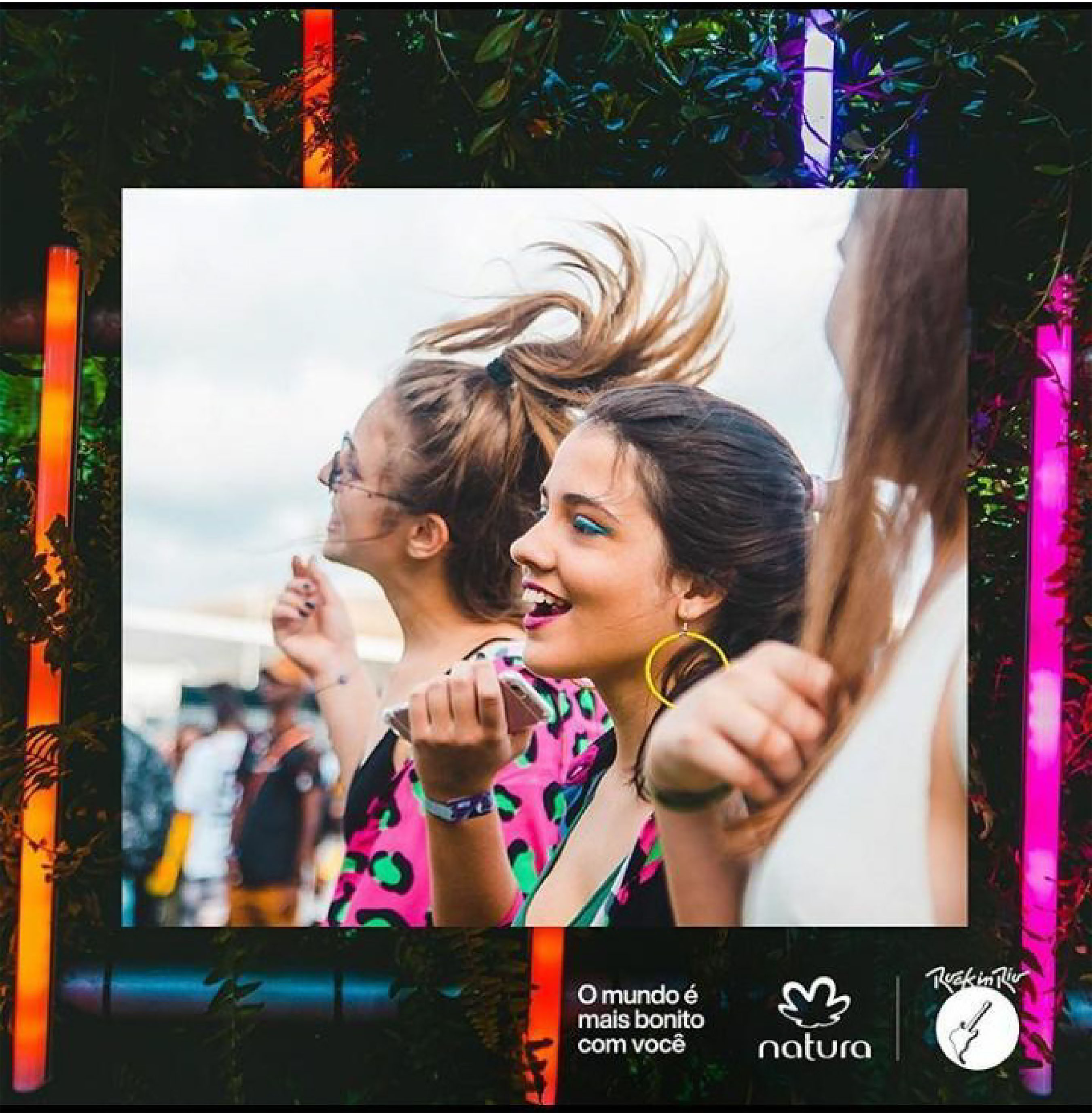
Most of the other representations of black men occur in content that covers events. They appear in materials that feature photos of the Rock in Rio festival, which has Natura as one of its sponsors, and in public photos (figure 6)7. It is also common for blurry backgrounds to appear in photos and videos, at a qualitative-iconic level of mere suggestion (figure 7)8.


In both the coverage of Rock in Rio and the Multishow Awards, another event sponsored by Natura, it is also common for the black men represented to be celebrities (figure 8, figure 9), such as musicians Evandro Fióti9 and Kond10. For Perez (2011, p. 77), black people are not considered a “symbolic legisign of Brazilian humanity”, that is, they are not portrayed as common or typical representatives of Brazilian society. Instead, black men appear mainly as prominent figures, as celebrities. As a result of meaning, the idea that black success is exceptional and not ordinary is reinforced, which perpetuates a distorted and harmful view.


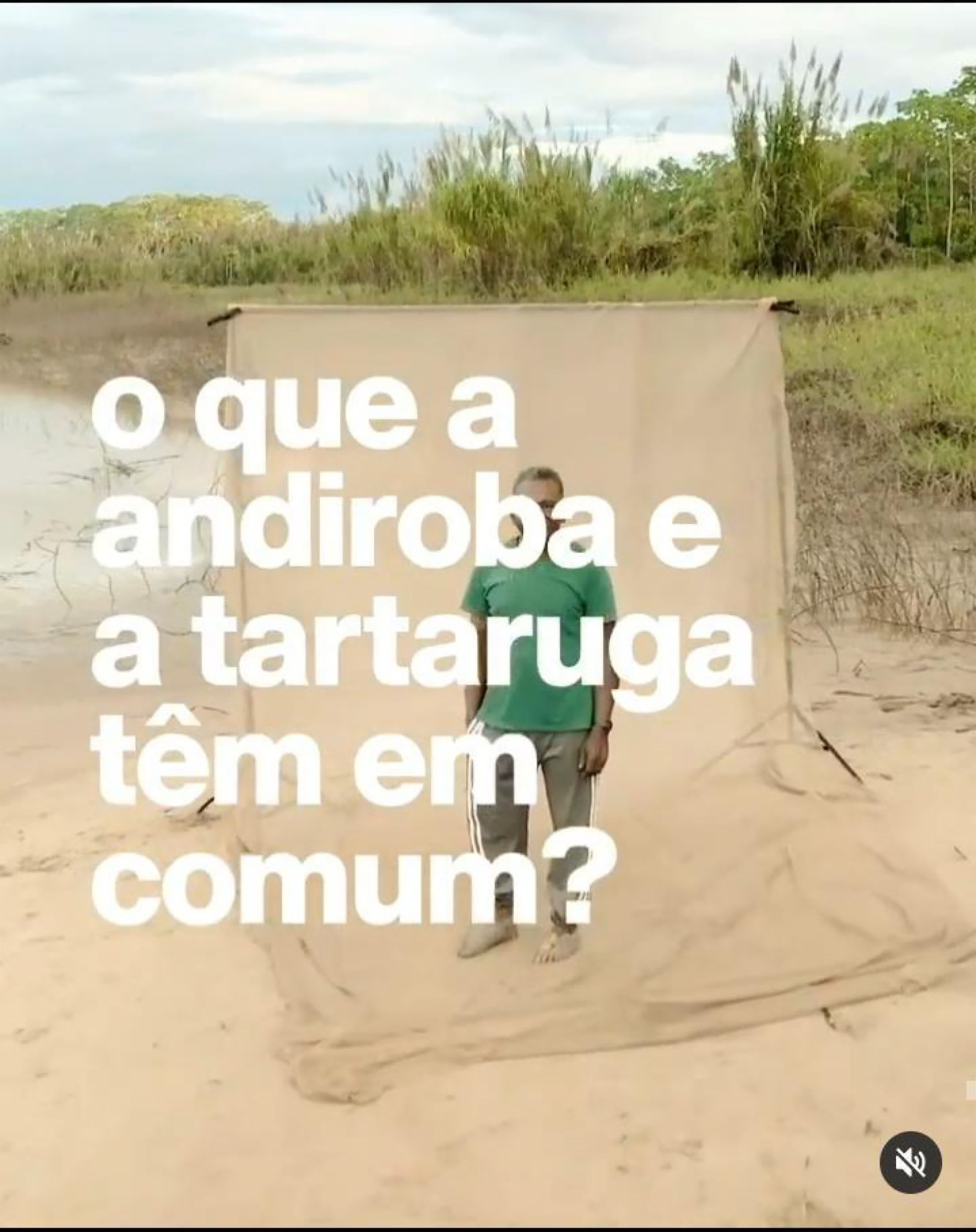
Furthermore, according to Kilomba (2019), the black population is rarely given the space of a universal subject. From this perspective, it is striking that the black presence occurs in materials in which the brand refers to causes, such as caring for nature (figure 10)11. In several contents, there are references to the processes of extracting essences and raw materials or that present the manufacture of products (Figure 11)12. In them, the presence of black men is in work positions (Figure 12)13. Above all, these representations are articulated with the Amazonian communities of producers and extractivists associated with Natura. They reinforce a class stereotype that places black people in positions of manual labor, as discussed by Corrêa (2006, p. 79), when categorizing the “black-machine - a body that works”.


The hypothesis that black men are invisible as consumers of the brand’s products is also raised, given that there is a scarcity of representations of consumption rituals associated with the brand’s products in the corpus. Although contemporary advertising is not restricted to advertising products, in its quest to signify brands and establish effective links of meaning with consumer subjects (Trindade, Perez, 2014), it is noteworthy that indicative aspects related to uses, functionalities, processes and effects are scarce. Black men are rarely represented in everyday situations of using products, handling packaging, unwrapping gifts or even in tidying up rituals. As exceptions, images of black celebrities are associated with the use of products, such as Seu Jorge (figure 13)14. In turn, in the launch campaign for the Essencial perfume, model Marcelo Lima stars in the campaign, always accompanied by images of the perfume bottle. In one of the videos, he applies the perfume to his neck (figures 14 and 15)15.


The only anonymous or unknown black man to interact with the product appears in figure 16, an educational publication from 2018 that teaches the best areas of the body for applying perfumes 16.

In addition to the singular-indicative aspects related to the use of the product, the Essencial campaign starring Marcelo Lima has as its motto the phrase “The New Essencial is #PoderSer”. The model’s trajectory is highlighted in one of the campaign videos, in which he shares: “Today I am managing to conquer a space, a black man, from the outskirts, showing that we can do it too”. As effects of meaning, a narrative of overcoming and “being able to inspire” other black people is constructed, also presenting a positive affirmation of blackness. In the images, he appears in a suit, in a luxurious environment, which appear as signs of success, sophistication and financial prosperity (figure 17)17.

Although the campaign does not carry out a deeper and more comprehensive racial critique, which recognizes the complexity of the black experience and the need for structural actions to combat racism, such debate appears in greater complexity only in the publications for Black Consciousness Day in 2019 (figures 18 and 19)18. In the videos, black Natura workers react to negative comments left by users on publications on the date the previous year, again in the position of “Black Machine”, illustrating what Corrêa (2006, p. 79) points out when he states that “the distance and extreme economic and symbolic separation between the white ruling class and the black working class are clear”. Women, a black man and a non-binary trans person look at themselves in the mirror and celebrate their identities, in addition to criticizing the questions raised about the date. In the scene starring the black man, the phrase “I love my blackness” appears on the screen, in line with Munanga’s (2020) discussion presented earlier about how blackness is part of the struggle of black people to positively rebuild their identity.


Among the intersections between gender, race and sexuality, one of the publications related to the sponsorship of Rock in Rio in 2019 shows two young black people having fun together at the event (figure 20). One of them wears red lipstick, an orange top and pants with yellow details and carries a red bag, with clothes and makeup that are culturally associated with the feminine universe. The other wears an orange jumpsuit, has dreadlocks and wears colorful bracelets. The caption states that there is nothing better than “having fun and dancing with friends”19. Although our analyses focus on the potential meanings of the publications, the comments in which the influencer couple and other users ask for the caption to be corrected to emphasize that they are not friends, but engaged are striking. The comments were not responded to by the brand. The piece is an interesting example to think about the erasure of black male identities that deviate from heteronormativity, and the comments from the public are also an example of the practices of contestation and contemporary tensions between people and the advertising field, as discussed by Laura Wottrich (2017).


In a publication also from 2019, on Father’s Day, already mentioned above, a possible interracial couple of young men is identified by the voiceover, which celebrates the forms of paternal love and states “it’s okay for you to like boys”, referring to a father’s welcoming speech to his son. In the scene, a young white man looks lovingly at a black boy riding a bicycle. In the next scene, the young white man climbs onto the back of the bicycle and holds on to the black boy. If it weren’t for the referentiality of the voiceover, the scene would suggest a fraternal embrace (Figure 21)20.
In both cases, we perceive the non-place of the “black queer”, as discussed by Lucas Veiga (2019, p. 88). The author explains that, in the media devices and due to the intersectional complexity of the intersections of identity matrices related to race, gender and sexual orientation, black gay men are often relegated to a condition of rejection in the economy of desire.
In these publications, while the images capture moments of affection and connection, expressions of romance are implied. The lack of direct, visual representation of romantic love between Black men may reflect not only broader cultural norms related to a dominant, heterosexual, white hegemonic masculinity (Connell, 2005), but also specific challenges faced by LGBTQIAP+ people within Black communities. Due to the persistence of colonial stereotypes related to Black masculinity, Black gay men face additional pressure to conform to rigid, heteronormative standards of masculinity in order to be accepted both within their communities and in society at large (Poe, 2023).
Final Considerations
We seek to discuss the representations of black masculinities in the sign expressions of the Natura brand. It is important to note that the analyses transcribed in this text were not exhaustive, considering the total number of images collected and the possible potential meanings they arouse. However, through a methodological approach of applied semiotics, we outlined certain patterns of meaning and advertising content that stood out for the discussion of black masculinities in their intersections with other social markers of difference.
The analysis reveals a persistent invisibility of black men. This scenario highlights an ongoing challenge regarding the inclusion and recognition of black men as consumer subjects, especially in the cosmetics segment, even amidst the growing discussion about the “new man”, the various expressions of contemporary masculinity and the greater attention to grooming aimed at the male audience.
There is a notable underrepresentation of black men as consumers of the brand’s products, with their appearance limited to commemorative dates and in the context of advertising tributes. It is also common for them to appear as celebrities, more for their visibility in the public scene than as subject-consumers of the products. They also appear as event attendees, in a supporting role or as supporting characters, contributing to the scenes of the content promoted by the brand. In these scenes, they appear de-individualized within groups of friends or crowds at the brand’s events, unlike the representation of the single black man, which is more common when there are female representations, as we have identified in previous studies.
Through the analysis undertaken, we identified how the signs of blackness are still linked to limited meanings, despite specific moments in which other possibilities for exercising masculinity are presented. In a class dynamic, a representation of middle-class blackness stands out, with access to consumer goods and music festivals, but the recurrence of a working-class blackness is also noticeable, who appears providing services in the development of Natura products in factories or in production and extraction activities in Amazonian communities, as represented in pieces that talk about the brand’s adherence to causes, such as sustainability.
Although there are allusions to black homosexual men, the visual representation of gay affection among black men is only suggested. In turn, considering the broad spectrum of gender identities, there are no expressions of trans masculinities. In relation to fatherhood, a transformation of meanings related to the expression of affection between fathers and children is perceived, as well as the symbolic construction of a caring black masculinity, but the representation of black father figures remains incipient when we consider the set of advertisements.
Another aspect that points to future discussions concerns the role of brands in the expression and construction of broader interpreters in various aspects of identity, including representations of gender and race. There are contributions that brands can and should make, however, it is not in the ecology of brands that citizenship is constituted and experienced in its full potential.
As Connell (2005) argues, understanding marginalized and subordinated masculinities is crucial to a more complete analysis of power dynamics and gender hierarchies. In the context of contemporary consumer scenes, these forms of masculinity are often overlooked or rendered invisible, but they are equally important for understanding the complexities of men’s gender identities and experiences in different social contexts.
- 1
-
2
Available at: https://www.instagram.com/p/BmYczRDlFKe/. Accessed on November 11, 2024.
-
3
Available at: https://www.instagram.com/p/Bz6VOLgAe_V/. Accessed on: November 11, 2024.
-
4
MEIO & MENSAGEM. Natura: Papai e bebê ficou um ano na gaveta. 2017. Available at: https://www.meioemensagem.com.br/marketing/natura-papai-e-bebe-ficou-um-ano-na-gaveta. Accessed on: March 15, 2024.
-
5
Available at: https://www.instagram.com/p/B4fAxWKgVBr/. Accessed on: November 11, 2024.
-
6
Available at: https://www.instagram.com/p/CC1p6XTFa9e/. Accessed on: November 11, 2024.
-
7
Available at: https://www.instagram.com/p/B3LB-4WAle2/. Accessed on: November 11, 2024.
-
8
Available at: https://www.instagram.com/p/B27a8yWgVwB/. Accessed on: November 11, 2024.
-
9
Available at: https://www.instagram.com/p/B3QgoGkgdtF/. Accessed on: November 11, 2024.
-
10
Available at: https://www.instagram.com/p/B3QgoGkgdtF/. Accessed on: November 11, 2024.
-
11
Available at: https://www.instagram.com/p/Bxxi54Ng2Kr/. Accessed on: November 13, 2024.
-
12
Available at: https://www.instagram.com/p/B0BbXkZAHtj/. Accessed on: November 13, 2024.
-
13
Available at: https://www.instagram.com/p/B0CLAvzg0di/. Accessed on: November 13, 2024.
-
14
Available at: https://www.instagram.com/p/B4OZz57ADun/. Accessed on: November 13, 2024.
-
15
Available at: https://www.instagram.com/p/B9kh9QqltM_/. Accessed on: November 13, 2024.
-
16
Available at: https://www.instagram.com/p/Bhr_uTils9z/. Accessed on: November 13, 2024.
-
17
Available at: https://www.instagram.com/p/B9RawXIA-yP/. Accessed on: November 13, 2024.
-
18
Available at: https://www.instagram.com/p/B5FcktzAQ1a/. Accessed on: November 13, 2024.
-
19
Available at: https://www.instagram.com/p/B3QFc-vgBMz/. Accessed on: November 13, 2024.
-
20
Available at: https://www.instagram.com/p/Bz6VOLgAe_V/. Accessed on: November 13, 2024.
References
- ARILHA, M.; UNBEHAUM, S.; MEDRADO, B. Introdução. In: ARILHA, M.; UNBEHAUM, S.; MEDRADO, B. (Org.). Homens e masculinidades: outras palavras. 1. ed. São Paulo: Editora 34, 1998. p. 15–28.
- BEAUVOIR, S. de. O segundo sexo: fatos e mitos (Vol. 1). 4.ed. São Paulo: Difusão Europeia do Livro, 1970.
- BOURDIEU, P. A Dominação Masculina Rio de Janeiro: Bertrand Brasil, 2012.
-
BRAND FINANCE. BRASIL 100 2023 RANKING Disponível em: https://brandirectory.com/rankings/brazil/table Acesso em: 18 mar. 2024.
» https://brandirectory.com/rankings/brazil/table - BEYNON, J. Masculinities and culture Buckingham: Open University Press, 2002.
- CARNEIRO, S. Dispositivo de racialidade: A construção do outro como não ser como fundamento do ser. São Paulo: Zahar, 2023.
- COLLINS, P. H. BILGE, S. Interseccionalidade São Paulo: Boitempo, 2021.
- CONNELL, R. Masculinities. 2. ed. Berkeley: University of California Press, 2005.
- CONNELL, R.; MESSERSCHMIDT, J. Masculinidade hegemônica: repensando o conceito. Estudos Feministas, v. 21, n. 1, p. 241–282, 2013.
- CONRADO, Mônica; RIBEIRO, Alan Augusto Moraes. Homem negro, negro homem: masculinidades e feminismo negro em debate. Revista Estudos Feministas, Florianópolis, v. 25, n. 1, p. 73-97, 2017
- CORRÊA, L. G. Mães cuidam, pais brincam: normas, valores e papéis na publicidade de homenagem. 2011. Tese (de (Doutorado) -. Programa de Pós-graduação em Comunicação Social). Universidade Federal de Minas Gerais (UFMG), Belo Horizonte, 2011.
- CORRÊA, L. G. De corpo presente: o negro na publicidade em revista. 2006. Dissertação (Mestrado em Comunicação Social) – Universidade Federal de Minas Gerais (UFMG), Belo Horizonte, 2006.
- CRENSHAW, K. Documento para o encontro de especialistas em aspectos da discriminação racial relativos ao gênero. Revista Estudos Feministas Florianópolis, v. 10, n. 1, p. 171-188. Florianópolis, 2002. p. 171-188.
- GARCIA, Sandra. Conhecer os homens a partir do gênero e para além do gênero. In: ARILHA, Margareth; GARCIA, Sandra (org.). Homens e masculinidades: outras palavras. São Paulo: Ecos, 1998. p. 31-50.
- GONZALEZ, L. Racismo e sexismo na cultura brasileira. Revista Ciências Sociais Hoje, Anpocs, p. 223-244, 1984.
- GONZALEZ, L. Por um feminismo afro-latino-americano: ensaios, intervenções e diálogos. Rio de Janeiro: Zahar, 2020.
-
HENNIGEN, I.; GUARESCHI, N. M. de F. A paternidade na contemporaneidade: um estudo de mídia sob a perspectiva dos estudos culturais. Psicologia & Sociedade, [S.L.], v. 14, n. 1, p. 44-68, jun. 2002. FapUNIFESP (SciELO). http://dx.doi.org/10.1590/s0102-71822002000100004.
» https://doi.org/10.1590/s0102-71822002000100004 - HOOKS, b. A gente é da hora: Homens negros e masculinidades. São Paulo: Boitempo, 2022.
-
INSTITUTO PROMUNDO (Brasil). Primeiro relatório sobre as paternidades negras no Brasil Brasília: Instituto Promundo, 2021. Disponível em: https://bit.ly/3vfzqf2 Acesso em: 16 mar. 2024.
» https://bit.ly/3vfzqf2 - JANUÁRIO, S. B. Masculinidades em (Re)construção: gênero, corpo e publicidade Covilhã: Editora Labcom, 2016.
-
KAUFMAN, G. The portrayal of men’s family roles in television commercials. Sex Roles, v. 41, n. 5/6, p. 439-458, 1999. Springer Science and Business Media LLC. http://dx.doi.org/10.1023/a:1018878917810.
» https://doi.org/10.1023/a:1018878917810 - KILOMBA, G. Memórias da plantação: Episódios de racismo cotidiano. Rio de Janeiro: Cobogó, 2019.
- KIMMEL, M. A sociedade de gênero Petrópolis: Editora Vozes, 2022.
- LEITE, F. Publicidade contraintuitiva: inovação no uso de estereótipos na comunicação. Curitiba: Appris, 2014.
-
MARTINO, L. M. S.; TONUSSI, C. “Não basta ser pai, tem que participar”? Presenças e ausências do masculino no cuidado com os filhos em anúncios de produtos para bebês no Instagram. Revista Contracampo, v. 41, n. 3, p. 1-18, 29 dez. 2022. Pró-Reitoria de Pesquisa, Pós-Graduação e Inovação - UFF. http://dx.doi.org/10.22409/contracampo.v41i3.53494.
» https://doi.org/10.22409/contracampo.v41i3.53494 - MBEMBE, A. Crítica da Razão Negra São Paulo: n-1 edições, 2018.
- MCCRACKEN, G. Cultura & consumo: novas abordagens ao caráter simbólico dos bens e das atividades de consumo. Rio de Janeiro: Mauad, 2010.
- MEDRADO, B.; LYRA, J. Por uma matriz feminista de gênero para os estudos sobre homens e masculinidades. Revista Estudos Feministas, v. 16, n. 3, p. 809–840, 2008.
- MUNANGA, K. Negritude: Usos e Sentidos. Belo Horizonte: Autêntica, 2020.
- NASCIMENTO, A. O genocídio do negro brasileiro: Processos de um racismo mascarado. São Paulo: Perspectivas, 2016.
- PEIRCE, C. S. Collected Papers of Charles Sanders Peirce Cambridge: Harvard University Press, 1931.
- PEREZ, C. Condições Antropossemióticas do Negro na Publicidade Contemporânea. In: Leandro Leonardo BATISTA, Francisco LEITE. (Org.). O Negro nos Espaços Publicitários Brasileiros 1ed.São Paulo: ECA/CONE, 2011, v. , p. 61-84.
- PEREZ, C. Há limites para o consumo? Barueri: Estação das Letras e Cores, 2020.
-
PERUZZO, A.; POMPEU, B.; PEREZ, C. Tendências das pesquisas sobre masculinidades em publicidade e consumos em revistas científicas nacionais (2004-2022). Dispositiva, v. 12, n. 22, p. 336-354, 18 dez. 2023. http://dx.doi.org/10.5752/p.2237-9967.2023v12n22p336-354.
» https://doi.org/10.5752/p.2237-9967.2023v12n22p336-354 -
PERUZZO, A. Publicidade e tecnologia de gênero: (des/re)construção de representações de masculinidades. 2019. Dissertação (Mestrado em Estudo dos Meios e da Produção Mediática) - Escola de Comunicações e Artes, Universidade de São Paulo, São Paulo, 2019. doi:10.11606/D.27.2020.tde-08012020-161029. Acesso em: 2024-03-18.
» https://doi.org/10.11606/D.27.2020.tde-08012020-161029 -
POE, W. “Homens negros amando homens negros”: militância gay negra dos anos 1980 no Brasil e nos EUA. Revista Brasileira de Estudos da Homocultura, v. 5, n. 18, p. 252–283, 2023. Disponível em: https://periodicoscientificos.ufmt.br/ojs/index.php/rebeh/article/view/14682 Acesso em: 18 mar. 2024.
» https://periodicoscientificos.ufmt.br/ojs/index.php/rebeh/article/view/14682 - RESTIER, Henrique. O duelo viril: confrontos entre masculinidades no Brasil mestiço. In: RESTIER, Henrique; SOUZA, Rolf Malungo de (orgs.). Diálogos contemporâneos sobre homens negros e masculinidades São Paulo: Editora Ciclo Continuo, 2019.
- SCOTT, J. Gênero: uma categoria útil de análise histórica. Educação & Realidade, v. 20, n. 2, p. 71–99, 1995.
- SODRÉ, M. O fascismo da cor: uma radiografia do racismo nacional. Petrópolis: Vozes, 2023.
- TRINDADE, E.; PEREZ, C. Dimensões do consumo midiatizado. In: II Congresso Mundial de Comunicação Ibero-Americana Confibercom, 2014, Braga. Comunicação ibero-americana: os desafios da Internacionalização. BRAGA: Centro de Estudos de Comunicação e Sociedade, Universidade do Minho, 2014 a, v. 1. p. 3109-3117.
- VEIGA, L. Além de preto é gay: as diásporas da bixa preta. In: Restier, H.; Souza, R. M. (Orgs.). Diálogos contemporâneos sobre Homens Negros e Masculinidades São Paulo: Ciclo Contínuo Editorial, 2019.
- VIGOYA, M. V. As cores da masculinidade: experiências interseccionais e práticas de poder na Nossa América. Rio de Janeiro: Papéis Selvagens, 2018.
- WOTTRICH, Laura. “Não podemos deixar passar”: práticas de contestação da publicidade no início do século XXI. 2017. 323 f. Tese (Doutorado) - Programa de Pós-graduação em Comunicação e Informação, Universidade Federal do Rio Grande do Sul, Porto Alegre, 2017.
Edited by
-
Responsible editors:
Marialva Barbosa and Sonia Virgínia Moreira

 Source: Natura Instagram

 Source: Natura Instagram
 Source: Natura Instagram
 Source: Natura Instagram
 Source: Natura Instagram
 Source: Natura Instagram

 Source: Natura Instagram
 Source: Natura Instagram

 Source: Natura Instagram
 Source: Natura Instagram

 Source: Natura Instagram
 Source: Natura Instagram
 Source: Natura Instagram

 Source: Natura Instagram
