| I - “Disposições Preliminares e Gerais” |
I - “Do Objeto, da Área de abrangência e das Definições” |
“Art. 2o Para os fins dessa Lei, consideram-se: [...]” |
XXIX - “interesse social: [...]” |
“[...] a exploração agroflorestal sustentável praticada na pequena propriedade ou na posse rural familiar ou por povos e comunidades tradicionais, desde que não descaracterize a cobertura vegetal existente e não prejudique a função ambiental da área; [...]” |
A espécie de ovinos pantaneiros é adaptada ao bioma Pantanal e tem potencial de exploração em pequenas propriedades de produtores familiares e locais, dentro de uma cadeia produtiva sustentável e estruturada. |
| I - “Do Objeto, da Área de abrangência e das Definições” |
“Art. 2o Para os fins dessa Lei, consideram-se: [...]” |
LIV - “Grupo Econômico: [...]” |
“[...] a sociedade formada por membros da mesma família ou não, em que haja comunhão de interesses econômicos manifestada por meio de uma relação de dependência mútua e de ações conjuntas de administração e de coordenação que indiquem a prática de atos próprios de sócios, podendo ser de direito ou de fato; [...]” |
Permite a organização de produtores locais, familiares ou não, para explorar a criação de ovinos adaptados ao Pantanal, com potencial de desenvolvimento de atividade rentável, conservando o bioma. |
| II - “Dos Objetivos, dos Princípios e das Diretrizes” |
“Art. 3o Toda Política Pública que versar sobre conservação, proteção, restauração e a exploração ecologicamente sustentável, no âmbito da AUR-Pantanal, deverá ter o objetivo de assegurar condições de desenvolvimento socioeconômico, qualidade ambiental e proteção à vida em todas as suas formas [...]” |
I, IV, VI, VII e VIII |
“I - a ação governamental na manutenção do equilíbrio ecológico, considerando o Pantanal como Patrimônio Público Nacional a ser necessariamente assegurado e protegido; [...] IV - o incentivo à pesquisa orientada ao uso sustentável e à proteção dos recursos ambientais; [...] VI - a educação ambiental formal e não formal visando a garantir a participação popular ativa na defesa do meio ambiente; VII - a manutenção de padrões de vida que garantam o bem estar social da população residente na AUR-Pantanal; VIII - a garantia da exploração econômica rentável de atividades tradicionalmente desenvolvidas na região [...]” |
Caminho estabelecido e incentivado para o avanço de pesquisas e políticas públicas que regulamentem a criação de ovinos pantaneiros, pelas populações locais, como atividade econômica desenvolvida e inserida dentro de um modelo sustentável. |
| I - “Disposições Preliminares e Gerais” |
II - “Dos Objetivos, dos Princípios e das Diretrizes” |
“Art. 4o São diretrizes para a elaboração e implementação de políticas públicas que versam sobre a conservação, a proteção, a restauração e a exploração ecologicamente sustentável na AUR-Pantanal” |
IX, X, XII, XIV e XV |
“IX - o fomento à certificação ambiental de atividades e à rastreabilidade das cadeias produtivas sustentáveis desenvolvidas na AUR-Pantanal; X - a diversificação da economia regional, incentivando o desenvolvimento de atividades da bioeconomia, do ecoturismo e do turismo rural; XI - a expansão de crédito e o apoio a atividades e a cadeias produtivas sustentáveis, incluindo o pagamento de serviços ambientais e ecossistêmicos; XII - o estímulo a ações alinhadas com os objetivos de desenvolvimento sustentável (ODS) da Organização das Nações Unidas (ONU) e com os acordos internacionais de conservação ambiental ratificados pelo Brasil; XIV - a governança sobre os processos de ocupação territorial e de exploração sustentável dos recursos naturais, orientando os processos de transformação do setor produtivo e garantindo o atendimento dos direitos essenciais das populações locais; XV - a promoção de pesquisas científicas, de relações sociais e econômicas, visando à implementação de novas unidades de conservação e de corredores ecológicos na AUR-Pantanal; [...]” |
a) possibilidade de fomento a pesquisas de certificação da raça de ovinos pantaneiros e obtenção de selo de Denominação de Origem (DO) como Indicação Geográfica; b) o Estado de MS não tem certificação alguma de DO, e o ovino pantaneiro atende a requisitos para pleitear o selo; c) a ovinocultura sustentável com Indicação Geográfica na modalidade DO atende aos requisitos do ODS-12 (Consumo e Produção Responsáveis); d) criação sustentável de ovino pantaneiro com Denominação de Origem com cadeia produtiva estruturada e composta por produtores locais, gerando oportunidade de renda e conservando o bioma. |
| III - “Do Fundo Estadual de Desenvolvimento Sustentável do Bioma Pantanal” |
V - “Do Uso do Fogo” |
“Art. 23. Os recursos do Fundo Clima Pantanal de que trata esta Lei serão aplicados na forma especificada abaixo, nas seguintes situações: [...]” |
II |
“[...] em atividades de fomento à estruturação territorial, ao desenvolvimento sustentável e ações de apoio ao desenvolvimento científico e tecnológico, no percentual de até 10% (dez por cento) dos recursos, conforme regulamento [...]” |
Oportunidade de criar um programa estadual para incentivar a produção e comercialização de ovinos pantaneiros certificados com DO, com foco em incentivo aos produtores locais. |
| IV - “Disposições Finais” |
V - “Do Uso do Fogo” |
“Art. 26. Veda-se, nos limites da AUR-Pantanal, a introdução de espécies exóticas da fauna não constantes de regulamentos federal e estadual ou em desacordo com esta Lei.” |
“Parágrafo único” |
“As atividades de aquicultura, que envolvam a criação de espécies nativas, deverão ser ambientalmente licenciadas [...]” |
Oportunidade de licenciar o ovino pantaneiro como raça certificada e nativa e criar condições para exploração mercadológica com DO. |

 Sustainable livestock farming in the Pantanal: challenges and opportunities for local sheep producers
 Thumbnail
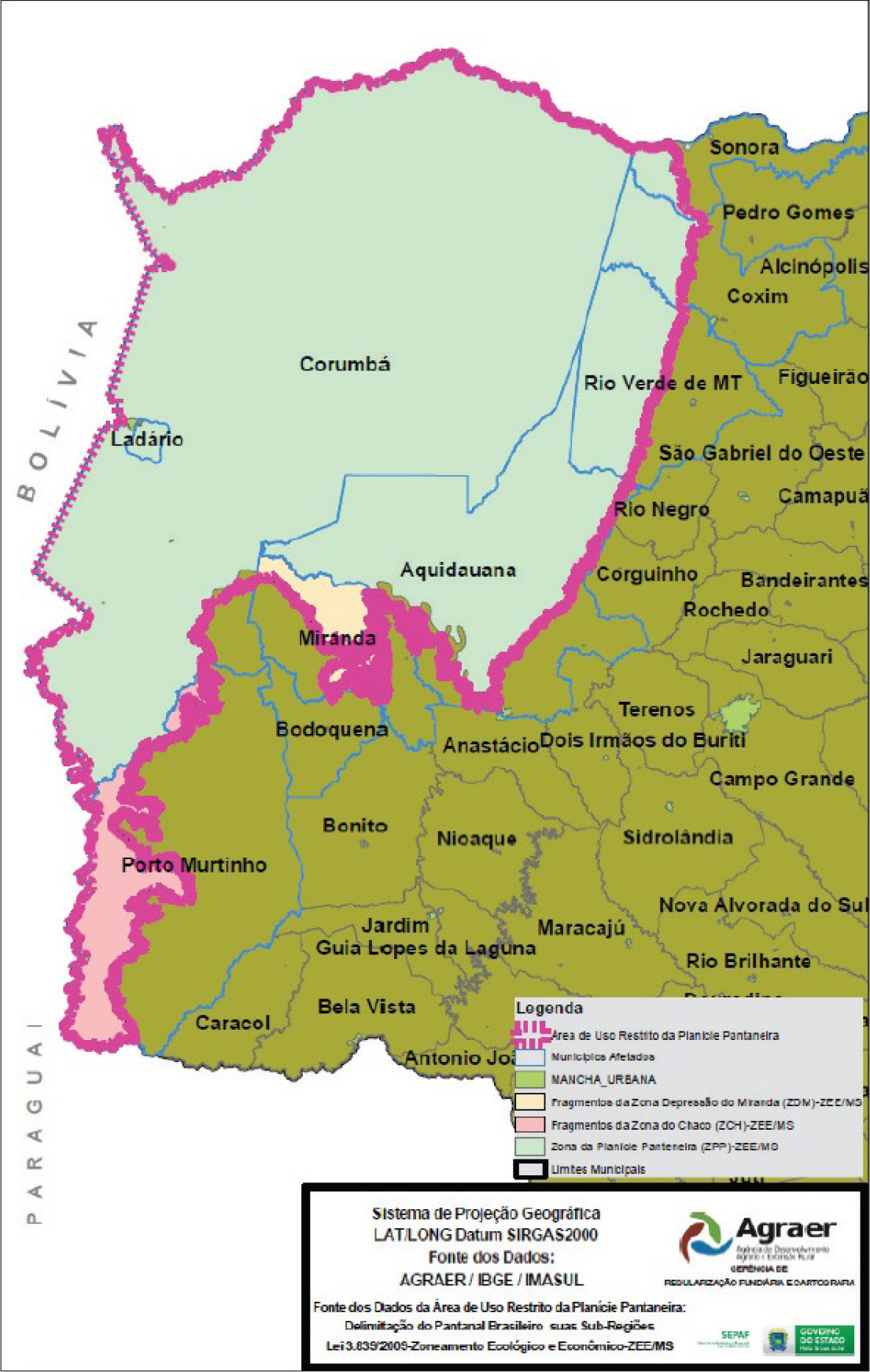 Fonte: