 Long-Term Clinical Outcomes of Catheter Ablation in Hypertrophic Cardiomyopathy and Atrial Fibrillation: A Systematic Review and Meta-Analysis
Abstract
Background: Patients with hypertrophic cardiomyopathy (HCM) are at increased risk of atrial fibrillation (AF). However, the benefits of catheter ablation (CA) for reducing adverse clinical outcomes in this population are not well established.
Objective: To assess the long-term impact of CA on clinical outcomes in patients with HCM and AF through a systematic review and meta-analysis.
Methods: Controlled studies of patients with HCM and AF undergoing CA were identified through PubMed/MEDLINE, Embase, LILACS, and Cochrane. Meta-analysis employed a random-effects model in R Studio, version 4.3.2, with p < 0.05 considered significant.
Results: Four retrospective cohort studies met inclusion criteria, all with long follow-up period (5.52 ± 0.91 years). Arrhythmia-free survival after multiple CA ranged from 36.3% to 82%. Combined event analysis (mortality, stroke, and heart failure) yielded odds ratio 0.22 (95% confidence interval 0.08 to 0.60; p < 0.05; I² = 64%). In individual analysis, only heart failure hospitalizations were significantly lower in the CA group (odds ratio 0.32; 95% confidence interval 0.13 to 0.82; p = 0.01).
Conclusions: This study suggests that CA may improve clinical outcomes in patients with HCM and AF, particularly by improving heart failure hospitalizations. Studies with greater methodological rigor are needed to prove this hypothesis, since only four studies were included in this systematic review.
Keywords:
Atrial Fibrillation; Catheter Ablation; Heart Failure; Hypertrophic Cardiomyopathy
Introduction
Hypertrophic cardiomyopathy (HCM) affects approximately 1 in 500 individuals and is characterized by unexplained left ventricular hypertrophy. Its clinical spectrum ranges from an asymptomatic course to progressive heart failure and sudden cardiac death.1,2 Moreover, atrial fibrillation (AF) is the most common arrhythmia in this population, with an incidence of 27 per 100 patient-years.3 This high incidence is driven by pathophysiological factors including diastolic dysfunction, mitral regurgitation, and left ventricular outflow tract obstruction, which promote atrial remodeling and predispose to AF. The development of AF in patients with HCM is associated with worse prognosis, significantly increasing the risks of thromboembolic stroke, heart failure decompensation, and all-cause mortality.4
Conventional antiarrhythmic drug (AAD) therapy has demonstrated only modest long-term success, with substantial rates of arrhythmia recurrence despite treatment. Consequently, catheter ablation (CA) has emerged as an important alternative for those who are refractory to drug therapy.5 Although observational series have suggested that CA may achieve superior rhythm control and clinical outcomes, these studies frequently lack contemporaneous control groups, thereby limiting definitive conclusions.6 Therefore, this meta-analysis aimed to synthesize the available controlled observational evidence to determine the long-term impact of CA, specifically on mortality, heart failure hospitalizations, and stroke, in patients with HCM and AF, as seen in the Central Figure.

AF: atrial fibrillation; CA: catheter ablation; HCM: hypertrophic cardiomyopathy; HF: heart failure.
Methods
This systematic review and meta-analysis were conducted in accordance with the Preferred Reporting Items for Systematic Reviews and Meta-Analyses (PRISMA) guidelines.7 Our protocol ID in PROSPERO database is: CRD42023451815.
Study selection criteria
Studies were selected based on the SPICE strategy:
-
S (setting): Only controlled studies were included in this analysis.
-
P (population): Studies enrolling patients of any age with a confirmed diagnosis of HCM and AF were considered
-
I (intervention) and C (control): Only studies comparing CA versus pharmacological treatment were included. Studies investigating surgical ablation, alcohol septal ablation, or control groups consisting of patients without HCM or undergoing alternative procedures were excluded.
-
E (evaluation): Assessment of mortality, heart failure hospitalization, and stroke incidence.
Data sources and search strategy
The search strategy was developed based on Medical Subject Headings (MeSH) terms related to AF, CA, and HCM.
The search strategy used in PubMed/MEDLINE was as follows: (‘atrial fibrillation’ OR ‘a fib’ OR ‘afib’ OR ‘AF’) AND (‘catheter ablation’) AND (‘hypertrophic cardiomyopathy’ OR ‘HCM’). This strategy was adapted for other databases, including LILACS, Embase, and the Cochrane Library.
Data extraction
Two independent reviewers initially screened titles and abstracts, followed by full-text assessments. In case of disagreements, a third reviewer was designated, though no conflicts occurred.
A structured data extraction chart was used. Information was collected on:
-
General study details (title, authors, publication year, journal).
-
Study characteristics (design, follow-up duration, blinding, randomization).
-
Participant demographics (sample size, age, sex distribution, exclusion criteria).
-
Details on the intervention (type of catheter ablation, antiarrhythmic and anticoagulation therapy regimens) and the control group (treatment strategy, drug usage details).
-
Outcomes measured (arrhythmia-free survival, all-cause mortality, heart failure hospitalizations, stroke incidence).
Risk of bias assessment
The Newcastle-Ottawa Scale (NOS) was employed to assess the risk of bias.8 Two authors independently conducted the assessments. Grading of Recommendations Assessment, Development, and Evaluation (GRADE) was used to assess the certainty of evidence and the strength of recommendations.9
Statistical analysis
The measures of treatment effect dichotomous variables were analyzed using odds ratios (OR) with 95% confidence intervals (CI) and significant p value was set at < 0.05. In instances where specific outcome events were absent in one or more study groups, a continuity correction of 0.5 was applied to all cells (a, b, c, d) to facilitate reliable estimation of relative risk and standard error.
Assessment of heterogeneity
Heterogeneity was evaluated using the I² statistic, with values over 50% indicating substantial heterogeneity.
Data synthesis
Analysis was carried out using R Studio, version 4.3.2. A random-effects model was employed to generate conservative estimates, accounting for both statistical and clinical heterogeneity across studies.
Assessment of reporting bias
A funnel plot was planned to assess publication bias if at least ten studies were available; however, only four studies met the inclusion criteria, making funnel plot generation inappropriate.
Results
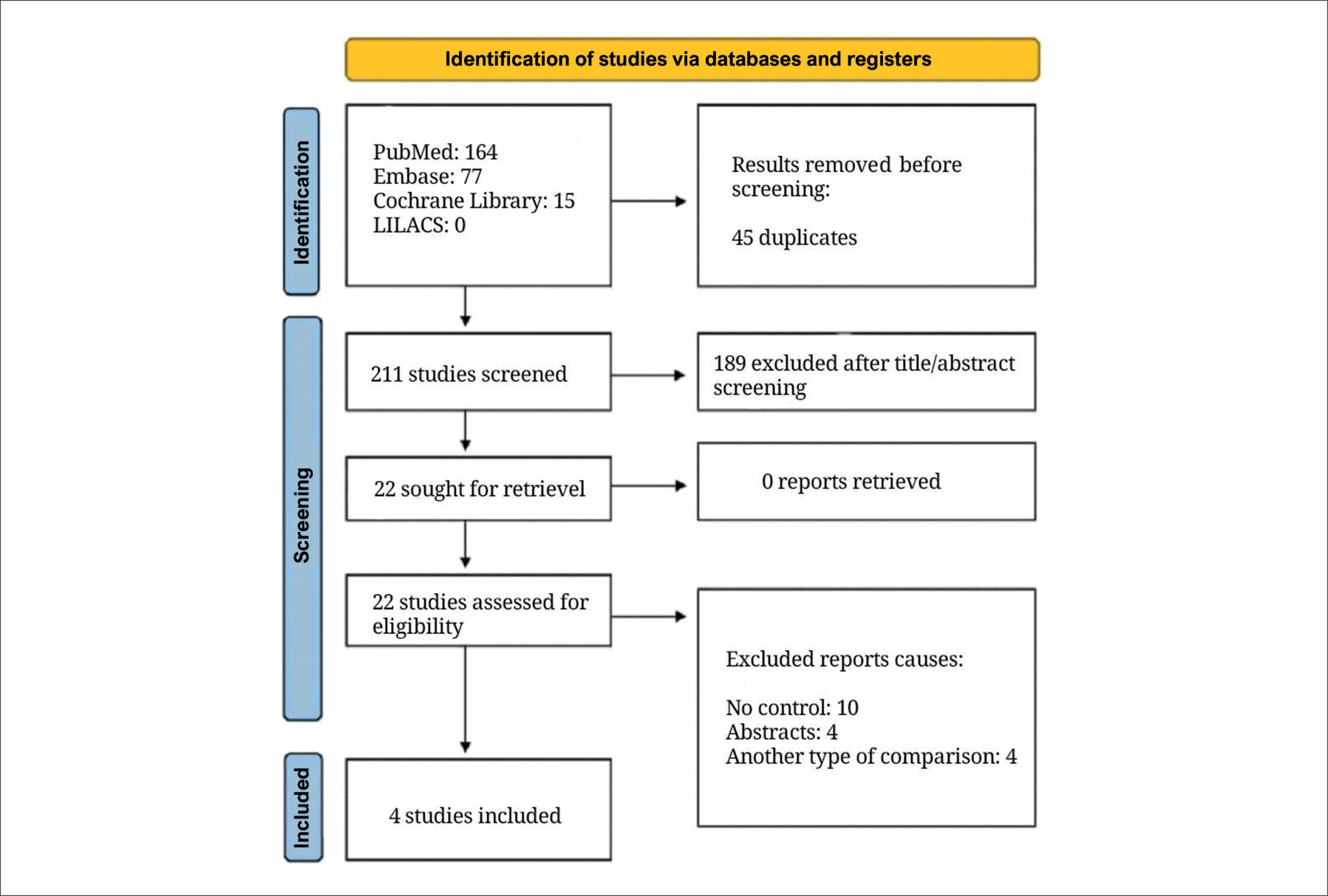
The systematic search yielded four retrospective cohort studies that met all inclusion criteria.10–13 The detailed screening and selection process is depicted in Figure 1, illustrating the numbers of articles identified, screened, and ultimately included in the review.

All four cohorts, comprising a total of 579 patients with long follow-up time (5.52 ± 0.91 years), were thoroughly characterized in Tables 1 to 3, which summarize study design, participant demographics, intervention details, and primary outcomes. Notably, multiple studies lacked data on substrate modification techniques during AF ablation procedures, baseline echocardiographic parameters, AF duration prior to CA, and preprocedural antiarrhythmic therapy. Nevertheless, quality assessment using the NOS returned high scores (8 or 9 out of 9; Table 4). The GRADE evaluations of evidence certainty, presented in Table 5, indicated a low to moderate reliability.
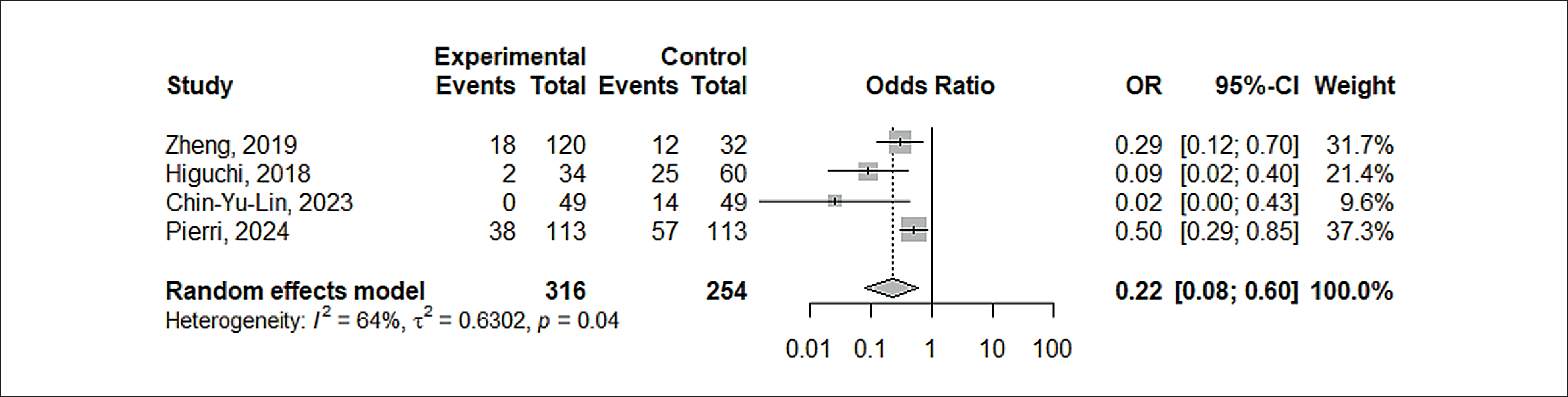
Across all studies, patients undergoing CA demonstrated significantly improved arrhythmia-free survival, particularly following repeat procedures (Table 3). In addition, the pooled meta-analysis revealed a statistically significant reduction in the composite adverse event rate among ablated patients (OR 0.22; 95% CI 0.08 to 0.60; p < 0.05), despite moderate heterogeneity (I² = 64%; Figure 2).

Meta-analysis of total events. Forest plot showing pooled risk estimates for total adverse events comparing CA versus non-CA groups. CA: catheter ablation; CI: confidence interval; OR: odds ratio.
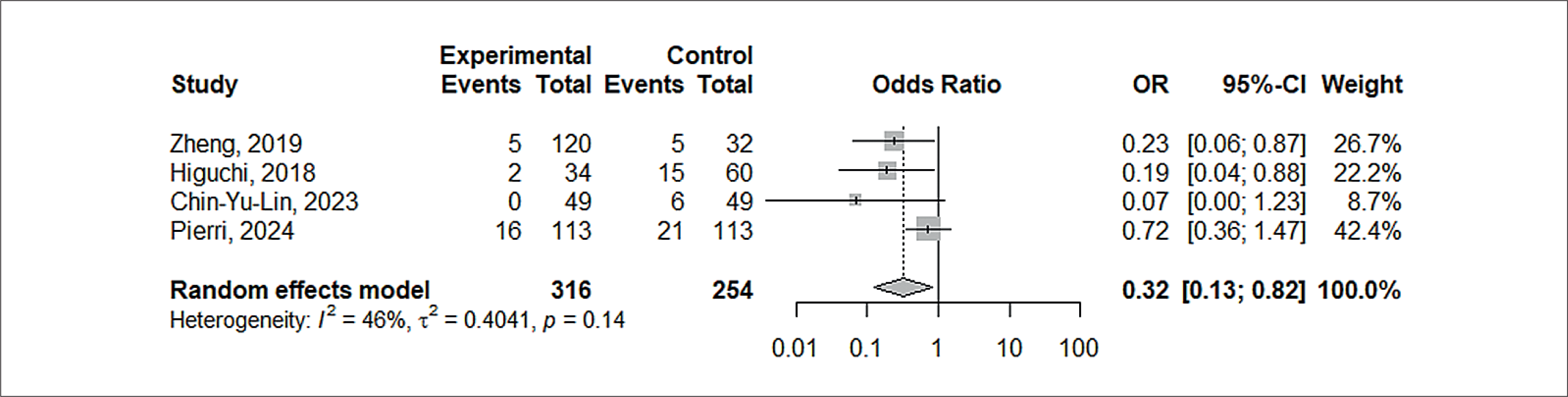
Although mortality tended to be lower in the CA group, this difference did not achieve statistical significance (Figure 3). Also, CA was associated with a significant decrease in heart failure hospitalizations (OR 0.32; 95% CI 0.13 to 0.82; p = 0.01), indicating a clear protective effect (Figure 4). While stroke incidence was lower in the CA cohort compared to controls, this reduction did not reach statistical significance (Figure 5; p > 0.05).

Meta-analysis of total mortality. Forest plot showing pooled estimates for all-cause mortality in CA versus non-CA patients. CA: catheter ablation; CI: confidence interval; OR: odds ratio.

Meta-analysis of heart failure hospitalizations. Forest plot depicting the incidence of heart failure hospitalizations comparing CA and non-CA groups. CA: catheter ablation; CI: confidence interval; OR: odds ratio.

Meta-analysis of stroke incidence. Forest plot comparing stroke incidence between CA and non-CA groups. CA: catheter ablation; CI: confidence interval; OR: odds ratio.
The complications rate related to AF-CA procedures were low (8 in total): fatal pneumothorax due to accidental subclavian vein: 1; cardiac tamponade: 3; complete atrioventricular block requiring permanent pacemaker: 1; femoral hematoma, pleural effusion, and hemidiaphragm paralysis: 3. Information about serious adverse drug effects in the control groups was not available.
Discussion
This systematic review and meta-analysis demonstrate that AF-CA in patients with HCM was associated with a significant reduction in adverse clinical events, driven predominantly by fewer heart failure hospitalizations. This observation suggests that the mitigation of heart failure admissions is a primary mechanism through which AF-CA confers its overall clinical benefit in this high-risk cohort.
Although AF-CA has been an established therapy in the last decades, observational series consistently report lower arrhythmia-free success rates in HCM compared with non-HCM populations, often necessitating repeat procedures and ongoing AAD therapy to maintain sinus rhythm. Indeed, single-procedure AF recurrence rates in HCM range from 38.7% to 49.8%, rising to 51.8% to 71.2% after multiple procedures.14 A more recent meta-analysis documented post-CA AF recurrence rates from 13.3% to 92.9%, and patients with HCM required more redo procedures and AADs than controls without HCM.15 We also observed a high recurrence rate of AF and atrial tachycardia following a single CA procedure in all four studies, with recurrence rates ranging from 63.7% to 74%, underscoring the challenges of durable rhythm control in this population. The distinct pattern of atrial remodeling in HCM, particularly asymmetric left atrial dilation observed on computed tomography imaging, likely contributes to these suboptimal outcomes.16 Moreover, emerging therapies such as mavacamten, which promotes reverse remodeling, and sodium-glucose cotransporter-2 inhibitors, which have demonstrated arrhythmia-reducing and cardioprotective effects in patients with heart failure, offer promising adjunctive approaches to enhance CA efficacy in HCM-associated AF.17,18
Advances in ablation technology, including cryoballoon ablation and pulsed-field ablation, have yielded encouraging results in general AF cohorts, yet their specific utility in HCM remains under-investigated. Retrospective data suggest comparable efficacy between cryoballoon and radiofrequency contact-force ablation for pulmonary vein isolation in HCM.19 However, inconsistent reporting of mapping systems, catheter technology, and non-pulmonary vein targets limits definitive conclusions in our study. Given the frequent need for repeat procedures in HCM, comprehensive lesion sets and advanced mapping to address complex atrial substrates may be necessary for sustained sinus rhythm in patients with HCM.
While AF in HCM is linked to increased mortality, partly due to hemodynamic compromise from loss of atrial contractility, and carries a markedly higher stroke risk than in non-HCM AF populations, maintenance of sinus rhythm remains a biologically plausible strategy to improve survival. In our analysis, although mortality and stroke incidence showed lower trends in the CA group, only the reduction in heart failure hospitalizations reached statistical significance. Some studies suggest that reverse atrial remodeling and reduced progression to persistent AF after CA may underlie these improved outcomes by decreasing overall AF burden.20 As we know, left atrial size is a critical determinant of AF risk in HCM, and persistent or permanent AF has been linked to worse prognosis.21–23 Furthermore, large trials have demonstrated mortality benefits with AAD therapy and improved outcomes with early rhythm control, reinforcing the importance of sinus rhythm maintenance, especially when initiated early.24
In our study, the only individual clinical outcome that was statistically significant and determined by CA intervention was heart failure hospitalization (7.28% versus 18.50%). AF is poorly tolerated by the HCM population and has an important negative impact on their quality of life. There are interplaying conditions, such as diastolic dysfunction, outflow tract obstruction, and mitral regurgitation, that interact with one another and collaborate to initiate AF and heart failure in HCM. In these cases, any AF recurrence determines a great chance of heart failure decompensation and hospitalization. This may explain the multiple procedures realized in the cohort studies to maintain better rhythm control and reduce serious hemodynamic consequences resulting from AF. Overall, the marked reduction in heart failure hospitalizations suggests that AF-CA may improve clinical stability in HCM by restoring ventricular filling and enhancing cardiac output through sustained sinus rhythm. To confirm and extend these findings, future investigations should prioritize large, prospective, randomized controlled trials directly comparing CA with contemporary medical therapy in this population. Moreover, incorporating advanced imaging modalities, such as cardiac magnetic resonance with late gadolinium enhancement, to quantify pre-ablation atrial fibrosis may enhance patient selection and procedural planning. Such imaging could identify arrhythmogenic substrates that voltage mapping alone may overlook in HCM atria, thereby optimizing lesion sets and improving long-term rhythm control.25
Limitations
This review has several limitations. First, only four controlled observational studies were identified, which limits statistical power and generalizability since retrospective cohorts may include patients with different baseline characteristics. Second, there was heterogeneity in study design, ablation techniques, follow-up duration, and concomitant therapies, which may have affected the consistency of the results. Third, small sample sizes and the geographic concentration of included cohorts may limit the applicability of these findings to broader populations. In addition, a subgroup analysis that might have reduced heterogeneity in the meta-analysis of composite outcomes was not possible because of the small number of included studies. Also, publication bias cannot be excluded because a funnel plot could not be performed (fewer than ten studies).
Finally, the retrospective design of all included studies introduces inherent biases. Consequently, larger prospective studies employing standardized ablation protocols are needed to validate these findings.
Conclusions
This study suggests that CA may reduce adverse outcomes in patients with AF and HCM, particularly by lowering heart failure-related hospitalizations. While these findings are promising, they underscore the necessity for further clinical trials with more robust methodologies to validate these results, since this systematic review includes only four retrospective studies.
-
Sources of Funding
There were no external funding sources for this study.
-
Study Association
This study is not associated with any thesis or dissertation work.
-
Ethics approval and consent to participate
This article does not contain any studies with human participants or animals performed by any of the authors.
-
Use of Artificial Intelligence
The authors did not use any artificial intelligence tools in the development of this work.
Data Availability Statement
The underlying content of the research text is contained within the manuscript.
References
-
1 Maron BJ, Maron MS. Hypertrophic Cardiomyopathy. Lancet. 2013;381(9862):242-55. doi: 10.1016/S0140-6736(12)60397-3.
» https://doi.org/10.1016/S0140-6736(12)60397-3 -
2 Maron BJ. Hypertrophic Cardiomyopathy: A Systematic Review. JAMA. 2002;287(10):1308-20. doi: 10.1001/jama.287.10.1308.
» https://doi.org/10.1001/jama.287.10.1308 -
3 Ye TTS, Siah QZ, Tan BYQ, Ho JSY, Syn NLX, Teo YH, et al. Ischaemic Events in Hypertrophic Cardiomyopathy Patients with and without Atrial Fibrillation: A Systematic Review and Meta-Analysis. J Thromb Thrombolysis. 2023;55(1):83-91. doi: 10.1007/s11239-022-02713-6.
» https://doi.org/10.1007/s11239-022-02713-6 -
4 Arunachalam K, Maan A, Chu A. Atrial Fibrillation in Hypertrophic Cardiomyopathy: Evidence-Based Review About Mechanism, Complications and Management. Crit Pathw Cardiol. 2020;19(2):87-9. doi: 10.1097/HPC.0000000000000210.
» https://doi.org/10.1097/HPC.0000000000000210 -
5 Parameswaran R, Al-Kaisey AM, Kalman JM. Catheter Ablation for Atrial Fibrillation: Current Indications and Evolving Technologies. Nat Rev Cardiol. 2021;18(3):210-25. doi: 10.1038/s41569-020-00451-x.
» https://doi.org/10.1038/s41569-020-00451-x -
6 Dinshaw L, Münkler P, Schäffer B, Klatt N, Jungen C, Dickow J, et al. Ablation of Atrial Fibrillation in Patients with Hypertrophic Cardiomyopathy: Treatment Strategy, Characteristics of Consecutive Atrial Tachycardia and Long-Term Outcome. J Am Heart Assoc. 2021;10(3):e017451. doi: 10.1161/JAHA.120.017451.
» https://doi.org/10.1161/JAHA.120.017451 -
7 Page MJ, McKenzie JE, Bossuyt PM, Boutron I, Hoffmann TC, Mulrow CD, et al. The PRISMA 2020 Statement: An Updated Guideline for Reporting Systematic Reviews. BMJ. 2021;372:n71. doi: 10.1136/bmj.n71.
» https://doi.org/10.1136/bmj.n71 -
8 Stang A. Critical Evaluation of the Newcastle-Ottawa Scale for the Assessment of the Quality of Nonrandomized Studies in Meta-Analyses. Eur J Epidemiol. 2010;25(9):603-5. doi: 10.1007/s10654-010-9491-z.
» https://doi.org/10.1007/s10654-010-9491-z -
9 GRADE Working Group. From Evidence to Recommendations – Transparent and Sensible [Internet]. Hamilton: GRADE; 2025 [cited 2025 Nov 11]. Available from: http://www.gradeworkinggroup.org
» http://www.gradeworkinggroup.org -
10 Higuchi S, Ejima K, Minami Y, Ooyabu K, Iwanami Y, Yagishita D, et al. Long-Term Clinical Course after Catheter Ablation of Atrial Fibrillation in Patients with Hypertrophic Cardiomyopathy. Heart Vessels. 2019;34(3):527-37. doi: 10.1007/s00380-018-1269-3.
» https://doi.org/10.1007/s00380-018-1269-3 -
11 Zheng S, Jiang W, Dai J, Li K, Shi H, Wu W, et al. Five-Year Outcomes after Catheter Ablation for Atrial Fibrillation in Patients with Hypertrophic Cardiomyopathy. J Cardiovasc Electrophysiol. 2020;31(3):621-8. doi: 10.1111/jce.14349.
» https://doi.org/10.1111/jce.14349 -
12 Lin CH, Lin CY, Chung FP, Lin YJ, Chang SL, Lo LW, et al. Catheter Ablation in Asian Patients with Atrial Fibrillation and Hypertrophic Cardiomyopathy: Electrophysiological Characteristics of Recurrence and Long-Term Clinical Outcomes. Front Cardiovasc Med. 2023;10:1135230. doi: 10.3389/fcvm.2023.1135230.
» https://doi.org/10.3389/fcvm.2023.1135230 -
13 Pierri A, Albani S, Merlo M, Buongiorno AL, Ricotti A, Grilli G, et al. Transcatheter Ablation of Atrial Fibrillation in Patients with Hypertrophic Cardiomyopathy: A Multicenter Propensity Score-Based Analysis. JACC Adv. 2024;3(5):100899. doi: 10.1016/j.jacadv.2024.100899.
» https://doi.org/10.1016/j.jacadv.2024.100899 -
14 Providencia R, Elliott P, Patel K, McCready J, Babu G, Srinivasan N, et al. Catheter Ablation for Atrial Fibrillation in Hypertrophic Cardiomyopathy: A Systematic Review and Meta-Analysis. Heart. 2016;102(19):1533-43. doi: 10.1136/heartjnl-2016-309406.
» https://doi.org/10.1136/heartjnl-2016-309406 -
15 Ezzeddine FM, Agboola KM, Hassett LC, Killu AM, Del-Carpio Munoz F, DeSimone CV, et al. Catheter Ablation of Atrial Fibrillation in Patients with and without Hypertrophic Cardiomyopathy: Systematic Review and Meta-Analysis. Europace. 2023;25(9):euad256. doi: 10.1093/europace/euad256.
» https://doi.org/10.1093/europace/euad256 -
16 Nedios S, Dinov B, Seewöster T, Lindemann F, Richter S, Arya A, et al. Characteristics of Left Atrial Remodeling in Patients with Atrial Fibrillation and Hypertrophic Cardiomyopathy in Comparison to Patients without Hypertrophy. Sci Rep. 2021;11(1):12411. doi: 10.1038/s41598-021-91892-y.
» https://doi.org/10.1038/s41598-021-91892-y -
17 Edelberg JM, Sehnert AJ, Mealiffe ME, Del Rio CL, McDowell R. The Impact of Mavacamten on the Pathophysiology of Hypertrophic Cardiomyopathy: A Narrative Review. Am J Cardiovasc Drugs. 2022;22(5):497-510. doi: 10.1007/s40256-022-00532-x.
» https://doi.org/10.1007/s40256-022-00532-x -
18 Harada M, Motoike Y, Nomura Y, Nishimura A, Koshikawa M, Watanabe E, et al. Impact of Sodium-Glucose Cotransporter 2 Inhibitors on Catheter Ablation for Atrial Fibrillation in Heart Failure Patients without Type-2 Diabetes. Int J Cardiol. 2025;422:132954. doi: 10.1016/j.ijcard.2024.132954.
» https://doi.org/10.1016/j.ijcard.2024.132954 -
19 Kinjo T, Kimura M, Horiuchi D, Itoh T, Ishida Y, Nishizaki K, et al. Comparing Cryoballoon and Contact-Force Guided Radiofrequency Ablation in Pulmonary Vein Isolation for Atrial Fibrillation in Patients with Hypertrophic Cardiomyopathy. J Interv Card Electrophysiol. 2024;67(7):1635-45. doi: 10.1007/s10840-024-01822-x.
» https://doi.org/10.1007/s10840-024-01822-x -
20 Andrade JG, Deyell MW, Macle L, Wells GA, Bennett M, Essebag V, et al. Progression of Atrial Fibrillation after Cryoablation or Drug Therapy. N Engl J Med. 2023;388(2):105-16. doi: 10.1056/NEJMoa2212540.
» https://doi.org/10.1056/NEJMoa2212540 -
21 Du M, Wang X, Zhang A, Li F, Yi M. Prognostic Effect of Atrial Fibrillation on Survival in Patients with Hypertrophic Cardiomyopathy: A Meta-Analysis. J Cardiothorac Surg. 2023;18(1):196. doi: 10.1186/s13019-023-02299-x.
» https://doi.org/10.1186/s13019-023-02299-x -
22 Fauchier L, Bisson A, Bodin A, Herbert J, Spiesser P, Pierre B, et al. Ischemic Stroke in Patients with Hypertrophic Cardiomyopathy According to Presence or Absence of Atrial Fibrillation. Stroke. 2022;53(2):497-504. doi: 10.1161/STROKEAHA.121.034213.
» https://doi.org/10.1161/STROKEAHA.121.034213 -
23 Olivotto I, Cecchi F, Casey SA, Dolara A, Traverse JH, Maron BJ. Impact of Atrial Fibrillation on the Clinical Course of Hypertrophic Cardiomyopathy. Circulation. 2001;104(21):2517-24. doi: 10.1161/hc4601.097997.
» https://doi.org/10.1161/hc4601.097997 -
24 Kirchhof P, Camm AJ, Goette A, Brandes A, Eckardt L, Elvan A, et al. Early Rhythm-Control Therapy in Patients with Atrial Fibrillation. N Engl J Med. 2020;383(14):1305-16. doi: 10.1056/NEJMoa2019422.
» https://doi.org/10.1056/NEJMoa2019422 -
25 Efremidis M, Bazoukis G, Vlachos K, Prappa E, Anastasakis A, Megarisiotou A, et al. Atrial Substrate Characterization in Patients with Atrial Fibrillation and Hypertrophic Cardiomyopathy: Evidence for an Extensive Fibrotic Disease. J Electrocardiol. 2021;69:87-92. doi: 10.1016/j.jelectrocard.2021.06.001.
» https://doi.org/10.1016/j.jelectrocard.2021.06.001
Edited by
-
Editor responsible for the review:
Ricardo Alkmim Teixeira