 Comparison Between Two Prevention and Control Programs for Risk Factors for Cardiovascular Diseases in an Oil Company
Abstract
Background: Cardiovascular diseases (CVDs) are the leading cause of death in the world, and companies can implement prevention and control actions aimed at reducing risk factors among their workers.
Objectives: To verify whether the result of model A of a CVD prevention and control program was superior to model B in reducing the cardiovascular risk (CVR) of individuals from an oil company.
Methods: Retrospective evaluation of secondary data from a restricted and fixed cohort of 670 workers, from 01/01/2016 to 12/31/2018. The workers were divided by program model into Group A (514) and Group B (156). The 2016 CVR was compared with that of 2018, within and between groups, as well as the mean and prevalence of risk factors for CVD. Statistical analysis was set at a significance level of 5%.
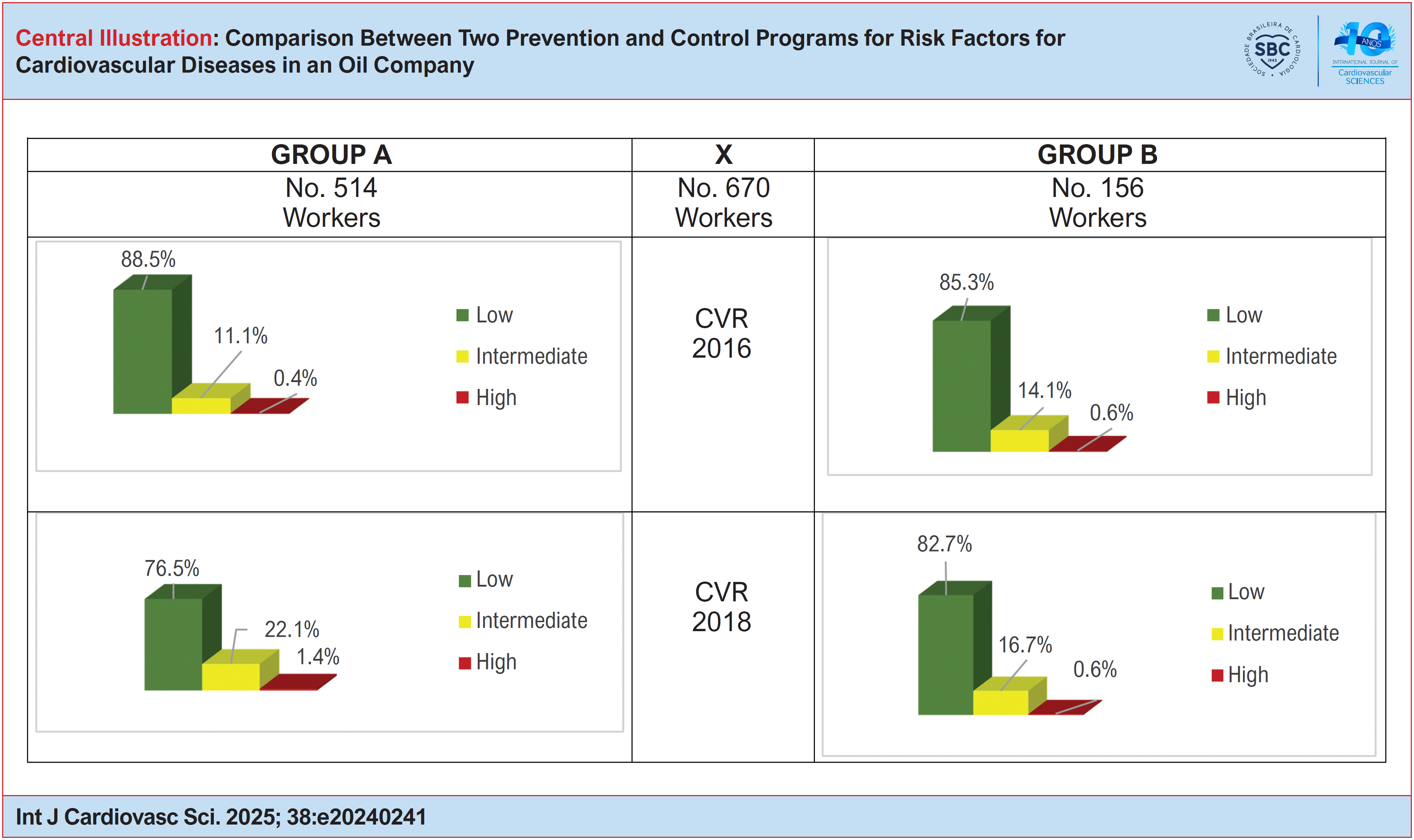
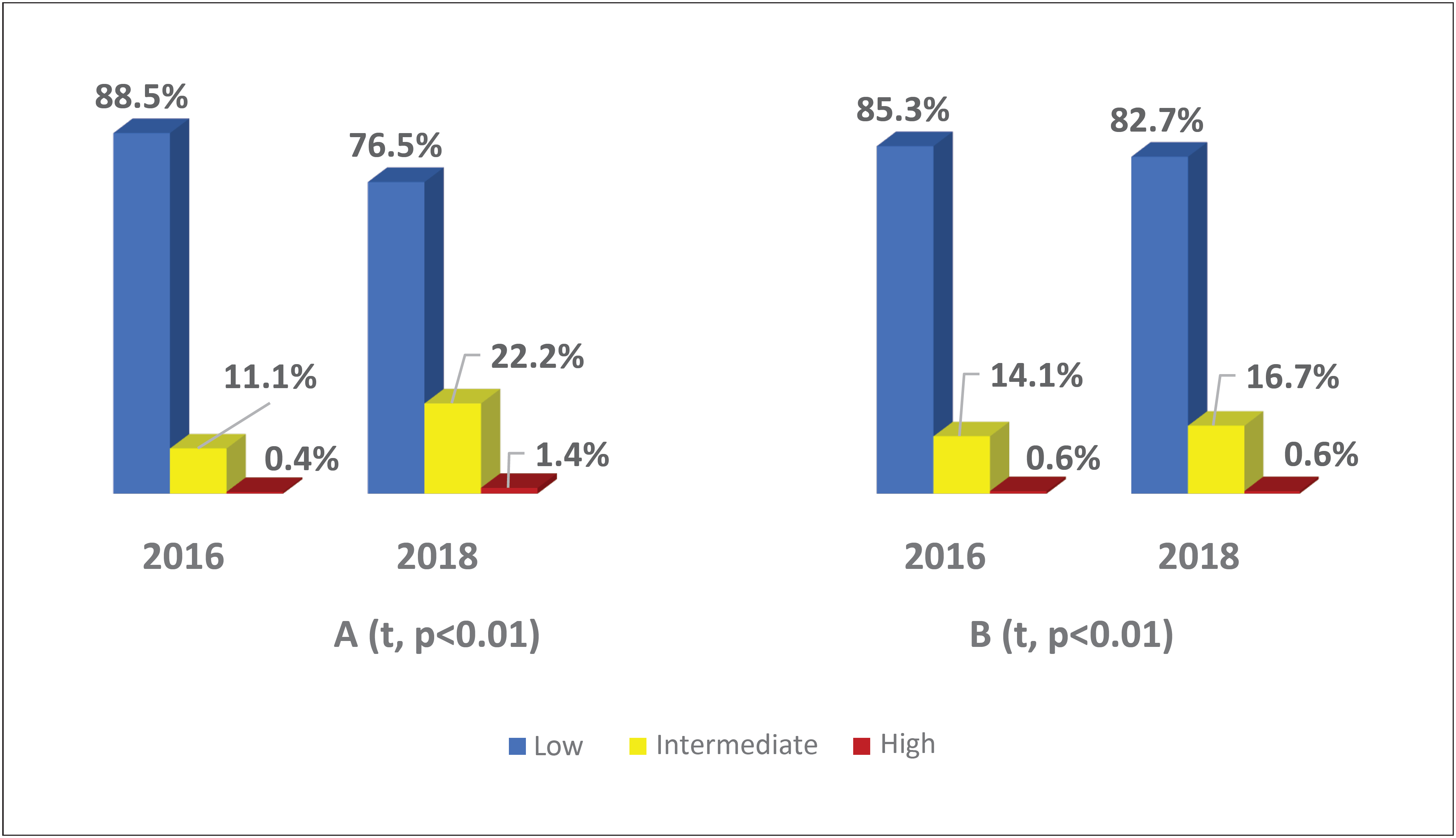
Results: Group A improved the level of physical activity (PAL), consumption of fruits and vegetables, and consumption of alcohol, but the "high" CVR increased from 0.4% in 2016 to 1.4% in 2018 (p<0.01). In Group B there was no change in the workers’ health profile, but the percentage of individuals with "intermediate" CVR increased from 14.1% to 16.7% (p=0.01).
Conclusions: The actions developed by the company had a positive impact on the way of life of workers covered by the model A program; however, they were not sufficient to reduce CVR in this group.
Keywords:
Cardiovascular Diseases; Risk Factors; Health Promotion; Occupational Health
Introduction
Cardiovascular diseases (CVD) are the leading cause of death worldwide,1-4 and actions to address this problem have been developed with positive results, especially in more developed regions.1-6
The recommended actions are aimed at reducing behavioral risk factors and controlling chronic diseases, such as hypertension, diabetes, and obesity.2,5 Because companies employ workers in the age group most prone to CVD, they play an important role in the early identification and control of these disease factors, as they have favorable conditions to plan, implement, monitor, control, and evaluate the effectiveness of the actions developed.7-12
Thus, companies that invest in health promotion have implemented programs aimed at reducing CVD risk factors.7-11 However, results on the effectiveness of these actions are scarce in the literature, especially when looking for studies that compared different methodologies.12-15 This study compared the effect of implementing two CVD prevention programs in an oil company, with the aim of verifying whether model A, which is more robust, would have better results than model B in reducing cardiovascular risk (CVR) among monitored workers.
Methods
Study design
Retrospective cohort study of a restricted and fixed population.
Study Population
This study worked with a population of workers employed by the oil company from January 1, 2016, to December 31, 2018; who were maintained in the same position/function, same workplace, and same regime during the period studied; and who were evaluated annually by the health area. Individuals who were away from the company for more than four months in one year due to illness, except CVD; who had an illness that could distort the CVR calculation; or who refused to participate were excluded.
Thus, of the 880 workers in the company on December 31, 2018, 670 were included, 514 from model A and 156 from model B. The loss of 210 individuals met previously established criteria, with 73 joining or leaving the company during the period studied; 25 who did not undergo periodic medical evaluations due to absences; 20 who changed locations; 49 who assumed new positions or their lost jobs; 40 who changed their work regime; and 3 who refused to participate in the study.

Study Development
Secondary data were obtained from electronic medical records for the period from January 1, 2016, to December 31, 2018, related to age; sex; marital status; education; blood pressure (BP); weight; height; waist circumference (WC); smoking; physical activity; alcohol consumption; fruit, vegetable, and legume consumption (FVL); total cholesterol (TC); HDL cholesterol (HDL-C); LDL cholesterol (LDL-C); triglycerides; fasting blood glucose; work shift; and job function. Body mass index (BMI) was obtained using the weight/height formula.2 The smoking variable was stratified into ex-smoker (quit smoking and did not return), smoker (smoked > 100 cigarettes/lifetime and smokes), non-smoker (never smoked), passive smoker (does not smoke but lives with a smoker), experimenter (smoked <100 cigarettes/lifetime and smokes). To assess the level of physical activity (PAL), the company used the short version of the International Physical Activity Questionnaire (IPAQ), classifying the worker as active, irregularly active, regularly active, or very active, considering the type of activity (light, moderate, or vigorous), days in the week, and time of practice/day. The nutritionist considered the number of meals per day with consumption of FVL to classify it as insufficient, regular, and recommended. Alcohol use was distributed as an abstainer (less than 01 time/year or never drank), infrequent (less than 01 time/month), less frequent (01 to 03 times a month), frequent (1 to 4 times a week), and heavy frequent (every day).
Income was obtained from the company's job and salary plan, by level assigned to the worker's position, disregarding additional bonuses and length of service, due to unavailability of the data at the time of collection. The income ranges by position are publicly accessible, but they do not represent the individual's gross salary.
CVR was calculated according to the Framingham score16, which indicates the probability of occurrence of cardiovascular events (CVE) in 10 years, using age, sex, smoking, BP, TC, and HDL-C as variables. Individuals were distributed according to CVR classification as low (< 10%), moderate (> 10% and < 20%), and high (> 20%).
Health Intervention Program Models
The company has two different CVD prevention and control program models.
Model A
Model A was developed on an operational basis, with 43.2% of the workers working at stations or in open fields, and 46.8% in offices.
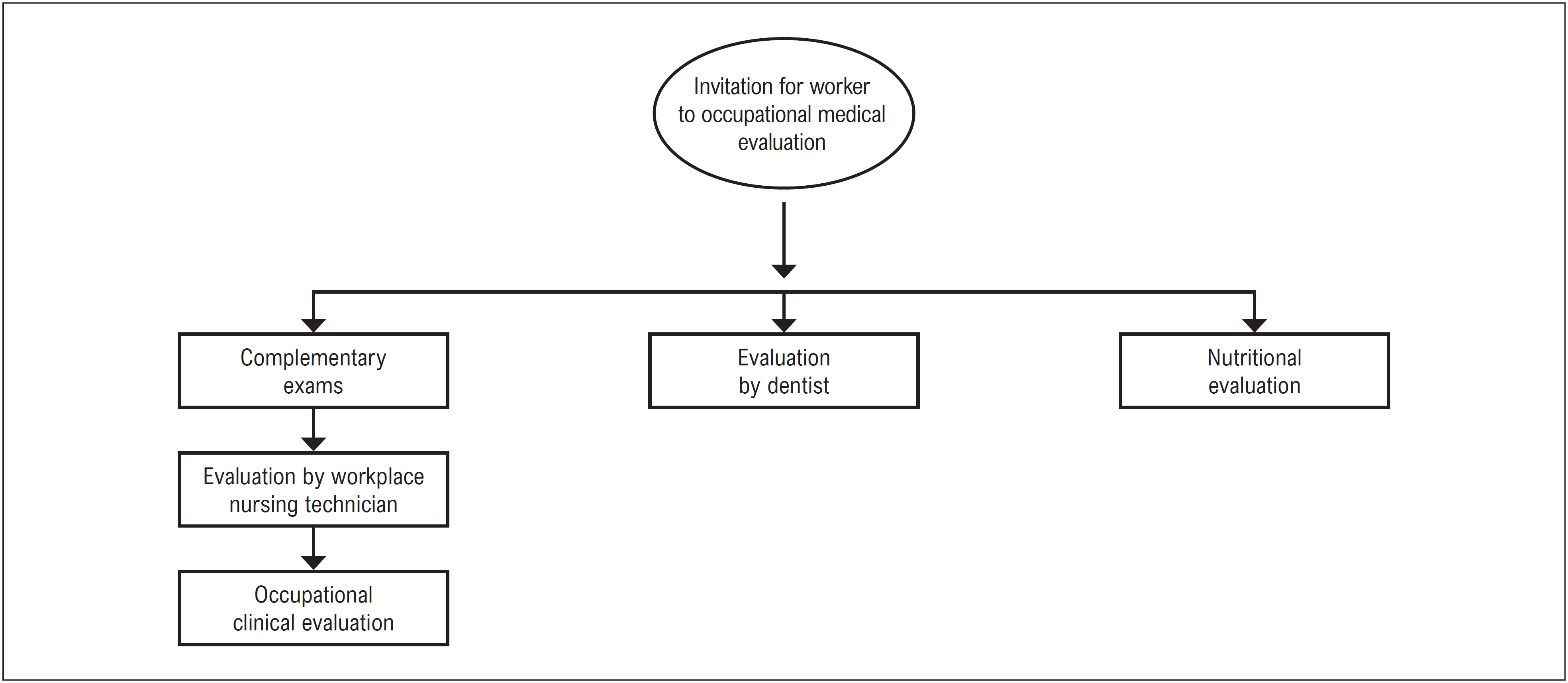
In this model, employees underwent additional tests and were subsequently evaluated by a physical education professional, doctor, nutritionist, nurse, dentist, and oral hygiene technician, who provided recommendations based on the identified problems, encouraging self-care. After the consultations, each case was discussed by the team and a follow-up plan was established in accordance with the CVR, which included follow-up and referral to specialists, if necessary. Employees consumed food provided by the company, controlled by a nutritionist, and had the possibility of exercising at the workplace and during work hours or at accredited gyms subsidized by the company, under the supervision of a physical education professional.
The actions instituted were aimed at controlling chronic diseases and reducing risk factors for CVD, with the strategy of encouraging the consumption of FVL and the adoption of physical activity (Figure 1).
Model B
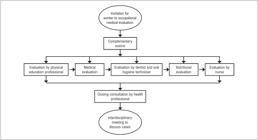
Model B was implemented at the company's administrative headquarters, the monitoring of employees began with additional tests and subsequent evaluation by a nursing technician, doctor, dentist, and nutritionist. Each professional provided guidance to the employee according to problems identified in their area of expertise, encouraging the adoption of healthy habits and referring them to specialists when necessary (Figure 2). The company subsidized physical activity at external gyms and registered employees were monitored by a physical education professional.

Data Analysis
Data were analyzed using SPSS, version 14.0, assuming a significance level of p<0.05.
The health profile was described using mean and standard deviation for continuous variables and frequency for categorical variables. The normality of the variables was verified by histogram, Q-Q diagram, symmetry, and kurtosis measures.
The difference in results between programs was verified by comparing the frequency of categorical variables in 2016 and 2018, using the Chi-square or Fisher's exact test and the unpaired Student's t-test for continuous variables. The intragroup comparison was performed using the McNemar and Wilcoxon tests for nominal and ordinal categorical variables, respectively, and the paired Student's t-test was used for continuous variables.
Ethical Aspects
This study was approved by the ethics committee of the Bahia School of Medicine and Public Health.
Results
In 2016, neither group presented differences in terms of age, marital status, and average time at the company; however, they did differ in terms of sex, education, income, and work regime (Table 1).
Regarding lifestyle habits, initially, the groups did not differ in smoking and consumption of sugary drinks; however, group B consumed more alcoholic beverages (p=0.03) and practiced less physical activity (p=0.01), but had a higher consumption of FVL (p<0.01).
The groups showed similar behavior for the variables of TC, and male and female HDL-C; however, they presented differences for the other variables related to the health profile of the workers. Despite this finding, the CVR, in 2016, showed no difference between the groups (p = 0.4). After two years, when comparing variables related to CVD risk factors between the groups, a difference was identified for male HDL-C, with a more pronounced reduction in group A (-5.8 ± 8.6 mg/dL; p < 0.01) than in group B (-0.3 ± 6.0 mg/dL; p < 0.01), and for triglycerides, which decreased in group A (- 9.6 ± 123.2 mg/dL; p = 0.01) and increased in group B (10.2 ± 66.4 mg/dL; p = 0.01). The behavior of CVR variation was similar between the groups (0.3 ± 2.4 vs 0.2 ± 2.1; p = 0.1). No difference was found for the other analyzed variables.
The groups were compared internally (Wilcoxon test) after two years of follow-up, and it was observed that, for behavioral variables, group A improved its PAL and consumption of FVL and alcohol, but it worsened its consumption of sugary drinks (p = 0.01), a fact also found in group B (p = 0.002).
As for risk factors for CVD, in the intragroup comparison, group A increased blood glucose, LDL-C, and female abdominal circumference; reduced male HDL-C and female HDL-C; and worsened its CVR. By contrast, group B showed an increase in blood glucose, BP, and CVR, with no changes in the other variables (Table 2).
The Central Illustration shows the CVR by category before and after intervention for the two groups. The CVR, compared by categories between groups at the two study moments, found a difference between the results obtained by the models (p < 0.01), with a higher risk of death in 10 years due to CVE for members of group A. The intragroup comparison by CVR categories also showed a difference, with group A increasing both the "intermediate" and "high" risk, while group B showed an increase only in "intermediate" risk (Graph 1).

The association of CVR categories and behavioral variables in 2018 was evaluated, and no difference was found for physically active individuals in the two groups. However, for alcohol abuse and adequate consumption of FV, a difference was found in group A, with "high" CVR being more frequent among those who drink more and for those who consume less FV. Regarding smoking, non-smokers had a higher frequency of "low" CVR than did smokers, both in group A and group B (Table 3).
Discussion
This study verified the results of two different programs implemented in an oil company to prevent and control CVD. Model A was more robust, considering the professionals involved and the proposed actions, and it was therefore expected to obtain better results, both in the reduction of the prevalence of risk factors and in the reduction of CVD. Thus, after two years of intervention, it was observed that model A obtained better results for some behavioral variables, such as increasing the PAL and the consumption of FVL, and decreasing alcohol consumption, while model B did not change the profile identified in 2016. The justification for these results should not be related only to the guidelines provided regarding lifestyle habits, but above all to the environmental interventions carried out in the operational area, such as the provision of healthy food by the company and spaces built for the practice of physical activity during the workday. The verification of the association between the classification of CVR and behavioral variables found positive results for group A for "alcohol abuse" and "adequate consumption of FVL", reinforcing the thesis that actions aimed at adopting healthy habits contribute to reducing the risk of death from CVD.16-19 However, for physical activity, this association was not found, since there was no difference in CVR between physically active and inactive individuals, contradicting the results of studies that demonstrated the beneficial relationship between physical activity and the reduction of risk factors for CVD.20,21
Moreover, regarding behavioral habits, it was observed that non-smokers presented a "low" risk for CVE in both groups, confirming data from the literature on the subject, which indicate that this risk factor is an important cause of disability and death, not only for CVD, but also for other NCDs.2,16,22
Despite the actions implemented by both programs and the results obtained by model A, no reduction in CVR was observed for workers in either group. Important risk factors, such as BP, overweight, hyperglycemia, and hypercholesterolemia, were not well controlled, which may explain the increase in CVR, especially for group A.
Other studies have discussed the effectiveness of CVD prevention and control programs in the workplace and have indicated, in most cases, the occurrence of behavioral changes, but with little impact on the reduction of CVR,9-11,23,24 which is in line with what was observed here. The authors presented the following justifications: cultural issues related to workers,9 the short duration of the intervention, and the strategy adopted.23,24 However, both these authors and others recognize that the corporate space is important for reducing CVD risk factors and indicates positive results,25 such as those obtained by Unilever's Lamplighter program and the IC Health program in India.26
The two programs evaluated in the present study differed in terms of methodology, with model B monitoring only those enrolled in the physical activity program during the period, while model A expanded its strategy, with environmental interventions and systematic monitoring of individuals with metabolic syndrome. The difference in methodology may be associated with the sociodemographic and occupational characteristics observed between the groups; however, the strategy used was not sufficient to achieve a reduction in CVR and adequate control of chronic diseases, regardless of the allocation group.
To justify this result, some hypotheses were raised, which should be verified in future studies, such as failure to monitor healthy individuals, immediate management support, worker adherence to the program, and the type of individual and group approach used. Thus, low investment in healthy individuals may have increased the risk of them acquiring risk factors for CVD, just as the failure of managers to release workers may have reduced participation in activities implemented by model A, since the focus on operational results may be above the health of workers. The establishment of clear goals and objectives, as well as the establishment of incentives for results achieved and effective communication with participants throughout the process, are factors indicated for the success of programs developed in companies.26
Another point to be investigated would be the influence of the work regime on the CVR, since a significant percentage of workers in group A work in shifts, with more time away from the corporate space due to compensatory time off, and may adopt behaviors different from those recommended regarding food consumption and physical activity. It is a fact that the aging process increases the prevalence of CVD, and that reducing the risk of death caused by CVD is associated with reducing and controlling the risk factors for these diseases.27 Coping strategies point to investing in healthy habits and early diagnosis and treatment.1,2,16-22 It is also well-known that controlling these behavioral factors requires raising awareness and convincing the individual to change habits and adhere to treatments when necessary. It is essential to maintain a strict monitoring of individuals with chronic diseases, such as hypertension and diabetes, as well as to adopt strategies that ensure the individual's interest in remaining in the program and adhering to the recommendations.28 In this sense, some studies that evaluated intervention programs that used strict participant monitoring procedures showed better results when compared to routine interventions.15,29
This study did not aim to identify the strengths and weaknesses of the programs, and therefore does not have definitive answers for the failure to reduce CVD. However, it is important to emphasize that the strategies implemented should be reviewed. The creation of spaces for physical activity during working hours and the provision of adequate food within the school walls, in isolation, showed favorable results and should be expanded to all workers. Health promotion and NCD prevention measures should involve families and even the community where workers are inserted as a measure to increase adherence to program recommendations and ensure the reduction of risk factors and control of CVD.
Conclusion
The actions developed by the company had a positive impact on the lifestyle of workers monitored by program model A, but they were not sufficient to reduce CVR in any of the monitored groups.
-
Sources of Funding
There were no external funding sources for this study.
-
Study Association
This article is part of the thesis of Doctoral submitted by Maria Lúcia Ribeiro Rocha, from Escola Bahiana de Medicina e Saúde Pública.
-
Ethics Approval and Consent to Participate
This study was approved by the Ethics Committee of the Escola Bahiana de Medicina e Saúde Pública under the protocol number 4107619.3.0000.5544. All the procedures in this study were in accordance with the 1975 Helsinki Declaration, updated in 2013. Informed consent was obtained from all participants included in the study.
-
Use of Artificial Intelligence
The authors did not use any artificial intelligence tools in the development of this work.
Availability of Research Data
The data cannot be made publicly available due to: data related to workers of a company, which has been permitted to be used by the author and advisor. In the submission to the Ethics Committee it was established that only researchers would have access to the bank, as agreed with the company.
References
-
1 Roth GA, Mensah GA, Johnson CO, Addolorato G, Ammirati E, Baddour LM, et al. Global Burden of Cardiovascular Diseases and Risk Factors, 1990-2019: Update from the GBD 2019 Study. J Am Coll Cardiol. 2020;76(25):2982-3021. doi: 10.1016/j.jacc.2020.11.010.
» https://doi.org/10.1016/j.jacc.2020.11.010 - 2 Brasil. Ministério da Saúde. Secretaria de Vigilância em Saúde. Departamento de Análise em Saúde e Vigilância de Doenças Não Transmissíveis. Plano de Ações Estratégicas para o Enfrentamento das Doenças Crônicas e Agravos não Transmissíveis no Brasil 2021-2030. Brasília : Ministério da Saúde; 2021.
-
3 Malta DC, Andrade SSCA, Oliveira TP, Moura L, Prado RRD, Souza MFM. Probability of Premature Death for Chronic Non-Communicable Diseases, Brazil and Regions, Projections to 2025. Rev Bras Epidemiol. 2019;22:e190030. doi: 10.1590/1980-549720190030.
» https://doi.org/10.1590/1980-549720190030 -
4 World Health Organization. Global Health Estimates for 2020: Deaths by Cause, Age, Sex, by Country and by Region, 2000-2019 [Internet]. Geneva: World Health Organization; 2020 [cited 2025 May 29]. Available from: https://www.who.int/data/gho/data/themes/mortality-and-global-health-estimates/ghe-leading-causes-of-death
» https://www.who.int/data/gho/data/themes/mortality-and-global-health-estimates/ghe-leading-causes-of-death -
5 Ribeiro AG, Cotta RM, Ribeiro SM. The Promotion of Health and Integrated Prevention of Risk Factors for Cardiovascular Diseases. Cien Saude Colet. 2012;17(1):7-17. doi: 10.1590/s1413-81232012000100002.
» https://doi.org/10.1590/s1413-81232012000100002 - 6 Matos MFD, Fiszman R. Preventive Strategies for Cardiovascular Diseases and the Promotion of Health. Rev SOCERJ. 2003;16(2):133-40.
-
7 Mansur AP, Favarato D. Mortality due to Cardiovascular Diseases in Brazil and in the Metropolitan Region of São Paulo: A 2011 Update. Arq Bras Cardiol. 2012;99(2):755–61. doi: 10.1590/S0066-782X2012005000061.
» https://doi.org/10.1590/S0066-782X2012005000061 - 8 Hyeda A, Costa ESM, Sbardellotto F, Ferreira JCC. The Information Architecture to Manage the Risks of Chronic Diseases in Workers: A Preliminary Analysis. Rev Bras Med Trab. 2016;14(1):29-36.
-
9 Viterbo LMF, Dinis MAP, Vidal DG, Costa AS. Implementation of an Interdisciplinary Approach to Promote Workers Global Health Status in the Oil Industry, Brazil (2006-2015). Int J Environ Res Public Health. 2019;16(12):2148. doi: 10.3390/ijerph16122148.
» https://doi.org/10.3390/ijerph16122148 -
10 Ciorlia LA, Godoy MF. Cardiovascular Risk Factors and Mortality. Long-Term Follow-Up (up to 20 years) in a Preventive Program Carried out by Occupational Medicine. Arq Bras Cardiol. 2005;85(1):20-5. doi: 10.1590/s0066-782x2005001400005.
» https://doi.org/10.1590/s0066-782x2005001400005 - 11 Rocha RS, Conti RAS. Cardiovascular Risk: An Approach from an Enterprise Perspective. Rev Bras Med Trab. 2005;3(1):10-21.
-
12 Cipriano G Jr, Neves LM, Cipriano GF, Chiappa GR, Borghi-Silva A. Cardiovascular Disease Prevention and Implications for Worksite Health Promotion Programs in Brazil. Prog Cardiovasc Dis. 2014;56(5):493-500. doi: 10.1016/j.pcad.2013.10.018.
» https://doi.org/10.1016/j.pcad.2013.10.018 -
13 O’Donnell MP. What is the ROI for Workplace Health Promotion? It Really does Depend, and that's the Point. Am J Health Promot. 2015;29(3):v-viii. doi: 10.4278/ajhp.29.3.v.
» https://doi.org/10.4278/ajhp.29.3.v -
14 Bazzani LC, Sánchez AI. Workplace Health Promotion: A Path to Follow. Cien Saude Colet. 2016;21(6):1909-20. doi: 10.1590/1413-81232015216.02522016.
» https://doi.org/10.1590/1413-81232015216.02522016 -
15 Rongen A, Robroek SJW, van Lenthe FJ, Burdorf A. Workplace Health Promotion: A Meta-Analysis of Effectiveness. Am J Prev Med. 2013;44(4):406-15. doi: 10.1016/j.amepre.2012.12.007.
» https://doi.org/10.1016/j.amepre.2012.12.007 - 16 Brasil. Ministério da Saúde. Secretaria de Atenção à Saúde. Departamento de Atenção Básica. Caderno de Atenção Primária – Rastreamento. Brasília: Ministério da Saúde; 2010.
-
17 O’Keefe EL, DiNicolantonio JJ, O’Keefe JH, Lavie CJ. Alcohol and CV Health: Jekyll and Hyde J-Curves. Prog Cardiovasc Dis. 2018;61(1):68-75. doi: 10.1016/j.pcad.2018.02.001.
» https://doi.org/10.1016/j.pcad.2018.02.001 -
18 Miller V, Mente A, Dehghan M, Rangarajan S, Zhang X, Swaminathan S, et al. Fruit, Vegetable, and Legume Intake, and Cardiovascular Disease and Deaths in 18 Countries (PURE): A Prospective Cohort Study. Lancet. 2017;390(10107):2037-49. doi: 10.1016/S0140-6736(17)32253-5.
» https://doi.org/10.1016/S0140-6736(17)32253-5 -
19 Lăcătușu CM, Grigorescu ED, Floria M, Onofriescu A, Mihai BM. The Mediterranean Diet: From an Environment-Driven Food Culture to an Emerging Medical Prescription. Int J Environ Res Public Health. 2019;16(6):942. doi: 10.3390/ijerph16060942.
» https://doi.org/10.3390/ijerph16060942 -
20 Matson-Koffman DM, Brownstein JN, Neiner JA, Greaney ML. A Site-Specific Literature Review of Policy and Environmental Interventions that Promote Physical Activity and Nutrition for Cardiovascular Health: What Works? Am J Health Promot. 2005;19(3):167-93. doi: 10.4278/0890-1171-19.3.167.
» https://doi.org/10.4278/0890-1171-19.3.167 -
21 Kraus WE, Powell KE, Haskell WL, Janz KF, Campbell WW, Jakicic JM, et al. Physical Activity, All-Cause and Cardiovascular Mortality, and Cardiovascular Disease. Med Sci Sports Exerc. 2019;51(6):1270-81. doi: 10.1249/MSS.0000000000001939.
» https://doi.org/10.1249/MSS.0000000000001939 -
22 Silva ST, Martins MC, Faria FR, Cotta RM. Combating Smoking in Brazil: The Strategic Importance of Government Actions. Cien Saude Colet. 2014;19(2):539-52. doi: 10.1590/1413-81232014192.19802012.
» https://doi.org/10.1590/1413-81232014192.19802012 - 23 Cremaschini M, Moretti R, Brembilla G, Valoti M, Sarnataro F, Spada P, et al. Assessment of the Impact Over One Year of a Workplace Health Promotion Programme in the Province of Bergamo. Med Lav. 2015;106(3):159-71.
-
24 Lazzeri G, Ferretti F, Pozza A, Dori F, Volpe E, Giovannini V, et al. The Workplace Health Promotion (WHP) Programme in an Italian University Hospital. J Prev Med Hyg. 2019;60(3):243-9. doi: 10.15167/2421-4248/jpmh2019.60.3.1278.
» https://doi.org/10.15167/2421-4248/jpmh2019.60.3.1278 -
25 Marcon SS, Ganassin GS, Arruda GO, Téston EF, Barreto MS, Marquete VF, et al. Intervenção Educativa no Local de Trabalho: Promoção da Saúde e Prevenção Cardiovascular com Homens Metalúrgicos. Rev Baiana Enferm. 2021;35(1):1-13. doi: 10.18471/rbe.v35.38619.
» https://doi.org/10.18471/rbe.v35.38619 - 26 Meyer J, Cuenca MH. Estrategias Globales de Salud en el lugar de Trabajo: Ubicar Programas Adecuados, Factor Clave para el Éxito. An Venez Nutr. 2013;26(1):23-5.
-
27 Malta DC, Bernal RTI, Lima MG, Silva AGD, Szwarcwald CL, Barros MBA. Socioeconomic Inequalities Related to Noncommunicable Diseases and their Limitations: National Health Survey, 2019. Rev Bras Epidemiol. 2021;24(suppl 2):e210011. doi: 10.1590/1980-549720210011.supl.2.
» https://doi.org/10.1590/1980-549720210011.supl.2 -
28 Lessa I. Chronic Non-Communicable Diseases in Brazil: A Challenge for the Complex Task of Surveillance. Ciênc Saúde Coletiva. 2004;9(4):931-43. doi: 10.1590/S1413-81232004000400014.
» https://doi.org/10.1590/S1413-81232004000400014 -
29 Prior JO, van Melle G, Crisinel A, Burnand B, Cornuz J, Darioli R. Evaluation of a Multicomponent Worksite Health Promotion Program for Cardiovascular Risk Factors-Correcting for the Regression Towards the Mean Effect. Prev Med. 2005;40(3):259-67. doi: 10.1016/j.ypmed.2004.05.032.
» https://doi.org/10.1016/j.ypmed.2004.05.032
Edited by
-
Editor responsible for the review:
Glaucia Maria Moraes de Oliveira