
 Perception of the formulators of the district food and nutrition policy: challenges and strategies for implementation
Abstract
The District Food and Nutrition Policy was approved in 2021 with the aim of improving the food, nutrition and health of the population of the Federal District (Brazil’s capital). This study evaluates the perception of the health professionals of the Working Group (WG) involved in the formulation of the policy on the actions necessary for its implementation. This is an exploratory, qualitative study which analyzed the responses of 11 nutritionists from the WG to a questionnaire. The textual corpus was submitted to content analysis using the IRAMUTEQ software. Results highlighted the need for management support, financial and human resources, as well as intersectoral action. Social control was pointed out as a limiting factor in the efficient implementation of the policy. Thus, the WG's vision made it possible to identify priorities that will serve as a basis for supporting the implementation of concrete improvements in food and nutrition policy.
Keywords
Programs and food and nutrition policies; Food and nutrition security; Qualitative research
Resumo
Em 2021, a Política Distrital de Alimentação e Nutrição foi homologada com o objetivo de melhorar a alimentação, a nutrição e a saúde da população do Distrito Federal. Este estudo avalia a percepção dos profissionais de saúde do Grupo de Trabalho (GT) envolvidos na formulação da normativa sobre as ações necessárias para sua implementação. Trata-se de pesquisa exploratória e qualitativa, que analisou respostas de 11 nutricionistas do GT a um questionário. O corpus textual foi submetido a análise de conteúdo com apoio do software IRAMUTEQ. Os resultados destacaram a necessidade de apoio da gestão, de recursos financeiros e humanos, além da atuação intersetorial. O controle social foi apontado como limitante para a instituição eficiente da política. Assim, a visão do GT permitiu identificar as prioridades que servirão de base para apoiar a implementação de melhorias concretas na política de alimentação e nutrição.
Palavras-chave
Programas e políticas de alimentação e nutrição; Segurança alimentar e nutricional; Pesquisa qualitativa
Resumen
En 2021, se homologó la Política Distrital de Alimentación y Nutrición con el objetivo de mejorar la alimentación, la nutrición y la salud de la población del Distrito Federal. Este estudio evalúa la percepción de los profesionales de salud del Grupo de Trabajo (GT) involucrados en la formulación de la normativa sobre las acciones necesarias para su implementación. Se trata de una investigación exploratoria y cualitativa que analizó las respuestas de 11 nutricionistas del GT a un cuestionario. El corpus textual se sometió al análisis de contenido, con apoyo del software IRAMUTEQ. Los resultados subrayaron la necesidad de apoyo de la gestión, de recursos financieros y humanos, además de la actuación intersectorial. El control social se señaló como limitador para la implementación eficiente de la política. Siendo así, la visión del GT permitió identificar las prioridades que servirán de base para dar apoyo a la implementación de mejoras concretas en la política de alimentación y nutrición.
Palabras clave
Programas y políticas de alimentación y nutrición; Seguridad Alimentaria y Nutricional; Investigación cualitativa
Introduction
It is widely recognized that adequate and healthy food is one of the determining factors for health. Its importance is highlighted in the Organic Health Law No. 8.080, integrated with other conditions such as: housing, basic sanitation, the environment, among other aspects, which are considered limiting factors in defining the population’s health levels. These factors jointly express the country’s social and economic organization1.
By focusing on the food factor, the concept in question highlights the state’s responsibility to guarantee all citizens adequate and healthy food on a daily basis, as provided for in the Universal Declaration of Human Rights of 1948. According to the document, food is a fundamental human right and is a determining factor in promoting health and well-being2. Brazil’s Organic Law on Food and Nutritional Security (LOSAN) sets out the government’s commitments to ensuring the population’s right to healthy and adequate food, in a way that does not interfere with other rights3.
However, data on Food Insecurity (FI) in Brazil reveals how far the country has fallen in recent times. A study released in 2023 showed that, between 2020 and 2022, 70.3 million Brazilians were suffering from severe or moderate food insecurity4. In addition, a total of 58.7% of the population was food insecure. In the Midwest region, FI affects 59.5% of the population, and in the Federal District, the situation exceeds the region’s percentage, with 61.5% of the population affected. There are 29.3% of the population suffering from mild FI, 19.1% from moderate FI and 13.1% from severe FI5.
In order to transform this scenario, public policy is a government action that can have favorable results. In general, it is a strategy to ensure that citizens comply with the social rights6. Over the years, Brazil has published public policies focusing on food and nutrition (F&N), especially the National Food and Nutrition Policy (PNAN)7.
The first version of the PNAN was published in 1999 and revised in 2011. Despite being a milestone in public policy and having had a positive impact on the entire health sector, it is recognized that there is a need for recommendations that are more geared towards the specificities of each territory7. Moura et al.8 emphasize this need by mentioning that the Brazilian territory is rich in diversity, making it essential to create state public policies to complement the national ones8.
Based on this assumption, the Federal District (DF) built the District Food and Nutrition Policy (PDAN), approved by Ordinance No. 1,192 of November 24, 20219. It was the second unit of the federation to present this thematic legislation, after Rio Grande do Sul10. The PDAN was constructed according to the specific characteristics of the Federal District and aims to improve the food, nutrition and health situation of the local population. To build it, a diagnosis of the territory was carried out and, based on the results, an inclusive set of regulations was created, geared to the epidemiological situation observed8,9.
After being published, there are stages of public policy management to be followed. Thus, after formulation, implementation and evaluation follow11. In the cycle of a public policy, the implementation phase emerges as a crucial point. It is during this stage that the concepts and plans drawn up come to fruition, in other words, they become actions and results. However, the great complexity of this stage, due to the multifaceted profile of the policies, requires a great deal of coordination on the part of the managers in order to achieve it12. Each policy objective is influenced and influences various jurisdictions, which implies the formation of a network of actors capable of acting to make change happen. Inter-organizational arrangements are essential, but they must be formulated taking into account the different realities of the territories if they are to be successful13.
The whole process is important for the success of the policy. Reflections and debates on each stage can have a positive impact on the effectiveness of the PDAN, as well as contributing to the management of other public policies. Furthermore, recording and discussing the aspects that hinder and facilitate the process can benefit other Brazilian states in building their own food and nutrition policies. In this sense, the purpose of this research is to assess the perception of the health professionals who made up the Working Group (WG) involved in formulating the regulations, on the actions necessary for their effective implementation.
Methodology
This study was developed based on the methodological assumptions of exploratory and qualitative research, based upon Bardin’s14 content analysis technique.
The project was cleared by the Research Ethics Committees of the Faculty of Health Sciences of the University of Brasília - CAAE: 51465521.4.0000.0030 and the Foundation for Teaching and Research in Health Science of the Federal District - CAAE: 51465521.4.3001.5553.
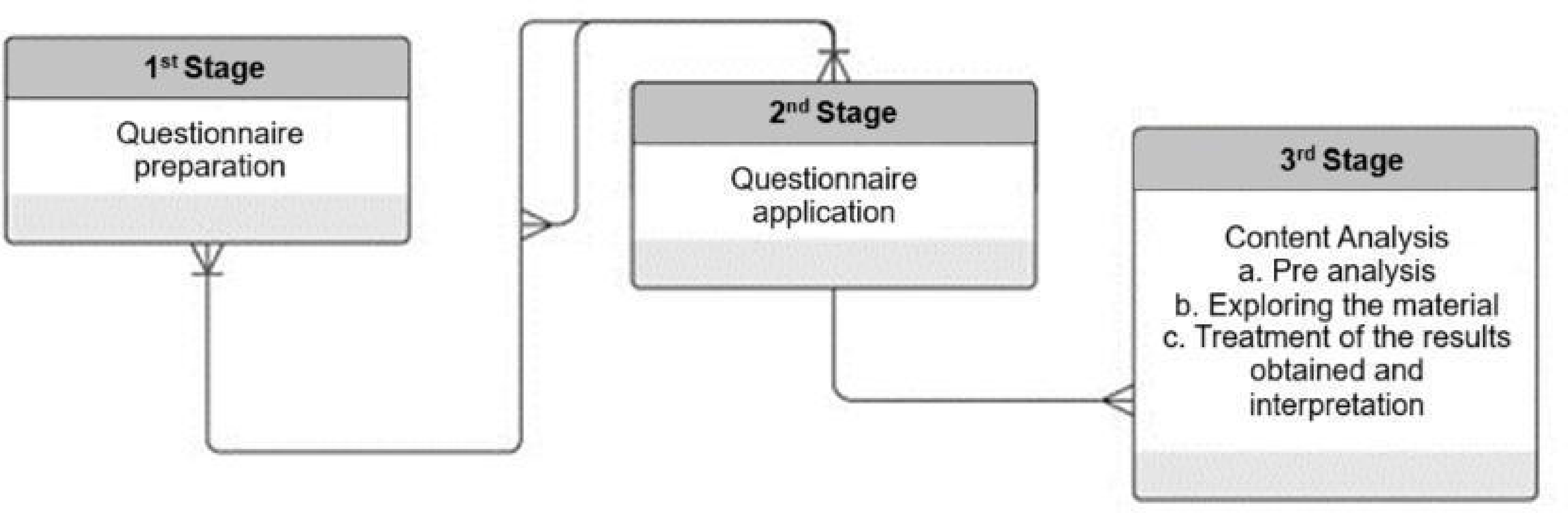
The study was divided into three stages, shown in Figure 1 and detailed below.

Flowchart showing the stages of the survey to assess the perception of the WG involved in formulating the PDAN.
Stage 1. Preparation of the questionnaire
The preparation of the questionnaire was based on the Technical Note of the Institute of Applied Economic Research (IPEA). This note provides a roadmap for the construction of the logic model, an instrument used to organize the formulation and evaluation of programs. The roadmap outlines a sequence of steps to be followed, including a questionnaire model adapted for this research15. Seven questions were used to understand the WG’s opinion on different aspects of policy implementation (Frame 1).
Questionnaire used to assess the perception of the WG involved in formulating the PDAN on its implementation.
Stage 2. Application of the questionnaire
The WG determined for the elaboration of the PDAN encompassed 13 members that were nutritionists working within the management of the SUS. However, the questionnaire was administered to only 12 members, as one of them is the researcher responsible for this project. The questionnaire was made available via Google Forms® from May 31 to June 14, 2022. The estimated average time taken to complete the questionnaire was 50 minutes.
Stage 3. Content analysis
In this stage, content analysis was carried out according to Bardin’s method14. This process is divided into three parts: pre-analysis, exploration of the material and treatment of the results obtained and interpretation.
-
Pre-analysis: This phase involved processing the text and defining the textual corpus. After restitution, the textual corpus was formatted. In the process, the answers were placed in a single file without identification. The text corpus was then processed and corrections made and the words organized according to the requirements of the IRAMUTEQ software (Interface de R pour les Analyses Multidimensionnelles de Textes et de Questionnaires), used in the next stage.
-
Exploring the material: After formatting the textual corpus, a thorough reading of the material was carried out. The processed file was then submitted to the IRAMUTEQ software. IRAMUTEQ is a free software that offers a wide range of statistical analyses16. In the context of this work, three analyses were selected which represent the categorization of the participants’ statements.
-
Descending Hierarchical Classification (DHC): a method used in qualitative text analysis, it allows text segments (TS) to be classified according to lexical similarities and differences16.
-
Similarity Analysis (SA): examines the occurrence of words and establishes connections between them, creating a network of interrelationships that reflects the context in which the words are inserted in the analyzed text16.
-
Word Cloud (WC): based on word frequency, where the size and position of each word in the illustration corresponds to its frequency of occurrence in the analysis. In this way, the keywords are visually highlighted in the figure16.
-
-
Treatment of the results obtained and interpretation: This stage involved defining the themes present in each class, reflecting on the words present and their frequency and association with the TS in which they were found. The same exercise was carried out for SA and WC. In this way, the aim was to understand and value the participants’ speeches in terms of their meanings in their context.
Results
Of the 12 participants invited to answer the questionnaire, 11 responded, representing a response rate of 91.6%. One participant did not respond.
Descending Hierarchical Classification (DHC)
After the content was processed by the software, the DHC was created, from which a dendrogram was generated containing various classes. Analysis of the TS by the software resulted in 4053 occurrences of words and 113 TS (distributed between the classes). This process achieved a 78% utilization rate, with two subdivisions and seven classes, revealing a direct correlation with each of the questions asked, while at the same time connecting similar classes.
Figure 2 not only shows the classes, but also the interconnections between them, highlighting their mutual associations. The dendrogram was segmented into two subgroups: the first comprising classes 1, 6 and 5, and the second, classes 7, 4, 3 and 2. This division does not follow a strict numerical order; the classes are grouped based on the relevance of their content and the association between them.

Dendrogram referring to the answers to the questionnaire applied to assess the perception of the WG involved in the formulation of the PDAN, Brasília/DF, Brazil, 2022
The subgroups are also divided on the basis of similarity. The first subgroup, made up of three classes, indicates that they have similar content, while the second subgroup, with four classes, follows the same principle. Each class was thoroughly analyzed and named, and the nomenclature associated with the questionnaire is shown in Frame 1. The most prominent TS in each class are shown in Frame 2.
Text segments with the greatest prominence present in the answers to the questionnaire applied to assess the perception of the WG involved in formulating the PDAN, Brasília, DF, Brazil, 2022.
Similarity Analysis
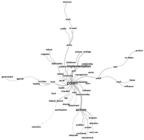
Analysis of the similarity of the answers to the questionnaire applied to assess the perception of the WG involved in formulating the PDAN. Brasília/DF, 2022.
With the SA, it was possible to identify the correlations between the terms present in the survey and the strength of each one in the records analyzed. The term PDAN, at the center, branches out to the other terms, representing the main points for the effective implementation of the central policy of the study. Other prominent terms in the records obtained were: “action”, “food” and “implementation”.
Word cloud

Word cloud of the answers to the questionnaire applied to assess the perception of the WG involved in formulating the PDAN. Brasília/DF, 2022.
The Word Cloud illustrates the textual significance of the questionnaire, showing the main words present in the speeches with their respective repetitions. Words with a higher degree of importance that are mentioned several times in the speeches are shown in a larger size. Only words with a frequency of 9 or more were considered in the analysis.
Discussion
In the analysis of the DHC, the WG members’ perception of the implementation of the PDAN highlights the need for planning and training (C1) for its operation. According to the records analyzed, it was noted that the expected results (C6) are connected to the structure of the policy (C1) and both classes are categorized in the same subgroup, which reveals a connection between them. The findings indicate that its implementation depends on management (C1) supported by access and participation (C6) by the population in the proposed actions. However, in order to guarantee the success of the PDAN, there must be awareness-raising to involve and mobilize (C5) everyone, guaranteeing institutional support and constituting an intersectoral process (C5).
Investment in actions to reduce food insecurity (C7) and the problems surrounding A&N seem to be one of the aspects raised by the group with the prospect of having a major impact on the issue. However, the idea of the need to formulate indicators (C3) for monitoring is an action that should not be ignored and which will reveal the achievement and incorporation of intended and agreed targets, based on listening to the population’s demands (C4). The WG participants believe that as an essential strategy for successful implementation there should be a plan for publicizing the PDAN and the planned activities (C3). They also point out in their records that intersectorality (C2) and identifying a support network is essential for the process of implementing the policy, which corroborates the publication by Barbosa13. The author states that the successful implementation of public policies can be limited by the involvement of actors from different governmental and organizational backgrounds. This allows expertise and new institutional formats to be added, deriving inter-organizational arrangements to achieve specific government actions and influencing policy implementation13.
Studying classes
When studying the classes, it becomes clear that the first addresses the structure necessary for the successful implementation of policies. In this sense, the importance of the recognition and legitimization of policies by both the population and the government is highlighted. The importance of financial support, the participation of management and other professionals and the creation of a committee to monitor and evaluate the policy were also pointed out.
The thinking revealed in this category is in line with the study published by Mubarok et al.17, which emphasizes the importance of implementing a public policy and formulating it in order to achieve the proposed objectives. For the authors, even well-organized policies require proper implementation if their objectives are to be achieved17.
In the words of one of the participants, it is clear that the qualification and involvement of professionals are fundamental to this stage. Training public administrators on the policy to be implemented makes them multipliers of the idea formulated. As agents of the policy, they are able to defend the guidelines through evidence, in different political environments inside and outside the public administration. In addition to promoting their internalization, training promotes the acquisition of skills needed to deal effectively with uncertainties, interpretations and deficits in communication and coordination in implementation18.
According to Dias and Matos19, the shortage of specialized professionals is one of the main obstacles to the effective implementation of public policies. To overcome this challenge, it is crucial to establish effective communication between decision-makers and those in charge of implementing actions. Management must be in tune with all the professionals involved, as the lack of engagement of the majority can jeopardize the implementation of the policy19.
In the analysis, financial support was discussed by two participants as one of the main points for successful implementation. In 2021, the Federal Court of Auditors (TCU) released a document entitled “Public policy in ten steps”. This document shows the importance of carrying out a budget survey of the resources needed to implement the policy and finding possible sources of funding. In addition, it is necessary to program the resources to be used20.
The WG also stressed the importance of establishing an advisory committee to oversee and evaluate the policy. This feature was highlighted in the PDAN itself, with the composition and active participation of the Federal District’s Health Council and the management areas involved with the F&N issue, as well as representation from the seven health regions that make up the Federal District’s health sector9. In 2023, this commission was established.
Class 2 deals with the process of intersectorality in the implementation of the PDAN. Nascimento21 considers intersectorality to be a positive factor in the implementation of a public policy. For him, the process is a revolutionary factor in public management, as the implementation of policies is still fragmented21. In their analysis, the participants highlighted the importance of intersectoral work through the dissemination of the policy, exemplifying the tools that can help in the process: intersectoral meetings and forums.
The PNAN includes intersectorality as a key point in the implementation of public policies. In its 2011 revision, the policy mentions how beneficial the intersectoral process can be for A&N policies. Fagundes et al.22 reinforce the recommendation of the National Health Council, which recommends the creation of an Intersectoral Food and Nutrition Commission (CIAN) by municipal and state health councils22.
It has been mentioned that promoting intersectorality is one of the measures that can help combat food and nutrition insecurity (INSAN). One of the objectives of the District Food and Nutrition Security Plan (PDSAN) is to help reduce this worrying situation. The PDAN emphasizes the importance of strengthening the intersectoral agenda and carrying out actions in conjunction with the PDSAN, with the aim of ensuring access to sustainable food9.
One participant emphasized the importance of considering the PDAN guidelines during the process of drawing up, implementing and monitoring intersectoral plans, encompassing both the District Health Promotion Plan and the District Food and Nutrition Security Plan. The main objective of the plans in question is to create an environment conducive to improving health conditions and promoting food and nutrition security (FNS)23,24.
Intersectoral work between social assistance and food security deserves to be highlighted as it is an essential strategy for the success of the PDAN. In this sense, integration between the Unified Social Assistance System (SUAS) and the National Food and Nutrition Security System (SISAN) takes place through joint efforts and territorial strategies. It simultaneously tackles social vulnerability and food and nutrition insecurity, with the primary aim of guaranteeing the Human Right to Adequate Food25.
Class 3 encompasses the fundamental strategies for implementing the policy. According to Teixeira26, one feasible strategy for implementing a public health policy is to design its supposed implementation. This process includes the planning of actions, technological tools, intersectoral incorporation and the projection of prevention, promotion and health recovery actions26.
Bortolini et al.27 conducted a study with the participation of 49 experts, with the aim of obtaining recommendations to strengthen the PNAN. In the course of the research, 51 recommendations were made that converge with the idea raised by the WG that took part in this work. The survey mentioned the need for support from the federal government for the state level, covering aspects such as action planning, allocation of financial resources, promotion of inter-institutional coordination and engagement with social control27.
Still in Class 3, it can be seen that some participants mention the importance of publicizing the policy. The media stand out in this context, as they can be used as facilitators of the process, broadening the dissemination of the proposal. Knowing in depth the real objective and impact that the regulation can have is crucial to its successful implementation. In this way, those involved can see themselves as protagonists in the process28.
In the analysis, the need to include indicators with the themes present in the PDAN was detected, given that the regulation gains visibility within the scope of central management. According to the records obtained, agreeing on indicators is a necessity that can occur through the Regional Management Agreements (AGR) and Local Management Agreements (AGL) present in Decree No. 37.515/201629. From the same perspective, Teixeira26 argues that in the implementation phase of a policy it is necessary to define indicators for monitoring and evaluation, in order to compare the results and analyze the effect of the regulations in practice26.
Regarding Class 4, it was possible to demonstrate the main goals expected from the PDAN. One of the WG’s perspectives with the policy is to achieve better F&N conditions for the population of the Federal District. Consequently, there will be an impact on reducing cases of overweight, obesity and other conditions resulting from poor diet.
Another proposed goal is to identify the social demands related to A&N, with the aim of creating public policies to combat the problems identified. Knowing and studying the social problems affecting the population is the first step towards solving them30. Thus, the goal mentioned seeks to use the implementation of the policy as a subsidy to identify other social demands that may arise in relation to A&N.
Class 5 highlights the main factors that can influence the achievement of the PDAN’s results. In this category, mobilization and social control were identified as intervening factors in the process. Popular participation in health management was established by Law No. 8142 of December 28, 199031. Social control is one of the ways that organized civil society can verify, analyze and demand the implementation of regulations. It must therefore interact with the state and analyze priorities regarding the implementation of certain actions32,33.
Resolution No. 547, of September 14, 2021, establishes the approval of the PDAN by the Federal District Health Council (CSDF). This statement manifests the relationship of cooperation that exists between the policy and the Council, where all agendas involving the PDAN must be presented to the Council for possible discussion34.
Another factor highlighted by the participants as an obstacle to achieving the PDAN’s objectives is the lack of institutional support, both in terms of human and financial resources. A document published by the National School of Public Administration (Enap) addresses some issues that can hinder the implementation of a public policy, both in the top-down and bottom-up approach. These include the importance of the ability to incorporate human and financial resources12.
It is crucial, according to the material, that public policy is integrated into budget cycles, ensuring a consistent distribution of resources over time. It also emphasizes the importance of finding funding to boost the start of implementation and, subsequently, to ensure more stable sources for the continuity of the process12.
Dealing with Class 6, the WG points out the main products/results expected from the policy. One of them is that the population has access to programs and actions involving A&N agendas. In this sense, as one of the participants pointed out, the Food and Nutrition Education (FNE) actions that exist throughout Primary Health Care (PHC) stand out, since their main objective is to empower the population to obtain a critical sense of their eating practices35. These activities can be carried out in groups or individually. Professionals working at this level of care should map out the potential and challenges related to food in the area, in order to work with the population to create healthy areas that result in effective improvements in their diet36.
With the last class, it is possible to see the main actions that could contribute to reducing the problems that led to the drafting of the PDAN, such as the expansion of Food and Nutrition Surveillance (FNS). The PDAN includes FNS in one of its guidelines, which is extremely important for the policy, as it helps managers monitor the population’s nutritional status. Through the Food and Nutrition Surveillance System (SISVAN), managers and other professionals learn about the population’s nutritional status and food consumption. In this way, they can take action to combat the problems identified and strengthen the strategies planned37.
Strengthening the consumption of fruit, legumes and vegetables (FLV) was also cited as a major strategy to combat the nutritional problems identified in the population of the Federal District. The consumption of FLV is an important protective factor against chronic non-communicable diseases (NCDs). The promotion of FLV consumption can take place in the school environment, with the presence of parents and students, in the community, in the basic health unit, in the workplace and in many other strategic points and is linked to FNE actions38.
Similarity analysis and word cloud
The similarity analysis shows a focus on the descriptor PDAN, which is linked to the terms “implementation”, “action” and “food and nutrition”, and thus branches out to the other words. It can be seen that the same words were the most common, as illustrated by the word cloud (Figure 4).
In both the similarity analysis and the word cloud, the term action refers to putting the policy implementation design into practice. This word covers the entire process necessary for the policy to be effectively put into practice, including planning, structuring, setting targets and expected results. In the similarity analysis, the word action is associated with the descriptor ‘intersectoral’, showing the strong relationship between the intersectoral process and the implementation of the PDAN, a point well highlighted by the WG in the questionnaire.
Wanderley et al.39 emphasize the importance of intersectorality in meeting the demands of citizens. According to the authors, intersectorality offers opportunities for advances in the integration of actions, allowing for a comprehensive approach to the problem. This interconnection between sectors has the potential to significantly benefit the population targeted by public policies, promoting a substantial improvement in quality of life. It implies the sharing of responsibilities between the different sectors, promoting better coordination and facilitating a more assertive allocation of available resources39.
Another highlight is the word implementation, which is mainly associated with the words “process” and “strategy”. This connection reveals the WG members’ perception of the need for strategic planning to implement the PDAN, which is a process that will be gradually integrated.
The most recurrent terms in the study, directly linked to the word ‘PDAN’, reflect one of the main objectives of the policy: to improve the A&N conditions of the population of the Federal District and thus contribute to their health.
Final considerations
The realization of the PDAN represents a significant step forward for the population of the Federal District, both in its conception and in its implementation. The analysis of the opinion of the WG responsible for managing the PDAN allowed for a broader understanding of the implementation of public policies, enabling the development of the necessary path to guide its execution. The results of this study highlight the importance of integrating intersectoral work, showing that fragmentation substantially compromises the implementation of the policy. It is essential to promote integration between the health, social assistance, agriculture and other sectors, as F&N is a cross-cutting issue that is not restricted to a single area.
Social control also plays a crucial role, monitoring and supervising the entire policy process, both financially and in terms of the effectiveness of actions, actively contributing to its implementation. With regard to human and financial resources, it is essential that the professionals involved are not only engaged, but also qualified in order to guarantee efficient implementation and serve as multipliers of the actions.
Articulating these aspects, the findings allow other units of the federation interested in designing and implementing public policies of a similar nature to be anchored. It is therefore hoped that this article will provide the PDAN with support for its effective implementation and the achievement of real improvements in the field of F&N in the Federal District.
Limitations of the study
One of the initial limitations was the fact that we listened only to the WG involved in formulating the PDAN. Actors indirectly involved could have enriched the debate by adding different points of view. Another aspect refers to the scarcity of studies related to F&N public policies at the state level, which also hindered the broadening of discussions. Operationally, the busy schedules of the WG members and the use of an open-ended questionnaire with complex questions may have prevented more detailed answers, as a result of tiredness or lack of time.
-
Abreu LG, Bastos HAD, Ronca DB, Fagundes AA, Ginani VC. Perception of the formulators of the district food and nutrition policy: challenges and strategies for implementation. Interface (Botucatu). 2025; 29: e240586 https://doi.org/10.1590/interface.240586
References
- 1 Brasil. Lei nº 8.080, de 19 de Setembro de 1990. Dispõe sobre as condições para a promoção, proteção e recuperação da saúde, a organização e o funcionamento dos serviços correspondentes, e dá outras providências. Diário Oficial da União. 20 Set 1990.
-
2 UNICEF Brasil. Declaração Universal dos Direitos Humanos [Internet]. Brasília: UNICEF; 2023 [citado 15 Maio 2024]. Disponível em: https://www.unicef.org/brazil/declaracao-universal-dos-direitos-humanos
» https://www.unicef.org/brazil/declaracao-universal-dos-direitos-humanos - 3 Brasil. Lei nº 11.346, de 15 de Setembro de 2006. Cria o Sistema Nacional de Segurança Alimentar e Nutricional - SISAN - com vistas a assegurar o direito humano à alimentação adequada e dá outras providências. Diário Oficial da União. 18 Set 2006.
-
4 FAO, IFAD, UNICEF, WFP, WHO. The State of Food Security and Nutrition in the World 2023. Urbanization, agrifood systems transformation and healthy diets across the rural–urban continuum. Rome: FAO; 2023. doi: 10.4060/cc3017en.
» https://doi.org/10.4060/cc3017en -
5 Rede Brasileira de Pesquisa em Soberania e Segurança Alimentar e Nutricional. II VIGISAN: Inquérito Nacional sobre Insegurança Alimentar no Contexto da Pandemia da Covid-19 no Brasil [Internet]. Brasília: Rede PENSSAN; 2022 [citado 7 Jul 2023]. Disponível em: https://olheparaafome.com.br/wp-content/uploads/2022/09/OLHEEstados-Diagramac%CC%A7a%CC%83o-V4-R01-1-14-09-2022.pdf
» https://olheparaafome.com.br/wp-content/uploads/2022/09/OLHEEstados-Diagramac%CC%A7a%CC%83o-V4-R01-1-14-09-2022.pdf - 6 Gianezini K, Barretto LM, Gianezini M, Laurex SL, Barbosa GD, Vieira RS. Políticas Públicas: definições, processos e constructos no século XXI. Rev Polit Publicas. 2017; (2):1065-84.
- 7 Brasil. Ministério da Saúde. Política Nacional de Alimentação e Nutrição. Brasília: Ministério da Saúde; 2013.
-
8 Moura RAD, Bastos HAD, Brandt KCO, Ronca DB, Ginani VC. A consulta pública na construção da Política Distrital de Alimentação e Nutrição. Saude Debate. 2022; 46(134):803-18. doi: 10.1590/0103-1104202213415.
» https://doi.org/10.1590/0103-1104202213415 - 9 Brasil. Ministério da Saúde. Política Distrital de Alimentação e Nutrição. Brasília: Ministério da Saúde; 2021.
- 10 Porto Alegre. Secretaria de Estado da Saúde. Política Estadual de Alimentação e Nutrição. Porto Alegre: SES; 2010.
- 11 Lima LL, D’Ascenzi L. Políticas públicas, gestão urbana e desenvolvimento local. Porto Alegre: Metamorfose; 2018.
- 12 Wu X, Ramesh M, Howlett M, Fritzen S. Guia de políticas públicas: gerenciando processos. Brasília: ENAP; 2014.
- 13 Barbosa SCT. Capacidade de gestão: coordenação interorganizacional na implementação de programas públicos federais no Brasil. Bol Anal Polit Institucional. 2016; (9):48-54.
- 14 Bardin L. Análise de Conteúdo. São Paulo: Edições 70; 2016.
- 15 Cassiolato M, Gueresi S. Como elaborar modelo lógico: roteiro para formular programas e organizar avaliação. Brasília: Instituto de Pesquisa Econômica Aplicada; 2010.
- 16 Camargo BV, Justo AM. IRAMUTEQ: um software gratuito para análise de dados textuais. Temas Psicol. 2013; 21(2):513-18.
- 17 Mubarok S, Zauhar S, Setyowati E, Suryadi S. Policy implementation analysis: exploration of George Edward III, Marilee S Grindle, and Mazmanian and Sabatier Theories in the policy analysis triangle framework. J Public Admin Stud. 2020; 5(1):33-8.
- 18 Onyango G. Policy-visibility and implementation in public administration. In: Farazmand A, editor. Global encyclopedia of public administration, public policy, and governance. Cham: Springer International Publishing; 2019. p. 1-8.
- 19 Dias R, Matos F. Políticas públicas: princípios, propósitos e processos. São Paulo: Atlas; 2012.
- 20 Tribunal de Contas da União. Política pública em dez passos. Brasília: Secretaria-Geral de Controle Externo, Secretaria de Orientação, Métodos, Informações e Inteligência para o CE e o Combate à Corrupção; 2021.
- 21 Nascimento S. Reflexões sobre a intersetorialidade entre as políticas públicas. Serv Soc Soc. 2010; (101):95-120.
- 22 Fagundes AA, Damião JDJ, Ribeiro RCL. Reflexões sobre os processos de descentralização da Política Nacional de Alimentação e Nutrição nos seus 20 anos. Cad Saude Publica. 2021; 37 Supl 1:e00038421.
- 23 Governo do Distrito Federal. Secretaria de Estado de Saúde. Plano Distrital de Promoção da Saúde 2020-2023. Brasília: Secretaria de Estado de Saúde; 2020.
- 24 Câmara Intersetorial de Segurança Alimentar e Nutricional do Distrito Federal. III Plano Distrital de Segurança Alimentar e Nutricional: 2022-2023. Brasília: CAISAN/DF; 2022.
- 25 Brasil. Ministério do Desenvolvimento Social. Articulação SUAS e SISAN. Brasília: Ministério do Desenvolvimento Social, Família e Combate à Fome; 2024.
- 26 Teixeira CF. Formulação e implementação de políticas públicas saudáveis: desafios para o planejamento e gestão das ações de promoção da saúde nas cidades. Saude Soc. 2004; 13(1):37-46.
-
27 Bortolini GA, Basso C, Jaime PC. 0005/2024 - Recomendações para o fortalecimento da implementação da Política Nacional de Alimentação e Nutrição. Cienc Saude Colet [Internet]. 2024 [citado 16 Maio 2024]. Disponível em: http://cienciaesaudecoletiva.com.br/artigos/recomendacoes-para-o-fortalecimento-da-implementacao-da-politica-nacional-de-alimentacao-e-nutricao/19053
» http://cienciaesaudecoletiva.com.br/artigos/recomendacoes-para-o-fortalecimento-da-implementacao-da-politica-nacional-de-alimentacao-e-nutricao/19053 - 28 Mendes VLPS, Aguiar FC. Implementação da política de saúde pública e seus desafios na era digital. Rev Admin Publica. 2017; 51(6):1104-21.
- 29 Brasil. Decreto nº 37.515, de 26 de Julho de 2016. Dispõe sobre a Instituição do Programa de Gestão Regional da Saúde - PRS para as Regiões de Saúde e Unidades de Referência Distrital. Sistema Integrado de Normas Jurídicas do DF. 27 Jul 2016. N. 134.
- 30 Capella ACN. Formulação de políticas públicas. Brasília: Escola Nacional de Administração Pública; 2018.
- 31 Brasil. Lei nº 8.142, de 28 de Dezembro de 1990. Dispõe sobre a participação da comunidade na gestão do Sistema Único de Saúde - SUS e sobre as transferências intergovernamentais de recursos financeiros na área da saúde e dá outras providências. Diário Oficial da União. 31 Dez 1990.
- 32 Gomes EGM. Conselhos gestores de políticas públicas: democracia, controle social e instituições [dissertação]. São Paulo: Escola de Administração de Empresas de São Paulo, Fundação Getúlio Vargas; 2003.
- 33 Rolim LB, Cruz RSBLCC, Sampaio KJAJ. Participação popular e o controle social como diretriz do SUS: uma revisão narrativa. Saude Debate. 2013; 37(96):139-47.
- 34 Brasil. Resolução n° 547, de 14 de Setembro de 2021. Dispõe sobre o plenário do conselho de saúde do Distrito Federal. Diário Oficial da União. 29 Out 2021. N. 204, p. 17.
- 35 Cervato-Mancuso AM, Vincha KRR, Santiago DA. Educação Alimentar e Nutricional como prática de intervenção: reflexão e possibilidades de fortalecimento. Physis. 2016; 26(1):225-49.
- 36 Coutinho JG, Gentil PC, Toral N. A desnutrição e obesidade no Brasil: o enfrentamento com base na agenda única da nutrição. Cad Saude Publica. 2008; 24 Supl 2:S332-40.
-
37 Brasil. Ministério da Saúde. SISVAN - Sistema de Vigilância Alimentar e Nutricional. Relatórios de Acesso Público [Internet]. Brasília: Ministério da Saúde; 2019 [citado 12 Set 2022]. Disponível em: https://sisaps.saude.gov.br/sisvan/relatoriopublico/index
» https://sisaps.saude.gov.br/sisvan/relatoriopublico/index - 38 Milhomens LM, Silva LALB, Melo RC, Araújo BC, Luquine CD Jr, Melo DS, et al. Estratégias para o aumento do consumo de frutas, legumes e verduras. Brasília: Fiocruz Brasília; 2020.
-
39 Wanderley MB, Martinelli ML, Paz RDO. Intersetorialidade nas políticas públicas. Serv Soc Soc. 2020; (137):7-13. doi: 10.1590/0101-6628.198.
» https://doi.org/10.1590/0101-6628.198
Edited by
-
Editor
Antonio Pithon Cyrino
-
Associated editor
Micheli Dantas Soares

 Source: Research data, 2023.
 Source: Research data, 2023. C = Class (unit referring to the group of words (vocabulary) used to express similar text segments, corresponding to the codes/themes assigned).
 Source: Research data, 2023.
 Source: Research data, 2023.