 International scientific production on intrapreneurship: an analysis of research, frontiers and trends
Abstract
Abstract The objective of this study is to conduct a bibliometric analysis of intrapreneurship and establish a future agenda. Intrapreneurship refers to terms, processes or practices that describe the entrepreneurial behaviors and orientations of individuals and corporations within existing organizations, which enable the performance of these organizations. The study employed a bibliometric methodology to collect data from the Web of Science. All years up to December 2021 were included in the database. The data was analyzed using CiteSpace software. To establish a future research agenda, we considered papers published in 2020 and 2021. The data indicates that: publications and citations have significantly increased since 2012; the debate is mainly concentrated in the United States; the works are interdisciplinary and multidisciplinary; the most referenced text by the articles in the database is Antoncic and Hisrich (2001); and finally, the narrative of intrapreneurship as a driving factor for organizational success dominates the field, despite its recent application. Thus, this study contributes to the field by providing a comprehensive analysis of the evolution of scientific production, highlighting the main studies and authors that have shaped its trajectory.
Keywords:
Intrapreneurship; Bibliometric analysis; Scientific production; CiteSpace
Resumo
Resumo O objetivo do presente estudo é realizar uma análise bibliométrica sobre o intraempreendedorismo e construir uma agenda futura. O intraempreendedorismo pode ser descrito como um termo, um processo ou uma prática, que descreve comportamentos e orientações empreendedoras de indivíduos e corporações, no interior das organizações existentes, e que possibilitam o desempenho dessas organizações. Como metodologia foi realizado um estudo bibliométrico. A base de dados foi coletada a partir da Web Of Science. Foram incluídos todos os anos da base até Dezembro de 2021. Para a análise dos dados optou-se pelo software CiteSpace. Para a construção da agenda de futuras pesquisas considerou-se trabalhos publicados em 2020 e 2021. Os resultados sugeriram que: as publicações e as citações vêm se expandindo consideravelmente a partir de 2012; o debate predomina nos Estados Unidos; os trabalhos possuem característica inter e multidisciplinar; o texto mais referenciado pelos artigos da base é Antoncic; Hisrich (2001); por fim, a narrativa do intraempreendedorismo como um fator impulsionador para o sucesso das organizações é a que se apresentou dominante no campo, apesar de sua aplicação ser bastante recente. Assim, este estudo contribui com o campo de estudos ao proporcionar uma análise abrangente da evolução da produção científica, destacando os principais estudos e autores que moldaram sua trajetória.
Palavras-chave:
Intraempreendedorismo; Análise bibliométrica; Produção científica; CiteSpace
1 Introduction
Intrapreneurship has its origins in Schumpeter's (1934) theory of entrepreneurship, which understands entrepreneurs as key actors in the development process. For this author, entrepreneurs are individuals who introduce new products and processes. Intrapreneurship (entrepreneurship within existing organizations) is an important component of organizational and economic development. Scholars and professionals have shown interest in the concept since the early 1980s due to its positive impact on the revitalization and performance of companies (Antoncic & Hisrich, 2001).
In a dynamic and highly competitive economic scenario, marked by social, technological and environmental changes, companies face the constant challenge of managing innovation and guaranteeing competitive advantage. In this context, employee entrepreneurial behavior is essential, as it drives the growth and strategic renewal of organizations (Veenker et al., 2008). Therefore, intrapreneurship has received increasing attention in both research and business practice.
Studies aim to comprehend the intricate interactions that promote or hinder entrepreneurial behavior within organizations. These studies point out that intrapreneurship has been consolidated recently, standing out mainly at the individual, team and organizational levels (Blanka, 2019; Luu, 2020), and that intrapreneurship can be affected by factors: individual (subjective factors that encourage intrapreneurship); organizational (internal factors of the organization that encourage intrapreneurship); and environmental (factors external to the organization that encourage intrapreneurship) (Arun et al., 2021; Kumar & Parveen, 2021).
At the individual level, intrapreneurship is considered a proactive behavior that relates to organizational change and improvement (Gawke; Gorgievski & Bakker, 2018). However, research on intrapreneurial teams is scarce, and few researchers have analyzed them, despite the authors indicating the need for analysis (Gapp & Fisher, 2007).
Research based on the organizational-level approach focuses on the organizational factors that influence employees' entrepreneurial behavior and the effect this has on company performance (Camelo-Ordaz et al., 2012). Corroborating this, Blanka (2019) suggests that the organizational-level approach is crucial and influences studies at the individual level, highlighting the lack of theoretical frameworks, determinants, and consequences at the team level.
In the individual factor, as well as in the level, there is a focus on proactive behavior that is subjective to the individual, relating to internal improvements in the organization (Gawke et al., 2018).
On the other hand, organizational factor analysis focuses on the internal factors that influence employees' intrapreneurial behavior and its impact on business performance (Camelo-Ordaz et al., 2012). This includes identifying and evaluating organizational resources and capabilities that can promote or restrict intrapreneurial activities (Rutherford & Holt, 2007; Alpkan et al., 2010; Kuratko & Audretsch, 2013; Kuratko et al., 2014; Kuratko & Morris, 2018).
In addition, the environmental context also plays a significant role, influencing the external conditions that shape the phenomenon of intrapreneurship (Antoncic, 2007; Kearney et al., 2010, 2013; Sakhdari, 2016). These analyses highlight the importance of the external environment as a crucial setting for the development of intrapreneurial behavior (Galván-Vela et al., 2021), complementing the individual and organizational perspectives.
Despite the growth of the field and the approaches adopted, there is still a lack of consensus regarding the precise definition of the concept (Åmo & Kolvereid, 2005; Christensen, 2005; Menzel et al., 2007), which permeates various areas of research (Blanka, 2019). Blanka (2019) argues that contributions to the field are fragmented, using various definitions. Furthermore, there is no systematic review that provides an overview of the field.
Based on the presented introduction, it is clear that a bibliometric study is relevant to the field of intrapreneurship. The wide range of levels and factors involved in analyzing intrapreneurship suggests a diversity of bibliographic sources and a broad academic production on the subject. A bibliometric study would enable the mapping and quantification of this production, identifying trends, gaps, and areas of emphasis in the literature.
Furthermore, the absence of a consistent definition of intrapreneurship, as previously mentioned, emphasizes the necessity for a bibliometric analysis, to comprehend how this concept has been approached and developed over time. By analyzing academic publications, it is possible to identify the different perspectives, approaches and trends in the literature, contributing to a greater understanding of the field.
The objective of this study is to conduct a bibliometric analysis of intrapreneurship and establish a future research agenda. The work represents an initiative aimed at identifying the main authors and articles, the authorship network, and highlighting the most relevant journals, to contribute to improving the state of the art of the subject at hand.
In this context, the study seeks to provide a comprehensive update of the field of intrapreneurship, highlighting the relevance of prominent authors, significant works and influential journals, all through a bibliometric approach. By recognizing pioneering contributions, the work seeks to identify possible gaps in the literature, providing a solid foundation for future research.
Therefore, the methodological strategy adopted, as described by Chen (2004, 2006, 2016), is based on bibliometric procedures that allow the analysis of the Research and Intellectual Front of the field. This approach enables the identification of initial theoretical frameworks and the observation of emerging themes (Chen, 2006; Liu, 2013). This not only consolidates existing knowledge, but also provides valuable insights into current trends, making a substantial contribution to guiding the advancement of knowledge in this dynamic area of research (Chen, 2004, 2006, 2016; Liu, 2013).
2 Methodological approach
This work is descriptive in nature and adopts a quantitative approach. It is a bibliometric analysis based on articles indexed in the Thomson Reuters Web of Science database. The use of bibliometric analysis has emerged as a substantial and relevant tool for evaluating scientific production (Liu et al., 2014), including in the social sciences (Carlson & Ji, 2011).
The purpose of this paper is to analyze the quantitative aspects of production - in relation to authorship, co-authorship, citations, co-citations, journals, keywords, volume of publications and distribution of bibliography (Prado et al., 2016) -, to disseminate and use the information recorded (Tague-Sutcliffe, 1992). In addition to clarifying the dynamics and trajectory of publications related to emerging research, promoting the continuous development of the field over time (Liu et al., 2014), and enabling researchers to track the progress of science (Chen, 2016).
Furthermore, this study based the composition of the objective on the recommendations for bibliometric research in the field of applied social sciences (Marchiori et al., 2021). The analysis is objective and utilizes bibliographic data from publications to develop the intellectual structure of scientific fields (Garfield, 1979).
In this sense, as a methodology, bibliometrics presupposes clarity with regard to the methods adopted. To meet this assumption, we adopted the framework presented by Prado et al. (2016), which sets out four stages to guide the researcher, related to the selection, search, organization and analysis of the data and materials that will form the corpus of the analysis, as shown in Chart 1.
During the initial stages of bibliometric research, it is crucial to determine the search terms and database that will be used to support the research. The data source for this study was the Web of Science index database (main collection) from Thomson Reuters Scientific. This database is widely recognized as one of the most significant in the world, covering numerous internationally well-evaluated journals across various fields of knowledge and having strict policies for including and excluding journals (Duque & Cervantes-Cervantes, 2019).
The standardization of collected information is the reason for defining a single database. Several bibliometric analyses have appropriately used the Web of Science as the only database, including studies by Costa et al. (2017), Prado et al. (2016), Hsu & Chiang (2015), Sanchez-Riofrio et al. (2015), and Liu et al. (2014). These studies highlight the unequivocal relevance of this database in their considerations. Furthermore, the database's restrictiveness allows for a direct interaction between the researcher and reference management tools, such as EndNote, and bibliometric analysis tools, such as CiteSpace (Chen 2004, 2006).
This study uses both CiteSpace and EndNote because of their ability to standardize data collection and evaluation procedures. CiteSpace software enables the creation of what Chen (2006) refers to as the Research Front (the most cited articles in a scientific field and their configuration), as well as the Intellectual base (citations and co-citations in scientific literature). Both concepts are relevant for analyzing trends and patterns in the literature of a given field of knowledge (Chen, 2006).
Regarding the definition of search terms, Chart 2 presents the basic procedures performed.
For the research, we included the search terms ((TI=(“intrapreneurship”)) OR TI=(“intrapreneur”) OR TI=(“intrapreneurial”)) in the article titles. We considered all years in the database up to 2021 - the last complete year - and all languages and categories. We filtered for scientific articles only, which automatically eliminated other types of work. The search resulted in 258 articles published in WOS during the period. The article references were downloaded and exported in both spreadsheet and text formats for analysis in CiteSpace software (Chen, 2006). The data was structured and systematized throughout the entire process.
Two authors separately operationalized the articles to identify which articles addressed the research question. The study implemented this approach to minimize potential discrepancies and ensure consistency in the application of exclusion criteria and other methodological procedures. The authors conducted cross-reviews to ensure the accuracy and validity of the obtained data. These measures strengthened the reliability and validity of the results. In the end, there was no need to exclude any articles, and all 258 articles found in the database remained in the analysis.
Regarding the analysis of the Research Front, the study based it on the study of the 258 articles found in the search. This analysis includes: the frequency of publications per year to determine the start of articles and identify any peaks or drops in publications; the articles at the Research Front were evaluated to assess the findings presented in these studies; the frequency of publication by country was used to analyze the geographic distribution of the research; the co-authorship among countries and the countries with greater centrality were analyzed to examine the cooperation between authors of different nationalities and the number of collaborations that one country has with another; the categories of the main collection database of WOS to identify the primary research areas of the analyzed field and the most representative journals of the research front (Garcia et al., 2021; Chen, 2006).
The frequency analysis of publications and central articles of the research front is conducted based on data available in Web of Science (WOS). This work operationalized the remaining steps of the research front by inputting the collected data from WOS into the CiteSpace software.
In turn, analyzing the intellectual base of a research field involves examining the citations and co-citations of authors and documents in scientific literature (Chen, 2006). Evaluating the co-citation of authors relates to the authors referenced by the articles in the search. Co-citation occurs when an article in the search references two authors at the same time. Similarly, co-citation of works refers to the documents cited by two or more articles in the database (Garcia et al., 2021).
The main contribution of this stage is the analysis of the references used by the sample found (Garcia et al., 2021). Therefore, it includes the analysis of the most cited areas and articles within the database, that is, the analysis of the citations of the articles in the database; the network of authors cited in the 258 articles; and the co-citation network. This stage is operationalized by inserting the data collected in WOS into CiteSpace. On both the research front and the intellectual base, we aimed to synthesize the results in a descriptive manner and present the observed relationships.
At the end of the bibliometric analysis, in order to present a possible future research agenda for the field of intrapreneurship, we constructed a research agenda for intrapreneurship by reading the papers presented in the database in the years 2020 and 2021 - considering the future research agenda indicated in these papers.
As with the initial selection, two authors separately operationalized the selected articles to identify those that included suggestions for future research. Notice that the construction of the agenda did not take into account all the articles from 2020 and 2021, as some did not present suggestions for future research. Furthermore, some articles were only partially available. As a result, the study considered only 56 out of the 76 articles published in these two years.
3 Results and discussion
Figure 1 displays the frequency of publications in the database by year, demonstrating the research orientation. However, it is important to note that the factors behind the evolution of publications are not the central focus of this study. Analyzing publications on intrapreneurship from 1985 to 2021, it is clear that publication volume was initially limited, indicating an incipient interest in the field. It is important to note that this observation does not aim to compare the absolute number of publications with other fields, but rather to highlight the specific temporal trajectory of this topic.

Evolution and trends in publications by year (1985-2021). Source: Prepared from Web of Science data.
Until around 2011, the growth in publications was modest, remaining at relatively low levels. This pattern suggests an initial phase in the development of the field, with interest gradually increasing over time. Note that this study cannot attribute the increase observed from 2012 onwards to increased interest in the subject alone; other contextual factors, such as the demands of academic assessment systems and the increased availability of research resources, may have influenced this trend.
However, it is undeniable that from this point on, there has been a notable increase in academic production on intrapreneurship, culminating in 43 publications in 2021, which represents a significant leap compared to previous years. This evolution suggests a maturing of the field and a growing interest on the part of the academic community, although further studies are needed to fully understand the determinants of this growth.
It is evident that articles with over 100 citations have only been published since 2010, including: (Alpkan et al., 2010) with 104 citations, (Camelo-Ordaz et al., 2012) with 138 citations, (Lechevalier et al., 2014) with 102 citations, (Valsania et al., 2016) with 102 citations, and (Razavi & Ab Aziz, 2017) with 187 citations - the highest number since 1985. The graph in Figure 1 illustrates that research on intrapreneurship has been ongoing since the 1980s, but it has only been widely conducted since 2012.
Table 1 displays the 10 most cited papers out of the 258 articles that represent the field of study (number of citations indicated in WOS). It is noteworthy that all papers belong to the 2010s and 2020s and are therefore quite recent.
Analyzing the central works of the research front indicates a focus on intrapreneurship to support organizational revitalization, innovation, adaptation to internal and external changes, and performance (Skarmeas et al., 2016). The articles generally focus on the organizational environment and analyze the subject with application and adherence to multiple theories and contexts.
Five (5) articles from the research front are devoted to relating intrapreneurship to theories of business strategy: Razavi & Ab Aziz (2017), Dung & Giang (2022), Asiaei et al. (2021), Camelo-Ordaz et al. (2012), and Neessen et al. (2019). The articles generally focus on the effects of intrapreneurship on Business Performance, Innovation Performance, Export Performance, and Overall Company Performance.
The first is concerned with the relation between Entrepreneurial Orientation and Intrapreneurial Intentions, using Transformational Leadership as a moderating variable. The second article focuses on two activities of international intrapreneurship: the strategic renewal behavior of employees and the new business behavior, and their influence on the Export Performance of Small and Medium Enterprises.
The third research paper presents a model in which intrapreneurship mobilizes resources to trigger Company Performance. The fourth article proposes to understand how the demographic characteristics and personal values of intrapreneurs influence Innovation Performance. Finally, the last article on the research front proposes a comprehensive model of intrapreneurship in which the authors integrate a new definition, dimensions and determinants applicable to individual employees.Following this, three articles discuss the behavioral, social, and psychological relationships of intrapreneurship: Begeç & Arun (2021), Pandey et al. (2021), and Huynh (2021). The first sought to develop conceptual arguments about intrapreneurship in relation to role theory, the authors adopted the structural and interactionist perspective of sociology to understand the concept of intrapreneurship, because intrapreneurs live in a society and shape their course according to the expectations of others.
The second article sought to examine the mediating role of psychological capital (PsyCap) in the relationship between intrapreneurship and work engagement. The third article seeks to clarify the behavioral, social, and psychological relationships of intrapreneurship, aiming to reveal the effects of transformational leadership on the international intrapreneurship of employees unfamiliar with the mediating role of psychological empowerment.
Finally, two articles discuss issues related to Sustainability, specifically, Corporate Social Responsibility practices: Luu (2020) and Giang & Dung (2022). The first discusses the relationship between internal Corporate Social Responsibility practices perceived by employees and Company Performance, with employee intrapreneurial behavior as a mediating variable. The second study, like the first, aimed to clarify the relationship between internal Corporate Social Responsibility practices and company performance. This was done by examining the mediating role of two employees' intrapreneurial behavior, strategic renewal behavior, and new business venture behavior.
When analyzing the countries with the largest number of papers in the database, we can see that in the global north, the United States has 36 published papers, with the start of research records in 1988. Meanwhile, in Europe, we find the following countries, also representing the global north: Spain, Germany, the Netherlands, Italy, England, Portugal, France and Finland, with 26, 14, 13, 13, 11, 11, 9 and 8 articles published, and with records beginning in: 2009, 2014, 2008, 2014, 2014, 2012, 2010 and 2009, respectively. In the global south, in Asia, we have Malaysia with 15 articles starting in 2011 and China with 11 published articles starting in 2010. Turkey, positioned between Asia and Europe, also contributed with 15 articles starting in 2009. These figures are in Chart 3.
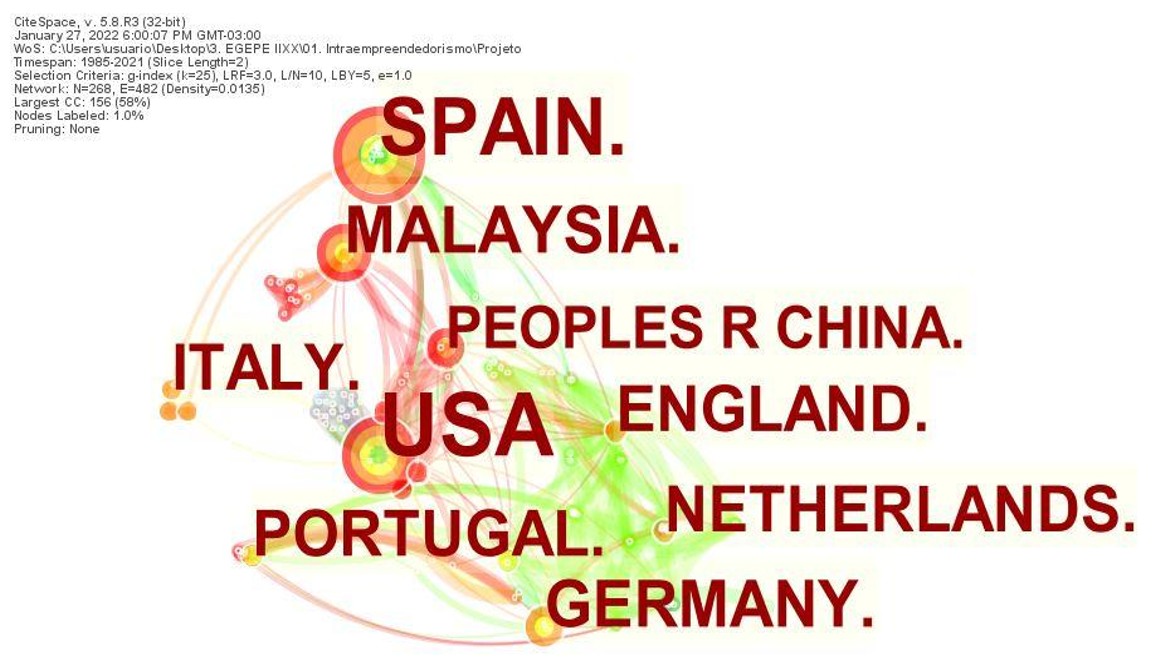
Chart 3 shows that the most representative works are essentially from countries in the global north, while there are few contributions from the global south. Figure 2 displays the co-authorship between countries. Centrality is defined as the number of publications with other countries, and the size of the node represents the centrality of the country. The larger the node, the greater the number of publications with other countries. The United States, Spain, Malaysia, and Germany are the most central countries.
The association with other countries is important to elevate the context of the work. Especially in the field of intrapreneurship, this association enables the structuring of research that considers diverse behaviors and practices, as each country has its own unique organizational spaces.
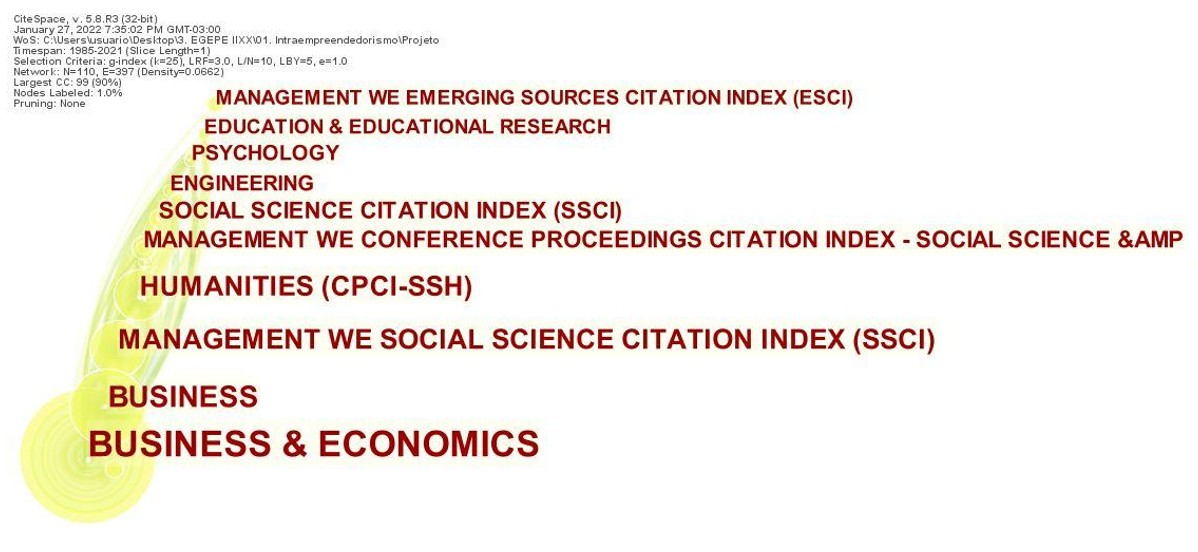
Figure 3 displays the categories with the highest co-occurrence counts. The size of each node corresponds to the number of articles in its respective category.

Database categories from the Web Of Science main collection. Source: Elaborated based on CiteSpace.
It is important to note, from Figure 3, the representativeness of the papers indexed specifically in the Business category. Most of the others fall into categories involving social and human issues. The analysis of the categories in the WOS main collection database is pertinent in that it sheds light on the importance of intrapreneurship in environments in which we human beings will need to readjust, as the world changes ever faster and becomes more competitive and interconnected. So entrepreneurs in their work environments will become increasingly important for maintaining companies. From the analysis of the most representative journals on the research front, Table 2 shows the journals that have published the most papers on intrapreneurship. Table 2 shows that the most representative journals are the Journal of Business Venturing with a frequency of 153 and an impact factor of 12,065 and Entrepreneurship Theory and Practice with a frequency of 141 and an impact factor of 10,075, which shows the importance of these journals for the field. The other journals are also important and do not show much discrepancy in their frequency. Overall, this is an important set of data sources for the study of intrapreneurship.
It is worth noting that eight (8) of the ten (10) most cited papers in the database and shown in Table 1 are not published in any of the journals listed in Table 2. Table 2 also shows that the majority, thirteen (13) of the journals, are in the Business area. The only non-Business journal is the Journal of Applied Psychology, which refers to the field of Psychology.Following on from the analysis, a relevant bibliometric result is the identification of the most cited articles by area. These papers can reveal significant themes for the field, indicating possible trends, as well as relevant definitions. Chart 4 shows that the 10 most cited papers were published since 2001, reinforcing the idea that the field is growing and under construction.
To present the definitions of intrapreneurship found in the most cited works among the research corpus, it is important to note that Antoncic & Hisrich (2001) believe that a broader definition of intrapreneurship includes entrepreneurship within an existing organization.
The authors discuss and validate a model that takes into account: (a) the four (4) dimensions of intrapreneurship - new business; innovation; self-renewal; and proactivity; (b) the key measures adopted in previous works - the first ENTRESCALE which aims to measure a company's general orientation towards entrepreneurship and the second corporate entrepreneurship scale, which is designed to measure the corporation's engagement in corporate entrepreneurship activities; and finally, they also take into account (c) the antecedents and consequences of intrapreneurship - environment and organization.
According to Alpkan et al. (2010), intrapreneurship involves creating an organizational environment that provides intrapreneurs with easy access to the resources and conditions necessary for developing and implementing innovative ideas and projects. The authors conducted research on the direct and interactive effects of organizational support and human capital on a company's innovative performance. Halme et al. (2012) describe intrapreneurship as a process by which individuals within organizations seek new opportunities and depart from the usual in a spirit of entrepreneurship. The authors consider that in pursuing their initiatives, intrapreneurs go beyond conventional limits and boundaries and take additional risks that other employees would not be willing to consider.According to Parker (2011), intrapreneurship is the practice of developing a new venture within an existing organization to exploit a new opportunity and create economic value. The paper develops theoretical arguments and testable hypotheses about the factors that promote nascent intrapreneurship in relation to nascent entrepreneurship. Contributions from human capital theory and incentive (agency) theory form the basis of these arguments. Moriano et al. (2014) propose that intrapreneurship is a term used to describe entrepreneurial behavior within an existing organization (Antoncic & Hisrich, 2001). The authors investigated the impact of manager leadership styles on employee intrapreneurial behavior and the mediating role of organizational identification.The work by Douglas & Fitzsimmons (2013), although it does not define intrapreneurship, analyzes whether individual entrepreneurship and corporate intrapreneurship are seen by individuals as separate and distinct entrepreneurial behaviors, in addition to verifying whether the antecedents of intrapreneurial intentions are the same or different from the antecedents of individual entrepreneurial intentions.Intrapreneurship for Antoncic & Antoncic (2011) can be defined more broadly as entrepreneurship within an existing organization, and includes entrepreneurial behaviors and orientations of existing organizations. The authors present a model that sheds light on the links between employee satisfaction, intrapreneurship and company growth.
In general terms, Antoncic (2007) believes that intrapreneurship is entrepreneurship within an existing organization and can be seen as a process by which individuals within organizations seek opportunities without taking into account the resources they control. The author's work sought to illustrate the intrapreneurship construct with its predictors and consequences in a model.Gawke et al. (2017) understand intrapreneurship as an individual employee's acting and anticipating behaviors with the aim of creating new business for the organization (i.e., risk-taking behavior) and improving an organization's ability to react to internal and external advances (i.e., strategic renewal behavior). According to the theory of work resource demands, the authors hypothesized that employee intrapreneurship develops personal resources over time, which subsequently enhances work engagement.
Benitez‐Amado et al. (2010) highlight and conceptualize the culture of intrapreneurship as a company's ability to develop a work environment that encourages creativity, innovation and entrepreneurship. The authors analyzed the relationship between two types of information technology (IT) (technological IT and managerial IT resources) with intrapreneurial culture and company performance.The analysis of the co-citation of authors suggests that it is related to the authors referenced by the articles in the search. A co-citation occurs when an article cites two authors at the same time. The most co-cited authors are important because they are quoted in many papers and therefore represent the mainstream of intrapreneurship research. Figure 4 shows the most co-cited authors. The size of the node is related to the frequency of co-citation; the higher the frequency of citation, the larger the node.

Beginning with an internal analysis of the research base, i.e., the co-citation network, we examined the network of the most cited authors within the 258 selected articles. This method allows for the identification of authors who have made significant contributions to the subject's literature, as well as the interactions and connections between them.
The most cited author in the database analyzed, with a frequency of 130 times and a high degree of centrality, Antoncic (2006) appears at the top of the ranking by citation count and influence in the field, despite the fact that his publication is more than ten (10) years old. Pinchot (1985) is the second most cited, with a frequency of 112 and a high degree of centrality. Finally, Zahra et al. (2006) comes in third among the most cited, with a frequency of 79 and a high degree of centrality.
Continuing with the analysis, Figure 5 displays the co-citation network of the articles in the database, i.e., the references taken up by the articles in the search.

The most referenced papers are less than 8 years old and are recent, which is different from other more mature fields of knowledge (Garcia et al., 2021). The research presented in Figure 5 is not part of the research referenced in Table 1, which covers the most cited articles. In the field of intrapreneurship, the research front - the most cited articles in the base - does not coincide with the intellectual base. This may be related to the original area of intrapreneurship, which, according to Blanka (2019), is a subfield of entrepreneurship.
The works that emerged in Figure 5 deal with intrapreneurship at both the individual and corporate levels. Blanka (2019), for example, carries out a systematic review from the perspective of intrapreneurship at the individual level. By distinguishing between corporate entrepreneurship, entrepreneurial orientation and intrapreneurship, the article clearly positions intrapreneurship as an individual-level concept.
The work of Gawke et al. (2017) sought to elucidate, based on the theory of work demands-resources, the hypothesis that employee intrapreneurship builds personal resources over time, which in turn promotes engagement at work.
The work of Valsania et al. (2016) aimed to analyze the relationship between authentic leadership and employee intrapreneurial behavior and the intervening processes. For the authors, employees' organizational identification and organizational empowerment mediate the relationship between authentic leadership and employees' intrapreneurial behaviors.
In turn, Neessen et al. (2019) conducted a systematic review of the literature and proposed a new definition of intrapreneurship that emphasizes its multilevel nature, as well as a comprehensive model of intrapreneurship, in which the authors integrated the new definition, dimensions and determinants applicable to individual employees.
Finally, Woo (2018) set out to discover the antecedents of intrapreneurship. Based on career construction theory and personality studies, he examined the mediating effects of career adaptability on the relationship between personality traits and intrapreneurship.As a result, it can be seen that the most co-cited papers in the database are related to intrapreneurship, both individual and organizational. This indicates possibilities for further research to map and deepen the understanding of the field in order to distinguish concepts within the field, and subfields of a larger field, intrapreneurship.
4 Research agenda for intrapreneurship
In order to build an agenda for future research, it was decided to take into account the indications for research in the articles published in 2020 and 2021 - as they are more recent - as well as the insights gained during the construction of this research. It is important to note that not all the articles made suggestions for future research. Therefore, the agenda was drawn up based on the themes that appeared in the two (2) years, which resulted in three (3) topics of suggestions for future research, which are divided into the factors of intrapreneurship: Individual; Organizational and Environmental.
The first relates to individual determinants, which are subjective incentive factors for intrapreneurship, i.e., the internal incentives of the individual who fully fills the entrepreneurial role within a large organization. Intrapreneurship assumes that individuals differ in their abilities to develop emerging opportunities through experience, training, schooling and social settings (Holmes & Schmitz, 1990). These different contexts have incentives to specialize in their expectations and negotiate with each other from an individual perspective.
The studies suggest research around relationships with: behavioral theories - analyzing human behavior through multiple areas and theories; cognitive theories - examining whether cognitive styles promote intrapreneurship and innovation, in diverse areas and contexts; emotional intelligence theories - analyzing the implementation of programs that develop emotional intelligence and the relationship with intrapreneurship in multiple contexts and cultures; and religiosity - investigating the impact of religiosity and religion on individuals' intrapreneurial behaviors.
They also suggest research into relations with: empowerment - examining through longitudinal studies the effects of leadership; psychological capital theory - analyzing the role of psychological capital and intrapreneurial self-capital in work engagement and life satisfaction, suggesting a longitudinal study; learning theories - analyzing through longitudinal studies, how the use of innovation labs can create a specific learning scenario in the context of the workplace for its participants; individual skills - analyzing the effects of recruitment focused on intrapreneurial skills, investigating the performance of new hires.
In addition, they suggest research into relationships with: theories of social psychology - analyzing role theory, more specifically, the forms, intensity, capacity, duration, formalization and differences in interpretation of expectations; and gender - analyzing the influences of networks of relationships on social functioning, which in China is Guanxi, in several other countries.
The second relates to Organizational determinants, which are internal factors of the organization that encourage intrapreneurship, i.e., all factors that directly or indirectly influence intrapreneurial action within the organization. According to Alam et al. (2020), the organizational role has an effect on the engagement of individuals in intrapreneurship. In this sense, intrapreneurship refers to 'entrepreneurial' avenues within the confines of organizational activity (Bulmash & Winokur, 2020).
Table 3 Agenda and suggestions to future research.The studies identified in the research agenda suggest work on: innovation and technology - analyzing the different types of innovation, the passion for invention, technologies including artificial intelligence and big data with different possibilities and directions; intellectual capital - investigating the interrelationship between intrapreneurship, intellectual capital and financial performance through longitudinal studies; and intrapreneurial capabilities - exploring the concept further.
They suggest research into relations with: strategy theories - which analyze the implementation of corporate strategies aimed at promoting intrapreneurship, adopting different theories, contexts and areas; institutional theories - which explore the logics and factors that influence intrapreneurial action; culture - which analyzes its impact on the development of a culture for change, considering different aspects, including the type of implementation (internal or external), organizational design, among others; and human resources - which analyzes how human resource management practices guide intrapreneurial behavior and organizational innovation in different segments.
In addition, they suggest research into: agency and structure - exploring the agency factors that contribute to intrapreneurship; corporate social responsibility (CSR) - investigating the relationship between internal CSR practices and intrapreneurial behavior; organizational empowerment - investigating its effect on intrapreneurship in different contexts and segments; and leadership - analyzing its effects on work engagement, intrapreneurship and innovation behavior in public and private organizations.
Finally, the third relates to Environmental determinants, which are factors outside the organization that encourage intrapreneurship. For Arun et al. (2021) intrapreneurship is not only entrepreneurship in organizations, but is also governed by specific combinations of circumstances generally outside the organizational environment, such as families, co-workers and friends.
The studies identified in the research agenda suggest work on: public policy - analyzing intrapreneurship in public administration and public policy, looking at multiple spheres, contexts and policies; social rules - analyzing how the rules of society and the rules of the company interact to produce different intrapreneurial results; and spiritual leadership - examining the influence of spiritual leadership on employees' intrapreneurial behaviors.
5 Final remarks
The aim of this study was to analyze the configuration of the field of studies on intrapreneurship and to build a future agenda. In order to achieve this objective, we carried out an analysis of the international literature on the subject, with an emphasis on identifying authors, countries, references and relevance. In addition, we developed a research agenda to guide future studies. This analysis included a bibliometric review, using quantitative approaches to examine the academic production of the field of study of intrapreneurship.
The results and discussions carried out in this paper have provided an understanding of the horizon of what has been researched on intrapreneurship around the world, allowing us to suggest a master line of articles, authors and journals that are central to the field of research. At the end, when we present a plausible research agenda, based on the most recent and cited international articles, this article shows gaps and opportunities for new points to be studied. Based on the main results, we can extract several suggestions that help us understand the dynamics of this field of research.
Firstly, we note that research into intrapreneurship has an interesting trajectory over the years, with its origins in the 1980s, which reaffirms Antoncic & Hisrich's (2001) findings that scholars and professionals have shown interest in the concept since the early 1980s due to its beneficial effect on the revitalization and performance of companies. However, this research has only gained momentum since 2012.
We suggest that this increase in research activity reflects, among other factors, the growing interest in issues related to entrepreneurship, innovation and business ecosystems, probably driven, among other elements, by significant changes in the global economy and technology, as Adner & Kapoor (2016) point out.
The analysis of the frequency of publications by country revealed a discrepancy in the relationship between countries in the global north and south, with a notable concentration in countries in the global north. This suggests the need for a more equitable representation of diverse economic and social contexts in future research, since different cultural and economic contexts can influence intrapreneurship research and practice.
Analysis of the categories on the Web of Science database highlighted the predominance of the Business and Economics category, emphasizing its relevance. The analysis of the central articles on the research front revealed that the studies generally aimed at understanding, largely, intrapreneurship in support of organizations' efforts to revitalize their businesses, innovate, adapt to changes in their internal and external environments, and guarantee their performance (Skarmeas et al., 2016). The articles generally focus on the organizational environment, and analyze the topic with the application and adherence of multiple theories and contexts.
When exploring the most representative journals, we identified that many of them are specific to the Business area, and one of them is from the Psychology area. This highlights the interconnection between these two areas when it comes to the subject of intrapreneurship.
When examining the intellectual basis of the field of research, we observed that in the network of authors cited, three were the most prominent authors: Antoncic (2006), Pinchot (1985) and Zahra et al. (2006). The co-citation network indicates a link with the original area of the field, which, according to Blanka (2019), is a subfield of entrepreneurship. This suggests that one cannot understand intrapreneurship in isolation, since it is intrinsically related to entrepreneurship.Finally, we indicate an agenda for future research based on the literature reviews. We also point out that it is necessary to carry out systematic reviews concentrated at national level, with the aim of examining what was produced in Brazil on intrapreneurship, given that the country does not appear on the international database. In addition, it is important to analyze the research agenda of the most recent national studies in conjunction with that presented in this article in order to see how the field of intrapreneurship is likely to develop over the next few years in Brazil and around the world.
Acknowledgements
This work does not include acknowledgments.
Statement on Data Availability
The data are available on the Web of Science.
-
Financial support:
This work did not receive specific funding from institutions or agencies in the public, private or non-profit sectors.
-
How to cite:
Ribeiro, O. C. R., Silva, E. M., Tessaro, N. T., & Castanheira, N. P. (2025). International scientific production on Intrapreneurship: an analysis of research, frontiers and trends. Gestão & Produção, 32, e12022. https://doi.org/10.1590/1806-9649-2025v32e12022
References
-
Adner, R., & Kapoor, R. (2016). Innovation ecosystems and the pace of substitution: re‐examining technology S‐curves. Strategic Management Journal, 37(4), 625-648. http://doi.org/10.1002/smj.2363
» http://doi.org/10.1002/smj.2363 -
Alam, M. Z., Kousar, S., Shabbir, A., & Kaleem, M. A. (2020). Personality traits and intrapreneurial behaviour: moderated role of knowledge sharing behaviour in diverse group of employees in developing country. Asia Pacific Journal of Innovation and Entrepreneurship, 14(1), 31-46. http://doi.org/10.1108/APJIE-09-2019-0068
» http://doi.org/10.1108/APJIE-09-2019-0068 -
Alpkan, L., Bulut, C., Gunday, G., Ulusoy, G., & Kilic, K. (2010). Organizational support for intrapreneurship and its interaction with human capital to enhance innovative performance. Management Decision, 48(5), 732-755. http://doi.org/10.1108/00251741011043902
» http://doi.org/10.1108/00251741011043902 -
Ambos, T. C., & Tatarinov, K. (2022). Building responsible innovation in international organizations through intrapreneurship. Journal of Management Studies, 59(1), 92-125. http://doi.org/10.1111/joms.12738
» http://doi.org/10.1111/joms.12738 -
Åmo, B. W., & Kolvereid, L. (2005). Organizational strategy, individual personality and innovation behavior. Journal of Enterprising Culture, 13(1), 7-19. http://doi.org/10.1142/S0218495805000033
» http://doi.org/10.1142/S0218495805000033 -
Antoncic, B. (2006). Impacts of diversification and corporate entrepreneurship strategy making on growth and profitability: a normative model. Journal of Enterprising Culture, 14(1), 49-63. http://doi.org/10.1142/S0218495806000040
» http://doi.org/10.1142/S0218495806000040 -
Antoncic, B. (2007). Intrapreneurship: a comparative structural equation modeling study. Industrial Management & Data Systems, 107(3), 309-325. http://doi.org/10.1108/02635570710734244
» http://doi.org/10.1108/02635570710734244 -
Antoncic, B., & Hisrich, R. D. (2001). Intrapreneurship: construct refinement and cross-cultural validation. Journal of Business Venturing, 16(5), 495-527. http://doi.org/10.1016/S0883-9026(99)00054-3
» http://doi.org/10.1016/S0883-9026(99)00054-3 -
Antoncic, J. A., & Antoncic, B. (2011). Employee satisfaction, intrapreneurship and firm growth: a model. Industrial Management & Data Systems, 111(4), 589-607. http://doi.org/10.1108/02635571111133560
» http://doi.org/10.1108/02635571111133560 - Arun, K., Begeç, S., & Okun, O. (2021). Intrapreneurial behaviors of organizational members: a conceptual view: how contextual expectations can explain the entrepreneurship roles in organizations?. Journal of Research in Marketing and Entrepreneurship, 23(1), 24-40. http://doi.org/10.1108/JRME-09-2019-0074.
-
Asiaei, K., Barani, O., Bontis, N., & Arabahmadi, M. (2021). Unpacking the black box: how intrapreneurship intervenes in the intellectual capital-performance relationship? Journal of Intellectual Capital, 21(6), 809-834. http://doi.org/10.1108/JIC-06-2019-0147
» http://doi.org/10.1108/JIC-06-2019-0147 -
Atallah, G., Bousmah, I., & De Fuentes, C. (2021). Previous intrapreneurship experience as a determinant of entrepreneurial activity and performance. Economics of Innovation and New Technology, 32(4), 519-536. http://doi.org/10.1080/10438599.2021.1965475
» http://doi.org/10.1080/10438599.2021.1965475 -
Audretsch, D. B., Lehmann, E. E., Menter, M., & Wirsching, K. (2021). Intrapreneurship and absorptive capacities: the dynamic effect of labor mobility. Technovation, 99, 102129. http://doi.org/10.1016/j.technovation.2020.102129
» http://doi.org/10.1016/j.technovation.2020.102129 -
Azis, P., & Amir, M. T. (2020). Examining the intrapreneurship drivers and strategy: case study of property services in Indonesia.The Journal of Asian Finance. Economics and Business, 7(12), 169-179. http://doi.org/10.13106/jafeb.2020.vol7.no12.169
» http://doi.org/10.13106/jafeb.2020.vol7.no12.169 -
Badoiu, G. A., Segarra-Ciprés, M., & Escrig-Tena, A. B. (2020). Understanding employees’ intrapreneurial behavior: a case study. Personnel Review, 49(8), 1677-1694. http://doi.org/10.1108/PR-04-2019-0201
» http://doi.org/10.1108/PR-04-2019-0201 -
Bani-Mustafa, A., Toglaw, S., Abidi, O., & Nimer, K. (2021). Do individual factors affect the relationship between faculty intrapreneurship and the entrepreneurial orientation of their organizations? Economies, 9(4), 199. http://doi.org/10.3390/economies9040199
» http://doi.org/10.3390/economies9040199 -
Begeç, S., & Arun, K. (2021). The bottleneck of intrapreneurship: are social positions and held expectations constraints in organizations’ entrepreneur process? A conceptual view. Journal of Entrepreneurship in Emerging Economies, 13(1), 131-151. http://doi.org/10.1108/JEEE-08-2019-0120
» http://doi.org/10.1108/JEEE-08-2019-0120 -
Belair-Gagnon, V., Lewis, S. C., & Agur, C. (2020). Failure to launch: competing institutional logics, intrapreneurship, and the case of chatbots. Journal of Computer-Mediated Communication, 25(4), 291-306. http://doi.org/10.1093/jcmc/zmaa008
» http://doi.org/10.1093/jcmc/zmaa008 -
Benitez‐Amado, J., Llorens‐Montes, F. J., & Perez‐Arostegui, M. N. (2010). Information technology‐enabled intrapreneurship culture and firm performance. Industrial Management & Data Systems, 110(4), 550-566. http://doi.org/10.1108/02635571011039025
» http://doi.org/10.1108/02635571011039025 - Bicer, M., & Pekkan, N. U. (2020). The relationship between group culture and intrapreneurship: a case study for hotel industry.Management Research & Practice, 12(3), 1.
-
Blanka, C. (2019). An individual-level perspective on intrapreneurship: a review and ways forward. Review of Managerial Science, 13(5), 919-961. http://doi.org/10.1007/s11846-018-0277-0
» http://doi.org/10.1007/s11846-018-0277-0 -
Bulmash, B., & Winokur, M. (2020, February). Entrepreneurial passion and turnover intentions: the role of intrapreneurship opportunities and risk tolerance. In Proceedings of the 2020 IEEE International Conference on Industrial Technology (ICIT) (pp. 1205-1209). New York: IEEE. http://doi.org/10.1109/ICIT45562.2020.9067259
» http://doi.org/10.1109/ICIT45562.2020.9067259 -
Camelo-Ordaz, C., Fernández-Alles, M., Ruiz-Navarro, J., & Sousa-Ginel, E. (2012). The intrapreneur and innovation in creative firms. International Small Business Journal, 30(5), 513-535. http://doi.org/10.1177/0266242610385396
» http://doi.org/10.1177/0266242610385396 - Canet Giner, M., Redondo Cano, A., Escribá Carda, N., Balbastre Benavent, F., Revuelto Taboada, L., & Saorín Iborra, M. (2020a). Human resources practices andintrapreneurial behavior: the influence of gender in this relationship. Tec Empresarial, 14(1), 11-25.
-
Canet-Giner, M. T., Redondo-Cano, A., Balbastre-Benavent, F., Escriba-Carda, N., Revuelto-Taboada, L., & Saorin-Iborra, M. D. C. (2020b). The influence of clustering on HR practices and intrapreneurial behavior. Competitiveness Review, 32(1), 35-58. http://doi.org/10.1108/CR-10-2019-0102
» http://doi.org/10.1108/CR-10-2019-0102 -
Carlson, K. D., & Ji, F. X. (2011). Citing and building on meta-analytic findings: a review and recommendations. Organizational Research Methods, 14(4), 696-717. http://doi.org/10.1177/1094428110384272
» http://doi.org/10.1177/1094428110384272 -
Chahine, T. (2021). Toward an understanding of public health entrepreneurship and intrapreneurship. Frontiers in Public Health, 9, 593553. http://doi.org/10.3389/fpubh.2021.593553 PMid:33898370.
» http://doi.org/10.3389/fpubh.2021.593553 -
Chakrabarty, S. (2021). Intrapreneurship in teams/groups: self-determination theory and compensation. Journal of Small Business and Enterprise Development, 28(1), 45-58. http://doi.org/10.1108/JSBED-10-2019-0344
» http://doi.org/10.1108/JSBED-10-2019-0344 -
Chandra, Y., & Mathur, K. (2021). Organization citizenship behaviour and work-life interface practices: exploring entrepreneurial and intrapreneurial mindset. Vision, 25(3), 361-372. http://doi.org/10.1177/09722629211010980
» http://doi.org/10.1177/09722629211010980 -
Chen, C. (2004). Searching for intellectual turning points: progressive knowledge domain visualization. Proceedings of the National Academy of Sciences of the United States of America, 101(Suppl 1), 5303-5310. http://doi.org/10.1073/pnas.0307513100 PMid:14724295.
» http://doi.org/10.1073/pnas.0307513100 -
Chen, C. (2006). CiteSpace II: detecting and visualizing emerging trends and transient patterns in scientific literature. Journal of the American Society for Information Science and Technology, 57(3), 359-377. http://doi.org/10.1002/asi.20317
» http://doi.org/10.1002/asi.20317 - Chen, C. (2016). CiteSpace: a practical guide for mapping scientific literature (pp. 41-44). Hauppauge: New Science Publishers.
-
Christensen, K. S. (2005). Enabling intrapreneurship: the case of a knowledge‐intensive industrial company. European Journal of Innovation Management, 8(3), 305-322. http://doi.org/10.1108/14601060510610171
» http://doi.org/10.1108/14601060510610171 -
Costa, D. F., Carvalho, F. M., Moreira, B. C. M., & Prado, J. W. (2017). Bibliometric analysis on the association between behavioral finance and decision making with cognitive biases such as overconfidence, anchoring effect and confirmation bias. Scientometrics, 111(3), 1775-1799. http://doi.org/10.1007/s11192-017-2371-5
» http://doi.org/10.1007/s11192-017-2371-5 -
Curtis, M. B., Chui, L., & Pavur, R. J. (2020). Intention to champion continuous monitoring: a study of intrapreneurial innovation in organizations. Journal of Emerging Technologies in Accounting, 17(2), 119-140. http://doi.org/10.2308/JETA-2020-014
» http://doi.org/10.2308/JETA-2020-014 -
Daryono, D., Wahyudi, S., & Suharnomo, S. (2021). The effect of dyadic social intrapreneurship and organizational transformation on competitive advantage. The Journal of Asian Finance. Economics and Business, 8(5), 315-324. http://doi.org/10.13106/jafeb.2021.vol8.no5.0315
» http://doi.org/10.13106/jafeb.2021.vol8.no5.0315 -
Deprez, J., Peeters, E. R., & Gorgievski, M. J. (2021). Developing intrapreneurial self-efficacy through internships? Investigating agency and structure factors. International Journal of Entrepreneurial Behaviour & Research, 27(5), 1166-1188. http://doi.org/10.1108/IJEBR-09-2020-0642
» http://doi.org/10.1108/IJEBR-09-2020-0642 -
Do, T. T. P., & Luu, D. T. (2020). Origins and consequences of intrapreneurship with behaviour-based approach among employees in the hospitality industry. International Journal of Contemporary Hospitality Management, 32(12), 3949-3969. http://doi.org/10.1108/IJCHM-05-2020-0491
» http://doi.org/10.1108/IJCHM-05-2020-0491 -
Douglas, E. J., & Fitzsimmons, J. R. (2013). Intrapreneurial intentions versus entrepreneurial intentions: distinct constructs with different antecedents. Small Business Economics, 41(1), 115-132. http://doi.org/10.1007/s11187-012-9419-y
» http://doi.org/10.1007/s11187-012-9419-y -
Dung, L. T., & Giang, H. T. T. (2022). The effect of international intrapreneurship on firm export performance with driving force of organizational factors. Journal of Business and Industrial Marketing, 37(11), 2185-2204. http://doi.org/10.1108/JBIM-01-2021-0018
» http://doi.org/10.1108/JBIM-01-2021-0018 -
Duque, P., & Cervantes-Cervantes, L. S. (2019). Responsabilidad Social Universitaria: una revisión sistemática y análisis bibliométrico. Estudios Gerenciales, 35(153), 451-464. http://doi.org/10.18046/j.estger.2019.153.3389
» http://doi.org/10.18046/j.estger.2019.153.3389 -
Elert, N., & Stenkula, M. (2020). Intrapreneurship: productive and non-productive. Entrepreneurship Theory and Practice, 46(5), 1423-1439. http://doi.org/10.1177/1042258720964181
» http://doi.org/10.1177/1042258720964181 -
Emas, R., & Jones, J. C. (2021). Setting the table for policy intrapreneurship: public administrator perspectives on local food system governance. Policy Design and Practice, 5(2), 245-259. http://doi.org/10.1080/25741292.2021.1978691
» http://doi.org/10.1080/25741292.2021.1978691 -
Escribá-Carda, N., Revuelto-Taboada, L., Canet-Giner, M. T., & Balbastre-Benavent, F. (2020). Fostering intrapreneurial behavior through human resource management system. Baltic Journal of Management, 15(3), 355-373. http://doi.org/10.1108/BJM-07-2019-0254
» http://doi.org/10.1108/BJM-07-2019-0254 -
Farrukh, M., Meng, F., & Raza, A. (2021). Believe they can succeed, and they will: intrapreneurial behavior and leadership. European Journal of Innovation Management, 25(3), 661-679. http://doi.org/10.1108/EJIM-10-2020-0393
» http://doi.org/10.1108/EJIM-10-2020-0393 -
Ferraz, P., Marques, C. S., Santos, G., Cunha, A. M., & Vaz, S. (2021). The influence of cognitive styles as promoters of entrepreneurial orientation and intrapreneurship as drivers of innovation: the case of nurses in health services in Portugal in times of COVID-19. Administrative Sciences, 11(4), 107. http://doi.org/10.3390/admsci11040107
» http://doi.org/10.3390/admsci11040107 -
Galván-Vela, E., Arango Herrera, E., Sorzano Rodríguez, D. M., & Ravina-Ripoll, R. (2021). State-of-the-art analysis of intrapreneurship: a review of the theoretical construct and its bibliometrics. Journal of Risk and Financial Management, 14(4), 148. http://doi.org/10.3390/jrfm14040148
» http://doi.org/10.3390/jrfm14040148 -
Gapp, R., & Fisher, R. (2007). Developing an intrapreneur‐led three‐phase model of innovation. International Journal of Entrepreneurial Behaviour & Research, 13(6), 330-348. http://doi.org/10.1108/13552550710829151
» http://doi.org/10.1108/13552550710829151 -
Garcia, A. S., Resende Ribeiro, O. C., Andrade, D. M., & Silva, J. P. N. (2021). Produção científica sobre empreendedorismo social e construção de uma agenda para pesquisas futuras: um Estudo Bibliométrico na base Web Of Science (1994-2018). Administração Pública e Gestão Social, 13(1), 1-23. http://doi.org/10.21118/apgs.v13i1.8612
» http://doi.org/10.21118/apgs.v13i1.8612 -
Garfield, E. (1979). Is citation analysis a legitimate evaluation tool? Scientometrics, 1(4), 359-375. http://doi.org/10.1007/BF02019306
» http://doi.org/10.1007/BF02019306 -
Gawke, J. C., Gorgievski, M. J., & Bakker, A. B. (2017). Employee intrapreneurship and work engagement: a latent change score approach. Journal of Vocational Behavior, 100, 88-100. http://doi.org/10.1016/j.jvb.2017.03.002
» http://doi.org/10.1016/j.jvb.2017.03.002 -
Gawke, J. C., Gorgievski, M. J., & Bakker, A. B. (2018). Personal costs and benefits of employee intrapreneurship: disentangling the employee intrapreneurship, well-being, and job performance relationship. Journal of Occupational Health Psychology, 23(4), 508-519. http://doi.org/10.1037/ocp0000105 PMid:29283602.
» http://doi.org/10.1037/ocp0000105 -
Gerards, R., van Wetten, S., & van Sambeek, C. (2021). New ways of working and intrapreneurial behaviour: the mediating role of transformational leadership and social interaction. Review of Managerial Science, 15(7), 2075-2110. http://doi.org/10.1007/s11846-020-00412-1
» http://doi.org/10.1007/s11846-020-00412-1 -
Giang, H. T. T., & Dung, L. T. (2022). The effect of internal corporate social responsibility practices on firm performance: the mediating role of employee intrapreneurial behaviour. Review of Managerial Science, 16, 1035-1061. http://doi.org/10.1007/s11846-021-00473-w
» http://doi.org/10.1007/s11846-021-00473-w -
Guerrero, M., Heaton, S., & Urbano, D. (2021). Building universities’ intrapreneurial capabilities in the digital era: the role and impacts of Massive Open Online Courses (MOOCs). Technovation, 99, 102139. http://doi.org/10.1016/j.technovation.2020.102139
» http://doi.org/10.1016/j.technovation.2020.102139 -
Halme, M., Lindeman, S., & Linna, P. (2012). Innovation for inclusive business: intrapreneurial bricolage in multinational corporations. Journal of Management Studies, 49(4), 743-784. http://doi.org/10.1111/j.1467-6486.2012.01045.x
» http://doi.org/10.1111/j.1467-6486.2012.01045.x -
Holmes, T. J., & Schmitz, J. A., Jr. (1990). A theory of entrepreneurship and its application to the study of business transfers. Journal of Political Economy, 98(2), 265-294. http://doi.org/10.1086/261678
» http://doi.org/10.1086/261678 -
Hsu, C. L., & Chiang, C. H. (2015). The financial crisis research: a bibliometric analysis. Scientometrics, 105(1), 161-177. http://doi.org/10.1007/s11192-015-1698-z
» http://doi.org/10.1007/s11192-015-1698-z - Huynh, G. T. T. (2021). The effect of transformational leadership on nonfamily international intrapreneurship behavior in family firms: the mediating role of psychological empowerment. Journal of Asian Business and Economic Studies, 28(3), 204-224. http://doi.org/10.1108/JABES-04-2021-0047.
-
Kearney, C., Hisrich, R. D., & Roche, F. W. (2010). Change management through entrepreneurship in public sector enterprises. Journal of Developmental Entrepreneurship, 15(4), 415-437. http://doi.org/10.1142/S1084946710001646
» http://doi.org/10.1142/S1084946710001646 -
Kearney, C., Hisrich, R. D., & Antoncic, B. (2013). The mediating role of corporate entrepreneurship for external environment effects on performance. Journal of Business Economics and Management, 14(1), S328-S357. doi:http://doi.org/10.3846/16111699.2012.720592
» http://doi.org/10.3846/16111699.2012.720592 -
Klofsten, M., Urbano, D., & Heaton, S. (2021). Managing intrapreneurial capabilities: an overview. Technovation, 99, 102177. http://doi.org/10.1016/j.technovation.2020.102177
» http://doi.org/10.1016/j.technovation.2020.102177 -
Kumar, S., & Parveen, R. (2021). Assessing the factors of employees’ intrapreneurial behaviour: an Indian context. World Journal of Entrepreneurship, Management and Sustainable Development, 17(4), 804-821. http://doi.org/10.1108/WJEMSD-12-2020-0160
» http://doi.org/10.1108/WJEMSD-12-2020-0160 -
Kuratko, D. F., & Audretsch, D. B. (2013). Clarifying the domains of corporate entrepreneurship. The International Entrepreneurship and Management Journal, 9(3), 323-335. http://doi.org/10.1007/s11365-013-0257-4
» http://doi.org/10.1007/s11365-013-0257-4 -
Kuratko, D. F., & Morris, M. H. (2018). Corporate entrepreneurship: a critical challenge for educators and researchers. Entrepreneurship Education and Pedagogy, 1(1), 42-60. http://doi.org/10.1177/2515127417737291
» http://doi.org/10.1177/2515127417737291 -
Kuratko, D. F., Hornsby, J. S., & Covin, J. G. (2014). Diagnosing a firm’s internal environment for corporate entrepreneurship. Business Horizons, 57(1), 37-47. http://doi.org/10.1016/j.bushor.2013.08.009
» http://doi.org/10.1016/j.bushor.2013.08.009 -
Lechevalier, S., Nishimura, J., & Storz, C. (2014). Diversity in patterns of industry evolution: how an intrapreneurial regime contributed to the emergence of the service robot industry. Research Policy, 43(10), 1716-1729. http://doi.org/10.1016/j.respol.2014.07.012
» http://doi.org/10.1016/j.respol.2014.07.012 -
Liu, G. (2013). Visualization of patents and papers in terahertz technology: a comparative study. Scientometrics, 94(3), 1037-1056. http://doi.org/10.1007/s11192-012-0782-x
» http://doi.org/10.1007/s11192-012-0782-x -
Liu, W., Gu, M., Hu, G., Li, C., Liao, H., Tang, L., & Shapira, P. (2014). Profile of developments in biomass-based bioenergy research: a 20-year perspective. Scientometrics, 99(2), 507-521. http://doi.org/10.1007/s11192-013-1152-z
» http://doi.org/10.1007/s11192-013-1152-z -
Ljunge, M., & Stenkula, M. (2021). Fertile soil for intrapreneurship: impartial institutions and human capital. Journal of Institutional Economics, 17(3), 489-508. http://doi.org/10.1017/S1744137420000612
» http://doi.org/10.1017/S1744137420000612 -
Luu, D. T. (2020). The effect of internal corporate social responsibility practices on pharmaceutical firm’s performance through employee intrapreneurial behaviour. Journal of Organizational Change Management, 33(7), 1375-1400. http://doi.org/10.1108/JOCM-03-2020-0072
» http://doi.org/10.1108/JOCM-03-2020-0072 -
Mahmoud, M. A., Ahmad, S., & Poespowidjojo, D. A. L. (2020). Intrapreneurial behavior, big five personality and individual performance. Management Research Review, 43(12). http://doi.org/10.1108/MRR-09-2019-0419
» http://doi.org/10.1108/MRR-09-2019-0419 -
Mahmoud, M. A., Ahmad, S., & Poespowidjojo, D. A. L. (2021). Psychological empowerment and individual performance: the mediating effect of intrapreneurial behaviour. European Journal of Innovation Management, 25(5), 1388-1408. http://doi.org/10.1108/EJIM-12-2020-0517
» http://doi.org/10.1108/EJIM-12-2020-0517 -
Marchiori, D. M., Popadiuk, S., Mainardes, E. W., & Rodrigues, R. G. (2021). Innovativeness: a bibliometric vision of the conceptual and intellectual structures and the past and future research directions. Scientometrics, 126(1), 55-92. http://doi.org/10.1007/s11192-020-03753-6
» http://doi.org/10.1007/s11192-020-03753-6 -
Markopoulos, E., Aggarwal, V., & Vanharanta, H. (2020). Democratization of intrapreneurship and corporate entrepreneurship within the mckinsey’s three horizons innovation space. InHuman Systems Engineering and Design II: Proceedings of the 2nd International Conference on Human Systems Engineering and Design (IHSED2019): Future Trends and Applications (pp. 1007-1017). Cham: Springer. http://doi.org/10.1007/978-3-030-27928-8_150
» http://doi.org/10.1007/978-3-030-27928-8_150 -
Marques, C. S., Lopes, C., Braga, V., Ratten, V., & Santos, G. (2021). Intuition and rationality in intrapreneurship and innovation outputs: the case of health professionals in primary health care. The International Entrepreneurship and Management Journal, 18(2), 579-602. http://doi.org/10.1007/s11365-021-00761-7
» http://doi.org/10.1007/s11365-021-00761-7 -
Menzel, H. C., Aaltio, I., & Ulijn, J. M. (2007). On the way to creativity: engineers as intrapreneurs in organizations. Technovation, 27(12), 732-743. http://doi.org/10.1016/j.technovation.2007.05.004
» http://doi.org/10.1016/j.technovation.2007.05.004 -
Moghaddas, S. Z., Tajafari, M., & Nowkarizi, M. (2020). Organizational empowerment: a vital step toward intrapreneurship. Journal of Librarianship and Information Science, 52(2), 529-540. http://doi.org/10.1177/0961000619841658
» http://doi.org/10.1177/0961000619841658 -
Moriano, J. A., Molero, F., Topa, G., & Lévy Mangin, J. P. (2014). The influence of transformational leadership and organizational identification on intrapreneurship. The International Entrepreneurship and Management Journal, 10(1), 103-119. http://doi.org/10.1007/s11365-011-0196-x
» http://doi.org/10.1007/s11365-011-0196-x -
Natividade, J. D., Ferreira, F. A., Zopounidis, C., Pereira, L. F., Çipi, A., & Ferreira, J. J. (2021). Developing a composite index for intrapreneurial orientation in small and medium-sized enterprises: A comprehensive dual methodology. The Journal of the Operational Research Society, 72(7), 1674-1687. http://doi.org/10.1080/01605682.2020.1730715
» http://doi.org/10.1080/01605682.2020.1730715 -
Neessen, P., Caniëls, M. C., Vos, B., & de Jong, J. P. (2019). The intrapreneurial employee: toward an integrated model of intrapreneurship and research agenda. The International Entrepreneurship and Management Journal, 15(2), 545-571. http://doi.org/10.1007/s11365-018-0552-1
» http://doi.org/10.1007/s11365-018-0552-1 -
Neessen, P. C., de Jong, J. P., Caniëls, M. C., & Vos, B. (2021). Circular purchasing in Dutch and Belgian organizations: the role of intrapreneurship and organizational citizenship behavior towards the environment. Journal of Cleaner Production, 280, 124978. http://doi.org/10.1016/j.jclepro.2020.124978
» http://doi.org/10.1016/j.jclepro.2020.124978 -
Okun, O., Arun, K., & Begec, S. (2020). Intrapreneurship and expectations restrictions. Dimensión Empresarial, 18(2), 140-151. http://doi.org/10.15665/dem.v18i2.2181
» http://doi.org/10.15665/dem.v18i2.2181 -
Özsungur, F. (2020). The effects of ethical leadership on work engagement, intrapreneurship, and service innovation behavior: sample of chambers of commerce and industry. International Journal of Public Leadership, 16(2), 199-216. http://doi.org/10.1108/IJPL-11-2019-0073
» http://doi.org/10.1108/IJPL-11-2019-0073 -
Pandey, J., Gupta, M., & Hassan, Y. (2021). Intrapreneurship to engage employees: role of psychological capital. Management Decision, 59(6), 1525-1545. http://doi.org/10.1108/MD-06-2019-0825
» http://doi.org/10.1108/MD-06-2019-0825 -
Parker, S. C. (2011). Intrapreneurship or entrepreneurship? Journal of Business Venturing, 26(1), 19-34. http://doi.org/10.1016/j.jbusvent.2009.07.003
» http://doi.org/10.1016/j.jbusvent.2009.07.003 - Pätzmann, L. M. (2021). Enabling factors of digital intrapreneurship: a socio-technical perspective. InProceedings of the 27th Annual Americas Conference on Information Systems (AMCIS). Cham: Springer.
-
Peyravi, B., Jakubavičius, A., Bičkauskas, R., Mazur, K., & Piven, A. (2021). The nexus between human resources practices, intrapreneurship and organizational innovation. Independent Journal of Management & Production, 12(6), s391-s401. http://doi.org/10.14807/ijmp.v12i6.1778
» http://doi.org/10.14807/ijmp.v12i6.1778 -
Pinchot, G. (1985). Introducing theentrepreneur’ [product management]. IEEE Spectrum, 22(4), 74-79. http://doi.org/10.1109/MSPEC.1985.6370622
» http://doi.org/10.1109/MSPEC.1985.6370622 -
Poduška, Z., Nedeljković, J., Nonić, D., Ratknić, T., Ratknić, M., & Živojinović, I. (2020). Intrapreneurial climate as momentum for fostering employee innovativeness in public forest enterprises. Forest Policy and Economics, 119, 102281. http://doi.org/10.1016/j.forpol.2020.102281
» http://doi.org/10.1016/j.forpol.2020.102281 -
Prado, J. W., Castro Alcântara, V., Melo Carvalho, F., Vieira, K. C., Machado, L. K., & Tonelli, D. F. (2016). Multivariate analysis of credit risk and bankruptcy research data: a bibliometric study involving different knowledge fields (1968-2014). Scientometrics, 106(3), 1007-1029. http://doi.org/10.1007/s11192-015-1829-6
» http://doi.org/10.1007/s11192-015-1829-6 -
Rambakus, Z., Hoque, M., & Gerwel Proches, C. N. (2020). Evaluating the extent of intrapreneurship in a sugar producing company in KwaZulu-Natal, South Africa. Cogent Business & Management, 7(1), 1736848. http://doi.org/10.1080/23311975.2020.1736848
» http://doi.org/10.1080/23311975.2020.1736848 -
Razavi, S. H., & Ab Aziz, K. (2017). The dynamics between entrepreneurial orientation, transformational leadership, and intrapreneurial intention in Iranian R&D sector. International Journal of Entrepreneurial Behaviour & Research, 23(5), 769-792. http://doi.org/10.1108/IJEBR-10-2016-0337
» http://doi.org/10.1108/IJEBR-10-2016-0337 -
Rosenow-Gerhard, J. (2021). Lessons learned-configuring innovation labs as spaces for intrapreneurial learning. Studies in Continuing Education, 43(2), 244-260. http://doi.org/10.1080/0158037X.2020.1797662
» http://doi.org/10.1080/0158037X.2020.1797662 -
Rutherford, M. W., & Holt, D. T. (2007). Corporate entrepreneurship: an empirical look at the innovativeness dimension and its antecedents. Journal of Organizational Change Management, 20(3), 429-446. http://doi.org/10.1108/09534810710740227
» http://doi.org/10.1108/09534810710740227 -
Sakhdari, K. (2016). Corporate entrepreneurship: a review and future research agenda. Technology Innovation Management Review, 6(8), 5-18. http://doi.org/10.22215/timreview/1007
» http://doi.org/10.22215/timreview/1007 -
Sanchez-Riofrio, A. M., Guerras-Martin, L. A., & Forcadell, F. J. (2015). Business portfolio restructuring: a comprehensive bibliometric review. Scientometrics, 102(3), 1921-1950. http://doi.org/10.1007/s11192-014-1495-0
» http://doi.org/10.1007/s11192-014-1495-0 - Schumpeter, J. (1934). The theory of economic development. Cambrige: Harvard University Press.
-
Seok, C. B., Lee Ching, P., & Ismail, R. (2020). Exploring the role of malaysian student’s intrapreneurial self-capital in the relationship between satisfaction with life, academic performance, and flourishing. Sustainability, 12(2), 580. http://doi.org/10.3390/su12020580
» http://doi.org/10.3390/su12020580 -
Skarmeas, D., Lisboa, A., & Saridakis, C. (2016). Export performance as a function of market learning capabilities and intrapreneurship: SEM and FsQCA findings. Journal of Business Research, 69(11), 5342-5347. http://doi.org/10.1016/j.jbusres.2016.04.135
» http://doi.org/10.1016/j.jbusres.2016.04.135 -
Soncin, M., & Arnaboldi, M. (2021). Intrapreneurship in higher education: the digital learning challenge. International Journal of Public Administration, 45(2), 135-146. http://doi.org/10.1080/01900692.2021.2011919
» http://doi.org/10.1080/01900692.2021.2011919 -
Tague-Sutcliffe, J. (1992). An introduction to informetrics. Information Processing & Management, 28(1), 1-3. http://doi.org/10.1016/0306-4573(92)90087-G
» http://doi.org/10.1016/0306-4573(92)90087-G -
Tavakoli, N., & Sisto, M. D. (2021). Social intrapreneurship: the foundation of CSR practices. International Journal of Technology Management, 85(2-4), 230-254. http://doi.org/10.1504/IJTM.2021.115284
» http://doi.org/10.1504/IJTM.2021.115284 -
Usman, M., Ali, M., Ogbonnaya, C., & Babalola, M. T. (2021). Fueling the intrapreneurial spirit: a closer look at how spiritual leadership motivates employee intrapreneurial behaviors. Tourism Management, 83, 104227. http://doi.org/10.1016/j.tourman.2020.104227
» http://doi.org/10.1016/j.tourman.2020.104227 -
Valsania, S. E., Moriano, J. A., & Molero, F. (2016). Authentic leadership and intrapreneurial behavior: cross-level analysis of the mediator effect of organizational identification and empowerment. The International Entrepreneurship and Management Journal, 12(1), 131-152. http://doi.org/10.1007/s11365-014-0333-4
» http://doi.org/10.1007/s11365-014-0333-4 -
van Wetten, S. J., Gerards, R., & de Grip, A. (2020). Are graduates’ intrapreneurial skills optimally used for innovation? Technovation, 96, 102131. http://doi.org/10.1016/j.technovation.2020.102131
» http://doi.org/10.1016/j.technovation.2020.102131 -
Vassilakopoulou, P., & Grisot, M. (2020). Effectual tactics in digital intrapreneurship: a process model. The Journal of Strategic Information Systems, 29(3), 101617. http://doi.org/10.1016/j.jsis.2020.101617
» http://doi.org/10.1016/j.jsis.2020.101617 -
Veenker, S., Sijde, P. V. D., During, W., & Nijhof, A. (2008). Organisational conditions for corporate entrepreneurship in Dutch organisations. The Journal of Entrepreneurship, 17(1), 49-58. http://doi.org/10.1177/097135570701700104
» http://doi.org/10.1177/097135570701700104 -
Wan, W., & Liu, L. (2021). Intrapreneurship in the digital era: driven by big data and human resource management? Chinese Management Studies, 15(4), 843-875. http://doi.org/10.1108/CMS-07-2020-0282
» http://doi.org/10.1108/CMS-07-2020-0282 -
Wan, W., Liu, L., & Wang, X. (2020). How user-driven innovation and employee intrapreneurship promote platform enterprise performance. Management Decision, 58(12), 2705-2723. http://doi.org/10.1108/MD-06-2019-0701
» http://doi.org/10.1108/MD-06-2019-0701 -
Woo, H. R. (2018). Personality traits and intrapreneurship: the mediating effect of career adaptability. Career Development International, 23(2), 145-162. http://doi.org/10.1108/CDI-02-2017-0046
» http://doi.org/10.1108/CDI-02-2017-0046 -
Yela Aránega, A. Y., Del Val Núñez, M. T., & Castaño Sánchez, R. (2020). Mindfulness as an intrapreneurship tool for improving the working environment and self-awareness. Journal of Business Research, 115, 186-193. http://doi.org/10.1016/j.jbusres.2020.04.022
» http://doi.org/10.1016/j.jbusres.2020.04.022 -
Zahra, S. A., Sapienza, H. J., & Davidsson, P. (2006). Entrepreneurship and dynamic capabilities: a review, model and research agenda. Journal of Management Studies, 43(4), 917-955. http://doi.org/10.1111/j.1467-6486.2006.00616.x
» http://doi.org/10.1111/j.1467-6486.2006.00616.x -
Zhang, C. X., Kimbu, A. N., Lin, P., & Ngoasong, M. Z. (2020). Guanxi influences on women intrapreneurship. Tourism Management, 81, 104137. http://doi.org/10.1016/j.tourman.2020.104137
» http://doi.org/10.1016/j.tourman.2020.104137
-
Editor-in-Chief
Pedro Munari.