 Application of Hybrid Project Management as a success enhancer in industries
Abstract
Abstract Project management sought levels of improvement with the advancement of production processes, in order to visualize forms of iterative and concrete improvement in agile management. The application of this methodology requires efficient and targeted participation on the part of management, seeking fundamental factors for the success of the project and management, in order to empirically apply the hybrid management methodology. Regarding methodology, this study seeks to answer what makes the hybrid model effective, and how to measure success within organizations that use this methodology. Thus, through bibliometrics, 5 main critical success factors were listed, applying them empirically and creating a success metric based on the parameters Time, Cost and Scope. The results indicate that the actions of hybrid management, based on critical success factors, help in an improvement far above expectations, in order to corroborate the observed parameters, while creating tools for applying hybrid models. Finally, this article contributes to the current debate regarding hybrid management models in mechanical projects, while providing robust results from the application of hybrid management in the Agile-Stage-Gate model.
Keywords:
Hybrid Project Management; Critical success factors; Agile-Stage-Gate; Project success
Resumo
Resumo A gestão de projetos buscou níveis de melhoramentos com o avanço dos processos produtivos, de forma a visualizar na gestão ágil formas de um aprimoramento iterativo e concreto. A aplicação desta metodologia exige uma participação eficiente e direcionada por parte da gestão, buscando fatores fundamentais para o sucesso do projeto e da gestão, de forma a aplicar empiricamente a metodologia da gestão híbrida. Quanto a metodologia, este estudo busca responder o que torna o modelo híbrido efetivo, e como mensurar o sucesso dentro de organizações que se utilizam desta metodologia. Assim, por meio de uma bibliometria, foram elencados 5 principais fatores críticos de sucesso, aplicando-os de forma empírica e realizando uma métrica de sucesso por base dos parâmetros Tempo, Custo e Escopo. Os resultados indicam que as ações de uma gestão híbrida, pautadas nos fatores críticos de sucesso, auxiliam em um melhoramento muito acima do esperado, de forma corroborar os parâmetros observados, ao passo que cria-se ferramentas de aplicação de modelos híbridos. Por fim este artigo contribui para o debate atual a respeito dos modelos de gestão híbridas em projetos mecânicos, ao passo que fornece resultados robustos da aplicação da gestão híbrida no modelo Agile-Stage-Gate.
Palavras-chave:
Gestão Híbrida de Projetos; Fatores críticos de sucesso; Agile-Stage-Gate; Sucesso em projetos
1 Introduction
The paradigm shifts in new product development are becoming increasingly accelerated (Cooper, 2016). The search for better processes and methodologies has led to the integration of methodological interfaces previously considered distinct, giving rise to Hybrid processes of product development (Pacagnella et al., 2024b).
However, the success or failure of this intersection is directly connected to the role of managers, since they are the interlocutors responsible for the implementation and conduction of the “innovativeness” processes (Bianchi et al., 2021). In this sense, the initial challenge of management lies in understanding which project models should be implemented; thus, new hybrid models are improved and integrated into the new product development process, among which one stands out for combining properties of Agile Management with the needs of traditional process models, called the Hybrid Agile-Stage-Gate (Bianchi & Amaral, 2021).
The elements of the Stage-Gate approach begin to contribute with their principles to the agile methodology, in order to integrate characteristics such as flexibility and iterativity, which are common to the use of agile methodologies (Cooper, 2016; Cooper & Sommer, 2016). According to Gemino et al. (2020), Agile Project Management is characterized by the application of actions supported by well-founded principles (flexibility and project dynamism), in order to make them simpler, more adaptable to changes, providing greater agility and iterativity, thus achieving more significant results and better performance in certain project niches.
Today, the methodology known as Agile Management complements the methodologies considered traditional (i.e., Waterfall), making the processes more dynamic in their communication and development phases (Bianchi et al., 2021). The Agile Methodology presents in its structure 12 principles, aimed at providing greater fluidity, iterativity, dynamic actions, and customer accessibility (Highsmith, 2004). This methodology marks an expansion of this innovative management model belonging to Industry 4.0.
Post-Agile Manifesto studies have pointed out that the development of projects based on agile methodologies did not present an exact certainty of success, since such projects involve different paradigms, scope, and team, which may lead to failures, delays, project abandonment, and conflict among team members (Chow & Cao, 2008). At the same time, new studies such as those by Ozkan et al. (2025) and Pacagnella et al. (2024a) corroborate these views.
In this context, it is perceived that the success or failure of a project will necessarily be linked to certain factors carried out by each sector or group, which are of vital importance for any organization (Rockhart, 1979). Project development models and approaches, whose actions and factors are known, make the steps to be followed during execution easier and safer, providing a significant increase in the probability of success. Thus, it is vital to understand and direct actions toward the dimensions of success, predominantly applying the critical success factors (Pacagnella et al., 2024a).
Based on the perception of latent needs, it is observed that innovative methodologies align with these gaps in success factors, addressing them, as does the Hybrid Management Methodology, which carries within itself models (structures) and methodologies (guidance), capable of adding process restarts and iterativity while assigning predefined stages (PMI, 2017).
In this context, the understanding of the factors operating within hybrid management proves to be of great importance and vital interest to the organization that applies its concepts, thus requiring people directly involved in the process of managing the created requirements, such as the Project Manager, in order to raise the following Research Questions (RQ):
-
RQI – What makes the Hybrid methodology effective?
-
RQII – How can success be measured within organizations that use this methodology?
In this way, the application of Hybrid Project Management is carried out as a success-enhancing factor in an automation industry, enabling the analysis and response to what makes the hybrid methodology effective, as well as the ways to measure the success achieved.
2 Bibliographic review
2.1 The Agile context
Agile Management began with software development, where concepts from these developments underwent methodological changes starting in the late 1990s. According to Pacagnella et al. (2024a), the most popular processes used in Agile Management are XP (Extreme Programming), FDD (Feature Driven Development), Scrum, and Lean Software Development. These methodologies are based on agile principles and values, employing groups of guiding concepts in their form of application.
The processes based on the Scrum methodology are the most popular and widely used, since they involve the development of self-directed and self-organizing teams, whose commitments and goals are pre-established at each iteration (i.e., Sprint), providing decentralized authority, autonomy, and responsibility to define the best way to achieve this goal (Ozkan et al., 2025). In summary, Scrum aims to apply a lightweight management framework, coordinated by the Scrum Master and Project Owner, in order to enhance the ease of managing and controlling iterative and incremental projects.
Another widely used method is Lean Thinking, which interacts perfectly with the concepts of traditional methodologies, creating tools capable of increasing the performance level of employees through visualization methods and stage progression. This is due to the fact that, when inserted into the Agile context, it shows fundamental traits of eliminating waste in the enterprise, whether tangible or not, such as time, energy, and operations (Rodriguês & Alves, 2025).
As with any process of evolution, and with the advancement of the Industry 4.0 concept, Agile Management began to contribute to concepts of linear management (i.e., Stage-Gate). Based on this perspective, and with the evolution of technological processes, Agile Management ceased to be an exclusive methodology for software developers and began to integrate project development methodologies in general (Bianchi & Amaral, 2021). The use of this management approach came to be called Hybrid Project Management (PMI, 2017), which aims to provide agility and flexibility to projects.
2.2 The Hybrid Project Management
From the emergence of the agile approach, the possible difficulties that managers could encounter in the execution of this management were already being presented, making it necessary to seek a balance between agility and discipline. This argument greatly contributed to the idea of using agile processes in the development of traditional projects (Costantini et al., 2021). The challenge was to make the stages more flexible without causing setbacks in restarts (iterations) (Fernandez & Fernández, 2008). In response, a set of studies was presented, aimed at applying and understanding the results of agile structures in these projects, while seeking solutions to the dilemmas regarding the most appropriate combination for the usability of agile management approaches and Stage-Gate, thus enabling the emergence of the hybrid methodology for product development approaches (Ciric et al., 2018; Gemino et al., 2020).
According to studies such as those by Costantini et al. (2021) and Bianchi et al. (2021), the feasibility presented by smaller companies whose purpose is the delivery of technological or high-tech solutions shows a compatibility of actions focused mainly on research and development (R&D), innovation, entrepreneurial behavior, and high levels of interaction among employees. In this sense, practices and studies on new product development (NPD), as shown by Cooper (2016), were able to identify that the level of adequacy and best practices applied in linear development — having a detailed and well-structured process with a robust systematization of oriented phases — led to greater feasibility of integrating the Stage-Gate systems and Agile Management (Costantini et al., 2021; Gemino et al., 2020). In this way, the idea of integrating the Agile Management approach with Stage-Gate processes and practices becomes an important direction, since the innovativeness inherent to the new production challenges requires greater robustness combined with flexibility (Bianchi et al., 2021).
The conduction of these studies and the success of implementation depend directly on the transitional role between the product, the client, the team, and top management, making the feasibility of flexibility more cohesive and assertive (Mousaei & Gandomani, 2018; Costantini et al., 2021), thus assigning the responsibility for managing these processes to the Project Manager.
2.3 The Project Manager
As presented by Bianchi et al. (2021), the characteristics and limitations of hybrid processes are closely linked to the organizational culture and the management model. In this way, the role of the Project Manager is directly related to identifying opportunities to develop a well-structured hybrid system, enhancing new product development practices.
More recent studies directly address the potential that hybrid methodologies offer to organizations that use them (Fernandez & Fernández, 2008; Ciric et al., 2018), pointing to solutions involving the use of more robust and innovative frameworks, fostering real growth in the performance of new products and their production (Gemino et al., 2020). Furthermore, without the role of a capable manager, applying Agile-Stage-Gate practices becomes almost unfeasible (Bianchi et al., 2021).
The Agile Management methodology offers as its focus dealing with constant changes, enhancing customer interactions, developing specific team skills, as well as planning and controlling projects through a conduction aimed at fulfilling short cycles (Highsmith, 2004; Pacagnella et al., 2024b).
In this sense, it becomes paramount for new product development processes guided by the Stage-Gate methodology to employ more flexible practices regarding responses to changes in uncertain projects (Cooper & Sommer, 2016). Driven by these challenges, the execution of actions aimed at a real integration of agile practices, which interface with traditional new product development processes, leads managers to consider different approaches, such as the iterative development of processes, in order to deal with different types of projects (Gemino et al., 2020).
Thus, the Project Manager will become responsible for the product to be developed, since this will be the person responsible for creating and managing the Product Backlog, in order to create an ordered list of functionalities and requirements of a product, which may also be defined as an action to be included in the next Sprint (Mousaei & Gandomani, 2018).
2.4 Success in Hybrid Projects
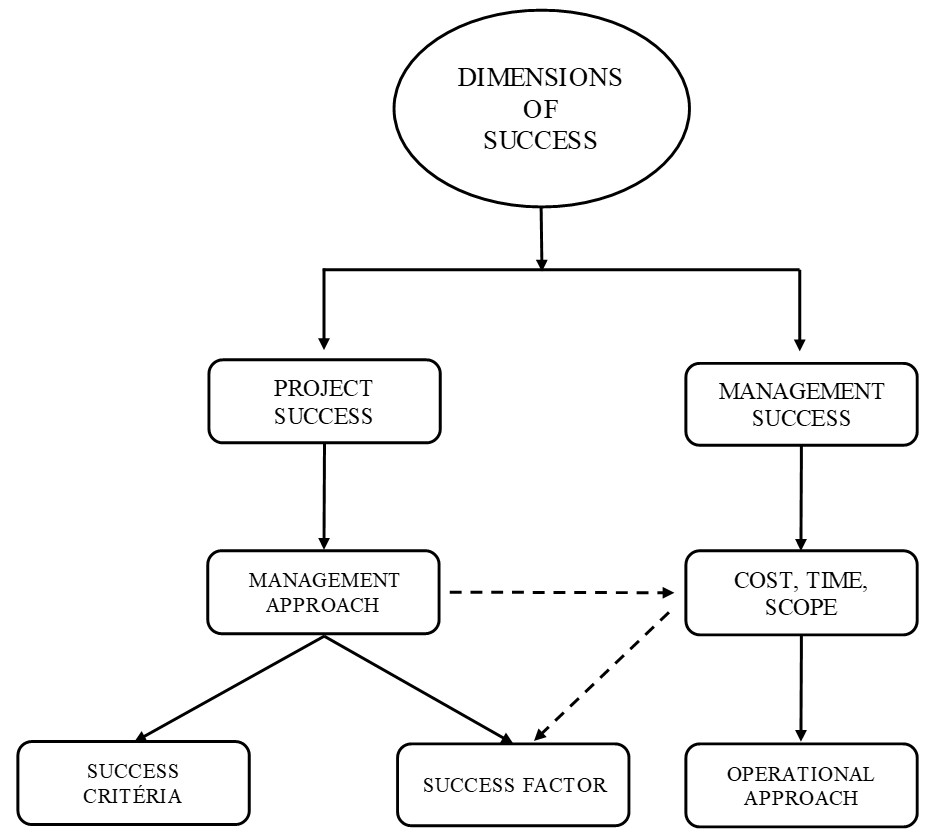
Success in Projects reveals a perception of the points outlined by the Dimension of Success, which encompasses both Project Success and Management Success (Cooke-Davies, 2002). In this understanding, Management Success will have as its main focus the fulfillment of pre-established parameters, while Project Success presents a clear and predominant vision of aspects of organizational improvement and project achievement (Figure 1).
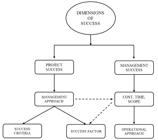
Rockhart (1979) points out that Project Success has as one of its focuses the factors that trigger vital actions for the organization, which were termed Critical Success Factors (CSFs). The critical success factors serve as a milestone for a conscious understanding of which points raise or decline a project within an organization (Bullen & Rockhart, 1981; Pacagnella et al., 2024a). Some studies point to different CSFs, always depending on the area and the company studied. For Pacagnella et al. (2024b), the main factors were: Establishing Clear Goals, Team Motivation, Greater Collaboration with the Client, and a Work Environment suitable for Agile.
This approach aims to understand, act, and direct the definitions of the most relevant needs of the project process, in order to provide ease of execution by managers (Pacagnella et al., 2024a; Rockhart, 1979; Cooke-Davies, 2002). Thus, CSFs encompass actions with greater positive impact on project aspects, providing competitive advantages over competitors, with CSFs being the vital key areas employed by organizations and companies to highlight the expectations created (Bullen & Rockhart, 1981).
Thus, it is understood that the CSFs of Stage-Gate management revolve around process control, schedules and planning; well-prepared and specialized teams (Slack et al., 2009); a high level of task rigor, in addition to updated and engaged management (Conforto & Amaral, 2016). Therefore, with this understanding, it is possible to conduct appropriate research to better understand the evolution regarding Agile-Stage-Gate, encompassing factors that highlight the role of management in project performance within its scope of Project Success. This understanding provided a robust support to achieve success in the development of the methodological aspect of the research, emphasizing publications with greater adherence to the theme.
3 Methodological aspects
This study addresses the question of what makes the Hybrid methodology effective and how to measure success within organizations that use this methodology. To this end, the methodological development was conducted in stages, culminating in a case study applying the Hybrid Project Management methodology through the Agile-Stage-Gate model in a small automation industry.
The first step was to conduct a robust bibliographic survey in order to create a solid base of studies that share similar aspects of hybrid management, as well as the converging points of success that these studies measure (factors). This step is of great relevance, since hybrid project management shows difficulties in classifying what the convergences of success are - critical success factors in projects.
These difficulties can be perceived from the singularities of execution presented, modifying the needs of each management for full success within the sphere of the specific project, since each project is unique in all aspects (Slack et al., 2009). The second step in the methodology of this study is to list the convergent points, here called Critical Success Factors, in order to identify which classes these factors will belong to, in addition to measuring the number of citations of these factors, creating a ranking of the most cited, thus forming the Categories of Hybrid Project Management.
After this stage, we begin with the selection of the factors with the greatest impact, in order to apply them in the Case Study at the target company, verifying the improvements obtained from the metrics of the aspects of Time, Cost, and Scope, thus developing a hybrid management framework capable of sustaining the application of the factors in a broad and robust manner.
3.1 Material collection
For the execution of the case study application, a search begins for the identification of publications that address the theme of Hybrid Project Management. A structure formed by keywords was used, which made it possible to establish a selection base through a filter of the desired articles within the chosen platforms.
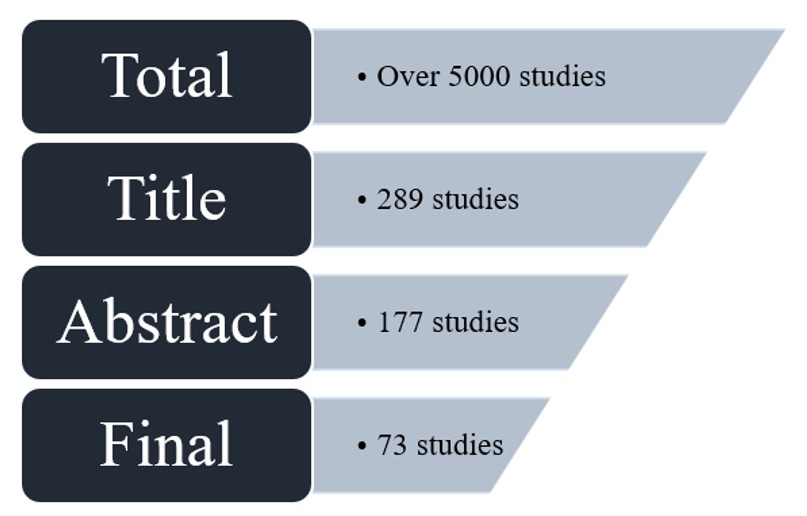
The study applies a time frame for publication, starting in 2001 and extending to the year 2024. The research was conducted through searches for keywords contained in the titles of publications that combined the word “Project” with derivatives of the Agile Project Management methodology and Hybrid Management. English terms were used to facilitate and broaden the bibliographic search. The following combinations were applied: “Agile AND Project”, “Scrum AND Project”, “Kanban AND Project”, “Lean AND Project”, and “Hybrid AND Project”. These searches resulted in a total exceeding 5,000 articles, which were filtered through a “Funnel” system, allowing for a more rigorous analysis of the publications to be used (Figure 2).
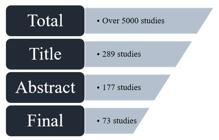
The filtering criteria for the selection of the stages followed the order of: Title of the selected publications, so that such articles should contain within their fields of study one of the combinations elaborated, resulting in a survey of 289 articles and studies. After this stage, a new analysis was applied, consisting of the reading of the Abstracts of the publications, which reduced the number to 177 articles and studies that aligned with the needs of the proposed study. Finally, another analysis was carried out, with the objective of deepening into the full reading of the publications, which enabled a selection consisting only of the articles and studies that emphatically presented hybrid project methodologies, reducing the number to 73 publications, which present applications of improvements leading to project growth and success.
After this stage, an analysis was made of which points were consistent as indicators of project success among the authors, in order to create a structure of categories and factors that would allow for an application within a case study. In this sense, these surveys provided solid and robust support for a critical and empirical analysis of the processes of success in projects that make use of hybrid methodologies.
4 Descriptive analysis
4.1 Categories and factors of Hybrid Project Management
The study succeeded in carrying out an analysis of the factors most frequently cited in the surveyed literature. In this way, a separation of these factors was conducted in order to create 5 Categories and 29 Factors. These categories encompassed different segments that made up hybrid project management, ranging from subjective situations (team motivation) to physical situations such as high-quality equipment and factory yard, as shown in Table 1.
Thus, it is important to note that these categories and their respective factors were not directed or listed randomly, but rather severely analyzed, seeking compatibility among each factor, as well as the most appropriate aspects for each class of category, in order to fit within the concepts of each chosen category. In this way, it was possible to observe the characteristics of each category, and how these are subdivided into levels of action.
Accordingly, there is the category Organization, whose characteristics are directly linked to the vision that an organization presents regarding its culture and subjective actions. In this category, one can observe qualities related to intrinsic and subjective aspects about the culture and methodologies applied in the workplace, in addition to being characterized by the factors that an organization can provide, whether in terms of physical environment, organizational culture, modus operandi, or ways of thinking through which the organization conceives its activities, mission, and objectives. This category comprises 6 factors.
In this sense, there is the category People, whose intrinsic characteristics of actions are directed toward the behaviors of employees and managers, their forms of execution, as well as their responsibilities. Another aspect of this category is related to team members, their actions linked to collective and/or individual success, as well as the ability to increase motivation regarding future work, so that collaboration with other team members aims to provide a great opportunity to learn new social, managerial, technical, and creative skills. This category comprises 6 factors.
Subsequently, it is possible to observe the category Processes, which focuses on the means of continuous execution, flows, control, and planning. This category represents the relationship of project planning and control, a well-executed schedule, and management appropriate to hybrid thinking, presenting the entire continuity of what is conceived at the beginning of the project through execution up to its final stage, accompanying the entire life cycle of this project. This category comprises 6 factors.
After that, one can observe the category Technical, a category that directly involves material factors, such as the factory yard, tools, and human resources. This category can be perceived based on the technical complexity of the project, the proper use of work software, the employability of a design suitable for the tools, as well as the concrete realization of an adequate integration test, the dynamism of new techniques according to demand, and the proper use of existing documentation. This category comprises 7 factors.
Finally, there is the category Project, which involves the conception and development of the entire project, as well as the action of management in the process. The Project category has fewer factors compared to the others, while at the same time presenting strong relevance regarding the initiation of projects, their risk and cost analyses, in order to allow a vision of the feasibility of completing the project. Thus, this category comprises 4 factors.
4.2 Success factors of Hybrid Project Management
After understanding which factors exist and the Categories to which they belong, it becomes possible to observe that these factors, when placed within their respective categories, present a number of citations found in the studies that compose the bibliometric analysis. This analysis was essential to properly identify which factors constitute the Critical Success Factors (the most frequently cited) within this hybrid methodology. In this regard, the five most cited factors were listed, as presented in Table 2.
The percentage of citation represents the relationship between the number of studies that identified a specific factor as a point of success and the total of 73 studies used as the research parameter, thus establishing the following ratio (Equation 1):
Thus, it is possible to observe that the factors with the highest level of citation and references are, respectively, Adequate project planning/strategy; Participative management, with visual management and lean thinking; Multifunctional teams with flexible and qualified people; The project imposed well-defined standards for process execution; and Project with initial risk assessment.
This analysis makes it possible to perceive that the main factors revolve around management actions and their applications, with the highest reference being Project planning/strategy, belonging to the Processes category, which is directly guided by managers, making the development of the entire process chain accessible and feasible. Thus, with the factors listed in their order of criticality, it is possible to apply them in order to carry out an analysis of the results of an empirical application, since bibliometrics and data analysis enabled a robust perception of the factors considered as ideas, making possible an application for case study.
Therefore, based on the bibliometric survey proposed in Table 1, it was possible to understand that there are 6 factors with citation rates below 40%, which demonstrates a lack of congruence among the authors regarding the level of success these factors would bring to hybrid management companies. On the other hand, there are 18 factors that present a citation rate above 50%, and among these, 5 stand out the most, namely: Adequate project planning/strategy with 81% of citations; Participative management, with visual management and lean thinking, with 79% of citations; Multifunctional teams with flexible and qualified people, with 78% of citations; The project imposed well-defined standards for process execution, with 77% of citations; and Project with initial risk assessment, with 74% of citations. After identifying the critical success factors, the study begins an empirical application in a Case Study at a small-sized automation company.
5 Analysis of results and empirical application
The thorough and in-depth analysis of the Critical Success Factors, as well as their Categories, provides an application of this survey in its most resolute state, allowing the factors to be understood both individually and in groups, while also enabling their interactions with other factors within the same category, or even their interaction with factors from adjacent categories.
This analysis, together with the bibliometric survey of the criticality of each factor (Table 1), presents itself as a robust support for a successful case study of the improvements sought by managers and organizations, mitigating errors, maximizing gains, and allowing for an understanding of the individualities of each organization.
For this purpose, the case study and empirical application were divided into 3 stages, namely: The Organizational Structure, understanding the company; The Application of the Framework, introducing the necessary improvements; and Conclusion, showing the final points identified.
5.1 Organizational structure
The organizational structure of the company before the application of the hybrid methodology consisted of a rigid hierarchy, based on the action of the Director (Owner of the company) as the main manager, with a secondary manager (tactical actions), the Operations Supervisor, who directly commanded the areas of Automation, Machining, Inventory, and Logistics.
The development activities were carried out by the designers (two mechanical designers and one electrical designer), who acted more as executors of directions, with little involvement with the client or in decision-making. The company did not have the position of Project Manager, which made all decisions centralized in the figure of the Director, limiting responses when he was engaged in other activities related to Administration, sales, or after-sales of the equipment.
As a result, the outcomes obtained through this Traditional management, when measuring the company’s Time, Scope, and Cost parameters, did not demonstrate a competitive advantage, which even resulted in a loss of the company’s profit margin, as shown in Table 3.
It is possible to observe that the Cost parameter generated by Traditional management exceeded the initial cost estimate by 11.5%, which resulted in a direct decrease in the company’s profit.
The new proposal aims at the implementation of Hybrid Management, in order to provide a robust foundation for the action structure so that the Project Manager assumes decisive command of the entire Tactical structure of the organization.
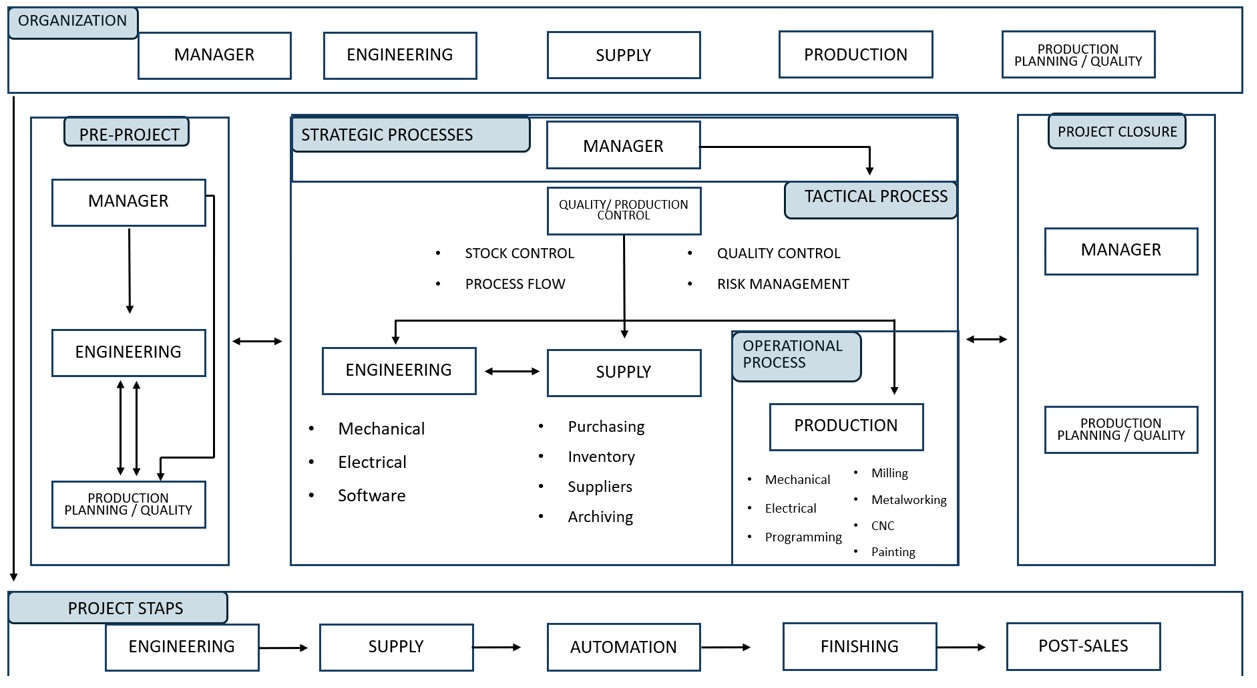
The purpose of the restructuring was conceived through the use of the most cited Critical Success Factor, Adequate project planning/strategy, in order to organize the proper direction for actions pertinent to hybrid management, aligning with the second most cited factor, Participative management, with visual management and lean thinking, which transformed the organizational structure as a whole, creating positions, new divisions, and new responsibilities, as shown in Figure 3.
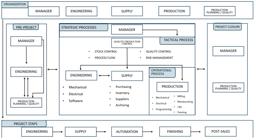
Organizational Structure for Implementing Hybrid Management. Source: Prepared by the Author.
From this restructuring it was possible to verify how each action fits within the organizational scenario of the company, modifying the initial guidelines of concentration of managerial decisions, which previously belonged solely to the Directorate before the shift to a hybrid model. At the same time, Figure 3 also makes it possible to observe the dimensions of the framing of each sector, as well as their responsibilities and hierarchies, generating a structure of flexible and dynamic feedback, making the actions clearer and more subtle. Thus, the actions related to the success factors were more easily applied and analyzed, allowing for a real verification of the management approaches, project stages, direct responsibilities, and critical factors that most impacted the aspects of Time, Scope, and Cost.
The understanding of the organizational structure, with Critical Success Factors directed toward Hybrid Management, is of utmost relevance for the in-depth analysis of the implementation of the critical factors, as it is through this understanding that a framework can be made viable to concretely organize the application parameters. These data serve as sources and tools for strategic planning aimed at improving project success. Thus, this analysis becomes a reliable and rapid form of empirical application of the factors based on its framework.
5.2 Framework application
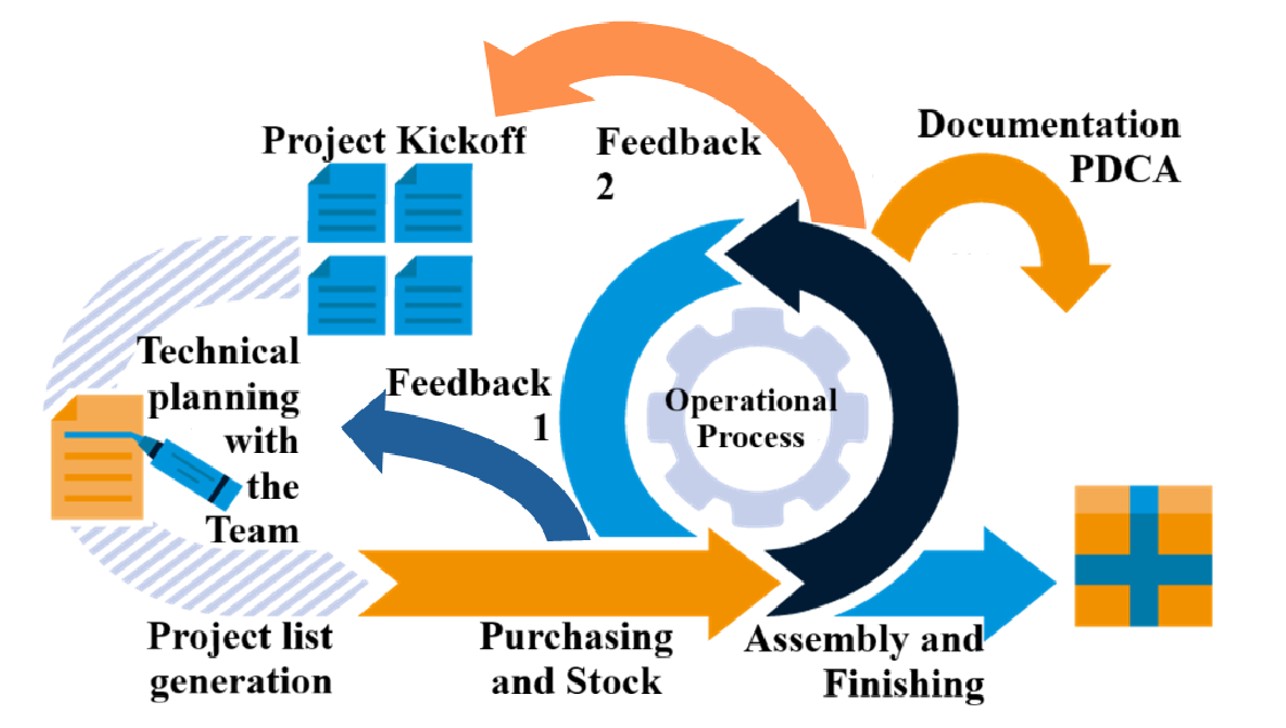
At this stage, the study focuses on the application of the 5 factors (Table 2), based on the organizational restructuring of Agile-Stage-Gate management, in order to empirically analyze their actions in a small-sized company in the automation sector. For this purpose, the 5 factors identified in the literature as critical to success were analyzed so as to create a framework based on Agile and Scrum processes, adapting it to a hybrid system for management facilitation, as shown in Figure 4.
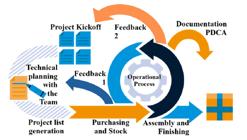
The measurement and analysis parameters will be based on Time, Cost, and Scope, allowing for an analysis with the results of previous projects in comparison to those managed by the hybrid methodology, which generated relevant results for the improvement of the company. The Framework is based on Scrum models, integrating Stage-Gate into the usual Waterfall project models, so that the beginning of the project can be observed in the “Project Kick-Off,” where the guidelines and needs made explicit by the clients are presented and, from this, the concept of the project to be developed is created, as listed in the factors “Project with initial risk assessment” and “The project imposed well-defined standards for process execution.”
Subsequently, there is the factor “Technical Planning with the team,” where the Project Manager will direct the models of hybrid management, in order to categorically apply the success factors, especially the factor “Multifunctional teams with flexible and qualified people,” coordinating practical and planning actions, as well as the necessary divisions for the development of the project itself.
Following this, there is the factor “Project List Generation,” which creates the demands for “Purchasing and Inventory,” and at this point, there is “Feedback 1,” so that the typical flexibility of the hybrid model aligns with the factor “Participative management, with visual management and lean thinking.” Subsequently, there are the factors “Operational Processes,” generating “Feedback 2,” resuming the factor “Adequate project planning/strategy.” Finally, there are the “PDCA Documentation” and “Assembly and Completion.” Understanding how the factors will act in practice through the framework makes it possible to conduct a real analysis of organizational improvement processes, as shown in Table 4.
Thus, the first factor to be analyzed was the 5th in the criticality of success ranking, which addresses the direct parameters of the initial project assessment. The execution of the factor “Project with initial risk assessment” was, prior to hybrid management, carried out only by the Director of the company, who assessed the parameters of total cost of manufacturing availability, machining capacity, as well as available assembly labor. In this scenario, it was observed that the projects had an average final delivery delay of 36 days, which generated both tangible and intangible losses for the company. This factor began to be executed by a group of 6 members, namely the Director, Project Manager, Senior Designer, Operations Supervisor, Quality Supervisor, and Machining Leader.
With this action, it was noticed that the scheduled timelines were insufficient in relation to the available workforce, as well as the machining capacity of the parts. The schedules could not be altered, but it was permitted to seek outsourcing for the machining of parts of the projects, in addition to modifying the way the project was executed, shifting toward modular actions. This allows the project to more quickly review any necessary feedback cycles, while enabling a more precise strategy regarding which modules would be machined internally or externally, anticipating subsequent stages, and providing greater control over execution time. This approach made it possible to observe a reduction in delays, resulting in an average delay of 3 days.
The second factor to be observed was “The project imposed well-defined standards for process execution.” This factor did not have a methodology within the company. As a rule, projects were developed in the engineering department, without the participation of the other sectors (i.e., lateral sectors), and without a presentation to the teams of the project to be built, in addition to machining execution being carried out based on part similarity, performed in batches.
As a positive point of this processing pattern by similarity, there is the speed of machining execution. However, the negative points of this practice were the assembly time (since this stage could only be completed after the machining and full treatment of the module), the time required for batching similar parts for different modules and projects (generating difficulty in the correct allocation of parts, as well as susceptibility to losses or machining in incorrect quantities), the high cost in case of rectification of a drawing, in addition to the high cost in case of an error in batch execution.
The application of management oriented toward a hybrid perspective made it possible to analyze the project as iterative, supporting feedback cycles without financial, time, or scope losses, or at least mitigating all the negative impacts that such feedback cycles could generate. In this sense, the imposed process execution standards, based on the Scrum-Agile framework, ensured that, in the projects under development, modularity was applied, creating “subprojects” in the Agile-Stage-Gate style, at the “Feedback 1” stage.
This action resulted in an analysis showing that only 6 parts had to be rectified, whereas in previous projects, a loss of 149 parts was observed (from a total of approximately 1,000 parts in both projects analyzed).
The third and fourth factors were analyzed together, namely “Multifunctional teams with flexible and qualified people” and “Participative management, with visual management and lean thinking.” This is because, previously, the teams were led only by the Director (Departments of Project Development and Processes) and the Operations Supervisor (Machining, Assembly, Production Planning and Control, and Logistics). The responsibility for all process, project, and production flows rested with these two managers.
After the implementation of hybrid management, the hierarchical configuration was restructured to include the Director (responsible for contracts and bidding), the Project Manager (responsible for the Project Department, and Production Planning and Control), the Quality Supervisor (responsible for the Processes and Logistics Department), and the Operations Supervisor (Machining and Assembly). Two employees were also selected to act respectively as machining leader and process and control leader.
Three quality verification teams were formed in order to cover the requirements of Cost, Time, and Scope, allowing the departments to act collaboratively with the other departments involved in project development (i.e., lateral departments). The managers had the responsibility of creating strategies to promote improvements in the lateral departments as well as in their own departments. Ideas were discussed weekly, and all managers were required to dedicate 10 hours per week working in loco in the lateral departments. The teams were self-managing and had the freedom to carry out verifications in the lateral departments, in order to create knowledge and multifunctionality.
In this way, a reduction of unplanned stoppages in processes and executions was observed, anticipating possible problems of execution, production, processes, and projects, reducing management interventions from 53 per week to only 4.
Finally, the last critical success factor applied was “Adequate project planning/strategy.” This factor presented the following conditions: projects were planned based on the company’s maximum resource capacity, assuming that the company would perform all procedures at 100% capacity at all times, without planning for strategic or maintenance stoppages, relying on the full availability of employees, and assuming that the company would execute a maximum of 4 projects simultaneously.
The planning process entailed consequences such as an average delay of 36 days in the final delivery of machines, procurement of more expensive items due to delivery times, excessive logistics trips for collecting purchased items, overload on machining equipment, unplanned stoppages caused by employee health issues, excessive overtime to meet deadlines, as well as rework in project development after assembling several components.
With the new Agile-Stage-Gate management process, it was established that the last project modules would be machined by external subcontractors, aiming to ensure that the revised drawings of the initial modules had already been completed, as well as the verification of the remaining project modules. Another planning approach was to analyze machining times by instituting that machines should not exceed 80% of their capacity, and to carry out assembly work always considering 90% of employees available.
An in-depth study was also conducted in the pre-project stage, in order to understand the risk points and weaknesses of each project, enabling alternatives so that this stage could count on more time, resources, or collaborators for execution. Management also acted on portfolio management, creating gaps of 7 to 10 days between the initiation of one project and another.
The results of this last factor were observed with the successful progress of six projects carried out simultaneously. Of these projects, two belonged to company “A,” one to company “B,” and three to company “C.” Management was able to identify that the risk factor for company A was software integration, and the action taken to ensure the success of this project was to anticipate development processes and the acquisition of items, approaching the process as “subprojects,” which allowed extending the software integration stage by five days.
In project B, the main risk factor was the acquisition of special items with long lead times. For this machine, the project development was redesigned to allow the assembly of long-lead-time items at the final stage. Finally, the machines for company C had the largest number of parts and components, making them difficult to assemble and integrate in terms of electromechanical systems.
To address this, careful process control was carried out (avoiding errors and unnecessary rework), along with modular acquisition and project development, external machining of 40% of the modules, and the presentation of the project to the entire team, enabling all employees to gain a more comprehensive understanding of the machines as a whole.
Thus, a concrete improvement can be verified in the three stipulated parameters, allowing for an analysis of the results of the empirical application. The results, as shown in Table 5, demonstrate an improvement of 91.7% in the Time parameter, with the aim of reducing the delays that had previously occurred. In the Scope parameter, an improvement of 75.5% was observed regarding the precise action of management, without unnecessary rework and with proper team engagement. Finally, in the Cost parameter, there was an improvement of 40.1%, reducing a total of approximately BRL 396,000.00, which had a drastic and positive impact on the continuity of the hybrid management methodology implementation.
6 Conclusion
Hybrid Project Management has proven to be in constant evolution over the years, with its application and visibility among companies and managers showing significant growth, as this management model enables a specificity of lightness and fluidity, combined with robust interaction. These aspects have made this approach a highly sought-after formula in the corporate environment, corroborating various studies in the academic field. Organizations that adopt the hybrid model have managed to create new products and services, directly impacting innovativeness and, therefore, sought to be assertive in leading paradigms of change and opportunities, while promoting security in relation to uncertainties, risks, and project complexity.
This study aimed to answer two research questions: “What makes the Hybrid model effective?” and “How to measure success within organizations that adopt this methodology?” In this sense, it is observed that the Stage-Gate model provides a global and unified action, facilitating communication processes among team members, as well as the definition of project stages. In this context, it becomes possible to integrate agile management practices, employing their foundations of self-discipline, flexible teams, iterative development, and multiple levels of planning and execution.
From this understanding, based on the bibliographic review, it was possible to identify 29 factors divided into 5 categories. Both the categories and the factors represent a consensus among the authors of the management methodologies included in the bibliometric study—whether hybrid, agile, or Stage-Gate. Thus, it was possible to observe which of these factors were most frequently highlighted by the authors, forming the critical success factors in projects. These factors were then inserted into a real-world context, promoting concrete changes in a small automation company whose portfolio is focused on the automotive industry. The critical factors identified were analyzed according to the parameters of Time, Cost, and Scope, generating both individual and collective numerical assessments of each factor applied in hybrid project management.
The first Critical Success Factor analyzed in the practical context was “Project with initial risk assessment”, with 74% of citations. In this factor, it was possible to observe the need for modification in the organizational structure and the management’s mode of operation. As a result, new positions were created, enhancing the focus on initial project risks, setting clearer project guidelines, and ensuring greater responsiveness among management members and their actions. The outcome was an 83.3% reduction in the average project completion delay.
Another factor analyzed was “The project imposed well-defined standards of process execution”, with 77% of citations. This factor previously lacked standardization, with centralized and non-integrated development, batch-based machining, and rigid process stages. These practices resulted in assembly delays, costly rework for the company, and elevated costs due to redesigns or the acquisition of new parts. By applying the hybrid model, it was possible to adopt a Scrum-Agile approach, creating “subprojects” through the modular breakdown of projects, facilitating rework in the Agile-Stage-Gate style. This led to only 6 parts requiring re-machining after production, compared to 149 in earlier projects, resulting in an approximate improvement of 96%.
The factors “Multifunctional teams with flexible and qualified people” and “Participative management, with visual management and lean thinking” were analyzed simultaneously due to their interrelated nature, although they belong to different categories. Before hybrid management, there was a heavy concentration of responsibilities, causing delays in responses, lack of process agility, fragmented perspectives, and centralized decision-making. After the adoption of the hybrid methodology, responsibilities were shared, multifunctional teams were established, managers worked weekly alongside lateral departments, and teams were granted greater freedom to collaborate across sectors. As a result, managerial interventions for scope rework dropped drastically to around 25% of previous levels, fostering greater trust, agility, assertiveness, and cost reduction.
Finally, “Adequate planning/strategy of projects”, with 81% of citations—the most cited factor by authors—proved to be essential for a holistic analysis of all other factors. It was also responsible for enabling portfolio analysis and real, effective control over company resources. This factor allowed for a 91% reduction in average project delays, as well as a structured and robust analysis of each project stage, risk assessment, and identification of the most pertinent actions. This led to a 40% reduction in overall expenses across the 6 executed projects.
In conclusion, this study enabled the development of a solid framework that supports the clear and dynamic application of Critical Success Factors. The findings clearly and objectively demonstrate that what makes the Hybrid model effective is the recognition of intrinsic factors identified through research, enhancing the methodology with participative management that facilitates the execution of the most impactful factors within organizations. Moreover, the division into categories, as well as the factors themselves, proved essential in answering the question of how to measure success within organizations using this methodology, as real improvements were demonstrated in the parameters of Time, Cost, and Scope.
Statement on Data Availability
The data were collected through a survey of individual projects and the team, in agreement with management regarding the survey, as well as the cost survey, with a single observation. The names of those involved and the company were not disclosed.
-
Financial support:
None.
-
How to cite:
Silva, V. R. (2025). Application of Hybrid Project Management as a success enhancer in industries. Gestão & Produção, 32, e4225. https://doi.org/10.1590/1806-9649-2025v32e4225
References
-
Bianchi, M. J., Conforto, E. C., & Amaral, D. C. (2021). Beyond the agile methods : a diagnostic tool to support the development of hybrid models. International Journal of Managing Projects in Business, 14(5), 1219-1244. http://doi.org/10.1108/IJMPB-04-2020-0119
» http://doi.org/10.1108/IJMPB-04-2020-0119 -
Bianchi, M. J., & Amaral, D. C. (2021). A method to create hybrid models using a morphological matrix. Journal of Modern Project Management., 9, 49-63. http://doi.org/10.19255/JMPM02605.
» https://doi.org/10.19255/JMPM02605 - Bullen, C. V., & Rockhart, J. F. (1981). A primer on critical success factors (Working Paper, No. 69). Cambridge: Massachusetts Institute of Technology, Sloan School of Management, Center for Information Systems Research.
-
Chow, T., & Cao, D. B. (2008). A survey study of critical success factors in agile software projects. Journal of Systems and Software, 81(6), 961-971. http://doi.org/10.1016/j.jss.2007.08.020
» http://doi.org/10.1016/j.jss.2007.08.020 -
Ciric, D., Lalic, B., Gracanin, D., Palcic, I., & Zivlak, N. (2018). Agile project management in new product development and innovation processes: challenges and benefits beyond software domain. In 2018 IEEE International Symposium on Innovation and Entrepreneurship (TEMS-ISIE) (pp. 1-9). New York: IEEE. http://doi.org/10.1109/TEMS-ISIE.2018.8478461
» http://doi.org/10.1109/TEMS-ISIE.2018.8478461 -
Conforto, E. C., & Amaral, D. C. (2016). Agile project management and stage-gate model: a hybrid framework for technology-based companies. Journal of Engineering and Technology Management, 40, 1-14. http://doi.org/10.1016/j.jengtecman.2016.02.003
» http://doi.org/10.1016/j.jengtecman.2016.02.003 -
Cooke-Davies, T. (2002). The “real” success factors on projects. International Journal of Project Management, 20(3), 185-190. http://doi.org/10.1016/S0263-7863(01)00067-9
» http://doi.org/10.1016/S0263-7863(01)00067-9 -
Cooper, R. G. (2016). Agile-stage-gate hybrids. Research Technology Management, 59(1), 21-29. http://doi.org/10.1080/08956308.2016.1117317
» http://doi.org/10.1080/08956308.2016.1117317 -
Cooper, R. G., & Sommer, A. F. (2016). The Agile-stage-gate hybrid model: a promising new approach and a new research opportunity. Journal of Product Innovation Management, 33(5), 513-526. http://doi.org/10.1111/jpim.12314
» http://doi.org/10.1111/jpim.12314 -
Costantini, S., Hall, J. G., & Rapanotti, L. (2021). Using complexity and volatility characteristics to guide hybrid project management. International Journal of Managing Projects in Business, 14(5), 1135-1162. http://doi.org/10.1108/IJMPB-06-2020-0187
» http://doi.org/10.1108/IJMPB-06-2020-0187 - Fernandez, D. J., & Fernández, J. D. (2008). Agile project management: agilism versus traditional approaches. Journal of Computer Information Systems, 49(2), 10-17.
-
Gemino, A., Horner Reich, B., & Serrador, P. M. (2020). Agile, traditional, and hybrid approaches to project success: is hybrid a poor second choice? Project Management Journal http://doi.org/10.1177/8756972820973082
» http://doi.org/10.1177/8756972820973082 - Highsmith, J. (2004). Agile project management: creating innovative products. Redwood City: Addison-Wesley.
-
Mousaei, M., & Gandomani, T. J. (2018). A new project risk management model based on Scrum framework and Prince2 methodology. International Journal of Advanced Computer Science and Applications, 9(4), 442-449. http://doi.org/10.14569/IJACSA.2018.090461
» http://doi.org/10.14569/IJACSA.2018.090461 -
Ozkan, N., Erdogan, T. G., Taskesenlioglu, S., & Gök, M. Ş. (2025). Enhancing information technology project portfolio management with agile principles and Kanban practices. International Journal of Managing Projects in Business, 18(3), 626-660. http://doi.org/10.1108/IJMPB-01-2025-0024
» http://doi.org/10.1108/IJMPB-01-2025-0024 -
Pacagnella, A. C., Jr., Silva, V. R., & Aquino, P. T., Jr. (2024a). Critical success factors for agile software development. IEEE Transactions on Engineering Management, 71, 14807-14823. http://doi.org/10.1109/TEM.2024.3441829
» http://doi.org/10.1109/TEM.2024.3441829 -
Pacagnella, A. C., Jr., Silva, V. R., & Aquino, P. T., Jr. (2024b). Exploring the critical success factors in Agile project management: a comprehensive survey analysis. In Proceedings of the 9th North American Conference on Industrial Engineering and Operations Management, Washington D.C., USA. Southfield: IEOM Society International. http://doi.org/10.46254/NA09.20240019
» http://doi.org/10.46254/NA09.20240019 - Project Management Institute – PMI. (2017). Um guia do conhecimento em gerenciamento de projetos (guia PMBOK). Newtown Square: Project Management Institute, Inc.
- Rockhart, J. F. (1979). Chief executives define their own data needs. Harvard Business Review, 57(2), 81-93. PMid:10297607.
-
Rodriguês, I., & Alves, W. (2025). A proposed conceptual model for linking Lean thinking and project management in the IT sector. International Journal of Lean Six Sigma, 16(2), 262-295. http://doi.org/10.1108/IJLSS-11-2023-0198
» http://doi.org/10.1108/IJLSS-11-2023-0198 - Slack, N., Chambers, S., & Johnston, R. (2009). Administração da produção (3. ed.). São Paulo: Atlas.
-
Editor-in-Chief
Pedro Munari