Characterization of pitaya phenology in the coastal region of Santa Catarina state
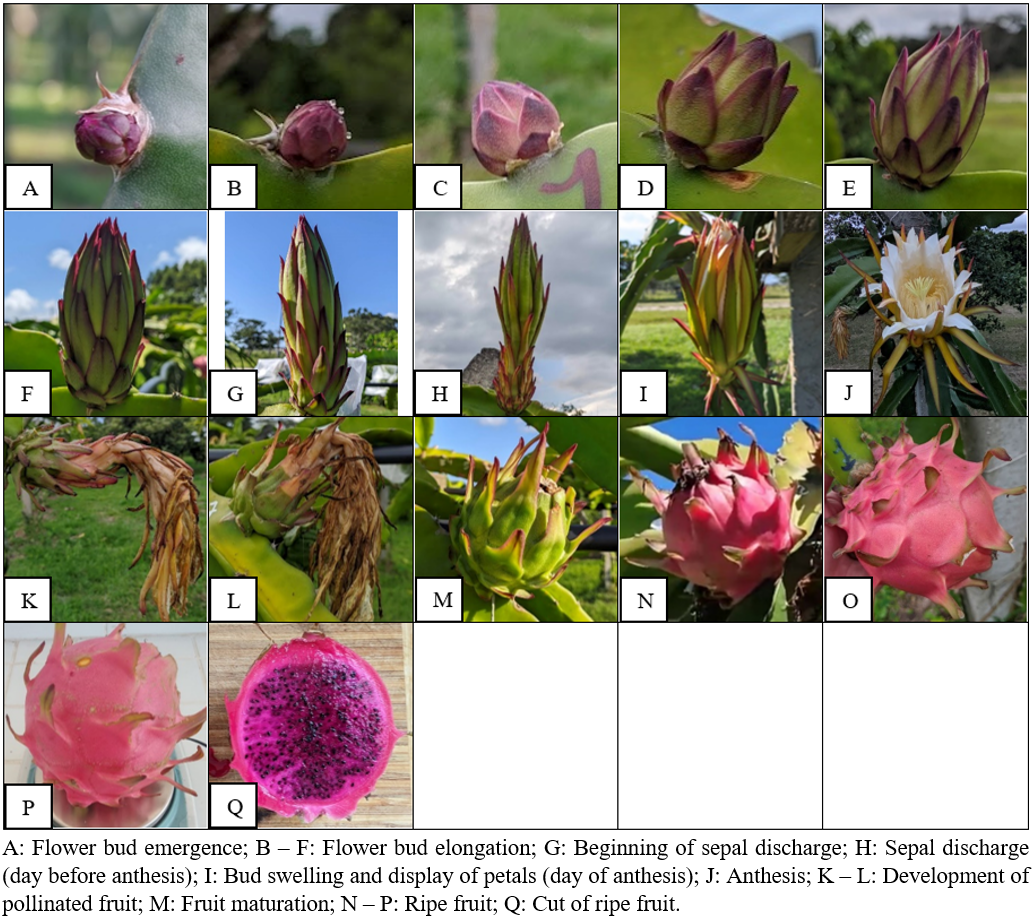
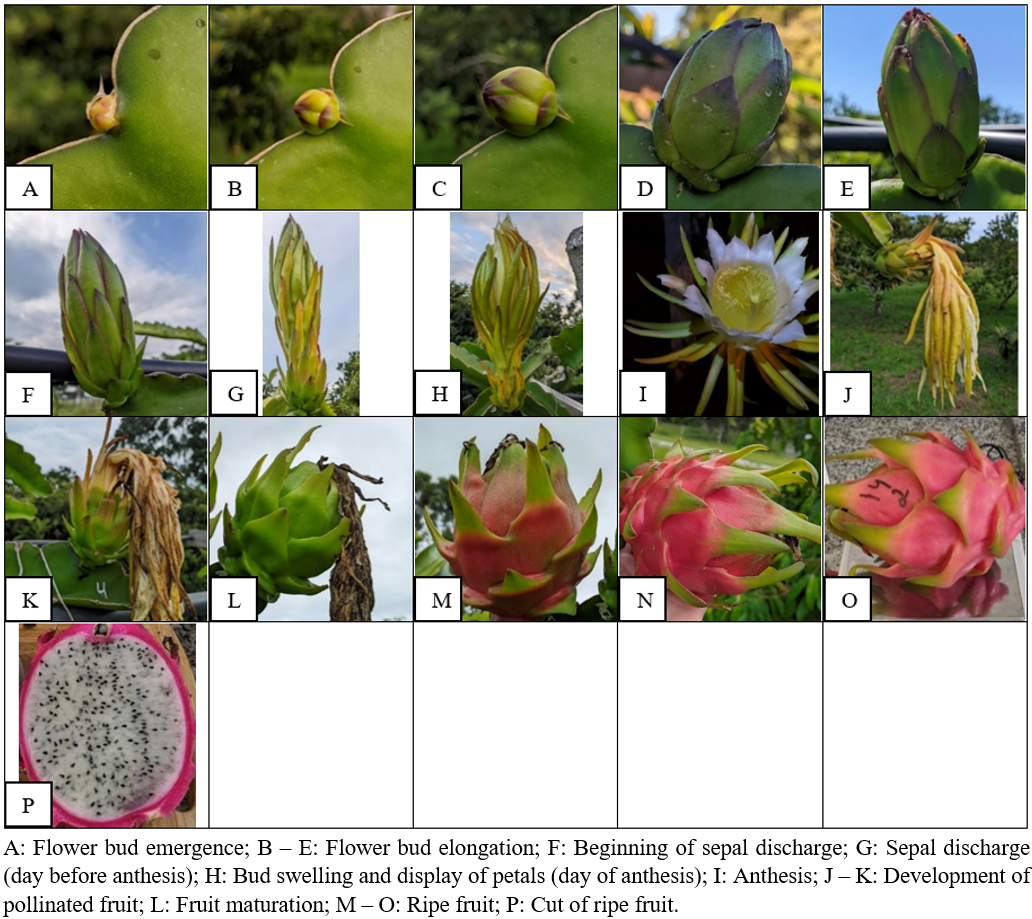
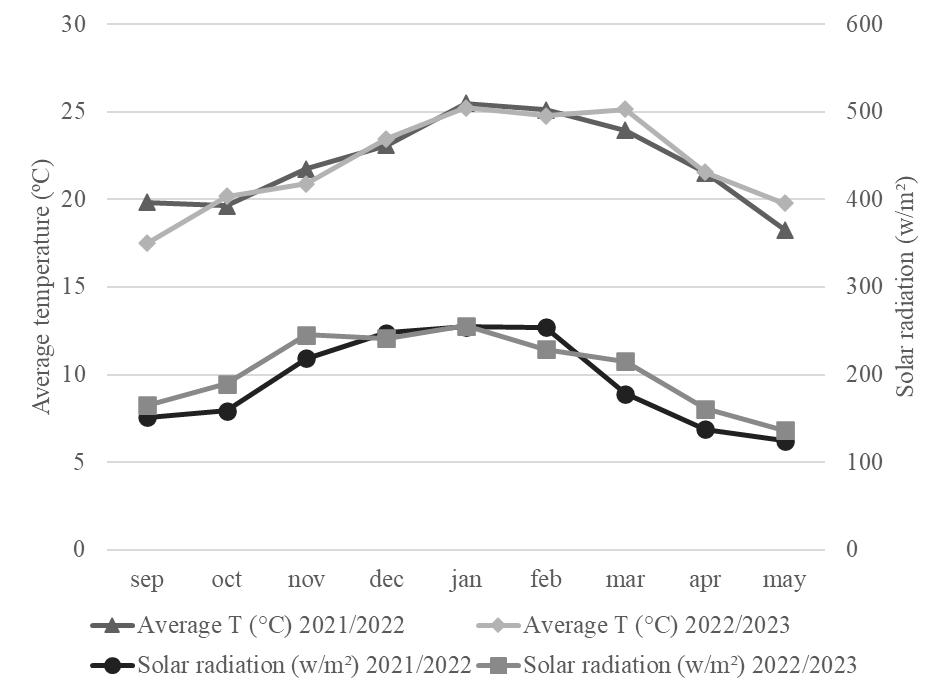
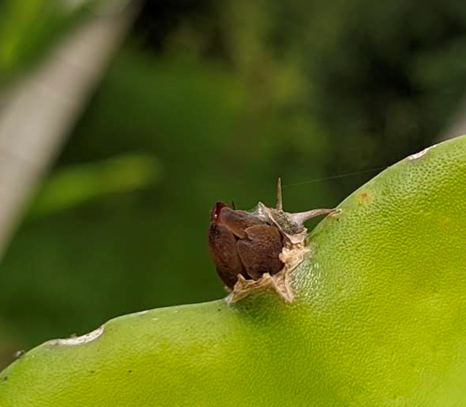
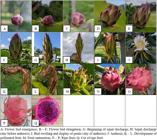
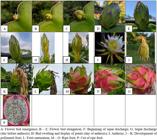
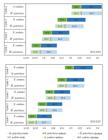
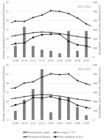
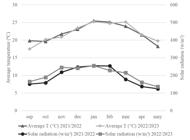
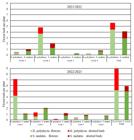
Pitaya is a fruit-bearing cactus with a high capacity for climate adaptation. This study characterized the reproductive phenological stages of Hylocereus polyrhizus and Selenicereus undatus in Florianópolis, SC, between 2021 and 2023, over two harvest seasons. Productive cycles, number of flowers per plant, flowering duration, and fruiting were analyzed and correlated with local meteorological conditions. Additionally, a phenological scale with images of floral and fruit stages was developed, along with an index of productive and aborted flower buds. Four to five productive cycles were observed, with an increase in fruit maturation time as temperature and radiation decreased. H. polyrhizus exhibited a higher flower bud abortion rate but produced more flowers overall. It also had a higher average fruit mass and pulp yield, especially in the second harvest. S. undatus, on the other hand, had a greater peel mass and superior fruit quality in terms of the SS/AT ratio. No significant differences in productivity were detected between cycles and harvests. The findings contribute to the management of the crop and a better understanding of the pitaya’s productive cycle in a subtropical climate.
Index terms
Hylocereus polyrhizus
;
Selenicereus undatus
; flower bud abortion; Fruit quality
 Thumbnail
 Thumbnail
 Thumbnail
 Thumbnail
 Thumbnail
 Thumbnail
 Thumbnail