Characterization of pitaya phenology in the coastal region of Santa Catarina state
Abstract:
Pitaya is a fruit-bearing cactus with a high capacity for climate adaptation. This study characterized the reproductive phenological stages of Hylocereus polyrhizus and Selenicereus undatus in Florianópolis, SC, between 2021 and 2023, over two harvest seasons. Productive cycles, number of flowers per plant, flowering duration, and fruiting were analyzed and correlated with local meteorological conditions. Additionally, a phenological scale with images of floral and fruit stages was developed, along with an index of productive and aborted flower buds. Four to five productive cycles were observed, with an increase in fruit maturation time as temperature and radiation decreased. H. polyrhizus exhibited a higher flower bud abortion rate but produced more flowers overall. It also had a higher average fruit mass and pulp yield, especially in the second harvest. S. undatus, on the other hand, had a greater peel mass and superior fruit quality in terms of the SS/AT ratio. No significant differences in productivity were detected between cycles and harvests. The findings contribute to the management of the crop and a better understanding of the pitaya’s productive cycle in a subtropical climate.
Index terms
Hylocereus polyrhizus
;
Selenicereus undatus
; flower bud abortion; Fruit quality
Resumo:
A pitaya é uma cactácea frutífera com alta capacidade de adaptação climática. Este estudo caracterizou os estádios fenológicos reprodutivos de Hylocereus polyrhizus e Selenicereus undatus em Florianópolis-SC, entre 2021 e 2023, ao longo de duas safras. Foram analisados os ciclos produtivos, número de flores por planta, duração da florada e frutificação, correlacionados às condições meteorológicas locais. Além disso, foi elaborada uma escala fenológica comimagens dos estádios florais e de frutos, bem como um índice de botões florais produtivose abortados.Observou-se de 4 a 5 ciclos produtivos, com aumento do tempo de maturação dos frutos conforme temperatura e radiação diminuíram. H. polyrhizus apresentou maior taxa de abortamento de botões florais, mas produziu mais flores ao final. Além disso,teve maior média de massa de fruto e rendimento de polpa, especialmente na segunda S. undatussafra., por outro lado, destacou-se pela maior massa de casca e melhor qualidade dos frutos na relação SS/AT. Não foram detectadas diferenças significativas na produtividade entre os ciclos e safras avaliadas. Os resultados contribuem para o manejo dacultura e a compreensão do ciclo produtivo da pitaya em clima subtropical.
Termos para indexação
Hylocereus polyrhizus
;
Selenicereus undatus
; abortamento de botões florais; qualidade de fruto
Introduction
Pitaya, also known as dragon fruit, is a cactus native to Central and South America (IBRAHIM et al., 2018). Its fruit has been highly appreciated by consumers due to its qualitative aspects of flavor and texture, in addition to its health benefits (LIMA et al., 2014).
It has become a great option for diversifying fruit farming (SATO et al., 2014), especially in the state of Santa Catarina, which is characterized by many small properties.
This crop is very important for Santa Catarina agriculture, the production of pitaya in the State has expanded significantly in recent years, especially in the southern and coastal region of the state, which accounts for more than 90% of the state’s total output.
In the 2021/22 season, around 4,523 tons were harvested across 276 hectares, with an average yield of 16.4 tons per hectare.
The number of growers increased by 139% between 2017 and 2022, reaching a total of 389 farmers (GOULART et al., 2023).
It is a hardy fruit with high capacity to adapt and survive in different climates and altitudes (LE BELLEC et al., 2006). This plasticity is related to its Crassulacean Acid Metabolism (CAM), which increases water-use efficiency (TAIZ; ZEIGER, 2010).
However, despite its broad adaptability, phenological information under subtropical conditions remains limited, particularly in southern Brazil, where cooler temperatures and shorter photoperiods prevail. The study of pitaya phenology is due to the importance of understanding the mechanisms of its growth and reproductive cycle, which result in better crop management (MARQUES, 2010), as well as serving as a basis for studies related to the adaptation of the species to different environments (SEGANTINI et al.,2010).
Its fruit production occurs mainly between the months of November and April in the southern hemisphere, and is defined by environmental issues, such as luminosity, temperature and solar radiation (MARQUES et al., 2011). It is considered a long-day plant, with floral induction in response to conditions of greater photoperiod and temperature, which directly influences the plant’s ability to initiate the flowering phase (LE BELLEC et al., 2006; JIANG et al., 2012).
The pitaya harvest occurs in 4 to 8 well-defined cycles (PUSHPAKUMARA et al., 2005), in which there is the emission and development of the floral bud, anthesis, development and maturation of the fruit, stages that commonly occur simultaneously (MIZRAHI; NERD, 1999). From emission to formation of the flower bud, there is an average duration of up to 23 days. Pitaya production cycles range from four to eight per season (PUSHPAKUMARA et al., 2005), encompassing the stages of floral bud emission and development, anthesis, fruit set, and ripening, which often occur simultaneously (MIZRAHI; NERD, 1999). The average duration from bud emergence to anthesis is about 20 days, and from pollination to harvest ranges from 34 to 43 days, depending on temperature (LONE et al., 2020).
The study of pitaya phenology is fundamental for the development of efficient management strategies and for maximizing productive potential, especially on the coast of Santa Catarina, where the crop is gaining ground and there is little information available. Therefore, this study aimed to characterize the reproductive phenological stages of Hylocereus polyrhizus and Selenicereus undatus under the climatic conditions of Florianópolis, Santa Catarina State, providing insights to improve crop management and production planning in subtropical regions.
Material and methods
Characterization of experimental area
The experiment was conducted from November 2021 to May 2023, in the orchard of Ressacada Experimental Farm, from Center for Agricultural Sciences of Santa Catarina Federal University (UFSC), located in the municipality of Florianópolis, Santa Catarina State, at geographic coordinates 27°41’0.7”S, 48°32’38”W and altitude of 5 m.
The climate of the region, according to the Köppen-Geiger climate classification, is Cfa (humid subtropical) with average temperatures of 21.5 ºC and 1638.2 mm of average annual rainfall (BACK; POLETO, 2017). The municipality of the experiment has an average photoperiod of 12.9 h, with the longest days found between the months of November and February, with an average of 14 h (BEGNINI et al., 2013). The soil in the experimental area is classified as Typical Hydromorphic Quartzarenic Neosol (NIERO,2011).
Origin of plants
The plants of pitaya (H. polyrhizus and S.undatus) were obtained from a commercial orchard located in the city of Londrina, Paraná. They were produced in July 2019 from cladode cuttings measuring 15 to 30 cm in length, which were stored in a protected environment for a period of 15 days for the healing of the cuts. The cuttings were then rooted individually in two-liter pots measuring approximately 15 cm in height. The substrate used consisted of a sand base and commercial Plantmax® substrate. The cuttings were inserted approximately 5 cm deep and irrigated once a week. The plants formed were planted in the field in December 2019.
Installation, training and experimental design
The plants were planted in pairs of the same species adjacent to concrete posts at 1.8 m high, in fertilized substrate, at an elevation of 40 cm in relation to the terrain. The experiment installed had 24 plants of S. undatus and 24 plants of H. polyrhizus distributed in 2 planting lines, with spacing of 3 m between them and 2 m between posts. The training system was umbrella type. All the plants of the experiment, which were located between the edges of the area, were evaluated. Bird attacks were occasionally observed during the final stages of fruit ripening.
To prevent extreme damage, unripe pitaya fruits were manually bagged 15 days after anthesis with non-woven bags.
Based on soil analysis, which indicated average levels of organic matter and availability of P2O5 and K2O, the following fertilization was carried out per harvest, considering the expected productivity of 30 t.ha-1: 200 g of urea, 51 g of triple superphosphate, 145 g of potassium chloride, applied to the base of the post with two plants, divided into the months of September, November, January and March of the 2021/22 and 2022/23 harvests.
Fertilization was based on the recommendation of Lone (2020).
Climate assessments
Throughout the work evaluation period, meteorological data was collected and correlated with the reproductive stages of pitaya, being presented graphically together with the statistical analysis. Methodology based on the proposal of Osuna-Enciso et al. (2016).
Data of minimum, average and maximum temperature (°C), minimum, average and maximum relative humidity (%) and rainfall (mm) were collected at the meteorological station of the Ressacada Experimental Farm Station CCA/UFSC (LABORATÓRIO DE CLIMATOLOGIA AGRÍCOLA, 2023).
Solar radiation data (W/m2) were collected from meteorological stations of the Agricultural and Rural Extension Company of Santa Catarina (Epagri)/Environmental Resources and Hydrometeorology Information Center of Santa Catarina (CIRAM), station 1006 Florianópolis (EPAGRI, 2020). The average monthly photoperiod data was prepared using the NOAA (National Oceanic and Atmospheric Administration) Solar Calculator (GML, 2005). The data can be consulted in full Table 1, Observed Meteorological Data.
Reproductive phenological traits
Phenological monitoring was carried out daily (JIANG et al., 2011) from 24 plants of each species with uniform characteristics (OSUNA-ENCISO et al., 2016) during two productive harvests, referring to the cycles 2021/2022 and 2022/2023, these being the second and third harvests of the orchard. It was also done, as proposed by Osuna-Enciso et al. (2016), the separation and quantification of the flowering cycles that occur in each productive harvest.
Phenological monitoring was correlated with climatic monitoring.
The traits observed in reproductive phenology were the period from the beginning to the end of flowering, the number of floral cycles per harvest, the number of flowers per plant per cycle, the average duration in days of flowering and the average duration in days of fruit development from pollination to harvest according to the methodology proposed by Ha et al. (2018).
The floral and fruit stages were also evaluated: five randomly selected emerging flower buds were marked, and their development was recorded to identify the duration of different floral and fruiting stages, according to the methodology proposed by Ha et al.(2018).
In addition, a phenological scale was created with images of the monitoring of the floral and fruit stages, according to the methodology of Rabelo et al. (2020). Buds or fruits damaged by birds were recorded as losses and excluded from time-to-event summaries.
A flower set index (%) was developed, presented in graph form: flower buds that produced flowers in relation to flower buds that aborted, calculated by (flowers/flower buds) x 100, methodology adapted from Jiang et al. (2011).
Fruit quality assessment
From the sampling of 20 fruits per cycle, evaluations of fruit mass (g), pulp mass (g), peel mass (g) and pulp yield (%) were carried out for the production cycles of the 2021/2022 and 2022/2023 harvests. From the pulp extraction, the titratable acidity (expressed in % of malic acid), soluble solids (expressed in °Brix) and pH were determined using the methodology proposed by Osuna-Enciso et al. (2016).
For measurements, 5 ml of juice was mixed with 20 ml of distilled water. This mixture was then filtered. From this mixture, the titratable acidity (TA) was determined by volumetry with an indicator. 2 drops of phenolphthalein were added and, under stirring, a sodium hydroxide solution (0.1 N NaOH) was added until the color changed (ZENEBON; PASCUET, 2005). Soluble solids (SS) were obtained by reading on a digital refractometer (ITREFD-45). The device was calibrated with distilled water, then the solution was distributed over the prism and the reading was performed directly in ºBrix. An index to evaluate the maturation from the SS/AT ratio was obtained. The pH was evaluated by reading the must samples on a bench pH meter (Adwa Instruments B.V.B.A - AD1000, Romania) calibrated with buffer solutions at pH 4.0 and pH 7.0.Due to the attack of birds (Azure Jay - Cyanocorax caeruleus), there was a loss of data relating to the third cycle of H. polyrhizus and S. undatus of the 2021/2022 harvest, and the fifth cycle of S. undatus of the 2022/2023 harvest, meaning that harvest data for this period could not be evaluated.
Data analysis
The experimental design adopted was completely randomized, with a 5 x 2 bi-factorial and 4 x 2 bi-factorial scheme, with 24 replicates. Where 4 production cycles in 2021/2022 and 5 production cycles in 2022/2023 were evaluated, with 2 species in each. Climatic data and phenology were analyzed through descriptive statistics. The data related to production and fruit characteristics were subjected to ANOVA and the means compared with each other by the Tukey test (P < 0.05), the software R v. 4.2.3 (R CORE TEAM, 2023) was used.
Before ANOVA, assumptions were verified: residual normality (Shapiro–Wilk) and homogeneity of variances (Bartlett). When needed, data were transformed (√x or ln(x)). The model was:Yij= µ+Ti+εij,with εij~N(0,σ2).
Where Yij is the observation 𝑗under treatment i;µ is the overall mean; Ti is the effect of treatment i; εij is the random error associated with each observation; and σ2 is the common variance of the errors. Missing data (e.g., bird-damaged fruits) were handled by cycle mean imputation, preserving replication without biasing inference.
Results and discussion
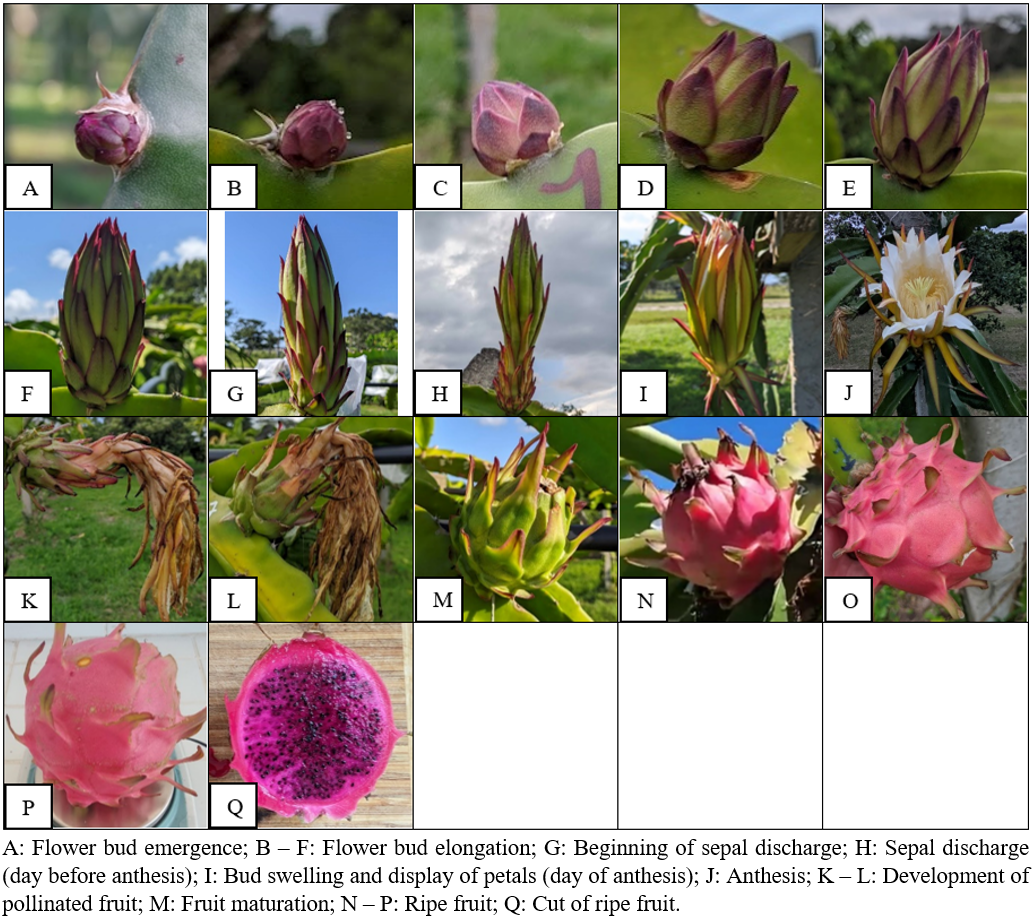
Figure 1 shows the development stages of H. polyrhizusflower bud until its ripe fruit.
The time elapsed from emission to full development of the flower bud (Figure 1 A-I) was 20 days, when anthesis occurred.
In H.polyrhizus, bud emission to anthesis averaged ~20 days, anthesis lasted one day, and fruit growth/maturation required ~33.5–45.5 days after anthesis, totaling ~54–67 days per cycle depending on the season. After fertilization, fruit development began (Figure 1 K-L), 4 to 5 days after pollination. On average, 33.5 to 45.5 days after anthesis, fruit growth and maturation occurred (Figure 1 M), the fruit was ready for harvest. The total period of the production cycle varied between 54 and 67 days, depending on the time of year.
In a previous study carried out in Hawaii, 17 to 21 days of flower bud development to anthesis were observed for H. polyrhizus (ZEE et al., 2004). In another study carried out in Taiwan, a duration of 18 days from flower bud development to anthesis were observed and 32 days after anthesis to fruit maturation (HA et al., 2014).
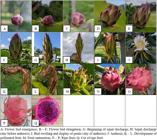
Sequence of development from flower bud to fruit of red-fleshed pitaya (H. polyrhizus) in Florianópolis - SC.
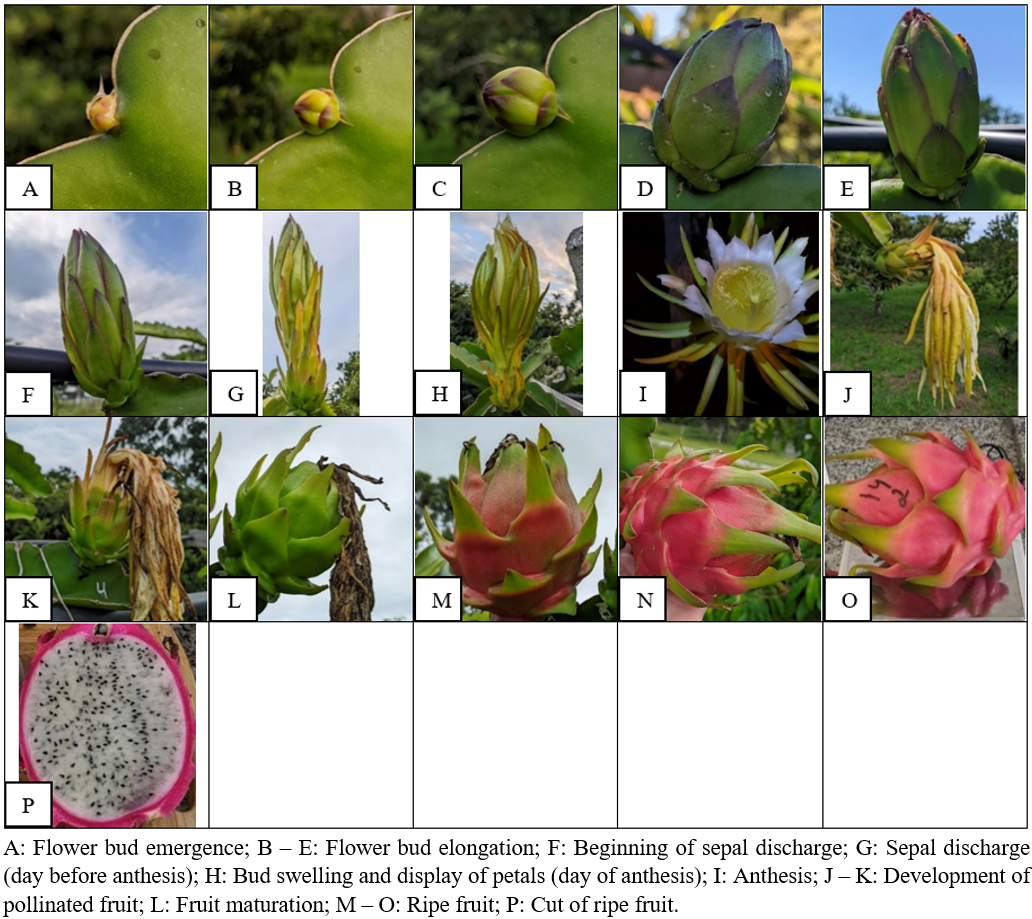
Figure 2 shows the stages of development of the flower bud of S. undatus until its mature fruit. The time elapsed from emission to full development of the flower bud (Figure 2 A-H) was 19 days, when anthesis occurred. In S. undatus, bud emission to anthesis averaged ~19 days, anthesis lasted one day, and fruit growth/maturation required ~33.5–45.5 days, yielding seasonal cycles of ~52–65.5 days. After fertilization occurred, fruit development began (Figure 2 J-K), 4 to 5 days after pollination.
From then on, fruit growth and maturation occurred (Figure 2 L), with an average duration of between 33.5 and 45.5 days. The total period of the production cycle varied between 52 and 65.5 days, depending on the time of year. After harvesting, in fruits analyzed in the laboratory, it was possible to observe aspects of the red skin color with green bracts, white flesh and numerous seeds (Figure 2 O-P).
The results obtained corroborate those of Silva et al. (2015) who observed 18 to 23 days in the development of the flower bud and 34 to 43 days for fruit development after pollination in Jaboticabal - SP, while Marques et al. (2011) observed 19 to 21 days in the flower bud development and 30 to 40 days for the development of the fruit after pollination in Lavras - MG. On the other hand, Ha et al. (2014), in Taiwan, observed 15 days in the development of the flower bud of S. undatus, while Pushpakumara et al. (2005), in Sri Lanka, observed only 13 days for Hylocereus spp.
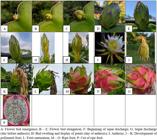
Sequence of development from flower bud to fruit of red pitaya with white flesh (S. undatus) in Florianópolis - SC.
In Figure 3, it is possible to observe that the 2021/2022 cycle occurred from 12/06/2021 to 05/13/2022 and the 2022/2023 cycle occurred from 11/22/2022 to 04/22/2023, when the last fruits were harvested.
In 2021/2022 it occurred distributed in four distinct cycles for both species. In 2022/2023 it was distributed in four cycles for H. polyrhizus and five cycles for S. undatus.
On the average of two evaluated years, the first cycle began with the emergence of H. polyrhizus flower buds started on December 2nd, with an average duration of 21 days until anthesis occurring for 6 days, and an average of 35 days from fertilization to fruit maturation. On average S. undatus the emergence of flower buds began on December 4th, with an average duration of 19 days until anthesis, occurring for 7 days, and an average of 37 days from fertilization to fruit maturation.
On average, the second cycle began with the emergence of H. polyrhizus flower buds started on December 26th, with an average duration of 19 days until anthesis occurring for 4 days, and an average of 38 days from fertilization to fruit maturation. S. undatus began the emergence of flower buds on December 27th, with an averageduration of 19 days until anthesis occurring for 4 days, and an average of 38 days from fertilization to fruit maturation. S. undatus began the emergence of flower buds on December 27th, with an average duration of 19 days until anthesis, occurring for 3 days, and an average of 37 days from fertilization to fruit maturation.
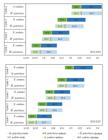
Average period of phenological stages, from the emergence and development of flower buds, to anthesis, and to development and maturation of fruits, in days, separated by cycles, of H. polyrhizus and S. undatus, in the 2021/2022 and 2022/2023 cycles.
On average, the third cycle began with the emergence of H. polyrhizus flower buds on January 19th, with an average duration of 20 days until anthesis occurring for 2 days, and an average of 40 days from fertilization to fruit maturation. S. undatus initiated flower bud emergence on January 21st, with an average duration of 19 days until anthesis, occurring for 2 days, and an average of 39 days from fertilization to fruit maturation.
On average, the fourth cycle began with the emergence of H. polyrhizus flower buds on February 19th, with an average duration of 21 days until anthesis occurring for 2 days, and an average of 43 days from fertilization to fruit maturation. S. undatus initiated flower bud emergence on February 20th, with an average duration of 20 days until anthesis occurring for 3 days, and an average of 43 days from fertilization to fruit maturation.
The fifth cycle began occurred only in 2022/2023, with the emergence of flower buds of S. undatus between 02/19/2023 and 02/21/2023, with an average duration of 18 days until anthesis occurring for 3 days, and an average of 43 days between fertilization and fruit maturation. The species H. polyrhizus did not emit flower buds in the fifth cycle.
The average period of flower bud development was on average 20 days for H. polyrhizus and 19 days for S. undatus, with no difference in the anthesis period, which lasted 1 day. As for the time of fruit development and maturation, there was variation in its period over time, with an average of 38 days for H. polyrhizus and 39 days for S. undatus.
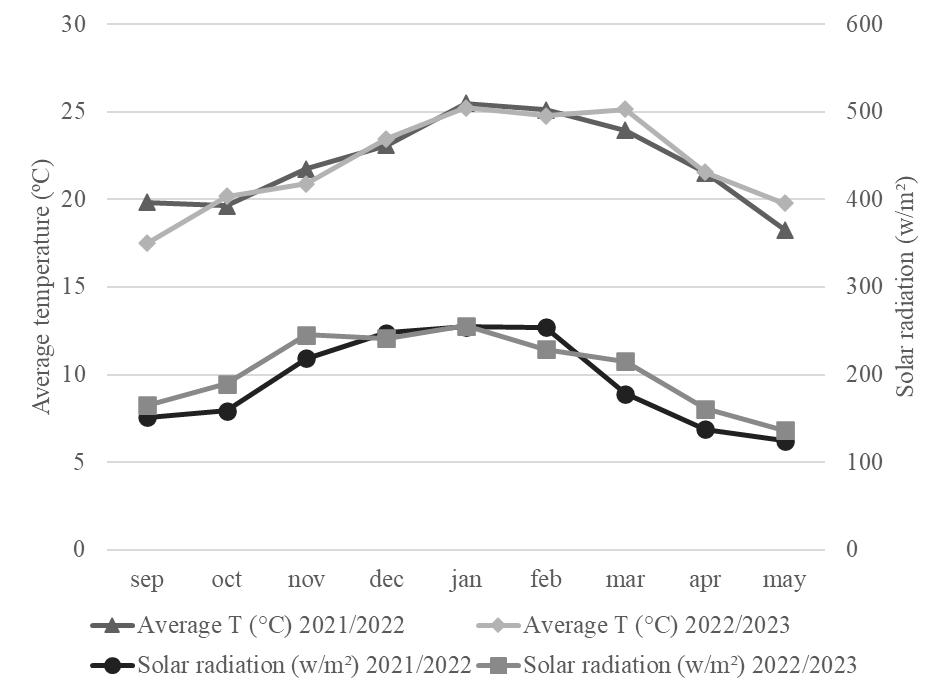
The increase in the number of days in the fruit ripening period throughout the cycles (9 for H. polyrhizus and 9.5 for S. undatus) is related to environmental conditions at the experimental site. It can be seen in Figure 4 that, from December onwards, a gradual reduction in the average daily photoperiod begins, with a daily variation of 2.9 hours until May, which leads to a reduction in the average daily temperature and average daily radiation in the months of February (25.1°C and 254.0 w/m2), March (23.9°C and 178.1 w/m2), April (21.5°C and 137.8 w/m2) and May (18.3°C and 124.4 w/ m2). The reduction in radiation from March onwards is also related to a high rainfall index observed in March and May. During the production period, from December to May, the average maximum temperature was between 22.7ºC and 29.7ºC, while the average relative humidity was between 84% and 89%.
As in the previous cycle, the increase in the fruit ripening period throughout the cycles (7 for H. polyrhizus and 9.5 for S. undatus) was related to environmental conditions at the experimental site. It can be seen in Figure 4 that, from December onwards, a gradual reduction in the average daily photoperiod begins, with a daily variation of 2.2 hours until April, which leads to a reduction in the average daily temperature and average daily solar radiation in the months of February (24.8°C and 229.1 w/m2), March (25.1°C and 215.3 w/m2) and April (21.5°C and 160.8 w/m2). During the productive period, from November to April, the average maximum temperature was between 25°C and 29.7°C, while the average relative humidity was between 83% and 88%.
When comparing the 2021/2022 cycle with the 2022/2023 cycle, there was a reduction of 4.9 (H. polyrhizus) and 3.1 (S. undatus) days in fruit ripening in the second cycle.
It is possible to observe in Figure 5 that the months of March and May 2023 had a higher average daily temperature (+1.2 and +1.5°C) compared to the same period in 2022, as well as the months of March, April and May 2023 had a higher average daily solar radiation (+37.2, +23.1 and +12.3W/m2) compared to the same period in 2022. This difference in temperature and solar radiation could justify the shorter fruit ripening period in the 2022/2023 cycle compared to the 2021/2022 cycle. The ideal temperature for pitaya flowering is around 30 to 32°C, temperatures in the range of 34 to 38°C are not desirable (NERD, et al., 2002).
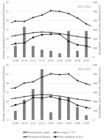
Accumulated precipitation (mm), average temperature (ºC), average photoperiod (hours) and average solar radiation (W/m2), from September 2021 to May 2022 and from September 2022 to May 2023.
The observed reproductive phenological stages corroborate with previous studies evaluated in the southern hemisphere.
In Lavras - MG, Marques et al. (2011) observed the flowering of pitaya S. undatus occurred between November and March, with fruiting between January and May, with three to five cycles. The authors complete that from emission to development of the flower bud a period of 19 to 21 days elapsed, with complete fruit maturation 30 to 40 days after pollination. In Jaboticabal - SP, also with S. undatus, Silva et al. (2015) observed the emission of flower buds between November and March, lasting 18 to 23 days and with episodes of anthesis between November and April, while the period observed between anthesis and fruit harvest varied from 34 to 43 days, distributed in nine cycles. In Fortaleza - CE, with an average temperature of 27.1 to 28.8ºC, Machado (2019) observed reproductive stages of the pitaya Hylocereus sp. for a long period of the year, starting in July and ending in April or May, with more significant flowering peaks in December or January, a period that coincides with increased precipitation and reduced sunlight.
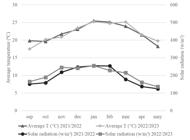
Average temperature (ºC) and average solar radiation (W/m2) of the 2021/2022 and 2022/2023 cycles, from September to May.
A large variation in the duration and number of cycles can be observed throughout the experiment. This variation can be explained by different climatic conditions. In the northern hemisphere, in Mexico, Osuna- Enciso et al. (2016) observed that the flowering period of pitaya S. undatus began in June, ending in September and October, with five and seven cycles occurring in two years, influenced by the increase in relative humidity and temperature.
In India, Kishore (2016) observed, for pitaya S. undatus, that the period of emission and development of the floral bud occurred between the months of June and September, with development and maturation of the fruit between June and October. Pushpakumara et al. (2005) observed, for Hylocereus spp., 4 to 7 cycles, between the months of April and November, in Sri Lanka. In Israel, other authors reported, for S. undatus and H. polyrhizus, 4 to 5 production cycles, between the months of July and December (NERD, et al., 2002).
In Taiwan, Chu and Chang (2022) observed, for pitaya H. polyrhizus, that the period of emission and development of the floral bud occurred between the months of April and October, with development and maturation of the fruit between May and November, Ha et al. (2018) observed genotypes of S. undatus with 3 to 5 cycles, starting in the months of June and July and ending in September, genotypes of H.polyrhizus with 3 to 5 cycles, starting in the months of June, August and September, and ending in September or October. Also in Taiwan, Tran and Yen (2014) observed the production cycle of Hylocereus spp. starting in May and ending in August or September, ranging from 6 to 7 cycles.
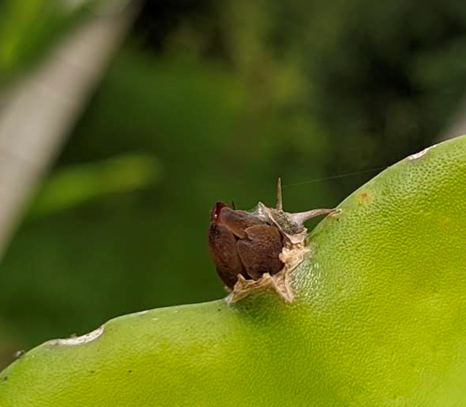
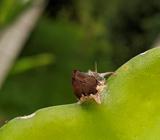
During the experiment, abortions of flower buds were observed, mainly in the initial stage, as can be seen in Figure 6.
The emission of flower buds was observed mainly in the second cycle in 2021/2022, as can be seen in Figure 7. In the first cycle, H.polyrhizus emitted 0.48 flower buds per plant, of which 0.40 (83.3%) reached anthesis and 0.08 (16.7%) aborted. S. undatus emitted 0.97 flower buds per plant, of which 0.69 (71.1%) reached anthesis and 0.28 (28.9%) aborted.
In the second cycle, H. polyrhizus emitted 4.8 flower buds per plant, of which 3.72 (77.5%) reached anthesis and 1.08 (22.5%) aborted. S. undatus emitted 2.03 flower buds per plant, of which 1.25 (61.6%) reached anthesis and 0.78 (38.4%) aborted. In the third cycle, H. polyrhizus emitted 0.04 flower buds per plant, of which 0.04 (100%) reached anthesis and none aborted. S. undatus emitted 0.31 flower buds per plant, of which 0.31 (100%) reached anthesis and none aborted.
In the fourth cycle, H. polyrhizus emitted 0.28 flower buds per plant, of which 0.28 (100%) reached anthesis and none aborted. S. undatus emitted 0.81 flower buds per plant, of which 0.66 (81.5%) reached anthesis and 0.15 (18.5%) aborted. In the total harvest, H.polyrhizus emitted a greater number of flower buds, and, despite having a higher abortion rate, it presented a greater number of flowers in relation to S. undatus, throughout the whole cycle. H. polyrhizus emitted 5.60 flower buds per plant, of which 4.44 (79%) reached anthesis and 1.16 (21%) aborted. S.undatus emitted 4.12 flower buds per plant, of which 2.91 (71%) reached anthesis and 1.21 (29%) aborted.
In 2022/2023, the emission of flower buds was also observed mainly at the beginning, in the first cycle, as can be seen in Figure 7.
In the first cycle, H. polyrhizus emitted 7.12 flower buds per plant, of which 4.20 (59%) reached anthesis and 2.92 (41%) aborted.
S.undatus emitted 1.09 flower buds per plant, of which 0.97 (89%) reached anthesis and 0.12 (11%) aborted. In the second cycle, H.polyrhizus emitted 1.28 flower buds per plant, of which 0.60 (46.9%) reached anthesis and 0.68 (53.1%) aborted. S. undatus emitted 2.06 flower buds per plant, of which 1.91 (92.7%) reached anthesis and 0.15 (7.3%) aborted. In the third cycle, H. polyrhizus emitted 0.16 flower buds per plant, of which 0.04 (25%) reached anthesis and 0.12 (75%) aborted. S. undatus emitted 1.16 flower buds per plant, of which 0.75 (64.7%) reached anthesis and 0.41 (35.3%) aborted. In the fourth cycle, H. polyrhizus emitted 0.36 flower buds per plant, of which 0.32 (88.9%) reached anthesis and 0.04 (11.1%) aborted.
S. undatus emitted 0.84 flower buds per plant, of which 0.69 (82.1%) reached anthesis and 0.15 (17.9%) aborted. In the fifth cycle, S. undatus emitted 0.75 flower buds per plant, of which 0.66 (88%) reached anthesis and 0.09 (12%) aborted. H. polyrhizus did not emitted flower buds in the fifth cycle. As in the previous harvest, H. polyrhizus emitted a greater number of flower buds, and despite having a higher abortion rate, it obtained a greater number of flowers in relation to S.undatus. H. polyrhizus emitted 8.92 flower buds per plant, of which 5.16 (58%) reached anthesis and 3.76 (42%) aborted. S. undatus emitted 5.90 flower buds per plant, of which 4.98 (84%) reached anthesis and 0.92 (16%) aborted.
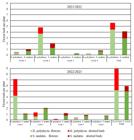
Flower buds emitted, aborted and viable, per plant, of H. polyrhizus and S. undatus, per cycle, in the 2021/2022 and 2022/2023 cycles.
The number of flowers per plant found in this work corresponds to that expected for the age of the plants, which have gone through their first and second productive harvest. Osuna-Enciso et al. (2016) reported the formation of 44.5, 69.4 and 35.2 flowers in 3, 4 and 5 year-old plants of S. undatus, respectively.
Tran and Yen (2014) observed, in 10-year-old plants, 22 flowers per plant of S. undatus, 26 flowers per plant of H.polyrhizus and 29 to 32 flowers per plant of Hylocereus spp. Ha et al. (2018) observed in 10-year-old plants, a variation of 9 to 31 flowers per plant in S. undatus and 10 to 23 flowers per plant in H. polyrhizus.
Martínez Chávez (2011) observed that there is a high variability in the abortion rate of red pitaya flower buds. According to the author, the rate of flower buds that aborted before anthesis fluctuated between 32-69% for H. polyrhizus and 54-76% for S. undatus, depending on the genotype and year evaluated.
De La Luz León et al. (1995) observed similar results for Stenocereus gummosus, “pitaya agria”, with 36% of flower bud abortion.
In their natural habitat, pitaya plants grow in the shade of trees, and it is necessary to recreate a similar environment for their cultivation. In the present experiment, the plants were grown in full sun, without shading.
According to Nobel and De la Barreta (2004), commercial pitaya orchards should have 30 to 60% shading, due to high temperatures and strong incidence of direct radiation on the plants. This environmental relationship may explain why the highest rates of flower bud abortion occurred in the months of December and January of the first year and November, December and January of the second year.
According to Castillo and Ortiz (1994), in addition to environmental factors, the abortion rate may also be associated with competition for the nutritional reserves of the buds with other buds, flowers and fruits. These periods of the highest abortion rate coincide with the highest number of flower bud emissions, with the first two cycles of each year having a significantly higher number compared to the others.
Table 1 shows that, for the 2021/2022, the fourth cycle presented a higher fruit mass (434.07 g) compared to the first (273.39 g) and the second cycle (267.9 g), in both genotypes evaluated, with H. polyrhizus having the highest average (328.7 g) compared to S. undatus (261.99). This difference was not observed for the evaluation of pulp mass.
The third cycle of 2021/2022 could not be evaluated due to the loss of fruits to pest attack. In 2022/2023, the third cycle of H.polyrhizus did not produce fruits, influencing the results. Nevertheless, H. polyrhizus presented a higher average fruit mass (387.62 g), compared to S. undatus (275.43 g), repeating itself for pulp mass (262.27 g and 176.22 g). The fifth cycle of 2022/2023 could not be evaluated for the species S.undatus due to the loss of fruits to pest attacks, while H. polyrhizus did not produce flower buds in this last cycle.
The 2021/2022, S. undatus resembles the results found by Osuna-Enciso et al. (2016), with higher fruit mass values (g) in the last cycles of S. undatus, which was not repeated in the 2022/2023 harvest or with the H.polyrhizus genotype.
Table 2 shows that, for 2021/2022, the fourth cycle presented a higher peel mass (144.78 g) in relation to the first (78.03 g) and second cycle (82.50 g), in the two genotypes evaluated. Regarding the pulp yield evaluation, a higher yield was observed in the second cycle of S. undatus (72.11%) in relation to the fourth cycle (55.11%), with H.polyrhizus having the highest yield (74.5%) in relation to S. undatus (61.37%). The third cycle of 2021/2022 could not be evaluated due to the loss of fruits to pest attack.
In 2022/2023, the third cycle of H. polyrhizus did not produce fruits, influencing the results. S. undatus presented a higher average peel mass (149.7 g) in relation to H.polyrhizus (121.41 g). H. polyrhizus showed a higher pulp yield (60.23%), compared to S.undatus (53.37%). The fifth cycle of this harvest could not be evaluated for the species S. undatus due to the loss of fruits to pest attacks, while H. polyrhizus did not produce flower buds in this last cycle. Osuna-Enciso et al. (2016) observed that for S. undatus the highest pulp yields were recorded in the initial cycles of the harvests evaluated.
In the first harvest, 2021/2022, it is possible to observe that the only difference between the cycles, for the concentration of malic acid (%), was the first cycle for S. undatus (0.20%) in relation to the other cycles.
On average, S. undatus presented a higher concentration of malic acid (0.22%) in relation to H. polyrhizus (0.15%), as in all respective cycles. Regarding the concentration of soluble solids (°Brix), no difference was verified between the cycles and between the genotypes evaluated. The third cycle of 2021/2022 could not be evaluated due to the loss of fruits to pest attack. In the second harvest, 2022/2023, the third cycle of H. polyrhizusdid not produce fruits, influencing the results. As in the previous harvest, S. undatus presented a higher concentration of malic acid (%) (0.39%) in relation to H. polyrhizus (0.15%). It was possible to observe a higher concentration (0.69%) in the first cycle of S. undatus in relation to the others. Regarding the concentration of soluble solids (°Brix), no difference was observed between the genotypes evaluated, but rather a lower concentration in the third cycle of S. undatus (6.89 °Brix) which, together with the absence of data for H.polyrhizus (0.00 °Brix), influenced a lower average between the cycles (5.00 °Brix) in this harvest. The fifth cycle of this harvest could not be evaluated for the species S. undatus due to the loss of fruits to pest attack, while H. polyrhizus did not produce flower buds in this last cycle (Table 3).
Results from Osuna-Enciso et al. (2016) for S. undatus show a higher concentration of malic acid (%) in the central period of the harvest, in September and October. This pattern was not observed in the present study, which resulted in the first cycle of each harvest of S. undatus with the lowest and highest concentration of malic acid (%) in relation to the others. The authors also observed a difference with a higher concentration of soluble solids (ºBrix) at the beginning compared to the end of the harvest.
Concentration of malic acid (%) and soluble solids (°Brix) of the genotypes S. undatus and H. polyrhizus for the 2021/2022 and 2022/2023 harvest cycles.
It is possible to observe in the first harvest, 2021/2022, the difference in the SS/TA ratio between the second cycle of H. polyrhizus (67.00) in relation to the same period of S.undatus (44.05).
H. polyrhizus also presented a higher result in the fourth cycle (100.47) in relation to S. undatus (43.95). This result in the fourth cycle of H. polyrhizus is also the highest among its other cycles. The third cycle of this harvest could not be evaluated due to the loss of fruits to pest attack. In the second harvest, 2022/2023, the third cycle of H. polyrhizus did not produce fruits, influencing the results. In the SS/TA ratio, H. polyrhizus presented higher results (73.86) in relation to S. undatus (33.48).
Across harvests, H.polyrhizus tended to show higher SS/TA than S. undatus (e.g., 73.86 vs. 33.48 in 2022/2023), while pH showed little difference between genotypes. Cycle-specific gaps reflect pest/ bird losses and absence of reproductive stage in some periods (Table 4).
For the pitaya fruit to be of good quality, it is important that the SS/TA ratio is less than 40. A result greater than 40 indicates flavorless fruit due to the loss of organic acids during respiration (VAN TO et al., 2000).
The high SS/TA values for H. polyrhizus and S. undatus in this study may be attributed to the low concentration of soluble solids (°Brix) and the high concentration of malic acid (%). This may have occurred due to the need for early harvesting of the fruits because of bird attacks, which reduced fruit quality. According to results reported by Cruz and Martins (2022), good-quality fruits of H. polyrhizus range from 11 to 22 °Brix and 0.17 to 0.24% malic acid, whereas those of S. undatus range from 11 to 18 °Brix and 0.11 to 0.20% malic acid.
The result in the SS/TA ratio of the second harvest of S. undatus (33.48) indicates good quality of the fruits, as found by Centurión- Yah et al. (2008), in Mexico.
Conclusions
In the region of Florianópolis – Santa Catarina State, four to five production cycles can be observed, starting in the months of November and December.
From the emission of the flower bud to anthesis, 19 days were observed, and 33.5 to 45.5 days from anthesis to harvest, for S. undatus.
While from the emission of the flower bud to anthesis, 20 days were observed, and 33.5 to 45.5 days from anthesis to harvest, for H. polyrhizus.
The period of fruit ripening increased with each cycle in each harvest, with the reduction of temperature and radiation over the months, between summer and winter.
H. polyrhizus presented a higher rate of bud abortion in relation to S. undatus. However, the number of flower buds that reached the anthesis stage corresponds to that expected for plants in the first and second production cycles.
H. polyrhizus demonstrated a higher average fruit mass and pulp yield than S. undatus in both harvests, with a higher average pulp mass only in the second harvest, while S. undatus presented a higher peel mass in the second harvest.
S. undatus presented better fruit quality compared to H. polyrhizus, in the SS/TA ratio.
Phenological timings allow harvest scheduling from anthesis (D+34–46) and the advance deployment of bird protection and labor/logistics. The abortion patterns support fine irrigation (smaller, more frequent applications) and light shading during heat/radiation peaks, as well as targeted nutrition with K (and B, as indicated by analysis) during the induction/emission phase to favor fruit set and filling.
Lots with SS/TA < 40 and firm texture should be prioritized for the fresh market, whereas lots with high pulp yield and soluble solids—more common in H. polyrhizus— are better suited to processing (pulps/ juices). These practical guidelines can help growers and researchers optimize management, reduce losses, and align product flows with market demands under subtropical conditions.
References
-
BACK, A.J.; POLETO, C. Avaliação do potencial erosivo das chuvas de Florianópolis-SC. Revista Brasileira de Climatologia, Curitiba, v. 21, 2017. https://doi.org/10.5380/abclima.v21i0.49018
» https://doi.org/10.5380/abclima.v21i0.49018 -
BEGNINI, R.M.; SILVA, F.R. da; CASTELLANI, T.T. Fenologia reprodutiva de Syagrus romanzoffiana (Cham.) Glassman (Arecaceae) em Floresta Atlântica no sul do Brasil. Biotemas, Florianópolis, v.26, p.53–60, 2013. https://doi.org/10.5007/2175-7925.2013v26n4p53
» https://doi.org/10.5007/2175-7925.2013v26n4p53 - CASTILLO, M.R.; ORTIZ, Y.D. Floración y fructificación de pitajaya en Zaachila, Oaxaca. Revista Fitotecnia Mexicana, Chapingo, v.17, p.12-9, 1994.
-
CENTURIÓN-YAH, A.R.; SOLÍS-PEREIRA, S.; SAUCEDO-VELOZ, C.; BÁEZ-SAÑUDO, R.; SAURI-DUCH , E. Cambios fi´sicos, qui´micos y sensoriales en frutos de pitahaya (Hylocereus undatus) durante su desarrollo. Revista Fitotecnia Mexicana, Chapingo, v.31, p.1–1, 2008. https://doi.org/10.35196/rfm.2008.1.1
» https://doi.org/10.35196/rfm.2008.1.1 -
CHU, Y.C.; CHANG, J.C. Codification and description of the phenological growth stages of red-fleshed pitaya (Hylocereus polyrhizus) using the extended BBCH scale-with special reference to spines, areole, and flesh color development under field conditions. Scientia Horticulturae, New York, v.293, p.110752, 2022. https://doi.org/10.1016/j.scienta.2021.110752
» https://doi.org/10.1016/j.scienta.2021.110752 - CRUZ, M.C.M.; MARTINS, R.S. Pitaia no Brasil, nova opção de cultivo Florianópolis: Epagri, 2022.
-
DE LA LUZ LEÓN, J.; DOMÍNGUEZ-CADENA, R.; CRUZ-ESTRADA, M. Reproductive phenology of Stenocereus gummosus (Engelm.) Gibson and Horak. Implications for its cultivation. Genetic Resources and Crop Evolution, Dordrecht, v.42, p.61-7, 1995. https://doi.org/10.1007/BF02310685
» https://doi.org/10.1007/BF02310685 - EPAGRI. Banco de dados de variáveis ambientais de Santa Catarina Florianópolis: Epagri. 2020. p. 20. (Documentos)
-
GML - Global Monitoring Laboratory. Global radiation and aerosols Boulder: NOAA/GML, 2005. Disponível em: https://gml.noaa.gov/grad/solcalc/
» https://gml.noaa.gov/grad/solcalc/ - GOULART JR, R.; REITER, J.M.W., SILVA, D.A. Relatório de projeto: diagnóstico socioeconômico da produção da cultura de pitaia no Sul Catarinense – 2021/22. Florianópolis: Epagri, 2023. (Relatório)
- HA, D.; TRAN, C.R Y.Morphological characteristics and pollination requirement in red pitaya (Hylocereus spp.). International Journal of Agricultural and Biosystems Engineering, Wilmington, v.8, p. 202-6, 2014.
-
HA, T.D.; OANH, L.T.K.; YEN, C.R. et al. Flowering phenology and mating system of a red skin pitaya (Hylocereus spp.) germplasm collection in Taiwan. Asian Journal of Advances in Agricultural Research, Hooghly, v.7, p.1-8, 2018. https://doi.org/10.9734/AJAAR/2018/43616
» https://doi.org/10.9734/AJAAR/2018/43616 -
IBRAHIM, S.R.M.; MOHAMED. G.A.; KHEDR, A.I.M.; ZAYED. M.F.; EL-KHOLY, A-E.S. Genus Hylocereus: beneficial phytochemicals, nutritional importance, and biological relevance: a review. Journal of Food Biochemistry, Westport, v.42, p.e12491, 2018. https://doi.org/10.1111/jfbc.12491
» https://doi.org/10.1111/jfbc.12491 -
JIANG, Y.; LIAO, Y.; LIN, T.; LEE, C.; YEN, C.; YANG, W. The photoperiod-regulated bud formation of red pitaya (Hylocereus sp.). HortScience, v. 47, p. 1063–1067, 2012. https://doi.org/10.21273/HORTSCI.47.8.1063
» https://doi.org/10.21273/HORTSCI.47.8.1063 -
JIANG, Y.L.; LIN, T.; LEE, C.; YEN, C.; YANG, W. Phenology, canopy composition, and fruit qualitY of yellow pitaya in tropical Taiwan. HortScience, Alexandria, v.46, p.1497-502, 2011. https://doi.org/ 10.21273/HORTSCI.46.11.1497
» https://doi.org/ 10.21273/HORTSCI.46.11.1497 -
KISHORE, K. Phenological growth stages of dragon fruit (Hylocereus undatus) according to the extended BBCH-scale. Scientia Horticulturae, New York, v.213, p.294-302, 2016. https://doi.org/10.1016/j.scienta.2016.10.047.
» https://doi.org/10.1016/j.scienta.2016.10.047 -
LABORATÓRIO DE CLIMATOLOGIA AGRÍCOLA. Dados meteorológicos Estação CCA/UFSC- Fazenda Experimental da Ressacada Florianópolis: UFSC, 2023. Disponível em: https://www.labclimagri.ufsc.br/dados.html
» https://www.labclimagri.ufsc.br/dados.html -
LE BELLEC, F.; VAILLANT, F.; IMBERT, E. Pitahaya (Hylocereus spp.): a new fruit crop, a market with a future. Fruits, Paris, v.61, n.4, p.237-50, 2006. https://doi.org/doi:10.1051/fruits:2006021
» https://doi.org/doi:10.1051/fruits:2006021 -
LIMA, C.A.D.; FALEIRO, F.G.; JUNQUEIRA, N.T.V.; BELLON, G. Avaliação de caracteri´sticas fi´sico-qui´micas de frutos de duas espécies de pitaya. Revista Ceres, Viçosa, MG, v.61, p.377-83, 2014. https://doi.org/10.1590/S0034-737X2014000300012
» https://doi.org/10.1590/S0034-737X2014000300012 - LONE, A.B.; BELTRAME, A.B.; SILVA, D.A. da; GUIMARÃES, G.G.F.; HARO, M.M. de; MARTNS, R.S. Cultivo de Pitaia Florianópolis: Epagri, 2020. (Boletim Técnico, 196).
- LONE, A.B.; SCHUNEMANN, A.P.P.; FURLANETO, C.; MARQUES, M.C.A. Flowering and fruiting behavior of Hylocereus undatus under subtropical conditions in southern Brazil. Scientia Horticulturae, New York, v.264, p.109-16, 2020.
- MACHADO, F.G.A. Densidades de plantio e ciclos de cultivo na produção e qualidade de frutos e fenologia reprodutiva da pitaia vermelha 2019. 102 f. Tese (Doutorado em Agronomia-Fitotecnia) – Universidade Federal do Ceará, Fortaleza, 2019.
- MARQUES, V.B. Germinação, fenologia e estimativa do custo de produção da pitaia [Hylocereus undatus (Haw.) Britton and Rose] 2010. 141 f. Teses (Doutorado) – Universidade Federal de Lavras, Lavras, 2010.
-
MARQUES, V.B.; MOREIRA, R.A.; RAMOS, J.D.; ARAÚJO, N.A.; SILVA. F.O.R. Fenologia reprodutiva de pitaia vermelha no munici´pio de Lavras, MG. Ciência Rural, Santa Maria, v.41, p.984-7, 2011. https://doi.org/10.1590/S0103-84782011005000071
» https://doi.org/10.1590/S0103-84782011005000071 - MARTÍNEZ CHÁVEZ, R. Relaciones entre genotipo, productividad y calidad de fruto en pitahaya (Hylocereus spp) 2011. 66 f. Tesis (Maestría en Ciencias) – Texcoco: Colegio de Postgraduados, 2011.
- MIZRAHI, Y.; NERD, A. Climbing and columnar cacti: new arid land fruit crops. Perspectives on New Crops and New Uses, Alexandria, v.1, p.358-66, 1999.
-
NERD, A.; SITRIT, Y.; KAUSHIK, R.A.; MIZRAHI, Y. High summer temperatures inhibit flowering in vine pitaya crops (Hylocereus spp.). Scientia Horticulturae, New York, v.96, p.343-50, 2002. https://doi.org/10.1016/S0304-4238(02)00093-6
» https://doi.org/10.1016/S0304-4238(02)00093-6 - NIERO, R.Z. Acompanhamento do nível freático e determinação da condutividade híbrica do solo na Fazenda Experimental da Ressacada CCA-UFSC 2011. 50 f. Trabalho Conclusão de Curso (Agronomia) - Universidade Federal de Santa Catarina, Centro de Ciências Agrárias, Florianópolis, 2011.
- NOBEL, P.S.; DE LA BARRERA, E. CO2 uptake by the cultivated hemiepiphytic cactus, Hylocereus undatus. Annals of Applied Biology, Wellesbourne, v.144, p.1–8, 2004
- OSUNA-ENCISO, T.; VALDEZ-TORRES, J.B.; SAÑUDO-BARAJAS, J.A.; MUY-RANGEL, M.D.; HERNÁNDEZ-VERDUGO, S.; VILLARREAL-ROMERO, M. OSUNA-RODRÍGUEZ, J.M.Fenologia reproductiva, rendimiento y calidad del fruto de pitahaya (Hylocereus undatus (How.) Britton and Rose) en el Valle de Culiacán, Sinaloa, México. Agrociencia, Texcoco, v.50, p.61–78, 2016.
- PUSHPAKUMARA, D.K.N.G.; GUNASENA, H.P.M.; KARYAWASAM, M. Flowering and fruiting phenology, pollination vectors and breeding system of dragon fruit (Hylocereus spp.). Sri Lankan Journal of Agricultural Science, Belihuloya, v.42, p.81–91, 2005.
- R CORE TEAM, 2023. R: A language and environment for statistical computing, 2023.
-
RABELO, J.M., CRUZ, A.C.M.; ALVES. D.A.; LIMA, J.E.; REIS, L.A.C.; SANTOS, N.C. Reproductive phenology of yellow pitaya in a high-altitude tropical region in Brazil. Acta Scientiarum.Agronomy, Maringá, v.42, 2020. https://doi.org/10.4025/actasciagron.v42i1.43335
» https://doi.org/10.4025/actasciagron.v42i1.43335 - SATO, S.T.A.; RIBEIRO, S.C.A.; SATO, M.K.; SOUZA, J.N.S. Caracterização fi´sica e fi´sico-qui´mica de pitayas vermelhas (Hylocereus costaricensis) produzidas em três munici´pios paraenses. Journal of Bionergy and Food Science, Macapá, v.1., n.1, p.46-56 2014.
- SEGANTINI, D.M.; MARQUES, M.C.A.; FURLANETO, C. Comportamento fenológico de pitaya vermelha em condições subtropicais do Estado de São Paulo. Bragantia, Campinas, v.69, n.4, p.995-1003, 2010.
-
SILVA, A.C.C.; CAVALLARI, L.L.; SABIÃO, R.R.; MARTINS, A.B.G. Fenologia reprodutiva da pitaya vermelha em Jaboticabal, SP. Ciência Rural, Santa Maria, v.45, p.585-90, 2015. https://doi.org/10.1590/0103-8478cr20120403
» https://doi.org/10.1590/0103-8478cr20120403 - TAIZ, L.; ZEIGER, E. Plant physiology. 5th edition. Sunderland: Sinauer Assosiates, 2010.
- TRAN, D.H.; YEN, C.R. Morphological characteristics and pollination requirement in red pitaya (Hylocereus spp.). International Journal of Agricultural and Biosystems Engineering, Istanbul, v.8, p. 268–272, 2014.
-
VAN TO, L.; NGU, N.; DUC, N.D.; HUONG, H.T.T. Dragon fruit quality and storage life: effect of harvesting time, use of plant growth regulators and modified atmosphere packaging. Acta Horticulturae, The Hague, n.575, p. 611–621, 2000. https://doi.org/10.17660/ActaHortic.2002.575.72
» https://doi.org/10.17660/ActaHortic.2002.575.72 - ZEE, F.; YEN, C.R.; NISHINA, M. Pitaya (dragon fruit, strawberry pear) Honolulu: University of Hawaii, 2004. 3 p. (Fruits and Nuts, FN-9).
- ZENEBON, O.; PASCUET, N.S. Métodos físico-químicos para análise de alimentos 4.ed. São Paulo: Instituto Adolfo Lutz, 2005. 579-80 p.