Lemon essential oil for controlling Alternaria alternata (Fr: Fr.) Keissler f. sp. Citri
Abstract
The increasing incidence of diseases in tangerine orchards, including alternaria brown spot (ABS) caused by Alternaria alternata, has led to significant production losses, which requires the development of new disease control strategies. This study aimed to evaluate the effect of essential oils (EOs)extracted from the peels of different lemon genotypes at several concentrations and application methods on the ABS control. The experiments were conducted at the Sylvio Moreira Citrus Research Center, Cordeiropolis - São Paulo state,Brazil. An in vitro experiment was set up in a completely randomized design (CRD) with a 2×4×5 factorial scheme, including two control methods (preventive and curative),four lemon genotypes for EO extraction (Amber IAC 269, Eureka IAC 644, Harvey IAC 641 e IAC 262 Siciliano), and five EO concentrations (0, 2, 4, 8, and 16µL mL-1), with three replicates. Each replicate consisted of a Petri dish containingthree young Murcott tangor leaves. An in vivo experiment was also conducted in a CRD with a 2×4×3 factorial scheme, including two control methods (preventive and curative), four lemon genotypes for EO extraction, and three EO concentrations(0,8, and 16 µL mL-1), with three replicates. Each replicate consisted of one Murcott tangor plant, with four leaves from three different branches of the same plant.Disease severity assessments were conducted over seven days following fungal inoculation. The Area Under the Disease Progress Curve (AUDPC) was calculated using severity data. Data were submitted to analysis of variance, Tukey’s test(p<0.05), and regression analysis. The preventive method was more effective in controlling the fungus. The Amber genotype, at concentration of 16 µL mL-1,showed the best ABS control.
Index terms
alternaria brown spot; alternative control; citrus; fungicide
Resumo
O aumento de doenças nos pomares de tangerinas, incluindo a mancha marrom de alternária (MMA), causada por Alternaria alternata f.sp. citri,tem causado prejuízos aos produtores, exigindo novos controles da doença.Objetivou-se com este trabalho avaliar o efeito dos óleos essenciais, extraídos de casca de genótipos de limão, em diferentes concentrações e métodos de aplicação, no controle da MMA. Os experimentos foram realizados no Centro de Citricultura Sylvio Moreira, em Cordeirópolis-SP. O experimento in vitro foi instalado em delineamento inteiramente casualizado (DIC), em esquema fatorial 2x4x5, sendo dois métodos de controle (preventivo e curativo), quatro genótipos de limão para extração deóleos essenciais (Amber IAC 269, Eureka IAC 644, Harvey IAC 641 e IAC 262 Siciliano)e cinco concentrações dos óleos essenciais (0, 2, 4, 8 e 16 µL mL-1), com três repetições, sendo cada repetição composta por uma placa de Petri contendo três folhas jovens detangor Murcott. O experimento in vivo foi instalado em DIC, em esquema fatorial 2x4x3, sendo dois métodos de controle (preventivo e curativo), quatro genótipos de limão para extração de óleos essenciais e três concentrações dos óleos essenciais (0, 8 e16 µL mL-1), com três repetições, sendo cada repetição composta por uma planta de tangor Murcott,sendo avaliadas quatro folhas de três ramos diferentes da mesma planta. As avaliações de severidade foram realizadas durante sete dias após a inoculação do fungo.Utilizando os dados de severidade foi calculada a Área Abaixo da Curva de Progresso da Doença(AACPD). Os dados foram submetidos à análise de variância, teste de Tukey (p <0,05) e regressão. O método preventivo foi melhor no controle do fungo. O genótipo Amber, na concentração de 16 µL mL-1, foi melhor no controle da MMA.
Termos para indexação
mancha marrom de alternária; controle alternativo; citros; fungicida natural; biocontrole
Introduction
Citrus cultivation is crucial in the global economy, ranking among the leading fruit production activities in yield and revenue generation.
Brazil is the world’s largest sweet orange producer and a major mandarin producer, with annual harvest exceeding 1.3 million tons in 2023, mainly concentrated in the São Paulo state, Brazil (FAO, 2023; IBGE, 2023). The citrus industry, including lemon (Citrus limon (L.) Burm.f.) production, plays a significant role in the economic growth, with Brazil producing approximately 17 million tons of citrus fruits in 2022, generating revenues exceeding USD 2 billion (FAO, 2022).
Among citrus crops, tangerines (mandarins) stand out in economic value due to the high consumer demand. However, fungal diseases such as Alternaria Brown Spot (ABS), caused by Alternaria alternata f. sp. citri, pose severe threats to production, with reported yield losses reaching up to 50% in susceptible varieties (AZEVEDO et al., 2010; PERES et al., 2021).
The economic impact of ABS is substantial, as it not only reduces fruit yield but also affects quality, causing fruits to be unmarketable for both fresh consumption and juice processing industries (ADASKAVEG et al., 2020).
ABS is characterized by necrotic lesions on leaves, twigs, and fruits, leading to premature fruit drop and reduced marketability.
The pathogen produces host-specific toxins (HSTs), such as Alternaria citri toxin (ACT), which disrupts the cellular membrane integrity of the host plant, leading to cell death and the appearance of characteristic brown spots (KOHMOTO et al., 1993; AKIMITSU et al.,2003).
A distinctive feature of the pathogen- host interaction is the production of alternariol, a mycotoxin that acts as a virulence factor and triggers programmed cell death in host plants (MEENA et al., 2017; SANTOS et al., 2021). The high susceptibility of most tangerine varieties to A. alternata has resulted in strong reliance on chemical fungicides, requiring 12 to 18 applications per year (AZEVEDO et al., 2010).
However, the overuse of fungicide increases production costs and raises concerns regarding environmental pollution, fungicide resistance, and potential health risks to consumers (PERES et al., 2021).
A. alternata infection is primarily favored by high relative humidity and moderate to high temperatures, with the pathogen spreading through conidia dispersed by wind and water (Peever et al., 1999). Initial symptoms include small brown lesions on leaves and fruits, which progress to extensive necrotic areas, leading to premature leaf drop and fruit decay (RODRIGUES et al., 2020).
ABS is characterized by the formation of necrotic lesions on leaves, twigs, and fruits, typically presenting brown spots surrounded by a yellow halo, which are the hallmark symptoms of the disease (AZEVEDO et al., 2010; PERES et al., 2021).
These conditions make ABS a persistent challenge for citrus growers, particularly in regions with humid climates.
In light of these challenges, there is an urgent need for sustainable and environmentally friendly alternatives to chemical fungicides.
Essential oils (EOs) derived from citrus peels have emerged as a promising solution due to their natural antifungal properties and low toxicity to humans and the environment. Lemon EOs are rich in monoterpenes, with limonene being the predominant compound known for its antimicrobial activity (Caputo et al., 2020; GOLMAKANI; MOAYYEDI, 2015).
Recent studies have demonstrated the efficacy of citrus EOs in controlling various fungal pathogens, including A. alternata, by disrupting fungal cell membranes and inhibiting spore germination (JING et al., 2014; TUNDIS et al., 2012). Moreover, the use of EOs aligns with the growing demand for organic and sustainable agricultural practices, offering a viable alternative to synthetic fungicides (DEWDNEY et al., 2021).
The antifungal activity of EOs is influenced by their chemical composition, which can vary depending on the citrus genotype, extraction method, and environmental conditions (VEKIARI et al., 2002; LURO et al., 2012).
EOs from different lemon genotypes, such as Amber, Eureka, Harvey, and Siciliano, exhibit varying antifungal efficacy levels, likely due to differences in their limonene content and other bioactive compounds (TEIXEIRA et al., 2013; ROZZA et al., 2011). Understanding these variations is crucial for optimizing the use of EOs in disease management.
Given the economic importance of tangerines and the severe impact of ABS on production, this study aims to evaluate the efficacy of EOs extracted from different lemon genotypes in controlling A. alternata f.sp. citri and identify the most effective EO genotype and concentration for managing ABS as a sustainable alternative to chemical fungicides.
Material and Methods
Experimental area
Fruits for essential oil (EO) extraction were harvested from specific lemon genotypes grown in a managed orchard located at the Sylvio Moreira Citriculture Center, belonging to the Agronomic Institute (IAC) of Cordeirópolis, state of São Paulo, Brazil (22° 32' S, 47° 27' W, altitude 639 m a.s.l.).
The climate is classified as Cwa according to the Köppen international system, characterized by warm summers and dry winters.
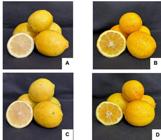
The soil is a Dark Red Latosol-Dystrophic with clayey texture, which provides good drainage but may require specific nutrient management strategies. From this collection of well-maintained lemon trees, four distinct genotypes were selected for this study: Siciliano (Figure 1A), Eureka (Figure 1B), Harvey (Figure 1C), and Amber (Figure 1D). These genotypes were chosen based on their potential for high essential oil yield and unique chemical profiles.
Essential Oil Extraction
For essential oil (EO) extraction, 80 fruits were harvested from each of the four lemon genotypes (Amber, Eureka, Harvey, and Siciliano).
Fruits were selected at commercial maturity, with average diameter of 6.5 - 7.5 cm and weight ranging from 120 to 150 g, consistent with the standard size of mature lemons used for EO extraction (GOLMAKANI;MOAYYEDI, 2015; TEIXEIRA et al., 2013).
The peel coloration of fruits was uniformly bright yellow, indicating optimal ripeness for oil extraction, as the yellow pigmentation of the flavedo is associated with higher essential oil content and quality (LURO et al., 2012; CAPUTO et al., 2020).
Fruits were submitted to meticulous cleaning, which involved thoroughly washing with potable water to remove any field debris or surface contaminants. Following the initial wash, fruits were sanitized using standardized protocol (e.g., sodium hypochlorite solution at specific concentration and exposure time) to eliminate potential microbial growth.
Lemon peels were then carefully separated from the pulp, ensuring the retention of the albedo (white inner layer) and the colored flavedo (outer peel).
Peels were manually cut into uniform pieces of approximately one cm² to optimize the surface area for essential oil extraction.
The essential oil was extracted using a well-established technique known as steam distillation. A Moritz apparatus served as the distillation unit, and approximately 250 grams of chopped lemon peel constituted a typical sample load for each extraction run.
The distillation continued for 3 hours, ensuring efficient recovery of volatile aromatic compounds within the lemon peel (TEIXEIRA et al., 2013).
The collected essential oils were carefully transferred to appropriate storage containers and maintained under controlled conditions to minimize degradation. The storage conditions typically involve protection from light exposure and cool temperature,often around 4°C.
Isolation of Alternaria alternata Fungus and Inoculum Preparation
The fungal A. alternataisolate was obtained from symptomatic Murcott tangor fruits exhibiting characteristic ABS symptoms. The methodology described by Peever et al.(1999) served as the foundation for isolate acquisition, albeit with some modifications for process optimization.
The isolation process began with collecting infected fruits showing typical ABS symptoms.
Small tissue fragments obtained from the lesion margins were aseptically excised and surface-sterilized using 1% sodium hypochlorite solution for 2 minutes, followed by rinsing with sterile distilled water.
The sterilized tissue fragments were then transferred to Petri dishes containing Potato Dextrose Agar (PDA) medium, adjusted to pH of 5.6, and supplemented with streptomycin (100 mg L-1) to inhibit bacterial growth. Petri dishes were incubated in growth chamber at 25 ± 2°C with 12-hour photoperiod for 7 days.
Fungal colonies exhibiting morphological characteristics consistent with A. alternata (e.g., dark green to black colonies with concentric rings) were subcultured onto fresh PDA plates to obtain pure isolates.
Mycelial plugs (8 mm in diameter) were aseptically transferred from the pure A. alternata isolate to fresh PDA plates for inoculum preparation.
Plates were incubated under the conditions described above for 7 days to promote fungal growth and conidial production. After incubation, 10 mL of sterile distilled water were added to each plate, and a sterilized Drigalski spatula was used to gently dislodge the conidia from the mycelial mat. The resulting conidial suspension was filtered through sterile gauze to remove mycelial fragments, and the conidial concentration was adjusted to 10⁵ conidia mL-1 using Neubauer chamber.
Analysis of Essential Oils by GCFID and GC-MS
The chemical composition of essential oils was determined using gas chromatography with flame ionization detection (GC-FID) and gas chromatography-mass spectrometry (GC-MS), following Frizzo et al. (2004).
Shimadzu GC-14B (Tokyo, Japan) with FID detector and GC-MS QP 5050A (Shimadzu Europe, Duisburg, Germany) were used.
Compound identification was based on mass spectral comparison with commercial libraries and linear retention indices (LRI) calculated on two capillary columns: weakly polar SE-52 and polar CW-20M (Mega, Legnano, Italy).Quantification was performed using tetradecane (Sigma Aldrich, USA) as internal standard. Results were expressed as relative percentages.
Preventive and Curative Control on Detached Leaves (in vitro experiment)
An in vitro experiment was conducted in 2021 and 2022 to evaluate the antifungal activity of essential oils (EOs) extracted from four lemon genotypes against A. alternata, a fungal pathogen causing significant citrus production losses. The experiment used young leaves from Murcott tangor trees grafted onto Cravo lemon (C. limonia Osbeck) rootstock, maintained under controlled environmental conditions within a greenhouse setting.
Murcott tangor trees were submitted to strategic pruning at the top approximately 15 days before leaf collection to stimulate the growth of new, tender leaves suitable for the experiment. This pruning technique promotes the development of new shoots, providing a more uniform and susceptible target tissue for the subsequent fungal inoculation.
The selection of EO concentrations for the experiment was based on the results of preliminary in vitro mycelial growth inhibition tests (data not shown). Five concentrations ranging from 0 μL ml-1 (control) to 16 μL ml-1 stepwise (2, 4, 8, and 16 μL ml-1) were used.
Each EO solution was prepared using sterile distilled water supplemented with 0.1% (v/v) Tween 80, a non-ionic surfactant that facilitates the dispersion and emulsification of the hydrophobic essential oils in the aqueous solution.
The EO and Tween 80 mixture was meticulously prepared within sterile test tubes, ensuring thorough and aseptic mixing to achieve a homogeneous solution with the desired concentration.
A completely randomized design (CRD) with a 2x4x5 factorial arrangement was implemented for the experiment.
This design structure allowed for the evaluation of the interaction between three key factors: the control method (preventive vs. curative), the lemon genotype for EO extraction (Amber, Eureka, Harvey, and Siciliano), and the various EO concentrations (0, 2, 4, 8, and 16 μL ml-1). Three replicates were included for each treatment combination.
Each replicate consisted of a Petri dish containing three young Murcott tangor leaves,carefully selected for uniformity in size and development stage.
For the preventive control test, using an autuomatic pipette, 1 mL of the prepared EO + Tween 80 solution at varying concentrations was applied to the abaxial surface of leaves (underside).
Based on preliminary tests, this volume was determined to be sufficient to ensure uniform coverage of the leaf surface.
The application on the abaxial surface was chosen because, although stomata are primarily located on the adaxial surface, the abaxial surface has higher density of trichomes and cuticular ridges, which can enhance the retention and absorption of the EO solution. After application, leaves were air dried for two hours at controlled room temperature of 25 ± 2°C, which was maintained to minimize EO volatilization and ensure consistent experimental conditions.
Subsequently, leaves were inoculated with the A. alternata pathogen solution using the spray method.
Inoculated Petri dishes were then placed in humid chamber by adding a moistened cotton ball to each dish, maintaining high humidity levels (>90%) to promote fungal infection.
Dishes were incubated in a controlled-environment BOD incubator at 27 ± 2°C with 12-hour photoperiod to simulate appropriate conditions for fungal growth and disease development. The incubation period of 24 hours was sufficient for infection, as confirmed by preliminary studies and supported by previous research (PEEVER et al., 1999).
For the curative control test, Murcott tangor leaves were first inoculated with the A. alternata solution using the abovementioned method.
After inoculation, leaves were incubated for 24 hours under the same controlled conditions (27 ± 2°C, 12-hour photoperiod) within the BOD incubator.
This initial incubation period allowed the fungal pathogen to establish itself on the leaf surface and initiate infection.
High humidity was maintained by placing a moistened cotton ball in each Petri dish. After 24 hours, the various EO + Tween 80 solutions were applied to leaves in the curative treatment groups, mimicking a post-infection intervention strategy. Dishes were then returned to the incubator for an additional seven days to monitor disease progression.
Preventive and Curative Control in the Field (in vivo experiment) An in vivo experiment was conducted in September 2023 to assess the efficacy of essential oils (EOs) extracted from four lemon genotypes against A. alternata infection under field conditions.
The experiment was conducted in a commercial citrus orchard where ABS is endemic. The experiment used two-year-old Murcott tangor trees grafted onto Cravo lemon rootstock, maintained within a managed orchard at the Sylvio Moreira Citriculture Center.
Branches exhibiting vigorous growth were strategically selected for the study. These branches were located in the upper third of the canopy, ensuring good light interception and promoting the presence of young, actively photosynthesizing leaves.
Targeted leaves presented size of approximately 2-3 cm in length, representing a suitable development stage for fungal inoculation.
A completely randomized design (CRD) with a 2x4x3 factorial arrangement was adopted for the experiment.
This design structure facilitated the evaluation of interactions between three key factors: the control method (preventive vs. curative), the lemon genotype for EO extraction (Amber, Eureka, Harvey, and Siciliano), and the various EO concentrations (0, 8, and 16 μL mL-1).
Three replicates were included for each treatment combination. Each replicate consisted of a single Murcott tangor tree, with four leaves strategically chosen from three branches of the same tree.
This selection strategy ensured a more robust evaluation by incorporating leaves from various positions within the canopy and potentially exposed to slightly different microclimates.
In the preventive control test, approximately 1 mL of the prepared EO + Tween 80 (0.1% v/v) solution was applied to the abaxial surface (underside) of leaves using a hand-held sprayer, ensuring uniform coverage.
This volume was determined to be sufficient to cover the leaf surface based on preliminary tests.
Due to the low pressure of the hand-held sprayer and the absence of wind during application, no physical barriers were necessary to prevent spray drift onto neighboring leaves or plants.
Two hours after applying the EO solution, leaves were inoculated with the A. alternata pathogen solution using a similar spraying technique.
This time gap allowed for sufficient drying of the EO solution and potential penetration into the leaf surface before the pathogen challenge.
Following inoculation, a humid chamber was created by enclosing the treated branches in transparent plastic bags (12 x 20 cm) lightly sprayed with sterile distilled water on the inner surface.
Bags were secured with adhesive tape around the branch stem, ensuring high humidity levels (>90%) to promote fungal infection while minimizing disruption to the surrounding canopy and orchard environment.
Targeted leaves were first inoculated with the A. alternata solution using the same spraying method for the curative control test.
Following inoculation, leaves were incubated for 24 hours within the canopy of Murcott tangor trees.
To maintain high humidity levels (>90%) and promote infection, a humid chamber was created by enclosing the inoculated branches in transparent plastic bags (12 x 20 cm) lightly sprayed with sterile distilled water on the inner surface.
Bags were secured with adhesive tape around the branch stem, ensuring high humidity levels while minimizing disruption to the surrounding canopy and orchard environment.
After 24 hours, the various EO + Tween 80 solutions were applied to leaves in the curative treatment groups, simulating a post-infection intervention strategy.
Severity Evaluation and Area Under the Disease Progress Curve (AUDPC)
Disease assessments were conducted over seven days following inoculation with A. alternata, encompassing both the in vitro and in vivo experiments.
These assessments focused on the presence and development of characteristic disease symptoms caused by the fungal pathogen.
In the in vitro experiment, visual observations were performed to detect the formation of necrotic lesions on Murcott tangor leaves within the Petri dishes.
In the in vivo experiment, targeted leaves of Murcott tangor trees were meticulously examined for the emergence of any visual signs of A. alternata infection.
Following the seven-day assessment period, the extent of disease development was quantified by measuring the area of necrotic lesions on the infected leaves.
This lesion area quantification was performed using methodology established by Martelli et al. (2016).
Their method uses a standardized scale of ten illustrated disease severity scores.
This scale ranges from “0,” which means complete absence of disease symptoms, to a maximum score, with severity levels represented as percentages of symptomatic leaf area: 0.3%, 3.5%, 8%, 15%, 34%, 61%, 80%, 90%, and 97%.
Data obtained from lesion area measurements were subsequently used to calculate the Area Under the Disease Progress Curve (AUDPC).
The AUDPC provides a quantitative representation of disease severity over time. To calculate the AUDPC, the disease proportion was first plotted based on the formula proposed by Shaner and Finney (1977). This formula considers the disease severity scores at various time points and the total duration of the assessment period.
Data Analysis
Collected data were submitted to rigorous statistical analysis to identify significant differences among experimental factors and quantify their effects on disease severity.
The analysis used a two-way ANOVA (analysis of variance) model to evaluate the main effects of control methods (preventive vs.curative) and lemon genotypes (Amber, Eureka, Harvey, and Siciliano) on lesion area and AUDPC values.
When ANOVA indicated significant effects for either the control method or the lemon genotype, further pairwise comparisons were conducted using Tukey’s honest significant difference (HSD) test.
This post-hoc test allowed for a more nuanced exploration of differences between specific treatment groups, with significance level of 5% (α = 0.05) used to determine statistical significance.
When significant for concentration, regression analysis was applied to investigate the relationship between EO concentration and disease severity.
The polynomial regression models assumed a linear relationship between EO concentration and the measured disease severity indices (lesion area and AUDPC).
The statistical analyses described above were conducted using the agricolae package for ANOVA and the drc package for regression. These packages are freely available within the R studio software (v. 4.1.0).
Results and Discussion
Analysis of Essential Oils by GCFID and GC-MS
The number of compounds identified in EOs (Table 1) was consistent with previous studies on citrus essential oils, which report a wide range of volatile constituents, with limonene being the most abundant (DUGO; MONDELLO, 2011; GONZÁLEZ-MAS et al., 2019).
In this study, the limonene content was similar to values reported in literature for mandarins, generally ranging from 65 to 75% (ANDRADE et al., 2023), except for specific varieties that exhibited slightly lower concentrations. Other major compounds identified included myrcene, linalool, and γ-terpinene, which are commonly found in citrus essential oils and contribute to their characteristic aroma and biological activity (FISHER;PHILLIPS, 2008).
Chemical composition and relative percentages of essential oils from different lemon varieties.
The presence of oxygenated monoterpenes, such as linalool and α-terpineol, was also notable, particularly in some varieties where these compounds were found in higher proportions.
These compounds have been reported to influence the antimicrobial and antioxidant properties of citrus essential oils (TRIPATHI; DUBEY, 2004).
Additionally, sesquiterpenes such as valencene and β-bisabolene, although found in lower concentrations, have been associated with the enhancement of the biological activity of citrus oils (GONZÁLEZ-MAS et al.,2019).
The antifungal potential of citrus essential oils is well documented, particularly against postharvest pathogens such as Geotrichum citri-aurantii, Penicillium digitatum, and P. italicum (ANTUNES et al.,2010).
The inhibitory activity of these oils is attributed to the synergistic effects of their volatile components, which can disrupt fungal membrane integrity and interfere with key metabolic processes.
Limonene,along with linalool and γ-terpinene, has been identified as a key contributor to this antifungal activity, suggesting that the essential oils analyzed in this study may have potential applications in the biocontrol of citrus diseases.
Preventive and Curative Control on Detached Leaves (in vitro experiment)
In the in vitro experiments conducted in 2021 and 2022, the essential oil (EO) extracted from the Amber lemon genotype demonstrated the most promising antifungal activity against A. alternata, particularly in the preventive control method.
Leaves treated with Amber EO at concentrations ranging from 2 to 16 μL mL-1 exhibited significantly lower disease severity compared to those treated with EOs from Eureka, Harvey, and Siciliano genotypes (Figure 2).
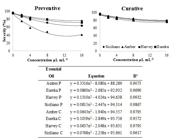
Severity of the fungus A. alternata at different essential oil concentrations from various genotypes in preventive (P) and curative (C) control - in vitro test (Cordeirópolis, SP - Brazil, 2024).
This trend was further corroborated by the AUDPC analysis (Figure 3), where the The enhanced efficacy of Amber EO is likely attributed to its unique chemical composition.

AUDPC of the fungus A. alternata at different essential oil concentrations from various genotypes in preventive and curative control - in vitro test (Cordeirópolis, SP - Brazil, 2024).
While limonene is the predominant compound in all genotypes (67.45% in Amber), Amber EO contains higher geranial (2.84%) and neral concentrations (2.02%), which are known for their strong antifungal activity against phytopathogens like A. alternata (Pavela, 2016).
Additionally, minor compounds such as β-pinene (8.66%), γ-terpinene (6.45%), and linalool (0.46%) may contribute to its antifungal properties by disrupting fungal cell membranes and inhibiting spore germination, even at low concentrations (Rodrigues et al., 2021). In contrast, Eureka and Siciliano genotypes have lower concentrations of these bioactive compounds, which may explain their reduced efficacy.
The concentration-dependent effect observed for all EOs aligns with findings from Devite et al. (2023), who reported similar results using EOs from the IAC 2019 Maria tangerine cultivar, which is genetically resistant to A. alternata.
Their study demonstrated that preventive and curative treatments with EO at 16 μL mL-1 effectively reduced disease severity compared to control.
The preventive application of EOs was more effective than the curative approach, as preventive treatment forms a protective barrier on the leaf surface, inhibiting fungal spore germination.
In contrast, curative treatment requires penetration of infected tissues, which is less effective due to the presence of the fungus and the time required for the plant to activate its secondary metabolism and produce pathogenesis-related compounds (OLIVEIRA et al., 2017).
The minor compounds in EOs, rather than the major constituents like limonene, often play a critical role in their antifungal activity. For example, β-pinene and linalool have been shown to disrupt fungal cell membranes and inhibit spore germination, even at low concentrations (RODRIGUES et al., 2021).
The mechanisms by which EOs exert their antifungal activity include disrupting fungal cell membranes, inhibiting key enzymes, and interfering with fungal cell communication pathways (CHITOLINA et al., 2020).
Compounds such as limonene, β-pinene, and linalool—abundant in citrus EOs—are highly lipophilic and can penetrate the lipid bilayer of fungal cells, destabilizing the membrane and causing cell death.
EOs also inhibit enzymes like ATPases and chitin synthases, critical for energy production and cell wall synthesis, impairing fungal growth and spore germination. Additionally, EOs disrupt fungal cell communication pathways, such as quorum sensing, weakening the pathogen’s ability to establish infections.
Some compounds, like geranial and neral, induce oxidative stress by generating reactive oxygen species (ROS), further contributing to fungal cell death. Further investigations of these mechanisms could lead to the development of more potent and environmentally friendly EO-based formulations for disease control.
Preventive and Curative Control in the Field (in vivo experiment)
The results of the in vivo experiment, regarding the efficacy of EOs against A. alternata infection under field conditions, are intriguing.
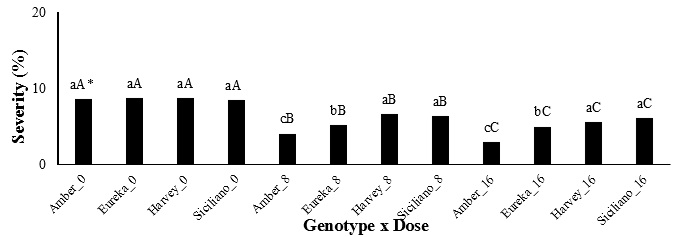
Interestingly, no statistically significant differences were observed between preventive and curative control methods regarding disease severity and AUDPC values (Figure 4).
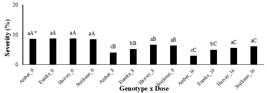
In vivo severity of the fungus A. alternata at different essential oil concentrations from various genotypes (Cordeirópolis, SP - Brazil, 2024). *Means followed by the same lowercase letter among varieties at the same dose, and uppercase letters within the same variety across different doses do not differ significantly (Tukey, 5%).
This unexpected outcome suggests that under field conditions, the timing of EO application (preventive vs. curative) may not significantly impact disease control.
However, this result could be attributed to the high volatility of EOs and their sensitivity to environmental factors such as temperature and UV radiation.
In this study, EOs were applied in the morning, under conditions of low wind and temperatures around 25°C, to minimize volatilization. Despite these conditions, the natural degradation of EOs in the field may have reduced their efficacy compared to in vitro conditions, where environmental factors are controlled (PAVELA, 2016; OLIVEIRA et al., 2017).
Despite the lack of significant differences between control methods, EOs from all genotypes exhibited a concentration-dependent effect on disease severity.
At the highest concentration tested (16 μL mL-1), EOs from all four genotypes (Amber, Eureka, Harvey, and Siciliano) demonstrated significant reduction in disease severity compared to control (Figure 4).
This observation aligns with findings from previous studies, highlighting the dose-dependent antifungal activity of EOs (JING et al., 2014; RODRIGUES et al., 2021).
Among the different genotypes, the EO derived from the Amber lemon showed a trend of superior performance in controlling A. alternata.
Notably,at concentrations of 8 and 16 μL mL-1, the Amber EO exhibited significantly lower disease severity compared to the other genotypes (Figure 4).
Similarly, the AUDPC analysis(Figure 5) revealed that the Amber EO consistently resulted in the lowest AUDPC values across all tested concentrations, indicating its remarkable ability to suppress fungal growth and disease progression throughout the seven-day evaluation period.

In vivo AUDPC of the fungus A. alternata at different essential oil concentrations from various genotypes (Cordeirópolis, SP - Brazil, 2024). *Means followed by the same lowercase letter among varieties at the same dose, and uppercase letters within the same variety across different doses do not differ significantly (Tukey, 5%).
Furthermore, the EO from the Eureka genotype presented a promising antifungal effect at the highest concentrations (8 and 16 μL mL-1).
At these concentrations, leaves treated with Eureka EO presented lower disease severity compared to those treated with Harvey and Siciliano genotypes (Figure 4).
These findings suggest potential variability in the antifungal efficacy of EOs extracted from different lemon genotypes, requiring further research to explore the specific components responsible for these differences.
The chemical composition of EOs, particularly the presence of minor compounds, plays a crucial role in their antifungal activity under field conditions.
While limonene is the predominant compound in all genotypes, the Amber EO contains higher geranial (2.84%) and neral concentrations (2.02%), which are known for their strong antifungal properties against phytopathogens like A. alternata (TUNDIS et al., 2012).
Additionally, β-pinene (8.66%) and γ-terpinene (6.45%) may contribute to the enhanced antifungal activity of the Amber EO by disrupting fungal cell membranes and inhibiting spore germination (ZAMBONELLI et al., 1996).
In contrast, Eureka and Siciliano genotypes have lower concentrations of these bioactive compounds, which may explain their reduced efficacy.
The synergistic effects of these minor compounds, rather than the action of a single compound, are likely responsible for the observed antifungal activity (SOYLU et al., 2010).
The acquisition and application of EOs are relatively simple, as they can be extracted from citrus peels, a by-product of the citrus processing industry, which makes EOs a cost-effective and sustainable alternative to synthetic fungicides.
However, their high volatility and sensitivity to environmental conditions may limit their efficacy in field applications.
Therefore, future studies could explore encapsulation techniques or adjuvants to enhance the stability and persistence of EOs under field conditions (ISMAN, 2020). Additionally, the viability of EO-based treatments depends on factors such as ease of application, cost-effectiveness, and compatibility with integrated pest management practices.
Conclusion
This study identified the Amber lemon genotype as the most effective source of essential oil (EO) for controlling A. alternata in both in vitro and in vivo conditions.
In in vitroexperiments, the preventive application of Amber EO at 16 μL mL -1 was the most effective in reducing disease severity and suppressing fungal growth, outperforming EOs from Eureka, Harvey, and Siciliano genotypes.
While curative applications also showed efficacy, preventive treatments consistently provided superior control, likely due to the formation of a protective barrier on the leaf surface.
In in vivo experiments, the Amber EO again demonstrated the highest efficacy, with the concentration of 16 μL mL -1 significantly reducing disease severity compared to control.
Although no significant differences were observed between preventive and curative methods under field conditions, the concentration-dependent effect was evident, with higher doses providing better disease control. The Eureka genotype also exhibited promising results at concentrations of 8 and 16 μL mL-1, suggesting potential variability in the antifungal efficacy of EOs extracted from different lemon genotypes.
These findings underscore the potential of Amber lemon EO as a sustainable and effective alternative for managing A. alternata in citrus production.
Future research should focus on optimizing application methods, exploring encapsulation techniques to enhance EO stability under field conditions, and identifying the specific chemical constituents responsible for the observed antifungal activity.
This study provides a foundation for the development of environmentally friendly strategies to control fungal diseases in citrus crops.
Acknowledgment
The Fundação de Amparo à Pesquisa do Estado de São Paulo-Fapesp financed this study (proc. nº 2017/24564-1 and 2020/07045-3).
References
-
ANDRADE, M.A.; BARBOSA, C.H.; SHAH, M.A.; AHMAD, N.; et al. Citrus by-products: valuable source of bioactive compounds for food applications. Antioxidants, Basel, v.12, n.1, p.38, 2023. https://doi.org/10.3390/antiox12010038
» https://doi.org/10.3390/antiox12010038 -
ANTUNES, M.D.; CAVACO A.M. Phenols and antioxidant activity of hydro-alcoholic propolis extracts from Algarve, South of Portugal. Food and Chemical Toxicology, Oxford, v.48, n.12, p.3418–23, 2010. https://doi.org/10.1016/j.fct.2010.09.014
» https://doi.org/10.1016/j.fct.2010.09.014 -
AZEVEDO, F.A.; POLYDORO, D.A.; BASTIANEL, M.; KUPPER, K.C.; et al. Resposta de diferentes genótipos de tangerinas e seus híbridos à inoculação in vitro e in vivo de Alternaria alternata. Revista Brasileira de Fruticultura, Jaboticabal, v.32, n.3, p.1-10, 2010. https://doi.org/10.1590/S0100-29452010005000085
» https://doi.org/10.1590/S0100-29452010005000085 -
CHITOLINA, G.M.; SILVA-JUNIOR, G.J.; FEICHTENBERGER, E.; PEREIRA, R.G.; et al. Distribution of Alternaria alternata isolates with resistance to quinone outside inhibitor (QoI) fungicides in Brazilian orchards of tangerines and their hybrids. Crop Protection, Amsterdam, v.141, p.105493, 2020. https://doi.org/10.1016/j.cropro.2020.105493
» https://doi.org/10.1016/j.cropro.2020.105493 -
DEVITE, F.T.; AZEVEDO, F.A.D.; BASTIANEL, M.; SCHINOR, E.H.; et al. Mandarin essential oils as an alternative method of controlling the fungus Alternaria alternata (Fr.: Fr.) Keissler. Horticulturae, Basel, v.9, p.613, 2023. https://doi.org/10.3390/horticulturae9060613
» https://doi.org/10.3390/horticulturae9060613 - DEWDNEY, M.M; VASHISTH, T.; DIEPENBROCK, L.M. Guia de produção de frutas cítricas da Flórida 2021–2022: Huanglongbing (greening de frutas cítricas): CG086/PP 225, rev. 3/2021. EDIS , 2021.
- DUGO, G.; MONDELLO, L. Citrus oils: Composition, advanced analytical techniques, contaminants, and biological activity. London: CRC Press, 2011.
-
FAO - Organização das Nações Unidas para a Alimentação e a Agricultura. FAOESTAT. Resultados do banco de dados. 202 Disponível em: < http://www.fao.org/3/y5143e/y5143e12.htm >. Acesso em: 8 abr. 2024.
» http://www.fao.org/3/y5143e/y5143e12.htm -
FISHER, K.; PHILLIPS, C.A. Potential antimicrobial uses of essential oils in food: is citrus the answer? Trends in Food Science and Technology, Oxford, v.19, n.3, p.156-64, 2008. https://doi.org/10.1016/j.tifs.2007.11.006
» https://doi.org/10.1016/j.tifs.2007.11.006 -
GOLMAKANI, M.T.; MOAYYEDI, M. Comparison of heat and mass transfer of different microwave-assisted extraction methods of essential oil from Citrus limon (Lisbon variety) peel. Food science and Nutrition, Malden, v.3, n.6, p.506-18, 2015. https://doi.org/10.1002/fsn3.240
» https://doi.org/10.1002/fsn3.240 -
GONZÁLEZ-MAS, M.C.; RAMBLA, J.L.; LÓPEZ-GRESA, M.P.; BLÁSQUEZ, M.A.; et al. Volatile compounds in citrus essential oils: A review. Critical Reviews in Food Science and Nutrition, Lausanne, v.59, n.5, p.774-94, 2019. https://doi.org/10.3389/fpls.2019.00012
» https://doi.org/10.3389/fpls.2019.00012 -
IBGE - INSTITUTO BRASILEIRO DE GEOGRAFIA E ESTATÍSTICA . Produção Agrícola Mundial. Disponível em: <https: //www.ib g e.gov.br/estatisticas- novoportal/economicas/agricultura-e-pecuaria/9201-levantamento-sistematico- da-producao-agricola.html?=t=o-que-e:> . Acesso em: 01 de abril de 2024.
» https: //www.ib g e.gov.br/estatisticas- novoportal/economicas/agricultura-e-pecuaria/9201-levantamento-sistematico- da-producao-agricola.html?=t=o-que-e: -
ISMAN, M.B. Bioinsecticides based on plant essential oils: a short overview. Zeitschrift für Naturforschung, Tubingen, v.75, n.7/8, p.179-82, 2020. https://doi.org/10.1515/znc-2020-0038
» https://doi.org/10.1515/znc-2020-0038 -
JING, L.; LEI, Z.; LI, L.; XIE, R.; et al. Antifungal activity of citrus essential oils. Journal of Agricultural and Food Chemistry, Easton, v.62, n.14, p.3011-33, 2014. https://doi.org/10.1021/jf5006148
» https://doi.org/10.1021/jf5006148 -
LURO, F.; VENTURINI, N.; COSTANTINO, G.; PAOLINI, J.; et al. Genetic and chemical diversity of citron (Citrus medica L.) based on nuclear and cytoplasmic markers and leaf essential oil composition. Phytochemistry, Athens, v.77, p.186-96, 2012. https://doi.org/10.1016/j.phytochem.2011.12.013
» https://doi.org/10.1016/j.phytochem.2011.12.013 -
MARTELLI, I.B.; PACHECO, C.A.; BASTIANEL, M.; SCHINOR, E.H.; et al. Diagrammatic scale for assessing foliar symptoms of alternaria brown spot in citrus.Agronomy Science and Biotechnology, Londrina, v.2, p.57-61, 2016. https://doi.org/10.33158/ASB.2016v2i2p57
» https://doi.org/10.33158/ASB.2016v2i2p57 - MOURA, G.S.; SCHEFFER, D.C.; FRANZENER, G.; JASKI, J.M. Efeito de óleos essenciais de Citrus spp.no controle pós-colheita da antracnose em banana e pimentão. Revista Cultivando o Saber, Cascavel, v.10, n.3, p.354-69, 2022.
-
OLIVEIRA, C.R.M.; MELLO-FARIAS, P.C.; OLIVEIRA, D.S.C. de; CHAVES, A.L.S.; et al. Water availability effect on gas exchanges and phenology of 'Cabula' orange. Acta Horticulturae, The Hague, v.1, n.1150, p.133-8, 2017. https://doi.org/10.17660/ActaHortic.2017.1150.19
» https://doi.org/10.17660/ActaHortic.2017.1150.19 -
PAVELA, R. History, presence and perspective of using plant extracts as commercial botanical insecticides and farm products for protection against insects – a review. Plant Protection Science, Praha, v.52, n.4, p.229-41, 2016. https://doi.org/10.17221/31/2016-PPS
» https://doi.org/10.17221/31/2016-PPS -
PEEVER, T.L., CANIHOS, Y.; OLSEN, L.; IBÁÑEZ, A.; et al. Population genetic structure and host specificity of Alternaria spp.Causing brown spots of Minneola tangelo and rough lemon in Florida. Phytopathology, St Paul, v.89, p.851-60, 1999. https://doi.org/10.1094/PHYTO.1999.89.10.851
» https://doi.org/10.1094/PHYTO.1999.89.10.851 - PEREIRA, M.E.C.; CANTILLANO, F.F.; GUTIEREZ, A.S.D.; et al. Procedimentos pós-colheita na produção integrada de citros. Cruz das almas: Embrapa Mandioca e Fruticultura Tropical, 2006. p.40. (Documentos, 156).
-
PIRES, T.C.; PICCOLI, R.H. Efeito inibitório de óleos essenciais do gênero Citrus sobre o crescimento de micro-organismos. Revista Instituto Adolfo Lutz, São Paulo, v.71, n.2, p.259-65, 2012. https://doi.org/10.53393/rial.2012.v71.32438
» https://doi.org/10.53393/rial.2012.v71.32438 -
RODRIGUES, D.W.; BOSSI, M.A. da S.; DRANKA, B.A.;GONÇALVES, L.F.S.; et al. Aplicação de óleos essenciais no controle alternativo da antracnose no Brasil. Metodologias e Aprendizado, Blumenau, v.4, p.33-40, 2021. https://doi.org/10.21166/metapre.v4i.1635
» https://doi.org/10.21166/metapre.v4i.1635 -
ROZZA, A.L.; MORAES T.de M.; KUSHIMA, H.; TANIMOTO, A.; et al. Gastroprotective mechanisms of Citrus lemon (Rutaceae) essential oil and its majority compounds limonene and beta-pinene: Involvement of heat-shock protein-70, vasoactive intestinal peptide, glutathione, sulfhydryl compounds, nitric oxide and prostaglandin E(2). Chemico-Biological Interactions, Amsterdam, v.189, n.1/2, p.82-9, 2011. https://doi.org/10.1016/j.cbi.2010.09.031
» https://doi.org/10.1016/j.cbi.2010.09.031 -
SHANER, G.; FINNEY, R.E. The effects of nitrogen fertilization on the expression of slowmildwing in knox wheat. Phytopathology, St Paul, v.67, p.1051-5, 1977. https://doi.org/10.1094/Phyto-67-1051.
» https://doi.org/10.1094/Phyto-67-105 -
SOYLU, E. M.; KURT, S.; SOYLU, S. In vitro and in vivo antifungal activities of the essential oils of various plants against tomato grey mould disease agent Botrytis cinerea International Journal of Food Microbiology, Amsterdam, v.143, n.3, p.183-9, 2010. https://doi.org/10.1016/j.ijfoodmicro.2010.08.015
» https://doi.org/10.1016/j.ijfoodmicro.2010.08.015 -
TEIXEIRA, J.P.F.; MARQUES, M.O.M.; FIGUEIREDO, J.O. Composição química de óleos essenciais de quinze genótipos de limão em duas épocas de colheita. Citrus Research and Technology, Cordeirópolis, v.34, n.2, p.65-74, 2013. https://doi.org/10.5935/2236-3122.20130008
» https://doi.org/10.5935/2236-3122.20130008 -
TRIPATHI, P.; DUBEY, N.K. Exploitation of natural products as an alternative strategy to control postharvest fungal rotting of fruit and vegetables. Postharvest Biology and Technology, Amserdam, v.32, n.3, p.235-45, 2004. https://doi.org/10.1016/j.postharvbio.2003.11.005
» https://doi.org/10.1016/j.postharvbio.2003.11.005 -
TUNDIS, R.; LOIZZO, M.R.; BONESI, M.; MENICHINI, F.; et al. Comparative study on the antioxidant capacity and cholinesterase inhibitory activity of Citrus aurantifolia Swingle, C. aurantium L., and C. bergamia Risso and Poit. Peel essential oils. Journal of Food Science, Chicago, v.71, n.1, p.40-6, 2012. https://doi.org/10.1111/j.1750-3841.2011.02511.x
» https://doi.org/10.1111/j.1750-3841.2011.02511.x -
VEKIARI, S.A.; PROTOPAPADAKIS, E.E.; PAPADOPOULOU, P.; PAPANICOLAOU, D.; et al. Composition and seasonal variation of the essential oil from leaves and peel of a Cretan lemon variety. Journal of Agricultural and Food Chemistry, Easton, v.50, p.147-53, 2002. https://doi.org/10.1021/jf001369a
» https://doi.org/10.1021/jf001369a -
ZAMBONELLI, A.; D’AULERIO, A.Z.; BIANCHI, A.; ALBASINI, A. Effects of essential oils on phytopathogenic fungi in vitro. Journal of Phytopathology, Oxford, v.144, n.9/10, p.491-4, 1996. https://doi.org/10.1111/J.1439-0434.1996.TB00330.X
» https://doi.org/10.1111/J.1439-0434.1996.TB00330.X
Edited by
-
Scientific Editor
Alexandre Pio Viana
-
Associate Editor
Ivan Herman Fischer
Data citations
FAO - Organização das Nações Unidas para a Alimentação e a Agricultura. FAOESTAT. Resultados do banco de dados. 202 Disponível em: < http://www.fao.org/3/y5143e/y5143e12.htm >. Acesso em: 8 abr. 2024.
IBGE - INSTITUTO BRASILEIRO DE GEOGRAFIA E ESTATÍSTICA . Produção Agrícola Mundial. Disponível em: <https: //www.ib g e.gov.br/estatisticas- novoportal/economicas/agricultura-e-pecuaria/9201-levantamento-sistematico- da-producao-agricola.html?=t=o-que-e:> . Acesso em: 01 de abril de 2024.