Production of dragon fruit plants by cuttings in semi-hydroponic and conventional systems
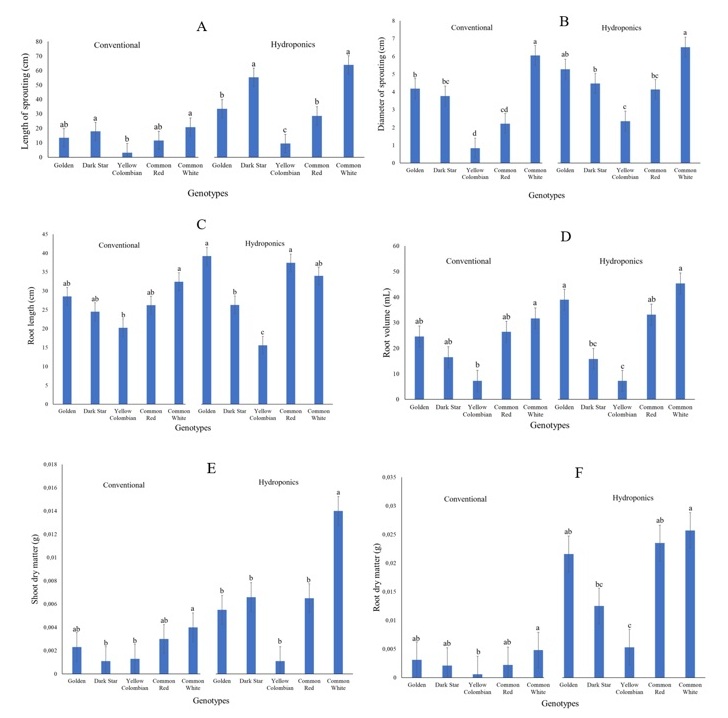
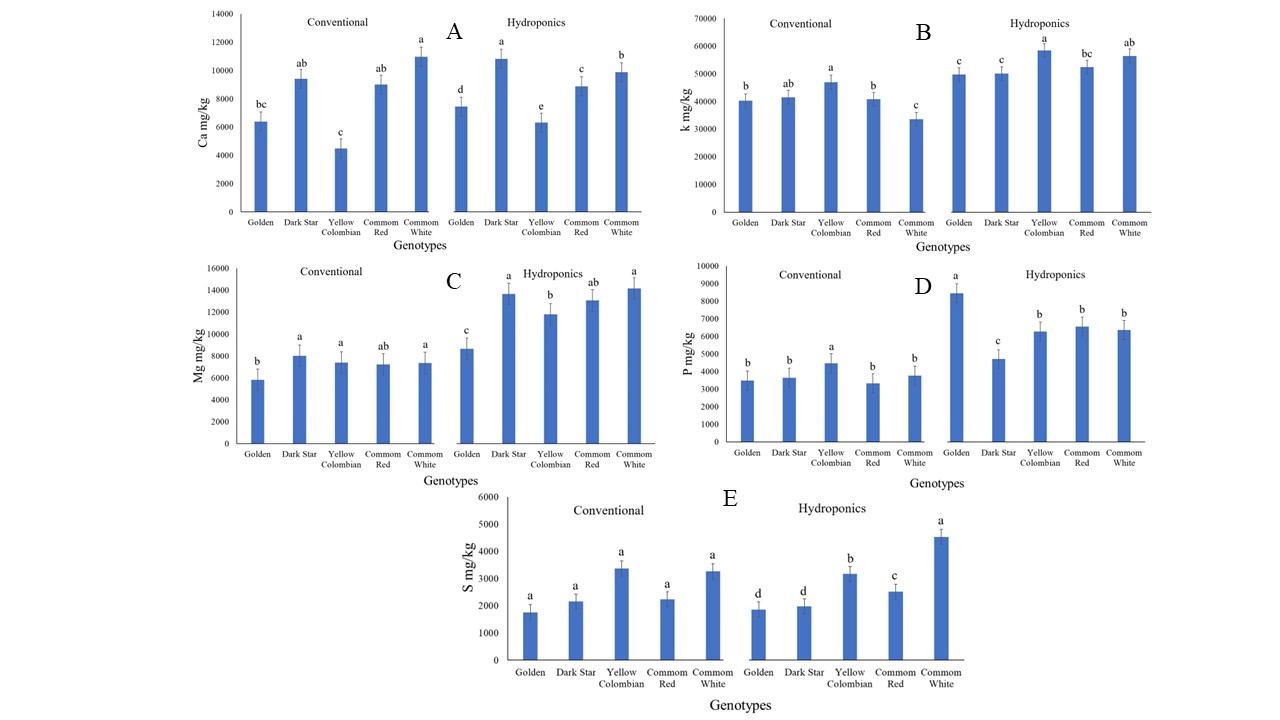
Dragon fruit, a relatively recent crop in Brazil, still lacks studies related to crop practices and nursery plants production. Research indicates that hydroponics can reduce the time necessary to obtain and improve their quality. Thus, the objective of this study was to evaluate the nursery plants growth of dragon fruit genotypes under two production systems, conventional and semihydroponic. The experiments were conducted between July and October 2022 at the Federal University of Lavras, Lavras-MG, Brazil. Cuttings of five dragon fruit genotypes were used, namely: ‘Common White’, ‘Dark Star’, ‘Common Red’, ‘Yellow Colombian’ and ‘Golden’. The experimental design was in randomized blocks, with five treatments, four blocks and five plants per plot. After 90 days of planting, shoot length and diameter, length of the main root, root volume, root and shoot dry matter, percentage of P, K, Ca, Mg and S in cladodes wereevaluated. The means were subjected to analysis of variance and compared using the Tukey test at 5% significance; a joint analysis of the experiments was also carried out. All genotypes showed greater growth in the semi-hydroponic system. The ‘Common White’ genotype achieved greater growth in both cultivation systems. Thesemihydroponic system demonstrated to be a viable alternative for the production of dragon fruit nursery plants, since the growth of nursery plants in this systemis significantly higher than those in a conventional system.
Index terms
floating; hydroponics; nursery plants production; Selenicereus
 Thumbnail
 Thumbnail