
 Alternatives to hydrogen cyanamide to induce vine budding in subtropical regions
Abstract:
The aim of this work was to evaluate the efficiency of unconventional products to overcome grapevine bud dormancy. Two experiments were carried out during the 2022 and 2023 seasons. In the first experiment, electric current was applied to Merlot vines, with treatments consisting of: Distilled water (negative control), electric current in the trunk for 30 and 60s, electric current in the production arm for 30 and 60s, electric current in the spur for 15 and 30s and hydrogen cyanamide (positive control). The second experiment was carried out on Sauvignon Blanc vines in 2022 with the same controls and Erger® (10%, 20% and 30%) and cassava extract (10, 20 and 30%). In 2023, Cabernet Franc vines were used with the following treatments: Erger® (5% and 7.5% + 5% Ca(NO3)2), cassava extract (20 and 30%), sorghum extract (1.5 and 5%), in addition to controls. The application of electric current on the spur during 15 and 30 seconds can overcome bud dormancy, as well as the application of cassava extract at 20 and 30% and Erger® 20%, with results similar to hydrogen cyanamide. Erger® and hydrogen cyanamide induce higher vine vigor, mainly because these product present N in their composition and this nutrient is readily available.
Index terms
dormancy overcoming; eletroculture; cianogenic plants; organic viticulture; image analysis
Resumo:
objetivo deste trabalho foi avaliar a eficiência de produtos não convencionais na superação da dormência de gemas em videiras. Foram realizados dois experimentos nas safras de 2022 e 2023. No primeiro experimento, foi aplicada corrente elétrica em videiras Merlot, com tratamentos compostos por: Água destilada (controle negativo), corrente elétrica no tronco por 30 e 60s, corrente elétrica no braço de produção por 30 e 60s, corrente elétrica no esporão por 15 e 30s e cianamida hidrogenada (controle positivo). O segundo foi realizado minina videira Sauvignon Blanc em 2022 com os mesmos controles e Erger® (10%, 20% e 30%) e extrato de mandioca (10, 20 e 30%). Em 2023, foram utilizadas videiras Cabernet Franc com os tratamentos: Erger® (5% e 7,5% + 5% Ca(NO3)2), extrato demandioca (20 e 30%), extrato de sorgo (1,5 e 5%), além das testemunhas. A aplicação decorrente elétrica no esporão por 15 e 30 segundos pode superar a dormência das gemas, assim como a aplicação de extrato de mandioca a 20 e 30% e Erger® 20%, com resultados semelhantes à cianamida hidrogenada. Erger® e cianamida hidrogenada induzem maior vigor da videira, principalmente porque esses produtos apresentam N em sua composição e esse nutriente está prontamente disponível.
Termos para indexação
superação de dormência; eletrocultura; plantas cianogênicas; viticultura orgânica; análise de imagem
Introduction
Grapevine cultivation in tropical and subtropical regions of Brazil presents delayed, non-uniform and low budding rates related to the absence of cold or irregular winters that provide inadequate chilling (SUDAWAN et al., 2016). This differs from other wine-growing regions with temperate climate where the requirement of chilling hours to overcome bud dormancy is met, necessary to start a new vegetative and productive cycle.
Thus, the absence of adequate chilling hours to overcome bud dormancy makes viticulture dependent on management, such as water deficit, girdling or products capable of inducing sprouting. In tropical and subtropical regions of Brazil, vineyards are grown in mild or slightly cold weather, which cold hours are not sufficient to meet the vine’s demand to provide good budding uniformity, where high temperatures throughout the year do not induce a state of endodormancy in buds, providing continuous vegetative growth.
Currently, the most effective product for this purpose is hydrogen cyanamide (H2CN2).
It induces budding uniformity and initial shoot vigor superior to other products, such as garlic extract, which is widespread mainly in organic and biodynamic crops.
However, hydrogen cyanamide presents some limitations regarding its use. Firstly, it is an extremely toxic product and the exposure of the spray operator can lead to severe clinical manifestations such as vomiting, nausea, headache, cutaneous hyperaemia and abdominal pain (SCHEP et al., 2009; BERNASCONI et al., 2023), whose application must be carried out with high safety, minimizing health risks, or environmental impacts and secondly, because it is a unique product, causing dependence on the entire sector, which leads to fluctuations in price and availability due to the high demand.
Nevertheless, hydrogen cyanamide remains a highly necessary product for viticulture and currently, no efficient alternatives have been proposed to replace it. Among the products tested for breaking dormancy, extracts based on garlic (BOTELHO et al., 2010; CARVALHO et al., 2016), mineral oil (KARIMI et al., 2021; VENTER et al., 2024), ethanol (CHERVIN;FENNEL, 2019) and calcium cyanamide (CaCN2) KARIMI et al., 2021) stand out, which did not prove to be convincing substitutes.
Among some alternatives that have not yet been tested or very little explored are: Erger®, a mixed mineral foliar fertilizer, which has been tested on temperate fruit plants, such as apple trees and in a minimum level in grapevines, where its combination with calcium nitrate showed similar results when compared to hydrogen cyanamide (DARDE et al., 2019; ROSA et al., 2020; DASKALAKIS et al., 2025). Studies in viticulture have shown promising results; however, an approach that evaluates higher doses of this product is needed.
A new technique that could be used is electric current and field, which has proven to be a very useful tool in several studies within plant biology, in which the application of electric fields to improve seed germination, increase polyphenols in wheat seeds and tannins in cocoa husks, as well as its effects on overcoming dormancy in grapevines, inducing plant growth and root formation in grapevine rootstocks (EL-SHEREIF et al., 2006; KÖSE, 2007; SHARAF-ELDIN, 2016; BARIŠIĆ et al., 2020), the influence of high voltage electric discharge (MARČEK et al., 2021, MARČEK et al., 2023; MA et al., 2024), although it has been very little explored, especially at field level.
Finally, a class of products that have not yet been tested to overcome plant dormancy are extracts from cyanogenic plants, rich in hydrocyanic acid (HCN), such as cassava (Manihot esculenta Crantz) and sorghum (Sorghum bicolor (L.) Moench). Due to their molecular similarity to hydrogen cyanamide, these extracts present themselves as a potential alternative for this purpose. In this sense, the aim of this work is to evaluate alternatives to overcome the dormancy of vine buds and to present a new vigor image analysis as a tool for vigor assessment.
Material and Methods
Local and experimental arrangement
Two experiments were carried out in different vineyards located at the Minas Gerais Agricultural Research Agency (EPAMIG) experimental station, in the municipality of Caldas (21°55’ S, 46°23’ W and altitude 1100 m a.s.l.), southern state of Minas Gerais.
According to the Köppen classification, the region has subtropical high-altitude climate with dry winters and mild summers (Cwa) (ALVARES et al., 2013). The climate conditions during both seasons were shown in Figure 1.

Average monthly rainfall (mm), minimum (TMIN), mean (TMEAN) and maximum (TMAX) air temperature (°C) during 2022-2023 seasons in the municipality of Caldas, Minas Gerais,Brazil.
Treatments were applied to three vineyards, including Merlot, Sauvignon Blanc and Cabernet Franc varieties, all of them 14 years old and grafted onto the ‘1103 Paulsen’ rootstock. Plants were trained in an espalier system with three wire strands, north-south orientation and with spacing of 2.50 m x 1.50 m and pruned in a spur cordon (Royat), maintaining an average of 15 spurs with 2 buds each, totaling 30 buds per plant.
Experiment I was evaluated in the 2022 and 2023 seasons and consisted of using electric current to overcome the dormancy of Merlot buds. The experimental design used was completely randomized, due to the small size and vineyard uniformity, consisting of eight treatments and three replicates with five plants each, totaling 120 plants.
Treatments were: application of distilled water as negative control (WC), application of direct current to the trunk for 30 (TC30) and 60 seconds (TC60), application of direct current to the spur cordon (branches) for 30 seconds (BC30) and 60 seconds (BC60), application of direct current to the spur for 15 seconds (SC15) and 30 seconds (SC30); and hydrogen cyanamide as positive control (HC). The application of electric current was carried out using the manual electric weeding equipment IZI® (Zasso), with electric voltage of 110 V, frequency of 50/60Hz and amperage of 0.7. For the cyanamide application, the commercial product Dormex®(BASF), with 520g/L of active ingredient,was used at commercial dose of 5%.
Experiment II consisted of extracts from cyanogenic plants and Erger® to overcome the dormancy of Sauvignon Blanc and Cabernet Franc buds. During 2022, the experiment was set in the Sauvignon Blanc vineyard, and due to some problems in 2023, the experiment was set in the Cabernet Franc vineyard.
In both tests, the experimental design used was completely randomized, consisting of eight treatments and four replicates with five plants each, totaling 160 plants. During the 2022 season, treatments consisted of: application of distilled water as negative control (WC), Erger® (10%) (ERG10), Erger® (20%) (ERG20); Erger® (30%) (ERG30), cassava extract (10%) (ME10), cassava extract (20%) (ME20), cassava extract (30%) (ME30), and hydrogen cyanamide as positive control (HC).
In 2023,treatments were: Erger® (5%+5% Ca(NO3)2) (ERG5), Erger® (7,5%+5% Ca(NO3)2)(ERG7), cassava extract (20%)(ME20), cassava extract 30%(ME30), sorghum extract (1,5%) (SE1), sorghum extract (5%)(SE5) and both controls. Erger® is composed of 15% nitrogen and 3.36% calcium and calcium nitrate was obtained from Haifa Premium® with 17% nitrogen and 33% calcium oxide, and fertilizer doses were adjusted to reach Ca(NO3)2 doses of 5% .
Cassava and sorghum extracts were obtained by grinding leaves with water in their proportions with the help of a blender, kept overnight in a material-liquid contact and stored at 6°C. Extracts were strained to remove particles that could clog the spray nozzles. For the cyanamide application , the commercial product Dormex® (BASF), with 520g/L of active ingredient, was used at commercial dose of 5%. Treatments were applied via spraying over all buds present in the spur. In both experiments, the volume of water-based treatments applied was 15ml per vine.
Agronomical analysis
The number of sprouted buds were weekly counted from the date of application of treatments and were recorded until no more sprouts occurred. From data obtained, the budding percentage was obtained as follows: (number of sprouted buds/total buds per plant) *100.
The budding uniformity was calculated by the number of days between first and last sprouted bud and the budding anticipation was calculated by the number of days until first bud sprouting.
The vegetative growth was evaluated by leaf area, estimated through nondestructive method. Single leaf area was estimated using the following equations: y =23.1898-2.7717x+0.471x2 and 0.1732x2.3616for Merlot and Sauvignon Blanc vines, respectively,where y is the estimated single leaf area and x is the sum of lengths of two main lateral leaf veins (REGINA et al., 2000; BORGHEZAN et al., 2010). The average single leaf area was obtained from eight to 10 leaves per shoot and the average shoot leaf area from four shoots per vine. The total leaf area per vine was calculated by multiplying the average shoot leaf area by the total number of shoots per vine. Branch length was obtained at 60 and 90 days after pruning (DAP), using a tape measure. During the 2023 season, leaf area was not measured due to the occurrence of severe downy mildew that compromised leaf area analysis.
Vegetative vigor was also evaluated by estimating gaps in the vegetative canopy of the vines using a methodology adapted from Hill et al. (2011), which was validated in this test. To measure leaf density in the canopy, a percentage analysis of canopy openings (% GAP) was conducted on four plants per treatment. Vines were photographed to obtain RGB digital images distanced 1.5 m from the vine at height of 1.25 m, centered, at the height between the first and second wire strands using a smartphone (Moto one action, 16 megapixels, Motorola). A blue tarp (2 by 2.5 m) was suspended behind the vine to provide a uniform background color.
The pictures were framed within the edges of the screen to avoid excluding any detail beyond the vine and the screen, except for parts of the training system (wires), which cannot be avoided. Blue was used as the background, since the hue is considered sufficiently different from the vine’s canopy for image analysis, in order to distinguish it.
After taking the pictures, the files were analyzed using the Adobe Photoshop® CS6 software (Figure 2A). Pictures were kept at 300 dpi resolution, with standardized size of 3x1(Figure 2B). The tolerance was previously tested (data not shown) and kept at 32 in the color range because it determines the color gamma of the selected pixels.
This value must remain between 0 and 255, where a low value selects a few colors that are very similar to the clicked pixel, while a higher value selects a wider range of colors, which may lead to color overlapping or selection of colors beyond determined areas.
To avoid this condition, the color overlap was calculated.
The color selection was obtained using the ‘magic wand tool’ Photoshop and, three areas were measured: the total area of the image with the selection of the whole image, the blue area identified as gaps, obtained selecting the blue pixels of the tarp (Figure 2C) and the area occupied by the vine, selecting the ‘inverse’ of the blue area. ‘Inverse’ is a selection option of the ‘magic wand tool’ Photoshop.
Finally, the sum of the blue area (gaps) and its inverse (vine) were obtained to calculate the gap percentage and the error associated with color overlapping through the formulas below.
To both experiments,the %COE was lower than 0.01% (data not shown).
GA: gap area or area in blue (cm2);
TCA: total calculated area (cm2) (sum of the area in blue and its inverse);
%VINE = 100-%GAP
COE: color overlay error (%);
TAO: total area obtained (cm²), calculated from the selection of the entire picture area.

Original picture (A), picture standardization (B), selection of the blue area using the ‘magic wand’ tool Photoshop (C).
Statistical Analysis
The analysis of variance (ANOVA) assumptions were checked: the normality of the model’s residual distribution and the homogeneity of variances were verified using the Shapiro’s test (p>0.05) and the Bartlett’s test (p>0,05), respectively, in the R software (R CORE TEAM, 2020). One-way ANOVA and Tukey multiple range test (p<0.05) were applied using the ‘ExpDes’ package, figures were plotted using the ‘ggplot2’ package.
Results and Discussion
The budding rate of Merlot vine was influenced by HC treatment and current when directly applied in the spur for 30 and 15 seconds, which obtained 100, 98.07 and 97.25% of budding rate, respectively.
These results were higher than WC treatment, with mean budding rate of 78%. TC and BC treatments presented values lower than those of WC (<60% of budding rate). In addition, SC and HC treatments presented great budding homogeneity as can be seen by the short length of the boxplot (Figure 3A).
Regarding budding uniformity and anticipation, HC treatment showed the lowest values, taking an average of 12 days to initiate dormancy breaking and 25 days to complete budding, while there were no differences between the remaining treatments for budding uniformity, showing an average of 35 days, 10 more than HC.
Budding anticipation was also lower when SC30 (16 days), SC15 (18 days) and WC (18 days) were applied (Figures 3B and 3C).
No differences were found regarding leaf area, ranging from 3.13 (BC60) up to 5.09 m2 (HC) (Figure 3D). Branch length at 60 DAP was higher when vines were applied HC and SC15, obtaining 86 and 59 cm, respectively (Figure 3E). The lowest value was found for TC30 and BC30, around 30 cm.
At 90 DAP, the same pattern among treatments was observed, the highest values were found for vines treated with HC (~120 cm) and the lowest values (~60cm) were found for TC30 and BC30 (Figure 3F).
Sauvignon Blanc vines presented higher budding rate when sprayed with HC, ME20, ME30 and ERG20, 15 to 20% higher than vines treated with WC (80% budding rate), the lowest value (Figure 4A). Vines sprayed with HC showed great budding anticipation, lasting 8 days until first budding, followed by all ERG treatments (11 and 13 days to first budding), as well as budding uniformity, which HC last only 22 days to fully overcome bud dormancy, followed by ERG20, lasting 25 days. WC, ME30 and ME10 were delayed about 12 days after vines were sprayed with HC (Figures 4B and 4C).
Similar to Merlot vine, the leaf area of Sauvignon Blanc vines did not present differences among treatments, ranging from 4.03m2 (ERG30) to 6.26m2 (ME30) (Figure 4D). Branch length at 60 DAP was higher when vines were sprayed with HC, with values of 63cm, while the lowest values were found for vines treated with WC (36.4 cm).
All ME and ERG treatments presented intermediate values, around 45 cm (Figure 4E).
At 90 DAP, HC treatment kept greater vigor with 85 cm in length, while all treatments presented no differences, with branch length of 70 cm (Figure 4F).

Budding rate (A), budding uniformity (B), budding anticipation (C), leaf area (D), branch length at 60 DAP (E) and branch length at 90 DAP (F) of Merlot vines during the 2022 season. Lowercase letters indicate differences among treatments (Tukey, p<0.05). Means of boxplots are represented by the red dot. HC= hydrogen cyanamide, SC= electric current in spur, TC= electric current in trunk, BC= electric current in branches, WC= water control.

Budding rate (A), budding uniformity (B), budding anticipation (C), leaf area (D), branch length at 60 DAP (E) and branch length at 90 DAP (F) of Sauvignon Blanc vines during the 2022 season.Lowercase letters indicate differences among treatments (Tukey, p<0.05). Means of boxplots are represented by the red dot. HC= hydrogen cyanamide, ME= cassava extract, ERG= Erger®, WC= water control.
Through image-based vigor analysis, HC vines presented higher vegetative growth characterized by greater VINE% for both Merlot and Sauvignon Blanc vines, around 80% and 60% of vegetation, and only 20% and 40% of gaps, respectively.
In Merlot vines, great vegetative vigor was observed even with direct electric current on the branch, with 50% vegetative growth and 50% gaps. The remaining treatments presented VINE% lower than 40% and GAP% higher than 60% (Figure 5A and 5B).
Regarding Sauvignon Blanc vines, ME, ERG and WC presented VINE% around 50% and 50% of gaps, with no statistical differences among them (Figure 5C and 5D).
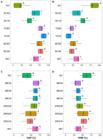
Percentage of GAP (A and C) and VINE (B and D) of Merlot and Sauvignon Blanc during 2022 season, respectively. Lowercase letters indicate differences among treatments (Tukey, p<0.05). Means of boxplots are represented by the red dot. HC= hydrogen cyanamide, SC= electric current in spur, TC= electric current in trunk, BC= electric current in branches, ME= cassava extract, ERG= Erger®, WC= water control.
During 2023, no differences among treatments were found regarding budding rate, from negative control (WC) to positive control (HC), the percentage reached between 80 and 100% budding (Figure 6A).

Budding rate (A), budding uniformity (B), budding anticipation (C) and branch length at 90 DAP (D) of Merlot vines during the 2023 season. Lowercase letters indicate differences among treatments (Tukey, p<0.05). Means of boxplots are represented by the red dot. HC= hydrogen cyanamide, SC= electric current in spur, TC= electric current in trunk, BC= electric current in branches, WC= water control.
Budding uniformity lasted 15 days for HC and from 20 to 25 days for the other treatments (Figure 6B). Budding anticipation was lower for all treatments, except for SC15 and SC30, which started after 10 days (Figure 6C). No differences were found for branch length, with mean of 70 cm (Figure 6D). Similarly to Merlot vines, during 2023, Cabernet Franc vines presented budding rate ranging from 80 up to 95% with no differences among treatments (Figure 7A).

Budding rate (A), budding uniformity (B), budding anticipation (C) and branch length at 90 DAP (D) of Cabernet Franc vines during the 2023 season. Lowercase letters indicate differences among treatments (Tukey, p<0.05). Means of boxplots are represented by the red dot. HC= hydrogen cyanamide, SC= electric current in spur, TC= electric current in trunk, BC= electric current in branches, ME= cassava extract, SE= sorghum extract, ERG= Erger®, WC= water control.
During 2023, the budding uniformity of Cabernet Franc vines was lower when SE1 was applied, lasting 25 days, 5 to 10 days faster than the other treatments (Figure 7B). No differences among treatments were found regarding budding anticipation and branch length. Vines started to bud around 7 to 10 days after pruning and branches grew closer to 75 cm at 90 DAP (Figures 7C and 7D).
The %GAP of Merlot vines was higher when vines were treated with electricity, except for BC30, showing 35 to 40% of gaps, while HC and WC presented only 20% of gaps. In contrast, HC and WC treatments showed 80% higher vine growth compared to the 60% of the other treatments (Figures 8A and 8B). The GAP percentage in relation to Cabernet Franc remained at 45% and vegetative growth at 55%, with no differences between treatments (Figures 8C and 8D).

Percentage of GAP (A and C) and VINE (B and D) of Merlot and Cabernet Franc during 2023 season, respectively. Lowercase letters indicate differences among treatments (Tukey, p<0.05). Means of boxplots are represented by the red dot. HC= hydrogen cyanamide, SC= electric current in spur, TC= electric current in trunk, BC= electric current in branches, ME= cassava extract, SE= sorghum extract, ERG= Erger®, WC= water control.
Electricity in dormancy breaking is a completely new technique with scarce experiments, with few efficacy results and potential explanations regarding its functioning.
However, it might be possible that applying the electric current directly on the spur buds has caused thermal stress in the bud cells and consequently the generation of toxic reactive oxygen species (ROS), the most common stress signalization in plants (ALAM et al., 2025; ZHENG et al., 2025).
Electric current causes thermal stress in plant cells primarily through resistive heating, where the electric energy passing through the plant tissue is converted into thermal energy.
When this thermal stress is significant, it causes irreversible damage, such as cellular membrane disruption and cell death (ZHANG et al., 1993; DANNEHL, 2018), membrane thermostability (in relation to heat stress temperature or time of heat stress). Several studies (LI et al., 2019; NUTRIZIO et al., 2020; ABBASPOUR et al., 2024; MA et al., 2024) have shown that the application of high voltage electrical discharge to seeds and plant tissues causes irreversible membrane disruption by inducing electroporation, where electrical pulses create permanent pores in the cellular membrane, allowing for the release of intracellular contents and consequently occasioning ROS synthesis.
To avoid ROS accumulation, grapevines synthetize antioxidant enzymes to control enzymes such as superoxide dismutase (SOD), which is an essential enzyme of the plant antioxidant system that responds to oxidative damage caused by adverse conditions and plays a key role to avoid these damages (FENG et al., 2016; HU et al., 2019).
Since high voltage current is applied, a sharp increase in ROS and hence in antioxidant enzymes works as a signal to overcome dormancy, and SOD constitutes the first line of defense against ROS by catalyzing the dismutation of the superoxide O2- to O2 and H2O2 (ALAM et al., 2025; ZHENG et al., 2025).
However, the effect of the electric current (EC) was influenced by the proximity of buds, since no effects were observed with EC applied to the trunk and branches. This is probably related both to the distance between the trunk, branches, and buds, and to the electrical properties of the wood, since wood is a poor electrical conductor.
Although wood has many electrons, these are strongly bound to the atom’s nucleus, not exhibiting free electron flow and, consequently, there is no flow of electricity.
These wood properties make it resistant to the passage of electric current (AIRA-ZUNZUNEGUI et al., 2022; MASTANTUONI et al., 2024); and perhaps the voltage of 110 V was not sufficient to cause any effect when applied to the trunk and branches.
Erger® treatments showed great responses during the 2022 season, and in addition to increasing budding, they also influenced budding anticipation and uniformity at doses of 10 and 20%, respectively. Rosa et al. (2020) presented similar results of higher budding rates when Erger® was applied; however, the functioning of this product in overcoming dormancy was not fully elucidated.
Erger® is an organic fertilizer with 5.8% nitric nitrogen (N), 3.1 % ammonia N, 6.1% urea and 6.5% CaO, its effect may be similar to that of calcium nitrate or calcium cyanamide, which may be associated with the effects of N on the photorespiratory pathway, increasing budding in branches, stimulating cellular respiration and reactivating nitrogen metabolism, cell division and elongation; inducing dormancy breaking (CANTÓN et al., 2005; FERREIRA et al., 2022). In addition, calcium may also be involved in the process of overcoming bud dormancy, since this element activates mitochondrial respiration by inducing the activity of enzymes involved in oxidative metabolism (TARASOV et al., 2012; ROSSI et al.,2019).
However, Erger® could be economically challenging at higher doses such as 20 and 30%, since the price of this product is higher compared to Dormex®, considering that doses of 20 and 30% would cost US$ 240/ ha and US$ 360/ha, respectively, against US$ 154/ha of Dormex® at 5%.
The extract from cyanogenic plants had never been tested to this purpose in agriculture or viticulture. In this sense, there is no work in literature to compare or that could elucidate its effects on overcoming bud dormancy. The major explanation is probably linked to effects similar to hydrogen cyanamide (HC); both hydrocyanic acid (HA) and HC present molecular similarity (HCN and H2CN2, respectively), and HA and participate in the plant defensive system, playing an effective role in the metabolic turnover, nitrogen transport and storage, also helping to lower reactive oxygen species (ROS) and stress (SENICA et al., 2016; CUNY et al., 2019; MARTINEZ;DIAZ, 2024; TAHIR et al., 2024).
The fast budding anticipation caused by HC might be related to its effect on overcoming bud dormancy. When HC is absorbed in the bud cell, it binds to antioxidant enzymes, like catalase, and inhibits their action in controlling ROS (MOHAMED et al., 2012; VELAPPAN et al., 2023).
Not all key points of (HC) regarding dormancy breaking have been fully elucidated. For example, it is common for vines treated with HC to exhibit greater vegetative vigor than those treated with other methods, such as electric current or garlic extract, widely used in organic viticulture to break dormancy.
This may be related to N availability, since HC present N in its composition, which can be absorbed and stimulate vine growth.
According to Amberger (2013), when HC is applied, it is readily absorbed by plant tissues and quickly decomposed by cyanamide hydratase into urea, and in sequence converted into ammonia by urease. In this sense, the available N is probably used by the vine shoots to grow, which could be observed by the lower gap percentage. HC, ERG10 and ERG20 presented lower gap percentage, indicating higher vine vigor, probably because Erger® presents 15% N in its composition.
The absence of significant differences among treatments found in both experiments during 2023 are related to the amount of chilling required in this season.
In 2023, the chilling hours (CH), below 7.2°C, was around 500, the chilling units to overcome the bud dormancy of Merlot and Cabernet Franc vines are 300 CH and 400 CH, respectively (ANZANELLO et al., 2022; ANZANELLO, 2024). The cold during winter was sufficient to break bud dormancy, which can be verified by the absence of differences between hydrogen cyanamide and distilled water, the positive and negative controls, respectively.
In addition, between seasons, June of 2023 presented mean TMIN 5.6°C and mean TMAX 22.4°C while the same parameters in 2022 were 6.5 and 23.6, respectively, a difference of 0.9 and 1.2 °C higher in 2022 season (Figure 1). It seems to be a slight difference, however, in terms of the accumulation of chilling units, this differences during one month impacts the vine requirements.
In general, the potential of electric current, cyanogenic plant extracts and Erger® is valid, but further research is needed. For instance, applying electrical shock in vines must be tested in order of time of exposure, voltage and/or amperage and how to build a tool to make the application of the method in a practical way, since applying the shock spur by spur is not economical and conventional even in small vineyards. On the other hand, the cyanogenic plant extract should be evaluated considering the extraction time, types of extraction (with hot or cold water), in HPLC tests to characterize its composition and confirm whether hydrocyanic acid was extracted, and so on.
Conclusion
The application of electric current on the spur during 15 and 30 seconds can overcome bud dormancy in grapevines grown in Royat system with spur pruning, as well as the application of cassava extract at 20 and 30% and Erger® 20%, with similar results to hydrogen cyanamide. Erger® and hydrogen cyanamide induce higher vine vigor, mainly because these product present N in their composition and this nutrient is readily available. Using Photoshop® to assess vine vigor through image analysis is an effective tool and must be highly recommended.
Acknowlegments
The authors thank Fundação de Amparo à Pesquisa do Estado de Minas Gerais (FAPEMIG) for the research funding, code APQ – 01666-21, and graduate scholarship to Emanuelle Laís dos Santos.
References
-
ABBASPOUR, L.; GHAREAGHAJLOU, N.; AFSHAR MOGADDAM, M.R.; GHASEMPOUR, Z. An innovative technique for the extraction and stability of polyphenols using high voltage electrical discharge. Current Research in Food Science, Amsterdam, v.9, n.100928, 2024. https://doi.org/10.1016/j.crfs.2024.100928
» https://doi.org/10.1016/j.crfs.2024.100928 -
AIRA-ZUNZUNEGUI, J.R.; SÁNCHEZ-APARICIO, M.; SÁNCHEZ-APARICIO, L.J.; PINILLA-MELO, J. GARCÍA-MORALES, S. 2022. Determination of wood moisture content with terrestrial laser scanner. Construction and Building Materials, Oxford, v.350, p.1-8, 2022. https://doi.org/10.1016/j.conbuildmat.2022.128834
» https://doi.org/10.1016/j.conbuildmat.2022.128834 -
ALAM, P.; FAIZAN, M.; ARIF, Y.; AZZAM, M.M.; HAYAT, S.; AFZAL, S.; ALBALAWI, T. Reactive oxygen species: Balancing agents in plants. Frontiers in Plant Science, Lausanne, v.16, n.1713590, 2025. https://doi.org/10.3389/fpls.2025.1713590
» https://doi.org/10.3389/fpls.2025.1713590 -
ALVARES, C.A.; STAPE, J.L.; SENTELHAS, P.C.; GONCALVES, J.L.M.; SPAROVEK, G. Köppen’s climate classification map for Brazil. Meteorologische Zeitschrift, Berlin, v.22, n.6, p.711-28, 2013. https://doi.org/10.1127/0941-2948/2013/0507
» https://doi.org/10.1127/0941-2948/2013/0507 -
AMBERGER, A. Cyanamide in plant metabolism. International Journal of Plant Physiology and Biochemistry, Nairobi, v.5, n.1, p.1-10, 2013. https://doi.org/10.5897/IJPPB11.010
» https://doi.org/10.5897/IJPPB11.010 -
ANZANELLO, R. Requerimentos de frio de videiras ‘Riesling Itálico’, ‘Tannat’ e ‘Cabernet Franc’ no período de dormência. Revista Eletrônica da UERGS, Porto Alegre, v.10, n.1, p.22-30, 2024. https://doi.org/10.21674/2448-0479.101.22-30
» https://doi.org/10.21674/2448-0479.101.22-30 -
ANZANELLO, R.; FOGAÇA, C.M.; SARTORI, G.B.D.; TASSO, T.G. Impacto of heat waves on the bud dormancy of grapevines. Revista Brasileira de Fruticultura, Jaboticabal, v.44, n.1, e-286, 2022. https://doi.org/10.1590/0100-29452022286
» https://doi.org/10.1590/0100-29452022286 -
BARIŠIC, V.; FLANJAK, I.; KOPJAR, M.; BENŠIC, M.; JOZINOVIC, A.; BABIC, J.; ŠUBARIC, D.; MILICEVIC, B.; DOKO, K.; JAŠIC, M.; ACKAR, Ð. Does high voltage electrical discharge treatment induce changes in tannin and fiber properties of cocoa shell?. Foods, Basel, v.9, n.6, p.810-25, 2020. https://doi.org/10.3390/foods9060810
» https://doi.org/10.3390/foods9060810 -
BERNASCONI, L.; CARNOVALE, M.; LONATI, D.; PETROLINI, V.M.; SCHICCHI, A.; BROLLI, B.; NEGRINI, V.M.; GRAZIOLI, C.; MAYSTROVA, O.; BUSCAGLIA, E.; SCARAVAGGI, G.; CREMA, F.; LOCATELLI, C.A. Hydrogen cyanamide exposure: a case series from pavia poison control centre.Occupational Medicine, v.73, n.8, p.500-6, 2023. https://doi.org/10.1093/occmed/kqad108
» https://doi.org/10.1093/occmed/kqad108 - BORGHEZAN, M.; GAVIOLI, O.; PIT, F.A.; SILVA, A.L. Modelos matemáticos para a estimativa da área foliar de variedades de videira a campo (Vitis vinifera L.). Ciência e Técnica Vitivinícola, Dois Portos, v.25, n.1, p.1-7, 2010.
-
BOTELHO, R. V.; PIRES, E.J.P.; MOURA, M.F.; TERRA, M.M.; TECCHIO, M.A. Garlic extract improves budbreak of the ‘Niagara Rosada’ grapevines on sub-tropical regions. Ciência Rural, Santa Maria, v.40, n.11, p.2282-7, 2010. https://doi.org/10.1590/S0103-84782010001100006
» https://doi.org/10.1590/S0103-84782010001100006 -
CANTÓN, F.R.; SUÁREZ, M.F.; CÁNOVAS, F.M. Molecular aspects of nitrogen mobilization and recycling in trees. Photosynthesis Research, Dordrecht, v.83, n.2, p.265-78, 2005. https://doi.org/10.1007/s11120-004-9366-9
» https://doi.org/10.1007/s11120-004-9366-9 - CARVALHO, J.N.; PEREIRA, L.S.; CARVALHO, P.A.; DECARLOS NETO, A. Application of natural garlic extract to overcome bud dormancy of grapevines 'BRS Rúbea' and 'BRS Cora’. Australian Journal of Crop Science, Lismore, v.10, n.2, p.216-9, 2016.
-
CHERVIN, C.; FENNELL, A. Ethanol sprays to release grapevine bud dormancy: a potential alternative to cyanamides. OENO One, Bordeaux, v.53, n.4, p.1-6, 2019. https://doi.org/10.20870/oeno-one.2019.53.4.2497
» https://doi.org/10.20870/oeno-one.2019.53.4.2497 -
CUNY, M.A.C.; LA FORGIDA, D.; DESURMONT, G.A.; GLAUSER, G.; BENREY, B. Role of cyanogenic glycosides in the seeds of wild lima bean, Phaseolus lunatus: Defense, plant nutrition or both?. Planta, Maryland, v.250, n.4, p.1281-92, 2019. https://doi.org/10.1007/s00425-019-03221-3
» https://doi.org/10.1007/s00425-019-03221-3 -
DANNEHL, D. Effects of electricity on plant responses. Scientia Horticulturae, New York, v.234, p.382-92, 2018. https://doi.org/10.1016/j.scienta.2018.02.007
» https://doi.org/10.1016/j.scienta.2018.02.007 -
DARDE, D.C.; ALMEIDA, G.K.D.; MARODIN, G.A.B. Budburst and flowering intensity by the spraying of dormancy-breaking products in ‘Eva’ apple trees. Semina: Ciências Agrárias, Londrina, v.40, n.3, p.1049-62, 2019. https://doi.org/10.5433/1679-0359.2019v40n3p1049
» https://doi.org/10.5433/1679-0359.2019v40n3p1049 -
DASKALAKIS, I.; STAVRAKAKI, M.; BOUZA, D.; BINIARI, K. Effect of four formulations on the dormancy release of dormant buds and the subsequent development of shoots under typical vineyard conditions. Notulae Botanicae Horti Agrobotanici Cluj-Napoca, Cluj-Napoca, v.53, n.2, p.1-12, 2025. https://doi.org/10.15835/nbha53214555
» https://doi.org/10.15835/nbha53214555 - EL-SHEREIF, A.R.; MIZUTANI, F.; ONGUSO, J.M. Effect of electric current on bud break and ACC content of 'Muscat Bailey A' grapevine buds. Bulgarian Journal of Agricultural Science, Sofia, v.12, p.413-9, 2006.
-
FENG, K.; YU, J.; CHENG, Y.; RUAN, M.; WANG, R.; YE, Q.; ZHOU, G.; LI, Z.; YAO, Z.; YANG, Y.; ZHENG, Q.; WAN, H. The SOD gene family in tomato: identification, phylogenetic relationships, and expression patterns. Frontiers in Plant Science, Lausannem v.7, p.1279, 2016. https://doi.org/10.3389/fpls.2016.01279
» https://doi.org/10.3389/fpls.2016.01279 -
FERREIRA, R.B.; LEONEL, S.; LIMA, G.P.P.; LEONEL, M.; MINATEL, I.O.; SOUZA, J.M.A.; MONTEIRO, G.C.; SILVA, M.S. Contents of nitrogen compounds during bud break and peach tree performance in response to budburst-inducing products. Scientia Horticulturae, New York, v.305, 111388, 2022. https://doi.org/10.1016/j.scienta.2022.111388
» https://doi.org/10.1016/j.scienta.2022.111388 -
HILL, G.; BERESFORD, R.; WOOD, P.; KIM, K.S. Image-assisted gap estimation, a simple method for measuring grapevine leaf canopy density. Crop Science, Madison, v.51, n.6, p.2801-8, 2011. https://doi.org/10.2135/cropsci2011.01.0017
» https://doi.org/10.2135/cropsci2011.01.0017 -
HU, X.; HAO, C.; CHENG, Z.M.; ZHONG, Y. Genome-wide identification, characterization, and expression analysis of the grapevine superoxide dismutase (SOD) family. International Journal of Genomics, New York, 2019. https://doi.org/10.1155/2019/7350414
» https://doi.org/10.1155/2019/7350414 -
KARIMI, R.; SABERI, A.; KHADIVI, A. Effects of foliar spray of agricultural grade mineral oil in springtime, in combination with potassium and calcium sulfates on the phenological and biophysical indices of clusters, and foliar nutritional levels in grapevine (Vitis vinifera L.) cv. Sultana (Id. Thompson seedless, Sultanina). Biological Research, v.54, n.28, p.1-12, 2021. https://doi.org/10.1186/s40659-021-00353-3
» https://doi.org/10.1186/s40659-021-00353-3 -
KÖSE, C. Effects of direct electric current on adventitious root formation of a grapevine rootstock. American Journal of Viticulture and Enology, Davis. v.58, n.1, p.120-3, 2007. https://doi.org/10.5344/ajev.2007.58.1.120
» https://doi.org/10.5344/ajev.2007.58.1.120 -
LI, Z.; FAN, Y.; XI, J. Recent advances in high voltage electric discharge extraction of bioactive ingredients from plant materials. Food Chemistry, Amsterdam, v.277, p.246-60, 2019. https://doi.org/10.1016/j.foodchem.2018.10.119
» https://doi.org/10.1016/j.foodchem.2018.10.119 -
MA, H.; WANG, L.; KE, H.; ZHOU, W.; JIANG, C.; JIANG, M.; ZHAN, F.; LI, T. Effects, physiological response and mechanism of plant under electric field application. Scientia Horticulturae, New York, v.329, n.112992, 2024. https://doi.org/10.1016/j.scienta.2024.112992
» https://doi.org/10.1016/j.scienta.2024.112992 -
MARCEK, T.; HAMOW, K. A.; JANDA, T.; DARKO, E. Effects of high voltage electrical discharge (HVED) on endogenous hormone and polyphenol profile in wheat. Plants, v.12, n.6, 1235, 2023. https://doi.org/10.3390/PLANTS12061235/S1
» https://doi.org/10.3390/PLANTS12061235/S1 -
MARCEK, T.; KOVAC, T.; JUKIC, K.; LONCARIC. A.; IŽAKOVIC, M. Application of high voltage electrical discharge treatment to improve wheat germination and early growth under drought and salinity conditions. Plants, v.10, n.10, 2137, 2021. https://doi.org/10.3390/plants10102137
» https://doi.org/10.3390/plants10102137 -
MARTINEZ, M.; DIAZ, I. Plant Cyanogenic-Derived Metabolites and Herbivore Counter-Defences. Plants, Basel, v.13, n.9, p.1-15, 2024. https://doi.org/10.3390/plants13091239
» https://doi.org/10.3390/plants13091239 -
MASTANTUONI, G.G.; TRAN, V.C.; GAREMARK, J.; DREIMOL, C.H.; ENGQUIST, I.; BERGLUND, L.A. ZHOU, Q. Rationally designed conductive wood with mechanoresponsive electrical resistance. Composites Part A: Applied Science and Manufacturing, Oxford, v.178, p.1-9, 2024. https://doi.org/10.1016/j.compositesa.2023.107970
» https://doi.org/10.1016/j.compositesa.2023.107970 -
MOHAMED, H.B.; VADEL, A.M.; GEUNS, J.M.C.; KHEMIRA, H. Effects of hydrogen cyanamide on antioxidant enzymes’ activity, proline and polyamine contents during bud dormancy release in Superior Seedless grapevine buds. Acta Physiologiae Plantarum, Heidelberg, v.34, n.2, p.429-37, 2012. https://doi.org/10.1007/s11738-011-0839-0
» https://doi.org/10.1007/s11738-011-0839-0 -
NUTRIZIO, M.; PATARO, G.; CARULLO, D.; CARPENTIERI, S.; MAZZA, L.; FERRARI, G.; CHEMAT, F.; BANOVIC, M.; JAMBRAK, A. R. High voltage electrical discharges as an alternative extraction process of phenolic and volatile compounds from wild thyme (Thymus serpyllum L.): in silico and experimental approaches for solubility assessment. Molecules, Basel, v.25, n.18, p.4131, 2020. https://doi.org/10.3390/molecules25184131
» https://doi.org/10.3390/molecules25184131 -
R Core Team. R: a language and environment for statistical computing. 2020. Available from: https://www.R-project.org/
» https://www.R-project.org/ - REGINA, M.A.; PEREIRA, G.E.; CANÇADO, G.M.A.; RODRIGUES, D.J. Calculation of grapevine leaf area by non-destructive method. Revista Brasileira de Fruticultura, Jaboticabal, v.22, n.3, p.310-3, 2000.
-
ROSA, A.M.; MARODIN, G.A.B.; FIALHO, F.B.; MARCHI, V.V.; SANTOS H.P. Alternative budburst management in Campanha Gaúcha vineyards. Revista Brasileira de Fruticultura, Jaboticabal, v.42, n.1, p.1-8, 2020. https://doi.org/10.1590/0100-29452020515
» https://doi.org/10.1590/0100-29452020515 -
ROSSI, A.; PIZZO, P.; FILADI, R. Calcium, mitochondria and cell metabolism: a functional triangle in bioenergetics. Biochimica et Biophysica Acta (BBA) - Molecular Cell Research, Amsterdam, v.1866, n.7, p.1068-78, 2019. https://doi.org/10.1016/j.bbamcr.2018.10.016
» https://doi.org/10.1016/j.bbamcr.2018.10.016 -
SCHEP, L.; TEMPLE, W.; BEASLEY, M. The adverse effects of hydrogen cyanamide on human health: an evaluation of inquiries to the New Zealand National Poisons Centre. Clinical Toxicology, Philadelphia, v.47, n.1, p.58-60, 2009. https://doi.org/10.1080/15563650802459254
» https://doi.org/10.1080/15563650802459254 -
SENICA, M.; STAMPAR, F.; VEBERIC, R.; MIKULIC-PETOVSEK, M. Transition of phenolics and cyanogenic glycosides from apricot and cherry fruit kernels into liqueur. Food Chemistry, Amsterdam, v.203, p.483-90, 2016. https://doi.org/10.1016/j.foodchem.2016.02.110
» https://doi.org/10.1016/j.foodchem.2016.02.110 - SHARAF-ELDIN, M.A. The effects of electromagnetic treatments on the growth and palmitic acid content of Cynara cardunculus. The Journal of Animal and Plant Sciences, Lahore, v.26, n.4, p.1081-6, 2016.
-
SUDAWAN, B.; CHANG, C.S.; CHAO, H.F, KU, M.S.B.; YEN, Y.F. 2016. Hydrogen cyanamide breaks grapevine bud dormancy in the summer through transient activation of gene expression and accumulation of reactive oxygen and nitrogen species. Plant Biology, New York, v.16, p.202-20, 2016. https://doi.org/10.1186/s12870-016-0889-y
» https://doi.org/10.1186/s12870-016-0889-y -
TAHIR, F.; ALI, E.; HASSAN, S.A.; BHAT, Z.F. WALAYAT, N.; NAWAZ, A.; KHANEGHAN, A. M.; PHIMOLSIRIPOL, Y.; KHAN, M.R.; AADIL, R.M. Cyanogenic glucosides in plant-based foods: Occurrence, detection methods, and detoxification strategies – A comprehensive review. Microchemical Journal, v.199, 110065, 2024. https://doi.org/10.1016/j.microc.2024.110065
» https://doi.org/10.1016/j.microc.2024.110065 -
TARASOV, A.I.; GRIFFITHS, E.J.; RUTTER, G.A. Regulation of ATP production by mitochondrial Ca2+ Cell Calcium, Amsterdam, v.52, n.1, p.28-35, 2012. https://doi.org/10.1016/j.ceca.2012.03.003
» https://doi.org/10.1016/j.ceca.2012.03.003 -
VELAPPAN, Y.; SIMONE, A.; SIGNORELLI, S.; CONSIDINE, J.A.; FOYER, C.H.; CONSIDINE, M.J. Hydrogen cyanamide causes reversible g2/m cell cycle arrest accompanied by oxidation of the nucleus and cytosol. Antioxidants, Basel, v.12, n.7, p.1-15, 2023. https://doi.org/10.3390/antiox12071330
» https://doi.org/10.3390/antiox12071330 -
VENTER, N.C.; AVENANT, E.; KOTZE, T.N.; HILLS, P.N.; MOORE, J.P. Plant biostimulants enhance bud break in Vitis vinifera crimson seedless using combination treatments. Horticulturae, Basel, v.10, n.5, p.471-94, 2024. https://doi.org/10.3390/horticulturae10050471
» https://doi.org/10.3390/horticulturae10050471 -
ZHANG, M.I.N.; WILLISON, J.H.M.; COX, M.A.; HALL, S.A. Measurement of heat injury in plant tissue by using electrical impedance analysis. Canadian Journal of Botany, Ottawa, v.71, n.12, p.1605-11, 1993. https://doi.org/10.1139/b93-195
» https://doi.org/10.1139/b93-195 -
ZHENG, C.; CHEN, J.P.; WANG, X.W.; LI, P. Reactive oxygen species in plants: metabolism, signaling, and oxidative modifications. Antioxidants, Cambridge, v.1 n.6, p.617-34, 2025. https://doi.org/10.3390/antiox14060617
» https://doi.org/10.3390/antiox14060617
Edited by
-
Scientific Editor
Alexandre Pio Viana
-
Associate Editor
Juliana Domingues Lima
The data that support the findings of this study are available from the corresponding author, Câmara, F.M.M., upon reasonable request.


