 Which test has better accuracy for screening for falls in community-dwelling older adults: handgrip strength or five-times sit-to-stand test?
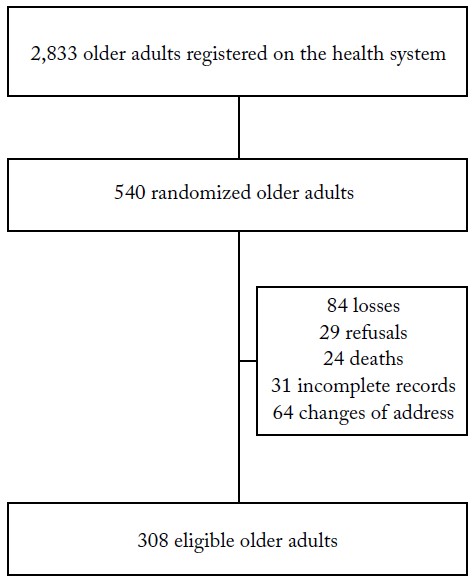
Various instruments can be used to screen for falls in older adults, notably the five-times sit-to-stand test (5XSST) and handgrip strength (HGS). However, knowledge on which of the two presents greater predictive ability to identify an association with fall history is missing. This knowledge may help identify older adults at higher risk of falling and enable the proposal and implementation of early prevention and rehabilitation strategies. Hence, this study sought to determine which strength test presents better accuracy for screening for falls in community-dwelling older adults: HGS or 5XSST. A cross-sectional study was conducted with a probabilistic sample of 308 community-dwelling older adults. Dependent variable consisted of self-reported fall history in the past 12 months; predictive variables included the performance on the 5XSST and HGS tests. Statistical analysis used Receiver Operating Characteristic (ROC) curve. HGS showed better accuracy for screening for falls in community-dwelling older women. Older women with HGS ≤ 16.05 kgf [AUC: 0.69 (95%CI: 0.54-0.81)] are more likely to have a history of falls. No predictive values were found for HGS in men, nor for 5XSST in either men or women. HGS is an important screening tool for falls in community-dwelling older women.
Keywords:
Accidental Falls; Hand Strength.
 Thumbnail