
 Workforce capacity of physical therapy professionals during the COVID-19 pandemic
ABSTRACT
The COVID-19 pandemic demanded immediate adoption of measures to prevent, control, and treat the disease and the reorganization of the physical therapy workforce, whose role in caring for respiratory conditions was essential. To analyze the temporal trend in the availability of physical therapy professionals at the three levels of care in the Brazilian Unified Health System (SUS) during the COVID-19 pandemic (from March 2020 to December 2022). This ecological time-series study was carried out in a population of physical therapists with the proper registry in the National Registry of Healthcare Facilities in at least one of the three levels of health care (primary, specialized, and hospital). Workload was standardized to 40 hours per week and the densities of professionals per 10,000 inhabitants were calculated. Physical therapists density totaled 2.04 and 2.86/10,000 inhabitants in March 2020 and May 2023, respectively. In primary care, densities equaled 0.46 in March 2020 and 0.53/10,000 inhabitants in May 2023 in March 2020 and May 2023, respectively. At the same time points, the densities in specialized care equaled 0.58 and 0.74/10,000 inhabitants and 0.99 and 1.59/10,000 inhabitants in hospital care. Physical therapists’ density increased at the three levels of healthcare in the SUS during the COVID-19 pandemic, especially in hospital settings. Considering the growing demand for functional post-COVID rehabilitation services, the participation of physical therapy professionals is expected to maintain its upward trend.
Keywords:
Health Workforce; Unified Health System; COVID-19 Pandemic; Physical Therapists
RESUMO
A pandemia de covid-19 exigiu a adoção de medidas imediatas de prevenção, controle e tratamento da doença, assim como a reorganização da força de trabalho em fisioterapia, cujo papel no cuidado às condições respiratórias foi imprescindível. Neste artigo, busca-se a tendência temporal da disponibilidade de profissionais de fisioterapia nos três níveis de atenção à saúde no Sistema Único de Saúde (SUS) durante a pandemia de covid-19 (de março de 2020 a maio de 2023). Caracteriza-se como um estudo ecológico de série temporal, cuja população era de fisioterapeutas, devidamente cadastrados no Cadastro Nacional de Estabelecimentos de Saúde, inseridos em pelo menos um dos três níveis de atenção à saúde (primária, especializada e hospitalar). A carga horária foi padronizada para 40 horas semanais e foram calculadas as densidades de profissionais por 10.000 habitantes. A densidade de profissionais de fisioterapia no SUS era de 2,04/10.000 habitantes em março de 2020 e de 2,86/10.000 habitantes em maio de 2023. Na atenção primária, as densidades registradas foram de 0,46/10.000 habitantes em março de 2020 e 0,53/10.000 habitantes em maio de 2023. Nesses mesmos pontos temporais, as densidades na atenção especializada foram de 0,58/10.000 habitantes e 0,74/10.000 habitantes; enquanto na atenção hospitalar, de 0,99/10.000 habitantes e 1,59/10.000 habitantes. Pode-se concluir que houve aumento da densidade de fisioterapeutas nos três níveis de atenção à saúde do SUS durante a pandemia de covid-19, com destaque para a atenção hospitalar. Considerada a demanda crescente por serviços de reabilitação funcional no pós-covid, espera-se que a participação dos profissionais de fisioterapia mantenha tendência ascendente.
Descritores:
Recursos Humanos em Saúde; Sistema Único de Saúde, Pandemia por covid-19; Fisioterapeutas
RESUMEN
La pandemia del covid-19 requirió la adopción de medidas inmediatas para prevenir, controlar y tratar la enfermedad, así como la reorganización de la fuerza laboral en fisioterapia, cuyo papel en el cuidado de las afecciones respiratorias fue esencial. En este artículo se busca identificar la tendencia temporal de la disponibilidad de profesionales de fisioterapia en los tres niveles de atención sanitaria en el Sistema Único de Salud (SUS) durante la pandemia del covid-19 (de marzo de 2020 a mayo de 2023). Se caracteriza por ser un estudio ecológico de series temporales, con una población de fisioterapeutas debidamente inscritos en el Registro Nacional de Establecimientos de Salud, actuantes en al menos uno de los tres niveles de atención sanitaria (primaria, especializada y hospitalaria). Se estandarizó la carga laboral a 40 horas semanales y se calcularon las densidades de profesionales por cada 10.000 habitantes. La densidad de profesionales de fisioterapia en el SUS fue de 2,04/10.000 habitantes en marzo de 2020 y de 2,86/10.000 habitantes en mayo de 2023. En atención primaria, las densidades registradas fueron de 0,46/10.000 habitantes en marzo de 2020 y de 0,53/10.000 habitantes en mayo de 2023. En estos mismos puntos temporales, las densidades en atención especializada fueron de 0,58/10.000 habitantes y de 0,74/10.000 habitantes; mientras que en atención hospitalaria representó 0,99/10.000 habitantes y 1,59/10.000 habitantes. Se puede concluir que hubo un incremento en la densidad de fisioterapeutas en los tres niveles de atención sanitaria del SUS durante la pandemia de la covid-19, con énfasis en la atención hospitalaria. Teniendo en cuenta la creciente demanda de servicios de rehabilitación funcional en el pos-covid, se espera que la participación de los profesionales de fisioterapia mantenga una tendencia al alza.
Palabras clave:
Recursos Humanos en Salud; Sistema Único de Salud, Pandemia por covid-19; Fisioterapeutas
INTRODUCTION
On March 11, 2020, the World Health Organization characterized COVID-19 as a pandemic1. This highly transmissible infection caused by the SARS-Cov-2 coronavirus can cause from asymptomatic to severe and critical cases that require hospitalization and respiratory support2. The first confirmed COVID-19 case in Brazil happened on February 26, 2020, in the municipality of São Paulo1, and the first death, on March 12, 2020. In September 2023, Brazil witnessed more than 700,000 deaths and peaks of deaths per day on April 8, 2021 (4,249 deaths), and of new cases on February 3, 2022, (298,410 new cases)3.
By the end of the COVID-19 Public Health Emergency of International Concern, declared by the World Health Organization on April 5, 20234, Brazil had endured three waves of new cases and deaths from the disease. During its first wave, in early 2020, the moving average of daily deaths remained above 1,000; its second longer and more lethal one lasted from November 2020 to April 2021, with a moving average of above 2,000 daily deaths; and its shorter and milder third one occurred in early 2022, with a moving average of 808 deaths5-7.
With the spreading of the pandemic in Brazil and in the world, healthcare providers began to face great challenges before the increased demands for health services to quickly respond to growing demands even if they lacked training. Thus, the management of health services needed to adopt immediate measures to prevent, control, and treat the disease, which required, among other actions, the reorganization of the health workforce8,9.
Thus, several countries saw changes in working hours and rhythm8, the hiring of temporary workers10 and the relaxation of regulations that governed the practices of healthcare providers in this period. Such strategy favored task-shifting, the expansion of practice scope, telemedicine, the recruitment of non-active professionals and those from other countries/regions, and changes in education and training. Brazil implemented some of these proposals, hindering them due to the rigidity of its regulations and its decentralized action and lack of communication in responding to the crisis9.
Although many professional categories were fundamental to coping with COVID-19, this study highlights the role of physical therapists in the care of respiratory conditions that affect patients with COVID-19. Therapeutic interventions to correct such conditions in the rehabilitation of these patients range from adjusting mechanical ventilation and techniques to ensure adequate tissue oxygenation at the acute period of the disease to recovering physical and cardiorespiratory conditioning at its subacute and chronic phase11,12.
These patients needed motor care to reverse post-intensive care syndrome as loss of strength and physical conditioning, pain, and the postural instability due to immobility or iatrogenesis13. Health professionals also had to address other potential complications, such as vascular and neurological diseases (pulmonary thromboembolism, stroke, Guillain-Barré syndrome), which necessitated long periods of rehabilitation in specialized care14. Based on this perspective, physical therapists’ work is important in the acute, subacute, and chronic phases of SARS-Cov-2 infections.
This and the magnitude of the pandemic in Brazil may have increased the number of physical therapists in the Brazilian Unified Health System (SUS). This study aimed to analyze the temporal trend of the availability of physical therapy professionals at the three levels of care at SUS during the COVID-19 pandemic (from March 2020 to May 2023).
METHODOLOGY
Study design: The availability of physical therapy professionals at SUS during the COVID-19 pandemic was evaluated in this ecological time series study.
Data were collected from secondary sources. Professionals’ information was extracted from the National Registry of Health Facilities (CNES) and the Brazilian Institute of Geography and Statistics population estimates.
Population: The study population was composed of physical therapists who worked in at least one of the three levels of health care at SUS and who were duly registered in CNES during the analysis period. The levels of care refer to the organization of the health system to provide treatments according to the complexity of each demand. Primary health care (PHC), which is closer to users, serves as a preferential gateway to the healthcare network, seeking to promote health, prevent diseases, and provide assistance. Specialized health care (SHC) focuses on certain conditions and diseases, offering treatment by professionals who have specialized themselves in outpatient services. Finally, hospital health care (HHC) offers treatment in hospitals with greater complexity and technological density15. The services for each level of care were selected according to the CNES classification. They are described in Figure 1. For this study, all classifications for the categories of physical therapists in the Brazilian Classification of Occupations were considered: 223650 - acupuncture; 223660 - occupational; 223655 - sports; 223605 - general; 223630 - neurofunctional; 223640 - osteopathic; 223645 - chiropractic; 223625 - respiratory, and 223635 - functional traumato-orthopedic physical therapists.
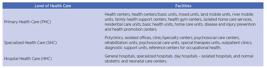
Collection: The monthly records referring to the number of professionals registered at SUS from March 2020 to May 2023 were obtained from CNES via the SUS Information Technology Department (https://cnes.datasus.gov.br). These data were extracted and pre-processed on RStudio, version 1.217.
Data processing/analysis: To avoid and correct possible biases, the weekly workload was standardized to 40 hours due to healthcare providers’ varying shifts. The Brazilian Federal Council of Physiotherapy and Occupational Therapy finds that physical therapists’ workload exceeds 30 hours per week18, but the adjustment in this study meets the World Health Organization recommendation, indicating the equivalence of working time in studies on rehabilitation workforce to standardize hours19. Then, the density of professionals per 10,000 inhabitants was calculated for each studied month20 considering the sum of the number of professionals for each month divided by the total population of Brazil and multiplied by 10,000. Population data were obtained from the Brazilian Institute of Geography and Statistics website (https://www.ibge.gov.br/) based on 2020-2023 estimates21.
The temporal trends in the density of physical therapy professionals per month in Brazil were analyzed using Joinpoint regression analysis, version 5.0.2, in which the mean percentage variation was estimated with a 95% confidence interval. The final model was chosen based on its best fit, with the monthly percentage change (MPC) based on the trend of each segment to estimate whether these values were statistically significant (p<0.05). To quantify the trend of the analyzed years, the average monthly percent change (AMPC, based on the cumulative geometric mean of MPC trends, with equal weights for the lengths of each segment during the fixed interval) was estimated. The used significance tests were based on the Monte Carlo permutation method and on the calculation of the annual percentage change of the ratio via its logarithm22,23.
Ethical aspects: According to Resolution no. 466/2012 of the National Health Council, studies with secondary data that are available in publicly accessible databases require no approval from research ethics committees24.
RESULTS
In Brazil, the distribution of physical therapists from March 2020 to May 2023 occurred differently at the three levels of health care, with important changes related to the increase in their density the beginning of the COVID-19 pandemic.
The density of physical therapy professionals totaled 2.04/ and 2.86/10,000 inhabitants in March 2020 and May 2023, respectively. PHC densities totaled 0.46/ and 0.53/10,000 inhabitants in March 2020 and May 2023, respectively. At these same time points, SHC and HHC densities totaled 0.58/ and 0.74/10,000 inhabitants and 0.99/ and 1.59/10,000 inhabitants, respectively.
Figure 2 shows the temporal trend in the distribution of the density of professionals per 10,000 inhabitants in the analyzed period.

Time trend of the density of physical therapy professionals per 10,000 inhabitants at the three levels of health care in Brazil, March 2020 to May 2023
The density of physical therapy professionals in Brazil showed a statistically significant increase (0.9%) at all levels of health care in the analyzed period. The investigation according to the levels of care also showed a significant statistical increase: 0.3% in PHC; 0.6% in SHC; and 1.2% in HHC (Table 1).
DISCUSSION
In the analyzed period, SUS witnessed an increase in physical therapists’ workforce at its three levels of care. Previous analyses had pointed to a growing trend in the total number of people working in health care in Brazil during the pandemic. Health sector employed 4.3 and 4.8 million formal workers in March 2020 and in May 2023, respectively25.
The analysis by level of care indicated that PHC showed a decrease in its number of physical therapists in the two moments that coincide with the increase in professionals at HHC, strengthening the suggestion that some professionals were reallocated according to health needs. Fehn26 reports that, with the low density of human resources in health, an alternative consisted of transferring professionals from areas with lower prevalence of COVID-19 to those with higher ones, as in Santos et al.27 (whose study involved more than 3,800 healthcare providers), who found that 13.4% of them were displaced from their function to work on the front line of the fight against COVID-19.
These decreases in the first year of the pandemic and the slight growth rate in the number of physical therapists in PHC, lower than that at other levels of care in the analyzed period, can also be explained by the notable privileging of outpatient and hospital services as places of care during the pandemic28, especially in its first year. At that time, most basic health units (UBS) in Brazil lacked the necessary supplies and equipment for timely diagnosis in the contagious phase of COVID-19, case surveillance, and patient care, such as real-time polymerase chain reaction tests, oximeters, infrared thermometers, and oxygen7. Furthermore, the absence of federally coordinated efforts to quickly face the pandemic led many municipalities to reduce care in their UBS and the performance of healthcare providers in their territories29,30.
On the other hand, the positive trend of growth of the PHC workforce from the second year of the crisis onward coincides with the resumption of the centrality of PHC in municipalities. Vaccination began and appointments and home visits were resumed in 2021.
PHC physical therapists work under conditions that require individual rehabilitation in UBS, at home, and collectively, especially in groups, preventing health problems and coordinating rehabilitation care in the network. Their scope grew during the pandemic as they participated in collective actions to survey, protect, and promote health. The crisis also required a different look at the emerging demands toward longitudinal actions and assistance and referrals to specialized services, if necessary, to ensure comprehensive care31. All PHC professionals participated more actively in health surveillance actions, such as sanitary barriers and population testing32,33. Although weakened, PHC played a crucial role in controlling COVID-19 by offering guidance on social distancing, conducting and organizing the vaccination campaign, telemonitoring cases, maintaining the monitoring of patients with chronic diseases, and active surveillance actions in the Brazilian territory by teams34.
SHC configures the place in which physical therapists care for patients in subacute and chronic moments, performing rehabilitation interventions to return their functionality. At this level of care, the variation in the density of physical therapists resembled that in PHC despite it showing no decrease. This datum shows that the health system maintained physical therapy care in response to existing demands, including via telecare during social isolation35,36. After the authorization of the professional council, physical therapists started to provide care in teleconsultations, teleappointments, and telemonitoring via video calls and cell phone applications, especially in monitoring symptoms and the secondary prevention of complications and functional decline31,37.
If, on the one hand, the slight growth of the SHC workforce (even during the acute crisis) was important to care for patients with post-COVID complications-which at first were unknown14-, on the other hand, it failed to provide the capacity to respond to a new demand that requires long-term care. Several countries, including Brazil, endured an increasing number of case notifications of patients with long COVID, the symptoms of which include a decline in cardiorespiratory, musculoskeletal, and neurological capacities, among others. Thus, the provision of outpatient rehabilitation services and the actions of physical therapists become strategic31.
Brazil has taken steps toward furthering this debate and adopting measures that enable the rehabilitation of people with post-COVID dysfunctions, such as the inclusion of specific procedures in the SUS Table of Procedures, Medications, Orthoses, Prosthetics, and Special Materials (with guaranteed funding by the Strategic Actions and Compensation Fund3) and public funded rehabilitation and research projects. Projects such as adopting rehabilitation centers for the long-term consequences of COVID-19 took place in a fragmented, punctual way in states and municipalities due to the uncoordinated governmental response to the pandemic, including in the long term38.
The density of physical therapists at HHC increased considerably throughout the analyzed period. The time intervals in which the highest increases occurred coincide with the first and second waves of deaths from COVID-1939. These included a sharp expansion in the number and occupation of intensive care unit beds and the opening of field hospitals to care for severe cases7,40 requiring physical therapists’ respiratory and motor therapies. Patients hospitalized with COVID-19 may have multiple complications, the most common of which are related to the respiratory system, and may require mechanical ventilation and prolonged hospitalization. In such conditions, physical therapists play a key role in managing ventilatory support and early mobilization, reducing hospitalization time, preventing respiratory and motor complications, and improving functional capacity41,42.
The density of professionals at HHC decreased from August to December 2021. In the same period, with the increase in the speed of vaccination, Brazil experienced a reduction in the number of cases, severe instances, mortality from COVID-19, and the occupancy rates of intensive care beds, a relief for the health system7. It also saw an increase in the density of physical therapists at the primary and specialized care that probably stemmed from the need for rehabilitation in outpatient clinics or at home after SARS-CoV-2 infection13.
The growing demand for functional rehabilitation services after COVID has joined the preexisting demands for rehabilitation due to chronic degenerative diseases and their ever-growing prevalence. Thus, the current deficient supply of rehabilitation services and physical therapists will need to give way to the reorganization of the Care Network for Persons with Disabilities to strengthen the role of PHC care coordination and to expand its capacity to respond to this new demand31, defending the increase of non-precarious participation and a more equitable distribution of physical therapy professionals in the Brazilian macro- and microregions and across levels of health care.
Since this study neither focused on the distribution of the physical therapy workforce across regions and states nor investigated the professional link with health services and physical therapists’ working conditions, it recommends that future studies fill these gaps since such factors may have contributed to the changes in the density of physical therapists across the levels of health care at SUS.
Given the evidence, this study conjectures that many physical therapists may have signed precarious temporary contracts or worked without their guaranteed fundamental rights such as leave due to health10,27. Thus, sick workers may have remained on the front line in many services to ensure their subsistence during this economic and health crisis. On the other hand, replacing professionals may have undergone an unexpected lag10. Physical therapists may also have shown significant mortality since the implementation of new care processes and protocols to address the high demand of infected patients implied their greater exposure to infection risk. Moreover, professionals had to endure the shortage of personal protective materials43.
Some methodological limitations in this study require consideration: its secondary data may include incorrect registers even if they are official Brazilian data that consider all its health facilities. Moreover, the population in the analysis refers to the estimated population in the 2010 Brazil census given the absence of a more recent survey.
CONCLUSION
The physical therapist workforce was essential during the COVID-19 pandemic. This study found an increase in the density of these professionals from March 2020 to May 2023 at the three levels of health care at SUS, especially in HHC, in which the density of physical therapists increased considerably throughout the analyzed period. Given the growing demand for post-COVID functional rehabilitation services, physical therapists’ role is expected to retain its upward trend.
Analyzing the policies to recruit and retain the health workforce and curb the worsening of work precariousness is essential to guarantee effective care. Understanding the health organization in Brazil during the pandemic to prepare it for new possible health challenges requires studies on the healthcare provider workforce.
DATA AVAILABILITY
The data underlying this study are available in the published article.
REFERENCES
-
1 Organização Pan-Americana da Saúde. OMS afirma que COVID-19 é agora caracterizada como pandemia [Internet]. Brasília, DF: OPAS; 2020 [cited 2026 Feb 26]. Available from: https://www.paho.org/pt/news/11-3-2020-who-characterizes-covid-19-pandemic
» https://www.paho.org/pt/news/11-3-2020-who-characterizes-covid-19-pandemic -
2 Ministério da Saúde (BR). Covid-19: sintomas [Internet]. Brasília, DF: Ministério da Saúde; 2021 [cited 2026 Feb 26]. Available from: https://www.gov.br/saude/pt-br/assuntos/covid-19/sintomas
» https://www.gov.br/saude/pt-br/assuntos/covid-19/sintomas -
3 Ministério da Saúde (BR). Painel Coronavírus Brasil [Internet]. Brasília, DF: Ministério da Saúde; 2022 [cited 2026 Feb 26]. Available from: https://covid.saude.gov.br/
» https://covid.saude.gov.br/ -
4 Organização Pan-Americana da Saúde. OMS declara fim da Emergência de Saúde Pública de Importância Internacional referente à COVID-19 [Internet]. Brasília, DF: OPAS; 2023 [cited 2026 Feb 26]. Available from: https://www.paho.org/pt/noticias/5-5-2023-oms-declara-fim-da-emergencia-saude-publica-importancia-internacional-referente
» https://www.paho.org/pt/noticias/5-5-2023-oms-declara-fim-da-emergencia-saude-publica-importancia-internacional-referente -
5 Moura EC, Cortez-Escalante JJ, Oliveira MS, Reis AT, Santos LMS, et al. Disponibilidade de dados públicos em tempo oportuno para a gestão: análise das ondas da COVID-19. SciELO Preprints. 2021. doi: 10.1590/SciELOPreprints.2316
» https://doi.org/10.1590/SciELOPreprints.2316 -
6 Cavalcante JR, Cardoso-Dos-Santos AC, Bremm JM, Lobo AP, Macário EM, et al. COVID-19 no Brasil: evolução da epidemia até a semana epidemiológica 20 de 2020. Epidemiol Serv Saúde. 2020;29(4):e2020376. doi: 10.5123/s1679-49742020000400010
» https://doi.org/10.5123/s1679-49742020000400010 -
7 Freitas CM, Silva IVM, Villela DAM, Knauth DR, Giovanella L, et al. Observatório Covid-19 Fiocruz - uma análise da evolução da pandemia de fevereiro de 2020 a abril de 2022. Ciênc Saúde Coletiva. 2023;28(10):2845-55. doi: 10.1590/1413-812320232810.10412023
» https://doi.org/10.1590/1413-812320232810.10412023 -
8 Schwartz J, King CC, Yen MY. Protecting Healthcare Workers During the Coronavirus Disease 2019 (COVID-19) Outbreak: Lessons from Taiwan's Severe Acute Respiratory Syndrome Response. Clin Infect Dis. 2020;71(15):858-60. doi: 10.1093/cid/ciaa255
» https://doi.org/10.1093/cid/ciaa255 -
9 Stralen ACV, Carvalho CL, Girardi SN, Massote AW, Cherchiglia ML. Estratégias internacionais de flexibilização da regulação da prática de profissionais de saúde em resposta à pandemia da COVID-19: revisão de escopo. Cad Saúde Pública. 2022;38(4):e00116321. doi: 10.1590/0102-311X00116321
» https://doi.org/10.1590/0102-311X00116321 -
10 Sodré F. Epidemia de Covid-19: questões críticas para a gestão da saúde pública no Brasil. Trab Educ Saúde. 2020;18(3):e00302134. doi: 10.1590/1981-7746-sol00302
» https://doi.org/10.1590/1981-7746-sol00302 -
11 Silva CCBM. Reabilitação pulmonar em pacientes com síndrome pós-COVID-19. Fisioter Pesqui. 2022;29(1):1-3. doi: 10.1590/1809-2950/00000029012022PT
» https://doi.org/10.1590/1809-2950/00000029012022PT -
12 Gastaldi AC. Physical therapy and the challenges of Covid-19. Fisioter Pesqui. 2021;28(1):1-2. doi: 10.1590/1809-2950/00000028012021
» https://doi.org/10.1590/1809-2950/00000028012021 -
13 Silva RMV, Sousa AVC. Fase crônica da COVID-19: desafios do fisioterapeuta diante das disfunções musculoesqueléticas. Fisioter Mov. 2020;33:e0033002. doi: 10.1590/1980-5918.033.ED02
» https://doi.org/10.1590/1980-5918.033.ED02 -
14 Leite MC, Ferreira TER, Fonseca GCD, Araújo RVBV, Bezerra Júnior MA. Infecção por Covid-19: aspectos neuropatológicos e sequelas neurológicas. Rev Neurocienc. 2022;30:1-18. doi: 10.34024/rnc.2022.v30.14367
» https://doi.org/10.34024/rnc.2022.v30.14367 -
15 Ministério da Saúde (BR). Atenção Primária e Atenção Especializada: conheça os níveis de assistência do maior sistema público de saúde do mundo [Internet]. Brasília, DF: Ministério da Saúde [cited 2026 Feb 26]. Available from: https://www.gov.br/saude/pt-br/assuntos/noticias/2022/marco/atencao-primaria-e-atencao-especializada-conheca-os-niveis-de-assistencia-do-maior-sistema-publico-de-saude-do-mundo
» https://www.gov.br/saude/pt-br/assuntos/noticias/2022/marco/atencao-primaria-e-atencao-especializada-conheca-os-niveis-de-assistencia-do-maior-sistema-publico-de-saude-do-mundo -
16 Ministério da Saúde (BR). Portaria de Consolidação nº 1, de 28 de setembro de 2017. Seção II: da tipificação de estabelecimentos [Internet]. Brasília, DF: Biblioteca Virtual em Saúde do Ministério da Saúde; 2017 [cited 2026 Feb 26]. Available from: https://bvsms.saude.gov.br/bvs/saudelegis/gm/2017/prc0001_03_10_2017.html#ART374
» https://bvsms.saude.gov.br/bvs/saudelegis/gm/2017/prc0001_03_10_2017.html#ART374 -
17 Saldanha RF, Bastos RR, Barcellos C. Microdatasus: pacote para download e pré-processamento de microdados do Departamento de Informática do SUS (DATASUS). Cad Saúde Pública. 2019;35(9):e00032419. doi: 10.1590/0102-311X00032419
» https://doi.org/10.1590/0102-311X00032419 -
18 Conselho Federal de Fisioterapia e Terapia Ocupacional. Jornada de Trabalho [Internet]. Brasília, DF: COFFITO; 1994 [cited 2026 Feb 26]. Available from: https://www.coffito.gov.br/nsite/?page_id=2355
» https://www.coffito.gov.br/nsite/?page_id=2355 - 19 World Health Organization. Guide for rehabilitation workforce evaluation. Geneva: WHO; 2023.
- 20 World Health Organization. National health workforce accounts: a handbook. Geneva: WHO; 2017.
-
21 Instituto Brasileiro de Geografia e Estatística. Estimativas da população [Internet]. Rio de Janeiro: IBGE [cited 2026 Feb 26]. Available from: https://www.ibge.gov.br/estatisticas/sociais/populacao/9103-estimativas-de-populacao.html
» https://www.ibge.gov.br/estatisticas/sociais/populacao/9103-estimativas-de-populacao.html -
22 Kim HJ, Fay MP, Feuer EJ, Midthune DN. Permutation tests for joinpoint regression with applications to cancer rates. Stat Med. 2000;19(3):335-51. doi: 10.1002/(sici)1097-0258(20000215)19:3<335::aid-sim336>3.0.co;2-z
» https://doi.org/10.1002/(sici)1097-0258(20000215)19:3<335::aid-sim336>3.0.co;2-z -
23 Kim HJ, Fay MP, Yu B, Barrett MJ, Feuer EJ. Comparability of segmented line regression models. Biometrics. 2004;60(4):1005-14. doi: 10.1111/j.0006-341X.2004.00256.x
» https://doi.org/10.1111/j.0006-341X.2004.00256.x -
24 Novoa PCR. O que muda na Ética em Pesquisa no Brasil: resolução 466/12 do Conselho Nacional de Saúde. Einstein (São Paulo). 2014;12(1):vii-ix. doi: 10.1590/S1679-45082014ED3077
» https://doi.org/10.1590/S1679-45082014ED3077 - 25 Instituto de Estudos de Saúde Suplementar. Relatório do emprego na cadeia produtiva da saúde. São Paulo: IESS; 2023.
-
26 Fehn A, Nunes L, Aguillar A, dal Poz M. Vulnerabilidade e déficit de profissionais de saúde no enfrentamento da COVID-19 [Internet]. São Paulo: Instituto de Estudos para Políticas de Saúde; 2020 [cited 2026 Feb 26]. Available from: https://ieps.org.br/pesquisas/vulnerabilidade-e-deficit-de-profissionais-de-saude-no-enfrentamento-da-covid-19/
» https://ieps.org.br/pesquisas/vulnerabilidade-e-deficit-de-profissionais-de-saude-no-enfrentamento-da-covid-19/ -
27 Santos RPO, Nunes JA, Dias NG, Lisboa AS, Antunes VH, et al. Condições de trabalho na atenção primária à saúde na pandemia de COVID-19: um panorama sobre Brasil e Portugal. Ciênc Saúde Coletiva. 2024;28(10):2979-92. Doi: 10.1590/1413-812320232810.10002023
» https://doi.org/10.1590/1413-812320232810.10002023 - 28 Fonseca RMGS, Fornari LF, Lourenço RG. Desafios da Atenção Básica no cuidado à população em tempo de pandemia. In: Associação Brasileira de Enfermagem. Enfermagem na atenção básica no contexto da COVID-19. Brasília: ABEn; 2020.
-
29 Fernandez M, Fernandes LM, Massuda A. A Atenção Primária à Saúde na pandemia da COVID-19: uma análise dos planos de resposta à crise sanitária no Brasil. Rev Bras Med Fam Comunidade. 2022;17(44):3336. doi: 10.5712/rbmfc17(44)3336
» https://doi.org/10.5712/rbmfc17(44)3336 -
30 Rosa-Cómitre ACD, Nascimento JL, Silva SJC, Barros NF. Processo de descaracterização da Atenção Primária à Saúde durante a pandemia no SUS, Campinas-SP, Brasil. Ciênc Saúde Coletiva. 2023;28(12):3553-62. doi: 10.1590/1413-812320232812.06342023
» https://doi.org/10.1590/1413-812320232812.06342023 -
31 Souza TS, Aleluia IRS, Pinto EB, Pinto Junior EP, Pedreira RBS, et al. Organização e oferta da assistência fisioterapêutica em resposta à pandemia da COVID-19 no Brasil. Ciênc Saúde Coletiva. 2022;27(6):2133-42. doi: 10.1590/1413-81232022276.00752022
» https://doi.org/10.1590/1413-81232022276.00752022 -
32 Patiño-Escarcina JE, Medina MG. Vigilância em Saúde no âmbito da atenção primária para enfrentamento da pandemia da Covid-19: revisão documental. Saúde Debate. 2022;46(spe 1):119-30. doi: 10.1590/0103-11042022E108
» https://doi.org/10.1590/0103-11042022E108 - 33 Ministério da Saúde (BR). Secretaria de Vigilância em Saúde. Departamento de Análise em Saúde e Vigilância de Doenças não Transmissíveis. Vigilância de fatores de risco e proteção para doenças crônicas por inquérito telefônico: Vigitel 2018. Brasília, DF: Ministério da Saúde; 2019.
-
34 Maharaj S, Kim J, McSweeny J, Heale R. Integrating Physiotherapists into Primary Health Care Organizations: The Physiotherapists' Perspective. Physiother Can. 2018;70(2):188-95. doi: 10.3138/ptc.2016-107.pc
» https://doi.org/10.3138/ptc.2016-107.pc -
35 Ostolin TLVP, Cockell FF. Telessaúde na atenção fisioterapêutica durante a pandemia de COVID-19: um relato de experiência. Fisioter Mov. 2023;36:e36301. doi: 10.1590/fm.2023.36301
» https://doi.org/10.1590/fm.2023.36301 -
36 Rodrigues SMA, Feliciano JS, Coutinho PFF, Melo DPG, Gonçalves RV. Telerreabilitação na fisioterapia neurofuncional pediátrica durante a pandemia de COVID-19: percepção dos pais, desafios e contribuições. Rev Pesqui Fisioter. 2023;13:e4907. doi: 10.17267/2238-2704rpf.2023.e4907
» https://doi.org/10.17267/2238-2704rpf.2023.e4907 -
37 Candido NL, Marcolino AM, Santana JM, Silva JRT, Silva ML. Atendimentos remotos em fisioterapia na pandemia por COVID-19: diretrizes no contexto brasileiro. Fisioter Mov. 2022;35:e35202. doi: 10.1590/fm.2022.35202
» https://doi.org/10.1590/fm.2022.35202 -
38 Batista KBC, Cortez-Escalante JJ, Oliveira MS, Moura EC, Reis AT, et al. Panorama da COVID longa no Brasil: análise preliminar de um inquérito para pensar políticas de saúde. Cad Saúde Pública. 2024;40(1):e00094623. doi: 10.1590/0102-311XPT094623
» https://doi.org/10.1590/0102-311XPT094623 -
39 Moura EC, Cortez-Escalante JJ, Oliveira MS, Reis AT, Santos LMS, et al. Covid-19: temporal evolution and immunization in the three epidemiological waves, Brazil, 2020-2022. Rev Saúde Pública. 2022;56:105. doi: 10.11606/s1518-8787.2022056004907
» https://doi.org/10.11606/s1518-8787.2022056004907 -
40 Massuda A, Malik AM, Vecina Neto G, Tasca R, Ferreira Junior WC. The resilience of the Brazilian National Health System in the face of the COVID-19 pandemic. Cad EBAPE BR. 2021;19(spe):735-44. doi: 10.1590/1679-395120200185
» https://doi.org/10.1590/1679-395120200185 -
41 Dias LMS, Santos JLS, Chaves GSS, Almeira Junior JJ, Oliveira MF, et al. Physiotherapy practice for hospitalized patients with COVID-19. J Bras Pneumol. 2022;48(3):e20220121. doi: 10.36416/1806-3756/e20220121
» https://doi.org/10.36416/1806-3756/e20220121 -
42 Martinez BP, Andrade FMD, Martins JA, Matte DL, Karsten M. Papel do Fisioterapeuta em diferentes cenários de atuação à COVID-19. ASSOBRAFIR Ciênc. 2020;11(supl 1):27-30. doi:10.47066/2177-9333.AC20.covid19.003
» https://doi.org/10.47066/2177-9333.AC20.covid19.003 -
43 Lóss JCS, Boechat LBG, Silva LP, Dias VE. A saúde mental dos profissionais de saúde na linha de frente contra a COVID-19. Rev Transformar. 2020;14(2):54-75. Available from: https://www.fsj.edu.br/transformar/index.php/transformar/article/view/375
» https://www.fsj.edu.br/transformar/index.php/transformar/article/view/375

 Source: Tipificação de Estabelecimentos, CNES, 2022, Brasil