 Impact of social isolation due to the COVID-19 pandemic on health status and activities of daily living in individuals with chronic obstructive pulmonary disease
ABSTRACT
During the COVID-19 pandemic, social isolation measures were implemented, which may have intensified physical inactivity among individuals with chronic obstructive pulmonary disease (COPD). Such inactivity potentially affected their health and functional status and performance of activities of daily living (ADL). This study aimed to evaluate the health and functional status of individuals with COPD during the pandemic and to examine the association between health status, functional status, and ADL performance. This longitudinal study assessed health status using the COPD Assessment Test (CAT) and functional status using the London Chest Activity of Daily Living (LCADL) scale during strict social isolation (visit 1) and after the relaxation of restrictions (visit 2). Changes in ADL performance between visits were recorded using a questionnaire developed by the authors. A total of 30 individuals with COPD were included (mean age: 69±7 years). Overall, no statistically significant differences were observed between visits in health status (15 [8-22] versus 13 [7-20] points; p=0.58) or functional status (LCADL total score: 17 [15-21] versus 17 [15-21] points; p=0.85). However, 15 individuals (50%) showed worsening health status (11 [6-25] versus 19 [12-29] points, p=0.0001; delta: 5 [2-6] points). This worsening was not correlated with functional status at visit 2 (LCADL personal care: p≥0.41) but was associated with a reduced frequency of performing household tasks on a daily basis (Fisher’s exact test=9.09; p=0.006). Overall, individuals with COPD showed no changes in health and functional status. However, half of the participants experienced worsening health status, which was associated with a reduced frequency of performing household tasks.
Keywords:
Chronic Obstructive Pulmonary Disease; COVID-19; Symptom Assessment
RESUMO
Durante a pandemia de covid-19 foi implantado o isolamento social, o que pode ter acentuado a inatividade física em indivíduos com doença pulmonar obstrutiva crônica (DPOC) e, consequentemente, piorado o estado de saúde, funcional e de realização das atividades de vida diária (AVDs). Neste estudo pretende-se avaliar o estado de saúde e funcional de indivíduos com DPOC durante a pandemia, além de verificar a associação do estado de saúde com o estado funcional e com a realização de AVDs. Trata-se de um estudo longitudinal que avaliou o estado de saúde por meio do questionário COPD Assessment Test (CAT) e o estado funcional pela escala London Chest Activity of Daily Living (LCADL) durante o isolamento social rigoroso (visita 1) e após a flexibilização das restrições (visita 2). Mudanças na realização das AVDs entre as visitas foram registradas por um questionário elaborado pelos autores. Foram estudados 30 indivíduos com DPOC, com idade média de 69±7 anos. No geral, entre as visitas, não houve diferença estatisticamente significante do estado de saúde (15[8-22] versus 13[7-20]pts; P=0,58) e do estado funcional (LCADL total: 17[15-21] versus 17[15-21]pts; P=0,85). Entretanto, 15 indivíduos (50%) apresentaram piora do estado de saúde (11[6-25] versus 19[12-29]pts, P=0,0001; delta: 5[2-6]pts), não se correlacionando com o estado funcional na visita 2 (LCADL cuidado pessoal: P³0,41), mas associada à redução na frequência de realização de tarefas domésticas no dia a dia (Fisher=9,09; P=0,006). No geral, os indivíduos não apresentaram mudanças no estado de saúde e funcional. No entanto, metade sofreu uma piora em seu estado de saúde, associando-se à redução na frequência da realização de tarefas domésticas cotidianas.
Descritores:
Doença Pulmonar Obstrutiva Crônica; Covid-19; Avaliação de Sintomas.
RESUMEN
Durante la pandemia de la covid-19 se implementó el aislamiento social, que pudo haber acentuado la inactividad física en individuos con enfermedad pulmonar obstructiva crónica (EPOC) y, en consecuencia, pudo haber empeorado el estado de salud, funcional y de realización de actividades de la vida diaria (AVD). Este estudio tiene como objetivo evaluar el estado de salud y funcional de las personas con EPOC durante la pandemia, además de verificar la asociación del estado de salud con el estado funcional y con la realización de las AVD. Se trata de un estudio longitudinal que evaluó el estado de salud a partir del cuestionario COPD Assessment Test (CAT) y el estado funcional con la escala London Chest Activity of Daily Living (LCADL) durante el aislamiento social estricto (visita 1) y después de la flexibilización de las restricciones (visita 2). Los cambios en la realización de las AVD entre las visitas se registraron mediante un cuestionario preparado por los autores. Participaron treinta individuos con EPOC, con una edad media de 69±7 años. En general, entre las visitas no hubo diferencias estadísticamente significativas en el estado de salud (15[8-22] versus 13[7-20]pts; P=0,58) y el estado funcional (LCADL total: 17[15-21] versus 17[15-21]pts; P=0,85). Sin embargo, 15 individuos (50%) presentaron empeoramiento del estado de salud (11[6-25] versus 19[12-29]pts, P=0,0001; delta: 5[2-6]pts), no correlacionándose con el estado funcional en la visita 2 (LCADL cuidado personal: P³0,41), pero asociado con una reducción en la frecuencia de la realización de tareas domésticas a diario (Fisher=9,09; P=0,006). En general, los individuos no mostraron cambios en la salud y el estado funcional. Sin embargo, la mitad sufrió un empeoramiento en su estado de salud, que estuvo asociado con una reducción en la frecuencia de la realización de tareas domésticas diarias.
Palabras clave:
Enfermedad Pulmonar Obstructiva Crónica; Covid-19; Evaluación de Síntomas
INTRODUCTION
Chronic obstructive pulmonary disease (COPD) is characterized by progressive airflow obstruction and persistent respiratory symptoms1. Bronchial obstruction leads to lung hyperinflation, which contributes to worsening symptoms during physical exertion2),(3.
The interaction between dyspnea, physical deconditioning, and muscle weakness results in functional limitations, often leading individuals to adopt a sedentary lifestyle with reduced engagement in activities of daily living (ADLs)4. This less active lifestyle further aggravates physical deconditioning and dyspnea, creating a vicious cycle that perpetuates the disease5.
With the emergence of COVID-19-related severe acute respiratory syndrome in Brazil, control and prevention measures were implemented, including social isolation, the most effective strategy to prevent the spread of the disease and flatten the transmission curve6),(7. However, social isolation can lead to changes in lifestyle and mental health8, potentially resulting in a significant reduction in moderate-to-vigorous physical activity levels and an increase in time spent in sedentary behavior9. In this context, individuals who tend to adopt sedentary behaviors may have been more affected by restrictions imposed during social isolation10.
Following the onset of the vaccination program in the country, social isolation measures were gradually relaxed, allowing individuals to resume their daily activities. However, physical inactivity and sedentary behavior-likely intensified by the lockdown-may have led to health impairments, with no guarantee of improvement in the functional and health status of this population, even after the easing of restrictions.
This study hypothesizes that these patients experienced impairments in their functional and health status during social isolation, and even more so immediately afterward, which may have led to a reduction in or abandonment of ADLs. Therefore, it is important to analyze the extent to which these aspects were affected during social isolation. It can also be hypothesized that patients who experienced a worsening of health status during social isolation would show a greater decline in functional status compared to those whose health status did not worsen.
Thus, this study aimed to evaluate the health and functional status of individuals with COPD during the COVID-19 pandemic, as well as to investigate the association between health status, functional status, and the performance of ADLs in this population.
METHODOLOGY
Study design, population, and site
This is a longitudinal observational study linked to a larger project previously approved by the Research Ethics Committee of the State University of Londrina (UEL). The study included patients diagnosed with COPD. Participants were selected from individuals who had previously taken part in research projects conducted at the Pulmonary Physical Therapy Research Laboratory (LFIP), Department of Physical Therapy, UEL, Londrina, Paraná State, Brazil.
Selection criteria
Inclusion criteria were: clinical COPD diagnosis established according to the Global Initiative for Obstructive Lung Disease (GOLD) (1; no diagnosis of severe and/or unstable heart disease; no musculoskeletal disorders that could limit daily activities; no prior COVID-19 infection; and willingness to participate in the study. Exclusion criteria were withdrawal from the study for any reason; loss of contact with the participant; or the presence of a clinical condition that could interfere with the level of physical activity in daily living (PADL), such as surgeries or orthopedic or neurological disorders. All participants read and signed an informed consent form.
Data collection
Patients were contacted by telephone and screened for eligibility if they expressed interest in participating in the study. After providing verbal consent to participate, individuals received a visit from a researcher at their home.
Data collection during home visit followed a strict health and safety protocol based on recommendations from the Brazilian Ministry of Health2, including the use of personal protective equipment (PPE), maintaining a two-meter distance from the participant during the visit, and sanitizing all equipment.
The study involved two assessment moments: visit 1 (October to December 2020), conducted during the period when government and public health authorities recommended social isolation and performed shortly after the study received ethics committee approval; and visit 2 (August to October 2021), conducted immediately after the relaxation of restrictive measures, as announced by official authorities.
Functional status
Functional status was assessed using the London Chest Activity of Daily Living (LCADL) scale11, which evaluates limitations in ADLs. The LCADL includes 15 ADL items distributed across four domains. In the scoring system, a subscore is calculated for each domain, and the total score corresponds to the sum of the four domain subscores.
Health status
The COPD Assessment Test (CAT) was used to evaluate the impact of the disease on quality of life and health status12. Each of the eight items is scored 0 to 5, resulting in a total score ranging from 0 to 40.
Performing household tasks
Participants were also assessed for changes in frequency of performing household tasks during the pandemic, classified as lower, unchanged, or higher compared to the pre-pandemic period. For this purpose, the authors developed a questionnaire that also collected demographic, socioeconomic, and cultural information.
Data analysis and processing
Data were tabulated using Microsoft Excel, and statistical analyses were performed using SPSS (version 21) and GraphPad Prism (version 9.3). Data normality was assessed using the Shapiro-Wilk test. Normally distributed data were described as mean ± standard deviation, whereas non-normally distributed data were expressed as median (interquartile range 25%-75%). To compare outcomes over time (visit 1 versus visit 2), the Wilcoxon sign-ranked test was used. Correlations were analyzed using Spearman’s correlation coefficient. Possible associations between worsening health status, worsening functional status, and reduced performance of ADLs were evaluated using Fisher’s exact test. Statistical significance was set at p<0.05.
RESULTS
A total of 136 individuals were contacted to participate in the study. Of these, 71 did not meet the inclusion criteria and 33 declined to participate. Therefore, the study sample initially consisted of 34 individuals. Two participants were excluded due to death and two due to loss of contact. Consequently, the analyses were conducted with 30 participants, with a mean age of 69±7 years, a predominance of males, a forced expiratory volume in one second (FEV1) of 51±18% of the predicted value, and a body mass index (BMI) of 27±6kg/m2 (Table 1).
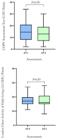
During the study period, no participants contracted COVID-19. When comparing visit 1 and visit 2, no significant changes were observed in functional status (LCADL total score: 17 [15-21] versus 17 [15-21] points; p=0.85, respectively) or health status (15 [8-22] versus 13 [7-20] points; p=0.58, respectively), with both outcomes remaining similar between the two time points (Figure 1). Overall, health status was not significantly correlated with functional status (r=−0.022; p>0.05).
However, 15 individuals (50%) showed worsening health status, indicated by higher scores on the CAT questionnaire (11 [6-25] versus 19 [12-29] points; p=0.0001).
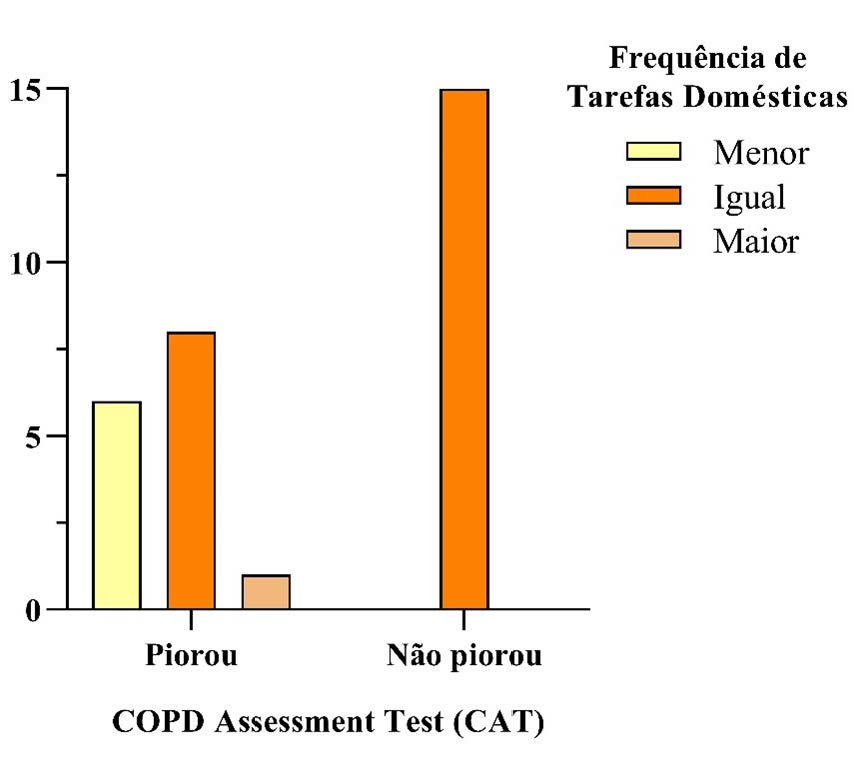
In this subgroup, the worsening of health status was not correlated with functional status at visit 2 (LCADL: personal care r=−0.22; domestic activities r=−0.22; physical activity r=0.14; leisure r=−0.19; total score r=−0.21, p≥0.41 for all). Nevertheless, an association was observed between worsening health status and a reduced frequency of performing household tasks on a daily basis (Fisher’s exact test=9.09; p=0.006) (Figure 2).
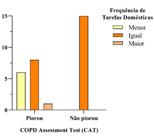
Association between reduced frequency of performing household tasks on a daily basis and worsening health status in the subgroup (50%).
DISCUSSION
This study showed that patients with COPD who were followed during the COVID-19 pandemic showed no differences in health or functional status between the period of social isolation (visit 1) and after the relaxation of restrictive measures (visit 2). However, half of the participants experienced worsening health status, which was not related to functional status at visit 2 but was associated with reduced frequency of performing household tasks on a daily basis, partially confirming the authors’ initial hypothesis.
It is known that Brazilians with COPD are considerably less active than healthy older adults, spending a large portion of their time in sedentary behavior13. For these individuals, measures implemented to reduce COVID-19 transmission may have further reduced engagement in ADLs14.
No participant in this study contracted COVID-19 so far. Chu et al.15 observed that the low prevalence of the disease in this population likely resulted from the early protection of patients with COPD in many countries.
Up to the time this study was conducted, few studies had directly analyzed the effects of social isolation and the associated behavioral changes on the health and functional status of patients with COPD. Among the available studies, Kahnet et al.16 aimed to monitor the impact of the COVID-19 pandemic on COPD patients in Spain and reported a slight deterioration in clinical status during isolation, despite high adherence to protective measures. Similarly, Scarlata et al.17 observed that individuals developed a clinical profile commonly associated with geriatric isolation, characterized by declines in cognitive function, independence, and increased frailty during lockdown in Italy.
In this study, half of the participants presented worsening health status, which was associated with a reduced frequency of performing household tasks. A previous study reported that individuals with chronic respiratory diseases experienced greater difficulty managing ADLs during the COVID-19 pandemic18. The lack of an association between worsening health status and functional status may be explained by the fact that the latter was assessed using an instrument based on the degree of dyspnea reported during the performance of activities19. As these individuals may have reduced their level of activity, their perception of dyspnea during these activities may also have been affected.
Although half of the participants experienced worsening health status, the overall sample did not show significant changes in this outcome between the two assessment time points. During the pandemic, a reduction in respiratory exacerbations among individuals with COPD was reported20, likely due to decreased exposure to respiratory viruses as a result of social isolation. Consequently, the lower occurrence of respiratory symptoms during this period may have contributed to better CAT scores.
In this study, participants did not show differences in functional status, which may be related either to a reduction in ADLs or to maintaining the same frequency of performing these activities. Additionally, according to Souza et al.21, individuals who already have sedentary habits may not report functional limitations associated with inactivity.
Finally, the findings of this study contribute to the assessment of patients with COPD before and after the easing of pandemic restrictions, showing that half of the participants experienced worsening health status, which was associated with performing household tasks less frequently. These findings reinforce the importance of including specific questionnaires in clinical assessment, as they are easy to administer, low-cost, and provide valuable information on symptom quantification, disease progression, and the perceived impact of symptoms on the disease from the patient’s perspective22.
This study has some limitations. First, data were not collected before the pandemic, which would have enabled more detailed comparisons across different time points. Moreover, a convenience sample from a single center was used. However, to minimize selection bias, participants were randomized and recruited consecutively according to a predefined sequence. Finally, the frequency of household chores during the pandemic was assessed using a questionnaire developed by the authors that had not undergone prior validation.
CONCLUSION
Overall, individuals with COPD did not show changes in health or functional status between the early phase of the COVID-19 pandemic and the period following the relaxation of restrictive measures. However, half of the participants experienced worsening health status, which was associated with a reduced frequency of performing routine household tasks. Therefore, interventions aimed at improving overall health status and functional capacity in individuals with COPD after the pandemic are essential to help prevent a poorer prognosis.
Data Availability:
The data underlying this study are available in the published article.
REFERENCES
-
1 Global Initiative for Chronic Obstructive Lung Disease. Global strategy for the diagnosis, management, and prevention of chronic obstructive lung disease [Internet]. 2022 [cited 2026 Mar 4]. Available from: Available from: https://goldcopd.org/2023-gold-report-2/
» https://goldcopd.org/2023-gold-report-2/ -
2 Sociedade Brasileira de Pneumologia e Tisiologia. Consenso Brasileiro sobre Doença Pulmonar Obstrutiva Crônica II - DPOC. J Bras Pneumol [Internet]. 2004 [cited 2026 Mar 4];30(Suppl 5):S1-42. Available from: Available from: http://www.jornaldepneumologia.com.br/details-supp/40
» http://www.jornaldepneumologia.com.br/details-supp/40 -
3 Gershon AS, Warner L, Cascagnette P, Victor JC, To T. Lifetime risk of developing chronic obstructive pulmonary disease: a longitudinal population study. Lancet. 2011;378(9795):991-6. doi: 10.1016/S0140-6736(11)60990-2
» https://doi.org/10.1016/S0140-6736(11)60990-2 -
4 Pitta F, Troosters T, Spruit MA, Probst VS, Decramer M, et al. Characteristics of physical activities in daily life in chronic obstructive pulmonary disease. Am J Respir Crit Care Med. 2005;171(9):972-7. doi: 10.1164/rccm.200407-855OC
» https://doi.org/10.1164/rccm.200407-855OC -
5 Ramon MA, Ter Riet G, Carsin AE, Gimeno-Santos E, Agustí A, et al. The dyspnoea-inactivity vicious circle in COPD: development and external validation of a conceptual model. Eur Respir J. 2018;52(3):1800079. doi: 10.1183/13993003.00079-2018
» https://doi.org/10.1183/13993003.00079-2018 -
6 Hale T, Angrist N, Goldszmidt R, Kira B, Petherick A, et al. A global panel database of pandemic policies (Oxford COVID-19 Government Response Tracker). Nat Hum Behav. 2021;5(4):529-38. doi: 10.1038/s41562-021-01079-8
» https://doi.org/10.1038/s41562-021-01079-8 -
7 Farias HSD. O avanço da covid-19 e o isolamento social como estratégia para redução da vulnerabilidade. Rev Bras Geograf Econ. 2020;9(17). doi: 10.4000/espacoeconomia.11357
» https://doi.org/10.4000/espacoeconomia.11357 -
8 Ahmed MZ, Ahmed O, Aibao Z, Hanbin S, Siyu L, et al. Epidemic of covid-19 in China and associated Psychological Problems. Asian J Psychiatr. 2020;51:102092. doi: 10.1016/j.ajp.2020.102092
» https://doi.org/10.1016/j.ajp.2020.102092 -
9 Malta DC. A pandemia da covid-19 e as mudanças no estilo de vida dos brasileiros adultos: um estudo transversal. Epidemiol Serv Saúde. 2020;29(4):e2020407. doi: 10.1590/S1679-49742020000400026
» https://doi.org/10.1590/S1679-49742020000400026 -
10 Li L, Li Q, Huang L. Air quality changes during the covid-19 lockdown over the Yangtze River delta region: an insight into the impact of human activity pattern changes on air pollution variation. Sci Total Environ. 2020;732:139282. doi: 10.1016/j.scitotenv.2020.139282
» https://doi.org/10.1016/j.scitotenv.2020.139282 -
11 Pitta F, Probst VS, Kovelis D, Segretti NO, Mt Leoni A, et al. Validation of the Portuguese version of the London Chest Activity of Daily Living Scale (LCADL) in chronic obstructive pulmonary disease patients. Rev Port Pneumol. 2008;14(1):27-47. doi: 10.1016/S0873-2159(15)30217-8
» https://doi.org/10.1016/S0873-2159(15)30217-8 -
12 Silva GPF, Morano MTAP, Viana CMS. Portuguese-language version of the COPD Assessment Test: validation for use in Brazil. J Bras Pneumol. 2013;39(4):402-8. doi: 10.1590/S1806-37132013000400002
» https://doi.org/10.1590/S1806-37132013000400002 -
13 Hernandes NA, Teixeira DC, Probst VS, Brunetto F, Ramos EMC, et al. Profile of the level of physical activity in the daily lives of patients with COPD in Brazil. J Bras Pneumol. 2009;35(10):949-56. doi: 10.1590/s1806-37132009001000002
» https://doi.org/10.1590/s1806-37132009001000002 -
14 Chen P, Mao L, Nassis GP, Harmer P, Ainsworth BE, et al. Wuhan coronavirus (2019-nCoV): the need to maintain regular physical activity while taking precautions. J Sport Health Sci. 2020;9(2):103-4. doi: 10.1016/j.jshs.2020.02.001
» https://doi.org/10.1016/j.jshs.2020.02.001 -
15 Chu DK, Akl EA, Duda S, Solo K, Yaacoub S, et al. Physical distancing, face masks, and eye protection to prevent person-to-person transmission of SARS-CoV-2 and covid-19: a systematic review and meta-analysis. J Vasc Surg. 2020;395(10242):1973-87. doi: 10.1016/j.jvs.2020.07.040
» https://doi.org/10.1016/j.jvs.2020.07.040 -
16 Kahnert K, Lutter JI, Welte T, Alter P, Behr J, et al. Impact of the covid-19 pandemic on the behaviour and health status of patients with COPD: results from the German COPD cohort COSYCONET. ERJ Open Res. 2021;7(3):00242-2021. doi: 10.1183/23120541.00242-2021
» https://doi.org/10.1183/23120541.00242-2021 -
17 Scarlata S, Cardaci V, Santangelo C, Matarese M, Cesari M,et al. Distancing measures in covid-19 pandemic: loneliness, more than physical isolation, affects health status and psycho-cognitive wellbeing in elderly patients with Chronic Obstructive Pulmonary Disease. COPD. 2021;18(4):443-8. doi: 10.1080/15412555.2021.1941834
» https://doi.org/10.1080/15412555.2021.1941834 -
18 Fettes L, Bayly J, Bruin LM, Patel M, Ashford S, et al. Relationships between prolonged physical and social isolation during the covid-19 pandemic, reduced physical activity and disability in activities of daily living among people with advanced respiratory disease. Chron Respir Dis. 2021;8. doi: 10.1177/14799731211035822
» https://doi.org/10.1177/14799731211035822 -
19 Zhou Z, Zhou A, Zhao Y, Chen P. Evaluating the Clinical COPD Questionnaire: a systematic review. Respirology. 2017;22(2):251-62. doi: 10.1111/resp.12970
» https://doi.org/10.1111/resp.12970 -
20 González J, Moncusí-Moix A, Benitez ID, Santisteve S, Monge A, et al. Clinical consequences of covid-19 lockdown in patients with COPD: results of a pre-post study in Spain. Chest. 2021;160(1):135-8. doi: 10.1016/j.chest.2020.12.057
» https://doi.org/10.1016/j.chest.2020.12.057 -
21 Souza GF, Sarmento A, Moreira GL, Gazzotti MR, Jardim JR, et al. The Glittre ADL-Test differentiates COPD patients with and without Self-reported functional limitation. COPD. 2020;17(2):143-9. doi: 10.1080/15412555.2020.1716707
» https://doi.org/10.1080/15412555.2020.1716707 -
22 Ferreira CA, Cukier A. Evaluating COPD from the perspective of the patient. J Bras Pneumol. 2006;32(2):vii-viii. doi: 10.1590/s1806-37132006000200001
» https://doi.org/10.1590/s1806-37132006000200001
Edited by
-
Responsible editor in charge:
Sônia LP Pacheco de Toledo