
 Rehabilitation technologies for facial paralysis
Abstract
Introduction: Facial paralysis causes significant motor, functional, aesthetic, and social impairments. Recent technological advances have made it possible to explore new rehabilitation alternatives that complement or substitute conventional treatments.
Objective: To analyze the technological interventions available for facial paralysis rehabilitation, identify their classification, and describe the trends in their development and application.
Methods: A scoping review was conducted following the PRISMA-ScR methodology and the protocol registered on OSF. Articles were searched in PubMed, EBSCO, Scopus, and OVID, including intervention studies involving individuals over 14 years of age with acquired facial paralysis. Sixteen studies that met the inclusion criteria were selected.
Results: Six main types of technologies were identified: functional electrical stimulation, electromyographic biofeedback, virtual reality, robotic devices, combined low-intensity laser therapy, and interactive software. Most of the studies were case series or quasi-experimental designs, which limits the quality of the evidence.
Conclusion: Emerging technologies for facial paralysis rehabilitation offer promising alternatives; however, challenges remain related to protocol standardization, accessibility, and robust clinical evidence. Additional studies are required to validate their efficacy, applicability, and cost-effectiveness in different clinical contexts.
Keywords:
Haptic technology; Nervous system diseases; Physical therapy modalities
Resumo
Introdução: A paralisia facial provoca alterações motoras, funcionais, estéticas e sociais de grande impacto. Os avanços tecnológicos recentes têm possibilitado o desenvolvimento de novas alternativas de reabilitação que complementam ou substituem os tratamentos convencionais.
Objetivo: Analisar as intervenções tecnológicas disponíveis para a reabilitação da paralisia facial, identificar sua classificação e descrever as tendências em seu desenvolvimento e aplicação.
Métodos: Realizou-se uma revisão de escopo conforme a metodologia PRISMA-ScR e o protocolo registrado na plataforma OSF. A busca foi conduzida nas bases PubMed, EBSCO, Scopus e OVID, incluindo estudos de intervenção com população acima de 14 anos e paralisia facial adquirida. Ao final, foram incluídos 16 estudos que atenderam aos critérios de elegibilidade.
Resultados: Foram identificados seis tipos principais de tecnologia: estimulação elétrica funcional, biofeedback eletromiográfico, realidade virtual, dispositivos robóticos, terapia combinada com laser de baixa intensidade e softwares interativos. A maioria dos estudos consistiu em séries de casos ou delineamentos experimentais preliminares, o que limita a robustez da evidência disponível.
Conclusão: As tecnologias emergentes para a reabilitação da paralisia facial configuram alternativas promissoras; entretanto, persistem desafios relacionados à padronização de protocolos, acessibilidade e consolidação de evidências clínicas robustas. São necessários estudos adicionais para validar sua eficácia, aplicabilidade e custo-efetividade em diferentes contextos assistenciais.
Palavras-chave:
Tecnologia háptica; Doenças do sistema nervoso; Modalidades de fisioterapia
Introduction
Facial paralysis is defined as the loss of voluntary control of the facial muscles due to dysfunction of the facial nerve. This condition can have a central origin, associated with injuries to the brainstem motor pathways, or a peripheral origin, directly related to damage to the seventh cranial nerve. Peripheral facial paralysis is the most common cranial neuropathy, with an estimated incidence of 20 to 30 cases per 100,000 inhabitants. The most common causes include viral infections such as herpes simplex or herpes zoster, trauma, inflammatory processes of the middle ear, metabolic disorders, and neoplasms.1
Although the literature presents variations in epidemiological data, a similar incidence between men and women has been reported. Some studies indicate a higher prevalence in young adults, while others suggest an age-related increase. The sequelae of facial paralysis affects facial expression, chewing, and functions related to eye lubrication and tearing, resulting in considerable functional and social impact.2
Traditionally, rehabilitation has focused on therapeutic exercise and physical modalities. However, recent technological advances have enabled the incorporation of devices, applications, and software into rehabilitation processes. These technologies have expanded therapeutic possibilities, although their implementation faces barriers related to access and equity.3
Facial paralysis is a condition that significantly affects facial function and expression, leading to physical, psychological, and social consequences for those who suffer from it. In recent decades, the development of technologies aimed at rehabilitating this condition has increased, offering complementary or alternative options to conventional treatments. The objective of this scoping review is to analyze the technological interventions applied to facial paralysis rehabilitation, identify which ones are available, how they are classified, and what trends exist in their development and application.
Methods
This scoping review followed the PRISMA-ScR4 extension and the previously registered protocol in OSF (https://doi.org/10.17605/OSF.IO/GFAHR). A bibliographic search was conducted in PubMed, EBSCO, Scopus, and OVID, with no start time limit and until November 2024. Search strategies used MeSH terms and free-text words related to facial paralysis, rehabilitation, techno-logy, and their synonyms (Supplement).
Inclusion criteria consisted of intervention studies evaluating technology-based approaches for the rehabilitation of acquired facial paralysis in populations aged ≥14 years and of any sex; studies published in English or Spanish; any intervention design (randomized controlled trials, quasi-experimental studies, case series, case reports, feasibility, and pilot studies).
Exclusion criteria consisted of studies on congenital, genetic, or neurodegenerative facial paralysis; non-interventional studies (reviews, observational studies without intervention, theoretical papers); articles with no specification of participants’ age or without sufficient primary data. (Note: age was removed from the exclusion criteria — age is defined solely in the inclusion criteria.)
Study selection
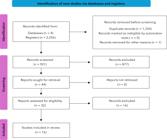
All retrieved records were uploaded to RAYYAN for screening. After duplicate removal and title/abstract screening, 44 articles were assessed in full text and finally 16 met the inclusion criteria (Figure 1). Two reviewers independently performed study selection and data extraction; disagreements were resolved by consensus and, if needed, by a third reviewer.
Data extraction and synthesis
A data extraction matrix was developed including author, year, country, design, sample size, sample characteristics, intervention description (type of technology, parameters/dose when available), outcome measures, and clinical results. Data synthesis was performed narratively, and studies were grouped according to the type of technological intervention.
Evidence classification
Given the aim and design of the scoping review, no formal risk of bias assessment was conducted with trial-specific tools. However, studies were classified according to the Oxford Centre for Evidence-Based Medicine (OCEBM) levels of evidence to provide methodological context.
Results
A total of 2,256 records were identified in the selected databases. After removing duplicates (n = 1,335), 921 articles were screened by title and abstract. Forty-four articles were reviewed in full text, and finally, 16 stu-dies were included in the synthesis of results as shown in Figure 1. No additional studies were found through manual search. The distribution of methodological designs showed a predominance of case studies and quasi-experimental designs, with few randomized controlled trials. The study design is summarized in Figure 2.

Most of the included studies were case series (n = 7), followed by randomized controlled trials (n = 4), single-case studies (n = 3), and feasibility/pilot studies (n = 2). As a substantial portion of the evidence comes from non-randomized de-signs, the strength of conclusions regarding effectiveness remains limited.
Geographically, the studies were mostly concentrated in the United States (n = 4), Finland (n = 3), and Canada (n = 2). No studies from Latin America or Africa were identified, highlighting a geographic research gap in facial rehabilitation technologies.
Various technologies used in the rehabilitation of facial paralysis were identified, which were organized into six thematic groups: electromechanical devices, low-intensity laser therapy, transcutaneous electrical stimulation, electromyographic (EMG) biofeedback, virtual reality and video self-modeling, and motor training software. Table 1 summarizes the general characteristics of the included studies.
Functional electrical stimulation and neuroprostheses
Functional electrical stimulation (FES) is one of the most used interventions in the rehabilitation of facial paralysis. Mäkelä et al.,5–7 in studies from 2019, 2020 and 2024, found that FES has been shown to activate facial muscles even in chronic stages, producing contractions of greater amplitude than those achieved voluntarily and without causing significant pain. The reviewed studies report activation of muscles such as the frontalis, orbicularis oris, and zygomaticus in patients with long-term paralysis, provided there is no complete denervation. In addition, different waveforms, such as square and sinusoidal, have been explored without finding substantial differences in terms of pain perception or movement efficacy, allowing therapy to be adjusted based on individual tolerance.
Within this field, neuroprostheses stand out as a major innovation. A notable example is the electrically induced blink neuroprosthesis, described in the studies by Mäkelä et al.6 and Frigerio et al.,8 which supports patients with severe facial paralysis by promoting eyelid closure during tasks that demand prolonged visual focus. This intervention helps preserve visual acuity and alleviates symptoms of dry eye in patients with severe facial paralysis by facilitating eyelid closure during activities requiring sustained visual attention. The studies reported the possibility of inducing blinking through transcutaneous stimulation of the facial nerve in patients with acute paralysis, achieving complete eye closure in more than half of the cases with tolerable stimulation levels. This approach offers non-invasive alternatives to surgical techniques, with the development of biomimetic devices capable of detecting movements on the healthy side of the face to induce responses on the affected side.
EMG biofeedback
Surface EMG-based biofeedback is a therapeutic tool that has been documented in facial rehabilitation. Evidence shows that biofeedback training facilitates selective control of facial muscles and reduces synkinesis.
Dalla Toffola et al.,9 Balliet et al.10 and Ross et al.11 reported successful cases of re-educating muscle control and blinking, even in patients with chronic paralysis, by combining EMG with behavioral modification techniques.
In the study by Machetanz et al.12 a personalized and low-cost biofeedback system was developed using open platforms such as Arduino and MyoWare sensors. This system demonstrated a significant correlation between electromyographic activity and the degree of facial paralysis, measured using the House & Brackmann scale, both in patients and in healthy subjects. This technology has potential for home-based rehabilitation, increasing access to follow-up and self-care therapies.
Combined therapies: integration of exercise, laser, and electrical stimulation
The combination of different therapeutic modalities has shown additional benefits in the rehabilitation of facial paralysis. Ordahan and Karahan13 evaluated the use of facial exercises combined with low-intensity laser therapy, finding that this combination significantly improves functional outcomes compared to exercises performed alone. Tuncay et al.14 also reported that conventional electrical stimulation combined with traditional physical therapy improves both electrophysiological parameters and clinical function in patients treated over a period of three months. On the other hand, the Mirror Effect Plus Protocol, developed by Martineau et al.,15 integrates mirror therapy, motor imagery, and neuromuscular training, showing positive trends in patients with severe paralysis. However, the authors recommend studies with larger sample sizes to confirm their efficacy.
Robotics, magnetic actuators, and non-invasive neurodevices
Robotic technologies have also begun to be explored in this field. In the study by Jayatilake et al.,16 a portable robotic system called the Robot Mask was developed, which externally manipulates the facial skin using shape-memory alloy actuators. This device allows the induction of more natural facial expressions, improves symmetry during smiling, and reduces aesthetic dysfunction, serving as a complement to traditional physiotherapy.
In the specific case of bidirectional eyelid paralysis, Houston et al.17 designed an automated blinking device using a magnetic actuator. The system combines a magnet attached to the eyelid with another magnet embedded in a glasses frame, operated by a motor that reverses the magnetic polarity, achieving fully automated blinking. The proof of concept was successful in a patient with total bilateral eyelid paralysis, setting a precedent for future clinical applications.
Virtual reality, therapeutic video games, and immersive systems
Virtual reality has emerged as an innovative tool in neuromotor rehabilitation. Qidwai et al.18 reported a case in which an immersive virtual environment was combined with EMG and electroencephalogram (EEG) sensors to stimulate muscle activation in a patient with facial paralysis. The use of an Oculus Rift headset allowed the creation of an interactive training environment where the patient had to follow moving objects, resulting in progressive improvements in the activation of the upper facial muscles.
Coulson et al.19 conducted a prospective, blinded clinical trial to enhance smile function in individuals with long-term facial nerve palsy using video self-modeling and implementation intentions. The intervention resulted in faster initiation and completion times for adapted (more symmetrical) smiles, along with higher ratings of movement control and facial symmetry. Additionally, Facial Disability Index scores improved, and participants demonstrated the successful transfer of improved smile patterns to everyday situations. These findings highlight the potential of visual feedback and cognitive planning strategies to promote functional and aesthetic recovery in facial rehabilitation.
Artificial intelligence applications and automated monitoring
In the field of monitoring and evaluation, Nguyen et al.20 proposed a system based on geometric deep learning using PointNet++ networks applied to 3D point clouds for facial expression recognition. Although this technology is primarily aimed at automatic expression recognition, it has potential applications in the objective assessment of therapeutic progress, facilitating auto-mated and precise monitoring of facial performance during rehabilitation.
The results of the reviewed interventions show improvements in facial functionality, reduction of synkinesis, restoration of smile symmetry, and recovery of blinking. The technologies reviewed have demonstrated their usefulness, although significant gaps remain. There is still no consensus on the optimal parameters for electrical stimulation or on the most effective combination of ther-apeutic modalities. Most studies involve small sample sizes and lack standardized protocols, which limits the generalization of the findings.
Current trends point toward personalized therapies using portable devices, the integration of sensors for real-time monitoring, the combination of technologies such as robotics, virtual reality, and artificial intelligence, and the development of systems that enable home-based rehabilitation. However, it is necessary to strengthen the evidence through controlled clinical trials, longitudinal studies, and the inclusion of diverse populations.
Discussion
This scoping review identified a diverse set of technological interventions aimed at the rehabilitation of facial paralysis. Among the technologies explored are functional electrical stimulation devices, EMG biofeedback, virtual reality systems, facial robotics, video self-modeling, and interactive software. This diversified approach reflects a trend toward increasingly personalized, interactive, and adaptable solutions to meet patient needs. However, most of the reviewed studies are case studies or small series, which limits the quality of the available evidence and highlights the need for controlled clinical trials with greater methodological rigor.
The most innovative interventions include technologies such as the Motorized Magnetic Levator Prosthesis, a system that uses magnets and motors to restore bidirectional blinking in cases of severe paralysis. This device represents a significant advancement by addressing one of the most critical complications of facial paralysis, enabling functional blinking without direct physical contact between the device and the eyelid. Similarly, the noninvasive robotic mask uses shape-memory alloy actuators to replicate facial expressions, reducing smile asymmetry and facilitating automated rehabilitation. These technologies promote less therapist-dependent interventions, which could improve treatment frequency and consistency in the long term. However, their implementation is still in early stages, and additional studies are needed to evaluate their efficacy and applicability in different clinical and population contexts. In general, prosthetic and robotic devices represent an emerging trend in health-care and rehabilitation.15,16,21
Transcutaneous electrical stimulation (FES) remains a widely used therapeutic option, especially in the early stages of facial paralysis. Tuncay et al.14 and Mäkelä et al.5–7 in three studies supported its efficacy in facilitating neuromuscular reactivation, with both functional and electrophysiological benefits. These cases reported improvements in the House & Brackmann scale and in nerve latency and amplitude parameters, supporting its use in acute or subacute phases. Electrical stimulation has been implemented in the rehabilitation process of various conditions related to the central nervous system. However, the lack of consensus regarding the optimal stimulation parameters such as frequency, intensity, and effectiveness for different therapeutic goals continues to be a clinical challenge, as does the overall quality of the supporting evidence.22–24
EMG biofeedback has become one of the key tools for rehabilitation, and its use has generally expanded to multiple applications in healthcare. Dalla Toffola et al.9 and Ross et al.11 reported positive results in improving selective motor control and reducing synkinesis, even in patients with prolonged paresis. These interventions allow patients to receive visual or auditory feedback about their muscle activity, facilitating motor relearning. How-ever, the success of these techniques largely depends on the patient's active participation and adherence, which could limit their applicability in populations with lower motivation or in contexts where access to supervised therapy is restricted.9,20,25–28
Virtual reality and interactive environments are also emerging as promising technologies. The case reported by Qidwai et al.17 combined Virtual reality with EMG and EEG, showing improvements in both muscular and neural activation through immersive exercises. These therapies provide a more dynamic and personalized rehabilitation experience, which can enhance patient motivation. In addition, tools such as video self-modeling and mirror therapy, used by Coulson et al.19 and Martineau et al.,15 contribute to improving movement perception and facial symmetry, promoting body awareness and facilitating autonomous motor training at home.14,17,19,25,29-31
Another line of advancement includes the development of low-cost biofeedback systems, such as the one proposed by Machetanz et al.,11 which uses electromyography sensors connected to open platforms like Arduino. These devices are accessible, portable, and suitable for home-based training, representing an important step toward the democratization of technological therapies, especially in resource-limited settings.11
Combined approaches, such as integrating low-level laser therapy with exercise or therapies that combine virtual reality, motor imagery, and visual feedback, point toward a multidimensional rehabilitation strategy that addresses physical, emotional, and social aspects. This approach is consistent with the biopsychosocial model of rehabilitation, which recognizes the importance of social participation and emotional expression in the quality of life of individuals with facial paralysis.12
When analyzing the overall results, it becomes evident that each technology has specific advantages and limitations that must be considered according to the phase of paralysis, case severity, and the individual characteristics of the patient. Acute-phase therapies, such as electrical stimulation, are more effective in preventing muscle atrophy and reactivating nerve function, while in the chronic phase, interventions like biofeedback, robotics, and virtual reality are more useful for relearning movement and treating synkinesis.
Despite these advances, significant challenges remain. Most of the studies are of low methodological quality, with small sample sizes and limited long-term follow-up. Moreover, more sophisticated technologies, such as robotic devices or immersive virtual reality, face cost and availability barriers, limiting their widespread implementation in healthcare systems with limited resources.
The evolution of technologies for facial paralysis rehabilitation shows a shift from conventional interventions toward more integrative, personalized, and technologically advanced strategies. However, the coexistence of accessible, low-cost technologies alongside highly sophisticated devices presents a clinical dilemma: balancing efficacy with economic feasibility and accessibility. Future research should focus on standardizing protocols, directly comparing different technologies in terms of clinical and economic outcomes, and evaluating their impact on quality of life and social participation. Only in this way will it be possible to integrate these interventions into broad clinical protocols and ensure their applicability across diverse healthcare settings.
Conclusion
The analysis of technological interventions for facial paralysis rehabilitation reveals a wide range of strategies, including electrical stimulation, biofeedback, virtual reality, robotic devices, and interactive software. These technologies show significant potential to improve muscle function, facial symmetry, and patient quality of life, particularly through innovative solutions such as the Motorized Magnetic Levator Prosthesis and the non-invasive robotic mask. However, most of the available studies are single-case reports or small case series, which limits the strength of the evidence and restricts the ability to generalize the results to broader clinical contexts.
Despite technological advances, important challenges persist, such as the absence of standardized protocols, variability in clinical outcomes, and economic and geographic barriers to accessing these interventions. While traditional therapies like biofeedback and electrical stimulation have proven effective in specific phases and conditions, current evidence does not yet allow for definitive recommendations regarding their superiority over other treatments or their optimal integration into combined protocols.
Although emerging technologies offer promising perspectives for facial paralysis rehabilitation, current evidence is not robust enough to recommend their generalized clinical implementation. Additional high-quality research is needed, especially controlled clinical trials and comparative studies, to evaluate not only the functional and neurophysiological efficacy of these interventions but also their psychosocial impact, economic feasibility, and applicability in different stages of the condition and across diverse populations.
Data availability statement
Data are available upon reasonable request.
References
-
1 Hwang CJ, Alshami S, Hodge DO, Bradley EA. The epidemiology and treatment outcomes of facial nerve palsy using a population-based method. Ophthalmic Plast Reconstr Surg. 2025;41(5):549-54. https://doi.org/10.1097/iop.0000000000002912
» https://doi.org/10.1097/iop.0000000000002912 -
2 Wei EX, Green A, Pepper JP, Akkina SR. Increasing incidence of facial nerve disorders in the United States from 2007 to 2022. Laryngoscope. 2025;135(6):2008-13. https://doi.org/10.1002/lary.31997
» https://doi.org/10.1002/lary.31997 -
3 Navarro-Martínez M, Rodríguez-Fernández P, Núñez-Rodríguez S, González-Bernal JJ. Clinical and sociodemographic charac-teristics of patients with peripheral facial paralysis in medical rehabilitation: a comprehensive description. Medicina (Kaunas). 2025;61(5):925. https://doi.org/10.3390/medicina61050925
» https://doi.org/10.3390/medicina61050925 -
4 Tricco AC, Lillie E, Zarin W, O'Brien KK, Colquhoun H, Levac D, et al. PRISMA Extension for Scoping Reviews (PRISMA-ScR): Checklist and Explanation. Ann Intern Med. 2018;169(7):467-73. https://doi.org/10.7326/m18-0850
» https://doi.org/10.7326/m18-0850 -
5 Mäkelä E, Venesvirta H, Ilves M, Lylykangas J, Rantanen V, Uusitalo H, et al. Electrically induced blink for the prevention of ocular symptoms and blurred vision in patients with acute facial nerve palsy. Ear Nose Throat J. 2024;103(5):NP294-300. https://doi.org/10.1177/01455613211048576
» https://doi.org/10.1177/01455613211048576 -
6 Mäkelä E, Venesvirta H, Ilves M, Lylykangas J, Rantanen V, Ylä-Kotola T, et al. Facial muscle reanimation by transcutaneous electrical stimulation for peripheral facial nerve palsy. J Med Eng Technol. 2019;43(3):155-64. https://doi.org/10.1080/03091902.2019.1637470
» https://doi.org/10.1080/03091902.2019.1637470 -
7 Mäkelä EA, Ilves MK, Venesvirta HM, Lylykangas JK, Rantanen VT, Vehkaoja AT, et al. Effect of pulse waveforms on movement amplitudes and perceived discomfort in electric muscle stimulation in unresolved facial nerve palsy. Biomed Phys Eng Express. 2020;6(3):035013. https://doi.org/10.1088/2057-1976/ab7eea
» https://doi.org/10.1088/2057-1976/ab7eea -
8 Frigerio A, Heaton JT, Cavallari P, Knox C, Hohman MH, Hadlock TA. Electrical stimulation of eye blink in individuals with acute facial palsy: progress toward a bionic blink. Plast Reconstr Surg. 2015;136(4):515-23e. https://doi.org/10.1097/prs.0000000000001639
» https://doi.org/10.1097/prs.0000000000001639 -
9 Dalla Toffola E, Bossi D, Buonocore M, Montomoli C, Petrucci L, Alfonsi E. Usefulness of BFB/EMG in facial palsy rehabilitation. Disabil Rehabil. 2005 Jul 22;27(14):809-15. https://doi.org/10.1080/09638280400018650
» https://doi.org/10.1080/09638280400018650 -
10 Balliet R, Shinn JB, Bach-y-Rita P. Facial paralysis rehabilitation: retraining selective muscle control. Int Rehabil Med. 1982;4(2):67–74. https://doi.org/10.3109/09638288209166880
» https://doi.org/10.3109/09638288209166880 -
11 Ross B, Nedzelski JM, McLean JA. Efficacy of feedback training in long-standing facial nerve paresis. Laryngoscope. 1991;101(7 Pt 1):744-50. https://doi.org/10.1288/00005537-199107000-00009
» https://doi.org/10.1288/00005537-199107000-00009 -
12 Machetanz K, Grimm F, Schäfer R, Trakolis L, Hurth H, Haas P, et al. Design and evaluation of a custom-made electromyographic biofeedback system for facial rehabilitation. Front Neurosci. 2022;16:66617. https://doi.org/10.3389/fnins.2022.666173
» https://doi.org/10.3389/fnins.2022.666173 -
13 Ordahan B, Karahan AY. Role of low-level laser therapy ad-ded to facial expression exercises in patients with idiopathic facial (Bell's) palsy. Lasers Med Sci. 2017;32(4):931-6. https://doi.org/10.1007/s10103-017-2195-9
» https://doi.org/10.1007/s10103-017-2195-9 -
14 Tuncay F, Borman P, Taşer B, Ünlü İ, Samim E. Role of electrical stimulation added to conventional therapy in patients with idiopathic facial (Bell) palsy. Am J Phys Med Rehabil. 2015; 94(3):222-8. https://doi.org/10.1097/phm.0000000000000171
» https://doi.org/10.1097/phm.0000000000000171 -
15 Martineau S, Rahal A, Piette É, Chouinard AM, Marcotte K. The mirror effect plus protocol for acute Bell's palsy: a ran-domised and longitudinal study on facial rehabilitation. Acta Otolaryngol. 2021;141(2):203-8. https://doi.org/10.1080/00016489.2020.1842905
» https://doi.org/10.1080/00016489.2020.1842905 -
16 Jayatilake D, Isezaki T, Teramoto Y, Eguchi K, Suzuki K. Ro-bot assisted physiotherapy to support rehabilitation of facial paralysis. IEEE Trans Neural Syst Rehabil Eng. 2014;22(3):644-53. https://doi.org/10.1109/tnsre.2013.2279169
» https://doi.org/10.1109/tnsre.2013.2279169 -
17 Houston KE, Singh M, Sedeh AE, Paschalis EI. A magnetic actuator device for fully automated blinking in total bidirectional eyelid paralysis: first proof of concept in a human par-ticipant. Transl Vis Sci Technol. 2024;13(5):2. https://doi.org/10.1167/tvst.13.5.2
» https://doi.org/10.1167/tvst.13.5.2 -
18 Qidwai U, Ajimsha MS, Shakir M. The role of EEG and EMG combined virtual reality gaming system in facial palsy rehabi-litation - A case report. J Bodyw Mov Ther. 2019;23(2):425-31. https://doi.org/10.1016/j.jbmt.2019.02.012
» https://doi.org/10.1016/j.jbmt.2019.02.012 -
19 Coulson SE, Adams RD, O'Dwyer NJ, Croxson GR. Physio-therapy rehabilitation of the smile after long-term facial nerve palsy using video self-modeling and implementation intentions. Otolaryngol Head Neck Surg. 2006;134(1):48-55. https://doi.org/10.1016/j.otohns.2005.09.010
» https://doi.org/10.1016/j.otohns.2005.09.010 -
20 Nguyen DP, Tho MCHB, Dao TT. Enhanced facial expression recognition using 3D point sets and geometric deep learning. Med Biol Eng Comput. 2021;59(6):1235-44. https://doi.org/10.1007/s11517-021-02383-1
» https://doi.org/10.1007/s11517-021-02383-1 -
21 Medina-Coello P, Salvador-Domínguez B, Badesa FJ, Rodríguez Corral JM, Plastrotmann H, Morgado-Estévez A. An-thropomorphic robotic hand prosthesis developed for children. Biomimetics (Basel). 2024;9(7):401. https://doi.org/10.33 90/biomimetics9070401
» https://doi.org/10.33 90/biomimetics9070401 -
22 González-Graniel E, Mercado-Gutierrez JA, Martínez-Díaz S, Castro-Liera I, Santillan-Mendez IM, Yanez-Suarez O, et al. Sensing and control strategies used in FES systems aimed at as-sistance and rehabilitation of foot drop: a systematic literature review. J Pers Med. 2024;14(8):874. https://doi.org/10.3390/jpm14080874
» https://doi.org/10.3390/jpm14080874 -
23 Couper SK, Smith M. The effects of functional electrical sti-mulation cycling on muscle spasticity in individuals with spinal cord injury: a systematic review. Top Spinal Cord Inj Rehabil. 2025;31(1):77-99. https://doi.org/10.46292/sci23-00048
» https://doi.org/10.46292/sci23-00048 -
24 Keesukphan A, Suntipap M, Thadanipon K, Boonmanunt S, Numthavaj P, McKay GJ, et al. Effects of electrical and magnetic stimulation on upper extremity function after stroke: A systematic review and network meta-analysis. PM R. 2025;17(8):978-93. https://doi.org/10.1002/pmrj.13356
» https://doi.org/10.1002/pmrj.13356 -
25 Hamada T, Seki M, Nango E, Shibata T, Imai S, Miyata T. Enhancing effects of exercise and neurofeedback: A systematic review and meta-analysis of computer game-based interventions for pediatric ADHD. Psychiatry Res. 2025;348:116447. https://doi.org/10.1016/j.psychres.2025.116447
» https://doi.org/10.1016/j.psychres.2025.116447 -
26 Ramachandran AK, Pedley JS, Moeskops S, Oliver JL, Myer GD, Hsiao HI, et al. Influence of neuromuscular training inter-ventions on jump-landing biomechanics and implications for ACL injuries in youth females: a systematic review and meta-analysis. Sports Med. 2025;55(5):1265-92. https://doi.org/10.1007/s40279-025-02190-w
» https://doi.org/10.1007/s40279-025-02190-w -
27 Brea-Gómez B, Pazo-Palacios R, Pérez-Gisbert L, Valenza MC, Torres-Sánchez I. Pelvic floor muscle training with preoperative biofeedback in patients with postprostatectomy incontinence: a systematic review and meta-analysis of randomised clinical trials. Eur Urol Focus. 2025:S2405-4569(25)00080-X. https://doi.org/10.1016/j.euf.2025.04.004
» https://doi.org/10.1016/j.euf.2025.04.004 -
28 Liu JY, Wang BH, Pan JG, Zhu LW. Meta-analysis of the ef-fect of biofeedback electrical stimulation on postpartum stress urinary incontinence in recent 5 years. Medicine (Baltimore). 2025;104(24):e42776. https://doi.org/10.1097/md.0000000000042776
» https://doi.org/10.1097/md.0000000000042776 -
29 Gkintoni E, Vassilopoulos SP, Nikolaou G, Vantarakis A. Neu-rotechnological approaches to cognitive rehabilitation in mild cognitive impairment: a systematic review of neuromodulation, EEG, virtual reality, and emerging AI applications. Brain Sci. 2025;15(6):582. https://doi.org/10.3390/brainsci15060582
» https://doi.org/10.3390/brainsci15060582 -
30 Petrakis A, Koumakis L, Kazantzaki E, Kondylakis H. Trans-forming healthcare: a comprehensive review of augmented and virtual reality interventions. Sensors (Basel). 2025;25(12):3748. https://doi.org/10.3390/s25123748
» https://doi.org/10.3390/s25123748 -
31 Fuentes-Abolafio IJ, Martín-San Agustín R, Henriquez-Jurado JM, Suso-Martí L, Escriche-Escuder A. Isolated effects of virtual reality training on upper limb motor function in patients with stroke: systematic review and meta-analysis. Disabil Rehabil. 2025;1-20. https://doi.org/10.1080/09638288.2025.2527953
» https://doi.org/10.1080/09638288.2025.2527953


 Note: A = Artificial intelligence applications and automated monitoring. B = Virtual reality, therapeutic video games, and immersive systems. C = Robotics, magnetic actuators, and non-invasive neurodevices. D = Combined therapies. E = Electromyographic biofeedback. F = Functional electrical stimulation and neuroprostheses.