 Epidemiological characterization of patients treated at a rehabilitation center: a retrospective analysis
Abstract
Introduction: Although essential in the context of the Unified Health System (SUS – Sistema Único de Saúde), physiotherapy services go through challenges that can be faced through the assessment of supply and demand as a way to guide public policies, contributing to the organization and more effective practices.
Objective: To analyze the sociodemographic and clinical profile of physiotherapy service patients at a Rehabilitation Center in Rio de Janeiro.
Methods: A descriptive cross-sectional study based on the analysis of medical records. The statistical analysis used the following tests: central tendency measures, frequency analysis, chi-squared test, Fisher's exact test, and Spearman's correlation test.
Results: A total of 300 medical records were analyzed. It was observed a majority of women (68%) and black individuals (61%) among the patients. The most common injuries were trauma-orthopedic (54.7%), rheumatological (34.3%), and neurofunctional (9%). Young men were more frequently associated with cardiorespiratory diseases, and seniors to neurological injuries. Sessions lasted an average of 28 minutes, with electrotherapy being the most common resource. Rheumatological diseases received more treatment with combined therapies. Women received less kinesiotherapy and more manual therapy. Black individuals received more combined therapies, and white individuals received more single resources.
Conclusion: There was an inequality in treatment regarding sex and race in the sample analyzed. Furthermore, the results indicate that the approach, methods, as well as service techniques and timeframes, all need to be reconsidered, in order to be in line with SUS's biopsychosocial model, scientific guidelines, and principles.
Keywords:
Epidemiological profile; Community Health Centers; Rehabilitation; Unified Health System; Physiotherapy
Resumo
Introdução: Apesar de essenciais no contexto do Sistema Único de Saúde (SUS), os serviços de fisioterapia atravessam desafios que podem ser enfrentados com a avaliação da oferta e da demanda, de forma a orientar políticas públicas e contribuir para a organização e práticas mais efetivas.
Objetivo: Analisar o perfil sociodemográfico e clínico de usuários de serviço de fisioterapia em um centro de reabilitação no Rio de Janeiro.
Métodos: Trata-se de um estudo transversal descritivo baseado na análise de prontuários. Para análise estatística, utilizaram-se os testes: medidas de tendência central, análise de frequência, teste qui-quadrado, teste exato de Fisher e teste de correlação de Spearman.
Resultados: Foram analisados 300 prontuários. Observou-se uma maioria de mulheres (68%) e de pessoas negras (61%). As lesões mais comuns foram traumato-ortopédicas (54,7%), reumatológicas (34,3%) e neurofuncionais (9%). Homens jovens foram mais associados a doenças cardiorrespiratórias e idosos a lesões neurológicas. As sessões duraram em média 28 minutos, sendo a eletroterapia o recurso fisioterapêutico mais utilizado. Doenças reumatológicas receberam mais tratamento com terapias combinadas. Mulheres receberam menos cinesioterapia e mais terapia manual. Pessoas negras receberam mais terapias combinadas e pessoas brancas, mais recursos únicos.
Conclusão: Na amostra analisada, houve desigualdade no tratamento em relação ao sexo e à raça. Os resultados indicam que a abordagem, métodos, técnicas e tempo de atendimento precisam ser repensados considerando o modelo biopsicossocial, as diretrizes científicas e os princípios do SUS.
Palavras-chave:
Perfil epidemiológico; Unidades Básicas de Saúde; Reabilitação; Sistema Único de Saúde; Fisioterapia
Introduction
Over time, rehabilitation services, which include physiotherapy, have used the biomedical model. Focused on the binomials health/disease and normal/pathologic, such paradigms are stablished through anatomophysiological references.1
In modernity, the biopsychosocial model has emerged to direct health's focus to matters such as the context individuals are part of and the necessity for the democratization of access to health. Amplifying the scrutiny over health and producing concepts as social determinants of health, which influence considerably the health industry's professions, as well as the public system.2 In this context, the physiotherapist's practice encompasses all levels of health care, contributing to the holistic care, the promotion of health, prevention of worsening conditions and in health management strategies, articulating with multidisciplinary teams3 to treat kinesio-functional alterations as well as trying to comprehend and consider, within its practice, the different factors that influence the health-disease process.
In the primary care of the Unified Health System (SUS), the physiotherapist is part of the Basic Care Multidisciplinary Team, acting in a interdisciplinary manner in prevention, treatment, recovery of mobility and promotion of health.4 In the secondary care, using specific knowledge from physiotherapy to reduce the need for more complex interventions and promoting health.5 However, the access to physiotherapy is inequitable, being higher among individuals with higher income and private health insurance. On the other hand, there is a high demand and low offer for the services on the public network and patients face long waiting lines for care.6,7,8 Additionally, although the scientific interest for this matter has grown, there are few studies evaluating the quality of physiotherapy services, particularly in the public sector, which is compounded by a lack of systematization and standardization of data concerning the main health conditions treated.9,10,11
Knowing the patient's profile is essential to offer more effective interventions. The epidemiological knowledge applied to physiotherapy has been important in the promotion of health and prevention of diseases.12 The research on social epidemiology13 provides data about the physiotherapy practice, the characteristics of the services and the profile of patients, contributing to more effective practices and more assertive public policies. Beyond that, the broadening of scientific evidence favors the training of capable professionals and the advancement of the profession.12,14 Therefore, the objective of this study is to analyze the sociodemographic and clinical profile of physiotherapy service patients at a Rehabilitation Center in the northern area of Rio de Rio de Janeiro, through the lens of the biopsychosocial model.
Methods
This study is based on a descriptive cross-sectional study that looked at medical records from 2022 to 2023 on VitaCare, an official electronic medical record system for Rio de Janeiro's public health system. Access to the system was provided by the unit's management after the research project was approved by the Ethics Committee of Instituto Federal de Educação, Ciência e Tecnologia do Rio de Janeiro (under ruling 6.635.102). The extraction of the data was performed in April and May of 2024.
The following inclusion criteria was considered: patient admitted in the rehabilitation center's physiotherapy sector in 2022 or 2023, with a minimum of five sessions completed. The exclusion criteria were: receiving physiotherapy services in the period that the medical records were accessed, and/or when there is no record of the patient's health condition and/or main complaint.
The following data was extracted to study the routine of the services, as well as the clinical and sociodemographic profile of patients: age, sex, race, occupation and place of residence, patients' type of registration in the unit, clinical, service start and end dates, service month(s), number of sessions performed, service time per sessions, the physiotherapy treatment performed and devices used.
The data was tabulated in an Excel spreadsheet and analyzed with the software Statistical Package for the Social Sciences (SPSS, version 29) and JAMOVI (version 2.5.5). Measures of central tendency (mean and median), standard deviation, minimum and maximum values, and frequency analysis composed the descriptive statistical analysis. The Shapiro–Wilk test was used to analyze the data distribution curve. The chi-squared test was used for the inferential analysis of categorical variables, while Spearman's correlation test was used for the association between quantitative variables, considering that the data did not follow normal distribution (p < 0.001). In both cases, a significance level of 5% was used. The existence of a statistical difference is pointed out in the chi-squared test and the standardized residual values adjusted, higher than 1.96, indicated which local associations contributed for the significative p-value.15 Fisher's exact test was used when the criteria to apply the chisquare test for association on the qualitative variables were not met, that is, in the cases in which the observed sample presented, in the contingency table, more than 25% of cells smaller than the five expected individuals.15
The research's initial proposal was to analyze all medical records regarding the years of 2022 and 2023, present on VitaCare's database. However, this objective was limited due to instability of the internet connection, shootings in the region, the substantial amount of records with gaps in the information of interest, and difficulties to access the system. On top of that, the waiting either for authorization or available computers in the unit, which was always in full operation. Considering the time available to extract the data from VitaCare and due to the challenges faced, the sample was restricted to 300 medical records.
Results
Of the 300 patients, 93 started and concluded the treatment in 2022, 39 started in 2022 and concluded in 2023 and 168 started and concluded in 2023. Most patients were female (68%), the average age was 57.4 years (±14.0) for women and 53.8 years (±18.1) for men. The sample included seven children (6.43 ± 6.65 years), eight young adults (24.00 ± 4.31 years), 154 adults (49.30 ± 7.86 years) and 131 elderly (69.10 ± 7.28 years).
Out of the total, 184 individuals were black or mixed, 108 white and 8 of Asian descent. There weren't records of indigenous individuals. Most patients did not have information about employment. Among the ones that had, 60 were retired, 11 unemployed and 2 employed, but it was not possible to determine the nature of the business (formal or informal). Only 45 patients had a permanent record, that is, connected to the clinic and the family health team, and 255 were not patients of the Family Clinic, which references the Rehabilitation Center (CReab).
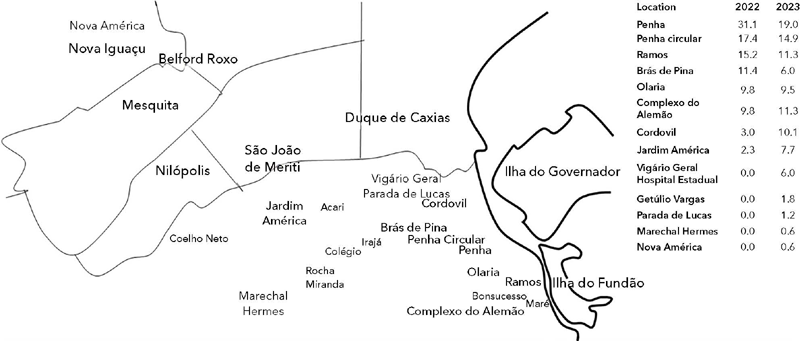
In 2022, the sample of patients from CReab was from the neighborhoods Penha, Penha Circular, Ramos, Brás de Pina, Olaria, Complexo do Alemão, Cordovil and Jardim América. In 2023, patients from these locations were added: Vigário Geral, Hospital Estadual Getúlio Vargas, Parada de Lucas, Marechal Hermes and Nova América. Figure 1 presents the relative position of these locations and a summary of these results.
Hospital Getúlio Vargas is located at Penha Circular, but the data is presented separately because the service attends the entire state of Rio de Janeiro. Therefore, patients from the hospital are not necessarily residents of Penha Circular and surroundings.
When compared to the data of 2022 demographic census by the Instituto Brasileiro de Geografia e Estatística (IBGE),16 our sample showed a significatively higher number of female individuals [X²(1) = 32.699; p < 0.001] as well as black and individuals of Asian descent, while the number of white and mixed individuals was lower than expected [X²(3) = 50.785; p < 0.001]. The frequency of adults and seniors was higher than other age ranges [X²(3) = 251.235; p < 0.001]. There was no significant association between the variables sex and race (p = 0.644). Among female individuals, 3.43% were people of Asian descent, 34.80% were white, 45.59% were mixed and 16.18% were black. Among male individuals, 1.04% were people of Asian descent, 38.54% were white, 43.75% were mixed and 16.67% were black. In relation to sex and age range, the number of men was significatively higher than the women between the young adults [X²(3) = 10.05; p = 0.016].
The clinical commitments were categorized according to the practice area of physiotherapy, with a total of 164 trauma-orthopedic, 103 were rheumatological, 27 were neurofunctional, two were dermatofunctional, two oncological cases and two cardiorespiratory. There was no association between an area of physiotherapy and the sex variables (p = 0.08) or race (p = 0.37), which indicates that the distribution of injuries does not differ due to race or sex considerations. However, when analyzed in conjunction, the three variables (sex, race and area of physiotherapy) indicated that the neuro-functional injuries are among the most present in black men [FISHER(5) = 10.47; p = 0.02]. There was also a significant association [FISHER(15) = 34,37; p = 0,002] between area of physiotherapy and age range. Children presented 50% of dermatofunctional injuries. However, this data was not considered due to evidence of errors in registering the age of users – some of them confirmed by workers in the sector. Young adults were 50% of cardiorespiratory injuries and seniors were 63% of neurofunctional injuries.
Patients were treated at CReab for an average of 3.78 (± 2.31) months, while 17 months was the maximum treatment time found in the sample. It was observed that 1.7% of patients were treated at the unit for a time equal or above one year. Considering the amount of physiotherapy sessions, the average was 11.7 (± 7.51) sessions, with a minimum of five and a maximum of 60. In this sample, 33% of patients had 10 sessions and 35% received up to nine sessions. Each session lasted an average of 28 (± 5.36) minutes, with a minimum of 10 and maximum of 50 minutes (Table 1).
Only 2.3% of patients had a treatment time above 30 minutes. There was an association between the classification of the injury and the treatment time [FISHER (30) = 59.56; p = 0.013], in which neurofunctional injuries received a higher treatment time in comparison to the others, being 100% of the treatments of 50 minutes.
Spearman's Nonparametric Bivariate Test pointed out a correlation between the number of sessions and the treatment time (ρ = +0.133; p = 0.006), which suggests a higher dedication to treatment time in cases when there is indication of more sessions. However, the correlation between the gravity of the patient's condition and the total time of treatment is weak. Fisher's test did not point out an association between the session time and the variables sex (p = 0.59), race (p = 0.75) or age range (p = 0.41).
The treatment received was categorized in the following manner: (1) Treatment with unique resources -electrotherapy, kinesiotherapy or manual therapy; (2) Treatment with combined resources - combination of the resources mentioned; or (3) Treatment with all the three resources - electrotherapy, kinesiotherapy and manual therapy. Considering the use of a single resource, 51.2% received only electrotherapy, 6.9% only kinesiotherapy and 2.8% only manual therapy. Considering combined resources, 6.4% received electrotherapy and kinesiotherapy, 5.7% received electrotherapy and manual therapy, 8.4% kinesiotherapy and manual therapy, while 18.7% received treatment with the three resources. The frequency of use of the electrotherapy in the sector was 82%.
The chi-square test of independence demonstrated a significative association between the type of treatment and the sex [X²(6) = 18.320; p = 0.005], as well as between the type of treatment and race [X²(12) = 23.351; p = 0.025]. In relation to sex, women received less kinesiotherapy (as a single or combined resource) and more manual therapy than men. For the variable race, black and mixed individuals received more treatments with combined therapies and white individuals were treated with single resources, particularly manual therapies (Table 2). There was no significant association between type of treatment and age range (p = 0.129).
There was also an association between the type of treatment and injury classification [X²(18) = 99.259; p < 0.001], trauma-orthopedic injuries presented a higher rate of electrotherapy use and lower rate of using other therapies. Fifty-three percent of all trauma-orthopedic injuries were treated with electrotherapy as the only resource. Rheumatological injuries presented more elevated numbers of combined treatments of electrotherapy and manual therapy and a lower use of kinesiotherapy, either as a single resource or associated with another one. Neurological injuries presented a higher rate of kinesiotherapy use and combined therapies kinesiotherapy and e manual therapy, as well as a lower use of electrotherapy.
Discussion
In the sample of 300 patients that entered the rehabilitation center in a Family Clinic at Penha, in the northern zone of Rio de Rio de Janeiro in 2022 and 2023, most of the patients were female. Maeda et al.17 observed the female predominance in outpatient pain management in the city of São Paulo. Women comprise the majority of patients in the health services concerning consultations with medical professionals.18 Guedes19 highlights that the culture and the construction of masculinity influence a higher resistance in men towards care, particularly in their relation to health services. However, some research performed in the cities of Curitiba20 and São Paulo21 found a male predominance in the search for physiotherapy services. A wide mapping considering the geographical region and other indicators, such as class and age may be interesting, especially if performed along a period of time to allow the observation of tendencies and changes. The adult age range (average age of 57.4 and 53.8 years for women and men, respectively) prevailed in the sample, similar to the results found by Ramos et al.20 and Silvestre et al.22 in physiotherapy service sectors.
The current study highlighted the association between the young adult age range and the male sex. The predominance of young adult men may be related to the higher risk of traumatic injuries, since this populational group is the majority among victims of traffic and urban violence.23 Additionally, the literature points out to a high rate of fractures associated to risky behaviors in men.20,21 However, this research did not find association between trauma-orthopedic injuries and sex or race. Moreover, the trauma-orthopedic injury category was not subdivided into types of injuries, which would make such analysis possible. Even so, it was possible to observe that most men showed fractures that had been caused by motorcycle accidents.
There was a predominance of black and mixed individuals (61.3%) being treated. Despite the Brazilian census of 2022 pointing out a growth in individuals declaring themselves as mixed and black descendants in the state of Rio de Janeiro, the results found in the current study indicate a prevalence significatively higher than the growth observed by IBGE.16 Data from the United Nations Population Fund Brazil24 corroborates the findings in the study, indicating that most of the population that uses SUS is black.
This data expresses the racial inequality in Brazil.25 The fact that there weren't any individuals that declared themselves indigenous in the specialized physiotherapy service was also emphasized. Chaves et al.26 points out the indigenous population's historical state of invisibility in the health services. This state, according to Ferro and Silva,27 can be explained through the Brazilian concept of pardism. The study about the classification of color/race of children in indigenous households in Brazil established that, in the urban context, daughters of indigenous mothers tend to be classified four times more as white or mixed than indigenous, which may indicate an underreporting of this population in the census.28 Additionally, since the 20th century, there isn't a census classification that determines the differentiation between miscegenated indigenous bodies.
Between the years of the analyzed sample, 2022 and 2023, it was observed an increase of temporary registrations. The percent of patients in the physiotherapy sector from Penha and Penha Circular was significatively lower than other locations. In 2023, four new regions showed up that were not serviced in the previous year. The Regulation System (SisReg) was implemented and started being used in 2023. This organizational change in the absorption of patients widened the service radius to other programmatic areas. The increase in the absorption of other locations’ demands is related to the management logic centered in amplifying the offer and adjusting to the new management and financing models. Restructuration, in this sense, may be forced by measures such as Programa Previne Brasil,29 applicable at the time of the study. This altered the public financing model, decentralizing resources that were previously destined to basic health and allowing city managers to independently define the composition of teams, specialized professionals, workload, and new professional arrangements. This reform, already repealed by Decree n 3.493/2024,30 interrupted the accreditation of teams at Núcleo Ampliado de Saúde da Família (NASF) and changed the financing criteria of Primary Health Care, which was then based on the number of patient records and not the per capita distribution of the Brazilian population.31,32
The patients in this study were searching for physiotherapy services mainly due to trauma-orthopedic complaints related to cervicalthoracic lombalgy (25.33%) and fractures (16%), rheumatological issues, mostly osteoarthritis (17%) and soft tissue pain syndromes (16%), neurofunctional complaints related to after-effects of a cerebrovascular accident (6,67%). These results are in agreement with other studies that discussed the motivations to search for physiotherapy in the public health system.5,6,7,20
Cervicalthoracic lombalgy encompasses acute and chronic pains in the cervical, thoracic and/or lumbar spine. The lumbar pain particularly, is the highest cause of disability in the world and can affect 65% of individuals per year and up to 84% of people throughout life.33 Despite being multifactorial, the lombalgy rate is higher in individuals with lower socioeconomic status, corroborating their high incidence in the public health sectors.33,34,35 Concerning neurofunctional injuries, the cerebrovascular accident represents 40% of early retirements in the world and 35% of the main causes of disability in individuals above than 50 years old.36 The association of neurofunctional injuries with the senior population and black individuals found in this research, may be related to the increased risk of brain and cardiovascular diseases, such as systemic arterial hypertension in both groups.
The patients studied attended the clinic's space for an average of 3.78 months, performing an average of 11.7 sessions of 28 minutes each. Most (68%) patients had up to 10 sessions. The clinic's organization establishes 10 sessions per patient, with an exception only for neurological injuries. This information explains the association between neurological injury and higher sessions count found in the current study. However, before Sys Reg's implementation, when the block of 10 sessions ended, some patients in non-neurological condition returned to continue the treatment, renewing the cycle of 10 sessions. However, 35% of these did not close the cycle, possibly due to improvement of the condition or losing the spot due to absenteeism.
The protocol of 10 sessions is a practice incorporated in private health. Health insurance plans work with cycles of 10 physiotherapy sessions and medical professionals tend to prescribe the amount of sessions that the plan will most likely allow reimbursement.37 Although randomized studies indicate a significative improvement of a group of patients after ten sessions,38,39,40 setting a fixed number of sessions for all individuals with non-neurological conditions is contrary to the principle of prescribing in alignment with the individual needs of each patient. Determining the treatment should consider these needs.37
Considering the duration of each physiotherapy session, the average time was 28 minutes, except for neurological cases, when sessions lasted about 50 minutes. The resolution of Conselho Federal de Fisioterapia e Terapia Ocupacional No. 444,41 establishes that, at an outpatient level, the physiotherapist should provide two consultations per hour at most, for neurological patients or the ones that have a stable clinical and physiotherapeutic condition, with or without partial dependency in relation to basic human needs. This resolution seems to try to essentially create a frame work for the minimum conditions of work for the physiotherapist, establishing a maximum of patients/clients per hour. Yet the document that guides the physiotherapy in the basic care at São Paulo state42 indicates individual or shared sessions with duration between 40 minutes and 1 hour, without breaking down the practice area referring to the type of clinical condition. These documents are inserted in a productivity logic based on the number of services per unit of time. The individual needs, specificities of dysfunctions and complexity of the cases are not considered in the documents.41,42
About the treatment offer, the majority of patients in the research received exclusively some electrophotothermal therapy resource, the most frequent being TENS and infrared. When electrotherapy was associated with kinesiotherapy or manual therapy, it used about half of the session time and its description was more detailed in the patient's record document than any other intervention. The electrophotothermal therapy is frequently used in physiotherapy because it helps controlling symptoms, tissue healing, it's easy to apply and lowers the interaction time between the professional and the patient.39,40,43 However, by using such resources, the physiotherapist should never neglect the causes or possible causes that originate the medical condition presented by the patient, for example, lack of fitness and musculoskeletal imbalances. The electrophotothermal therapy can be used as support, but shouldn't substitute active methods, such as therapeutic exercises.44
The medical records analyzed in the present study showed that electrophotothermal therapy was largely used as single resource to treat back pain, despite the guideline from National Institute for Health and Care Excellence45 discouraging the use of electrotherapy and acupuncture in the treatment of back pain and affirming that the treatment with general exercises and cardiovascular fitness, education about health and pain, associated to manual therapy exercises demonstrate the best evidences in these cases.
Finally, the research's results point out significant differences in the treatment offered according to sex and race of patients. It was observed that women and white individuals were more frequently exposed to manual therapy in comparison to the other groups. There is a gap in the studies that explore the existence of association between the therapeutic resources used and race and gender markers. On one hand, this makes the discussion about the results obtained harder. On another, it indicates an unexplored field. For Stenberg et al.,46 the gender bias results in inequitable treatments in rehabilitation, which can't be justified by any other factor considered. Among the results of the survey performed, it was observed a difference in the recommendations given to each gender. Additionally, it was observed a lower frequency of suggesting group interventions and exercises for men than for women. In this sense, it can be understood that men are seen as stronger than women, who are associated with fragility, so the physiotherapy diagnosis and the choice of treatment are influenced by the gender. Lastly, Stenberg et al.46 highlight the need to study this issue further. Qualitative studies involving the use frequency of different resources, with race, gender and class markers, as well as the social representations of professionals and patients in relation to such resources, could open new paths to the comprehension of the cultural and social factors involved.
Chhabra and Kaur47 see the matter of gender from the perspective of professional choice in terms of salary and prestige within the health sector and of touching and listening as being associated to the gender role, attributed to the feminine. In relation to the quality of the service, researches like Corrêa's48 demonstrated that gender and race stereotypes influence therapeutic choice and approach and the professional's level of engagement with the patients. The researcher observes that black individuals indicate dissatisfaction with the quality of the physiotherapy service and emphasize as problems the generic treatments, absence of concern from the professional with their wellbeing, not following up on exercises, as well as the superficial explanation about them. Social markers as race, gender and sexuality influence both the clinical practice, the teaching and research in physiotherapy. Stereotyped attitudes and prejudice of professionals have been related to advantages or disadvantages for patients.46,47,48 These findings reinforce the need for public policies and professional training that approach class, race and gender intersectionality critically, with the aim to guarantee a fairer physiotherapy practice that is centered on the patient.
A physiotherapy practice that satisfies SUS's basic principles of fairness and integrity must necessarily follow the biopsychosocial paradigm. SUS's changes in the management and financing scheme as consequence of the consistent advancement of the market paradigm along the health sector, diminished its universality principles. By inserting health in the market logic, policies linked to ideas of budget allocation based on performance indicators gain the centerstage and influence the lowering quality of the service the population receives. The financing reduction of NASF teams, for example, resulted in their reduction in the entire country between 2018 and 2022, which affected the diversity of workers and multidisciplinary efforts. Additionally, there was an increase in the workload of professionals and escalation of patients to specialized sectors.32 These changes affected the participation of the physiotherapy professional in the primary care and increased demand in individual outpatient service to the detriment of group actions with transversal objectives.49 This increase in demand was observed in the researched sector.
The most important limitation of this study was the lack of access to all medical records of years 2022 and 2023 due to structural issues and circumstances reported in the text. The implementation of SisReg between the years analyzed, on one hand, consists in a limitation that made impossible evaluate the consistency of findings along the years; on the other hand, being traversed by this organizational transition enabled the observation of important changes related to the locations serviced by the sector. For example, allowing the observation of immediate impacts after this transformation. In this manner, this accidental limitation became a relevant data and important contributor to this study.
The present study tries to widen the knowledge about the physiotherapy service in the state of Rio de Janeiro. Overcoming the challenges encountered in this study requires a joint effort of managers, health professionals and policy-makers. The alignment to SUS's doctrinal principles must be a priority to guarantee an assistance that is not only efficient, but also fair, whole and human, anchored in good practices and innovations, aiming to improve the efficiency of services and guarantee results in line with the patient's needs.
Conclusion
The rehabilitation centers and physiotherapy services’ purpose is not only to showcase their existence, they must serve the needs of the population in conformity with their epidemiological and sociodemographical profiles, reducing algic conditions, recovering its functionality, promoting wellbeing and improving the quality of life of individuals. Institutions that offer physiotherapy services must evaluate the needs of each patient and create personalized treatment plans. This involves comprehending the specific conditions of each patient, its limitations and recovery goals. The assistance must consider the patient's physical condition, as well as emotional and social aspects. The integration with other sectors and other care levels is critical for a complete approach and successful recovery.
The current study identified an alignment of the service with biomedical and market models, which goes against the biopsychosocial paradigm that is the basis for SUS. The reduced treatment time observed in the study is an obstacle to a more complete evaluation, resulting in the ranking of the medical diagnosis over the kinetic-functional diagnosis. The protocol of 10 sessions and short time result in the patient having to prioritize one part of the body for treatment. Additionally, the time and duration of the sessions, about 28 minutes, make it impossible for a complete treatment and use of more efficient resources and techniques. This hinders the adoption of adequate treatment protocols based on consolidated scientific evidence and contributes to an assistance of dubious quality. The use of electrophotothermal therapy resources instead of kinesiotherapy and manual therapy in this short session evidences the distancing from the biopsychosocial paradigm and the principle of completeness in health. A critical evaluation of the current management models is necessary. They are distant from the holistic vision theorized at SUS and aligned to the project of dismantling SUS.
In the analysis of the epidemiological profile, important associations related to sex, race and age range were observed. Adults and seniors were the majority in the sectors, as well as women and black individuals. There was an association with black men and neurological injuries, and young men and trauma-orthopedic injuries. The study highlights the association of the type of treatment with sex and race, with women and white individuals being treated more frequently with manual therapy. This data needs more attention, as they reveal an inequality in the public health treatment in relation to such markers.
Acknowledgments
To Instituto Federal de Educação Ciência e Tecnologia do Rio de Janeiro (IFRJ) for the financial support. To Ricardo Jevoux de Carvalho Junior for the translation of the paper from Portuguese to English.
Data availability statement
The data that support the findings of this study are available upon reasonable request.
References
-
1 Biz MCP, Santos MC, Reis F, Nicolau SM, Furtado JP. Centros Especializados em Reabilitação: avaliando os desafios à implementação do modelo biopsicossocial nas práticas assistenciais à pessoa com deficiência. Interface (Botucatu). 2024;28: e230178. https://doi.org/10.1590/interface.230178
» https://doi.org/10.1590/interface.230178 -
2 Oliveira AEC, Leal BJ, Pernambuco AP. Aplicação da CIF na fisioterapia: revisão de estudos brasileiros 2018-2022: Uma revisão integrativa. Rev Conex Ci. 2025;20(2):50-7. https://doi.org/10.24862/cco.v20i2.1973
» https://doi.org/10.24862/cco.v20i2.1973 -
3 Conselho Federal de Fisioterapia e Terapia Ocupacional. Resolução n° 424, de 08 de julho de 2013. Estabelece o Código de Ética e Deontologia da Fisioterapia. Brasília: Diário Oficial da União; 2013 Aug 1. https://www.coffito.gov.br/nsite/?p=3187
» https://www.coffito.gov.br/nsite/?p=3187 -
4 Ministério da Saúde. Portaria GM/MS no 635, de 22 de maio de 2023. Institutes, defines and creates a federal financial incentive for implementation, funding and performance for the modalities of multiprofessional teams in the primary health care. Brasília: Diário Oficial da União; 2023 May 23. https://tinyurl.com/yc28urt4
» https://tinyurl.com/yc28urt4 -
5 Andrade PMO, Schuhmacher MEH, Soares LHR, Coelho RO, Forechi L. Outpatient physical therapy in the municipalities and macroregions of Minas Gerais: an ecological study. Fisioter. Mov. 2025;38:e38127. https://doi.org/10.1590/fm.2025.38127
» https://doi.org/10.1590/fm.2025.38127 -
6 Araújo KC, Silva EP, Castro e Sousa F. Assistência fisioterapêutica ofertada à pessoa idosa pelo SUS nas disfunções musculoesqueléticas no município de Ponte Nova. Rev Saude Din. 2022;4(2):1-10. https://doi.org/10.4322/2675-133X.2022.050
» https://doi.org/10.4322/2675-133X.2022.050 -
7 Nascimento TEG, Silva MHML, Santos LS, Ribeiro ES, Gama GL. Nível de satisfação dos usuários de serviços de fisioterapia: uma revisão integrativa. Discip Sci. 2021;22(1):253-65. https://tinyurl.com/ypxpurfj
» https://tinyurl.com/ypxpurfj -
8 Pereira AG, Gomes AM, Merey LSF, Carli AD, Santos MLM. Scheduling, waiting time, absenteeism and repressed demand in outpatient physical therapy care. Fisioter Mov. 2022;35: e35113. https://doi.org/10.1590/fm.2022.35113
» https://doi.org/10.1590/fm.2022.35113 -
9 Ribeiro SS, Gonçalves Jr JRB. A importância da Avaliação da Satisfação dos Usuários do Serviço de Fisioterapia: Revisão Sistemática. Rev Saude Din. 2020;2(3):90-102. https://tinyurl.com/2p9veu5m
» https://tinyurl.com/2p9veu5m -
10 Rothstein JR, Albiero JFG, Freitas SFT. Modelo para avaliação da efetividade da atuação fisioterapêutica na atenção básica. Saude Debate. 2024;48(140):e8749. https://doi.org/10.1590/2358-289820241408749P
» https://doi.org/10.1590/2358-289820241408749P -
11 Martinez BP, Cepeda RM, Ferreira FMM, Ramos FF, Cipriani FM, Knaut SAM, et al. Brazilian classification of physical therapy diagnosis. Braz J Phys Ther. 2024;28(3):e101066. https://doi.org/10.1016/j.bjpt.2024.101066
» https://doi.org/10.1016/j.bjpt.2024.101066 -
12 Bispo Jr JP. La fisioterapia en los sistemas de salud: marco teórico y fundamentos para una práctica integral. Salud Colect. 2021;17:e3709. https://doi.org/10.18294/sc.2021.3709
» https://doi.org/10.18294/sc.2021.3709 -
13 Marques MJS, Branco MRFC, Feitosa YO, Souza CMM, Cavalcante MS, Alves CMC. Relação entre distribuição de fisioterapeutas, atendimentos e fatores socioeconômicos: estudo ecológico brasileiro. Cienc Saude Colet. 2025. https://tinyurl.com/252pf44u
» https://tinyurl.com/252pf44u -
14 Bento LBP, Santos WS, Silva RCL, Ayres FM, Freitas JGA. Prática baseada em evidência na clínica fisioterapêutica: estudo de revisão integrativa. Cuad Ed Desar. 2025;17(4):e7966. https://doi.org/10.55905/cuadv17n4-036
» https://doi.org/10.55905/cuadv17n4-036 -
15 Universidade Federal do Rio Grande do Sul. Faculdade de Medicina. Programa de Pós-Graduação em Ciências da Saúde: Ginecologia e Obstetrícia. Bioestatística quantitativa aplicada. Porto Alegre: UFRG; 2020. 260 p. https://tinyurl.com/26sh7mzx
» https://tinyurl.com/26sh7mzx -
16 Instituto Brasileiro de Geografia e Estatística. Censo Demográfico 2022: Identificação étnico-racial da população, por sexo e idade – Resultados do universo. Rio de Janeiro: IBGE; 2023. https://tinyurl.com/4d57e5p6
» https://tinyurl.com/4d57e5p6 -
17 Maeda CY, Uema RH, Yeng LT, Glória IPS. Perfil epidemiológico de pacientes com dor crônica atendidos em um ambulatório de dor em São Paulo. Rev Cient UMC. 2022;7(2). https://revista.umc.br/index.php/revistaumc/article/view/1809
» https://revista.umc.br/index.php/revistaumc/article/view/1809 -
18 Instituto Brasileiro de Geografia e Estatística. Pesquisa Nacional de Saúde: 2019: ciclos de vida. Rio de Janeiro: IBGE; 2021. 139 p. https://tinyurl.com/52abm256
» https://tinyurl.com/52abm256 -
19 Guedes IS, Prazeres IMA, Silva ADC, Bezerra LH, Forte MPN, Cajazeiras AEP. O impacto do modelo hegemônico da masculinidade no cuidado em saúde. RevCienti HMJMA. 2022; 3(2):21-8. https://doi.org/10.54257/2965-0585.v3.i2.51
» https://doi.org/10.54257/2965-0585.v3.i2.51 -
20 Ramos AC, Carniel M, Vara MFF, Santos EL. Perfil epidemiológico dos pacientes do serviço de fisioterapia de um município da região metropolitana de Curitiba/PR. Rev Saude Publica Parana. 2021;4(4):145-61. https://doi.org/10.32811/25954482-2021v4n4p145
» https://doi.org/10.32811/25954482-2021v4n4p145 -
21 Silva DV, Andrusaitis SF, Fernandes LG, Melo TB, Carvas Jr N, Brech GC. Prevalência de idade e gênero e sua correspondência com os setores de fisioterapia ambulatorial de um instituto de ortopedia e traumatologia de referência da cidade de São Paulo. Fisioter Pesqui. 2019;26(4):394-400. https://doi.org/10.1590/1809-2950/18026426042019
» https://doi.org/10.1590/1809-2950/18026426042019 -
22 Silvestre LF. Perfil epidemiológico dos pacientes atendidos pela fisioterapia de uma instituição de ensino superior de Curitiba. Anais EVINCI UniBrasil. 2020;5(1);375. https://tinyurl.com/39wmerkh
» https://tinyurl.com/39wmerkh -
23 Martins AM, Dal Vesco GR, Dutra JCA, Carmo RMMR, Baptista CJ. Mortalidade masculina por causas externas em três agregados ecológicos (Brasil, Mato Grosso do Sul e Campo Grande), 2010 a 2019: implicações de classe, raça e gênero no perfil epidemiológico e suas tendências. Saude Pesq. 2024;17 (1):e11403. https://doi.org/10.17765/2176-9206.2024v17n1.e11403
» https://doi.org/10.17765/2176-9206.2024v17n1.e11403 -
24 Barbosa IR, Aiquoc KM, Souza TA. Raça e saúde: múltiplos olhares sobre a saúde da população negra no Brasil. Natal: EDUFRN; 2021. https://repositorio.ufrn.br/handle/123456789/44949
» https://repositorio.ufrn.br/handle/123456789/44949 -
25 Instituto Brasileiro de Geografia e Estatística. Desigualdades sociais por cor ou raça no Brasil. Estudos e Pesquisas: Informação Demográfica e Socioeconômica. 2022 [cited 2024 Apr 12]. Available from: https://tinyurl.com/wa7tske3
» https://tinyurl.com/wa7tske3 -
26 Chaves KB, Silva LG, Oliveira LBP, Cabra LDM. Povo indígena e a formação médica: um relato de experiência. Rev Cient FACS. 2023;23(2):68-79. https://tinyurl.com/tddh6rnk
» https://tinyurl.com/tddh6rnk -
27 Ferro SP, Silva GM. Pardismo: um etnocídio de Estado. Rev Insurgencia. 2024;10(1):173-207. https://tinyurl.com/5a4tr54f
» https://tinyurl.com/5a4tr54f -
28 Marinho GL, Bastos JL, Longo LAFB, Tavares FG. Classificação de cor/raça de filhos em domicílios indígenas no Brasil. Cad Saude Publica. 2019;35(Sup 3):e00006119. https://doi.org/10.1590/0102-311X00006119
» https://doi.org/10.1590/0102-311X00006119 -
29 Brasil. Ministério da Saúde. Portaria nº 2.979, de 12 de novembro de 2019. Establishes Programa Previne Brasil, which institutes a new financing model to fund Primary Health Care in the scope of Sistema Único de Saúde (SUS), by means of altering Consolidated Decree No. 6/GM/MS, September 28th, 2017. Diário Oficial da União; 2019 Nov 13. https://tinyurl.com/5a36s4e8
» https://tinyurl.com/5a36s4e8 -
30 Brasil. Ministério da Saúde. Portaria GM/MS nº 3.493, de 10 de abril de 2024. Alters Consolidated Decree GM/MS No. 6, September 28th, 2017, to institute a new federal cofinancing methodology for the Minimum Primary Health Care in the scope of Sistema Único de Saúde (SUS). Diário Oficial da União; 2024 Apr 11. https://tinyurl.com/4hu9bjcb
» https://tinyurl.com/4hu9bjcb -
31 Santana MP, Alves AM, Gama ICS, Parduci NV, Larroque MM, Luchesi BM. Impactos da ausência do Núcleo de Apoio à Saúde da Família no contexto da pandemia de COVID-19. Rev Bras Med Fam Comunidade. 2022;17(44):3033. https://doi.org/10.5712/rbmfc17(44)3033
» https://doi.org/10.5712/rbmfc17(44)3033 -
32 Nobre V, Pereira J, Mrejen M, Medeiros O, Tasca R. Como evoluiu o número de vínculos profissionais NASF após o fim do incentivo financeiro federal ao programa? APS. 2023;5(2):56- 64. https://apsemrevista.org/aps/article/view/286
» https://apsemrevista.org/aps/article/view/286 -
33 Nobili SH, Camargo CRM, Luz LDP, Souza IF. Fisioterapia ortopédica: avaliação da percepção da dor e incapacidade em indivíduos com dor lombar usuários da rede Instagram e Facebook – Artigo científico. Braz J Hea Rev. 2024;7(1):5625-38. https://doi.org/10.34119/bjhrv7n1-456
» https://doi.org/10.34119/bjhrv7n1-456 -
34 Araújo MGM, Fittipaldi EOS, Ceballos AGC, Santos WJ. Hábitos de vida, incapacidade física e a relação com a dor lombar crônica não específica. Rev Cont Saude. 2024;24(48):e14452. https://doi.org/10.21527/2176-7114.2024.48.14452
» https://doi.org/10.21527/2176-7114.2024.48.14452 -
35 Mendonça AG, Oliveira VC, Fonseca LS, Oliveira MX. Custos diretos da dor lombar em hospitais financiados pelo Sistema Único de Saúde. Rev Pesqui Fisioter. 2021;11(1):181-9. https://doi.org/10.17267/2238-2704rpf.v11i1.3438
» https://doi.org/10.17267/2238-2704rpf.v11i1.3438 -
36 Sá AJS, Carvalho ADF, Costa AVMC, Araújo Jr DG, Carvalho FJOV, Araújo FW, et al. Cenário de acesso ao tratamento fisioterapêutico de indivíduos afetados por acidente vascular cerebral: Uma revisão integrativa. Rev Soc Develop. 2023;12(2): e16512240048. https://doi.org/10.33448/rsd-v12i2.40048
» https://doi.org/10.33448/rsd-v12i2.40048 -
37 Agência Nacional de Saúde Suplementar. ANS acaba com limites de cobertura de quatro categorias profissionais. 2022 [cited 2025 Nov 23]. Available from: https://www.gov.br/ans/ptbr/assuntos/noticias/periodo-eleitoral/ans-acaba-com-limitesde-cobertura-de-quatro-categorias-profissionais
» https://www.gov.br/ans/ptbr/assuntos/noticias/periodo-eleitoral/ans-acaba-com-limitesde-cobertura-de-quatro-categorias-profissionais -
38 Ma J, Zhang T, He Y, Li X, Chen H, Zhao Q. Effect of aquatic physical therapy on chronic low back pain: a systematic review and meta-analysis. BMC Musculoskelet Disord. 2022;23:1050. https://doi.org/10.1186/s12891-022-05981-8
» https://doi.org/10.1186/s12891-022-05981-8 -
39 Matos LRRS, Petzinger KNB, Candeias DKL, Martins ILS, Lessa EA, Bezerra NKMS, et al. Aspectos clínicos e epidemiológicos de pacientes atendidos no ambulatório de reabilitação traumatoortopédica em um hospital universitário. Rev Ensaio Cienc Inovacao Saude. 2022;3(1):20-6. https://doi.org/10.51909/recis.v3i1.191
» https://doi.org/10.51909/recis.v3i1.191 -
40 Silva FP, Severo-Silveira L, Plentz RDM, Durigan JLQ, Baroni BM. Agentes eletrofísicos na prática clínica de fisioterapeutas ortopédicos e esportivos no Brasil. Fisioter Pesqui. 2020;27(2): 202-9. https://doi.org/10.1590/1809-2950/19019727022020
» https://doi.org/10.1590/1809-2950/19019727022020 -
41 Brasil. Conselho Federal de Fisioterapia e Terapia Ocupacional. Resolução COFFITO n. 444, de 26 abril de 2014. Alters the Resolution COFFITO No. 387/2011, which sets and establishes Physiotherapy Assistance Parameters in the many modalities offered by the physiotherapist. Brasília: Diário Oficial da União; 2014 Oct 20. https://www.legisweb.com.br/legislacao/?id=275977
» https://www.legisweb.com.br/legislacao/?id=275977 -
42 Conselho Regional de Fisioterapia e Terapia Ocupacional da 3ª Região. Main document for physiotherapy in São Paulo's Basic Health Care. 2023 [cited 2025 Nov 24]. Available from: https://tinyurl.com/4f56hbt2
» https://tinyurl.com/4f56hbt2 -
43 Rampazo EP, Andrade ALM, Silva VR, Back CGN, Madeleine P, Liebano RE. The effects of photobiomodulation and transcutaneous electrical nerve stimulation on chronic neck pain: a double-blind, randomized, sham-controlled trial. Braz J Phys Ther. 2024:28(6):101124. https://doi.org/10.1016/j.bjpt.2024.101124
» https://doi.org/10.1016/j.bjpt.2024.101124 -
44 Gibbs AJ, Gray B, Wallis JA, Taylor NF, Kemp JL, Hunter DJ, et al. Recommendations for the management of hip and knee osteoarthritis: A systematic review of clinical practice guidelines. Osteoarthritis Cartilage. 2023;31(10):1280-92. https://doi.org/10.1016/j.joca.2023.05.015
» https://doi.org/10.1016/j.joca.2023.05.015 -
45 National Guideline Centre (UK). Low Back Pain and Sciatica in Over 16s: Assessment and Management. London: National Institute for Health and Care Excellence (NICE); 2016. https://pubmed.ncbi.nlm.nih.gov/27929617
» https://pubmed.ncbi.nlm.nih.gov/27929617 -
46 Stenberg G, Fjellman-Wiklund A, Strömbäck M, Eskilsson T, From C, Enberg B, et al. Gender matters in physiotherapy. Physiother Theory Pract. 2022;38(13):2316-29. https://doi.org/10.1080/09593985.2021.1970867
» https://doi.org/10.1080/09593985.2021.1970867 -
47 Chhabra C, Kaur H. Gender perspective in the field of physiotherapy: an opportunity for gender neutrality. In: Singh M, Jeet S, Garg M, editors. Gender justice in India: Contemporary issues and challenges. Nova Delhi: Bharti Publications; 2023. p. 107-16. https://tinyurl.com/tamnzwjz
» https://tinyurl.com/tamnzwjz -
48 Corrêa GM. Atenção fisioterapêutica e saúde da população negra: percepção da qualidade do cuidado [undergraduate thesis]. Porto Alegre: Universidade Federal do Rio Grande do Sul; 2023. http://hdl.handle.net/10183/275991
» http://hdl.handle.net/10183/275991 -
49 Viana SO, Silva DJR, Amorim MCBV. Atuação do fisioterapeuta no NASF-AB: possibilidades e desafios. Rev Atenção Saude. 2021;19(70):277-89. https://doi.org/10.13037/2359-4330.7827
» https://doi.org/10.13037/2359-4330.7827
Edited by
-
Associate editor:
Ana Paula Cunha Loureiro