 Sustainable Biopolymer Coatings for Paper Packaging: A Critical Review
Abstract
Reducing the consumption of single-use plastics is becoming reality in today’s society. More than 300 million tons of plastic waste are generated annually globally, with a significant portion coming from disposable food packaging. The development of sustainable paper-based packaging coated with biopolymers has gained prominence in the packaging sector due to its biodegradability, non-toxicity and biocompatibility properties. These materials offer additional advantages, such as resistance to moisture and oxidation, which increases the durability of packaged food products. Improving the knowledge and their applications are essential to ensure the sustainability of production processes and meet growing environmental and economic demands. However, ongoing research is needed to overcome challenges such as production scalability and the high cost of some biopolymers in order to ensure their viability on a large scale. Additionally, it has the potential to stimulate innovation in the packaging industry, offering solutions that align sustainability and competitiveness in the market.
Keywords:
Biopolymers; sustainable materials; packaging; plastic alternatives; paper coatings
1. INTRODUCTION
The increasing demand for sustainable alternatives in the packaging sector has intensified efforts to replace petroleum-based materials, particularly in food and cosmetic applications. Conventional plastic packaging, widely used due to its low cost and versatility (Reichert et al., 2020; Vera et al., 2023), presents significant environmental challenges, including limited recyclability and persistence in the environment (Hai et al., 2024). It is estimated that over 300 million tons of plastic waste are generated annually worldwide, with a significant portion attributed to single-use packaging for food products. In this context, fiber-based materials such as paper and paperboard have emerged as promising alternatives due to their renewability, biodegradability, and established recycling infrastructure (Asgher et al., 2020; Hadidi et al., 2022; Mangaraj et al., 2019; Vera et al., 2023).
Pulp-based packaging, exemplified by materials such as cardboard, kraft or sack kraft, has become a tangible and viable presence on the market. However, paper-based packaging exhibits inherent limitations related to its hydrophilic nature, resulting in poor resistance to water, water vapor, and grease, as well as reduced mechanical performance under wet conditions (Dai et al., 2021; Nowacka et al., 2018; Peng et al., 2024). These drawbacks restrict its application in more demanding packaging systems. To overcome these limitations, the application of barrier coatings is essential to enhance functional properties, such as moisture resistance, gas barrier performance, and product preservation throughout storage and distribution (Ahuja; Samyn; Rastogi, 2022; Jahangiri; Mohanty; Misra, 2024).
Traditionally, these barrier properties have been achieved using synthetic polymers and aluminum-based materials, which significantly compromise the recyclability and biodegradability of paper packaging (Despond; Espuche; Domard, 2001; Ji et al., 2020; Zhang; Britt; Tung, 2001). As a result, increasing attention has been directed toward the use of biopolymer-based coatings as sustainable alternatives. Biopolymers, including polysaccharides, proteins, and lipids, offer advantages such as biodegradability, low toxicity, and potential compatibility with paper substrates (Jafarzadeh; Jafari, 2021; Liu et al., 2021; Moeini et al., 2021; Reichert et al., 2020).
Despite the growing number of studies on biopolymer-based coatings, existing reviews tend to address these materials broadly within the context of food packaging or biodegradable films, without systematically comparing their barrier performance, mechanical behavior, and technological readiness specifically when applied as coatings on paper substrates. Challenges related to moisture sensitivity, scalability, and performance trade-offs under realistic processing conditions remain insufficiently addressed. Therefore, this review critically examines biopolymer-based coatings with a specific focus on their barrier and mechanical performance when applied to paper packaging, their current limitations, and their proximity to industrial implementation. Key challenges are identified and perspectives for the development of more efficient and sustainable coating systems are discussed.
2. METHODOLOGY OF LITERATURE SURVEY
This review was conducted based on a structured literature survey aimed at identifying and analyzing recent advances in biopolymer-based coatings for paper packaging applications. Scientific publications were retrieved from major academic databases, including ScienceDirect, Google Scholar, and Web of Science.
The search strategy was based on combinations of relevant keywords such as “paper packaging”, “biopolymer coatings”, “barrier properties”, “starch”, “chitosan”, “cellulose derivatives”, “polylactic acid”, “lignin”, and “tannin”. The selection of papers focused primarily on publications from the last 10-15 years, in order to reflect the current state of development in the field. Studies were included based on their direct relevance to biopolymer coatings applied to paper or paperboard substrates, with emphasis on works reporting quantitative barrier or mechanical data. Review articles were also considered when providing relevant comparative analyses. Studies focused exclusively on films or coatings for non-cellulosic substrates, as well as works unrelated to packaging applications, were excluded.
3. PAPER PACKAGING AND BIO-BARRIERS
3.1. Paper for packaging
Paper and paperboard have emerged as preferred substrates for sustainable packaging due to their renewability, biodegradability, and compatibility with existing recycling infrastructure (Asgher et al., 2020; Mangaraj et al., 2019; Vera et al., 2023). However, the inherent hydrophilic nature of cellulosic fibers results in poor resistance to water, water vapor, and grease, significantly limiting the performance of untreated paper in demanding packaging applications (Dai et al., 2021; Nowacka et al., 2018; Peng et al., 2024). The porous fiber network further facilitates the permeation of gases and moisture, which is particularly critical in food packaging where barrier integrity directly affects product quality and shelf life. To address these limitations, the application of functional coatings has become a central strategy, driving growing research interest in bio-based alternatives derived from natural polymers.
Additionally, the porous fiber network of paper facilitates the permeation of gases, water vapor, and grease, significantly compromising its barrier properties. These limitations are particularly critical in applications such as food packaging, where resistance to moisture, oxygen, and oil is essential to ensure product quality and shelf life, rendering untreated paper unsuitable for many high-performance applications (Ji et al., 2020). To address these challenges, the application of coatings has emerged as a key strategy to enhance both barrier and mechanical properties, driving increasing research efforts toward the development of bio-based coatings derived from natural polymers, including starch, alginate, chitosan, and proteins (Guillaume et al., 2010; Li et al., 2019, 2017; Wang; Jing, 2017; Xie et al., 2021). Although these systems have demonstrated promising improvements, their effectiveness remains constrained by intrinsic factors such as hydrophilicity, coating uniformity, and interfacial interactions with the paper substrate, underscoring the need for further advances toward more efficient and scalable solutions.
3.2. Packaging barriers
Polymeric coatings on paper substrates are applied through different industrial techniques, including extrusion, dispersion, and solution-based systems, enabling the formation of coated, multilayered, and laminated structures suited to diverse packaging requirements (Rastogi; Samyn, 2015). Conventional coatings based on polyethylene (PE) and polyethylene terephthalate (PET) offer cost-effective moisture and gas barriers but present significant end-of-life challenges, including degradation times of up to 300 years and incompatibility with paper recycling streams (Despond; Espuche; Domard, 2001; Ji et al., 2020; Raheem, 2013; Zhang; Britt; Tung, 2001). These limitations have accelerated the transition toward bio-based coating alternatives, increasingly evaluated through life cycle assessment (LCA) to ensure that improvements in barrier performance are accompanied by genuine environmental benefits (Basak; Dangate; Samy, 2024a).
Biodegradable biopolymers such as PLA, PHA (including PHBV), PCL, starch, and chitosan have been widely studied and, in some cases, commercially applied as coatings for paper packaging (Cheng et al., 2024; Nath et al., 2023). Thermoplastic biopolymers such as PLA and PHB can be processed industrially mainly through extrusion, although adaptations are required to improve thermal stability and properties (Jahangiri; Mohanty; Misra, 2024; Rastogi; Samyn, 2015). In contrast, non-thermoplastic polymers, such as polysaccharides and proteins, are typically applied via dispersion- or solvent-based coating techniques, which may involve higher energy consumption and limitations for large-scale production. Starch, an abundant and low-cost polymer, is often modified and combined with other polymers (e.g., PVOH) to improve its barrier performance (Cheng et al., 2021). PLA is commercially used to coat paper and paperboard, although its barrier to oxygen and water vapor is limited and depends on its crystallinity (Farah; Anderson; Langer, 2016; Kunam et al., 2024), while chitosan is also applied as a coating for food packaging applications (Gal; Rahmaninia; Hubbe, 2023; Tan et al., 2023).
The barrier and mechanical performance of different bio-based coatings and modified papers reported in the literature are summarized in Table 1. The data highlight the tensile, and barrier properties achieved with different composite systems.
The data in Table 1 highlight the trade-offs between barrier performance and material properties in biopolymer coatings applied to paper substrates. Starch-based coatings, widely used in surface sizing, improve mechanical strength and grease resistance; however, their hydrophilic nature results in limited water vapor barrier performance, often requiring chemical modification or combination with hydrophobic components to enhance moisture resistance. Similarly, chitosan coatings exhibit excellent oxygen barrier properties and strong interactions with cellulose fibers, but their high affinity for water leads to reduced water vapor resistance, limiting their performance under humid conditions. Among the reviewed systems, PVA/AKD-based coatings combined with nanoclay demonstrated the most competitive water vapor barrier performance, while PBAT/esterified lignin blends showed promising grease resistance alongside improved tensile properties. These results underscore the importance of hybrid and composite approaches in overcoming the intrinsic limitations of individual biopolymers, and highlight the need for standardized testing protocols to enable more robust cross-study comparisons.
3.3. Biopolymers as coating
In recent years, biopolymers (from renewable sources) have been explored for potential use as biodegradable coatings for paper packaging. Compared to traditional synthetic polymers, biopolymer-based materials, including polyesters, proteins, polysaccharides, and their blends, offer environmental benefits such as recyclability and reusability (Basak; Dangate; Samy, 2024a; Peng et al., 2024). Biodegradable materials are substances that break down into water, carbon dioxide, methane and biomass through the enzymatic action of microorganisms. For a material to qualify as biodegradable, it should ideally decompose in approximately 1 to 2 months under composting conditions (Brdlík et al., 2021; Cheng et al., 2024).
3.3.1. Starch
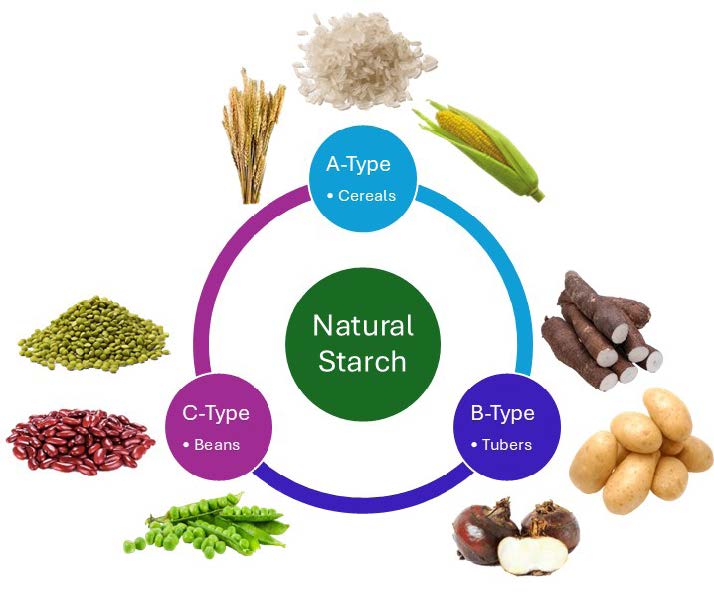
Starch is a widely available biopolymer present in cereal grains, roots, tubers, fruits, and leaves. Under high temperature and pressure, it can be extruded into a thermoplastic melt with the addition of low levels of plasticizers, such as water or glycerol. This thermoplastic starch is renewable, flexible, and suitable for producing polymer films (Mousavi et al., 2021). In the paper industry, starch is the most applied additive for surface treatment at the size press, primarily due to its cost-effectiveness and its substantial contribution to the bonding and stiffness of the paper sheet (Bildik Dal; Hubbe, 2020; Shoukat et al., 2025). Figure 1 presents the starch source diversity.
Chemically, starch consists of two main polysaccharides: amylose, a highly linear structure composed of α-(1→4) linked glucopyranosyl units, and amylopectin, a highly branched molecule containing α-D-(1→4) linked glucopyranosyl units with α-D-(1→6) branch points (Takeda; Shitaozono; Hizukuri, 1990; Tharanathan, 2005). Despite its promising characteristics, native starch exhibits limited industrial applicability due to its insolubility in cold water and high hydrophilicity (Shoukat et al., 2025). Consequently, various starch modifications have been developed to enhance its functionality, broadening its application in the paper and packaging industry as a sustainable and high-performance material. The polyhydroxy nature of starch makes it easy to modify its structure and functional properties using enzymatic or chemical methods (Cheng et al., 2021; Linan et al., 2024).
Starch and starch-based composites/hybrids have been extensively explored in the paper industry due to their ability to form hydrogen bonds with cellulosic fibers, thereby enhancing inter-fiber bonding and improving mechanical properties. Polyelectrolyte complexes (PECs), particularly those anchored onto cellulosic fibers or mineral fillers, significantly contribute to the development of fiber networks by promoting favorable electrostatic interactions (Fares; Schlenoff, 2017). The stoichiometric mixing of oppositely charged polyelectrolyte solutions can result in structured complexes, where polymer chains are ionically crosslinked and stabilized by additional macromolecular interactions (e.g., hydrogen bonding, hydrophobic, or van der Waals forces). The densely packed, interpenetrated network formed in these PECs from binary oppositely charged starches can serve as effective barrier coating or films for food and beverage packaging. For instance, layer-by-layer starch-based polyelectrolyte films have demonstrated high-performance liquid barrier properties, effectively preventing the penetration of water, oxygen, grease, and oil (Meka et al., 2017).
Recent studies illustrate both the potential and the remaining challenges of starch-based coatings. Khaksaar et al. (2023) demonstrated that acorn starch improved pulp drainage, retention, and mechanical strength more effectively than commercial cationic corn starch, highlighting the potential of alternative starch sources as sustainable papermaking additives (Khaksaar; Jalali Torshizi; Hamzeh, 2023). Zeng et al. (2021) showed that oxidized starch films incorporating licorice root extracts exhibited improved mechanical, water barrier, and antibacterial properties, suggesting that bioactive starch composites represent a promising direction for active paper packaging (Zeng et al., 2021). Taken together, these findings indicate that while native starch alone is insufficient as a barrier coating, modified and composite starch systems can deliver competitive performance, provided that moisture sensitivity is addressed through appropriate formulation strategies.
Oxidized starch, due to its enhanced solubility, is particularly suited for coatings and surface sizing. Its superior film-forming ability contributes to a smoother and more uniform surface (Shoukat et al., 2025). Furthermore, starch represents a sustainable alternative to conventional plastics, with broad applications across multiple industries. Various starch sources, including rice, corn, cassava, and potato, have been utilized in the synthesis of biodegradable polymers, offering environmental advantages due to their natural degradation without toxic residues (Tan et al., 2015).
3.3.2. Chitosan
Chitosan, derived from chitin through alkaline hydrolysis, is a linear polysaccharide composed of glucosamine units with β-(1→4) linkages, whose primary amine (NH₂) and hydroxyl (OH) functional groups enable chemical modifications without disrupting polymerization (Kumari; Rath, 2014; Peniche; Argüelles-Monal; Goycoolea, 2008). Its degradation products are non-toxic, non-immunogenic, and non-carcinogenic, making it particularly attractive for food packaging applications (Muzzarelli, 1997). The hydroxyl and protonated amino groups in chitosan interact with the negatively charged cellulose in paper through hydrogen bonding and electrostatic interactions, promoting strong adhesion of chitosan coatings to paper substrates and enhancing mechanical strength, surface smoothness, and gas barrier properties (Song et al., 2018; Tan et al., 2023).
Despite these advantages, the inherent hydrophilicity of chitosan remains its primary limitation as a barrier coating for paper packaging, resulting in reduced water vapor resistance under humid conditions (Gällstedt; Hedenqvist, 2006; Ureña et al., 2023). Several strategies have been explored to overcome this challenge. Chemical modifications such as carboxymethylation and cross-linking with hydrophobic agents have demonstrated improved moisture resistance while preserving chitosan’s film-forming ability (Gal; Rahmaninia; Hubbe, 2023). Blending chitosan with hydrophobic components, such as waxes or lipid-based materials, and the use of multilayer coating architectures have also proven effective in reducing water vapor transmission rates (Tan et al., 2023). Additionally, the incorporation of nanoclay or other nanofillers into chitosan matrices has been shown to enhance barrier performance through the formation of tortuous diffusion paths that restrict moisture and gas permeation (Wang; Jing, 2017).
Roy et al. (2024) demonstrated that carboxymethylated chitosan (CMCh) increased both dry and wet strength of paper when added to refined and unrefined pulps at concentrations of 1.0-2.0%, with the largest gains attributed to higher applied charge (Roy et al., 2024). These findings highlight that chemical modification not only addresses moisture sensitivity but also expands the functional versatility of chitosan as both a coating and a strength additive in paper systems. Taken together, the evidence suggests that chitosan’s performance as a barrier coating is highly dependent on the modification strategy adopted, and that hybrid approaches combining chemical modification with multilayer design represent the most promising path toward industrially viable chitosan-based coatings for paper packaging.
The practical potential of these strategies is illustrated by recent studies focusing on chitosan-based composite coatings for paper substrates. Tan et al. (2023) developed a recyclable chitosan coating cross-linked with cardanol glycidyl ether that demonstrated excellent water and oil resistance, UV-shielding capacity, and gas barrier performance when applied to paperboard, while remaining compatible with repulping processes, a critical requirement for maintaining paper recyclability (Tan et al., 2023). Similarly, Zhu et al. (2023) reported that cross-linking chitosan with tannin extract-based epoxy resin produced coatings with satisfactory resistance to oil, gas, and UV radiation at competitive cost, further confirming that hybrid chitosan systems can deliver multifunctional barrier performance on paper substrates (Zhu et al., 2023). These results reinforce that, while neat chitosan coatings remain constrained by moisture sensitivity, chemically modified and composite chitosan systems are progressively closing the gap between laboratory performance and the functional requirements of industrial paper packaging.
3.3.3. Cellulose derivatives
Cellulose is a linear biopolymer composed of 7,000-15,000 D-glucopyranose units linked by β-(1→4)-glycosidic bonds (Amenorfe et al., 2022; Li et al., 2024; Sampath et al., 2017). The cellulose chains aggregate into microfibrils through van der Waals interactions and hydrogen bonding, which subsequently form cellulose fibers (Ching et al., 2015; Rubentheren et al., 2016). The degree of polymerization typically ranges from 1,510 to 5,500, resulting in both crystalline and amorphous regions within the structure. This arrangement gives cellulose properties including flexibility, thermal stability and mechanical strength (Li et al., 2024). While the amorphous regions are less ordered and constitute a minor proportion of the material, crystalline cellulose exhibits higher resistance to enzymatic degradation due to its tightly packed structure (Sampath et al., 2017).
Owing to these properties and its being the most abundant biopolymer on earth, cellulose, particularly its derivatives, has attracted growing research interest, fostering the development of novel applications beyond the conventional pulp and paper industry. Among the cellulose derivatives are cellulose acetate (CA), carboxymethyl cellulose (CMC), methyl cellulose (MC), ethyl cellulose (EC), microfibrillated cellulose (MFC), nanofibrillated cellulose (NFC), cellulose nanocrystals (CNCs), and bacterial nanocellulose (BNC) (Li et al., 2024; Liu et al., 2021).
CA films in the presence of plasticizers, exhibit increased thickness, reduced water vapor transmission rate, and excellent optical properties. These characteristics result in a bio-based packaging material with improved oxygen and water resistance performance, making it a potential candidate for food packaging applications (Gonçalves et al., 2019). Teixeira et al. (2021) investigated the use of glycerol and triethyl citrate as plasticizers in CA films. The incorporation of glycerol resulted in films with enhanced light protection, effectively reducing light transmission. In contrast, triethyl citrate-plasticized films exhibited favorable mechanical properties, including reduced tensile strength and increased elongation at break, while also showing a lower water vapor barrier compared to glycerol-based films (Teixeira et al., 2021).
In the paper industry, CMC is often used as one of the compounds to produce barrier material, mainly for food packaging. He et al. (2021) developed a natural coating formulation of AgNPs immobilized with CMC and CNC aiming for the improvement of food packaging paper. Compared with uncoated paper, CMC/CNC@AgNPs coated paper showed improved tensile strength, WVP, air permeability properties, evidencing the good barrier material produced. In addition, good results of antibacterial activities were found (He et al., 2021).
Jhang et al. (2023) investigated the influence of functional groups on the crystallinity and compatibility of the polymer matrix by comparing three types of modified microcrystalline methylcellulose with varying degrees of hydroxypropyl substitution. The goal was to reduce intermolecular hydrogen bonding in the modified cellulose and enhance its compatibility with thermoplastic polyurethane, which was selected for its superior mechanical properties and broad industrial applications. Despite the low filler content, the composite showed significant improvements in toughness, elongation at break and tensile strength (Jhang et al., 2023).
Zhou et al. (2024) obtained high-purity rice straw cellulose, aiming to optimize its conversion into EC, and assess the biodegradability and mechanical properties of EC films blended with ethanol as a green solvent. The mixture with ethanol formed a film with a smooth surface, tensile strength and biodegradability, showing potential as a substitute for plastics (Zhou et al., 2024).
Many studies aim to investigate the use of MFC as reinforcement. Li et al. (2021) modified the surface of MFC using a water-based transesterification reaction with vinyl laurate, followed by oven drying. The modified MFC was then used as a reinforcing filler in PLA biocomposites. They concluded that the surface treatment reduces the hydrophilicity of the MFC, making it more compatible with the PLA matrix. The modified MFC significantly increases the resistance of PLA composites, provided by the better dispersion and interaction of the MFC within the PLA (Li et al., 2021).
Taken together, cellulose derivatives offer a broad and tunable platform for barrier coating development. However, their performance remains highly dependent on the degree of substitution, choice of plasticizer or compatibilizer, and coating architecture. While nanocellulose-based systems show the greatest potential for high-performance barriers, their large-scale production and processing remain technically challenging and cost-intensive, limiting their current industrial applicability.
3.3.4. Polylactic acid
Polylactic acid (PLA) is a biodegradable, bio-based thermoplastic polyester synthesized from lactic acid obtained through fermentation of renewable feedstocks such as corn starch, sugarcane, and agricultural residues (Nath et al., 2023; Zhang et al., 2021). Among bio-based thermoplastic polymers, PLA stands out as the most industrially mature alternative to conventional polyethylene (PE) coatings for paper and paperboard, primarily due to its processability via extrusion coating, that is the dominant industrial technique for applying barrier layers to paper substrates (Basak; Dangate; Samy, 2024b; Kunam et al., 2024).
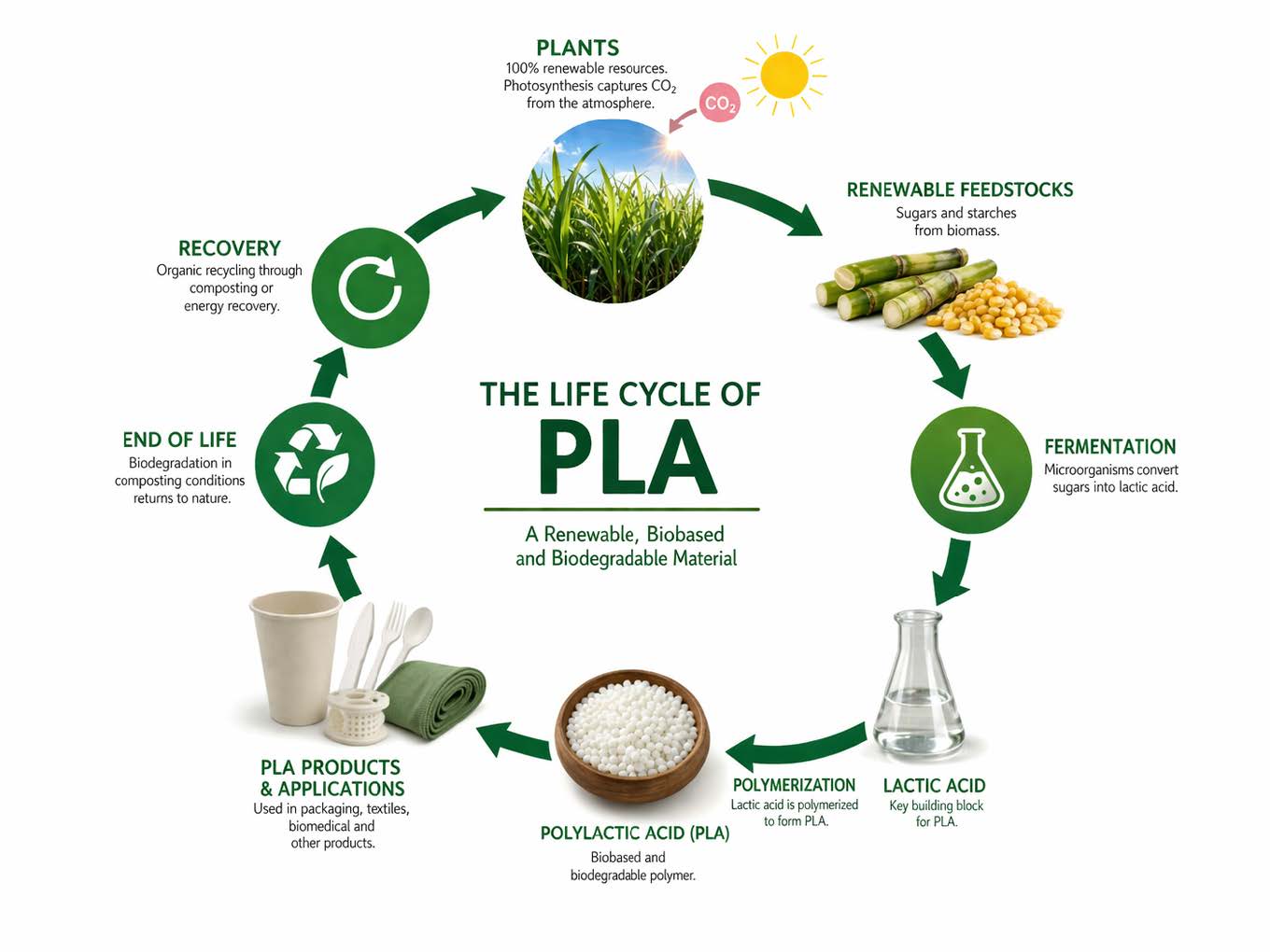
The production of PLA begins with lactic acid, a chiral molecule existing in two enantiomeric forms: L-lactic acid and D-lactic acid. These isomers, or their cyclic dimers, lactides, are the building blocks for PLA synthesis (Nath et al., 2023). Lactic acid is primarily produced through the fermentation of various carbohydrates derived from renewable resources. These renewable feedstocks include a wide range of agricultural products and byproducts such as corn starch, sugarcane, beet juice, molasses, agricultural waste, and even sulfite liquors from the pulp and paper industry (Basak; Dangate; Samy, 2024a; Farah; Anderson; Langer, 2016; Kunam et al., 2024). Figure 2 outline the PLA life cycle.
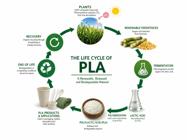
Schematic representation of the life cycle of polylactic acid (PLA), illustrating its production from renewable feedstocks, conversion to lactic acid via fermentation, polymerization into PLA, application in various products, and end-of-life pathways.
PLA’s mechanical properties include reasonable tensile strength and stiffness, although its inherent brittleness and relatively low toughness limit its suitability for applications requiring high impact resistance or flexibility (Farah; Anderson; Langer, 2016). These limitations can be addressed through blending with other polymers, addition of plasticizers, or incorporation of reinforcing agents such as cellulose nanofibers, which improve toughness and overall processability (Guo et al., 2025; Li et al., 2021). However, the barrier properties of PLA represent its most critical limitation in paper coating applications, because of its permeability to water vapor and oxygen, that is significantly higher than conventional PE coatings. It is directly linked to crystallinity, with more crystalline PLA exhibiting lower permeability (Farah; Anderson; Langer, 2016; Kunam et al., 2024).
In the context of paper packaging, PLA coatings improve water and oil resistance of paper substrates, enhancing their suitability for food contact applications (Kunam et al., 2024). Peng et al. (2024) demonstrated that Pickering emulsion-based coatings incorporating PLA significantly improved the hydrophobicity and oil resistance of paper, with KIT test values reaching 10 at 8% PLA content, while maintaining adequate tensile properties, illustrating the potential of PLA-based composite systems to deliver competitive barrier performance when combined with emulsion coating strategies (Peng et al., 2024). Despite these advances, PLA’s end-of-life management remains a significant concern, as its biodegradation requires industrial composting conditions that are not universally available, limiting the environmental benefits of PLA-coated paper in regions lacking adequate composting infrastructure (Brdlík et al., 2021).
Taken together, PLA represents the most technologically ready bio-based coating option for paper packaging, but its adoption at scale depends on overcoming both performance limitations, particularly water vapor and oxygen barrier, and end-of-life infrastructure gaps. Strategies combining PLA with nanocellulose, nanoclay, or other barrier-enhancing fillers represent the most promising direction for closing the performance gap with conventional synthetic coatings.
3.3.5. Natural waxes
Natural waxes are complex mixtures of hydrocarbons, fatty acids, esters and other lipid components with diverse applications, including coatings for paper and food packaging. Their chemical composition and physicochemical properties make them excellent candidates for conferring hydrophobicity and reducing permeability (De Freitas et al., 2019; Hosseini; Mousavi; McClements, 2023). Waxes derived from plants and animals (natural and renewable) are insoluble in water, but their solubility in organic solvents varies with temperature. Among the most studied natural waxes are carnauba wax, candelilla wax, beeswax, sugarcane wax, Japan wax, jojoba wax, bayberry wax, and rice bran wax (Tijani et al., 2024). Carnauba wax and beeswax were classified for FDA as GRAS (generally recognized as safe; 21CRF184.1978, 21CFR184.1973) (Janjarasskul; Krochta, 2010).
Beeswax (BW) is a natural secretion from honeybees. Chemically, BW is a complex mixture containing around 300 constituents, including hydrocarbons, fatty acid esters, diesters, free acids, and fatty alcohols. Unhydrolyzed BW mainly consists of alkyl esters (72%), free fatty acids (14%), and hydrocarbons (11%). Upon hydrolysis, it yields primary alcohols, hydrocarbons, acids, diols, and hydroxy acids, with fatty acid monoesters (C30-C32) being predominant. The composition varies slightly depending on bee species, location, and diet (Hosseini; Mousavi; McClements, 2023).
Carnauba wax (CW) is a complex mixture of free fatty acids, long-chain alcohols and esters, composed mainly of carbon chains. Esters dominate its composition, making up more than 80%, with aliphatic esters and cinnamic acid diesters being the most abundant. Most esters are ω-hydroxy acids (C26) and monoalcohols (C32), while the rest include monocarboxylic acids (C28) and α,ω-diols (C30). Its structure is mainly made up of cinnamic acid diesters linked to various alcohols and hydroxycarboxylic acids (Susmita Devi et al., 2022).
The ester groups in waxes give them hydrophobic properties, making them effective as moisture barriers (Tijani et al., 2024). When applied to paper substrates, natural wax coatings form thin, uniform layers that reduce porosity and significantly improve water and oil barrier properties. Jahangiri et al. (2024) evaluated several natural waxes as single-layer coatings on paper and demonstrated that beeswax produced the best barrier performance, attributed to its higher coating weight and degree of crystallinity, while also improving mechanical strength compared to uncoated paper (Jahangiri; Mohanty; Misra, 2024). These results highlight the direct relationship between wax crystallinity and barrier efficiency in paper coating systems.
While natural waxes offer clear advantages in terms of renewability and barrier performance, their application as paper coatings presents practical challenges, including limited thermal stability at processing temperatures, tendency to crack under mechanical stress, and difficulties in achieving uniform coverage at industrial scale (Pashova, 2023; Tijani et al., 2024). Blending natural waxes with other biopolymers or emulsifying them prior to application has emerged as an effective strategy to improve coating uniformity and processability. In this context, Liu et al. (2022) evaluated microcrystalline wax emulsions (a petroleum-derived wax) demonstrated that optimized emulsifier proportions significantly improved oil, water, and water vapor barrier properties of coated paper, representing a viable model for the development of equivalent emulsion systems based on natural waxes as more sustainable alternatives to fluorinated oil repellents (Liu et al., 2022).
Considering these findings together, natural waxes represent a promising but underexplored class of bio-based coating materials for paper packaging. Their performance is strongly influenced by crystallinity, coating weight, and application method, and their full industrial potential is likely to be realized through formulation strategies that combine wax emulsions with complementary biopolymers to achieve more robust and processable coating systems.
3.3.6. Lignin
Lignin is the second most abundant biopolymer on Earth, accounting for up to one-third of plant cell wall material, where it provides structural rigidity and protection against microbial attack (Argyropoulos et al., 2023). As a byproduct of the pulp and paper industry, particularly of the kraft process, lignin is available in large quantities at relatively low cost, making it an attractive candidate for valorization as a bio-based coating material (Dessbesell et al., 2020). However, the structural heterogeneity and limited reactivity of technical lignins (resulting from the harsh chemical conditions of pulping) represent significant challenges for their direct application as coating materials, generally necessitating chemical modification to improve processability and performance (Argyropoulos et al., 2023).
Several modification strategies have been explored to enhance lignin’s suitability as a barrier coating for paper packaging. Esterification with fatty acids such as palmitic and lauric acids has proven particularly effective, promoting the formation of continuous, hydrophobic films on paperboard that significantly reduce water vapor and oxygen permeability while increasing surface hydrophobicity, as evidenced by higher water contact angles (Hult et al., 2013). Hydroxypropyl modification under mild conditions, as demonstrated by Wang et al. (2024), converts phenolic hydroxyl groups to more reactive aliphatic hydroxyl groups, improving lignin’s reactivity for polymerization with isocyanates and resulting in coatings with enhanced moisture resistance and barrier properties (Wang et al., 2024). Additionally, the incorporation of lignin into polymer matrices such as PBAT has been shown to enhance water resistance, thermal stability, and mechanical performance of cellulosic substrates, as illustrated by the data in Table 1, where PBAT/esterified lignin blends achieved KIT test values of up to 5 and Cobb values as low as 16 g/m² (Shorey; Mekonnen, 2022).
More recently, kraft lignin-based polyurethane coatings have demonstrated promising results specifically for paper packaging substrates. Figueiredo et al. (2026) developed kraft lignin-based polyurethane coatings applied to recycled linerboard, achieving improved mechanical properties, water resistance, and thermal stability while maintaining biodegradability, highlighting the potential of lignin valorization within a circular bioeconomy framework for the paper packaging sector (Figueiredo et al., 2026a, 2026b).
Overall, lignin represents a high-potential but technically demanding bio-based coating material. Its performance is strongly dependent on the type of technical lignin used, the modification strategy adopted, and its compatibility with the paper substrate. While esterification and hydroxypropylation have shown the most consistent results in improving barrier performance, large-scale application remains constrained by variability in lignin composition across sources and processes, underscoring the need for advances in structural standardization and quality control.
3.3.7. Tannin
Tannins are the fourth most abundant polymer in plant vascular tissue, present in high concentrations particularly in tree bark, where they typically account for 15-30% of dried material (Bule et al., 2020; Cheng, 2021). As polyphenolic compounds, tannins exhibit a range of functional properties relevant to packaging applications, including antioxidant activity, UV absorption, protein binding, and antimicrobial behavior, making them attractive multifunctional additives for bio-based coating systems (Melone; Saladino; Crestini, 2013; Vera et al., 2023).
Tannins are broadly classified into two types (hydrolysable and condensed) each with distinct chemical structures and reactivity profiles that influence their performance as coating components (Nonaka, 1989; Pizzi, 2008). Commercially, tannins are extracted primarily from wattle, quebracho, and various tree barks, using solvents such as hot water, ethanol, and acetone, with extraction conditions significantly affecting the molecular weight distribution and functional properties of the resulting material (Das et al., 2020; Melone; Saladino; Crestini, 2013).
When applied as coatings or incorporated into biopolymer matrices, tannins have demonstrated the ability to enhance barrier performance, mechanical properties, and active functionality of paper packaging systems. Zhu et al. (2023) developed a cross-linked coating combining chitosan with a tannin extract-based epoxy resin, demonstrating resistance to oil, gas, and UV radiation when applied to paper, while remaining biodegradable and compatible with repulping processes, a critical advantage for maintaining paper recyclability (Zhu et al., 2023). The low cost of tannin extracts further contributed to the economic viability of this system, reinforcing its potential for industrial scaling.
Ismayati et al. (2024) developed active packaging from polyvinyl alcohol (PVA)/tannin-based bioplastics, featuring antioxidant activity and UV protection. The study explored three distinct synthesis methods, varying the order and temperature of tannin addition, along with different tannin concentrations. Heating during the bioplastic synthesis resulted in lower antioxidant activity and greater rigidity. Therefore, the method without heating was chosen to evaluate different tannin concentrations. Increasing the tannin content resulted in greater antioxidant activity, more elastic properties and greater protection against UV radiation (Ismayati et al., 2024).
As a whole, tannins represent a versatile and cost-effective bio-based component for paper packaging coatings, particularly when combined with other biopolymers such as chitosan or PVA to form hybrid systems with multifunctional barrier and active properties. Their natural abundance, low extraction cost, and compatibility with repulping processes position them as promising candidates for sustainable and recyclable paper coating systems. However, the variability in tannin composition across plant sources and extraction methods remains a challenge for standardization and consistent industrial performance.
3.3.8. Comparative analysis of biopolymer-based coatings
While the previous sections discussed each biopolymer individually, a direct comparison between these materials is essential to better understand their relative performance, limitations, and industrial potential as paper coatings. In this context, Table 2 provides a comparative overview of the main biopolymer systems, considering their barrier performance, technological readiness, key limitations, and the most promising strategies to overcome current challenges.
The comparison highlights that no single biopolymer simultaneously fulfills all the functional requirements for paper-based packaging. Polysaccharide-based coatings, such as starch and chitosan, exhibit excellent oxygen barrier properties due to their dense hydrogen-bonded networks, but their intrinsic hydrophilicity limits their performance as water vapor barriers. In contrast, lipid-based materials, including natural waxes, provide outstanding moisture resistance but lack sufficient gas barrier properties and present processing challenges. Thermoplastic polymers such as PLA offer advantages in terms of industrial processability, particularly via extrusion coating, but still fall short in barrier performance compared to conventional synthetic polymers. More complex systems, such as lignin- and tannin-based coatings, show promising multifunctionality but remain limited by structural variability and lower technological maturity.
4. CONCLUSIONS
The use of renewable and bio-based resources in the packaging sector is rapidly advancing, with biopolymer coatings emerging as promising alternatives to conventional fossil-based materials. Polysaccharides, proteins, and bio-based polyesters have demonstrated significant potential to enhance the barrier and mechanical performance of paper-based packaging while improving its environmental profile. However, their widespread implementation remains constrained by intrinsic limitations, particularly their sensitivity to moisture, variability in barrier performance, and trade-offs between functionality and processability.
From an industrial perspective, important challenges persist regarding scalability, cost competitiveness, and compatibility with existing converting technologies. While thermoplastic biopolymers such as PLA can be processed via extrusion coating, many natural polymers still rely on dispersion- or solvent-based techniques, which may limit large-scale application and increase processing costs. In this context, strategies such as chemical modification, blending, and multilayer design are essential to overcome performance limitations and enable more robust and industrially viable coating systems.
Among the reviewed materials, starch- and cellulose-based coatings present the most advanced technological readiness, benefiting from abundant raw material supply and established processing routes, though their barrier performance under high humidity conditions remains a critical limitation that requires addressing through modification or hybrid formulation strategies. PLA-based extrusion coatings represent the most mature alternative to conventional PE coatings in terms of processability and barrier performance. Chitosan and lignin-based systems show considerable promise, particularly when combined with hydrophobic agents or applied in multilayer architectures, but require further development to achieve consistent industrial performance. Natural waxes and tannins, while less technologically mature, offer compelling advantages in terms of natural abundance, low cost, and multifunctional properties, and are increasingly demonstrating competitive barrier performance when formulated as emulsions or incorporated into hybrid coating systems.
The evidence reviewed suggests that no single biopolymer is likely to emerge as a universal solution for paper packaging coating. Rather, hybrid and multilayer systems that combine the complementary strengths of different bio-based materials represent the most promising path toward coating systems that can simultaneously meet functional, processability, and sustainability requirements.
Future developments should prioritize bridging the gap between laboratory-scale performance and industrial feasibility, with particular emphasis on life cycle assessment to ensure that bio-based coatings deliver genuine environmental benefits across their full value chain. Standardization of testing protocols and material characterization methods will also be essential to enable more robust cross-study comparisons and accelerate the transition of promising laboratory findings toward commercial implementation in next-generation paper packaging systems.
DATA AVAILABILITY
All data that support the findings of this study are included within the article.
REFERENCES
-
Reichert CL, Bugnicourt E, Coltelli M-B, Cinelli P, Lazzeri A, Canesi I, et al. Bio-Based Packaging: Materials, Modifications, Industrial Applications and Sustainability. Polymers 2020;12:1558. https://doi.org/10.3390/polym12071558.
» https://doi.org/10.3390/polym12071558 -
Vera M, Mella C, García Y, Jiménez VA, Urbano BF. Recent advances in tannin-containing food biopackaging. Trends Food Sci Technol 2023;133:28-36. https://doi.org/10.1016/j.tifs.2023.01.014.
» https://doi.org/10.1016/j.tifs.2023.01.014 -
Hai LV, Bandi R, Dadigala R, Han S-Y, Cho S-W, Yang G-U, et al. Hydrophobic, ultraviolet radiation-shielding, and antioxidant functionalities of TEMPO-oxidized cellulose nanofibril film coated with modified lignin nanoparticles. Int J Biol Macromol 2024;277:134464. https://doi.org/10.1016/j.ijbiomac.2024.134464.
» https://doi.org/10.1016/j.ijbiomac.2024.134464 -
Asgher M, Qamar SA, Bilal M, Iqbal HMN. Bio-based active food packaging materials: Sustainable alternative to conventional petrochemical-based packaging materials. Food Res Int 2020;137:109625. https://doi.org/10.1016/j.foodres.2020.109625.
» https://doi.org/10.1016/j.foodres.2020.109625 -
Hadidi M, Jafarzadeh S, Forough M, Garavand F, Alizadeh S, Salehabadi A, et al. Plant protein-based food packaging films; recent advances in fabrication, characterization, and applications. Trends Food Sci Technol 2022;120:154-73. https://doi.org/10.1016/j.tifs.2022.01.013.
» https://doi.org/10.1016/j.tifs.2022.01.013 -
Mangaraj S, Yadav A, Bal LM, Dash SK, Mahanti NK. Application of Biodegradable Polymers in Food Packaging Industry: A Comprehensive Review. J Packag Technol Res 2019;3:77-96. https://doi.org/10.1007/s41783-018-0049-y.
» https://doi.org/10.1007/s41783-018-0049-y -
Dai L, Xi X, Li X, Li W, Du Y, Lv Y, et al. Self-assembled all-polysaccharide hydrogel film for versatile paper-based food packaging. Carbohydr Polym 2021;271:118425. https://doi.org/10.1016/j.carbpol.2021.118425.
» https://doi.org/10.1016/j.carbpol.2021.118425 -
Nowacka M, Rybak K, Wiktor A, Mika A, Boruszewski P, Woch J, et al. The quality and safety of food contact materials - paper and cardboard coated with paraffin emulsion. Food Control 2018;93:183-90. https://doi.org/10.1016/j.foodcont.2018.06.011.
» https://doi.org/10.1016/j.foodcont.2018.06.011 -
Peng Y, Guo J, Gao Y, Li X, Ni M, Shen X, et al. Facile preparation of Pickering emulsion-based coatings for hydrophobic, oil-resistant, biodegradable green paper-based packaging. Food Hydrocoll 2024;149:109624. https://doi.org/10.1016/j.foodhyd.2023.109624.
» https://doi.org/10.1016/j.foodhyd.2023.109624 -
Ahuja A, Samyn P, Rastogi VK. Paper bottles: potential to replace conventional packaging for liquid products. Biomass Convers Biorefinery 2022. https://doi.org/10.1007/s13399-022-03642-3.
» https://doi.org/10.1007/s13399-022-03642-3 -
Jahangiri F, Mohanty AK, Misra M. Sustainable biodegradable coatings for food packaging: challenges and opportunities. Green Chem 2024;26:4934-74. https://doi.org/10.1039/D3GC02647G.
» https://doi.org/10.1039/D3GC02647G -
Despond S, Espuche E, Domard A. Water sorption and permeation in chitosan films: Relation between gas permeability and relative humidity. J Polym Sci Part B Polym Phys 2001;39:3114-27. https://doi.org/10.1002/polb.10064.
» https://doi.org/10.1002/polb.10064 -
Ji Y, Xu Q, Jin L, Fu Y. Cellulosic paper with high antioxidative and barrier properties obtained through incorporation of tannin into kraft pulp fibers. Int J Biol Macromol 2020;162:678-84. https://doi.org/10.1016/j.ijbiomac.2020.06.101.
» https://doi.org/10.1016/j.ijbiomac.2020.06.101 -
Zhang Z, Britt IJ, Tung MA. Permeation of oxygen and water vapor through EVOH films as influenced by relative humidity. J Appl Polym Sci 2001;82:1866-72. https://doi.org/10.1002/app.2030.
» https://doi.org/10.1002/app.2030 -
Jafarzadeh S, Jafari SM. Impact of metal nanoparticles on the mechanical, barrier, optical and thermal properties of biodegradable food packaging materials. Crit Rev Food Sci Nutr 2021;61:2640-58. https://doi.org/10.1080/10408398.2020.1783200.
» https://doi.org/10.1080/10408398.2020.1783200 -
Moeini A, Germann N, Malinconico M, Santagata G. Formulation of secondary compounds as additives of biopolymer-based food packaging: A review. Trends Food Sci Technol 2021;114:342-54. https://doi.org/10.1016/j.tifs.2021.05.040.
» https://doi.org/10.1016/j.tifs.2021.05.040 -
Liu Y, Ahmed S, Sameen DE, Wang Y, Lu R, Dai J, et al. A review of cellulose and its derivatives in biopolymer-based for food packaging application. Trends Food Sci Technol 2021;112:532-46. https://doi.org/10.1016/j.tifs.2021.04.016.
» https://doi.org/10.1016/j.tifs.2021.04.016 -
Guillaume C, Pinte J, Gontard N, Gastaldi E. Wheat gluten-coated papers for bio-based food packaging: Structure, surface and transfer properties. Food Res Int 2010;43:1395-401. https://doi.org/10.1016/j.foodres.2010.04.014.
» https://doi.org/10.1016/j.foodres.2010.04.014 -
Li H, Yang J, Li P, Lan T, Peng L. A facile method for preparation superhydrophobic paper with enhanced physical strength and moisture-proofing property. Carbohydr Polym 2017;160:9-17. https://doi.org/10.1016/j.carbpol.2016.12.018.
» https://doi.org/10.1016/j.carbpol.2016.12.018 -
Li H, Qi Y, Zhao Y, Chi J, Cheng S. Starch and its derivatives for paper coatings: A review. Prog Org Coat 2019;135:213-27. https://doi.org/10.1016/j.porgcoat.2019.05.015.
» https://doi.org/10.1016/j.porgcoat.2019.05.015 -
Wang S, Jing Y. Study on the barrier properties of glycerol to chitosan coating layer. Mater Lett 2017;209:345-8. https://doi.org/10.1016/j.matlet.2017.08.040.
» https://doi.org/10.1016/j.matlet.2017.08.040 -
Xie H, Zhang H, Liu X, Tian S, Liu Y, Fu S. Design and Preparation of Multiple Function-Integrated Lignin/Tannin/ZnONP Composite Coatings for Paper-Based Green Packaging. Biomacromolecules 2021;22:3251-63. https://doi.org/10.1021/acs.biomac.1c00340.
» https://doi.org/10.1021/acs.biomac.1c00340 -
Rastogi VK, Samyn P. Bio-Based Coatings for Paper Applications. Coatings 2015;5:887-930. https://doi.org/10.3390/coatings5040887.
» https://doi.org/10.3390/coatings5040887 -
Raheem D. APPLICATION OF PLASTICS AND PAPER AS FOOD PACKAGING MATERIALS - AN OVERVIEW. Emir J Food Agric 2013:177-88. https://doi.org/10.9755/ejfa.v25i3.11509.
» https://doi.org/10.9755/ejfa.v25i3.11509 -
Basak S, Dangate MS, Samy S. Oil- and water-resistant paper coatings: A review. Prog Org Coat 2024;186:107938. https://doi.org/10.1016/j.porgcoat.2023.107938.
» https://doi.org/10.1016/j.porgcoat.2023.107938 -
Nath PC, Sharma R, Debnath S, Sharma M, Inbaraj BS, Dikkala PK, et al. Recent trends in polysaccharide-based biodegradable polymers for smart food packaging industry. Int J Biol Macromol 2023;253:127524. https://doi.org/10.1016/j.ijbiomac.2023.127524.
» https://doi.org/10.1016/j.ijbiomac.2023.127524 -
Cheng J, Gao R, Zhu Y, Lin Q. Applications of biodegradable materials in food packaging: A review. Alex Eng J 2024;91:70-83. https://doi.org/10.1016/j.aej.2024.01.080.
» https://doi.org/10.1016/j.aej.2024.01.080 -
Cheng H, Chen L, McClements DJ, Yang T, Zhang Z, Ren F, et al. Starch-based biodegradable packaging materials: A review of their preparation, characterization and diverse applications in the food industry. Trends Food Sci Technol 2021;114:70-82. https://doi.org/10.1016/j.tifs.2021.05.017.
» https://doi.org/10.1016/j.tifs.2021.05.017 -
Farah S, Anderson DG, Langer R. Physical and mechanical properties of PLA, and their functions in widespread applications - A comprehensive review. Adv Drug Deliv Rev 2016;107:367-92. https://doi.org/10.1016/j.addr.2016.06.012.
» https://doi.org/10.1016/j.addr.2016.06.012 -
Kunam PK, Ramakanth D, Akhila K, Gaikwad KK. Bio-based materials for barrier coatings on paper packaging. Biomass Convers Biorefinery 2024;14:12637-52. https://doi.org/10.1007/s13399-022-03241-2.
» https://doi.org/10.1007/s13399-022-03241-2 -
Tan J, Zhu Q, Li D, Huang N, Wang Z, Liu Z, et al. Recyclable, UV-shielding, and biodegradable chitosan-based cardanol glycidyl ether as excellent water and oil resistance as well as gas barrier coating for paper. Int J Biol Macromol 2023;227:1305-16. https://doi.org/10.1016/j.ijbiomac.2022.12.004.
» https://doi.org/10.1016/j.ijbiomac.2022.12.004 -
Gal MR, Rahmaninia M, Hubbe MA. A comprehensive review of chitosan applications in paper science and technologies. Carbohydr Polym 2023;309:120665. https://doi.org/10.1016/j.carbpol.2023.120665.
» https://doi.org/10.1016/j.carbpol.2023.120665 -
Brdlík P, Borůvka M, Běhálek L, Lenfeld P. Biodegradation of Poly(Lactic Acid) Biocomposites under Controlled Composting Conditions and Freshwater Biotope. Polymers 2021;13:594. https://doi.org/10.3390/polym13040594.
» https://doi.org/10.3390/polym13040594 -
Mousavi SN, Nazarnezhad N, Asadpour G, Ramamoorthy SK, Zamani A. Ultrafine Friction Grinding of Lignin for Development of Starch Biocomposite Films. Polymers 2021;13:2024. https://doi.org/10.3390/polym13122024.
» https://doi.org/10.3390/polym13122024 -
Bildik Dal AE, Hubbe MA. Hydrophobic copolymers added with starch at the size press of a paper machine: A review of findings and likely mechanisms. BioResources 2020;16:2138-80. https://doi.org/10.15376/biores.16.1.BildikDal.
» https://doi.org/10.15376/biores.16.1.BildikDal -
Shoukat R, Cappai M, Pilia L, Pia G. Rice Starch Chemistry, Functional Properties, and Industrial Applications: A Review. Polymers 2025;17:110. https://doi.org/10.3390/polym17010110.
» https://doi.org/10.3390/polym17010110 -
Takeda Y, Shitaozono T, Hizukuri S. Structures of sub-fractions of corn amylose. Carbohydr Res 1990;199:207-14. https://doi.org/10.1016/0008-6215(90)84262-S.
» https://doi.org/10.1016/0008-6215(90)84262-S -
Tharanathan RN. Starch - Value Addition by Modification. Crit Rev Food Sci Nutr 2005;45:371-84. https://doi.org/10.1080/10408390590967702.
» https://doi.org/10.1080/10408390590967702 -
Linan LZ, Fakhouri FM, Nogueira GF, Zoppe J, Velasco JI. Benefits of Incorporating Lignin into Starch-Based Films: A Brief Review. Polymers 2024;16:2285. https://doi.org/10.3390/polym16162285.
» https://doi.org/10.3390/polym16162285 -
Fares HM, Schlenoff JB. Diffusion of Sites versus Polymers in Polyelectrolyte Complexes and Multilayers. J Am Chem Soc 2017;139:14656-67. https://doi.org/10.1021/jacs.7b07905.
» https://doi.org/10.1021/jacs.7b07905 -
Meka VS, Sing MKG, Pichika MR, Nali SR, Kolapalli VRM, Kesharwani P. A comprehensive review on polyelectrolyte complexes. Drug Discov Today 2017;22:1697-706. https://doi.org/10.1016/j.drudis.2017.06.008.
» https://doi.org/10.1016/j.drudis.2017.06.008 -
Khaksaar AB, Jalali Torshizi H, Hamzeh Y. Valorization and Development of Acorn Starch as Sustainable and High-Performance Papermaking Additive for Improving Bagasse Pulp and Paper Properties. Waste Biomass Valorization 2023;14:937-47. https://doi.org/10.1007/s12649-022-01912-9.
» https://doi.org/10.1007/s12649-022-01912-9 -
Zeng F, Weng Z, Zheng H, Xu M, Liang X, Duan J. Preparation and characterization of active oxidized starch films containing licorice residue extracts and its potential against methicillin-resistant S. aureus Int J Biol Macromol 2021;187:858-66. https://doi.org/10.1016/j.ijbiomac.2021.07.179.
» https://doi.org/10.1016/j.ijbiomac.2021.07.179 -
Tan BK, Ching YC, Poh SC, Abdullah LC, Gan SN. A Review of Natural Fiber Reinforced Poly(Vinyl Alcohol) Based Composites: Application and Opportunity. Polymers 2015;7:2205-22. https://doi.org/10.3390/polym7111509.
» https://doi.org/10.3390/polym7111509 -
Peniche C, Argüelles-Monal W, Goycoolea FM. Chapter 25 - Chitin and Chitosan: Major Sources, Properties and Applications. In: Belgacem MN, Gandini A, editors. Monomers Polym. Compos. Renew. Resour., Amsterdam: Elsevier; 2008, p. 517-42. https://doi.org/10.1016/B978-0-08-045316-3.00025-9.
» https://doi.org/10.1016/B978-0-08-045316-3.00025-9 -
Kumari S, Rath PK. Extraction and Characterization of Chitin and Chitosan from (Labeo rohit) Fish Scales. Procedia Mater Sci 2014;6:482-9. https://doi.org/10.1016/j.mspro.2014.07.062.
» https://doi.org/10.1016/j.mspro.2014.07.062 -
Muzzarelli RAA. Human enzymatic activities related to the therapeutic administration of chitin derivatives. Cell Mol Life Sci CMLS 1997;53:131-40. https://doi.org/10.1007/PL00000584.
» https://doi.org/10.1007/PL00000584 -
Song Z, Li G, Guan F, Liu W. Application of Chitin/Chitosan and Their Derivatives in the Papermaking Industry. Polymers 2018;10:389. https://doi.org/10.3390/polym10040389.
» https://doi.org/10.3390/polym10040389 -
Gällstedt M, Hedenqvist MS. Packaging-related mechanical and barrier properties of pulp-fiber-chitosan sheets. Carbohydr Polym 2006;63:46-53. https://doi.org/10.1016/j.carbpol.2005.07.024.
» https://doi.org/10.1016/j.carbpol.2005.07.024 -
Ureña M, Phùng TT-T, Gerometta M, de Siqueira Oliveira L, Chanut J, Domenek S, et al. Potential of polysaccharides for food packaging applications. Part 1/2 : An experimental review of the functional properties of polysaccharide coatings. Food Hydrocoll 2023;144:108955. https://doi.org/10.1016/j.foodhyd.2023.108955.
» https://doi.org/10.1016/j.foodhyd.2023.108955 -
Roy S, Rahman MM, Ferdous T, Likhon MNA, Jahan MS. Preparation of chitosan derivative and its application in papermaking. Int J Biol Macromol 2024;256:128371. https://doi.org/10.1016/j.ijbiomac.2023.128371.
» https://doi.org/10.1016/j.ijbiomac.2023.128371 -
Zhu Q, Tan J, Li D, Zhang T, Liu Z, Cao Y. Cross-linked chitosan/tannin extract as a biodegradable and repulpable coating for paper with excellent oil-resistance, gas barrier and UV-shielding. Prog Org Coat 2023;176:107399. https://doi.org/10.1016/j.porgcoat.2022.107399.
» https://doi.org/10.1016/j.porgcoat.2022.107399 -
Amenorfe LP, Agorku ES, Sarpong F, Voegborlo RB. Innovative exploration of additive incorporated biopolymer-based composites. Sci Afr 2022;17:e01359. https://doi.org/10.1016/j.sciaf.2022.e01359.
» https://doi.org/10.1016/j.sciaf.2022.e01359 -
Li X, Wan C, Tao T, Chai H, Huang Q, Chai Y, et al. An overview of the development status and applications of cellulose-based functional materials. Cellulose 2024;31:61-99. https://doi.org/10.1007/s10570-023-05616-8.
» https://doi.org/10.1007/s10570-023-05616-8 -
Sampath UGTM, Ching YC, Chuah CH, Singh R, Lin P-C. Preparation and characterization of nanocellulose reinforced semi-interpenetrating polymer network of chitosan hydrogel. Cellulose 2017;24:2215-28. https://doi.org/10.1007/s10570-017-1251-8.
» https://doi.org/10.1007/s10570-017-1251-8 -
Ching YC, Rahman A, Ching KY, Sukiman NL, Cheng HC. Preparation and Characterization of Polyvinyl Alcohol-Based Composite Reinforced with Nanocellulose and Nanosilica. BioResources 2015;10:3364-77. https://doi.org/10.15376/biores.10.2.3364-3377.
» https://doi.org/10.15376/biores.10.2.3364-3377 -
Rubentheren V, Ward TA, Chee CY, Nair P, Salami E, Fearday C. Effects of heat treatment on chitosan nanocomposite film reinforced with nanocrystalline cellulose and tannic acid. Carbohydr Polym 2016;140:202-8. https://doi.org/10.1016/j.carbpol.2015.12.068.
» https://doi.org/10.1016/j.carbpol.2015.12.068 -
Gonçalves SM, dos Santos DC, Motta JFG, Santos RR dos, Chávez DWH, Melo NR de. Structure and functional properties of cellulose acetate films incorporated with glycerol. Carbohydr Polym 2019;209:190-7. https://doi.org/10.1016/j.carbpol.2019.01.031.
» https://doi.org/10.1016/j.carbpol.2019.01.031 -
Teixeira SC, Silva RRA, de Oliveira TV, Stringheta PC, Pinto MRMR, Soares N de FF. Glycerol and triethyl citrate plasticizer effects on molecular, thermal, mechanical, and barrier properties of cellulose acetate films. Food Biosci 2021;42:101202. https://doi.org/10.1016/j.fbio.2021.101202.
» https://doi.org/10.1016/j.fbio.2021.101202 -
He Y, Li H, Fei X, Peng L. Carboxymethyl cellulose/cellulose nanocrystals immobilized silver nanoparticles as an effective coating to improve barrier and antibacterial properties of paper for food packaging applications. Carbohydr Polym 2021;252:117156. https://doi.org/10.1016/j.carbpol.2020.117156.
» https://doi.org/10.1016/j.carbpol.2020.117156 -
Jhang S, Cho W, Lee SK, Yu AR, Lee JG, Jung K, et al. Functional group effect of chemically modified microcrystalline methyl cellulose on thermoplastic polyurethane composites. Cellulose 2023;30:6917-31. https://doi.org/10.1007/s10570-023-05335-0.
» https://doi.org/10.1007/s10570-023-05335-0 -
Zhou Y, Hu Y, Tan Z, Zhou T. Cellulose extraction from rice straw waste for biodegradable ethyl cellulose films preparation using green chemical technology. J Clean Prod 2024;439:140839. https://doi.org/10.1016/j.jclepro.2024.140839.
» https://doi.org/10.1016/j.jclepro.2024.140839 -
Li K, Mcgrady D, Zhao X, Ker D, Tekinalp H, He X, et al. Surface-modified and oven-dried microfibrillated cellulose reinforced biocomposites: Cellulose network enabled high performance. Carbohydr Polym 2021;256:117525. https://doi.org/10.1016/j.carbpol.2020.117525.
» https://doi.org/10.1016/j.carbpol.2020.117525 -
Zhang Q, Song M, Xu Y, Wang W, Wang Z, Zhang L. Bio-based polyesters: Recent progress and future prospects. Prog Polym Sci 2021;120:101430. https://doi.org/10.1016/j.progpolymsci.2021.101430.
» https://doi.org/10.1016/j.progpolymsci.2021.101430 -
Basak S, Dangate MS, Samy S. Oil- and water-resistant paper coatings: A review. Prog Org Coat 2024;186:107938. https://doi.org/10.1016/j.porgcoat.2023.107938.
» https://doi.org/10.1016/j.porgcoat.2023.107938 -
Guo M, Duan Y, Li Z, Liu R, Qin C, Li Q. Role of silane compatibilization on cellulose nanofiber reinforced poly (lactic acid) (PLA) composites with superior mechanical properties, thermal stability, and tunable degradation rates. Int J Biol Macromol 2025;297:139836. https://doi.org/10.1016/j.ijbiomac.2025.139836.
» https://doi.org/10.1016/j.ijbiomac.2025.139836 -
de Freitas CAS, de Sousa PHM, Soares DJ, da Silva JYG, Benjamin SR, Guedes MIF. Carnauba wax uses in food - A review. Food Chem 2019;291:38-48. https://doi.org/10.1016/j.foodchem.2019.03.133.
» https://doi.org/10.1016/j.foodchem.2019.03.133 -
Hosseini SF, Mousavi Z, McClements DJ. Beeswax: A review on the recent progress in the development of superhydrophobic films/coatings and their applications in fruits preservation. Food Chem 2023;424:136404. https://doi.org/10.1016/j.foodchem.2023.136404.
» https://doi.org/10.1016/j.foodchem.2023.136404 -
Tijani AT, Ayodele T, Liadi M, Clementson C, Hammed A. Review of bioactive wax emulsified films. J Appl Polym Sci 2024;141:e55718. https://doi.org/10.1002/app.55718.
» https://doi.org/10.1002/app.55718 -
Janjarasskul T, Krochta JM. Edible Packaging Materials. Annu Rev Food Sci Technol 2010;1:415-48. https://doi.org/10.1146/annurev.food.080708.100836.
» https://doi.org/10.1146/annurev.food.080708.100836 -
Susmita Devi L, Kalita S, Mukherjee A, Kumar S. Carnauba wax-based composite films and coatings: recent advancement in prolonging postharvest shelf-life of fruits and vegetables. Trends Food Sci Technol 2022;129:296-305. https://doi.org/10.1016/j.tifs.2022.09.019.
» https://doi.org/10.1016/j.tifs.2022.09.019 -
Pashova S. Application of Plant Waxes in Edible Coatings. Coatings 2023;13:911. https://doi.org/10.3390/coatings13050911.
» https://doi.org/10.3390/coatings13050911 -
Liu D, Duan Y, Wang S, Gong M, Dai H. Improvement of Oil and Water Barrier Properties of Food Packaging Paper by Coating with Microcrystalline Wax Emulsion. Polymers 2022;14:1786. https://doi.org/10.3390/polym14091786.
» https://doi.org/10.3390/polym14091786 -
Argyropoulos DDS, Crestini C, Dahlstrand C, Furusjö E, Gioia C, Jedvert K, et al. Kraft Lignin: A Valuable, Sustainable Resource, Opportunities and Challenges. ChemSusChem 2023;16:e202300492. https://doi.org/10.1002/cssc.202300492.
» https://doi.org/10.1002/cssc.202300492 -
Dessbesell L, Paleologou M, Leitch M, Pulkki R, Xu C (Charles). Global lignin supply overview and kraft lignin potential as an alternative for petroleum-based polymers. Renew Sustain Energy Rev 2020;123:109768. https://doi.org/10.1016/j.rser.2020.109768.
» https://doi.org/10.1016/j.rser.2020.109768 -
Hult E-L, Koivu K, Asikkala J, Ropponen J, Et. A. Esterified lignin coating as water vapor and oxygen barrier for fiber-based packaging. Hfsg 2013. https://doi.org/10.1515/hf-2012-0214.
» https://doi.org/10.1515/hf-2012-0214 -
Wang X, Gao K, Zhang X, Zhang Z, Jiang J. Mild condition lignin modification enabled high-performance anticorrosive polyurethane coating. Int J Biol Macromol 2024;280:135719. https://doi.org/10.1016/j.ijbiomac.2024.135719.
» https://doi.org/10.1016/j.ijbiomac.2024.135719 -
Shorey R, Mekonnen TH. Sustainable paper coating with enhanced barrier properties based on esterified lignin and PBAT blend. Int J Biol Macromol 2022;209:472-84. https://doi.org/10.1016/j.ijbiomac.2022.04.037.
» https://doi.org/10.1016/j.ijbiomac.2022.04.037 -
Figueiredo JC, Lelis RCC, Castro RN, Gomes FJB, Redmond EFA, Bujanovic BM. Kraft Lignin-Based Polyurethane with GVL: A Sustainable Coating Alternative for Recycled Linerboard. Polymers 2026;18:118. https://doi.org/10.3390/polym18010118.
» https://doi.org/10.3390/polym18010118 -
Figueiredo J de C, Gomes FJB, Redmond EFA, Bujanovic B, Lelis RCC, Santana MF, et al. Synthesis and Application of Kraft Lignin-Based Polyurethane Coatings for Functional Paper Packaging Materials. Polymers 2026;18:787. https://doi.org/10.3390/polym18070787.
» https://doi.org/10.3390/polym18070787 - Bule M, Khan F, Nisar M, Niaz K. Tannins (hydrolysable tannins, condensed tannins, phlorotannins, flavono-ellagitannins), 2020, p. 132-46.
-
Cheng K. Chapter 4 - Wood tannins: structure, production, and analysis. In: Cheng K, Hagiopol C, editors. Nat. Polyphenols Wood, Elsevier; 2021, p. 85-121. https://doi.org/10.1016/B978-0-12-822205-8.00009-8.
» https://doi.org/10.1016/B978-0-12-822205-8.00009-8 -
Melone F, Saladino R, Crestini C. Tannin Structural Elucidation and Quantitative 31P NMR Analysis. 2. Hydrolyzable Tannins and Proanthocyanidins. J Agric Food Chem 2013;61:9316-24. https://doi.org/10.1021/jf401664a.
» https://doi.org/10.1021/jf401664a -
Nonaka G. Isolation and structure elucidation of tannins. Pure Appl Chem 1989;61:357-60. https://doi.org/10.1351/pac198961030357.
» https://doi.org/10.1351/pac198961030357 -
Pizzi A. Chapter 8 - Tannins: Major Sources, Properties and Applications. In: Belgacem MN, Gandini A, editors. Monomers Polym. Compos. Renew. Resour., Amsterdam: Elsevier; 2008, p. 179-99. https://doi.org/10.1016/B978-0-08-045316-3.00008-9.
» https://doi.org/10.1016/B978-0-08-045316-3.00008-9 -
Das AK, Islam MdN, Faruk MdO, Ashaduzzaman Md, Dungani R. Review on tannins: Extraction processes, applications and possibilities. South Afr J Bot 2020;135:58-70. https://doi.org/10.1016/j.sajb.2020.08.008.
» https://doi.org/10.1016/j.sajb.2020.08.008 -
Ismayati M, Fatah NAN, Ernawati EE, Juliandri Kusumaningrum WB, Lubis MAR, et al. Antioxidant and UV-blocking activity of PVA/tannin-based bioplastics in food packaging application. Int J Biol Macromol 2024;257:128332. https://doi.org/10.1016/j.ijbiomac.2023.128332.
» https://doi.org/10.1016/j.ijbiomac.2023.128332
Edited by
-
Associate editor:
Claudia Gomes https://orcid.org/0000-0002-0814-7205