 Ground-dwelling ant Assemblages and Soil Attributes Relationship in Roraima Savanna, Brazilian Amazon
Abstract
Ants are among the most abundant soil invertebrates and provide important ecosystem services. We evaluated the relationship between ant assemblages and soil attributes in a Brazilian savanna area within the Amazon biome (Roraima State). Ground ants were sampled using baits and pitfall traps across five pedoenvironments: Latossolo Amarelo, Latossolo Vermelho, Argissolo Vermelho-Amarelo, Argissolo Amarelo, and Gleissolo Háplico. In total, 48 species, 22 genera, and seven subfamilies were recorded, with Pheidole (Myrmicinae) exhibiting the highest richness. The ant assemblage in Gleissolo Háplico showed high dissimilarity compared to the other pedoenvironments, characterized by lower richness and abundance of key groups like Dolichoderinae, Dorymyrmex, Nylanderia, and Tapinoma. This pattern was mainly attributed to the high levels of soil moisture, organic matter, and extractable acidity, resulting from Gleissolo’s location at the lowest point of the toposequence. These findings can help identify bioindicators for environmental quality and support conservation measures in this savanna threatened by agricultural expansion.
Keywords:
Ants distribution; Brazilian savanna; edaphic attributes; Formicidae; Insecta
1. INTRODUCTION AND OBJECTIVES
Species distribution in ecosystems is governed by a complex interplay of physical barriers, habitat fragmentation, and various abiotic factors, including soil type and vegetation cover, and also biotic factors, including competition and symbiosis (Pearson & Dawson, 2003). Understanding these distribution patterns remains a critical ecological challenge, particularly as agricultural expansion across Latin America continues to drive high levels of habitat fragmentation (Moulatlet et al., 2023; Krögen & Nygren, 2020). This is especially evident in the Cerrado, or Brazilian savanna, which constitutes one of Brazil’s largest natural resource frontiers alongside the Amazon (Krögen & Nygren, 2020).
Rapid deforestation driven by soybean and pasture expansion has led to severe environmental degradation and soil erosion (Krögen & Nygren, 2020; Nunes & Castro, 2021). Due to its high biodiversity, endemism, and advanced degradation, the Cerrado is recognized as a global conservation hotspot (Kiataki et al., 2022). Consequently, investigating the links between species distribution and soil attributes is essential for understanding pre-disturbance patterns and guiding recovery efforts.
Ants are ideal bioindicators for such studies; they are the most abundant soil invertebrates (Aguilar-Colorado & Rivera-Chávez, 2023), possess high biomass, and respond rapidly to climate change, fragmentation, or invasive species (Longino et al., 2002). Additionally, ants are easily sampled (Magalhães et al., 2022) and serve as vital dispersal agents for the maintenance of Cerrado ecosystems (Fagundes et al., 2022). Ants have been used in the Cerrado to indicate degrees of human degradation (Ramos et al., 2003), vertical stratification (Campos et al., 2008), natural regeneration (Tibcherani et al., 2020), conversion of natural habitats into anthropogenic areas (Carvalho et al., 2022), and fire effects (Costa et al, 2022). Despite this, the specific relationship between ant assemblages and different pedoenvironments (soil classes) remains poorly understood in Cerrado native ecosystems (Costa et al., 2010; Silva et al., 2017).
Based on these gaps, this study evaluated the relationship between soil attributes and ground-dwelling ant assemblages across different pedoenvironments in an Amazonian Cerrado area. The study tested the hypothesis that the richness, abundance, and composition of these ant assemblages do not differ significantly across different pedoenvironments.
2. MATERIALS AND METHODS
2.1. Study area
The study was conducted at the 498-ha Monte Cristo Experimental Field, located on the Cauamé Campus (02°56’47”N, 60°43’02”W) 15 km north of Boa Vista, Roraima, Brazil. The site is part of the Biodiversity Research Program (PPBio) and features 12 permanent 250 m transects installed along contour lines to minimize the effects of topographic variation (Magnusson et al., 2005). Regional climate is classified as Aw (tropical wet and dry), characterized by minimum temperatures ≥ 18ºC (Alvares et al., 2013). Annual precipitation averages 1,925 mm, with approximately 82% occurring during the rainy season from April to September, peaking in June (rainy season) (Barni et al., 2020). The relief is predominantly flat to gently undulating, with slopes between 1.5% and 8% and elevations ranging from 60 to 160 m (Benedetti et al., 2011).
The vegetation belongs to a disjoint savanna patch of approximately 43,281 km² within the Amazon forest biome, locally known as “lavrado” (Nascimento and Carvalho, 2016). The flora is dominated by herbaceous plants, followed by subshrubs, trees, and shrubs (Araújo et al., 2017). These elements form a mosaic without a true canopy, where the distribution of woody plants is largely determined by soil conditions, which defines distinct pedoenvironments along the toposequence (Benedetti et al., 2011).
The lowest areas contain hydromorphic Gleissolo Háplico (GS) (Entisol) whose vegetation lacks woody individuals (Barbosa et al., 2012) and is dominated by grassy pioneer vegetation, mostly Cyperaceae and also Poaceae (Benedetti et al., 2011), normally submerged for one to four months during the wet season and the palm Mauritia flexuosa L. (Araújo et al., 2017). Conversely, the well-drained upper portions support dry shrubby savanna with trees like Curatella americana L., Byrsonima spp., and Bowdichia virgilioides Kunth (Benedetti et al., 2011; Barbosa et al., 2012). These soils include Latossolo Amarelo (YL) and Latossolo Vermelho (RL), both Oxisols, besides Argissolo Vermelho-Amarelo (RYA) and Argissolo Amarelo (YA), both Ultisols (Benedetti et al., 2011).
2.2. Ant assemblages
Ground-dwelling ants were sampled every 25 m along 250-m transects, resulting in 10 sampling points per pedoenvironment (50 units total). Each point utilized a composite sampling design combining a pitfall trap and an adjacent sardine bait. This dual-method approach is recommended to provide a more comprehensive characterization of ant assemblages (Longino et al., 2002; Lopes & Vasconcelos, 2008; Oliveira et al., 2009; Costa et al., 2010; Miranda et al., 2022). For analysis, the results from both capture techniques were combined into a single sampling unit per point.
The pitfall traps consisted of 500-mL plastic containers installed flush with the ground level for 48 hours (Campos et al., 2008). Containers were partially filled with a water, detergent, and salt solution to kill and preserve the specimens (Boscardin et al., 2012). Sardine baits (approximately 4 g) were placed on white paper (10 x 10 cm) during the morning (between 8:00 and 11:00 AM), and ants observed on or under the paper were manually collected (Lopes & Vasconcelos, 2008) 40 minutes after the initial bait exposure (Oliveira et al., 2009; Costa et al., 2010) and placed into identified plastic bags.
Sampling occurred in non consecutive six days between December 2010 and January 2011, under uniform climatic conditions. In the laboratory, ants were identified to genus and then sorted into species or morphospecies using taxonomic keys (Baccaro, 2006; Baccaro et al., 2015) and reference collections. Voucher specimens were deposited in the Invertebrate Collection of the Instituto Nacional de Pesquisas da Amazônia (INPA).
Abundance was determined using the relative frequency of occurrence (RFi) (Equation 1) (Ramos et al., 2003; Campos et al., 2008; Tibcherani et al., 2020; Souza & Araújo, 2020; Miranda et al., 2022) which is more appropriate than the raw number of individuals for ant studies, as it minimizes the influence of foraging habits and varying nest sizes on the data (Romero & Jaffe, 1989). Presence in all units represented maximum abundance (100%) and capture in a single unit represented the minimum (10%).
in which: RFi = relative frequency of occurrence of taxon; Afi = absolute frequency of occurrence (number of sampling units in which individuals of taxon i were recorded); n = total number of sampling units.
Average Richness (ARi) (Equation 2) and Total Richness (TRi) were estimated using identification across three taxonomic levels: subfamily, genus, and species.
in which: ARi = average richness of taxa at the identified level (subfamily, genus, or species); Si = number of taxa at the identified level (subfamily, genus, or species) observed in the i-th sampling unit; n = total number of sampling units.
Sampling effort completeness for ant species richness was evaluated through species accumulation curves (Longino et al., 2002; Ramos et al., 2003; Campos et al., 2008; Lopes & Vasconcelos, 2008). These curves were developed and organized using Microsoft Excel spreadsheets.
2.3. Soil degree of compaction and soil moisture content
Soil degree of compaction (SDC) and soil moisture content (SMC) were determined at five random points within each pedoenvironment at depths of 0-10 cm and 0-5 cm, respectively. SDC was evaluated by measuring soil resistance to penetration (MPa) utilizing a hydraulic penetrometer with a 10 MPa capacity, featuring a dynamometric ring, an analog dial indicator, and a 6.33 cm2 conical tip. SMC was determined as soil gravimetric moisture content (g kg-1) after samples were oven-dried (105 ºC, 24 h) (Sousa et al., 2022).
2.4. Statistical data analyzes
2.4.1. Ant assemblages, soil degree of compaction, and soil moisture content individually
Data for ant taxa (abundance and richness) and soil attributes were ln(Xi) + 1 transformed to standardize values, minimize distortions from dominant species (Rodrigues et al., 2007), and strengthen statistical robustness (Greenacre et al., 2022).
We compared the mean values of abundance and richness for taxa at each level of identification (subfamily, genus, or species), soil degree of compaction, and soil moisture content between the pedoenvironments using One-way ANOVA. If a significant difference (p < 0.05) was detected among the pedoenvironments, the mean values were compared using the parametric LSD post-hoc test, provided that the assumption of homogeneity of variances, as evaluated by Levene’s test, was met. Otherwise, the non-parametric Kruskal-Wallis test was used to compare the means. These univariate analyses were performed using STATISTICA software version 14.0.0.15.
2.4.2. Relationship between ant assemblage and soil attributes
Soil attributes included SDC, SMC, and those obtained from a previous study at 0-10 cm depth, such as texture, organic matter, density, porosity, pH, and fertility (Benedetti et al., 2011).
Principal Component Analysis (PCA) was performed to differentiate pedoenvironments and explore associations between ant assemblages and soil variables (Silva et al., 2017). PCA simplifies complex, intercorrelated variables into uncorrelated principal components (Hongyu et al., 2015; Greenacre et al., 2022), revealing patterns often missed by univariate methods (Ribeiro et al., 2018). Subfamilies or genera represented by single species were excluded to avoid redundancy. A preliminar PCA selected variables with correlations ≥ 0.70 absolute values with the first component (PC1) (Castro & Silva, 2024), followed by a definitive PCA visualized via biplot (Greenacre et al., 2022).
Non-parametric One-way Analysis of Similarities (ANOSIM) tested differences in ant assemblage composition between pedoenvironments using Euclidean distance (Westerbom et al., 2018). Relationship intensity was evaluated by the R-value, ranging from strong (R > 0.75) to scarcely discernible (R < 0.25) (Thompson et al., 2025). Significant ANOSIM results triggered Hierarchical Cluster Analysis (HCA) and Similarity Percentage Analysis (SIMPER). HCA utilized Euclidean distance and the single-linkage method to measure dissimilarity, computing a standardized linkage distance (LD) (Equation 3) where 0% indicates maximum similarity and 100% maximum dissimilarity (Matamoros-Jiménez & Hernández-Vega, 2021).
in which: LD = standardized linkage distance; dlink = actual observed linkage distance (dissimilarity) calculated between two pedoenvironments; dmax = maximum possible linkage distance (dissimilarity) between two pedoenvironments.
Finally, SIMPER analysis, based on Euclidean distance, identified the specific taxa primarily responsible for the dissimilarity between pedoenvironments. PCA and HCA were executed using STATISTICA version 14.0.0.15, while ANOSIM and SIMPER were conducted using Past version 4.13.
3. RESULTS AND DISCUSSION
3.1. Ant assemblage
3.1.1. Ant assemblage assessment: general overview
A total of 9,184 individuals were collected, representing 48 species, 22 genera, and seven subfamilies. The subfamily Myrmicinae exhibited the highest richness for both genera (12) and species (27), accounting for approximately 55% and 56% of the total, respectively (Table 1). Regarding genera richness, the highest number of species (eight, 17% of total) was observed in Pheidole, followed by Camponotus and Solenopsis (six species, 13% of total, each), besides Crematogaster and Dorymyrmex (three species, 6% of total, each). These five genera accounted for 26 species (54% of total).
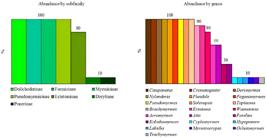
Maximum abundance, representing a 100% frequency of occurrence, was recorded for only 16 species (33% of the total) belonging to nine genera (41% of total) across four subfamilies (57% of total) (Figure 1). The maximum abundance set comprised seven species from four genera (Pheidole, Crematogaster, Pogonomyrmex, and Solenopsis) of Myrmicinae; four species from two genera (Camponotus and Nylanderia) of Formicinae; four species from two genera (Dorymyrmex and Tapinoma) of Dolichoderinae; and one single species from genus Pseudomyrmex of Pseudomyrmicinae (Table 1).
Abundance (%) of ant subfamilies, genera, and species across five pedoenvironments, Argissolo Vermelho-Amarelo (RYA), Argissolo Amarelo (YA), Latossolo Amarelo (YL), Latossolo Vermelho (RL), and Gleissolo Háplico (GS), at a patch of savanna in the Brazilian Amazon), Boa Vista, Roraima State, Brazil.
Generalism, competitive ability, and resilience are advantageous characteristics that explain the prominence of these genera in the study (Franco & Feitosa, 2018). Crematogaster, Pheidole, Solenopsis, and Camponotus are largely generalists, exploiting diverse resources through large colonies, aggressive interspecific behavior, and efficient patrolling (Silvestre et al., 2003; Fernández et al., 2021). The predominance of Pheidole is expected, as it is the most species-rich genus globally, though many species in South American savannas remain undescribed (Casadei-Ferreira et al., 2020). In the Cerrado biome, high species richness of such genera is a common soil pattern across various Brazilian states (Ramos et al., 2003; Silvestre et al., 2003; Campos et al., 2008; Costa et al., 2010; Miranda et al., 2022; Costa et al., 2025).
The high abundance of Tapinoma sp1 is attributed to its high ecological performance, characterized by a broad dietary spectrum, the ability to disperse over long distances via flight, defensive secretions toxic to all ant species, and supercolonies organization (Seifert et al., 2024). Dorymyrmex is primarily associated with savanna rather than forest phytophysiognomies in some Brazilian states (Costa et al., 2025).
Conversely, low richness (frequency of occurrence between 10-30%) was observed for 22 species (46% of total) belonging to 15 genera (68% of total) across five subfamilies (71% of total) (Figure 1). This group included three species from two genera (Atta and Solenopsis) of Myrmicinae and one species from the genus Tapinoma of Dolichoderinae, each with 20% of relative abundance; 10 species from seven genera of Formicinae, a single species from the genus Labidus of Dorylinae, and one species from the genus Hypoponera of Ponerinae, each with only 10% of relative abundance (Table 1). Such rarity often stems from specific microclimatic requirements or limited foraging capacities related to small body size, while only a few species are rare due to their restricted geographic distribution (Longino et al., 2002; Jeliazkov et al., 2022).
To overcome “methodological effects” in detecting rare species, combining capture methods is essential to provide a more complete inventory of ant assemblage (Longino et al., 2002; Tibcherani et al., 2018; Souza & Araújo, 2020). While sardine baits and pitfall traps captured similar individual numbers (4,741 and 4,443 individuals, respectively), pitfall traps detected higher richness than sardine baits (47 vs. 27 species). Twenty species were captured exclusively by pitfall, while Forelius pruinosus was exclusive to sardine baits. Integrated methods provide a more complete inventory, as environmental conditions, such as seasonality, soil texture, flooding, vegetation, and litter influence capture efficiency (Longino et al., 2002; Lopes & Vasconcelos, 2008; Oliveira et al., 2009; Costa et al., 2010; Tibcherani et al., 2018, 2020; Souza & Araújo, 2020; Miranda et al., 2022).
Finally, the underrepresentation of Cyphomyrmex, Hypoponera, Myrmicocrypta, and Trachymyrmex is linked to their cryptic, hypogaeic habits, and small colony sizes, which are more typical of dense forests (Silvestre et al., 2003). Similarly, Kalathomyrmex emeryi is rarely collected due to its restriction to specific dry habitats (Klingenberg & Brandão, 2009), while F. pruinosus typically builds small, inconspicuous nests (Koptur & Keeler, 2024).
3.1.2. Ant assemblage comparison across pedoenvironments
Total subfamily richness remained stable among pedoenvironments (5-6), while total genus (14-16) and species richness (27-32) showed minor variations across RYA, YA, YL, and RL (Figure 2). However, the GS pedoenvironment exhibited lower total richness for both genus (11) and species (22), largely due to the absence of 26 species (54% of the total), including all representatives of Dolichoderinae and Dorylinae, 15 species of Myrmicinae, and four species of Formicinae (Figure 2, Table 1).

Total and average taxonomic richness (subfamilies, genera, and species) of the ant assemblage across five pedoenvironments, Argissolo Vermelho-Amarelo (RYA), Argissolo Amarelo (YA), Latossolo Amarelo (YL), Latossolo Vermelho (RL), and Gleissolo Háplico (GS), at a patch of savanna in the Brazilian Amazon), Boa Vista, Roraima State, Brazil.
GS expressed significantly lower values of ants richness (subfamilies, genera, and species), compared to well-drained pedoenvironments (RYA, YA, YL, and RL) (Figure 2). Regarding distribution, 14 species (29% of total) were present in all pedoenvironments, whereas 16 species (33% of total) were restricted to a single area, often as singletons or doubletons with low frequency of occurrence. Species accumulation curves indicated sufficient sampling effort in YA, RL, and GS as they reached an asymptote, whereas RYA and YL curves did not stabilize, suggesting potential for additional records (Figure 3).

Ant species accumulation curve across five pedoenvironments, Argissolo Vermelho-Amarelo (RYA), Argissolo Amarelo (YA), Latossolo Amarelo (YL), Latossolo Vermelho (RL), and Gleissolo Háplico (GS), at a patch of savanna in the Brazilian Amazon), Boa Vista, Roraima State, Brazil.
Significant differences in abundance were observed, with GS showing lower values for Dolichoderinae, Dorymyrmex, Nylanderia, and Tapinoma compared to well-drained pedoenvironments (Figure 4). Ectatominae presented lower abundance in GS and YA, compared to RYA, and nine species (19% of the total) exhibited lower abundance in GS compared to at least one other pedoenvironment. Conversely, Pheidole radoszkowskii showed higher abundance in GS compared to YL and RL.
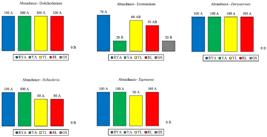
Abundance of selected ant taxa (Dolichoderinae, Ectatominae, Dorymyrmex, Nylanderia, and Tapinoma) across five pedoenvironments, Argissolo Vermelho-Amarelo (RYA), Argissolo Amarelo (YA), Latossolo Amarelo (YL), Latossolo Vermelho (RL), and Gleissolo Háplico (GS), at a patch of savanna in the Brazilian Amazon), Boa Vista, Roraima State, Brazil.
Variations in ant assemblage richness and abundance are influenced by sampling effort (Falcão et al., 2016), collection methods (Lauchande et al., 2024), trap spacing (Longino et al., 2002; Baccaro et al., 2011), and capture efficiency (Costa et al., 2010). Environmental factors such as climatic seasonality (Miranda et al., 2022), habitat complexity (Costa et al., 2025), and anthropogenic disturbance (Tibcherani et al., 2018) also play critical roles. Additionally, activity periods (Lancellotti et al., 2022; Domingos-Melo et al., 2022) and sampling area size (Siqueira & Silva, 2024) affect captures. In this study, the significant impact of the pedoenvironment on ant assemblages was primarily driven by relief, soil attributes, and plant richness.
3.1.3. Soil degree of compaction and soil moisture content
Higher soil degree of compaction (SDC) values were recorded in YA, RYA, and YL (0.94-0.97 MPa), followed by RL (0.56 MPa), while GS showed the lowest value (0.33 MPa) (Figure 5). Conversely, the highest soil moisture content (SMC) was found in GS (27.81 g kg-1) and the lowest in RYA (14.24 g kg-1). This inverse relationship suggests that lower compaction increases macroporosity and moisture availability (Silva et al., 2022), complemented by the direct influence of the water table on Gleissolos in lower topographic positions.

Soil degree of compaction (SDC, 0-10 cm depth) and soil moisture content (SMC, 0-5 cm depth) across five pedoenvironments, Argissolo Vermelho-Amarelo (RYA), Argissolo Amarelo (YA), Latossolo Amarelo (YL), Latossolo Vermelho (RL), and Gleissolo Háplico (GS), at a patch of savanna in the Brazilian Amazon), Boa Vista, Roraima State, Brazil.
3.1.4. Relationship between ant assemblages and soil attributes
Based on a preliminary PCA, only 19 variables, 11 from ant assemblages and eight soil attributes, exhibited strong correlation coefficients (absolute value ≥ 0.70) with PC1 (Table 2) and were retained for the definitive analysis (Castro & Silva, 2024). The definitive PCA generated 11 principal components (PCs) explaining 100% of the total variance; however, only PC1, PC2, and PC3 met Kaiser’s criterion with eigenvalues > 1.00 (Kaiser, 1974). These three PCs explained approximately 86% of the accumulated variance, which is considered highly acceptable (Batista & Gomes, 2021). PC1 was the most significant, explaining nine to 14 times more variance than PC2 or PC3, respectively, thus representing the maximum intensity of variable influence and identifying result patterns efficiently (Schaefer et al., 2021; Greenacre et al., 2022; Castro & Silva, 2024).
Correlation coefficients of the variables (VR) with the first Principal Component (PC1) of the preliminary PCA (Principal Component Analysis) for data obtained across five pedoenvironments, Argissolo Vermelho-Amarelo (RYA), Argissolo Amarelo (YA), Latossolo Amarelo (YL), Latossolo Vermelho (RL), and Gleissolo Háplico (GS), at a patch of savanna in the Brazilian Amazon), Boa Vista, Roraima State, Brazil. Coefficients with strong intensity (≥ 0.70 in absolute value) are highlighted in bold.
Relevant soil attributes influencing ant assemblages included available phosphorus, exchangeable potassium, degree of compaction, clay, organic matter, sand, moisture, and extractable acidity. PCA proved effective in identifying these key variables while suggesting that others, such as silt, density, and pH, could be excluded (Table 3) in future studies to save resources without significant information loss (Hongyu et al., 2015; Zhang et al., 2023).
Eigenvalues (EG), total variance (%TV), and cumulative variance (%CV) explained by the Principal Components (PCs) in the definitive Principal Component Analysis (PCA) correlation matrix for data obtained across five pedoenvironments, Argissolo Vermelho-Amarelo (RYA), Argissolo Amarelo (YA), Latossolo Amarelo (YL), Latossolo Vermelho (RL), and Gleissolo Háplico (GS), at a patch of savanna in the Brazilian Amazon), Boa Vista, Roraima State, Brazil.
The relationship between PC1 and PC2 (explaining approximately 81% of the accumulated variance) indicated the formation of two groups. The first group, comprising RYA, YA, YL, and RL, was positioned on the positive side (on the right) of the PC1 axis (Figure 6A). Vectors for Dolichoderinae, Dorymyrmex, Nylanderia, Tapinoma, D. goeldii, C. novogranadensis, N. guatemalensis, Tapinoma sp1, average richness (subfamily, genera, species), clay content, and soil degree of compaction formed acute angles (< 90º) and pointed toward this group (Figure 6B). This arrangement suggested a strong positive correlation between these ant assemblage variables and specific soil physical and chemical attributes (Rodrigues et al., 2007).

Ordination diagram from definitive Principal Component Analysis (PCA) showing: distribution of the five pedoenvironments, Argissolo Vermelho-Amarelo (RYA), Argissolo Amarelo (YA), Latossolo Amarelo (YL), Latossolo Vermelho (RL), and Gleissolo Háplico (GS); and (B) selected variables (ant assemblages and soil attributes), at a patch of savanna in the Brazilian Amazon), Boa Vista, Roraima State, Brazil.
Clay, which exhibited a strong positive correlation with PC1 (Table 2), favored certain Atta species in the Brazilian Neotropics (Schaefer et al., 2021). Higher clay content enhanced particle cohesion, resulting in greater soil penetration resistance (Gaia-Gomes et al., 2021) that is soil compaction in RYA, YA, YL, and RL compared to GS, as these variables are positively correlated (Rodrigues et al., 2007).
In contrast, the second group comprised only GS sampling units, positioned on the negative side (on the left) of the PC1 axis (Figure 6A). Vectors for soil moisture, organic matter, sand content, available phosphorus, potassium, and extractable acidity formed acute angles toward GS (Figure 6B). These conditions did not favor the selected ant assemblage attributes (Table 1; Figures 2, 3, 4). The spatial ordination highlighted contrasting abiotic conditions between the two groups (Souza et al., 2023), with RYA, YA, YL, and RL being similar to each other but highly dissimilar to GS, as indicated by vectors forming angles between 90º and 180º, respectively, thus suggesting negative correlation (Abreu et al., 2020) between ants, soil drainage, and fertility.
Increased soil moisture in GS for most of the year enables intense grass root biomass production and significantly higher carbon input (Barbosa et al., 2012), resulting in higher organic matter content compared to other pedoenvironments (Benedetti et al., 2011). Furthermore, high water availability reduces decomposing microbiota activity, leading to organic matter accumulation (Marschner, 2021; Benedetti et al., 2011). Consequently, GS exhibited greater availability of nutrients like potassium and phosphorus (Delarmelina et al., 2022; Silva et al., 2021; Benedetti et al., 2011). However, the decomposition of accumulated organic matter releases weak acids, accelerating cation leaching and soil acidification (Liang et al., 2023), which explains the higher extractable acidity recorded in GS (Benedetti et al., 2011; Nascimento et al., 2024).
ANOSIM revealed significant differences between pedoenvironments (p = 0.0001), with high dissimilarity indicated by an R-value of 0.94 (Thompson et al., 2025; Westerbom et al., 2018). HCA corroborated this, showing RYA, YA, YL, and RL linked at a standardized distance of ~60%, while this group linked to GS at ~100%, nearly doubling the internal linkage distance (Figure 7A).

Hierarchical Cluster Analysis (HCA) dendrograms showing: (A) clustering of the five pedoenvironments, Argissolo Vermelho-Amarelo (RYA), Argissolo Amarelo (YA), Latossolo Amarelo (YL), Latossolo Vermelho (RL), and Gleissolo Háplico (GS); and (B) selected variables (ant assemblages and soil attributes), at a patch of savanna in the Brazilian Amazon), Boa Vista, Roraima State, Brazil.
HCA indicated that soil moisture, organic matter, phosphorus, and extractable acidity exerted a higher impact on ant richness and abundance than clay, sand, or potassium (Figure 7B). This underscores the relevance of GS’s topographical position, where seasonal submersion (Benedetti et al., 2011) filters ant populations by hindering foraging and compromising nest construction (Lin et al., 2024; Costa et al., 2010). Conversely, higher clay content in RYA, YA, YL, and RL (Benedetti et al., 2011) positively impacts assemblages, as clay acts as a vital cementing material for nests (Yang et al., 2022).
Differences in plant diversity also influenced ant assemblages. While all pedoenvironments share some floristic elements, GS is distinct, lacking the tree and shrub cover found in well-drained soils (Araújo et al., 2017). This wet grassland physiognomy features lower structural complexity and plant richness compared to RYA, YA, YL, and RL (Araújo et al., 2017). Environments with reduced vertical strata and lower plant diversity generally do not support diverse ant assemblages (Amaral et al., 2019), whereas complex environments provide heterogeneous microhabitats and food resources through varied litterfall (Souza & Araújo, 2020; Lobo et al., 2023; Costa et al., 2025).
Roraima’s savannas have faced rapid agribusiness expansion, transforming the landscape fourfold between 2000 and 2014 (Silva & Oliveira, 2018). Factors such as low land costs and flat topography accelerate this process, necessitating urgent mitigation and conservation measures (Silva & Oliveira, 2018; Barni et al., 2020). Evaluating ant assemblages can help identify indicator species and monitor the impacts of converting native vegetation into agricultural land (Costa et al., 2025).
SIMPER analysis showed that 11 species accounted for 46% of the dissimilarity among pedoenvironments. Most taxa, including D. richteri, C. crassus, P. naegelii, S. clytemnestra, D. bicolor, C. jardinero, Pseudomyrmex sp5, and Pheidole sp75, showed the lowest abundance in GS and the highest in Argissolos (RYA, YA) or Latossolos (YL, RL). In contrast, P. radoszkowskii and Pheidole sp105 reached their highest abundance in GS, while C. leydgi peaked in RL.
4. CONCLUSIONS
The tested hypothesis was partially corroborated, as no significant differences were found in richness, abundance, and composition of the ground-dweling ant assemblages between Argissolo (Argissolo Vermelho-Amarelo, Argissolo Amarelo,) and Latossolo (Latossolo Amarelo, Latossolo Vermelho).
Conversely, the ant assemblage in Gleissolo Háplico exhibited high and relevant dissimilarity compared to the other pedoenvironments, showing significantly lower richness and abundance of key groups, such as the subfamily Dolichoderinae and the genera Dorymyrmex, Nylanderia, and Tapinoma.
This pattern was predominantly attributed to higher levels of soil moisture, organic matter, extractable acidity, and available phosphorus, as well as sand and exchangeable potassium, and lower clay content, which are a direct reflection of the location of Gleissolo Háplico at the lowest point of the toposequence.
These results highlight the potential of ants as bioindicators of environmental quality and reinforce the urgent need for conservation measures in the Roraima savanna, a region severely threatened by accelerating agricultural expansion.
DATA AVAILABILITY
All data that support the findings of this study are included within the article.
REFERENCES
-
Abreu BS, Barbosa SBP, Silva EC, Santoro KR, Batista AMV, Martinez RLV. Principal component and cluster analyses to evaluate production and milk quality traits. Revista Ciência Agronômica 2020; 51(3): e20196977. https://doi.org/10.5935/1806-6690.20200060
» https://doi.org/10.5935/1806-6690.20200060 -
Aguilar-Colorado ÁS, Rivera-Chávez J. Ants/nest-associated fungi and their specialized metabolites: Taxonomy, chemistry, and bioactivity. Revista Brasileira de Farmacognosia 2023; 33: 901-923. https://doi.org/10.1007/s43450-023-00417-3
» https://doi.org/10.1007/s43450-023-00417-3 -
Alvares CA, Stape JL, Sentelhas PC, Gonçalves JLM, Sparovek G. Köppen’s climate classification map for Brazil. Meteorologische Zeitschrift 2013; 22(6): 711-728. https://doi.org/10.1127/0941-2948/2013/0507
» https://doi.org/10.1127/0941-2948/2013/0507 -
Amaral GC, Vargas AB, Almeida FS. Efeitos de atributos ambientais na biodiversidade de formigas sob diferentes usos do solo. Ciência Florestal 2019; 29(2): 660-672. https://doi.org/10.1590/1519-6984.290806
» https://doi.org/10.1590/1519-6984.290806 -
Araújo MAM, Rocha AES, Miranda IS, Barbosa RI. Hydro-edaphic conditions defining richness and species composition in savanna areas of the northern Brazilian Amazonia. Biodiversity Data Journal 2017; 5: e13829. https://doi.org/10.3897/BDJ.5.e13829
» https://doi.org/10.3897/BDJ.5.e13829 - Baccaro BF. Chave para as principais subfamílias e gêneros de formigas (Hymenoptera: Formicidae). Manaus: INPA; 2006.
- Baccaro BF, Feitosa RM, Fernandez F, Fernandes IO, Izzo TJ, Souza JLP et al. Guia para os gêneros de formigas do Brasil. Manaus: INPA ; 2015.
-
Baccaro BF, Ketelhut SM, Morais JW. Efeitos da distância entre iscas nas estimativas de abundância e riqueza de formigas em uma floresta de terra-firme na Amazônia Central. Acta Amazonica 2011; 41(1): 115-122. https://doi.org/10.1590/S0044-59672011000100013
» https://doi.org/10.1590/S0044-59672011000100013 -
Barbosa RI, Santos JRS, Cunha MS, Pimentel TP, Fearnside PM. Root biomass, root: shoot ratio and belowground carbon stocks in the open savannahs of Roraima, Brazilian Amazonia. Australian Journal of Botany 2012; 60: 405-416. http://dx.doi.org/10.1071/BT11312
» http://dx.doi.org/10.1071/BT11312 -
Barni PE, Barbosa RI, Xaud HAM, Xaud MR, Fearnside PM. Precipitation in northern Amazonia: Spatial distribution in Roraima, Brazil. Sociedade & Natureza 2020; 32: 439-456. https://doi.org/10.14393/SN-v32-2020-52769
» https://doi.org/10.14393/SN-v32-2020-52769 -
Batista RR, Gomes MM. Effects of chemical composition and pyrolysis process variables on biochar yields: Correlation and principal component analysis. Floresta e Ambiente 2021; 28(3): e20210007. https://doi.org/10.1590/2179-8087-FLORAM-2021-0007
» https://doi.org/10.1590/2179-8087-FLORAM-2021-0007 -
Benedetti UG, Vale Júnior JF, Schaefer CEGR, Melo VF, Uchôa SCP. Gênese, química e mineralogia de solos derivados de sedimentos pliopleistocênicos e de rochas vulcânicas básicas em Roraima, norte amazônico. Revista Brasileira de Ciência do Solo 2011; 35(2): 299-312. https://doi.org/10.1590/S0100-06832011000200002
» https://doi.org/10.1590/S0100-06832011000200002 - Boscardin J, Garlet J, Costa EC. Mirmecofauna epigéica (Hymenoptera: Formicidae) em plantios de Eucalyptus spp. (Myrtales: Myrtaceae) na região oeste do estado do Rio Grande do Sul, Brasil. Entomotropica 2012; 27(3): 119-128.
-
Campos RI, Lopes CT, Magalhães WCS, Vasconcelos HL. Estratificação vertical de formigas em Cerrado strictu sensu no Parque Estadual da Serra de Caldas Novas, Goiás, Brasil. Iheringia, Série Zoologia 2008; 98(3), 311-316. https://doi.org/10.1590/S0073-47212008000300004
» https://doi.org/10.1590/S0073-47212008000300004 -
Carvalho RL, Vieira J, Melo C, Silva AM, Tolentino VCM, Neves K et al. Interactions between land use, taxonomic group and aspects and levels of diversity in a Brazilian savanna: Implications for the use of bioindicators. Journal of Applied Ecology 2022; 59(10): 2642-2653. https://doi.org/10.1111/1365-2664.14270
» https://doi.org/10.1111/1365-2664.14270 -
Casadei-Ferreira A, Economo EP, Feitosa RM. Additions to the taxonomy of Pheidole (Hymenoptera: Formicidae) from the southern grasslands of Brazil. Revista Brasileira de Entomologia 2020; 64(4): e20200068. https://doi.org/10.1590/1806-9665-RBENT-2020-0068
» https://doi.org/10.1590/1806-9665-RBENT-2020-0068 -
Castro SAB, Silva AC. Evaluation of PCA with variable selection for cluster typological domains. International Engineering Journal 2024; 77(2): e230071. http://dx.doi.org/10.1590/0370-44672023770071
» http://dx.doi.org/10.1590/0370-44672023770071 -
Costa AG, Torres FTP, Lima GS, Melo FR, Rodrigues VB, Santana Neto VP et al. Fire influence on the ants community in savanic and forest environments of the Cerrado Biome. Floresta e Ambiente 2022; 29(1): e20220025. https://doi.org/10.1590/2179-8087-FLORAM-2022-0025
» https://doi.org/10.1590/2179-8087-FLORAM-2022-0025 -
Costa AN, Macedo RM, Vaz-Silva J, Alves KM, Pacheco R, Vieira-Neto EHM et al. Ant assemblages (Hymenoptera: Formicidae) and spatial patterns of diversity along Cerrado remnants in Central-West Brazil. Brazilian Journal of Biology, 2025, 85: e290806. https://doi.org/10.1590/1519-6984.290806
» https://doi.org/10.1590/1519-6984.290806 -
Costa CB, Ribeiro SP, Castro PTA. Ants as bioindicators of natural succession in savanna and riparian vegetation impacted by dredging in the Jequitinhonha River Basin, Brazil. Restoration Ecology 2010; 18(1): 148-157. https://doi.org/10.1111/j.1526-100X.2009.00643.x
» https://doi.org/10.1111/j.1526-100X.2009.00643.x -
Delarmelina WM, Caldeira MVW, Gomes Junior D, Godinho TO, Caliman JP, Gonçalves EO et al. Soil attributes and spatial variability of soil organic carbon stock under the Atlantic Forest, Brazil. Ciência Florestal 2022; 32(3): 1528-1551. https://doi.org/10.5902/1980509867028
» https://doi.org/10.5902/1980509867028 -
Domingos-Melo A, Nadia TL, Leal IR, Machado IC. Nocturnal ant integrates generalist pollination system in the Caatinga dry forest Biota Neotropica 2022; 22(4): e20221416. https://doi.org/10.1590/1519-6984.235508
» https://doi.org/10.1590/1519-6984.235508 -
Fagundes M, Silva APMF, Mayrink BHS, Figueiredo LHA, Jorge AC, Gomes ILV. Seed germination of a myrmecochorous plant endemic to the Brazilian semiarid region: the wolf is not so bad. Acta Botanica Brasileira 2022; 36: e20220093. https://doi.org/10.1590/1677-941X-ABB-2022-0093
» https://doi.org/10.1590/1677-941X-ABB-2022-0093 -
Falcão JCF, Dáttilo W, Rico-Gray V. Sampling effort differences can lead to biased conclusions on the architecture of ant-plant interaction networks. Ecological Complexity 2016; 25: 44-52. https://doi.org/10.1016/j.ecocom.2016.01.001
» https://doi.org/10.1016/j.ecocom.2016.01.001 -
Fernández F, Guerrero RJ, Sánchez-Restrepo AF. Systematics and diversity of Neotropical ants. Revista Colombiana de Entomología 2021; 47(1): e11082. https://doi.org/10.25100/socolen.v47i1.11082
» https://doi.org/10.25100/socolen.v47i1.11082 -
Franco W, Feitosa RM. First standardized inventory of ants (Hymenoptera: Formicidae) in the natural grasslands of Paraná: New records for Southern Brazil. Papéis Avulsos de Zoologia 2018; 58: e20185812. http://doi.org/10.11606/1807-0205/2018.58.12
» http://doi.org/10.11606/1807-0205/2018.58.12 -
Gaia-Gomes JH, Pinheiro Júnior CR, Pereira MG, Almeida WS, Silva GT. Variability of soil physical and hydraulic properties along a toposequence in the coastal lowlands of Rio de Janeiro. Revista Ambiente & Água 2021; 16(1): e2579. https://doi.org/10.4136/1980-993X
» https://doi.org/10.4136/1980-993X -
Greenacre M, Groenen PJF, Hastie T, d’Enza AI, Markos A, Tuzhilina E. Principal Component Analysis. Nature Reviews Methods Primers 2022; 2(100): 1-24. https://doi.org/10.1038/s43586-022-00184-w2022
» https://doi.org/10.1038/s43586-022-00184-w2022 -
Hongyu K, Sandanielo VLM, Oliveira Junior GJ. Principal Component Analysis: theory, interpretations and applications. Engineering and Science 2015; 5(1): 83-90. https://doi.org/10.18607/ES201653398
» https://doi.org/10.18607/ES201653398 -
Jeliazkov A, Gavish Y, Marsh CJ, Geschke J, Brummitt N, Rocchini N et al. Sampling and modelling rare species: conceptual guidelines for the neglected majority. Global Change Biology 2022; 28(12): 3754-3777. https://doi.org/10.1111/gcb.16114
» https://doi.org/10.1111/gcb.16114 -
Kaiser HF. An index of factorial simplicity. Psychometrika 1974; 39: 31-36. https://doi.org/10.1007/BF022915751974
» https://doi.org/10.1007/BF022915751974 -
Kiataki FK, Noronha SE, Simon MF. Contribution of the Brazilian National Forest Inventory to the knowledge of Cerrado woody flora. Biota Neotropica 2022; 22(1): e20211306. https://doi.org/10.1590/10.1590/1676-0611-BN-2021-1306
» https://doi.org/10.1590/10.1590/1676-0611-BN-2021-1306 -
Klingenberg C, Brandão CRF. Revision of the fungus-growing ant genera Mycetophylax Emery and Paramycetophylax Kusnezov rev. stat., and description of Kalathomyrmex n. gen. (Formicidae: Myrmicinae: Attini). Zootaxa 2009; 2052: 1-31. http://doi.org/10.11646/zootaxa.2052.1.1
» http://doi.org/10.11646/zootaxa.2052.1.1 -
Koptur S, Keeler KH. Comparing ant activity and plants bearing extrafloral nectaries in rockland habitats of the Florida Keys with those of the Everglades and the Bahamas. Diversity 2024; 16, 360. https://doi.org/10.3390/d160703602024
» https://doi.org/10.3390/d160703602024 -
Krögen M, Nygren A. Shifting frontier dynamics in Latin America. Journal of Agrarian Change 2020; 20(3): 364-386. https://doi.org/10.1111/joac.12354
» https://doi.org/10.1111/joac.12354 -
Lancellotti IR, Mayhé-Nunes AJ, Feitosa RM, Portugal AS, Santos MG. Ants associated with fronds of the tropical bracken fern Pteridium esculentum subsp. arachnoideum. https://doi.org/10.1590/1676-0611-BN-2022-1416
» https://doi.org/10.1590/1676-0611-BN-2022-1416 -
Lauchande VL, Mntambo SP, Hlongwane ZT, Munyai TC. Comparing the effectiveness of pitfall traps and active sampling methods for ants and spiders in a Chromolaena odorata invaded site. Bothalia 2024; 54: a5. https://doi.org/10.38201/btha.abc.v54.5
» https://doi.org/10.38201/btha.abc.v54.5 -
Liang F, Li B, Vogt RD, Mulder J, Song H, Chen J et al. Straw return exacerbates soil acidification in major Chinese croplands. Resources, Conservation and Recycling 2023; 198: 107176. https://doi.org/10.1016/j.resconrec.2023.107176
» https://doi.org/10.1016/j.resconrec.2023.107176 -
Lin J, Yang X, Lyu H, Chen X, Wang L, Wang C et al. Food search and transport in red imported fire ants (Hymenoptera: Formicidae) under wet conditions. Journal of Asia-Pacific Entomology 2024; 27: 102170. https://doi.org/10.1016/j.aspen.2023.102170
» https://doi.org/10.1016/j.aspen.2023.102170 -
Lobo NCR, Ribeiro LM, Pereira JR, Almeida AA, Almeida FS. Efeitos de fatores ambientais sobre as assembleias de formigas arborícolas e epigéicas na Floresta Estacional Semidecidual. Ciência Florestal 2023; 33(1): e67579. https://doi.org/10.5902/1980509867579
» https://doi.org/10.5902/1980509867579 -
Longino JT, Coddington J, Colwell RK. The ant fauna of a tropical rain forest: estimating species richness three different ways. Ecology 2002; 83(3): 689-702. https://doi.org/10.1890/0012-9658(2002)083[0689:TAFOAT]2.0.CO;2
» https://doi.org/10.1890/0012-9658(2002)083[0689:TAFOAT]2.0.CO;2 -
Lopes CT, Vasconcelos HL. Evaluation of three methods for sampling ground-dwelling ants in the Brazilian Cerrado. Neotropical Entomology 2008; 37(4): 399-405. https://doi.org/10.1590/S1519-566X2008000400007
» https://doi.org/10.1590/S1519-566X2008000400007 -
Magalhães FS, Campana DRS, Freitas GS, Abonizio-Santos MR, Prado LP, Morini MSC. Natural regeneration in Atlantic Forest Fragments: using ants (Hymenoptera: Formicidae) for monitoring a conservation unit. Papéis Avulsos de Zoologia 2022; 62: e202262071. http://doi.org/10.11606/1807-0205/2022.62.071
» http://doi.org/10.11606/1807-0205/2022.62.071 -
Magnusson WE, Lima AP, Luizão R, Luizão F, Costa FRC, Castilho CV et al. RAPELD: a modification of the Gentry method for biodiversity surveys in long-term ecological research sites. Biota Neotropica 2005; 5(2): 1-6. https://doi.org/10.1590/S1676-06032005000300002
» https://doi.org/10.1590/S1676-06032005000300002 -
Marschner P. Processes in submerged soils - linking redox potential, soil organic matter turnover and plants to nutrient cycling. Plant and Soil 2021; 464:1-12. https://doi.org/10.1007/s11104-021-05040-6
» https://doi.org/10.1007/s11104-021-05040-6 -
Matamoros-Jiménez C, Hernández-Vega H. Clustering approach to generate pedestrian traffic pattern groups: An exploratory analysis. Ciencia e Ingeniería Neogranadina 2021; 31(2): 41-59. https://doi.org/10.18359/rcin.4403
» https://doi.org/10.18359/rcin.4403 -
Miranda VL, Koch EBA, Oliveira LS, Nunes JJM, Barbosa DBS, Soares MRA et al. Seasonality effect on ant (Hymenoptera: Formicidae) activity in an ecotonal environment in the state of Piauí, Brazil. Papéis Avulsos de Zoologia 2022; 62: e202262003. http://doi.org/10.11606/1807-0205/2022.62.003
» http://doi.org/10.11606/1807-0205/2022.62.003 -
Moulatlet GM, Riaño K, Rodrigues FRO, Meneses P, Zuquim G. Diversity and composition of ferns and lycophytes in a fragmented landscape in Ecuadorian Amazonia. Rodriguésia 2023; 74: e00592023. http://dx.doi.org/10.1590/2175-7860202374069
» http://dx.doi.org/10.1590/2175-7860202374069 -
Nascimento DC, Corrêa GR, Campos PV, Gradella FS, Schaeffer CEGR, Bueno ML et al. Soil attributes and leaf litter composition in forest communities of the Brazilian Pantanal. Anais da Academia Brasileira de Ciências 2024; 96(3): e20240709. https://doi.org/10.1590/0001-3765202420240709
» https://doi.org/10.1590/0001-3765202420240709 -
Nascimento SP, Carvalho CM. Expressões orais populares utilizadas pelo povo do lavrado em Roraima. Revista Geográfica Acadêmica 2016; 10(1): 131-162. https://doi.org/10.18227/1678-7226rga.v10i1.3661
» https://doi.org/10.18227/1678-7226rga.v10i1.3661 -
Nunes ED, Castro SS. Degradation of Phytophysiognomies of Cerrado and linear water erosive impacts in southwestern Goiás - Brazil. Sociedade & Natureza 2021; 33: e60606. https://doi.org/10.14393/SN-v33-2021-60606
» https://doi.org/10.14393/SN-v33-2021-60606 -
Oliveira PY, Souza JLP, Baccaro FB, Franklin E. Ant species distribution along a topographic gradient in a “terra-firme” forest reserve in Central Amazonia. Pesquisa Agropecuária Brasileira 2009; 44(8): 852-860. https://doi.org/10.1590/S0100-204X2009000800008
» https://doi.org/10.1590/S0100-204X2009000800008 -
Pearson RG, Dawson TP. Predicting the impacts of climate change on the distribution of species: are bioclimate envelope models useful? Global Ecology and Biogeography 2003; 12(5): 361-371. https://doi.org/10.1046/j.1466-822X.2003.00042.x
» https://doi.org/10.1046/j.1466-822X.2003.00042.x -
Ramos LS, Zanetti-Bonetti Filho R, Delabie JHC, Lacau S, Santos MFS, Nascimento IC et al. Comunidades de formigas (Hymenoptera: Formicidae) de serapilheira em áreas de cerrado “stricto sensu” em Minas Gerais. Lundiana: International Journal of Biodiversisty 2003; 4(2): 95-102. https://doi.org/10.35699/2675-5327.2003.21859
» https://doi.org/10.35699/2675-5327.2003.21859 -
Ribeiro MJB, Pinto LFB, Barbosa ACB, Santos GRA, Pinto APG, Nascimento CS et al. Principal components for the in vivo and carcass conformations of Anglo-Nubian crossbred goats. Ciência Rural 2018; 48(6): e20170771. https:////dx.doi.org/10.1590/0103-8478cr20170771
» https:////dx.doi.org/10.1590/0103-8478cr20170771 -
Rodrigues LA, Carvalho DA, Oliveira-Filho AT, Curi N. Efeitos de solos e topografia sobre a distribuição de espécies arbóreas em um fragmento de Floresta Estacional Semidecidual, em Luminárias, MG. Revista Árvore 2007; 31(1): 25-35. https://doi.org/10.1590/S0100-67622007000100004
» https://doi.org/10.1590/S0100-67622007000100004 -
Romero H, Jaffe K. A comparison of methods for sampling ants (Hymenoptera: Formicidae) in savannas. Biotropica 1989; 21(4): 348-352. https://www.jstor.org/stable/2388285
» https://www.jstor.org/stable/2388285 -
Schaefer CEGR, Henriques RJ, Gomes LP, Gorsani RG, Santos MFS, Fernandes DPS. Interplays between Atta ants (Formicidae: Attini), soils and environmental properties in the Brazilian Neotropics: a preliminary assessment. Revista Brasileira de Ciência do Solo 2021; 45:e0210073. https://doi.org/10.36783/18069657rbcs20210073
» https://doi.org/10.36783/18069657rbcs20210073 -
Seifert B, Kaufmann B, Fraysse L. A taxonomic revision of the Palaearctic species of the ant genus Tapinoma Mayr 1861 (Hymenoptera: Formicidae). Zootaxa 2024; 5435(1): 1-74. https://doi.org/10.11646/zootaxa.5435.1.1
» https://doi.org/10.11646/zootaxa.5435.1.1 -
Silva CF, Souza RC, Pereira MG, Pinto LASR, Ferreira R, Correia MEF et al. Edaphic attributes indicative of edge effect in Semideciduous tropical forest. Acta Oecologica 2021; 113: 103776. https://doi.org/10.1016/j.actao.2021.103776
» https://doi.org/10.1016/j.actao.2021.103776 -
Silva EF, Corá JE, Harada AY, Sampaio IBM. Association of the occurrence of ant species (Hymenoptera: Formicidae) with soil attributes, vegetation, and climate in the Brazilian Savanna northeastern region. Sociobiology 2017; 64: 442-450. https://doi.org/10.13102/sociobiology.v64i4.1209
» https://doi.org/10.13102/sociobiology.v64i4.1209 -
Silva FG, Assis Junior RN, Toma RS, Oliveira LS, Marques ES, Mota JCA. Physical-hydraulic attributes as indicators of funciotnality of soil pores under different compaction levels. Revista Caatinga 2022; 35(4): 884-893. https://doi.org/10.1590/1983-21252022v35n416rc
» https://doi.org/10.1590/1983-21252022v35n416rc -
Silva GFN, Oliveira IJ. Reconfiguração da paisagem nas savanas da Amazônia. Mercator 2018; 17: e17028. https://doi.org/10.4215/rm2018.e17028
» https://doi.org/10.4215/rm2018.e17028 - Silvestre R, Brandão CRF, Silva RR. Grupos funcionales de hormigas: el caso de los grêmios del cerrado. In: Fernández F, editor. Introducción a las hormigas de la región neotropical. Bogotá: Instituto de Investigación de Recursos Biológicos Alexander von Humboldt; 2003.
-
Siqueira GM, Silva RA. Multifractal and joint analysis of soil arthropod diversity in the Brazilian Savanna. Revista Brasileira de Ciência do Solo 2024; 48: e0230114. https://doi.org/10.36783/18069657rbcs20230114
» https://doi.org/10.36783/18069657rbcs20230114 -
Sousa MMM, Andrade EM, Palácio HAQ, Medeiros PHA, Ribeiro Filho JC. Spatial-temporal soil-water content dynamics in toposequences with different plant cover in a tropical semi-arid region. Revista Ciência Agronômica 2022; 53: e20217867. https://doi.org/10.5935/1806-6690.20220010
» https://doi.org/10.5935/1806-6690.20220010 -
Souza JLP, Araújo JS. Evaluation of sampling techniques and influence of environmental variables on ants in forest fragments in an oil extraction area in the Amazon. Sociobiology 2020; 67(3): 364-375. https://doi.org/10.13102/sociobiology.v67i3.5148
» https://doi.org/10.13102/sociobiology.v67i3.5148 -
Souza RC, Pereira MG, Machado DL, Toledo LO, Menezes CEG, Santos GL et al. Nutrient cycling aspects as possible ecosystem functional indicators of successional stage in Semideciduous seasonal forest, Rio de Janeiro state, Brazil. Acta Oecologica 2023; 121: 103951. https://doi.org/10.1016/j.actao.2023.103951
» https://doi.org/10.1016/j.actao.2023.103951 -
Thompson N, Salzmann U, Hutchinson DK, Strother SL, Pound MJ, Utescher T, Bruggerd J, Hicklerd T, Hocking EP, Lunt DJ. Global vegetation zonation and terrestrial climate of the warm Early Eocene. Earth-Science Reviews 2025; 261: 105306. https://doi.org/10.1016/j.earscirev.2024.105036
» https://doi.org/10.1016/j.earscirev.2024.105036 -
Tibcherani M, Aranda R, Mello RL. Time to go home: The temporal threshold in the regeneration of the ant community in the Brazilian savanna. Applied Soil Ecology 2020; 150: 103451. https://doi.org/10.1016/j.apsoil.2019.103451
» https://doi.org/10.1016/j.apsoil.2019.103451 -
Tibcherani M, Nacagava VAF, Aranda R, Mello RL. Review of ants (Hymenoptera: Formicidae) as bioindicators in the Brazilian Savanna. Sociobiology 2018; 65(2): 112-129. https://doi.org/10.13102/sociobiology.v65i2.2048
» https://doi.org/10.13102/sociobiology.v65i2.2048 -
Westerbom M, Lappalainen A, Mustonen O, Norkko A. Trophic overlap between expanding and contracting fish predators in a range margin undergoing change. Scientific Reports 2018; 8:7895. https://doi.org/10.1038/s41598-018-25745-6
» https://doi.org/10.1038/s41598-018-25745-6 -
Yang G, Zhou W, Qu W, Zhu P, Xu J. A Review of Ant Nests and Their Implications for Architecture. Buildings 2022; 12(12): 2225. https://doi.org/10.3390/buildings12122225
» https://doi.org/10.3390/buildings12122225 -
Zhang Y, Tang S, Shi K. Risk assessment of coal mine water inrush based on PCA-DBN. Scientific Reports 2022; 12, 1370. https://doi.org/10.1038/s41598-022-05473-8
» https://doi.org/10.1038/s41598-022-05473-8
Edited by
-
Associate editor:
Bruno Araujo Furtado de Mendonça http://orcid.org/0000-0003-0288-0024


