 Intervention research and Psychology in Brazil: a systematic literature review
Abstract
Objective This study aims to understand Intervention Research's contributions to psychological theory and practice through the scientific production of theoretical and/or empirical articles carried out in Brazil that have, in the field of Psychology, Intervention Research as a main theoretical-methodological approach.
Method A systematic literature review was conducted on the Capes Journal Portal, with articles published from 2011 to 2020. The PRISMA writing guide and the PerSPEcTiF protocol were used. Sixty-one articles were analyzed using the following indicators: geographical region, areas of practice, theoretical affiliation, and methodological tools.
Results The most studies are characterized as theoretical-empirical, located in the South, Southeast, and Northeast regions, with a focus on Social or School/Educational Psychology, based on Poststructuralist theory, and use workshops, discussion groups, and field diaries.
Conclusion It is concluded that Intervention Research has opposed the positivist approach in Psychology, engaging in the politicization of research in favor of social transformation.
Keywords:
Brazil; Intervention research; Participatory research; Psychology
Resumo
Objetivo O objetivo deste estudo é compreender as contribuições da Pesquisa-Intervenção para a teoria e a prática psicológica através da produção científica de artigos teóricos e/ou empíricos realizados no Brasil que tenham, no campo da Psicologia, a Pesquisa-Intervenção como o principal aporte teórico-metodológico.
Método Realizou-se uma revisão sistemática de literatura no Portal de Periódicos da Capes, com artigos publicados de 2011 a 2020. Utilizou-se o guia de redação PRISMA e o protocolo PerSPEcTiF. Foram analisados 61 artigos através dos indicadores: região geográfica; campos de atuação, filiação teórica e ferramentas metodológicas.
Resultados A maioria dos estudos se caracteriza como teórico-empírico, situado no eixo Sul-Sudeste e Nordeste, com atuação na Psicologia Social ou Escolar/Educacional, de base teórica Pós-estruturalista, com utilização de oficinas, grupos de discussão e diário de campo.
Conclusão Conclui-se que a Pesquisa-Intervenção tem se contraposto a vertente positivista na Psicologia, atuando na politização da pesquisa em prol da transformação social.
Palavras-chave:
Brasil; Pesquisa-intervenção; Pesquisa participativa; Psicologia
Intervention Research (IR) has been widely adopted in Brazil as a theoretical-methodological perspective within Participatory Research (PR) contexts. Psychology researchers have used IR in educational settings, healthcare practices, and everyday life in peripheral territories (Maraschin et al., 2015). Originating from the humanities, PR encompasses fields such as education, sociology, and psychology. The PR questions principles valued in positivist research, such as neutrality, reliability, and replicability (Aguiar & Rocha, 2007; Paulon, 2005; Rocha & Aguiar, 2003). As an umbrella term, it traverses approaches, from consulting the researched community to actively engaging with the involved subjects, where researchers and the community are co-participants in the investigation. In these cases, where research policy is articulated with an action within the researched community aimed at improving the quality of life of the population involved, what are the specificities of IR?
In the 1960s and 1970s, during the context of military dictatorship in Latin America, including Brazil, action research was a landmark of engaged research, highlighting the need for political action in social sciences research, influenced by Marxist epistemology, Paulo Freire's popular education, and liberation theology. In the psychological field, action research developed within community psychology and educational processes with popular organization groups (Aguiar & Rocha, 2007), focusing on modes of subjectivity linked to economic markers, such as social classes. As an engaged research approach, action research aimed to bring about transformative action through awareness-raising to combat alienation, the product of a dominant ideology (Paulon, 2005; Rocha & Aguiar, 2003).
In the 1980s, the institutionalist movement began to problematize the knowledge-power relations that go beyond mere economic issues. Thus, there was involvement in the struggles of anti-asylum, anti-prison, anti-school (Rodrigues & Souza, 1987), feminist, black, and LGBTQIA+ movements, analyzing their effects on modes of subjectivation (Rocha & Aguiar, 2003), which cannot be solely understood through class markers or the classical opposition of ideology versus consciousness (Paulon, 2005). The perspective of IR that emerges from this movement is theoretically grounded in Poststructuralism (especially based on the works of philosophers Deleuze, Guattari, and Foucault) and Institutional Analysis, with contributions from Marxist sociologists Lourau and Lapassade (Paulon, 2005). The IR gains strength in the context of the country's political openness, drawing from the French institutionalist movement of the 1960s and subsequent Latin American movements of the following decades, proposing a micropolitical intervention in social experience (Aguiar & Rocha, 2007; Rocha & Aguiar, 2003).
The publication of three books on Institutional Analysis in the late 1980s and early 1990s by psychologists and psychoanalysts served to systematize the initial implications of IR rooted in institutionalism in Brazil, namely: Análise Institucional no Brasil (Institutional Analysis in Brazil) (Saidon & Kamkhagi, 1987), Grupos e Instituições em Análise (Groups and Institutions under Analysis) (Rodrigues et al., 1992), and Compêndio em Análise Institucional (Compendium on Institutional Analysis) (Baremblitt, 1992). Based on a theoretical foundation rooted in sociology (in the case of institutional analysis) and philosophy (in the realm of the philosophy of difference), IR has found a place of acceptance, systematization, and theoretical-methodological dispersal within various subareas of Psychology for over 30 years.
In 1987, Rodrigues and Souza questioned why Institutional Analysis had been incorporated into psychological knowledge: "What concerns, dissatisfactions, and deficiencies of Psychology reveal to us, or, perhaps, conceal from us, this attempt to appropriate it as a privileged form of intervention?" (Rodrigues & Souza, 1987, p. 29). Three decades later, IR has consolidated itself as a theoretical-methodological principle in qualitative-based psychological research. It is possible to find researchers with different theoretical frameworks who consider IR as the foundation for fruitful analysis of intersubjective and institutional relations produced in the field. In this sense, in addition to the aforementioned institutionalist movement, there are, for example, productions based on Historical-Cultural Psychology (Souza & Arinelli, 2019; Souza, 2019); Psychoanalysis (Besset et al., 2008; Moreira & Coutinho, 2018), and Schizoanalysis (Romagnoli, 2014; Romagnoli & Silva, 2019).
According to Souza (2019, p. 693), "intervention research aims, simultaneously, to produce knowledge about the investigated phenomena, develop methods of accessing the phenomenon, and develop psychological practices committed to transforming the living conditions of students, educators, and the community [...]" and we add: workers, professionals, and users of the public health system. Given this diversity, it is necessary to investigate the theoretical implications, areas of application, and the main convergences and divergences in the methodological approaches to the appropriation of IR by Psychology in Brazil, to understand, through scientific productions that refer to it, its contributions to psychological theory and practice. To this end, we discuss, for example, the characteristics of production in Psychology in terms of the study's geographical region, areas of application, theoretical affiliation, and methodological tools among researchers. Based on the above, we start with the following research question: What are the contributions of IR to psychological theory and practice? We seek to understand this question by characterizing the scientific production of theoretical and/or empirical articles carried out in Brazil that have IR as a theoretical-methodological framework in the field of Psychology.
With this study, we intend to contribute to the understanding of how intervention research has been shaped and reinvented as an investigative policy with specific theoretical-methodological delineations in the field of Psychology in Brazil.
Method
Study Type
We conducted a systematic review (Costa & Zoltowski, 2014; Sampaio & Mancini, 2007) to comprehend the contributions of IR to psychological theory and practice through the systematization of Brazilian scientific production on IR and Psychology available in a publicly accessible digital repository. We conducted a search for scientific articles from the last ten years (2011-2020) in the CAPES Journal Portal associated with the Coordenação de Aperfeiçoamento de Pessoal de Nível Superior (CAPES, Coordination for the Improvement of Higher Education Personnel). Regarding the methodological characterization of this study, we followed Sampaio and Mancini's (2007) guidelines to carry out the systematic review process.
Search Strategy and Databases
In the first step, to address the guiding question of our investigation using the PerSPEcTiF protocol (Perspective, Setting, Phenomenon of Interest/Problem, Environment, Comparison (optional), Time/Timing, Findings) (Booth et al., 2019), we started with specific selections, namely: What are the definitions (PERSPECTIVE), main characteristics, and methodological strategies used (PHENOMENA OF INTEREST) to guide the fields of analysis (ENVIRONMENT) in academic productions regarding IR and Psychology in the last ten years?
In the second step, we conducted the evidence search on the CAPES Journal Portal, as its functionality allows for broader retrieval of studies and indexing of databases with various specialized scopes and syntaxes. To access the platform, we logged in using the Comunidade Acadêmica Federada (CAFe, Federated Academic Community) access credentials, which allowed access to studies restricted to public consultation (primary studies in private databases). Next, we selected our descriptors, namely, “Intervention Research” AND “Psychology”.
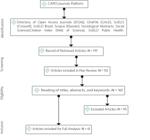
For retrieval of the studies, the following databases indexed in the CAPES Journal Portal were accessed: Directory of Open Access Journals (DOAJ); OneFile (GALE); SciELO (CrossRef); SciELO Brazil; Scopus (Elsevier); Sociological Abstracts; Social Sciences Citation Index (Web of Science); SciELO Public Health. Thus, in the first search, we retrieved 203 (2019/2) studies, and in the second search, 191 (2021/1), with the latter being the quantity adopted for the pre-analysis reading of the retrieved studies.
Inclusion and exclusion criteria
As the 3rd methodological step, we applied the criteria for exclusion and inclusion to determine the final corpus of articles for analysis. The first filter applied to the retrieved studies was the selection of only peer-reviewed primary studies using the instrument provided on the CAPES platform, resulting in the inclusion of 161 studies.
We selected only Brazilian-authored scientific articles in Portuguese, English, and Spanish, also including international journals, as long as they addressed the context of scientific production in Brazil. Our article retrieval search took place in two stages, in the second half of 2019 and the first half of 2021, respectively.
This two-staged search was justified by monitoring updated indexing in the current year of submission of this systematic review article and for minimizing retrieval errors due to oscillations and/or technical problems that may occur in these database sites (Sampaio & Mancini, 2007), with no significant difference in quantity between the searches.
Selection of studies and data extraction
The 4th step of the systematic review involved a methodological analysis of each retrieved primary study. Throughout the search strategy process, we followed the PRISMA (Preferred Reporting Items for Systematic Reviews and Meta-Analysis) writing guideline; thus, to discard studies that were out of scope, we elected two judges with experience in handling and publishing systematic reviews to review the titles, keywords, and abstracts. The guiding questions for this review process were as follows: a) Was the study conducted in Brazil? b) Is it a scientific article? c) Is it affiliated to the field of Psychology? d) Does it involve or present intervention research?
After this preliminary reading, the inclusion and exclusion discrepancies of the studies pointed out by the judges were discussed, and together they reached a final decision about the divergent studies. We then proceeded with a total of 61 articles for full reading. To characterize the scientific production of theoretical and/or empirical articles conducted in Brazil that have IR as a theoretical and methodological framework in the field of Psychology, we started by analyzing the following indicators: basic data (title, year of publication, journal), geographic region of the study, area of application, theoretical affiliation, and methodological tools used in each primary study.
For the selection and extraction of data, the authors developed a 15-item-instrument that allowed for the systematization and categorization of an information database regarding methodological elements, theoretical elements, and descriptive syntheses of each primary study analyzed. Figure 1 represents the flowchart of the methodological procedure for retrieving the studies in the following diagram.
Results
After carrying out the process described in the previous section, we now present Table 1 containing data that characterizes each of the articles that fit within the scope of analysis for this review:
The results indicate that the 61 articles in the corpus of this study were published in 23 different journals, with 13 that focused on Psychology, 4 Interdisciplinary, 2 focusing on Public Health, 2 on Education, 1 on Administration, and 1 on Linguistics. The journals are: Psicologia e Sociedade (n = 14); Revista de Psicologia da UFC (n = 11); Estudos e Pesquisas em Psicologia (n = 5); Ciência & Saúde Coletiva, Polis & Psique, and Interface - Comunicação, Saúde e Educação (n = 3); Psicologia Escolar e Educacional (n = 4); Cadernos de Psicologia Social do Trabalho and Estudos de Psicologia (n = 2); Arquivos Brasileiros de Psicologia, Avances en Psicologia Latino Americana, Cadernos EBAPE.BR, Colloquium Humanarun, International Journal of Developmental and Educational Psychology, Obutchénie, Paideia, Periferia, Physis, Psico-PUCRS, Bakthiana, Ciências Humanas, Psicologia e Saúde, and Sexualidad, Salud y Sociedad (n = 1). The publication years are: 2018 (n = 13); 2012, 2014, and 2016 (n = 8); 2017 (n = 7); 2013 (n = 6); 2019 (n = 5); 2011 (n = 4), and 2015 and 2020 (n = 1). Regarding the predominant regions of the studies based on the authors' institutional origin, we found: Southeast (n = 20), Northeast (n = 18), South (n = 17), and Midwest (n = 3), as well as inter-regional studies between South and Southeast (n = 2) and between South and Midwest (n = 1).
Regarding the manuscript types, 3 are theoretical, 19 are empirical, and 39 are theoretical-empirical works. In terms of the area of study, they are distributed as follows: Social Psychology (n = 22), School/Educational Psychology (n = 18), Mental/Public/Community Health (n = 15), Developmental Psychology (n = 7), Industrial and Organizational Psychology (n = 4), Cognitive Psychology (n = 1), Health Psychology (n = 1), and Research Methodology (n = 1).
The theoretical-epistemological affiliations to which the articles are linked are: Poststructuralist (n = 37); Institutional Analysis (n = 14); Cultural-historical (n =8); Schizoanalysis (n = 7); Cartography (n = 6); Psychoanalysis (n = 3); Decolonial Theories (n = 2); Activity Therapy, Ethnography, Gender/Feminist Studies, Frankfurt School, Theory of Mind, Social Cognition, Activity Theory, Bakhtinian Theory, Phenomenology, Dialectical-Historical Materialism, Paulo Freire, Liberation Psychology, and Developmental/Maturational Theories (n = 1).
Finally, regarding the presented methodological tools, they are: Groups/Workshops (n = 35); Field Diaries (n = 22); Interviews (n = 15); Participant Observation (n = 11); Video and Photo Production/Audiovisual Recording (n = 6); Restitution/Feedback Meetings (n = 5); Case Study and Narratives (n = 2); Document, Film Screening, Website Debate, Waiting Room, Fanzine, Event Organization, Psychological Testing, and Questionnaires (n = 1). It is worth noting that in several articles, more than one area of study, theoretical-epistemological affiliation, and methodological tool were employed in the construction of the published text. Therefore, the sum of the numbers highlighted in the previous three paragraphs is greater than 61 (the number of analyzed articles).
Discussion
The results presented here will be discussed based on the following markers: study region, area of study, theoretical affiliation, and methodological tools. In the spaces where psychology-based IR works circulate, there is a majority of publications in journals within the field of psychology itself, with institutional origins concentrated in the Southeast, Northeast, and South regions, with few publications from researchers in the Midwest region and none from the North. The unequal production of IR, being lower in the North and Midwest regions, coincides with the greater quantitative concentration of Psychology graduate programs (both academic and professional, public, and private) in the South, Southeast, and Northeast regions (Tomanari et al., 2019). This topography also reflects the history of the creation of Brazilian Psychology graduate programs, which started in the 1960s and 1970s in the Southeast, expanding to the Northeast and South in the 1980s, and reaching the North and Midwest regions more strongly in the late 1990s and early 2000s (Resende et al., 2019).
Under these circumstances, we raise the question of how much the limited production of IR in the North and Midwest regions reflects the progress of psychological research in regions that have historically encountered challenges in enhancing doctoral-level faculty training and consequently experienced a delayed implementation of research centers and laboratories (Gomes et al., 2019). It is worth noting that, despite the significant growth in the number of courses and researchers, the Northeast region still faces low funding for research programs and scholarships. Despite such adversity, academic productions in the Northeast have focused their problematizations, linking research to university extension activities, and endorsing the university's social function of contributing to regional transformation and development (Barros et al., 2019 a ; Morais et al., 2019). These are also issues that drive IR. Therefore, this could explain the nearly equivalent production compared to the South-Southeast axis.
Regarding the areas of study, firstly, there is a predominance of articles related to the area of Social Psychology (n = 22) (Adrião et al., 2017; Amorim et al., 2017; Barros et al., 2018; Benício et al., 2018; Brito & Zanella, 2017; Capelini & Tavares, 2016; Cavarzan & De Camargo, 2017; Colaço et al., 2018; Barros et al., 2019b; Deusdará & Rocha, 2012; Félix-Silva et al., 2016; Kroef et al., 2020; Lazzarotto et al., 2013; Lazzarotto & Axt, 2012; Nobre et al., 2018; Oliveira, Costa & de Camargo, 2018; Reis & Alvim, 2017; Romagnoli, 2016; Santos et al., 2011; Scisleski & Galeano, 2018; Soares et al., 2014; Souza & Viotto Filho, 2018).
Secondly, we have School/Educational Psychology (n = 18) (Barros & Colaço, 2013 b ; Barros et al., 2018; Bonamigo et al., 2014; Clarindo & Colaço, 2014; Colmenero Cunha & Bicalho, 2018; Deusdará & Rocha, 2012; Dias, 2012; Hansen et al., 2012; Melsert & Bicalho, 2012; Miranda et al., 2016; Mourão, 2017; Rezende et al., 2018; Ribeiro et al., 2016; Rodrigues & Cruz, 2013; Rodrigues et al., 2012; Rosa, 2011; Santos et al., 2011).
In general, Social Psychology research addresses the importance of questioning institutions as systems that construct reality, either through the denaturalization of forms of macropolitical social administration or the density of micropolitical capillarization processes of contemporary subjectivation. As an example, we can mention the research by Barros et al. (2018), Scisleski and Galeano (2018), Romagnoli (2014), and Capelini and Tavares (2016).
Barros et al. (2018) questioned how the macropolitical conditions for pacifying criminal groups impacted the daily lives of young people living in vulnerable contexts. Scisleski and Galeano (2018) analyzed how state policies influenced the production of a youth seen as marginal in shopping centers in Campo Grande, MS. Capelini and Tavares (2016) examined how macropolitical conditions affected the micropolitical daily life of the Human Rights Defense Center in Serra, ES. Finally, Romagnoli (2014) researched how macropolitical and micropolitical conditions affected the daily life of the Centro de Referência de Assistência Social (Reference Center for Social Assistance).
To summarize, research related to Social Psychology, especially theoretical-empirical ones, has produced theoretical and methodological elements that contribute to strengthening the social commitment of IR, as mentioned by Romagnoli (2014, p. 51):
To bet on the heterogeneity of the concept and on tracking how it is delineated, not only theoretically but especially in our practices and research, is to bet on the life that increasingly becomes precarious in the academic space, and to insist on the researcher's political positioning as a social agent.
Regarding research in the field of School and Educational Psychology, we observe a demand from researchers to study alongside participants and schools, deconstructing institutions and discursive practices. For example, we can mention the research conducted by Miranda et al. (2017), Mourão (2017), Ribeiro et al. (2016), and Bonamigo et al. (2014). Miranda et al. (2017, p. 58) emphasized that "from the discussion of the first ideas to editing, including filming, the stages were marked by the participants", while Mourão (2017, p. 69) highlighted that "the use of video production in the Workshop involved the construction of co-authorship since the group participated in the process, that is, in the intentionality and purpose of the production". Ribeiro et al. (2016) discussed the use of field diaries as a strategy that allowed for co-authorship of the research with participating teachers. Bonamigo et al. (2014) used restitution in their research to ensure the participation of students, teachers, parents, pedagogical coordination, and school principals.
Regarding research in the field of Mental and Public Health (n = 14) (Barbosa et al., 2014; Bongiovanni & Silva, 2019; Chassot & Silva, 2018; Severo et al., 2014; Fernandes & Joca, 2011; Londero & Paulon, 2018; Maciazeki-Gomes et al., 2016; Maurente et al., 2014; Nogueira & Paulon, 2019; Palombini et al., 2013; Paulon et al., 2011; Oliveira, Pezzato & Mendes, 2018; Romagnoli & Silva, 2019; Sade et al., 2013), also observe an interest from researchers in analyzing how macro and micro political conditions impacted public and mental health networks in Brazil, producing ways of being and existing in these contexts. For example, Nogueira and Paulon (2019) analyzed how the conceptions of health and madness, produced in macro and micro conditions, impacted a health network in a municipality in the State of Rio Grande do Sul. Similarly, Maurente et al. (2014) discussed how discursive practices around mental health care impacted the work of a mental health team.
Regarding theoretical affiliation, we highlight the claims of doing IR influenced by the discussions of the French institutionalist movement, also known as Institutional Analysis. Within this movement, there is a critique of power dynamics and interests as constitutive processes of the research field, especially when the researcher themselves interferes in the field through their act of researching, thus viewing research as an intervention (Barbosa et al., 2014; Barros et al., 2019a ; Benício et al., 2018; Rodrigues & Cruz, 2013; Romagnoli, 2014). In some works, IR is synonymous with cartography, with a focus on analyzing the processes of research as mediators of subjectivation, shaped not only by power dynamics but also by discursive/enunciative regimes, especially in terms of their ethical-political effects on social actors (Colmenero Cunha & Bicalho, 2018; Kroef et al., 2020; Melsert & Bicalho, 2012; Weber et al., 2012). Within the scope of Poststructuralism, Schizoanalysis is also worth mentioning, with seven articles mostly intersecting with Institutional Analysis and Cartography (Amorim et al., 2017; Lazzarotto & Axt, 2012; Lazzarotto et al., 2013; Romagnoli & Silva, 2019; Romagnoli, 2014; Sade et al., 2013; Soares et al., 2014).
Although not explicitly present in the theoretical foundations of IR in Brazil (Rocha & Aguiar, 2003), it is also relevant to situate the claims of IR within studies of Historical-Cultural Psychology and other theories derived from the tradition of historical-dialectical materialism (Barros & Colaço, 2013 a ; Brito & Zanella, 2017; Cavarzan & De Camargo, 2017; Clarindo & Colaço, 2014; Colmenero Cunha & Bicalho, 2018; Maciazeki-Gomes et al., 2016; Reis & Alvim, 2017; Rodrigues & Lopes de Oliveira, 2018; Rosa, 2011; Souza & Arinelli, 2019; Souza & Viotto Filho, 2018). The studies sought to understand the process of transformation within the researched communities using the theory of cultural mediation, as pointed out by Souza and Arinelli (2019, p. 14):
IR shifts the researcher’s place in the action and their own action, which also constitutes a psychological practice, placing the researcher as a producer of meanings and senses that must be considered both in the research and in the reorganization and direction of the practice". We believe that this mode of research is in line with Vygotsky (2004) when he argues that the method constitutes, simultaneously, both the path and the product of research.
Furthermore, research anchored in Historical-Cultural Psychology and Historical-Dialectical Materialism also emphasized the importance of the participation of research subjects in the process of elaborating discussions and results, reinforcing the action of "researching with". For example, we can mention the research by Souza and Viotto Filho (2018, p. 109): “We adopt the term intervention as a result of proposing on-site activities in schools, in which the subjects (administrators, teachers, students, and family members) actively participate alongside researchers in solving difficulties and directing research outcomes”.
This leads us to the final marker of the current discussion: the methodological tools. In general, we observe criticisms of the Cartesian paradigm of knowledge production from the perspective of the subject ABOUT the objects of research, with discussions questioning the supposed neutrality of the researcher and the realism of the world and research collaborators (Chassot & Silva, 2018; Maciazeki-Gomes et al., 2016; Miranda et al., 2017). Regarding this, Rocha and Aguiar (2003, p. 67) explicitly state that "the process of formulating IR deepens the rupture with traditional research approaches", and Macerata et al. (2019, p. 39) confirm that "The methodological approach of participatory IR encourages us to place the researcher and the researched side by side”. Through the horizontal nature of encounters, in IR, investigation works through micropolitical processes and contexts, in which human experiences come to life through collectivity, also highlighting the sociopolitical movements of the field of forces (Scisleski & Galeano, 2018; Maurente et al., 2014).
IR carries out its research action WITH the research agents, meaning that the production of knowledge occurs through horizontal relationships. In this sense, the processes of co-production and co-participation in research configure devices for enunciating the field's regimes of forces, signaling their heterogeneities and possibilities for constructing new discursive regimes of restructuring and re-institutionalizing relationships (Barros et al., 2018; Miranda et al., 2016; Mourão, 2017; Oliveira, Costa & de Camargo, 2018; Paulon et al., 2011; Ribeiro et al., 2016). Research collaborators are granted active participation to the construction of alliances and micropolitical engagements as materialities of discourses and knowledge (Bonamigo et al., 2014; Bongiovanni & Silva, 2019; Capelini & Tavares, 2016; Deusdará & Rocha, 2012; Lima & Dimenstein, 2016; Rodrigues & Lopes de Oliveira, 2018; Romagnoli, 2016; Santos et al., 2011; Souza & Arinelli, 2019; Souza & Filho, 2018).
Methodological tools allow the construction of alternative strategies to the positivist tradition. The production of knowledge ceases to be a representation of reality and is conceived as a process of construction and transformation of the world, working with its actors and institutions.
Through these perspectives, the unique characterization attributed to IR is described in its very name: intervention. It involves recognizing that, within the processual nature of research, whether through the researcher's insertion in the field or through the relationships established by the researcher, as well as through the field's own determinations and agency, intervention configures processes of differentiation in the field, constructing new sociopolitical and micropolitical arrangements (Barros & Colaço, 2013 a ; Clarindo & Colaço, 2014; Félix-Silva et al., 2016; Lazzarotto & Axt, 2012; Palombini et al., 2013; Romagnoli & Silva, 2019). Intervention strategies provide an opportunity for problematizing and questioning the situations and processes under investigation, allowing the denaturalization of institutional practices, as well as the opportunity for configuring new enunciations (Amorim et al., 2017; Colaço et al., 2018). As a coexisting consequence, in IR, every intervention mobilizes the transformation of micropolitical arrangements, enabling the protagonism of the actors themselves as they construct new arrangements within the heterogeneity of the research field (Barros & Colaço, 2013b; Brito & Zanella, 2017; Dias, 2012; Lazzarotto et al., 2013).
In these contexts, research strategies are predominantly established through co-participatory and dialogical relationships such as groups/workshops, participant observation, interviews, as well as the recording of discourses in a field diary. The strategies of groups and workshops allow for the construction of discussions and analyses of the construction and consequences of social practices, where research collaborators narrate their trajectories or even reproduce actions from their daily lives. They also function as important experiences of self-management, mobilizing experiences of autonomy (Adrião et al., 2017; Barros & Colaço, 2013 a ; Barros et al., 2018; Barros et al., 2019b; Benício et al., 2018; Bongiovanni & Silva, 2019; Brito & Zanella, 2017; Cavarzan & De Camargo, 2017; Chassot & Silva, 2018; Clarindo & Colaço, 2014; Colaço et al., 2018; Dias, 2012; Duarte, 2015; Fernandes & Maraschin, 2012; Hansen et al., 2012; Maciazeki-Gomes et al., 2016; Melsert & Bicalho, 2012; Miranda et al., 2017; Miranda et al., 2016; Mourão, 2017; Oliveira, Pezzato & Mendes, 2018; Palombini et al., 2013; Paulon et al., 2011; Oliveira, Costa & de Camargo, 2018; Pozzana & Kastrup, 2017; Rodrigues & Lopes de Oliveira, 2018; Rodrigues et al., 2012; Romagnoli, 2016; Severo et al., 2014; Soares et al., 2014; Souza & Arinelli, 2019; Souza & Viotto Filho, 2018).
Through interviews and participant observations, we observed a greater analysis of discursive and non-discursive practices that constitute the repertoire of subjectivation of the fields. Discourses are the analyzers of subjectivation processes, shaped by regimes of enunciation of knowledge and their respective powers. Therefore, the methodological strategies of interviews and observations allow for closer proximity and engagement with field issues, so that knowledge is produced through the implications of the relationships built with the field (Amorim et al., 2017; Barbosa et al., 2014; Barros & Colaço, 2013 b ; Barros et al., 2018; Brito & Zanella, 2017; Capelini & Tavares, 2016; Cavarzan & De Camargo, 2017; Chassot & Silva, 2018; Colaço et al., 2018; Colmenero Cunha & Bicalho, 2018; Deusdará & Rocha, 2012; Lima & Dimenstein, 2016; Maciazeki-Gomes et al., 2016; Melsert & Bicalho, 2012; Mourão, 2017; Oliveira, Pezzato & Mendes, 2018; Paulon et al., 2011; Romagnoli & Silva, 2019; Romagnoli, 2016; Rosa, 2011; Souza, 2019).
Field diaries constitute an interesting tool for the interface between observation and immersion analysis in the field by researchers. They also allow for an analysis of the research's own engagement strategies. The diaries reconstruct the production of researchers' experiences and perceptions and their mobilizations concerning the field's arrangements (Amorim et al., 2017; Barros et al., 2018; Barros et al., 2018; Dias, 2012; Félix-Silva et al., 2016; Kroef et al., 2020; Lazzarotto et al., 2013; Londero & Paulon, 2018; Palombini et al., 2013; Paulon et al., 2011; Oliveira, Pezzato & Mendes, 2018; Pozzana & Kastrup, 2017; Reis & Alvim, 2017; Ribeiro et al., 2016; Rodrigues & Lopes de Oliveira, 2018; Rosa, 2011; Soares et al., 2014).
These methodological tools provide an understanding of the conditions for the development of IR driven by processes that enable approximations between the lived experience of the field and the micropolitical constructions of individuals influenced by different institutional contexts. According to Romagnoli (2016), the focus of IR lies in the discussions and construction of aesthetic-ethical-political strategies as alternatives for knowledge production and epistemological mobilization that highlight the different contours of human experiences, as well as the possibilities, or lack thereof, of including alterities within power strategies. These are issues that are rarely addressed by the instrumental and technical limitations of positivist methods and are guided by a supposed neutrality.
Conclusion
Considering the objective of understanding the contributions of IR to psychological theory and practice through the characterization of scientific production, both theoretical and empirical, conducted in Brazil, and having IR as a theoretical-methodological framework, this study allowed us to outline an overview of IR in Brazil based on the following indicators: study's geographical region, areas of expertise, theoretical affiliation, and methodological tools among researchers, stemming from the following research question: What are the contributions of IR to psychological theory and practice?
The results indicate that IR has been understood as a research WITH, being that it occurs alongside research participants who have a collaborative role in data production and knowledge construction. In this regard, it has been characterized as participatory research, reflecting its politicized, critical, and active bias towards reality, thus distinguishing itself from positivist research primarily by addressing problems and questions hidden by positivist methods, as well as subverting the alleged neutrality of research by producing implicated knowledge and an alternative politics of narratives and knowledge production.
Another relevant point from the results is the inequality in the geographical distribution of authorship in the analyzed publications, which are mainly concentrated in the Southeast region. The absence of publications by authors from the Northern region stands out. Although the geographical distribution of IR across Brazilian regions reflects, to some extent, the inequalities in resources and opportunities, given the results regarding the Northern and Midwest regions, it is noteworthy that, despite these inequities, a significant production was found in the Brazilian Northeast, ranking second only to the Southeast. This topography reflects the history of graduate programs in psychology in Brazil, as well as the development of psychology research in regions that have long struggled with the difficulties of improving doctoral-level teacher training and the consequent delayed implementation of research centers and laboratories.
It is plausible to consider that, due to the participatory nature of IR, which aims to combine knowledge production and social transformation through involvement in processes of denaturalizing rooted practices and recognizing that theories and practices are co-emergent, most studies employing this research perspective are characterized as theoretical-empirical.
Referring to the relationship between areas of interest and interlocutor fields, most research relate to the areas of Social Psychology and School/Educational Psychology. Despite the multiplicity of theoretical and methodological approaches, the main theoretical affiliations are within the Poststructuralist perspective, with emphasis on Schizoanalysis, often intersecting with Institutional Analysis and Cartography.
Furthermore, it is worth noting that the reviewed articles predominantly employ methodological tools based on co-participatory and dialogical relationships, such as groups/workshops, participant observation, interviews, and the recording of discourses in field diaries.
The results also highlight the potential of IR in diverse fields of study, as well as its impact on the politicization of collaborators, who are displaced from their position regarding knowledge production to democratize the research process for social transformation. This bias is materialized in researching WITH, which has produced alternative research arrangements characterized by the involvement of researchers with the field and co-participatory research.
Finally, it is important to emphasize that the results are limited to the methodological strategies adopted, which defined the scope of the analysis. We believe that this scope reflects the reality of knowledge production and work guidelines within IR in Brazil from 2011 to 2021. However, we acknowledge that other ways of conceptualizing, producing, and working with IR may exist beyond the reviewed publications. Other search engines could lead to different results, thus opening possibilities for future research on IR based on different intersections and methodological designs.
Acknowledgments
We thank the funding provided, to some of the authors of this study, by the Coordenação de Aperfeiçoamento de Pessoal de Nível Superior (CAPES, Coordination for the Improvement of Higher Education Personnel), Fundação Cearense de Apoio ao Desenvolvimento Científico e Tecnológico (FUNCAP, State of Ceara's Foundation for the Support of Scientific and Technological Development), and Conselho Nacional de Desenvolvimento Científico e Tecnológico (CNPQ, National Council for Scientific and Technological Development).
References
-
Adrião, K. G., Menezes, J. D. A., Souza, L. B. D., & Falcão, R. (2017). Mulheres e homens jovens: Gozos e interdições, poder e desigualdades. Psicologia & Sociedade, 29, e153790. https://doi.org/10.1590/1807-0310/2017v29153790
» https://doi.org/10.1590/1807-0310/2017v29153790 -
Aguiar, K. F., & Rocha, M. L. (2007). Micropolítica e o exercício da pesquisa-intervenção: Referenciais e dispositivos em análise. Psicologia: Ciência e Profissão, 27(4), 648-663. http://doi.org/10.1590/S1414-98932007000400007
» http://doi.org/10.1590/S1414-98932007000400007 -
Amorim, A. K. D. M. A., Nobre, M. T., Coutinho, A. F. J., & Gomes, F. E. S. (2017). Entre canteiros e nuvens, perigos e guarda-chuvas: A experiência de uma pesquisa-intervenção com pessoas em situação de rua. Estudos de Psicologia (Natal), 22(4), 389-400. https://doi.org/10.22491/1678-4669.20170040
» https://doi.org/10.22491/1678-4669.20170040 -
Barbosa, L. B., Dimenstein, M., & Leite, J. F. (2014). Mulheres, violência e atenção em saúde mental: Questões para (re) pensar o acolhimento no cotidiano dos serviços. Avances en Psicología Latinoamericana, 32(2), 309-320. https://doi.org/10.12804/apl32.2.2014.09
» https://doi.org/10.12804/apl32.2.2014.09 - Baremblitt, G. (1992). Compêndio de análise institucional Rosa dos Tempos.
-
Barros, J. P. P., & Colaço, V. F. R. (2013a). Produção de sentidos sobre saúde em um grupo de discussão com adolescentes de Fortaleza. Psicologia & Sociedade, 25(3), 674-684. https://doi.org/10.1590/S0102-71822013000300021
» https://doi.org/10.1590/S0102-71822013000300021 -
Barros, J. P. P., & Colaço, V. F. R. (2013b). Sentidos sobre "sexualidade" e "drogas" entre adolescentes no contexto escolar. Estudos e Pesquisas em Psicologia, 13(1), 63-85. http://pepsic.bvsalud.org/scielo.php?script=sci_arttext&pid=S1808-42812013000100005&lng=pt&tlng=pt
» http://pepsic.bvsalud.org/scielo.php?script=sci_arttext&pid=S1808-42812013000100005&lng=pt&tlng=pt -
Barros, J. P. P., Aquino, C. A. B., Miranda, L. L., Mello, R. P., Ximenes, V. M., Colaço, V. F. R., Lima, A. F., Bomfim, Z. A. C., Santos, W. S., & Martins, K. P. H. (2019a). Problemáticas sociais e suas relações com a pesquisa e a extensão: Contribuições do Programa de Pós-Graduação em Psicologia da UFC. Estudos de Psicologia (Natal), 24(2), 147-158. https://doi.org/10.22491/1678-4669.20190017
» https://doi.org/10.22491/1678-4669.20190017 -
Barros, J. P. P., Paiva, L. F. S., Rodrigues, J. S., da Silva, D. B., & Leonardo, C. dos S. (2018). “Pacificação” nas periferias: Discursos sobre as violências e o cotidiano de juventudes em Fortaleza. Revista de Psicologia, 9(1), 117-128. http://www.periodicos.ufc.br/psicologiaufc/article/view/30781
» http://www.periodicos.ufc.br/psicologiaufc/article/view/30781 -
Barros, M. E. B., Muniz, H. P., & Brito, J. M. (2019b). A saúde do trabalhador da educação: A experiência de constituição de Cosates como dispositivo de intervenção numa rede municipal de ensino. Cadernos de Psicologia Social do Trabalho, 22(1), 15-28. https://doi.org/10.11606/issn.1981-0490.v22i1p15-28
» https://doi.org/10.11606/issn.1981-0490.v22i1p15-28 -
Benício, L. F. S., Barros, J. P. P., & Silva, D. B. (2018). Entre sufocamentos e alguns possíveis: Violência urbana e políticas públicas. Revista Polis e Psique, 8(3), 129-156. https://doi.org/10.22456/2238-152X.86349
» https://doi.org/10.22456/2238-152X.86349 - Besset, V. L., Coutinho, L. G., & Cohen, R. H. P. (2008) Pesquisa Intervenção com adolescentes: Contribuições da psicanálise. In L. R. Castro & V. L. Besset (Orgs.), Pesquisa Intervenção na infância e juventude (pp. 94-112). Trarepa/FAPERJ.
-
Bonamigo, I. S., Tondin, C. F., Risson, A. P., & Solvalagem, A. L. (2014). Pesquisa-intervenção sobre violências em escolas. Psicologia Escolar e Educacional, 18, 519-527. https://doi.org/10.1590/2175-3539/2014/0183782
» https://doi.org/10.1590/2175-3539/2014/0183782 -
Bongiovanni, J., & Silva, R. A. N. D. (2019). Desafios da desinstitucionalização no contexto dos serviços substitutivos de saúde mental. Psicologia & Sociedade, 31, e190259. https://doi.org/10.1590/1807-0310/2019v31190259
» https://doi.org/10.1590/1807-0310/2019v31190259 -
Booth, A., Noyes, J., Flemming, K., Moore, G., Tunçalp, Ö., & Shakibazadeh, E. (2019). Formulating questions to explore complex interventions within qualitative evidence synthesis. BMJ Global Health, 4(Suppl 1), e001107. https://doi.org/10.1136/bmjgh-2018-001107
» https://doi.org/10.1136/bmjgh-2018-001107 -
Brito, R. D. V. A. D., & Zanella, A. V. (2017). Formação ética, estética e política em oficinas com jovens: Tensões, transgressões e inquietações na pesquisa-intervenção. Bakhtiniana: Revista de Estudos do Discurso, 12(1), 42-64. https://doi.org/10.1590/2176-457326093
» https://doi.org/10.1590/2176-457326093 -
Capelini, T. C., & Tavares, G. M. (2016). Concepções de Estado que atravessam movimentos sociais: Análises provocativas. Estudos e Pesquisas em Psicologia, 16(3), 668-695. http://pepsic.bvsalud.org/scielo.php?script=sci_arttext&pid=S1808-2812016000300002&lng=pt&tlng=pt
» http://pepsic.bvsalud.org/scielo.php?script=sci_arttext&pid=S1808-2812016000300002&lng=pt&tlng=pt -
Cavarzan, D. D. F. K., & de Camargo, D. (2017). Grupo de apoio social para mães de crianças diagnosticadas com TDAH. International Journal of Developmental and Educational Psychology, 3(1), 93-101. https://doi.org/10.17060/ijodaep.2017.n1.v3.978
» https://doi.org/10.17060/ijodaep.2017.n1.v3.978 -
Chassot, C. S., & Silva, R. A. N. D. (2018). A pesquisa-intervenção participativa como estratégia metodológica: Relato de uma pesquisa em associação. Psicologia & Sociedade, 30, e181737. https://doi.org/10.1590/1807-0310/2018v30181737
» https://doi.org/10.1590/1807-0310/2018v30181737 -
Clarindo, J. M., & Colaço, V. F. R. (2014). O papel do grupo na relação entre mediação e construção do conhecimento. Revista de Psicologia, 5(2), 85-95. http://www.periodicos.ufc.br/psicologiaufc/article/view/1478
» http://www.periodicos.ufc.br/psicologiaufc/article/view/1478 -
Colaço, V. F. R., Adrião, K. G., & Menezes, J. A. (2018). Implicações políticas na pesquisa-intervenção com jovens. Revista de Psicologia, 9(1), 8-17. http://www.periodicos.ufc.br/psicologiaufc/article/view/20638
» http://www.periodicos.ufc.br/psicologiaufc/article/view/20638 -
Colmenero Cunha, T., & Bicalho, P. P. G. (2018). Por uma concepção política de conflito escolar. Revista de Psicologia, 9(1), 70-80. http://www.periodicos.ufc.br/psicologiaufc/article/view/20508
» http://www.periodicos.ufc.br/psicologiaufc/article/view/20508 - Costa, A. B., & Zoltowski, A. P. C. (2014). How to write a systematic review article. In S. H. Koller, M. C. P. de Paula Couto, & J. V. Hohendorff (Orgs.), Manual of scientific production (pp. 55-70). Penso.
-
Deusdará, B., & Rocha, M. L. D. (2012). Cartografias da escola: Controle e práticas de comunicação em análise. Psicologia & Sociedade, 24, 373-381. https://doi.org/10.1590/S0102-71822012000200015
» https://doi.org/10.1590/S0102-71822012000200015 -
Dias, R. D. O. (2012). Produção da vida nos territórios escolares: Entre universidade e escola básica. Psicologia & Sociedade, 24(spe), 67-75. https://doi.org/10.1590/S0102-71822012000400011
» https://doi.org/10.1590/S0102-71822012000400011 -
Duarte, D. A. (2015). A supervisão enquanto dispositivo: Narrativa docente do estágio profissional em psicologia do trabalho. Interface - Comunicação, Saúde, Educação, 19(52), 133-144. https://doi.org/10.1590/1807-57622014.0170
» https://doi.org/10.1590/1807-57622014.0170 -
Félix-Silva, A. V., Sales, R. D. C. M., & Soares, G. P. (2016). Modos de viver e fazer arte de pessoas em situação de rua. Estudos de Psicologia (Natal), 21, 46-57. https://doi.org/10.5935/1678-4669.20160006
» https://doi.org/10.5935/1678-4669.20160006 -
Fernandes, A. M. D., & Joca, E. C. (2011). O 18 de maio como espaço de investigação e formação. Psicologia & Sociedade, 23(spe), 170-176. https://doi.org/10.1590/S0102-71822011000400020
» https://doi.org/10.1590/S0102-71822011000400020 -
Fernandes, R. B. P., & Maraschin, C. (2012). Com-partilhando inscrições: Experiências de oficinas em curso. Revista Psicologia e Saúde, 4(2), 126-134. http://pepsic.bvsalud.org/scielo.php?script=sci_arttext&pid=S2177-093X2012000200005&lng=pt&tlng=pt
» http://pepsic.bvsalud.org/scielo.php?script=sci_arttext&pid=S2177-093X2012000200005&lng=pt&tlng=pt -
Gomes, G. V. A., Costa e Silva, C., Zanini, D. S., Cardoso, L. M. (2019). Avaliação Psicológica na pós-graduação: Um panorama das regiões Centro-Oeste, Nordeste e Norte do Brasil. Estudos de Psicologia (Natal), 24(2), 181-192. https://doi.org/10.22491/1678-4669.20190020
» https://doi.org/10.22491/1678-4669.20190020 -
Hansen, J., Vieira, V., Westphal, J. P., & Vieira, M. L. (2012). Prontidão escolar: Uma experiência de pesquisa-intervenção. Arquivos Brasileiros de Psicologia, 64(2), 115-129. http://pepsic.bvsalud.org/scielo.php?script=sci_arttext&pid=S1809-52672012000200010&lng=pt&tlng=pt
» http://pepsic.bvsalud.org/scielo.php?script=sci_arttext&pid=S1809-52672012000200010&lng=pt&tlng=pt -
Kroef, R. F. S., Gavillon, P. Q., & Ramm, L. V. (2020). Diário de Campo e a Relação do(a) Pesquisador(a) com o Campo-Tema na Pesquisa-Intervenção. Estudos e Pesquisas em Psicologia, 20(2), 464-480. https://doi.org/10.12957/epp.2020.52579
» https://doi.org/10.12957/epp.2020.52579 -
Lazzarotto, G. D. R., Carvalho, J. D. D., & Becker, J. L. (2013). Acompanhando micropolíticas juvenis: Estratégias clínico-institucionais. Psicologia & Sociedade, 25(2), 55-64. https://doi.org/10.1590/S0102-71822013000600008
» https://doi.org/10.1590/S0102-71822013000600008 -
Lazzarotto, G., & Axt, M. (2012). Uma singular pragmática do escrever: Um diário coletivo. Revista Polis e Psique, 2(1), 120-136. https://doi.org/10.22456/2238-152X.30511
» https://doi.org/10.22456/2238-152X.30511 -
Lima, M., & Dimenstein, M. (2016). O apoio matricial em saúde mental: uma ferramenta apoiadora da atenção à crise. Interface - Comunicação, Saúde, Educação, 20(58), 625-635. https://doi.org/10.1590/1807-57622015.0389
» https://doi.org/10.1590/1807-57622015.0389 -
Londero, M. F. P., & Paulon, S. M. (2018). Por um devir bicicleta no apoio à rede de saúde. Psicologia & Sociedade, 30, e169755. https://doi.org/10.1590/1807-0310/2018v30169755
» https://doi.org/10.1590/1807-0310/2018v30169755 -
Macerata, I., Soares, J. G. N. & Oliveira, A. M. (2019). A pesquisa-intervenção como pesquisa-apoio: o caso do POP RUA. Saúde e Sociedade, 28(4), 37-48. https://doi.org/10.1590/S0104-12902019190703
» https://doi.org/10.1590/S0104-12902019190703 -
Maciazeki-Gomes, R. D. C., Souza, C. D. D., Baggio, L., & Wachs, F. (2016). O trabalho do agente comunitário de saúde na perspectiva da educação popular em saúde: Possibilidades e desafios. Ciência & Saúde Coletiva, 21(5), 1637-1646. https://doi.org/10.1590/1413-81232015215.17112015
» https://doi.org/10.1590/1413-81232015215.17112015 -
Maraschin, C., Rocha, M. L. D., & Kastrup, V. (2015). ICT Intervention-Research in a mental health clinic in Brazil. Revista Polis e Psique, 5(3), 94-118. https://doi.org/10.22456/2238-152X.55770
» https://doi.org/10.22456/2238-152X.55770 -
Maurente, V. S., Freitag Tanikado, G. V., & Maraschin, C. (2014). Análise de Controvérsias no Campo da Saúde Mental a partir de uma Pesquisa-Intervenção: Para uma Política dos Fazeres em Campos de Saberes Heterogêneos. Psico, 45(4), 568-577. https://doi.org/10.15448/1980-8623.2014.4.17020
» https://doi.org/10.15448/1980-8623.2014.4.17020 -
Melsert, A. L. M., & Bicalho, P. P. G. (2012). Desencontros entre uma prática crítica em psicologia e concepções tradicionais em educação. Psicologia Escolar e Educacional, 16(1), 153-160. https://doi.org/10.1590/S1413-85572012000100016
» https://doi.org/10.1590/S1413-85572012000100016 -
Miranda, L. L., El Khouri, M. M., Sousa , Filho J. A., & de Oliveira, E. N. P. (2017). O vídeo como dispositivo na pesquisa com jovens estudantes: Contorno(s) estético-ético-político(s). Revista de Psicologia, 8(1), 53-64. http://www.periodicos.ufc.br/psicologiaufc/article/view/18790
» http://www.periodicos.ufc.br/psicologiaufc/article/view/18790 -
Miranda, L. L., Oliveira, E. N. P. D., Shioga, J. E. M., & Rodrigues, D. C. (2016). Pesquisando com jovens na escola: Desafios da pesquisa-intervenção em dois contextos escolares. Psicologia Escolar e Educacional, 20(2), 245-254. https://doi.org/10.1590/2175-353920150202958
» https://doi.org/10.1590/2175-353920150202958 -
Morais, N. A., Souza, L. E. C., Maia, L. M., & Teixeira, L. C. (2019). Desafios e perspectivas de um Programa de Pós-Graduação em Psicologia de uma instituição privada no Nordeste brasileiro. Estudos de Psicologia (Natal), 24(2), 159-170. https://doi.org/10.22491/1678-4669.20190018
» https://doi.org/10.22491/1678-4669.20190018 -
Moreira, A. da S., & Coutinho, L. G. (2018). Efeitos da medicalização na travessia adolescente. Revista de Psicologia, 9(1), 53-63. http://www.periodicos.ufc.br/psicologiaufc/article/view/20509
» http://www.periodicos.ufc.br/psicologiaufc/article/view/20509 -
Mourão, L. C. C. B. (2017). A oficina de vídeo como potência de pesquisa em psicologia: Luz, câmera, criação! Revista de Psicologia, 8(1), 65-74. http://www.periodicos.ufc.br/psicologiaufc/article/view/18791
» http://www.periodicos.ufc.br/psicologiaufc/article/view/18791 -
Nobre, M. T., Moreno, N. S., Amorim, A. K. D. M. A., & Souza, E. C. D. (2018). Narrativas de modos de vida na rua: Histórias e percursos. Psicologia & Sociedade, 30, e175636. https://doi.org/10.1590/1807-0310/2018v30175636
» https://doi.org/10.1590/1807-0310/2018v30175636 -
Nogueira, C. S., & Paulon, S. M. (2019). A loucura interroga a gestão: O que aprender com ingovernáveis na era do trabalho imaterial. Cadernos de Psicologia Social do Trabalho, 22(2), 131-142. https://doi.org/10.11606/issn.1981-0490.v22i2p131-142
» https://doi.org/10.11606/issn.1981-0490.v22i2p131-142 -
Oliveira, É. C. S., Pezzato, L. M., & Mendes, R. (2018). Às margens do cuidado: regulações de gênero em uma equipe de saúde. Physis: Revista de Saúde Coletiva, 28(2), e280208. https://doi.org/10.1590/S0103-73312018280208
» https://doi.org/10.1590/S0103-73312018280208 -
Oliveira, M. C. S. L., Costa, D. L. P., & de Camargo, C. K. (2018). Infração juvenil feminina e socioeducação: um enfoque cultural e de gênero. Estudos e Pesquisas em Psicologia, 18(1), 72-92. http://pepsic.bvsalud.org/scielo.php?script=sci_arttext&pid=S1808-42812018000100005&lng=pt&tlng=pt
» http://pepsic.bvsalud.org/scielo.php?script=sci_arttext&pid=S1808-42812018000100005&lng=pt&tlng=pt -
Palombini, A. D. L., Onocko-Campos, R. T., Silveira, M., Gonçalves, L. L. M., Zanchet, L., Xavier, M. A. Z., & Marques, C. D. C. (2013). Relações entre pesquisa e clínica em estudos em cogestão com usuários de saúde mental. Ciência & Saúde Coletiva, 18(10), 2899-2908. https://doi.org/10.1590/S1413-81232013001000014
» https://doi.org/10.1590/S1413-81232013001000014 -
Paulon, S. M. (2005). A análise de implicação como ferramenta na pesquisa- intervenção. Psicologia & Sociedade, 17(3), 18-25. http://www.scielo.br/pdf/psoc/v17n3/a03v17n3
» http://www.scielo.br/pdf/psoc/v17n3/a03v17n3 -
Paulon, S. M., Gageiro, A. M., Costa, D. F. C. D., Londero, M. F. P., Pereira, R. G., Mello, V. R. C. D., & Rosa, R. H. D. (2011). Práticas clínicas dos profissionais' PSI'dos Centros de Atenção Psicossocial do Vale do Rio dos Sinos. Psicologia & Sociedade, 23(spe), 109-119. https://doi.org/10.1590/S0102-71822011000400014
» https://doi.org/10.1590/S0102-71822011000400014 -
Pozzana, L., & Kastrup, V. (2017). Da propriocepção à apropriação da experiência: Uma prática corporal com pessoas com deficiência visual. Periferia, 9(1), 368-382. https://doi.org/10.12957/periferia.2017.29409
» https://doi.org/10.12957/periferia.2017.29409 -
Reis, A., & Alvim, M. (2017). Estrangeirismos na cidade: Inventando o comum em zonas urbanas fronteiriças. Revista Polis e Psique, 6(3), 166-186. https://doi.org/10.22456/2238-152X.66835
» https://doi.org/10.22456/2238-152X.66835 -
Resende, G. C., Silva, I. R., & Calegare, M. G. A. (2019). O Programa de Pós-Graduação em Psicologia da Universidade Federal do Amazonas: Proposta e perspectivas para a região Amazônica. Estudos de Psicologia (Natal), 24(2), 125-135. https://doi.org/10.22491/1678-4669.20190015
» https://doi.org/10.22491/1678-4669.20190015 -
Rezende, A. O., Rezende Vorcaro, A. M., & Mendes Vilela, A. A. (2018). Tecendo a rede: A construção do caso clínico no atendimento institucional de jovens. Revista de Psicologia, 9(1), 64-69. http://www.periodicos.ufc.br/psicologiaufc/article/view/20637
» http://www.periodicos.ufc.br/psicologiaufc/article/view/20637 -
Ribeiro, D. M., Miranda, L. L., Feitosa, G. L., Cardoso, N. F. S., Oliveira, P. S. N., & de Oliveira, T. C. D. (2016). Pesquisando com professores: A centralidade do diário de campo e da restituição em uma pesquisa-intervenção. Revista de Psicologia, 7(1), 81-93. http://www.periodicos.ufc.br/psicologiaufc/article/view/3675
» http://www.periodicos.ufc.br/psicologiaufc/article/view/3675 -
Rocha, M. L., & Aguiar, K. F. (2003). Pesquisa-intervenção e a Produção de novas análises. Revista Psicologia Ciência e Profissão do CFP, 23(4), 64-73. http://pepsic.bvsalud.org/pdf/pcp/v23n4/v23n4a10.pdf
» http://pepsic.bvsalud.org/pdf/pcp/v23n4/v23n4a10.pdf -
Rodrigues, D. S., & Lopes de Oliveira, M. C. S. (2018). Grupo como dispositivo socioeducativo: Pesquisa-intervenção com adolescentes em cumprimento de prestação de serviço à comunidade. Revista de Psicologia, 9(1), 30-41. http://www.periodicos.ufc.br/psicologiaufc/article/view/30780
» http://www.periodicos.ufc.br/psicologiaufc/article/view/30780 - Rodrigues, H., & Souza, V. L. (1987). A Análise Institucional e a profissionalização do psicólogo. In H. Rodrigues, M. B. Leitão, & R. Barros (Orgs.), Grupos e instituições em análise (pp. 17-33). Editora Rosa dos Ventos.
- Rodrigues, H., Leitão, M. B., & Barros, R. (1992). Grupos e Instituições em Análise Editora Rosa dos Ventos.
-
Rodrigues, M. C., Ribeiro, N. N., & Cunha, P. C. (2012). Leitura mediada com enfoque sociocognitivo: Avaliação de uma pesquisa-intervenção. Paidéia (Ribeirão Preto), 22(53), 393-402. https://doi.org/10.1590/S0103-863X2012000300011
» https://doi.org/10.1590/S0103-863X2012000300011 -
Rodrigues, R. D. O., & Cruz, S. G. F. D. P. (2013). Interlocuções entre Psicologia e Direitos Humanos: Práticas interventoras. Revista de Ciências Humanas, 47(2), 198-210. http://hdl.handle.net/11449/127059
» http://hdl.handle.net/11449/127059 -
Romagnoli, R. C. (2014). O conceito de implicação e a pesquisa-intervenção institucionalista. Psicologia & Sociedade, 26(1), 44-52. https://doi.org/10.1590/S0102-71822014000100006
» https://doi.org/10.1590/S0102-71822014000100006 -
Romagnoli, R. C. (2016). Relações macropolíticas e micropolíticas no cotidiano do CRAS. Psicologia & Sociedade, 28(1), 151-161. https://doi.org/10.1590/1807-03102015v28n1p151
» https://doi.org/10.1590/1807-03102015v28n1p151 -
Romagnoli, R. C., & Silva, B. C. (2019). O cotidiano da intersetorialidade e as relações entre as equipes. Estudos e Pesquisas em Psicologia, 19(1), 107-126. http://pepsic.bvsalud.org/scielo.php?script=sci_arttext&pid=S1808-42812019000100007&lng=pt&tlng=pt
» http://pepsic.bvsalud.org/scielo.php?script=sci_arttext&pid=S1808-42812019000100007&lng=pt&tlng=pt -
Rosa, S. A. D. (2011). Dificuldades de atenção e hiperatividade na perspectiva histórico-cultural. Psicologia Escolar e Educacional, 15(1), 143-150. https://doi.org/10.1590/S1413-85572011000100015
» https://doi.org/10.1590/S1413-85572011000100015 -
Sade, C., Barros, L. M. R. de, Melo, J. J. M., & Passos, E. (2013). O uso da entrevista na pesquisa-intervenção participativa em saúde mental: o dispositivo GAM como entrevista coletiva. Ciência & Saúde Coletiva, 18(10), 2813-2824. https://doi.org/10.1590/s1413-81232013001000006
» https://doi.org/10.1590/s1413-81232013001000006 - Saidon, O., & Kamkhagi, V. R. (1987). Análise Institucional no Brasil: Favela, Hospício, Escola e Funabem Espaço e Tempo.
-
Sampaio, R. F., & Mancini, M. C. (2007). Estudos de revisão sistemática: Um guia para síntese criteriosa da evidência científica. Brazilian Journal of Physical Therapy, 11(1), 83-89. https://doi.org/10.1590/S1413-35552007000100013
» https://doi.org/10.1590/S1413-35552007000100013 -
Santos, C. B. D., Costa, Â. B., Carpenedo, M., & Nardi, H. C. (2011). A diversidade sexual no ensino de Psicologia. O cinema como ferramenta de intervenção e pesquisa: El cine como herramienta de intervención e investigación. Sexualidad, Salud y Sociedad (Rio de Janeiro), (7), 127-141. https://doi.org/10.1590/S1984-64872011000200006
» https://doi.org/10.1590/S1984-64872011000200006 -
Scisleski, A. C. C., & Galeano, G. B. (2018). Pesquisa-intervenção e juventudes: Enredando a produção de vidas marginais. Revista de Psicologia, 9(1), 18-29. http://www.periodicos.ufc.br/psicologiaufc/article/view/20631
» http://www.periodicos.ufc.br/psicologiaufc/article/view/20631 -
Severo, A. K. D. S., L’Abbate, S., & Campos, R. T. O. (2014). A supervisão clínico-institucional como dispositivo de mudanças na gestão do trabalho em saúde mental. Interface - Comunicação, Saúde, Educação, 18(50), 545-556. https://doi.org/10.1590/1807-57622013.0520
» https://doi.org/10.1590/1807-57622013.0520 -
Soares, G. P., Félix-Silva, A. V., & Figueiró, M. E. S. D. S. (2014). Teatro-menor: Cartografia em arte e experimentação de mulheres em situação de cárcere. Psicologia & Sociedade, 26(spe), 89-99. https://doi.org/10.1590/S0102-71822014000500010
» https://doi.org/10.1590/S0102-71822014000500010 -
Souza, F. S., & Viotto , Filho I. A. T. (2018). Pesquisa-intervenção formativa na escola: Dialogando com gestores, professores e estudantes. Colloquium Humanarum, 15(1), 105-118. https://journal.unoeste.br/index.php/ch/article/view/2138
» https://journal.unoeste.br/index.php/ch/article/view/2138 -
Souza, V. L. T. (2019). A pesquisa-intervenção como forma de inserção social em contextos de desigualdade: Arte e imaginação na escola. Psicologia em Revista, 25(2), 689-706. https://doi.org/10.5752/P.1678-9563.2019v25n2p689-706
» https://doi.org/10.5752/P.1678-9563.2019v25n2p689-706 -
Souza, V. L. T., & Arinelli, G. S. (2019). A dimensão revolucionária do desenvolvimento e o papel da imaginação. Obutchénie: Revista de Didática e Psicologia Pedagógica, 3(2), 1-22. https://doi.org/10.14393/OBv3n2.a2019-51560
» https://doi.org/10.14393/OBv3n2.a2019-51560 -
Tomanari, G. A. Y., Santos, A. A. A., & Mourão, L. (2019). Documento de Área 37: Psicologia Brasília: CAPES. https://capes.gov.br/images/Documento_de_%C3%A1rea_2019/PSICOLOGIA.pdf
» https://capes.gov.br/images/Documento_de_%C3%A1rea_2019/PSICOLOGIA.pdf -
Weber, L., Grisci, C. L. I., & Paulon, S. M. (2012). Cartografia: Aproximação metodológica para produção do conhecimento em gestão de pessoas. Cadernos EBAPE.BR, 10(4), 841-857. https://doi.org/10.1590/S1679-39512012000400005
» https://doi.org/10.1590/S1679-39512012000400005