
 Racism in early childhood education: a systematic review
Abstract
Objective The objective of this systematic review is to identify and analyze studies that address the relationship between racism and Early Childhood Education.
Method Using the descriptors 'racism', 'racial prejudice', and 'racial discrimination', separately associated with the term 'early childhood education', a search was carried out in the following databases: Periódicos Capes, Scientific Electronic Library Online (SciELO), Web of Science, and PubMed. This review followed methodological recommendations from the Preferred Reporting Items for Systematic Reviews and Meta-Analyses (PRISMA).
Results Initially, 1,240 publications were identified, which, after applying the inclusion criteria, were reduced to 20. These 20 publications were analyzed in terms of authorship, year, location, method, objective, and results.
Conclusion Despite an increase in recent years, the number of articles in this area is still limited, indicating the need to expand studies on this topic due to its relevance.
Keywords:
Child rearing; Racism; Systematic review
Resumo
Objetivo O objetivo desta revisão sistemática é identificar e analisar os estudos que abordam a relação entre racismo e Educação Infantil.
Método A partir dos descritores ‘racism’, ‘racial prejudice’ e ‘racial discrimination’, associados separadamente ao termo ‘early childhood education’, foi feita uma busca nas seguintes bases de dados: Periódicos Capes, Scientific Electronic Library Online (SciELO), Web of Science e PubMed. Esta revisão seguiu recomendações metodológicas do Preferred Reporting Items for Systematic reviews and Meta-Analyses (PRISMA).
Resultados Inicialmente, identificaram-se 1240 publicações que, depois de aplicados os critérios de inclusão, foram reduzidas para 20, que foram analisados em relação a autoria, ano, local, método, objetivo e resultados.
Conclusão Apesar do aumento nos últimos anos, o número de artigos dessa área ainda é reduzido, o que indica que é necessário ampliar os estudos sobre o tema devido à sua relevância.
Palavras-chave:
Educação infantil; Racismo; Revisão sistemática
Black children experience racism as of the first days of their lives (Santiago & Faria, 2021) and construct their identities based on the gaze of others (Gomes, 2005). According to Rudman (2004), negative unconscious feelings based on race and ethnicity are nurtured from early on. These feelings, however, can be unlearned through conscious effort, which justifies the importance of discussing racism from early childhood. Thus, paying attention to the unsaid is crucial, as discriminatory actions are often expressed more through body language than verbal communication (Sales Jr., 2006).
According to the United Nations Children's Fund (UNICEF, 2020), early childhood, which encompasses the period from zero to six years of age, school is one of the primary contexts for socialization (Felipe & Guizzo, 2013). The United Nations Educational, Scientific and Cultural Organization (UNESCO, 2016) advocates for the relevance of Early Childhood Education and its role in the full development of the child. For this reason, it is important to be mindful of the role played by early childhood educators in this period of developmental consolidation (Acosta-Marroquín, 2020).
In this scenario, in their pedagogical practice, educators can act as individuals who reinforce or prevent prejudiced situations. These actions depend on various aspects, ranging from the conception of race to the training of these teachers. Thus, it can be observed that there are still significant gaps regarding teachers' performance in a broader context, particularly regarding anti-discriminatory practices. According to Mawhinney et al. (2012), the lack of teacher training on these issues serves as a barrier, leaving teachers unsure of how to respond in situations that require their intervention. The authors assert that, within the educational sphere, the main requirement concerning racism is to reflect upon, teach, and learn about anti-racist culture. In this sense, Motta and Paula (2019) affirm that Black teachers can often act as activists in combating racial prejudice, as they understand the importance of addressing these issues in a space filled with opportunities.
In line with these points, Mantoan (2003) emphasizes that the discourse of exclusion should be kept away from the school environment. Studies show that, through multicultural education, it is possible to reduce discriminatory practices in this setting. To achieve this, Afro culture should be introduced to children from early childhood, and debates on race, ethnicity, and racialization in children's cultures should be encouraged.
According to Blair et al. (2001), the debate of these issues and the study of strategies to reduce racism from an early age are essential practices. Based on this, this research aimed to identify and analyze, through a systematic review, studies addressing the relationship between racism and Early Childhood Education, conceived as an important phase of education with numerous possibilities not only to identify discriminatory practices but also to intervene and diminish them, fostering the learning of new forms of socialization.
Method
Bibliometric research, of the systematic literature review type. Its development followed the guidelines of the Preferred Reporting Items for Systematic Reviews and Meta-Analyses (PRISMA) (Moher et al., 2015).
A comprehensive search was conducted in the databases of the Capes Journal portal, Web of Science, PubMed, and Scientific Electronic Library Online (SciELO). The first two databases were accessed using the Comunidade Acadêmica Federada (CAFe, Federated Academic Community) access credentials, provided by the Rede Nacional de Ensino e Pesquisa (RNP, National Education and Research Network), which granted access to both open access and non-open access articles. The descriptors used were 'racism', 'racial prejudice', and 'racial discrimination', all associated with the term 'early childhood education' using the Boolean operator 'and'. The search period was from September 2020 to March 2021.
Inclusion and Exclusion Criteria
For satisfactory results, different inclusion criteria were adopted. Articles had to: 1) be written in any language and published up to the year 2020; 2) specifically address racism in Early Childhood Education; 3) focus on children in early childhood; 4) have undergone peer review; and 5) be empirical studies. In parallel, the exclusion criteria included: 1) works that did not adhere to the format of a scientific article; 2) articles that did not specifically address the topic of Early Childhood Education; 3) duplicate publications; 4) articles that could not be located; 5) theoretical and/or case studies; and 7) research using secondary data.
Study Selection
The selection of studies was conducted independently and simultaneously. Three researchers evaluated the retrieved studies: two analyzed 50% of the corpus, and the third researcher, 100%. A fourth researcher monitored the entire process, examining both agreements and disagreements among the evaluators. In cases of disagreement, the fourth researcher also analyzed the article to decide on inclusion eligibility in the final research corpus.
Data Collection and Extraction Process
The following information was extracted from each included study: author, year, location, method, type of analysis (quantitative or qualitative), study design (longitudinal or cross-sectional), participants, objective, and results. The data were organized and stored in spreadsheets for better organization and summarization.
Risk of Bias
The research considered the inclusion of both quantitative and qualitative studies, with the latter being predominant in all the results. Thus, the risk of bias in the articles that were part of the final research corpus was analyzed using the instrument Appendix H Quality appraisal checklist - qualitative studies, developed by the National Institute for Health and Care Excellence (NICE, 2012), which assesses qualitative studies through a six-item checklist.
Results and Discussion
Based on the methodological procedure mentioned above, 1,240 articles were retrieved. Using the descriptors 'racism' and 'early childhood education', 995 articles were found in the Capes Jounal Portal, 14 in the Web of Science database, and two in SciELO. With the descriptors 'racial prejudice' and 'early childhood education', 49 articles were found in the Capes Jounal Portal, three in the Web of Science database, and two in SciELO. With the descriptors 'racial discrimination' and 'early childhood education', 173 articles were found in the Capes Jounal Portal, and two in the Web of Science database. The search was also carried out on the PubMed platform, but no studies related to the topic were found.
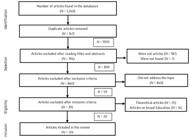
Out of the 1,240 identified articles, 147 were removed due to duplication. After reading the titles and abstracts, an additional 194 articles were excluded. Out of these, 187 did not meet the format of a scientific article, and seven were not found. After applying the exclusion criteria, 840 articles were further eliminated for not addressing the topic; 25 for being theoretical studies (non-empirical); and 14 for not exclusively addressing early childhood (0-6 years). After applying all these eligibility criteria, 20 articles were selected to compose the corpus of this review, as shown in Figure 1.
The risk of bias of the selected studies was assessed using the instrument Appendix H Quality appraisal checklist - qualitative studies (NICE, 2012), which assesses studies of a qualitative nature. It was observed that the studies that comprised the final corpus of the research presented a low risk of bias in most of the evaluated topics, considering five out of the six main topics indicated in the analysis, namely: 'theoretical approach', 'study design', 'data collection', 'reliability', and 'analysis'.
Regarding the sixth topic, 'ethical issues', the articles present weaknesses because, although participant-anonimity precautions were stated, information about the approval by an Ethics Committee was not reported by many studies (articles 1, 2, 13, 16, 18, 19, and 20). A relevant aspect regarding the writing/reporting of the research is that all articles accurately described their theoretical approach, the rigor of their methodology, and the context in which the research was conducted (Table 1).
Regarding the authors of the analyzed articles, Souto-Manning, Cheruvu, and Santiago each had two studies. The first two co-authored two articles, which were published in 2014 and 2016, respectively. Santiago's studies were published in 2014 and 2020. The other authors had only one publication addressing the topic.
In this review, no filter was applied regarding the year in which the publications began. It was discovered that the first article linking racism with Early Childhood Education was published in 2000 (article 20). Another article on the topic was published in 2005 (article 19), followed by a four-year gap until two more articles were published in 2009 and 2010 (articles 18 and 17). After another three-year gap without publications, an article on the topic was published in 2014 (article 16). After this period of considerable intervals in terms of publication, two articles on the topic were published in 2015 (articles 14 and 15) and two in 2016 (articles 12 and 13). No articles were published in 2017. From 2018 onwards, there was an increase in frequency and the number of articles per year: three articles in 2018 (articles 9, 10, and 11), three in 2019 (articles 6, 7, and 8), and five in 2020 (articles 1, 2, 3, 4, and 5).
Since then, it can be observed that the interest in the topic of racism within the context of Early Childhood Education has increased, with a consequent decrease in time interval between publications. Special attention is drawn to the importance of the years 2018, 2019, and 2020, which stand out as the period with the highest number of publications on the topic.
It is worth reflecting on the reasons for the considerable increase in studies on the subject. The fact that more attention has been focused on the process of promoting racial equality, associated with the use of technological tools for denouncing attacks and incidents involving assaults and deaths of Black citizens, has increased visibility regarding this reality (Santos, 2020). This reality may have brought forth a broader discussion of racism in different social spaces, such as within Early Childhood Education.
Furthermore, as asserted by Neves (2005), in recent decades, some minority groups have been fighting for their social recognition. This changing scenario fosters the establishment of actions aimed at promoting good coexistence among people of different ethnic and cultural backgrounds through affirmative policies, which can positively impact reflections on the subject.
Regarding location, the Americas have the highest number of research studies in this area. In North America, 11 articles were published in the United States and one in Canada, while in South America, five articles were produced, all from Brazil. The European continent contributed with three studies, all from England. Among the mentioned locations, some articles addressed the subject in a general manner, mentioning only the state the study occurred without specifying the city, which hinders a better contextualization of the results, as each reality has specificities to be observed. Furthermore, only two continents were included in the research, indicating that the topic has not been extensively studied in most continents and many regions of the world.
Regarding the method, most studies exclusively used observation to collect data (articles 3, 7, 8, 10, 14, 15, 16, 19, and 20). Other methods employed were interviews (articles 2, 6, and 9); group methodologies and interventions (articles 11, 17, and 18); combined observation, interview, and document analysis (articles 1 and 12); and one study used narratives and interviews (article 13). Two studies did not clarify the methods employed to obtain results (articles 4 and 5).
The most employed technique was observation, which, according to Freitas and Moscarola (2002), serves to validate researchers' hypotheses before going into the field. Other studies used group methods, such as focus groups and intervention groups. These methods, according to Kinalski et al. (2017), value discussion among participants and the researcher, allowing for a broader understanding of the group by observing how relationships unfold in the everyday lives of those involved, not only related to the research but also how they are articulated, confronted, and censored through group interaction. During the analysis of the categories in this review, it was observed that there is a scarcity of instruments capable of being applied to a larger number of participants, such as scales, for enabling quantitative analysis of the results.
Regarding the nature of the research, all 20 studies analyzed were qualitative. This approach, which, according to Patias and Hohendorff (2019), deals with multiple and subjective realities and considers the experiences of individuals, is frequently used in the field of education. Such a perspective enables an expansion of the epistemological universe of discussions and provides many contributions to the advancement of knowledge about education. However, there is a scarcity of quantitative research, which, according to the same authors, can generate concrete statistical results with greater generalizability. Regarding the analysis of study designs, it was investigated whether they were longitudinal or cross-sectional. Among those analyzed, only Barley's study (2019) had a longitudinal nature.
The studies included different types of participants, allowing for categorization. These categories are as follows: studies only with children aged 3-5 years (articles 1, 8, and 11) or studies that did not specify the children's age, only stating that they were in the preschool phase (articles 9, 10, 12, and 20); studies involving both teachers and children (articles 4, 5, 14, 17, and 18); studies solely focused on teachers (articles 2, 3, 6, 7, 16, and 19); and studies that encompassed teachers and administrators (articles 13 and 15).
Research involving the children themselves allows for the exploration of the different forms of expression they use. Malaguzzi (1993) emphasizes the importance of paying attention to play, thinking, and language, to enhance these forms of expression, as it is through dialogue that bridges can be built to break prejudiced paradigms from early childhood. Only one study included infants as research participants, highlighting the significance of providing visibility to even younger children, as suggested by Shaw et al. (2019).
Some studies employed multiple informants and data triangulation within the same study, enabling researchers to cross-reference information from children, teachers, and administrators who experience the same environment from different perspectives. This approach is crucial since, according to Figaro et al. (2013), data triangulation enables the investigation of the same phenomenon in different times and spaces.
Regarding the objectives of the studies, they could be categorized into three main thematic classes. These classes are as follows: the children's understanding of race (articles 1, 2, 3, 5, 8, 12, 14, 17, 18, 19, and 20); the reflection on how ethnic-racial issues are addressed in Early Childhood Education (articles 4, 7, 11, and 15); and the understanding of the challenges experienced by Black teachers in Early Childhood Education (articles 6, 9, 10, 13, and 16).
The studies related to the first category aimed to show the children's conceptions of race, considering that they interact with each other and, through this interaction, contribute to the process of socialization of their peers. Understanding children's conceptions of race is crucial for understanding how it affects their process of creating and recreating ideas concerning racism because, as Ladson-Billings and Tate (1995) affirm, the impact of race reflects in the everyday lives of individuals, providing a more sensitive perspective on the reality of those who, from an early age, suffer from being in a marginalized position due to their skin color.
The second category, which includes studies that aimed to reflect on how ethnic-racial issues are addressed in education, starts from the assumption that it is important to discuss the subject from Early Childhood Education and highlights the relevance of the figure of the educator in mediating these discussions. Investigating this problem is necessary because, according to Silva (2018), many times, when teachers witness racist situations in the classroom, they remain silent or try to convince the targeted child that the action was just a "joke". By doing so, they contribute to the perpetuation of prejudice and the maintenance of practices that should be combated.
Finally, the third category brought together studies whose objectives were to present the difficulties experienced by Black teachers in Early Childhood Education. It was found that the challenges begin from their training, go through the hiring process, and extend to classroom practices. The studies in this category point out the need to reduce discrimination when hiring Black teachers, as well as emphasize the importance of training, both academic to specialized training in Early Childhood Education, that values the diversity of individuals, whether in terms of class, race, or gender.
The analysis of the objectives of the studies gathered in this systematic review allows us to observe that the relation between racism and Early Childhood Education is quite broad. This discussion permeates various sectors that make up the educational context, from the positions of administrators and teachers, whether in the act of hiring Black teachers or in educational and pedagogical practices, to the attitudes and perceptions about race among children in early childhood.
The analysis of the results from the 20 studies gathered here followed the same categorization established in the objectives. Therefore, category one, which aimed to analyze children's conceptions of race, demonstrated a significant influence regarding the idea of race and racialization in Early Childhood Education. This was confirmed when the authors observed different experiences among peers based on race and a preference for White children. Such differentiation is not limited to racial issues but also extends to gender and class spheres. Thus, the studies indicate the need to promote multicultural education that values diversity and the full development of individuals.
Working on the concept of race during childhood is a crucial point in terms of shaping the individual because, as Hindley and Olsen (2017) suggest, young children are active observers and spend the childhood period making associations about people's appearances in an attempt to understand their significance in their world. Understanding how power relations are established during this stage of life is essential because studies recovered in this research, such as those by Essien-Wood and Wood (2020) and Santiago (2020), confirm that the treatment toward White children is completely different from that of Black children, and this attitude is expressed from an early age.
As for the results related to the second category, which addressed how ethnic-racial issues are discussed in Early Childhood Education, they demonstrated that educators reinforce racist practices in this context. This becomes evident when teachers ignore or deny the existence of such issues in the classroom or when they use playful characters from literature, cinema, or other forms of art that, in many circumstances, reinforce negative stereotypes about the Black racial group. As a strategy to address this, the studies suggest the need to improve teacher training so that they can handle these situations in their daily lives and empower Black teachers to deal with situations like these that affect them personally.
According to Neitzel (2018), one of the most important strategies to overcome implicit prejudice is having conversations about race. This is an effective approach in situations where teachers claim they do not address the topic of 'racism in Early Childhood Education' because they do not believe that young children practice prejudice, despite ample evidence that clearly demonstrates otherwise.
Considering the difficulties faced by teachers when addressing these issues in the classroom, Silva (2018) suggests that these challenges may stem from a potential deficit in undergraduate courses regarding this subject. Therefore, in order to remove racial prejudice as a practice among teachers and administrators, it is important for this topic to be addressed as a cross-cutting content, starting from the training period in university courses, as well as being included in professional development and continuing education programs for teachers. This is an important condition for understanding that inclusive and democratic education, according to Luz and Sartori (2018), requires the construction of a school that is attentive to racial issues.
Boutte (2018) warns that teacher training should be more comprehensive and systematic, as changes in the foundations of some courses have not been sufficient. The author emphasizes the need to persist in a culturally relevant pedagogy that considers education as a means to challenge hegemonic structures and injustices in the world.
Lastly, the results of the research aimed at analyzing the difficulties faced by Black teachers demonstrate that White teachers are favored during the hiring process. Another challenge identified in the studies relates to the notion of race linked to gender, where it was found that male Black teachers face even greater barriers because they are associated with the image of the Black paternal figure, which, according to the authors, is associated with a rude figure not affectionate towards children.
As possible resolutions to the problems faced, the studies point out the urgent need to recruit Black teachers to work in Early Childhood Education and invest in ongoing training that addresses racial issues. However, according to Boutte (2018), this understanding is not always easy to grasp, which generates further resistance and acceptance in the educational context, especially at the early schooling stage. Therefore, it is necessary to have a closer look at racism in Early Childhood Education, addressing this issue from a very young age so that early interventions in this context can contribute to the construction of a more just and egalitarian society.
Final Considerations
This systematic review aimed to address the ethnic-racial issues present in Early Childhood Education. As demonstrated, it is still a relatively understudied topic, highlighting the invisibility of the suffering experienced by Black children from a very young age. The results indicate the need for further research in this area. To achieve this, it is necessary to create and implement public policies that encourage such efforts and promote ethnic equity. It is also crucial for the entire community to engage in dialogue with schools to better understand this phenomenon.
There is also a need to develop more quantitative research on the subject, as all the articles found were qualitative in nature. With numerical data, quantitative studies contribute to a broader understanding of the phenomenon. Thus, a better understanding of the topic would be facilitated from different perspectives.
It should be emphasized that, although this research has highlighted several elements involving the discussion of the topic, it has methodological limitations. One of them relates to the exclusivity of the age group that was selected for analysis, not encompassing the entire childhood period. Another limitation is the fact that other descriptors such as 'daycare' were not used in the searches, which reinforces the idea that further investigations are needed.
It is necessary to further intensify discussions on racial issues starting from Early Childhood Education. In this way, the learning and discussions can prevent the reproduction of racial prejudices and stereotypes, so that they are not prematurely assimilated by children and allowing a more just, equitable, and diverse experience.
References
-
Acosta-Marroquín, N. P. (2020). Formación de maestros en educación infantil: revisión de tendencias investigativas.Pedagogía Y Saberes, (53), 83-96. https://doi.org/10.17227/pys.num53-10402
» https://doi.org/10.17227/pys.num53-10402 -
Barley, R. (2019). Exploring young children's gendered discourses about skin colour. Ethnography and Education,14, 465-481. https://doi.org/10.1080/17457823.2018.1485112
» https://doi.org/10.1080/17457823.2018.1485112 -
Bernstein, J., Zimmerman, T. S., Werner-Wilson, R. J., & Vosburg, J. (2000). Preschool Children's Classification Skills and a Multicultural Education Intervention To Promote Acceptance of Ethnic Diversity. Journal of Research in Childhood Education, 14, 181-192. https://doi.org/10.1080/02568540009594762
» https://doi.org/10.1080/02568540009594762 -
Blair, I. V., Ma, J. E., & Lenton, A. P. (2001). Imagining stereotypes away: The moderation of implicit stereotypes through mental imagery. Journal of Personality and Social Psychology, 81(5), 828-841. https://doi.org/10.1037/0022-3514.81.5.828
» https://doi.org/10.1037/0022-3514.81.5.828 -
Blanchard, S. B., King, E., Schagen, A. V., Scott, M. R., Crosby, D., & Beasley, J. (2018). Diversity, inclusion, equity, and social justice: How antibias content and self-reflection support early childhood preservice teacher consciousness. Journal of Early Childhood Teacher Education , 39(4), 346-363.https://doi.org/10.1080/10901027.2017.1408722
» https://doi.org/10.1080/10901027.2017.1408722 -
Boutte, G. S. (2018). Taking Culturally Relevant Teaching to the Big House: Implications for Early Childhood Teacher Educators. The New Educator, 14(2), 171-184. https://doi.org/10.1080/1547688X.2018.1426327
» https://doi.org/10.1080/1547688X.2018.1426327 -
Boyd-Swan, C., Herbst, C. M. (2019). Racial and Ethnic Discrimination in the Labor Market for Child Care Teachers.Educational Researcher, 48(7), 394-406. https://doi.org/10.3102/0013189X19867941
» https://doi.org/10.3102/0013189X19867941 -
Camilo, D. N., Moura, G. B., Pimentel, C. E., Noriega, J. A. V., & Cavalcanti, J. G. (2020). Prejuicio racial entre niños de la educación infantil: revisitando Clark & Clark (1947).CES Psicología , 13(2), 32-45. https://doi.org/10.21615/cesp.13.2.3
» https://doi.org/10.21615/cesp.13.2.3 -
Cheruvu, R., Souto-Manning, M., Lencl, T., & Chin-Calubaquib, M. (2014). Race, Isolation, and Exclusion: What Early Childhood Teacher Educators Need to Know About the Experiences of Pre-Service Teachers of Color. Urban Review, 47, 237-265. https://doi.org/10.1007/s11256-014-0291-8
» https://doi.org/10.1007/s11256-014-0291-8 -
Escayg, K. A. (2020). Anti‐racism in U.S. early childhood education: Foundational principles. Sociology Compass, 14, 1-15.https://doi.org/10.1111/soc4.12764
» https://doi.org/10.1111/soc4.12764 -
Essien-Wood, I. R, & Wood, J. L. (2020). Content Validation of the D-Three Effect Inventory (DTEI): Examining the Experiences of Black Children in Early Childhood Education. Journal of African American Studies, 24, 644-653. https://doi.org/10.1007/s12111-020-09495-2
» https://doi.org/10.1007/s12111-020-09495-2 - Felipe, J., & Guizzo, B. S. (2013). Entre batons, esmaltes e fantasias. In F. Meyer & R. Soares (Eds.), Corpo, gênero e sexualidade (pp. 77-87). Mediação.
- Figaro, R., Nonato, C., & Grohmann, R. (2013). As mudanças no mundo do trabalho do jornalista Atlas.
-
Freitas, H., & Moscarola J . (2002). Da observação à decisão: métodos de pesquisa e de análise quantitativa e qualitativa de dados.RAE-Eletrônica, 1(1), 1-30. https://doi.org/10.1590/S1676-56482002000100006
» https://doi.org/10.1590/S1676-56482002000100006 - Gomes, N. L. (2005). Alguns termos e conceitos presentes no debate sobre relações raciais no Brasil: uma breve discussão. In Secretaria de Educação Continuada, Alfabetização e Diversidade. Educação anti-racista: caminhos abertos pela Lei Federal n° 10.639/03 (pp. 39-62). MEC.
-
Hindley, A. F, & Olsen, E. J. (2017). Early Childhood Racial Identity: The Potential Powerful Role for Museum Programing. Journal of Museum Education, 42, 13-21. https://doi.org/10.1080/10598650.2016.1265851
» https://doi.org/10.1080/10598650.2016.1265851 -
Kinalski, D. D. F., Paula, C. C., Padoin, S. M. M., Neves, E. T., Kleinubing, R. E., & Cortes, L. F. (2017). Focus group on qualitative research: experience report.Revista Brasileira de Enfermagem , 70(2), 424-429. https://doi.org/10.1590/0034-7167-2016-0091
» https://doi.org/10.1590/0034-7167-2016-0091 -
Ladson-Billings, G., & Tate, W. F. I. V. (1995). Toward a critical race theory of education.Teachers College Record,97(1), 47-68. https://doi.org/10.4324/9781315709796-2
» https://doi.org/10.4324/9781315709796-2 -
Luz, R. M. N., & Sartori, J. (2018, May 12). Gestão escolar na perspectiva da educação inclusiva https://rd.uffs.edu.br/handle/prefix/2030
» https://rd.uffs.edu.br/handle/prefix/2030 -
MacNevin, M., & Berman, R. (2016). The Black baby doll doesn't fit the disconnect between early childhood diversity policy, early childhood educator practice, and children's play. Early Child Development and Care , 187(5-6), 827-839. https://doi.org/10.1080/03004430.2016.1223065
» https://doi.org/10.1080/03004430.2016.1223065 -
Malaguzzi, L. (1993). Una carta per tre diritti. Scuole e Nidi d’Infanzia. http://www.scuolenidi.re.it/allegati/cartaper3diritti.pdf
» http://www.scuolenidi.re.it/allegati/cartaper3diritti.pdf - Mantoan, M. T. E. (2003). Inclusão Escolar: O que é? Por que? Como fazer? Moderna.
-
Marques, C. M., & Dornelles, L. V. (2019). O mito da ausência de preconceito racial na educação infantil no Brasil. Revista Portuguesa De Educação , 32(1), 91-107. https://doi.org/10.21814/rpe.12270
» https://doi.org/10.21814/rpe.12270 -
Mawhinney, L., Rinke, C. R., & Park, G. (2012). Being and Becoming a Teacher: How African American and White Preservice Teachers Envision Their Future Roles as Teacher Advocates. The New Educator, 8(4), 321-344. https://doi.org/10.1080/1547688X.2012.726588
» https://doi.org/10.1080/1547688X.2012.726588 -
Meidl, C. (2018). Challenges to Recruiting Black Males Into Early Childhood Education. Urban Education, 54(4), 564-591. https://doi.org/10.1177/0042085918789745
» https://doi.org/10.1177/0042085918789745 -
Moher, D., Liberati, A., Tetzlaff, J., Altman, D. G. & The Prisma Group (2015). Preferred reporting items for systematic reviews and meta-analyses: the PRISMA statement. Epidemiologiae e Serviços de Saúde, 24(2), 335-342. https://doi.org/10.5123/S1679-49742015000200017
» https://doi.org/10.5123/S1679-49742015000200017 -
Motta, F., & Paula, C. D. (2019). Questões Raciais para Crianças: resistência e denúncia do não dito. Educação & Realidade, 44(2), 1-18. https://doi.org/10.1590/2175-623688365
» https://doi.org/10.1590/2175-623688365 - National Institute for Health and Care Excellence (NICE). (2012). Methods for the development of NICE public health guidance (3th ed.). NICE.
-
Neitzel, J. (2018). Research to practice: Understanding the role of implicit bias in early childhood disciplinary practices. Journal of Early Childhood Teacher Education, 39(3), 232-242.https://doi.org/10.1080/10901027.2018.1463322
» https://doi.org/10.1080/10901027.2018.1463322 -
Neves, P. S. C. (2005). Luta anti-racista: entre reconhecimento e redistribuição. Revista Brasileira de Ciências Sociais, 20, 81-96. https://doi.org/10.1590/S0102-69092005000300006
» https://doi.org/10.1590/S0102-69092005000300006 -
Park, C. C. (2010). Young Children Making Sense of Racial and Ethnic Differences: A Sociocultural Approach. American Educational Research Journal, 48(2), 387-420. https://doi.org/10.3102/0002831210382889
» https://doi.org/10.3102/0002831210382889 -
Patias, N. D., & Hohendorff, J. V. (2019). Critérios de qualidade para artigos de pesquisa qualitativa.Psicologia Em Estudo , 24, 1-14. https://doi.org/10.4025/psicolestud.v24i0.43536
» https://doi.org/10.4025/psicolestud.v24i0.43536 -
Perkins, D. M., & Mebert, C. J. (2005). Efficacy of Multicultural Education for Preschool Children: A Domain-Specific Approach. Journal of Cross-Cultural Psychology , 36(4), 497-512.https://doi.org/10.1177/0022022105275964
» https://doi.org/10.1177/0022022105275964 -
Rosen, R. (2015). Between Play and the Quotidian: Inscriptions of Monstrous Characters on the Racialised Bodies of Children. Race Ethnicity and Education , 20(2), 178-191. https://doi.org/10.1080/13613324.2015.1121218
» https://doi.org/10.1080/13613324.2015.1121218 -
Rudman, L. A. (2004). Sources of Implicit Attitudes. Current Directions in Psychological Science, 13(2), 79-82. https://doi.org/10.1111/j.0963-7214.2004.00279.x
» https://doi.org/10.1111/j.0963-7214.2004.00279.x -
Sales , Jr R. (2006). Democracia racial: o não-dito racista. Tempo Social, 18(2), 229-258. https://doi.org/10.1590/s0103-20702006000200012
» https://doi.org/10.1590/s0103-20702006000200012 -
Santiago, F. (2015). Gritos sem palavras: Resistência das crianças pequenininhas negras frente ao racismo. Educação em Revista, 31, 129-153. https://doi.org/10.1590/0102-4698132765
» https://doi.org/10.1590/0102-4698132765 -
Santiago, F. (2020). “Não é nenê, ela é preta”. Educação Infantil e pensamento interseccional. Educação em Revista, 36, 1-25. https://doi.org/10.1590/0102-4698220090
» https://doi.org/10.1590/0102-4698220090 -
Santiago, F., & Faria, A. L. G. (2021). Feminismo negro e pensamento interseccional: Contribuições para pesquisas das culturas infantis. Educação & Sociedade, 42, 1-18. https://doi.org/10.1590/ES.239933
» https://doi.org/10.1590/ES.239933 -
Santos, S. A. R. J. (2020, June 21). Black Lives Matter? Um debate sobre igualdade racial em tempos de Covid- 19. Observatório Socioeconômico da Covid-19. https://www.ufsm.br/app/uploads/sites/820/2020/06/Textos-para-Discuss%C3%A3o-06-Black-Lives-Matter-Igualdade-Racial-em-tempos-de-COVID19.pdf
» https://www.ufsm.br/app/uploads/sites/820/2020/06/Textos-para-Discuss%C3%A3o-06-Black-Lives-Matter-Igualdade-Racial-em-tempos-de-COVID19.pdf -
Shaw, P. A., Messiou, K., & Voutsina, C. (2019). Illuminating young children’s perceived notions of inclusion in pedagogical activities. International Journal of Inclusive Education, 25(4), 1-30.https://doi.org/10.1080/13603116.2018.1563642
» https://doi.org/10.1080/13603116.2018.1563642 -
Silva, P. B. G. (2018). Educação das Relações Étnico-Raciais nas instituições escolares. Educar em Revista, 34(69), 123-150. https://doi.org/10.1590/0104-4060.58097
» https://doi.org/10.1590/0104-4060.58097 -
Souto-Manning, M., & Cheruvu, R. (2016). Challenging and Appropriating Discourses of Power: Listening to and Learning from Early Career Early Childhood Teachers of Color. Equity & Excellence in Education, 49(1), 9-26. https://doi.org/10.1080/10665684.2015.1121793
» https://doi.org/10.1080/10665684.2015.1121793 -
Souza, E. Q., & Dinis, N. F. (2018). Formação docente, relações étnicos-raciais e educação infantil. Laplage em Revista, 4, 38-54. https://doi.org/10.24115/S2446-622020184especial584p.38-54
» https://doi.org/10.24115/S2446-622020184especial584p.38-54 -
Tembo, S. (2021). Black educators in (white) settings: Making racial identity visible in Early Childhood Education and Care in England, UK.Journal of Early Childhood Research 19(1), 70-83. https://doi.org/10.1177/1476718X20948927
» https://doi.org/10.1177/1476718X20948927 -
United Nations Children’s Fund (UNICEF). (2020, June 9). 40 milhões de crianças sem acesso a cuidado na primeira infância devido à Covid-19. https://www.unicef.org/brazil/comunicados-de-imprensa/40-milhoes-de-criancas-sem-acesso-cuidado-na-primeira-infancia-devido-pandemia#:~:text=O%20acesso%20a%20cuidados%20na,os%20seis%20anos%20de%20vida
» https://www.unicef.org/brazil/comunicados-de-imprensa/40-milhoes-de-criancas-sem-acesso-cuidado-na-primeira-infancia-devido-pandemia#:~:text=O%20acesso%20a%20cuidados%20na,os%20seis%20anos%20de%20vida -
United Nations Educational, Scientific and Cultural Organization (UNESCO). (2016). Global education monitoring report 2016: Education for people and planet - Creating sustainable futures for all United Nations. https://doi.org/10.18356/9789210028677
» https://doi.org/10.18356/9789210028677 -
Zimmerman, B. J., & Levy, G. D. (2000). Social cognitive predictors of prosocial behavior toward same and alternate race children among white pre-schoolers.Current Psychology, 19, 175-193. https://doi.org/10.1007/s12144-000-1014-8
» https://doi.org/10.1007/s12144-000-1014-8

