 Survey of demands for the mental health network in Primary Care in a municipality in the interior of Minas Gerais
Abstract
Objective The demand for the process of referral to the mental health service from primary care has been growing and, therefore, it is necessary to understand the reasons that are leading to this increase.
Method Thus, the present study aimed to analyze and describe the reasons for referral to the mental health network in the municipality of Patos de Minas, Minas Gerais, Brazil, and to identify the characteristics of each user.
Results A total of 688 guides were analyzed, most of them women, presenting anxiety disorders and depressive disorders as the main complaints, classified according to the Diagnostic and Statistical Manual of Mental Disorders (5th edition).
Conclusion Through this study, information about mental health in primary care was provided and may contribute to improve mental health care at this point of care, since no records have been found within the municipality so far that included information on this subject.
Keywords:
Anxiety; Depression; Family health strategy; Health promotion; Mental health; Primary health care
Resumo
Objetivo A demanda quanto ao processo de encaminhamento ao serviço de saúde mental a partir da atenção primaria vem crescendo e, com isso, faz-se necessário a compreensão de quais os motivos que estão levando a este aumento.
Método Dessa forma, o presente trabalho objetivou a análise e descrição dos motivos de encaminhamento a rede de saúde mental no município de Patos de Minas, Minas Gerais, Brasil e identificação das características de cada usuário.
Resultados Foram analisadas 688 guias, em sua maior parte mulheres, apresentando como principais queixas, transtorno de ansiedade e transtornos depressivos, classificados a partir do Manual Diagnóstico e Estatístico de Transtornos Mentais (5º edição).
Conclusão Por meio deste estudo, informações a respeito da saúde mental na atenção primaria foram fornecidas e poderão contribuir para melhorar o cuidado em saúde mental neste ponto de atenção, uma vez que dentro do município não foi encontrado, até o momento, nenhum registro que contemplasse informações a esse respeito.
Palavras-chave:
Ansiedade; Depressão; Estratégia saúde da família; Promoção da saúde; Saúde mental; Atenção primária à saúde
The Psychiatric Reform movement started in Brazil in the late 1970s and emerged as a critique of the asylum model, characterized by practices of abandonment, mistreatment, and isolation (Raja et al., 2021). In this context, amidst the Brazilian population's struggle for access to public health and the urgent need for changes in the prevailing hygienist system, an important search took place in the field of mental health for the achievement of rights and more humane spaces (Sampaio & Bispo, 2021).
The Brazilian Mental Health Policy, established through Law nº 10.216, was created with the intention of guaranteeing user care in the community, within health networks, and health protection systems, prioritizing the development of services that could replace the asylum model (Januário et al., 2017). In this context, it is essential to highlight Primary Care as one of the most significant points of attention to address mental health needs and a crucial component in this care network (Baião & Marcolan, 2020).
It is well-known that Family Health Teams address mental health-related demands within Primary Care, highlighting the need for specialized care in this area (Alvarez et al., 2019). Based on the described information, this study was conducted with the following guiding question: What are the demands and profile of users referred to the mental health service in Primary Care in the municipality of Patos de Minas, Minas Gerais, Brazil?
Method
To achieve the results, a cross-sectional, quantitative, descriptive study was conducted. For this purpose, the data contained in the referral forms from the Family Health Teams to the mental health network in Primary Care in the municipality were analyzed.
Participants
The study was conducted in the Basic Health Units of the municipality of Patos de Minas, located in the interior of Minas Gerais, which has an estimated population of 152,488 people. At the time of data collection, the city had a population of 150,683 people registered in the Unified Health System, with a coverage rate of 98.8% by the Family Health Strategy. The Basic Health Units and their Family Health Teams are distributed across four territories, with each territory linked to a Support Center for Family Health. All four Support Center for Family Health teams in the municipality provide support to the professionals of the Family Health Teams. Therefore, each Support Center for Family Health team is responsible for an average of 9 to 11 Family Health Teams. The distribution of psychology professionals follows the same division of the Support Center for Family Health territories in the municipality, with an average of three psychologists per territory.
Instruments
The project involved the analysis of referral forms issued between October 2019 and February 2020 through the Vivver electronic system of the municipal health department. Furthermore, the project was evaluated and approved, according to CAAE: 18890719.2.0000.5495, opinion nº 3,558,396 / University of Franca, while respecting the guidelines of the Helsinki Declaration.
For the purpose of this study, only data such as the name of the originating unit, area (health team to which the user belongs), date of birth, gender, requesting professional, and reason for referral/case description were extracted from the Vivver electronic system and subsequently tabulated in Excel spreadsheets for further statistical analysis of the results.
Procedures
As for the analysis of the descriptions contained in the "reason for referral/case description" field, all the demands presented in this item were categorized according to the criteria of the Diagnostic and Statistical Manual of Mental Disorders (DSM-5), 5th edition. The reason for using this reference is the fact that the DSM-5 is one of the most widely used diagnostic frameworks in the field of mental health worldwide. Another reason for employing this criterion was the observation that the descriptions contained in the reasons for the referrals exhibited parameters presented by the aforementioned manual.
Therefore, the descriptions provided in the referral reasons in this study may represent a preliminary translation of the professional's listening to the complaint. It is important to note that many descriptions may not directly describe the diagnosis itself, but encode signs, symptoms, and behaviors that align with a specific diagnostic category. For the categorization process, all demands were analyzed individually and distributed into 12 categories created for a better data analysis. These categories are as follows: 1) Conditions related to Major Depressive Disorder; 2) Conditions related to Anxiety Disorders; 3) Conditions related to Somatic Symptom and Related Disorders; 4) Conditions related to Relational/Social Conflicts; 5) Conditions related to Sleep-Wake Disorders; 6) Conditions related to Eating Disorders; 7) Conditions related to Disruptive, Impulse-Control, and Conduct Disorders; 8) Conditions related to Substance Use and Addictive Disorders; 9) Conditions related to Neurodevelopmental Disorders; 10) Conditions related to the Schizophrenia Spectrum and Other Psychotic Disorders; 11) Conditions related to Trauma- and Stressor-Related Disorders; 12) Unspecified Conditions: This category includes descriptions with illegible referral reasons, requests for continued treatment without justification or nonspecific reasons, and others left unfilled by the professional.
Data Analysis
In order to fulfill the research objectives, the results were presented in tabular and graphical formats. Descriptive data analysis was conducted, utilizing absolute and relative frequencies expressed as percentages. The Chi-square test of association was employed, along with pairwise comparisons. The statistical analysis was performed using IBM®SPSS® for Windows, version 25. A significance level of 5% was applied to determine statistical significance.
Results
Table 1 presents the stratification of all individuals included in the Department of the Municipal Health Secretariat, with 52.17% belonging to the female gender and 47.83% to the male gender (Ministério da Saúde, 2024).
Population of the municipality enrolled in the Unified Health System according to sex. Patos de Minas, MG, Brazil, 2019
Regarding the ages of the population enrolled in the Unified Health System of the municipality, it can be said that the majority falls within the age range of 25 to 44 years, as shown in Table 2.
Population of the municipality enrolled in the Unified Health System according to age group. Patos de Minas, MG, Brazil, 2019
A total of 688 referral forms were counted during the four months of the study, which is a significant number considering that Primary Care is just one component of the Psychosocial Care Network that addresses mental health needs. The municipality also has other sectors, such as school clinics, the social assistance department, and secondary and tertiary care sectors, which cater to these demands.
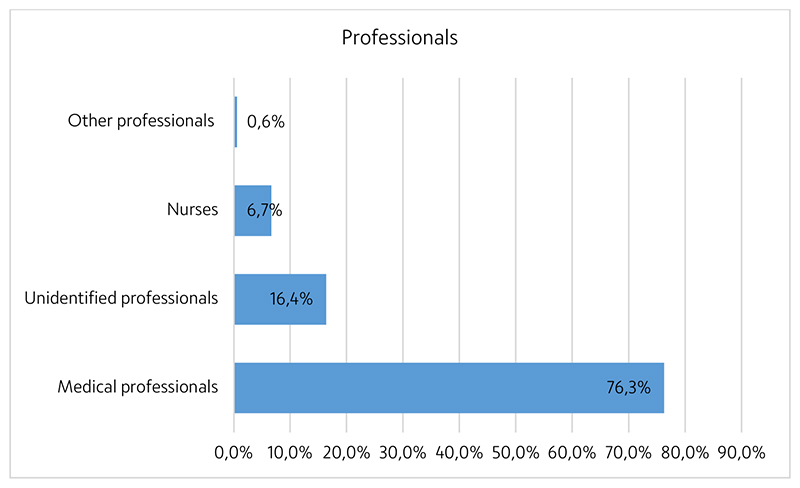
Figure 1 displays the distribution of mental health referral forms according to the referring professional, indicating that the majority of them were referred by physicians.

Origin of the referral forms regarding the requesting professional (n = 688), between October 2019 and February 2020. Patos de Minas, MG, Brazil
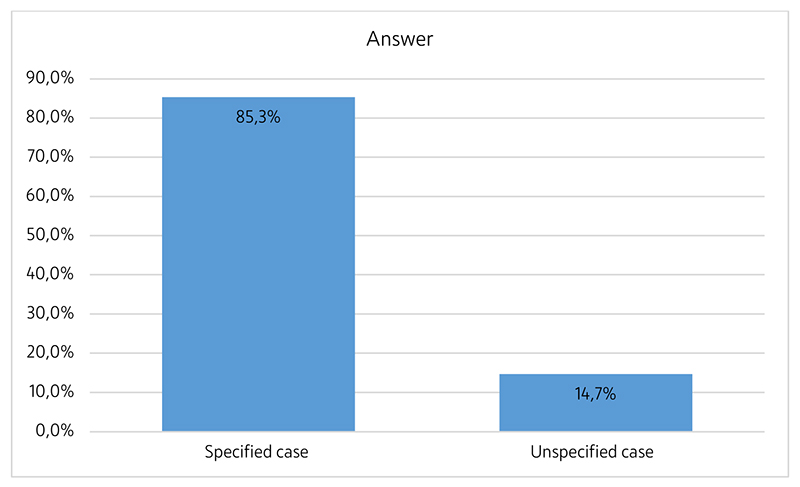
Regarding the reason for referral/case description item, it was found that 14.68% of the referral forms were sent without specifying or clearly stating the reasons, as shown in Figure 2.
Reason for referral/description of specified and unspecified case (n = 688). Patos de Minas, MG, October 2019 to February 2020
Table 3 below shows the demands presented in the referral forms and their distribution in each of the territories. It was found that the majority of the demands are related to Anxiety Disorders, followed by conditions involving Depressive Disorders. There was a statistically significant difference in the occurrence percentage of the demands presented among the Family Health Teams territories in most of the analyzed conditions.
Table 4 presents the relationship of demands presented according to gender. The results revealed a statistically significant difference in the percentage of demands presented between men and women in most of the analyzed categories, with a prevalence of females in the majority of them.
Table 5 shows the relationship of demands presented according to age. It was observed that there was a statistically significant difference in the percentage of occurrences in demands among age groups for the majority of the analyzed categories.
Discussion
The increasing demand for specialized care within mental health is a concerning factor that has been worsening over time, and it is essential for this care provided by psychology and psychiatry professionals to be delivered quickly and effectively (Fatori et al., 2018). The lack of trained professionals within the Family Health Teams causes distress to users experiencing mental suffering, thus justifying their reluctance to seek qualified professionals as a form of treatment. They perceive that the services offered do not work for them, or that the wait time for care is too long for an acute problem (Campos et al., 2018; Rotoli et al., 2019). In the case of the study in question, this issue is particularly evident in relation to the role of physicians within the Family Health Teams, as the majority of the referrals were made by this professional.
The majority of family physicians acknowledge gaps in their training for mental health care, as the training approach is primarily focused on hospital settings, which diverges from the needs found in primary care (Collange et al., 2016; Pereira & Andrade, 2018). Addressing consultations related to mental health issues is not limited to physicians alone, and the care team also plays a role in attending to these individuals. However, there are limitations in carrying out actions in this area of care (Campos et al., 2018).
Research shows that many professionals are unaware of the term "psychic sufferin" which leads to difficulties in diagnosing mental disorders. These findings can reinforce the practice of making referrals without clear and legitimate specifications, contributing to the transfer of cases without the responsibility of conducting a more accurate assessment or even seeking knowledge exchange (Rotoli et al., 2019; Souza & Padula, 2020).
The age range observed in this study is diverse, indicating that mental disorders impact individuals across all stages of life. These findings support the research conducted by Rocha et al. (2010), who reported that mental disorders are prevalent in modern societies and affect individuals of all age groups, with a particular emphasis on adults. This is because adulthood is a stage in life when responsibilities increase, which can potentially contribute to psychological distress. The lowest prevalence of mental disorders was observed among individuals under the age of 18, which aligns with other studies indicating a low utilization of specialized mental health services by this age group in Brazil (Paula et al., 2007). However, it is important to note that the number of cases is increasing over time, raising concerns within primary care (Papola et al., 2020).
Another group that requires greater attention is individuals aged over 60. This study observed an incidence of 14.7% in the issued referrals. Research indicates that mental disorders are becoming increasingly prevalent among older adults and are associated with factors such as gender, socioeconomic status, comorbid conditions, and, notably, the aging process itself (Borim et al., 2013; GBD 2019 Mental Disorders Collaborators, 2022).
When examining the gender of the referred individuals, a clear predominance of females is evident, which aligns with the findings of this study (Janssen et al., 2018). The higher prevalence of mental disorders in women, particularly related to anxiety and depression, is notable, leading the Family Health Teams in primary care to pay special attention to this group, considering factors such as race and sexual orientation (Janssen et al., 2018; Steel et al., 2014). The increased incidence of psychiatric conditions in women may be attributed to hormonal changes and the significant burden of societal roles they often bear, such as being a mother, homemaker, and professional (Joel et al., 2015; Rocha et al., 2010).
Regarding the finding that the majority of demands presented in the referral guides were related to Anxiety Disorder, evidence from the literature supports this high prevalence. Family Health Strategy 4 had the highest number of referrals and, consequently, the highest number of conditions linked to anxiety disorders. A statistically significant difference was observed in the occurrence of this demand between genders, age groups, and Family Health Strategy territories, with a higher prevalence among women (81.6%), in Núcleo de Apoio à Saúde da Família (NASF, Family Health Support Centers) NASF 4 (34.6%), and in the age group of 21 to 40 years old (33.3%).
Anxiety disorder is a worldwide issue, with a multifactorial origin that can be correlated with sociodemographic factors such as education, housing conditions, work, income, or even associated with other conditions or addictions, such as tobacco and alcohol (Zimmermann et al., 2020). However, in the present study, it was not possible to establish correlations with these data due to limitations in the information available in the Vivver software. Therefore, a more comprehensive understanding of the population under study is necessary to assess strategies for promoting mental health.
The statistically significant differences in the percentage of this demand across territories were observed between Family Health Strategy 1 and Family Health Strategy 3, as well as between Family Health Strategy 1 and Family Health Strategy 4. Additionally, there was a significant difference between Family Health Strategy 2 and Family Health Strategy 3, as well as between Family Health Strategy 2 and Family Health Strategy 4. Among all territories, Family Health Strategy 4 had the highest number of demands related to this condition (34.6%), while Family Health Strategy 1 had a significantly lower prevalence (17.5%). However, it is important to note that further investigation is warranted due to the heterogeneity of profiles observed in all territories.
Regarding depressive disorder, there were statistically significant differences in its occurrence based on gender, age groups of users, and Family Health Strategy territories. The majority of cases were found among women (84.2%) from Family Health Strategy 4, within the age range of 41 to 60 years (36.7%). The prevalence of depressive problems in women, similar to anxiety disorders, has a multifactorial origin, influenced by physiological, hormonal, sociocultural, educational, and income factors. These conditions are commonly observed from the end of the third decade of life, which aligns with the findings of this study (Parreira et al., 2017). The low number of referrals in individuals under 18 years of age is likely due to underreporting and inadequate treatment of anxiety and depressive conditions in this population (Barican et al., 2022; Fatori et al., 2018).
In addition to the aforementioned factors, it is important to consider marital problems and addiction issues such as alcohol and other substance abuse, which were found to have a low prevalence in this study (1.5%). However, it is believed that there may be underreporting of data, particularly among adolescents and men, as indicated by previous literature (Barbosa et al., 2018; Noronha et al., 2019). The low number of demands related to substance use in the referral forms may be attributed to the presence of a specialized service in the municipality, the Psychosocial Care Center alcohol and other drugs, which operates 24 hours a day and serves as an important point of attention in the network for addressing these issues. It is likely that users seek assistance at this facility the most, leading to fewer referrals in the general referral forms.
Anxiety and depression, which represent the majority, can also be associated with mental disorders such as schizophrenia, with an incidence of 1.6% in this study. Schizophrenia is reported to have a worldwide prevalence of 1% and does not possess exclusive epidemiological characteristics (Weng et al., 2022). However, mental health professionals still encounter difficulties in correctly diagnosing and treating this condition.
Conclusion
Through this study, information about mental health in primary care was provided and could contribute to improving mental health care at this point of care, since no records were found so far within the municipality that included information on this matter.
References
-
Alvarez, A. P. E., Vieira, Á. C. D. D., & Almeida, F. A. (2019). Núcleo de Apoio à Saúde da Família e os desafios para a saúde mental na atenção básica. Physis: Revista de Saúde Coletiva, 29(4), e290405. https://doi.org/10.1590/s0103-73312019290405
» https://doi.org/10.1590/s0103-73312019290405 -
Baião, J. J., & Marcolan, J. F. (2020). Labirintos da formação em enfermagem e a Política Nacional de Saúde Mental. Revista Brasileira de Enfermagem, 73(1), e20190836. https://doi.org/10.1590/0034-7167-2019-0836
» https://doi.org/10.1590/0034-7167-2019-0836 -
Barbosa, D. C. M., Furman, G. R., Santos, A. L., & Molena-Fernandes, C. A. (2018). Depressão em mulheres de apenados: Prevalência e fatores associados. Revista Brasileira de Enfermagem, 71(1), 538-545. https://doi.org/10.1590/0034-7167-2017-0263
» https://doi.org/10.1590/0034-7167-2017-0263 -
Barican, J. L., Yung, D., Schwartz, C., Zheng, Y., Georgiades, K., & Waddell, C. (2022). ,. Evidence-Based Mental Health, 25(1), 36-44. https://doi.org/10.1136/ebmental-2021-300277
» https://doi.org/10.1136/ebmental-2021-300277 -
Borim, F. S. A., Barros, M. B. A., & Botega, N. J. (2013). Transtorno mental comum na população idosa: Pesquisa de base populacional no Município de Campinas, São Paulo, Brasil. Cadernos de Saúde Pública, 29(7), 1415-1426. https://doi.org/10.1590/S0102-311X2013000700015
» https://doi.org/10.1590/S0102-311X2013000700015 -
Campos, D. B., Bezerra, I. C., & Jorge, M. S. B. (2018). Mental health care technologies: Primary Care practices and processes. Revista Brasileira de Enfermagem, 71(5), 2101-2108. https://doi.org/10.1590/0034-7167-2017-0478
» https://doi.org/10.1590/0034-7167-2017-0478 -
Collange, F., Verger, P., Launay, O., & Pulcini, C. (2016). Knowledge, attitudes, beliefs and behaviors of general practitioners/family physicians toward their own vaccination: A systematic review. Human Vaccines & Immunotherapeutics, 12(5), 1282-1292. https://doi.org/10.1080/21645515.2015.1138024
» https://doi.org/10.1080/21645515.2015.1138024 -
Fatori, D., Brentani, A., Grisi, S. J. F. E., Miguel, E. C., & Graeff-Martins, A. S. (2018). Prevalência de problemas de saúde mental na infância na atenção primária. Ciência & Saúde Coletiva, 23(9), 3013-3020. https://doi.org/10.1590/1413-81232018239.25332016
» https://doi.org/10.1590/1413-81232018239.25332016 -
GBD 2019 Mental Disorders Collaborators. (2022). Global, regional, and national burden of 12 mental disorders in 204 countries and territories, 1990-2019: A systematic analysis for the Global Burden of Disease Study 2019. The Lancet Psychiatry, 9(2), 137-150. https://doi.org/10.1016/S2215-0366(21)00395-3
» https://doi.org/10.1016/S2215-0366(21)00395-3 -
Janssen, M., Heerkens, Y., Kuijer, W., van der Heijden, B., & Engels, J. (2018). Effects of mindfulness-based stress reduction on employees’ mental health: A systematic review. PLoS One, 13(1), e0191332. https://doi.org/10.1371/journal.pone.0191332
» https://doi.org/10.1371/journal.pone.0191332 -
Januário, S. S., Neves Peixoto, F. S., Lima, N. N. R., Nascimento, V. B., Sousa, D. F., Pereira Luz, D. C. R., Silva, C. G. L., & Rolim Neto, M. L. (2017). Mental health and public policies implemented in the Northeast of Brazil: A systematic review with meta-analysis. The International Journal of Social Psychiatry, 63(1), 21-32. https://doi.org/10.1177/0020764016677557
» https://doi.org/10.1177/0020764016677557 -
Joel, D., Berman, Z., Tavor, I., Wexler, N., Gaber, O., Stein, Y., Shefi, N., Pool, J., Urchs, S., Margulies, D. S., Liem, F., Hänggi, J., Jäncke, L., & Assaf, Y. (2015). Sex beyond the genitalia: The human brain mosaic. Proceedings of the National Academy of Sciences of the United States of America, 112(50), 15468-15473. https://doi.org/10.1073/pnas.1509654112
» https://doi.org/10.1073/pnas.1509654112 -
Ministério da Saúde. (Brasil). (2024). Sobre a Secretaria Secretaria de Atenção Primária à Saúde. https://aps.saude.gov.br/sobre
» https://aps.saude.gov.br/sobre -
Noronha, B. P., Nascimento-Souza, M. A., Lima-Costa, M. F., & Peixoto, S. V. (2019). Padrões de consumo de álcool e fatores associados entre idosos brasileiros: Pesquisa Nacional de Saúde (2013) . Ciência & Saúde Coletiva, 24(11), 4171-4180. https://doi.org/10.1590/1413-812320182411.32652017
» https://doi.org/10.1590/1413-812320182411.32652017 -
Papola, D., Purgato, M., Gastaldon, C., Bovo, C., van Ommeren, M., Barbui, C., & Tol, W. A. (2020). Psychological and social interventions for the prevention of mental disorders in people living in low- and middle-income countries affected by humanitarian crises. The Cochrane Database of Systematic Reviews, 9(9), CD012417. https://doi.org/10.1002/14651858.CD012417.pub2
» https://doi.org/10.1002/14651858.CD012417.pub2 -
Parreira, B. D. M., Goulart, B. F., Ruiz, M. T., Silva, S. R., & Gomes-Sponholz, F. A. (2017). Sintomas de depressão em mulheres rurais: Fatores sociodemográficos, econômicos, comportamentais e reprodutivos. Acta Paulista de Enfermagem, 30(4), 375-382. https://doi.org/10.1590/1982-0194201700056
» https://doi.org/10.1590/1982-0194201700056 -
Paula, C. S., Duarte, C. S., & Bordin, I. A. S. (2007). Prevalence of mental health problems in children and adolescents from the outskirts of São Paulo City: Treatment needs and service capacity evaluation. Brazilian Journal of Psychiatry, 29(1), 11-17. https://doi.org/10.1590/S1516-44462006005000012
» https://doi.org/10.1590/S1516-44462006005000012 -
Pereira, A. A., & Andrade, D. C. L. (2018). Estratégia educacional em saúde mental para médicos da atenção básica. Revista Brasileira de Educação Médica, 42(1), 6-14. https://doi.org/10.1590/1981-52712015v41n4RB20160021
» https://doi.org/10.1590/1981-52712015v41n4RB20160021 -
Raja, T., Tuomainen, H., Madan, J., Mistry, D., Jain, S., Easwaran, K., & Singh, S. P. (2021). Psychiatric hospital reform in low- and middle-income countries: A systematic review of literature. Social Psychiatry and Psychiatric Epidemiology, 56(8), 1341-1357. https://doi.org/10.1007/s00127-021-02075-z
» https://doi.org/10.1007/s00127-021-02075-z -
Rocha, S. V., Almeida, M. M. G., Araújo, T. M., & Virtuoso Júnior, J. S. (2010). Prevalência de transtornos mentais comuns entre residentes em áreas urbanas de Feira de Santana, Bahia. Revista Brasileira de Epidemiologia, 13(4), 630-640. https://doi.org/10.1590/S1415-790X2010000400008
» https://doi.org/10.1590/S1415-790X2010000400008 -
Rotoli, A., Silva, M. R. S., Santos, A. M., Oliveira, A. M. N., & Gomes, G. C. (2019). Saúde mental na Atenção Primária: Desafios para a resolutividade das ações. Escola Anna Nery, 23(2), e20180303. https://doi.org/10.1590/2177-9465-EAN-2018-0303
» https://doi.org/10.1590/2177-9465-EAN-2018-0303 -
Sampaio, M. L., & Bispo, J. P. (2021). Dimensão epistêmica da Reforma Psiquiátrica Brasileira: Significados de gestores, profissionais e usuários. Interface - Comunicação, Saúde, Educação, 25, e200267. https://doi.org/10.1590/Interface.200267
» https://doi.org/10.1590/Interface.200267 -
Souza, R. F., & Padula, M. P. C. (2020). Condições de pessoas em sofrimento psíquico acompanhadas em Centro de Atenção Psicossocial (CAPS) e internadas em hospitais. Brazilian Journal of Health Review, 3(5), e5. https://doi.org/10.34119/bjhrv3n5-050
» https://doi.org/10.34119/bjhrv3n5-050 -
Steel, Z., Marnane, C., Iranpour, C., Chey, T., Jackson, J. W., Patel, V., & Silove, D. (2014). The global prevalence of common mental disorders: A systematic review and meta-analysis 1980-2013. International Journal of Epidemiology, 43(2), 476-493. https://doi.org/10.1093/ije/dyu038
» https://doi.org/10.1093/ije/dyu038 -
Weng, Y., Lin, J., Ahorsu, D. K., & Tsang, H. W. H. (2022). Neuropathways of theory of mind in schizophrenia: A systematic review and meta-analysis. Neuroscience and Biobehavioral Reviews, 137, e104625. https://doi.org/10.1016/j.neubiorev.2022.104625
» https://doi.org/10.1016/j.neubiorev.2022.104625 -
Zimmermann, M., Chong, A. K., Vechiu, C., & Papa, A. (2020). Modifiable risk and protective factors for anxiety disorders among adults: A systematic review. Psychiatry Research, 285, e112705. https://doi.org/10.1016/j.psychres.2019.112705
» https://doi.org/10.1016/j.psychres.2019.112705
-
1
Article based on the dissertation by L. M. B. TINOCO, entitled “Levantamento das demandas para a rede de saúde mental na atenção primária de um município do interior de Minas Gerais”. Universidade de Franca, 2021.
-
Support:
This work was carried out with the support of the Coordenação de Aperfeiçoamento de Pessoal de Nível Superior (Capes) - Financing Code 001, and has financial support from the Conselho Nacional de Desenvolvimento Científico e Tecnológico (CNPq).