
 Application of different functional groups of banana peels for enhanced dye removal in textile effluents
Abstract
The presence of deionized chemical contaminants in waterways poses significant threats to aquatic ecosystems and human populations. This research investigates the efficacy of banana peel (Musa spp.) as a natural adsorbent for treating textile dye-contaminated water. Isotherm and kinetic model types showed that chemisorption was the rate-limiting phase in monolayer adsorption. The maximum adsorption was 28.7 mg/g. Hydroxyl, amine, and carboxyl functional groups detected in the FTIR spectrum provide active sites that promote the adsorption of dye molecules onto the adsorbent. The usual solution eliminated 92.8% of dyes under optimal conditions. The experimental results identified optimal treatment parameters of 0.5 g adsorbent dosage, 7.0 pH, 100 mg/L initial dye concentration, and 60 min contact time. Under these conditions, the system achieved 83.9% dye removal efficiency. While the low dye adsorption capacity in industrial effluent (83.9%) compared to synthetic solutions (92.8%) reflects matrix complexity, banana peels remain effective for real-world textile wastewater treatment. Significantly, a simple acid–base process enables 95% dye recovery, demonstrating both the adsorbent’s reusability and circular economy potential for sustainable water treatment.
Keywords
banana peel adsorbent; textile dye removal; adsorption isotherms and kinetics; FTIR functional groups; wastewater treatment.
INTRODUCTION
The rapid expansion of industrial activities and population growth has led to severe water pollution, posing significant threats to both environmental integrity and global water security. Despite water covering 71% of Earth’s surface, only 0.03% of the planet’s freshwater resources are readily available for human consumption and industrial use, making their protection from contamination critically important (Leal et al., 2018). The direct discharge of untreated industrial effluents constitutes a primary source of aquatic contamination, introducing toxic chemicals, heavy metals, and synthetic dyes into freshwater systems. This uncontrolled release not only compromises water quality but also disrupts aquatic ecosystems and threatens public health through bioaccumulation in the food chain (Nuithitikul et al., 2010; Leal et al., 2018; Wong et al, 2020). The textile industry discharges an estimated 5,000–10,000 metric tons of reactive dyes annually, contributing to approximately 17–20% of total industrial wastewater pollution (Yagub et al., 2014; Pirkarami; Olya, 2017; Wong et al, 2020). Most of these colors block sunlight from reaching all sections of a water body, threatening aquatic life and populations around badly polluted water. This stresses the necessity for eco-friendly textile wastewater treatment (Kabir et al., 2019; Wong et al, 2020).
Adsorption is a common and advanced decolorization method intended for textile effluent due to its simplicity, low price, as well as great effectiveness, particularly for supersaturated dye solutions (Kabir, 2018; Naushad et al., 2019). Biodegradable and commercial adsorbents for wastewater Color adsorption (Arami et al., 2005). As these materials are difficult to treat and expensive, researchers must find new adsorbents that match performance requirements. Activated carbon and organic resins are excellent dye adsorbents (Gimbert et al., 2008). Current research shows that replacing traditional materials with cheap, environmentally friendly biowaste-derived adsorbents has considerably decreased the adsorption mechanism’s expenditure (Gimbert et al., 2008; Wong et al., 2018; Li et al., 2019; Biswas et al., 2020). The separation of heavy metals from textile industry wastewater using biosorbents has been widely investigated (Naushad et al., 2015; Kabir et al., 2019). These findings prompted the creation of inexpensive, eco-friendly adsorbents that remove the majority of hazardous Color compounds from textile effluent.
Banana peel is a popular adsorbent because of its year-round availability. Banana peels acquire cationic and anionic compounds from diverse functional groups (Munagapati et al., 2020). Most bio-waste banana peels can extract heavy metals, pharmaceuticals, radioactive elements, phenolic chemicals, and more. Numerous scholars have examined the efficacy of banana peels (Achak et al., 2009; Silva et al., 2013; Oyewo et al., 2016; Vilardi et al., 2018). Previous studies have recorded that banana peels demonstrate effective remediation potential for textile industry effluent treatment (Memon et al., 2008; Palma et al., 2011; Kamar et al., 2018; Mondal; Kar, 2018; Munagapati et al., 2018; Oyekanmi et al., 2019; Hashem et al., 2020). Color removal from real industrial effluents was relatively limited compared to synthetic dye solutions. However, banana peel effectively removed color from aqueous dye solutions in most experiments. The combined dye solutions exhibited appropriate adsorption behavior, and textile effluents containing the same dyes were also successfully treated under optimized conditions. The study confirms banana peels’ efficacy in color removal, though cost factors present challenges for commercial adoption in wastewater treatment (Ma et al., 2015). Industrial water disinfection requires study on banana peels.
A shocking amount of reactive dyes, which are frequently used to Color cotton, are being released into the environment. In this study, reactive Colors were taken out of textile effluent using banana peels. The banana peel’s adsorption capacities were evaluated for the Fourier transform infrared spectroscopy (FTIR) study with respect to the pH of the solution, adsorbent dose, the initial amount of dye, and retention time. Using a standard solution, the best adsorption characteristics were identified. For the purpose of demonstrating the adsorption of textile effluent Colors by banana peel, experimental data were appropriately matched with isotherm and kinetic models.
MATERIALS AND METHOD
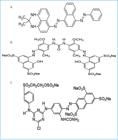
The important source material of fresh red banana peels (Musa acuminata) was procured from local markets in Kanyakumari, Tamil Nadu, India. A well-established textile dying facility in the city of Tirupur in the Indian state of Tamil Nadu provided wastewater together with the powder of three different reactive dyes in succession. These dyes were named Deafiz Red ME 6BL, Firsfix Yellow 3RS, and Deazol Black B EAN. Figure 1 presents the chemical makeup of a number of different dyes that are available for purchase and belong to comparable generic groupings. In order to achieve the desired pH level for the solutions, Surya Fine Chem (India) provided both NaOH and HCl.
Preparation of an adsorbent
The banana peels were initially cut into smaller pieces before being cleaned, dried, crushed, and then screened in order to commence the process of preparing them before adsorption. Before being heated for 8 h at 80°C in an IFB 23L microwave oven, the peels were washed well by using deionized water (DI-water), allowed to air dry for 48 h, and then cleaned again. The dried peels were mixed in an airtight polythene container and sieved through a 100 mesh (149 μm) using an Indian Preethi electric blender.
Determination of chemical composition
The proportion of the dye solution was recorded using a ultraviolet (UV)-Vis spectrophotometer (HACH, Loveland, CO, USA). A Hach-Sension-MM156 was used to determine the solution’s pH, with subsequent calibration performed with a portable multi-parameter and a glass electrode. LabTech magnetic stirrer from Hopkinton, Massachusetts, USA, was utilized to keep the solution homogeneous, while high-sensitivity mercury-cadmium-telluride (MCT) Tracer-100 FTIR equipment was used to monitor the solution for chemical changes (Shimadzu, Tokyo, Japan). LabSolutions IR was implemented for use as a peak analysis instrument. Pior to FTIR analysis, all samples were uniformly prepared by thoroughly homogenizing each specimen with potassium bromide (KBr) at a 1:100 (w/w) ratio to ensure spectral consistency. The resulting KBr pellets provided transparent matrices suitable for infrared spectroscopy analysis while minimizing potential interference from atmospheric water vapor or CO₂ absorption.
The standard solution and the calibration curve
Adsorption efficiency can be optimized by determining the ideal combination of key parameters, including pH, contact time, initial dye concentration, and adsorbent dosage. The optimal conditions (pH 7.0, 60-min contact time, 100 mg/L initial dye concentration, and 0.5 g banana peel dosage) were established through systematic experimentation. Elemental concentrations in textile wastewater were quantified using calibration with standard solutions of known concentrations. The synthetic wastewater solution was prepared by combining equal volumes of three different dye solutions with DI water. Each dye stock solution was standardized by dissolving 1.0 g of dye in 1.0 L of DI water. The resulting mixed solution contained equivalent concentrations of all the three dye components, simulating balanced textile wastewater conditions. To ensure dye dispersion, the stock solution was magnetically stirred for 60 min at 180 rpm. Using the maximum wavelength of adsorption, the absorbance of a standard solution was measured and converted into a component of the solution’s concentration. Comparison between water absorption and wavelength is shown in Figure 2a. As shown in the graph, the maximum value occurs at a wavelength of 601 nm. The maximum value from this experiment was used in all spectrophotometric calculations. Stock solution ranging from 25 to 225 mg/L at pH 7 was used in the calibration experiment. The absorbance of each solution was determined at a constant temperature of 25°C (Figure 2b). Data were well-fit to a horizontal line with an R2 of 0.995, demonstrating a constant molar absorption rate across the whole dose range.

(a) Determining the wavelength for the most absorption, (b) method for the determination of normal dye concentration at pH ~ 7, λmax = 601 nm, and T = 25°C.
Adsorption investigation
This study examined absorption of dyes by banana peels from textile wastewater. After adjusting adsorption parameters with a standard solution, banana peels were used to remove Color from wastewater. To determine the ideal pH range between 2.0 and 10.0 for maximum adsorption, 0.5, 0.75, and 1.0 g of the adsorbent were added to 250 mL of a dye solution (50 mg/L) in amber bottles. After an hour of magnetic stirring at 180 rpm and 25°C, the mixtures were filtered using No. 1 Whatman filter paper. Using the calibration curve, the UV–Vis spectrophotometer was able to provide an instantaneous determination of the final concentration of the solutions that were filtered. 0.1–0.8 g of Mads banana peels was added to 250 mL of a 50 mg/L dye solution with a pH of 7 in amber bottles, and adsorbent consumption was calculated. pH testing was done similarly.
Four concentration levels (Ci = 25.0, 50.0, 100.0, and 150.0 mg/L) were used in adsorption studies to establish equilibrium. A magnetic stirrer was used to stir banana peels added to 250 mL dye solution for 2 h at 25°C. At predetermined intervals (t = 0, 10.0, 20.0, 30.0,45.0, 60.0, 90.0, and 120.0 min), spectrophotometric samples were collected. The final solution concentration remained constant as the adsorption period lengthened, indicating equilibrium. For the purpose of determining the adsorption capacity (q) and the effectiveness (% dye removal), Equations 1 and 2 were utilized (Gimbert et al., 2008).
where:
Ci: initial dye solution concentration (mg/L);
Cf: the final dye solution concentration (mg/L);
V: the solution volume (L);
Mads: the weight (g) of the adsorbent.
Isotherms of adsorption
The experimental adsorption data were analyzed using both Langmuir and Freundlich isotherm models to establish a theoretical framework for industrial wastewater treatment applications. The adsorption process was best described by the Langmuir isotherm model (Equation 3) (Gimbert et al., 2008), indicating monolayer dye adsorption occurring at homogeneous binding sites with equivalent energy. This model assumes no intermolecular interactions or migration between adsorption sites, with surface saturation achieved at maximum monolayer coverage.
Where:
qm: the maximum amount of mass that can be adsorbed per unit of weight.
The adsorption equilibrium ability is denoted by the symbol qe, while the Langmuir isotherm constant is denoted by KL. Ce/qe was plotted over Ce to calculate qm and KL. KL is the intercept, and Qm is the inverse slope. Dye adhesion on banana peels may be quantified by computing a non-dimensional separation factor (RL) using the Langmuir isotherm model. Equation 4 (Unuabonah et al., 2009) demonstrates this point.
The separation factor (RL) exhibits binary behavior, exclusively assuming values of either 0 or 1, corresponding to irreversible or linear adsorption isotherms, respectively. In contrast, the Freundlich isotherm model describes multilayer adsorption characterized by significant intermolecular interactions occurring on energetically heterogeneous surface sites. The linearized form of the Freundlich isotherm is presented in Equation 5 (Gimbert et al., 2008).
The Freundlich isotherm notates two quantities, KF (mg/g) and 1/nF (heterogeneity factor of adsorption capacity). Using a straight line fit to the data of the ln(qe) like a function of the ln(Ce), which would be analogous to the Langmuir isotherm, we were able to estimate KF (from the intercept) and nF (from the slope). Most of the time, 1/nF has a value between 0 and 1, but outside of that range, the concentration and adsorption of the dye solution change to a great extent. If nF = 1, the adsorption is linear; otherwise, it is either chemical or physical (1/nF or more) (Gimbert et al., 2008). Adsorption of dye onto the adsorption surface increases 1/nF by 1 (Unuabonah et al., 2009).
Kinetics of adsorption
The adsorption kinetics were investigated by examining the equilibrium relationship between adsorption capacity and contact time. Both pseudo-first-order (PFO, Equation 6) and pseudo-second-order (PSO, Equation 5) kinetic models demonstrated excellent correlation with experimental data when applied in their linearized forms (Equation 7). The PFO model showed dependence on the initial solution concentration, while the PSO model exhibited stronger correlation with the square of the solution concentration (Wong et al., 2020), suggesting different rate-limiting mechanisms in the adsorption process.
where:
qt: the adsorption capacity at instant time (mg/g);
t: time (min).
K1: the adsorption rate for PFO.
K2: the adsorption rate for PSO.
Study of desorption
When the banana peel had absorbed the dye at a concentration of 0.5 mg/L, it was removed from the mixture using a vacuum filter. Whether used alone or in combination, adsorbents proved useful in both basic and acidic environments. The preparation of the adsorbent began with treatment using 0.1 M HCl and NaOH solutions. After washing three times with distilled water and drying at 80 °C for 12 hours, the adsorbent was obtained free from residual acidic or basic reagents.
RESULTS AND DISCUSSION
FTIR analysis
The FTIR spectrum of banana peel shown in Figure 3 illustrates the presence of distinct functional groups. The largest peak, at 3,393.8 cm-1, demonstrates coordinated motion in the O–H (hydroxyl) and N–H (amine) stretches of both amino acids and alcohols. Several alkane C–H stretching peaks were found in the region of 2,850–3,000 cm-1 (Pavia et al., 2015). FTIR analysis identified characteristic vibrational modes of aldehydes and carboxylic acids, with distinct peaks corresponding to C=O stretching (1736.9 cm-1), O–H bending (160.2 cm-1), and symmetric –COO– stretching (1,399.4 cm-1). The amine N-H deformation, alkene C-H stretching, and aromatic C-O stretching are responsible for the 1000- 1350 cm-1, 925-850 cm-1 and 650-1000 cm-1 bands, respectively (Memon et al., 2008; Pavia et al., 2015). The hydroxyl and carboxylic groups of cellulose and the amines of hemicellulose were detected in the FTIR spectrum of banana peel. Hydrogen bonds are formed between the positively charged functional groups in the banana peel (-COOH, -NH2, -OH, etc.) and the negatively charged atoms on the dye surface (N, O, etc.) (Laskar et al., 2017; Oyekanmi et al, 2019).

Effect of the pH solution
Banana peels’ ability to absorb reactive Colors from solutions depends on the pH of the solution and the adsorbent’s surface (ionic or neutral). pH is a factor in adsorption. Experiments with adsorption times of 60 min were conducted at a starting dye concentration of 50 mg/L over the pH 2–10 range. Adsorption at concentrations of 0.5, 1.0, and 2.0 g/L was tested. Figure 4 shows the correlation connecting the pH of the solution, in addition to the amount of Color absorbed by banana peels. The highest percentages of dye removal occur at a pH of 7.0 (93.4, 97.1, and 99.6% intended for 0.50, 0.75, and 1.0 g adsorbents, respectively). A higher pH value decreases adsorption efficiency. Similar outcomes were achieved with Colors adsorbed onto the peels of bananas, oranges, shrimp, and sewage sludge (Annadurai et al., 2002; Abdurrahman et al., 2013; Rahman; Akter, 2016).

At a pH of 7.0, anionic and cationic dye ions were adsorbed on banana peel adsorption sites, rendering the solution Colorless. Strong electrostatic interactions between functional groups on banana peels and charged molecules in the dye solution (Na+, Cl−, SO3Na+, -COO, -O, -COOH, -NH2, -SO4, etc.) contribute to the absorption of Colors from waste solutions. To remove Colors that have been neutralized by H+ and OH ions, found in acidic and basic environments, respectively, is more challenging.
The relationship between adsorbent dosage and dye adsorption capacity was systematically investigated, as illustrated in Figure 5. The results demonstrate that increasing the dosage of banana peel adsorbent significantly enhances decolorization, with the treated adsorbent achieving 94% adsorption capacity compared to only 20% for untreated banana peel (Figure 5b). This improvement can be attributed to the increased availability of active adsorption sites, including hydroxyl, carboxyl, and amine functional groups, which facilitate electrostatic interactions and hydrogen bonding with dye molecules. At higher dosages (0.8 g), the adsorption capacity plateaued at 96% (Figure 5a), indicating that beyond this threshold, additional adsorbent does not substantially improve performance due to equilibrium limitations.

(a) Effects of the amount of adsorbent used on the dye’s ability to adhere to the banana peel, (b) Effects of the amount of adsorbent equilibrium.
Interestingly, while adsorption capacity increased with dosage, the adsorption capacity (qe) exhibited an inverse trend, decreasing from 28.4 mg/g at 0.2 g dosage to 14.9 mg/g at 0.8 g dosage. This phenomenon occurs because lower dosages allow for more efficient utilization of active sites, leading to higher dye uptake per unit mass of adsorbent. At 0.2 g, the adsorbent reaches near saturation, leaving minimal residual dye in solution. However, as the dosage increases beyond this point, two key factors contribute to reduced capacity:
-
Site Saturation and Aggregation Effects: Excess adsorbent leads to particle agglomeration, which reduces the effective surface area available for dye binding. This aggregation increases diffusion path lengths, limiting molecular access to active sites;
-
Unsaturated Active Sites: At higher dosages, the adsorbent-to-dye ratio becomes imbalanced, leaving many adsorption sites unoccupied, thereby lowering the overall capacity per unit mass. These findings align with previous studies (Kabir et al., 2019), confirming that while higher dosages improve absolute dye removal, they also introduce diminishing returns in adsorption efficiency. The optimal dosage range (0.2–0.8 g) balances high adsorption capacity with practical adsorbent usage, making it suitable for scalable wastewater treatment applications. Further research could explore modifications to prevent particle aggregation and enhance adsorbent dispersibility, thereby improving performance at higher dosages.
Effects on initial concentration and contact time
This experiment examined the relationship between dye concentration and contact time. The time-dependent adsorption behavior of the dye at four initial concentrations (Ci = 25, 50, 100, and 150 mg/L) is presented in Figures 6a and 6b. Figure 6a demonstrates that after the first 10 min, the rate of % dye elimination sped up and then leveled out. Except for the 150.0 mg/L solution, all starting concentrations achieved equilibrium within 60.0 min of adsorption. The adsorption process attained its maximum efficiency within 90 minutes. Rapid initial adsorption occurs because of the large concentration of active adsorbate molecules, which facilitates rapid interaction between the dyes and the adsorbent. As active site loss due to adoption gradually reduces adsorption, a dynamic equilibrium between adsorption and desorption is reached. With higher dye concentrations, there were fewer active sites available despite the fact that the adsorbent and solution volume remained the same. Inadequate active sites, when present in greater numbers, reduced dye removal efficiency. Compared to the removal rates of 56.6, 96.2, and 100% achieved by solutions of 100.0, 50.0, and 25.0 mg/L, respectively, only 43.4% of dyes were removed by solutions of 150.0 mg/L. This finding is consistent with that of Arami et al. As there were more dye molecules in the same volume and mass of the adsorbent, the adsorption power of banana peels was greater in dye-rich solutions (33.5 mg/g at 150.0 mg/L and 12.50 mg/g at 25.0 mg/L). Yet, as can be shown in Figure 6b, the adsorption of the banana peels was parallel to the removal of the dye.

In the subsequent circumstances, adsorption isotherm studies were performed with 0.5 g of banana peel, a pH of 7, as well as a temperature range of 25°C and a concentration between 25 and 200 mg/L. At a speed of 180 rpm, the magnetic stirrer mixed the adsorbent and adsorbate for 1 h. Equilibrium concentrations, % of removal efficiency, and the amount of dye adsorbed were calculated using the same approach employed for the adsorption experiment. In order to fit experimental data to isotherm equations, the Langmuir isotherm model (Figure 7a) provides a relatively better fit than the Freundlich model, as illustrated by the higher R2 value (Figure 7b). For the two isotherm models, Table 1 lists the adsorption parameters and related R2 values.

The banana peel adsorbent surface is unusual in that it is quite uniform, yet the Langmuir isotherm model provides a clear explanation of the phenomenon of single-layer adsorption. A nonlinear adsorption behavior and a reduction in R2 (1/nF 0.114 1) are the outcomes of the saturation of surface adsorbent active sites, which is predicted by the Freundlich model. When present in large numbers, this impact may be seen to its fullest extent. For the purpose of predicting dye adsorption onto the banana peel, the Langmuir isotherm model was used (RL versus Ci, Figure 8). The value of RL decreased from 0.133 to 0.02 when the concentration of RL grew from 25 mg/L to 200 mg/L. Peels from bananas often had RL values that ranged between 0.02 and 0.14, which indicated that they were able to constantly absorb Color. When 1/nF is smaller than unity, the Freundlich isotherm for dye adsorption is the same as the Langmuir isotherm.

Kinetics of adsorption
Kinetic tests with three dye concentrations (25.0, 50.0, and 100.0 mg/L) during 0–120 min evaluated banana peel adsorption capability. Figure 9 shows the generalized linear PFO and PSO model equations used to compute the adsorption response rate for various concentrations. Isotherm experiments confirmed chemisorption’s greater R2 value (Figure 9 compared to PFO). Table 2 compares rate constants (k1 and k2), theoretical equilibrium adsorption capacity (qe, calc), and R2 values of two kinetic models.

(a) Adsorption kinetics using pseudo-first-order dynamics, (b) adsorption kinetics using pseudo-second-order dynamics.
Textile wastewater adsorption
The optimized treatment conditions determined using the stock solution, such as solution pH, adsorbent dosage, and contact time were applied to textile wastewater. To begin with, the effluent was diluted to a concentration of 0.612, or 56 mg/L, since its composition was unknown (as determined using a calibration curve). During an hour at 180 rpm, 250 mL of wastewater (56 mg/L) and 0.5 g of banana peel were magnetically swirled together. Adsorption was able to remove 84.3% of the dye, resulting in an end concentration of 8.2 mg/L (absorbance = 0.087), which is 9 percentage points below the 50 mg/L concentration of the standard solution. The adsorption capacity of industrial wastewater may be diminished by the presence of Coloring agents (salts, alkalies, surfactants, and softeners) that were not taken into account in the typical dye solution experiments. An increased concentration of dye at the outset leads to diminished elimination. The dye concentration of the wastewater and the reference solution may influence the calibration curve. The color adsorption capacity of banana peels and other bio-adsorbents has been compared across various studies, which used different dosages and concentrations. While similar removal trends were observed, the percentage and duration of dye removal varied depending on the mineral composition of the banana peel and the initial dye concentration (Amela et al., 2012; El-Maghraby; Taha, 2014; Sousa et al., 2014; Hashem; Amin, 2016; Djiani et al., 2019; Ahmed; Makewska-Nowak, 2020).
Study of adsorbent regeneration
The adsorbent surface (shown in Figure 10) was bleached with 0.1 M HCL (A) and NaOH (B) solutions. Recovery rates for HCl (51.19, 3.21%) and NaOH solutions (47.91, 4.62%) were comparable. This was demonstrated by the fact that the dye solution included an equal number of positive and negative hydroxyl groups, and that the maximum adsorption occurred at pH = 7.0, indicating that both basic and acidic media were required to generate extreme conditions and desorb Colors from the adsorbent. Dye desorption from an adsorbent surface under extreme circumstances requires both basic and acidic media. When placed in an acidic environment, H+ will displace the negatively charged dye molecules. The dye molecules’ positive functionality is removed by the basic medium. Hence, the most efficient order for acid and base is acid, followed by base. This acid–base treatment recovers only 96.1% when compared to individual acid and base treatments (99.1%), due to the neutralization of leftover HCl and NaOH solutions.

CONCLUSION
Banana peel absorbs textile wastewater Color well. Before treating wastewater, a typical solution that constitutes a mixture of the three primary Colors was used to optimize parameters. This experiment yielded the following findings.
-
Results from FTIR spectroscopy of banana peels indicated the presence of several hydroxyl, amine, and carboxylic groups. Effective dye removal and high adsorption capacity were both achieved by strong adsorbent–adsorbate interactions;
-
The anions and cations of the wastewater solution suggest a pH of 7 for adsorption. Adsorption capacity accelerated with dosage; however, it was limited above 0.5 g;
-
Adsorption reached the steady state in 60 min, although solutions with concentrations above 100 mg/L needed more adsorption sites;
-
Chemical adsorption removed the banana peel Color. PSO kinetic and Langmuir isotherm models fit experimental adsorption data;
-
This study shows that banana peels can absorb textile Colors while being a cheap and renewable biowaste. Using acid and basic treatments, 95% of banana peels can be used for Color adsorption.
DATA AVAILABILITY STATEMENT
The datasets generated during and/or analyzed during the current study are available from the corresponding author on reasonable request.
REFERENCES
- ABDURRAHMAN, Fahim Bin; AKTER, Mahmuda; ABEDIN, Mohamed Zainai. Dyes removal from textile wastewater using orange peels. International Journal of Science Technology Research, v. 2, n. 9, p. 47-50, 2013.
-
ACHAK, Mounia; HAFIDI, Abdellatif; OUAZZANI, Naaila; SAYADI, Sami; MANDI, Laila. Low cost biosorbent “banana peel” for the removal of phenolic compounds from olive mill wastewater: Kinetic and equilibrium studies. Journal of Hazardous Materials, v. 166, n. 1, p. 117-125, 2009. https://doi.org/10.1016/j.jhazmat.2008.11.036
» https://doi.org/10.1016/j.jhazmat.2008.11.036 -
AHMED, Arif Eftekhar; MAJEWSKA-NOWAK, Katarzyna. Removal of reactive dye from aqueous solutions using banana peel and sugarcane bagasse as biosorbents. Environment Protection Engineering, v. 46, n. 3, p. 121-135, 2020. https://doi.org/10.37190/epe200308
» https://doi.org/10.37190/epe200308 -
AMELA, Khalfaoui; HASSEN, Meniai Abdeslam; KERROUM, Derbal. Isotherm and kinetics study of biosorption of cationic dye onto banana peel. Energy Procedia, v. 19, p. 286-295, 2012. https://doi.org/10.1016/j.egypro.2012.05.208
» https://doi.org/10.1016/j.egypro.2012.05.208 -
ANNADURAI, Gurusamy; JUANG, Ruey-Shin; LEE, Duu-Jong. Use of cellulose-based wastes for adsorption of dyes from aqueous solutions. Journal of Hazardous Materials, v. 92, n. 3, p. 263-274, 2002. https://doi.org/10.1016/S0304-3894(02)00017-1
» https://doi.org/10.1016/S0304-3894(02)00017-1 -
ARAMI, Mokhtar; LIMAEE, Nargess Yousefi; MAHMOODI, Niyaz Mohammad; TABRIZI, Nooshin Salman. Removal of dyes from colored textile wastewater by orange peel adsorbent: equilibrium and kinetic studies. Journal of Colloid and Interface Science, v. 288, n. 2, p. 371-376, 2005. https://doi.org/10.1016/j.jcis.2005.03.020
» https://doi.org/10.1016/j.jcis.2005.03.020 -
BISWAS, Shanta; RASHID, Taslim Ur; DEBNATH, Tonmoy; HAQUE, Papia; RAHMAN, Mohammed M. Application of chitosan-clay biocomposite beads for removal of heavy metal and dye from industrial effluent. Journal of Composites Science, v. 4, n. 1, p. 16, 2020. https://doi.org/10.3390/jcs4010016
» https://doi.org/10.3390/jcs4010016 -
DJILANI, Chahrazed; ZAGHDOUDI, Rachida; MAGRI, Pierre; DJAZI, Fayçal; LALLAM, Abdelaziz; BOUCHEKIMA, Bachir. Elaboration and characterization of chitosan/banana peel biocomposite for the removal of dyes from wastewater. Desalination and Water Treatment, v. 151, p. 189-198, 2019. https://doi.org/10.5004/dwt.2019.23887
» https://doi.org/10.5004/dwt.2019.23887 -
EL-MAGHRABY, Azza; TAHA, Nahla A. Equilibrium and kinetic studies for the removal of cationic dye using banana pith. Advances in Environmental Research, v. 3, n. 3, p. 217-230, 2014. https://doi.org/10.12989/aer.2014.3.3.217
» https://doi.org/10.12989/aer.2014.3.3.217 -
GIMBERT, Frédéric; MORIN-CRINI, Nadia; RENAULT, François; BADOT, Pierre-Marie; CRINI, Gregório. Adsorption isotherm models for dye removal by cationized starch-based material in a single component system: error analysis. Journal of Hazardous Materials, v. 157, n. 1, p. 34-46, 2008. https://doi.org/10.1016/j.jhazmat.2007.12.072
» https://doi.org/10.1016/j.jhazmat.2007.12.072 -
HASHEM, Amr Hosny; SAIED, Ebrahim; HASANIN, Mohamed Sayed. Green and ecofriendly bio-removal of methylene blue dye from aqueous solution using biologically activated banana peel waste. Sustainable Chemistry and Pharmacy, v. 18, 100333, 2020. https://doi.org/10.1016/j.scp.2020.100333
» https://doi.org/10.1016/j.scp.2020.100333 -
HASHEM, Fayza S.; AMIN, M. S. Adsorption of methylene blue by activated carbon derived from various fruit peels. Desalination and Water Treatment, v. 57, n. 47, p. 22573-22584, 2016. https://doi.org/10.1080/19443994.2015.1132476
» https://doi.org/10.1080/19443994.2015.1132476 - KABIR, S. M. Fijul. Waste management by waste: removal of acid dyes from wastewaters of textile coloration using fish scales. Thesis (Master’s degree) – Louisiana State University and Agricultural & Mechanical College, 2018.
-
KABIR, S. M. Fijul; CUETO, Rafael; BALAMURUGAN, Sreelatha; ROMEO, Laurel D.; KUTTRUFF, Jenna T.; MARX, Brian D.; NEGULESCU, Ioan I. Removal of acid dyes from textile wastewaters using fish scales by absorption process. Clean Technologies, v. 1, n. 1, p. 311-324, 2019. https://doi.org/10.3390/cleantechnol1010021
» https://doi.org/10.3390/cleantechnol1010021 -
KABIR, S. M. Fijul; RASHID, Taslim Ur; NEGULESCU, Ioan I. Gelation of textile dye solution treated with fish scales. Gels, v. 5, n. 3, p. 37, 2019. https://doi.org/10.3390/gels5030037
» https://doi.org/10.3390/gels5030037 -
KAMAR, Firas Hashim; NIAMAT, Farrah E.; FAISAL, Ayad A. H.; MOHAMMED, Ahmed A.; NECHIFOR, Aurelia Cristina; NECHIFOR, Gheorghe. Use of artificial neural network for modeling and prediction of reactive red dye removal from wastewater using banana peels bio-sorbent. Revista de Chimie, v. 69, n. 8, p. 1919-1926, 2018. https://doi.org/10.37358/RC.18.8.6447
» https://doi.org/10.37358/RC.18.8.6447 -
LASKAR, Nirban; KUMAR, Upendra. SEM, FTIR and EDAX studies for the removal of safranin dye from water bodies using modified biomaterial-Bambusa tulda. IOP Conference Series: Materials Science and Engineering, v. 225, p. 012105, 2017. https://doi.org/10.1088/1757-899X/225/1/012105
» https://doi.org/10.1088/1757-899X/225/1/012105 -
LEAL, Tarcísio W.; LOURENCO, Luís A.; SCHEIBE, Ana S.; DE SOUZA, Selene M. Guelli U.; DE SOUZA, Antônio A. Ulson. Textile wastewater treatment using low-cost adsorbent aiming the water reuse in dyeing process. Journal of Environmental Chemical Engineering, v. 6, n. 2, p. 2705-2712, 2018. https://doi.org/10.1016/j.jece.2018.04.008
» https://doi.org/10.1016/j.jece.2018.04.008 -
LI, Wei; MU, Bingnan; YANG, Yiqi. Feasibility of industrial-scale treatment of dye wastewater via bio-adsorption technology. Bioresource Technology, v. 277, p. 157-170, 2019. https://doi.org/10.1016/j.biortech.2019.01.002
» https://doi.org/10.1016/j.biortech.2019.01.002 -
MA, Jianfeng; HUANG, Daiqin; ZOU, Jing; LI, Liangyin; KONG, Yong; KOMARNENI, Sridhar. Adsorption of methylene blue and Orange II pollutants on activated carbon prepared from banana peel. Journal of Porous Materials, v. 22, p. 301-311, 2015. https://doi.org/10.1007/s10934-014-9896-2
» https://doi.org/10.1007/s10934-014-9896-2 -
MEMON, Jamil R.; MEMON, Saima Q.; BHANGER, Muhammad I.; MEMON, G. Zuhra; EL-TURKI, A.; ALLEN, Geoffrey C. Characterization of banana peel by scanning electron microscopy and FT-IR spectroscopy and its use for cadmium removal. Colloids and Surfaces B: Biointerfaces, v. 66, n. 2, p. 260-265, 2008. https://doi.org/10.1016/j.colsurfb.2008.07.001
» https://doi.org/10.1016/j.colsurfb.2008.07.001 -
MONDAL, Naba Kumar; KAR, Sumana. Potentiality of banana peel for removal of Congo red dye from aqueous solution: isotherm, kinetics and thermodynamics studies. Applied Water Science, v. 8, n. 6, 157, 2018. https://doi.org/10.1007/s13201-018-0811-x
» https://doi.org/10.1007/s13201-018-0811-x -
MUNAGAPATI, Venkata Subbaiah; WEN, Jet-Chau; PAN, Chih-Long; GUTHA, Yuvaraja; WEN, Jyh-Horng; REDDY, Guda M. Adsorptive removal of anionic dye (Reactive Black 5) from aqueous solution using chemically modified banana peel powder: kinetic, isotherm, thermodynamic, and reusability studies. International Journal of Phytoremediation, v. 22, n. 3, p. 267-278, 2020. https://doi.org/10.1080/15226514.2019.1658709
» https://doi.org/10.1080/15226514.2019.1658709 -
MUNAGAPATI, Venkata Subbaiah; YARRAMUTHI, Vijaya; KIM, Yeji; LEE, Kwon Min; KIM, Dong-Su. Removal of anionic dyes (Reactive Black 5 and Congo Red) from aqueous solutions using Banana Peel Powder as an adsorbent. Ecotoxicology and Environmental Safety, v. 148, p. 601-607, 2018. https://doi.org/10.1016/j.ecoenv.2017.10.075
» https://doi.org/10.1016/j.ecoenv.2017.10.075 -
NAUSHAD, Mu; AHAMAD, Tansir; ALOTHMAN, Zeid A.; MUHTASEB, Ala’a, H. Green and eco-friendly nanocomposite for the removal of toxic Hg (II) metal ion from aqueous environment: adsorption kinetics & isotherm modelling. Journal of Molecular Liquids, v. 279, p. 1-8, 2019. https://doi.org/10.1016/j.molliq.2019.01.090
» https://doi.org/10.1016/j.molliq.2019.01.090 -
NAUSHAD, Mu; MITTAL, Alok; RATHORE, Mukta; GUPTA, Vinod. Ion-exchange kinetic studies for Cd (II), Co (II), Cu (II), and Pb (II) metal ions over a composite cation exchanger. Desalination and Water Treatment, v. 54, n. 10, p. 2883-2890, 2015. https://doi.org/10.1080/19443994.2014.904823
» https://doi.org/10.1080/19443994.2014.904823 -
NUITHITIKUL, Kamchai; SRIKHUN, Sarawut; HIRUNPRADITKOON, Samorn. Kinetics and equilibrium adsorption of Basic Green 4 dye on activated carbon derived from durian peel: Effects of pyrolysis and post-treatment conditions. Journal of the Taiwan Institute of Chemical Engineers, v. 41, n. 5, p. 591-598, 2010. https://doi.org/10.1016/j.jtice.2010.01.007
» https://doi.org/10.1016/j.jtice.2010.01.007 -
OYEKANMI, Adeleke A.; AHMAD, Akil; HOSSAIN, Kaizar; RAFATULLAH, Mohd. Adsorption of Rhodamine B dye from aqueous solution onto acid treated banana peel: Response surface methodology, kinetics and isotherm studies. PLoS One, v. 14, n. 5, e0216878, 2019. https://doi.org/10.1371/journal.pone.0216878
» https://doi.org/10.1371/journal.pone.0216878 - OYEWO, O. A.; ONYANGO, M. S.; WOLKERSDORFER, C. Application of banana peels nanosorbent for the removal of radioactive minerals from real mine water. Journal of Environmental Radioactivity, v. 164, p. 369-376, 2016.
-
PALMA, Carolyn; CONTRERAS, Elsa; URRA, Johana; MARTÍNEZ, María Jesús. Eco-friendly technologies based on banana peel use for the deColorization of the dyeing process wastewater. Waste and Biomass Valorization, v. 2, n. 1, p. 77-86, 2011. https://ui.adsabs.harvard.edu/link_gateway/2011WBioV...2...77P/doi:10.1007/s12649-010-9052-4
» https://ui.adsabs.harvard.edu/link_gateway/2011WBioV...2...77P/doi:10.1007/s12649-010-9052-4 - PAVIA, Donald L.; LAMPMAN, Gary M.; KRIZ, George S. Introduction to spectroscopy. United States: Thomson Learning, 2015.
-
PIRKARAMI, Azam; OLYA, Mohammad Ebrahim. Removal of dye from industrial wastewater with an emphasis on improving economic efficiency and degradation mechanism. Journal of Saudi Chemical Society, v. 21, suppl. 1, p. S179-S186, 2017. https://doi.org/10.1016/j.jscs.2013.12.008
» https://doi.org/10.1016/j.jscs.2013.12.008 -
RAHMAN, Fahim Bin; AKTER, Mahmuda. Removal of dyes form textile wastewater by adsorption using shrimp shell. International Journal of Waste Resource, v. 6, n. 3, p. 1-5, 2016. https://doi.org/10.4172/2252-5211.1000244
» https://doi.org/10.4172/2252-5211.1000244 - SILVA, C. R.; GOMES, T. F.; ANDRADE, G. C.; MONTEIRO, S. H.; DIAS, A. C.; ZAGATTO, E. A.; TORNISIELO, V. L. Banana peel as an adsorbent for removing atrazine and ametryne from waters. Journal of Agricultural and Food Chemistry, v. 61, n. 10, p. 2358-2363, 2013.
-
SOUSA, Antonio Éder Araújo de; GOMES, Elis Cristina Chagas; DE QUADROS MELO, Diego; DIÓGENES, Izaura Cirino Nogueira; BECKER, Helena; LONGHINOTTI, Elisane. Adsorption of safranin on pseudostem banana fibers. Separation Science and Technology, v. 49, n. 17, p. 2681-2688, 2014. https://doi.org/10.1080/01496395.2014.937496
» https://doi.org/10.1080/01496395.2014.937496 -
UNUABONAH, Emmanuel I.; ADIE, Gilbert U.; ONAH, Lora O.; ADEYEMI, Olalere G. Multistage optimization of the adsorption of methylene blue dye onto defatted Carica papaya seeds. Chemical Engineering Journal, v. 155, n. 3, p. 567-579, 2009. https://doi.org/10.1016/j.cej.2009.07.012
» https://doi.org/10.1016/j.cej.2009.07.012 -
VILARDI, Giorgio; DI PALMA, Luca; VERDONE, Nicola. Heavy metals adsorption by banana peels micro-powder: Equilibrium modeling by non-linear models. Chinese Journal of Chemical Engineering, v. 26, n. 3, p. 455-464, 2018. https://doi.org/10.1016/j.cjche.2017.06.026
» https://doi.org/10.1016/j.cjche.2017.06.026 -
WONG, Syieluing; GHAFAR, Nawal Abd; NGADI, Norzita; RAZMI, Fatin Amirah; INUWA, Ibrahim Mohammed; MAT, Ramli; AMIN, Nor Aishah Saidina. Effective removal of anionic textile dyes using adsorbent synthesized from coffee waste. Scientific Reports, v. 10, n. 1, p. 2928, 2020. https://doi.org/10.1038/s41598-020-60021-6
» https://doi.org/10.1038/s41598-020-60021-6 -
WONG, Syieluing; LIM, Yuhan; NGADI, Norzita; MAT, Ramli; HASSAN, Onn; INUWA, Ibrahim M.; MOHAMED, Nurul Balqis; LOW, Jiun Hor. Removal of acetaminophen by activated carbon synthesized from spent tea leaves: equilibrium, kinetics and thermodynamics studies. Powder Technology, v. 338, p. 878-886, 2018. https://doi.org/10.1016/j.powtec.2018.07.075
» https://doi.org/10.1016/j.powtec.2018.07.075 -
YAGUB, Mustafa T.; SEN, Tushar Kanti; AFROZE, Sharmeen; ANG, H. Ming. Dye and its removal from aqueous solution by adsorption: a review. Advances in Colloid and Interface Science, v. 209, p. 172-184, 2014. https://doi.org/10.1016/j.cis.2014.04.002
» https://doi.org/10.1016/j.cis.2014.04.002
Edited by
-
Editor:
Maurício Alves da Motta Sobrinho, Universidade Federal de Pernambuco, Recife, Pernambuco/PE, Brasil. https://orcid.org/0000-0003-2638-9096

 Source: Elaborated by the authors.
 Source: Elaborated by the authors.
 Source: Elaborated by the authors.
 Source: Elaborated by the authors.
 Source: Elaborated by the authors.
 Source: Elaborated by the authors.
 Source: Elaborated by the authors.
 Source: Elaborated by the authors.
 Source: Elaborated by the authors.
 Source: Elaborated by the authors.