
 The potential of duckweed ponds for protein biomass production from the effluent of constructed wetlands treating domestic wastewater
ABSTRACT
Wastewater treatment is an ongoing concern. Nature-based solutions, such as constructed wetlands and duckweed ponds, have been researched to address this and other issues. However, no studies have been found that connect these two options due to their implementation demands. Thus, the objective of this study is to evaluate the potential of using constructed wetland effluent to produce protein-rich duckweed biomass. The methodology involved a literature review to characterize the effluent from constructed wetlands and a mathematical test that varied the depth and retention time of the duckweed ponds. A hydraulic retention time of 15 days and a depth of 0.50 m were found to provide the most favorable conditions for duckweed production. Under these conditions, it was possible to estimate that 1 g of crude protein corresponds to the recovery of 2.63 L of virtual water through effluent treatment. Finally, it was possible to conclude that constructed wetlands are a feasible, sustainable source of the nutrients necessary for duckweed protein cultivation.
Keywords:
wastewater treatment; nutrient recovery; alternative protein
RESUMO
O tratamento de efluentes é uma preocupação contínua. As soluções baseadas na natureza, como wetlands construídos e lagoas de lemnas, têm sido pesquisadas para solucionar esse e outros problemas. Entretanto, não são encontrados estudos que conectem essas duas opções, dadas as suas demandas de implementação. Com isso, o objetivo deste estudo foi avaliar o potencial de utilização do efluente de WC para o cultivo de biomassa proteica de lemnas. A metodologia utilizada foi revisão bibliográfica para caracterizar o efluente dos WC e teste matemático com variação de profundidade e tempo de detenção das lagoas de lemnas. O tempo de detenção hidráulica (TDH) de 15 dias e a profundidade de 0,50 m foram os fatores que apresentaram condições mais favoráveis para a produção de lemnas. Nessa condição, foi possível estimar que 1 g de proteína bruta de lemna corresponde à recuperação de 2.63 L de água virtual por meio do tratamento de efluente. Finalmente, foi possível concluir a viabilidade dos WC como fonte sustentável de nutrientes necessários para o cultivo de proteína de lemnas.
Palavras-chave:
tratamento de efluentes; recuperação de recursos; proteína alternativa
INTRODUCTION
Wastewater treatment is a fundamental concern for modern societies. Just as the availability of potable water and food production are essential to sustaining life, domestic wastewater can negatively affect these services when not properly managed. Consequently, there is an ongoing search for technologies to treat wastewater efficiently and reduce its environmental impact.
In recent years, interest has grown in alternatives to conventional wastewater treatment systems, driven by the need for resource recovery and reduced waste generation. Among these alternatives are nature-based solutions (NbS), as defined by the United Nations Environment Programme (UNEP, 2022). These solutions replicate natural processes to offer sustainable alternatives across several domains, including climate change mitigation, land degradation control, and urban development. Among the various NbS, constructed wetlands (CWs) stand out as one of the most widely applied technologies for wastewater treatment. These systems rely on a combination of filtration substrates and oxidative bacteria to remove organic matter (Sezerino, 2020). Additionally, ammonium nitrogen is primarily removed through the activity of soil and rhizosphere microorganisms, as well as through phytoextraction by macrophytes (Sezerino, 2020). However, nutrient removal efficiency tends to decline over time as systems age.
Another promising NbS, duckweed ponds, can complement CWs by removing residual nutrients from their effluent. Duckweeds are free-floating macrophytes characterized by rapid growth and high protein content, making them attractive not only for wastewater polishing but also for biomass valorization. They have been explored for various applications, including biofuel production, animal feed, fertilizers, human protein sources, and other bioproducts (Baek, Saeed and Choi, 2021).
Despite the proven effectiveness of CWs in removing organic matter and of duckweed ponds in recovering nutrients, and despite the well-established design parameters for each system, few studies have integrated these two technologies. Therefore, this study aims to assess the potential for cultivating protein-rich duckweed biomass using CW effluent.
METHODOLOGY
This study aimed to estimate the biomass production potential of duckweed cultivated with CW effluent. To achieve this, the research was structured in three main stages: characterization of CW effluents, evaluation of nutrient loading rates, and assessment of biomass production potential.
Constructed Wetland Treatment Plant and Effluent Characterization
A bibliographic survey was conducted using the Web of Science and ScienceDirect databases to identify full-scale Constructed Wetland Treatment Plants (CWTP) treating domestic wastewater. The search employed the keywords "wetland", "full-scale", and "domestic", which were required to appear in the abstract. Results were filtered by reviewing the title, abstract, and full text, in that order. Only studies published within the past 20 years and containing data on total nitrogen concentrations in the effluent, as well as system flow rate, surface area, and CW type, were included.
Only treatment plants with effluent total nitrogen concentrations exceeding 10 mg.L−1 after treatment were selected, as this threshold corresponds to limits established by the most restrictive regulations, such as those of the European Union (EU, 2024). Systems categorized as "free-water surface" were excluded because this configuration requires bright light conditions for the associated organisms (Chen, 2011), and duckweeds can be easily dispersed (Cao et al., 2020). This can compromise the system by covering the water surface upstream and inhibiting light penetration. Despite the absence of a well-defined classification of wastewater treatment plant size based on area and flow rate, only facilities with a surface area below one hectare and a flow rate lower than 1,000 m³.day−1 were selected to avoid substantial disparities among the studies reviewed.
Nutrient Loading Rate
Duckweed growth can be influenced by several environmental and operational factors, including ambient temperature, light intensity and duration, and especially nutrient availability (Valappil, House and Brennan, 2022). Among these, the surface nutrient loading rate, λs (kg.ha−1.day−1), is the most manageable determinant of crude protein production and can be calculated from Equation 1.
Where:
λs = surface nutrient loading rate (kg.ha−1.day−1);
C0 = nutrient concentration (mg.L−1);
Q = influent flow rate (m³.day−1), and:
A = surface area (m2).
Total nitrogen concentration was used to estimate nutrient loading rates because the studies reviewed lacked information on specific nitrogen forms and phosphorus concentrations. Despite the potential toxicity of non-ionized ammonia to duckweed growth (Caicedo Bejarano, 2005), practically all ammonia is present in its ionized form at pH values below eight, and the typical pH of domestic wastewater is around seven (Sperling, 2007). Additionally, the absence of evidence for a preferential nitrogen source in duckweeds has been reported (Pasos-Panqueta, Baker and Camargo-Valero, 2024). Although phosphorus influences duckweed growth, particularly under nutrient-imbalanced conditions (Pasos-Panqueta, Baker and Camargo-Valero, 2024), nitrogen is the most critical nutrient for crude protein production (Roman and Brennan, 2019). Therefore, whenever total phosphorus data were available, nitrogen-phosphorus (N:P) ratios were calculated and used only as a complementary indicator to identify potentially limited effluents.
To enhance biomass production, the main design parameter for duckweed ponds is surface area, calculated from Equation 2.
Where:
A = surface area (m2);
Q = influent flow rate (m³.day−1);
h = pond depth (m), and:
HRT = Hydraulic Retention Time (days).
By replacing Equation 2 with Equation 1, the nutrient loading rate can be expressed as a function of the hydraulic retention time (HRT) and pond depth, as shown in Equation 3:
Equation 3 illustrates the interplay between HRT and pond geometry during the conceptual design phase. In duckweed-based systems, the surface area is the primary determinant of biomass productivity. To evaluate the most suitable design parameters to enhance biomass production, total nitrogen loading rates were calculated for combinations of HRT (5, 10, 15 days) and h (0.50 m, 1.00 m, 1.50 m) for each treatment plant. Then, production potential was classified according to Table 1.
The maximum threshold of 50 kg.ha−1.day−1 was adopted based on the value recommended in the literature (Mohedano et al., 2012), since higher nitrogen loading rates, particularly when associated with elevated ammonium concentrations, can inhibit duckweed growth and cause toxicity. The medium value (25 kg.ha−1.day−1) was adopted as it represents half of the maximum threshold and is consistent with loading conditions reported in studies on polishing domestic wastewater (De Matos et al., 2014; Tonon et al., 2017). The low potential classification (10 kg.ha−1.day−1) was defined based on an order-of-magnitude criterion, whereas low nutrient concentrations can promote starch accumulation rather than protein-rich biomass production (Tao et al., 2017).
Biomass Productivity
As mentioned, duckweed growth depends on various factors. However, in this study, biomass productivity (Pb in ton.year−1) was estimated by simplifying it to the relative growth rate (RGR in g.m−2.day−1) on dry weight and the pond area (A in square meter), calculated according to Equation 4.
The RGR used in Equation 4 was defined based on three scenarios derived from studies polishing domestic wastewater. The pessimistic and optimistic scenarios were defined using, respectively, the lowest, 4.49 g.m−2.day−1 (Tonon et al., 2017) and the highest, 63.00 g.m−2.day−1 (De Matos et al., 2014) reported RGR values based on dry weight. The moderate scenario was defined as the mean of these extremes, resulting in 33.74 g.m− 2.day−1. In addition to environmental and operational conditions, long-term and real-scale pond size can also influence RGR values (Zhao et al., 2014).
RESULTS AND DISCUSSION
Table 2 shows the CWTPs identified through the literature review that met the established search criteria. Among the results, it is possible to observe that fewer horizontal flow stations were found, while hybrid systems were more common.
Constructed Wetlands Treatment Plants for full-scale domestic wastewater and respective effluent characteristics.
Although the biological (BOD) and chemical oxygen demand (COD) values reported for CWTP effluents can reach 60 and 130 mg.L−1, respectively, the mean concentrations are 24.72 ± 18.83 mg.L−1 for BOD and 53.76 ± 40.20 mg.L−1 for COD. In De Matos et al. (2014), a duckweed pond was fed with wastewater presenting a COD concentration of 195.3 ± 58.7 mg.L−1, while in Tonon et al. (2017), the ponds were supplied with wastewater containing 100.6 ± 54.1 mg.L−1 of COD. These parameters support the use of duckweed ponds for polishing CW effluent, as these protein-rich plants exhibit limited efficiency in organic matter degradation (Al-Nozaily, Alaerts and Veenstra, 2000; Körner and Vermaat, 1998).
Nutrient Concentration
The lowest total nitrogen concentration reported in CWTP effluents is 11.60 mg.L−1, while the highest value is approximately four times higher. The mean concentration among the values reported is 23.79 ± 9.00 mg.L−1. In turn, the total phosphorus concentration averaged 2.13 ± 1.85 mg.L−1. In this context, nitrogen concentrations of around 35 mg.L−1 have been shown to yield RGRs similar to those at ten times higher concentrations (Zhao et al., 2014). This finding supports the use of CWTP effluent as a culture medium for duckweed growth at acceptable nutrient concentrations, as well as the low COD values previously mentioned.
In the post-treatment effluent, the mean nitrate (N-NO3−) concentration was slightly higher than that of ammonium nitrogen (N-NH4+), with values of 15.41 ± 8.08 mg.L−1 and 9.30 ± 8.10 mg.L−1, respectively. Among the six CWTPs for which the nitrate-ammonium ratio could be determined based on nutrient concentrations, only one had ammonium as the main nitrogen source. Considering only the nitrate-ammonium ratio, Petersen et al. (2021) hypothesized that relative growth is stimulated when nitrate is the main nitrogen source. However, no significant effect of the nitrate-ammonium ratio on crude protein content was observed (Petersen et al., 2021).
Regarding the N:P ratio, the mean value was approximately 10:1, increasing to 80:1 and 120:1 at phosphorus concentrations of around 0.30 mg.L−1. Nevertheless, these nutrient proportions remain within the favorable range for duckweed growth reported by Pasos-Panqueta, Baker and Camargo-Valero (2024) (N:P = 4:1-200:1). Furthermore, phosphorus saturation in the rhizosphere of CWs as systems age (Zou et al., 2024) may lead to a decrease in this ratio.
Classification of Production Potential by Nutrient Load
Based on the nutrient load, Figure 1 shows the percentage of treatment plants classified by combinations of HRT and pond depth, where graphs in the same rows and columns share the same HRT and pond depth, respectively. The 5-day HRT and 1.50 m deep configuration resulted in 92% of the 12 CWTPs being classified as "not recommended". Increasing the HRT to 10 days, 75% of the CWTPs were classified as having a high superficial nutrient load, while 17% were still classified as "not recommended" at 1.50 m depth.
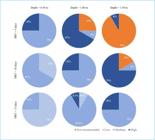
Percentage of CWTPs classified by nutrient loading rate based on combinations of hydraulic retention time and water depth in the duckweed pond.
Figure 1 shows that configurations with a pond depth and HRT ratio of 1:10 had the same percentage of CWTP classifications, allowing the superficial nutrient load to be simplified to a value numerically equal to the nutrient concentration, as shown in Equation 5. In the same ense, the superficial area was identical for these configurations; therefore, the difference lies in construction costs and in the inhibition of an anoxic zone resulting from changes in pond depth.
It is not possible to identify which configuration had the greatest potential for biomass growth without quantifying the surface area of the duckweed ponds. However, the 0.50 m depth did not result in a "not recommended" classification for any CWTP or HRT value. Similarly, an HRT of 15 days, regardless of the pond depth, was not classified as "not recommended". The 15-day HRT and 0.50 m deep configuration resulted in 75% and 25% of the CWTPs being classified as low and medium potential, respectively. These results suggest that shallow pond depths and high HRT are less likely to result in a "not recommended" nutrient loading rate in duckweed ponds fed with effluents from CWTPs that have total nitrogen concentrations between 10 and 50 mg.L−1.
High HRT values can affect nutrient removal rates in duckweed ponds. Al-Hashimi and Joda (2010), De Matos et al. (2014), and Akowanou et al. (2023) reported total nitrogen and phosphorus removal efficiencies ranging from 20 to 65% at HRT below 7 days. In contrast, Mohedano et al. (2019), Tonon et al. (2017), and Teles et al. (2017) achieved removal efficiencies above 84% for the same nutrients at HRTs exceeding 25 days.
Biomass Productivity
As shown in Figure 2, a water depth of 0.50 m resulted in the highest biomass productivity. Under these conditions, the moderate 15-day HRT scenario showed the greatest potential, yielding 249.18 tons.year of dry biomass. However, biomass productivity can range from 33.16 to 465.28 tons.year−1 under the pessimistic and optimistic scenarios, respectively, for the aforementioned configuration (0.50 m depth and 15-day HRT).

Biomass productivity (tons of dry weight per year) for each combination of HRT, pond depth, and RGR scenarios.
Based on the relationship between biomass productivity and treated wastewater volume, an estimated ratio of 1 kg of biomass per m3 of treated effluent was obtained under the moderate scenario, using a water depth of 0.50 m and a 15-day HRT. Considering that duckweed contains 38 g of crude protein per 100 g of dry biomass (De Matos et al., 2014), the production of 1 g of crude protein corresponds to the recovery of 2.63 L of virtual water through the treatment process. This ratio may serve as a sustainability indicator when compared to the water-use efficiency of conventional protein production systems, such as soybean and beef production, which require 11.17 L and 47.64 L of water per gram of protein, respectively (Damerau, Waha and Herrero, 2019).
CONCLUSIONS
The findings of this study indicate that CWTP effluent can be a sustainable nutrient source for producing protein-rich duckweed biomass, as it generally exhibits low BOD and COD while supplying nitrogen and phosphorus, thereby reducing the need for inorganic fertilizers.
Mathematical analysis indicates that pond depth and HRT influence nutrient loading rates, which in turn affect duckweed biomass productivity, suggesting the existence of a threshold for maximum production efficiency. Despite the inverse relationship between HRT and nutrient loading rates, the highest HRT evaluated yielded the greatest theoretical biomass production potential due to the larger pond surface area required for the depths analyzed. This interpretation, together with the high crude protein content, led to the characterization of duckweed ponds as having high potential for protein biomass production.
Future studies should incorporate techno-economic assessments that explicitly correlate construction and operational costs with surface area requirements, and quantify the economic value of harvested biomass and the benefits associated with additional nutrient removal.
DATA AVAILABILITY STATEMENT
The datasets generated and/or analyzed during the current study are available from the corresponding author upon reasonable request.
REFERENCES
-
AKOWANOU, Akuemaho Virgile Onésime; DEGUENON, Hontonho Espérance Justine; BALOGUN, Kolawolé; DAOUDA, Mohamed Moukorab Arêmou; AINA, Martin Pépin. The combined effect of three floating macrophytes in domestic wastewater treatment. Scientific African, v. 20, e01630, 2023. https://doi.org/10.1016/j.sciaf.2023.e01630
» https://doi.org/10.1016/j.sciaf.2023.e01630 -
AKYÜREK, Aydemir; AĞDAĞ, Osman Nuri. Comparison of constructed wetlands and package type sequencing batch biological treatment plants in rural areas in terms of efficiency and cost in a full-scale example. Ecological Engineering, v. 201, 107190, 2024. https://doi.org/10.1016/j.ecoleng.2024.107190
» https://doi.org/10.1016/j.ecoleng.2024.107190 -
ALI, Mahwish; ROUSSEAU, Diederik; AHMED, Safia. A full-scale comparison of two hybrid constructed wetlands treating domestic wastewater in Pakistan. Journal of Environmental Management, v. 210, p. 349-358, 2018. https://doi.org/10.1016/j.jenvman.2018.01.040
» https://doi.org/10.1016/j.jenvman.2018.01.040 -
AL-HASHIMI, Mohammed Ali; JODA, Rasha Azeez. Treatment of Domestic Wastewater Using Duckweed Plant. Journal of King Saud University - Engineering Sciences, v. 22, n. 1, p. 11-18, 2010. https://doi.org/10.1016/S1018-3639(18)30505-1
» https://doi.org/10.1016/S1018-3639(18)30505-1 -
AL-NOZAILY, Fadhl; ALAERTS, Guy; VEENSTRA, Siemen. Performance of duckweed-covered sewage lagoons – I. Oxygen balance and COD removal. Water Research, v. 34, n. 10, p. 2727-2733, 2000. https://doi.org/10.1016/S0043-1354(00)00003-8
» https://doi.org/10.1016/S0043-1354(00)00003-8 -
AL-WAHAIBI, Buthaina Mahfoud; JAFARY, Tahereh; AL-MAMUN, Abdullah; BAAWAIN, Mahad Said; AGHBASHLO, Mortaza; TABATABAEI, Meisam; STEFANAKIS, Alexandros. Operational modifications of a full-scale experimental vertical flow constructed wetland with effluent recirculation to optimize total nitrogen removal. Journal of Cleaner Production, v. 296, 126558, 2021. https://doi.org/10.1016/j.jclepro.2021.126558
» https://doi.org/10.1016/j.jclepro.2021.126558 -
AYAZ, Selma; AKTAŞ, Özgür; AKÇA, Lütfi; FINDIK, Nur. Full-scale hybrid constructed wetlands incorporated with an initial anaerobic stage for domestic wastewater treatment in a drinking water catchment area. Desalination and Water Treatment, v. 57, n. 19, p. 8626-8638, 2016. https://doi.org/10.1080/19443994.2015.1024751
» https://doi.org/10.1080/19443994.2015.1024751 -
BAEK, GahYoung; SAEED, Maham; CHOI, Hyung-Kyoon. Duckweeds: their utilization, metabolites and cultivation. Applied Biological Chemistry, v. 64, n. 1, 73, 2021. https://doi.org/10.1186/s13765-021-00644-z
» https://doi.org/10.1186/s13765-021-00644-z - CAICEDO BEJARANO, Julia Rosa. Effect of operational variables on nitrogen transformations in duckweed stabilization ponds London: Taylor & Francis, 2005.
- CAO, Xuan Hieu; FOUROUNJIAN, Paul; WANG, Wenqin (org.). The Duckweed Genomes Cham: Springer International Publishing, 2020.
-
CHEN, Hongjun. Surface-Flow Constructed Treatment Wetlands for Pollutant Removal: Applications and Perspectives. Wetlands, v. 31, n. 4, p. 805-814, 2011. https://doi.org/10.1007/s13157-011-0186-3
» https://doi.org/10.1007/s13157-011-0186-3 -
DAMERAU, Kerstin; WAHA, Katharina; HERRERO, Mario. The impact of nutrient-rich food choices on agricultural water-use efficiency. Nature Sustainability, v. 2, n. 3, p. 233-241, 2019. https://doi.org/10.1038/s41893-019-0242-1
» https://doi.org/10.1038/s41893-019-0242-1 -
DECEZARO, Samara Terezinha; WOLFF, Delmira; ARAÚJO, Ronaldo; FACCENDA, Henrique; PERONDI, Taíse; SEZERINO, Pablo. Vertical flow constructed wetland planted with Heliconia psittacorum used as decentralized post-treatment of anaerobic effluent in Southern Brazil. Journal of Environmental Science and Health, Part A, v. 53, n. 13, p. 1131-1138, 2018. https://doi.org/10.1080/10934529.2018.1530106
» https://doi.org/10.1080/10934529.2018.1530106 -
DE MATOS, Flávia Tavares; LAPOLLI, Flávio Rubens; MOHEDANO, Rodrigo de Almeida; FRACALOSSI, Débora Machado; BUENO, Guilherme Wolff; ROUBACH, Rodrigo. Duckweed Bioconversion and Fish Production in Treated Domestic Wastewater. Journal of Applied Aquaculture, v. 26, n. 1, p. 49-59, 2014. https://doi.org/10.1080/10454438.2014.877740
» https://doi.org/10.1080/10454438.2014.877740 -
EUROPEAN UNION – EU. Directive (EU) 2024/3019 of the European Parliament and of the Council of 27 November 2024 concerning urban wastewater treatment (recast). Official Journal of the European Union, L 3019, 2024. Available at: https://eur-lex.europa.eu/eli/dir/2024/3019/oj Accessed on: Jan 14, 2026.
» https://eur-lex.europa.eu/eli/dir/2024/3019/oj -
KÖRNER, Stephan; VERMAAT, Jan. The relative importance of Lemna gibba L., bacteria and algae for the nitrogen and phosphorus removal in duckweed-covered domestic wastewater. Water Research, v. 32, n. 12, p. 3651-3661, 1998. https://doi.org/10.1016/S0043-1354(98)00166-3
» https://doi.org/10.1016/S0043-1354(98)00166-3 -
MOHEDANO, Rodrigo de Almeida; TONON, Gustavo; COSTA, Rejane Helena Ribeiro da; PELISSARI, Catiane; BELLI FILHO, Paulo. Does duckweed ponds used for wastewater treatment emit or sequester greenhouse gases? Science of The Total Environment, v. 691, p. 1043-1050, 2019. https://doi.org/10.1016/j.scitotenv.2019.07.169
» https://doi.org/10.1016/j.scitotenv.2019.07.169 -
MOHEDANO, Rodrigo de Almeida; VELHO, Viviane Furtado; COSTA, Rejane Helena da; HOFMANN, Stefânia Martins; BELLI FILHO, Paulo. Nutrient recovery from swine waste and protein biomass production using duckweed ponds (Landoltia punctata): Southern Brazil. Water Science and Technology, v. 65, n. 11, p. 2042-2048, 2012. https://doi.org/10.2166/wst.2012.111
» https://doi.org/10.2166/wst.2012.111 -
PASOS-PANQUEVA, Johan; BAKER, Alison; CAMARGO-VALERO, Miller Alonso. Unravelling the impact of light, temperature and nutrient dynamics on duckweed growth: A meta-analysis study. Journal of Environmental Management, v. 366, 121721, 2024. https://doi.org/10.1016/j.jenvman.2024.121721
» https://doi.org/10.1016/j.jenvman.2024.121721 -
PELISSARI, Catiane; ÁVILA, Cristina; TREIN, Camila Maria; GARCÍA, Joan; ARMAS, Rafael Dultra de; SEZERINO, Pablo Heleno. Nitrogen transforming bacteria within a full-scale partially saturated vertical subsurface flow constructed wetland treating urban wastewater. Science of The Total Environment, v. 574, p. 390-399, 2017. https://doi.org/10.1016/j.scitotenv.2016.08.207
» https://doi.org/10.1016/j.scitotenv.2016.08.207 -
PETERSEN, Finn; DEMANN, Johannes; RESTEMEYER, Dina; ULBRICH, Andreas; OLFS, Hans-Werner; WESTENDARP, Heiner; APPENROTH, Klaus-Jürgen. Influence of the Nitrate-N to Ammonium-N Ratio on Relative Growth Rate and Crude Protein Content in the Duckweeds Lemna minor and Wolffiella hyalina. Plants, v. 10, n. 8, 1741, 2021. https://doi.org/10.3390/plants10081741
» https://doi.org/10.3390/plants10081741 -
ROMAN, Ben; BRENNAN, Rachel. A beneficial by-product of ecological wastewater treatment: An evaluation of wastewater-grown duckweed as a protein supplement for sustainable agriculture. Ecological Engineering, v. 142, 100004, 2019. https://doi.org/10.1016/j.ecoena.2019.100004
» https://doi.org/10.1016/j.ecoena.2019.100004 - SEZERINO, Pablo Heleno. Wetlands construídos como ecotecnologia para o tratamento de águas residuárias Curitiba: Brazil Publishing, 2020.
-
SINGH, Saurabh; MAITHANI, Chinmay; MALYAN, Sandeep; SOTI, Abhishek; KULSHRESHTHA, Niha Mohan; SINGH, Rajesh; BRIGHU, Urmila; GUPTA, Akhilendra Bhushan; KUMAR, Jhalesh; YADAV, Shweta; SINGH, Omkar; GOYAL, Vikash Chandra. Comparative performance and 16S amplicon sequencing analysis of deep and shallow cells of a full scale HFCW having sequentially decreasing depths reveals vast enhancement potential. Bioresource Technology Reports, v. 22, 101404, 2023. https://doi.org/10.1016/j.biteb.2023.101404
» https://doi.org/10.1016/j.biteb.2023.101404 - SPERLING, Marcos von. Wastewater characteristics, treatment and disposal London: IWA Publishing, 2007.
-
TAO, Wendong; SAUBA, Keshav; FATTAH, Kazi Parvez; SMITH, John. Designing constructed wetlands for reclamation of pretreated wastewater and stormwater. Reviews in Environmental Science and Bio/Technology, v. 16, n. 1, p. 37-57, 2017. https://doi.org/10.1007/s11157-016-9419-5
» https://doi.org/10.1007/s11157-016-9419-5 -
TELES, C. C.; MOHEDANO, Rodrigo de Almeida; TONON, Gustavo; BELLI FILHO, Paulo; COSTA, Rejane Helena Ribeiro da. Ecology of duckweed ponds used for nutrient recovery from wastewater. Water Science and Technology, v. 75, n. 12, p. 2926-2934, 2017. https://doi.org/10.2166/wst.2017.172
» https://doi.org/10.2166/wst.2017.172 -
TONON, Gustavo; MAGNUS, Bruna Scandolara; MOHEDANO, Rodrigo de Almeida; LEITE, Wanderli; COSTA, Rejane Helena Ribeiro da; BELLI FILHO, Paulo. Pre treatment of Duckweed Biomass, Obtained from Wastewater Treatment Ponds, for Biogas Production. Waste and Biomass Valorization, v. 8, n. 7, p. 2363-2369, 2017. https://doi.org/10.1007/s12649-016-9800-1
» https://doi.org/10.1007/s12649-016-9800-1 -
TREIN, Camila Maria; ZUMALACARREGUI, Jorge Alejandro García; MORAES, Mirene Augusta de Andrade; VON SPERLING, Marcos. Reduction of area and influence of the deposit layer in the first stage of a full-scale French system of vertical flow constructed wetlands in a tropical area. Water Science & Technology, v. 80, n. 2, p. 347-356, 2019. https://doi.org/10.2166/wst.2019.278
» https://doi.org/10.2166/wst.2019.278 - UNITED NATIONS ENVIRONMENT PROGRAMME – UNEP. Nature-based Solutions: Opportunities and Challenges for Scaling Up. Nairobi: UNEP, 2022.
-
VALAPPIL, Pandara Femeena; HOUSE, Gregory; BRENNAN, Rachel. Creating a Circular Nitrogen Bioeconomy in Agricultural Systems through Nutrient Recovery and Upcycling by Microalgae and Duckweed: Past Efforts and Future Trends. Journal of the ASABE, v. 65, n. 2, p. 327-346, 2022. https://doi.org/10.13031/ja.14891
» https://doi.org/10.13031/ja.14891 -
ZHAI, Jun; QIN, Chuan; XIAO, Hai Wen; HE, Qiang; LIU, Jie. Constructed Wetlands for Wastewater Treatment in Mainland China: Two Decades of Experience. Applied Mechanics and Materials, v. 90-93, p. 2977-2986, 2011. https://doi.org/10.4028/www.scientific.net/AMM.90-93.2977
» https://doi.org/10.4028/www.scientific.net/AMM.90-93.2977 -
ZHAO, Yonggui; FANG, Yang; JIN, Yanling; HUANG, Jun; BAO, Shu; FU, Tian; HE, Zhiming; WANG, Feng; ZHAO, Hai. Potential of duckweed in the conversion of wastewater nutrients to valuable biomass: A pilot-scale comparison with water hyacinth. Bioresource Technology, v. 163, p. 82-91, 2014. https://doi.org/10.1016/j.biortech.2014.04.018
» https://doi.org/10.1016/j.biortech.2014.04.018 -
ZOU, Li; XU, Jianling; LIU, Huijia; ZHOU, Zegang; CHEN, Yue; WANG, Xinyu; WANG, Hanxi; ZOU, Yuanchun. The efficiency of enhanced nitrogen and phosphorus removal in a vertical flow constructed wetland using alkaline modified corn cobs as a carbon source. Environmental Technology & Innovation, v. 35, 103690, 2024. https://doi.org/10.1016/j.eti.2024.103690
» https://doi.org/10.1016/j.eti.2024.103690
Edited by
-
Editor:
Rodrigo Moruzzi https://orcid.org/0000-0002-1573-3747

 Source: by the Authors (2025).
 Source: by the Authors (2026).