Effect of toxicants from non-domestic wastewater on the growth of aerobic, anaerobic, and algal biomass
ABSTRACT
The present study used toxicity tests to investigate the effects of several toxicants on the growth of aerobic (activated sludge), anaerobic (sludge) (Upflow Anaerobic Sludge Blanket (UASB)), and algal (Chlorella vulgaris cultivation) biomasses. The toxicants analyzed are included in Brazilian water authorities’ regulations for the discharge of non-domestic wastewater (NDW) into sanitary sewage networks. First, the concentration ranges commonly reported as inhibitory for the three types of biomass were surveyed in the literature. Based on this survey and considering the limits established by the NDW discharge regulations in Brazil, three doses were defined for each substance, to be used in aerobic (dissolved oxygen consumption rate), anaerobic (methane production rate), and algal (cell growth rate) toxicity tests. The tests revealed that the biomasses exhibited quite variable minimum inhibitory concentrations (MIC); aerobic biomass appeared to be more tolerant (MIC in greater magnitude) than anaerobic and algal biomass, with the latter being the most sensitive. Aerobic sludge was particularly sensitive (toxicity observed at 1 mg.L-1) to lead, cobalt, total chromium, iron, zinc, and sulfide. In comparison, anaerobic sludge was more sensitive to tin and mercury (0.1 and 0.5 mg.L-1, respectively). Algal biomass was more sensitive to vanadium, cobalt, and sulfide (0.2, 0.5, and 0.5 mg.L-1, respectively). Arsenic, copper, total chromium, iron, phenols, and sulfate had minimum inhibitory doses (for all three biomasses) lower than the values proposed by some Brazilian water authorities, indicating the need for more in-depth studies on these substances to encourage future reviews of the currently established limits.
Keywords:
industrial wastewater; metals; toxic compounds; toxicity; inhibition; activated sludge; anaerobic digestion; facultative ponds
INTRODUCTION
The increase in demand for consumer goods, combined with a steady population growth, has intensified industrial/commercial activities and, consequently, the generation of non-domestic wastewater (NDW) (Sapia; Morita, 2003). NDW are characterized by wastewater generated in various industrial typologies (textile, metallurgical, chemical, food), wastewater from chemical toilets, and leachate from sanitary landfills (Aquino et al., 2019). These may have different characteristics depending on the industry type and often require more advanced treatment configurations when compared to domestic wastewater treatment because of their complexity.
In the 1960s, the joint treatment of NDW and domestic sewage was established as a common policy of sanitation companies, bringing economic benefits to society, industries, and water authorities, with the additional benefit of facilitating inspection by environmental agencies (Morita, 2021). However, when released into the sewage system, NDW can cause damage to the networks, such as corrosion, incrustation, flammability, and explosion, and may harm the health and safety of the operators of the sewage collection and transportation system, due to its multiple components (Matos et al., 2020; Zhang et al., 2023). Another important aspect is that the composition of this wastewater can cause adverse effects on biological treatment processes and volatilize solvents, organic, sulfur, and nitrogen (N) compounds in different units of the Sewage Treatment Plants (STPs). It can also generate sludge with dangerous characteristics, due to the presence of organic compounds, cyanide, metals, among others. These substances make NDW final disposal in agricultural areas unfeasible or contaminate soil and water bodies (Sapia; Morita, 2003).
One of the main problems associated with the presence of typically industrial pollutants, such as anthropogenic organic compounds (Benzene, Toluene, Ethylbenzene, Xylene (BTEX), pesticides, pharmaceuticals, Polycyclic Aromatic Hydrocarbons (PHA), synthetic detergents) and metals, in STPs, is that once in contact with aerobic, anaerobic, or algal biomass, depending on the type of biological treatment used, they can inhibit the activity of bacteria, archaea and microalgae, thus impairing the degradation of sewage organic matter and reducing treatment efficiency (Chen et al., 2014; Matamoros et al., 2015; Aquino et al., 2019). Several studies in the literature have reported negative effects on biomass, such as reduced respiration rate, reduced hydrogen and methane production, and reduced microalgae growth, due to the presence of metals, semi-metals, and inorganic substances (Çeçen et al., 2010; Sharma; Melkania, 2018; Hussain et al., 2021). These negative effects are harmful to the microbial community, causing oxidative stress, disruption of cellular structures, impairment of organellar functions, enzyme inactivation, among others (Oleszkiewicz; Sharma, 1990; Bajguz et al., 2011; ROSSI et al., 2020; Nnaji et al., 2024; Li et al., 2025).
To minimize such adverse effects, NDW must meet the specific discharge standard set by local water authorities, as is the case in several Brazilian states—Decree No. 15,425 of 07/23/1980 for the state of São Paulo (São Paulo, 1980), COEMA Resolution No. 2 of 02/02/2017 for the state of Ceará (Coema, 2002), Resolution No. 5,490 of 03/27/2013 for Espírito Santo (Cesan, 2013), and Technical Standard T.187/6 of 04/30/2018 for Minas Gerais (Copasa, 2018). For instance, in the state of Minas Gerais, Technical Standard T.187/6 is used by one water authority to establish criteria and limits for the release of NDW into the sewage system by industries, commercial activities, and service companies. These limits encompass 41 parameters/pollutants, including nine volatile organic compounds (VOCs), such as benzene, toluene, xylene, ethylbenzene, styrene, chloroform, dichloroethene, carbon tetrachloride and trichloroethene; 17 metallic or semi-metallic elements, e.g. aluminum (Al), arsenic (As), barium (Ba), among others; and five inorganic substances: cyanide, fluoride, sulfide, sulfate, and ammonia. The states of Ceará and Espírito Santo also have water authorities imposing standards with limits and procedures for receiving NDW in the sewage system. Other countries have also adopted similar programs. For example, the United States Environmental Protection Agency (USEPA) has a program called the National Pollutant Discharge Elimination System (NPDES) for this purpose, which establishes guidelines and standards for wastewater discharge from more than 50 industrial categories/commercial activities into the sewage collection network (Usepa, 2025). According to Delatorre Junior and Morita (2007), countries such as Italy, Canada, Puerto Rico, Chile, and Slovakia have established their programs following the North American model.
Given the above and considering the importance of regulating the limit values of parameters/pollutants for the release of NDW into the sewage system, this study used toxicity tests to investigate the effects of several substances covered by Brazilian water authorities’ NDW discharge regulations on the performance of aerobic biomass (activated sludge), anaerobic biomass (UASB sludge), and algal biomass (Chlorella vulgaris culture). The objective of the study was to evaluate whether the values currently adopted are effective in protecting the activity of the tested biomasses.
METHODOLOGY
Substances tested
In this study, the toxicity of 25 substances was tested at three concentration levels for each type of biomass, as shown in Table 1. The concentration levels were defined based on the limits established by Brazilian NDW discharge regulations and studies reported in the literature (Table 2). In many cases, the inhibition ranges reported in the literature are very wide, depending on the biomass used. In the present study, biomasses that are not adapted to the presence of the target substances were used to identify their real impact on the activity of the sludge/microalgae, as will be described later.
Inhibitory concentrations reported in the literature for aerobic, anaerobic, and algal biomasses.
Aerobic biomass tests
Aerobic toxicity tests were performed using a methodology known as the ‘Respirometric Test for Activated Sludge’ (OECD, 2010). The test measures the decay of dissolved oxygen (DO) concentration in aerobic sludge, using a potentiometer (DO measuring electrode). For this, the substance to be assessed for toxicity (Table 1) was kept in contact with aerobic sludge previously fed (for at least 4 hours) with glucose (1 g.L-1) under constant stirring. A sample of the culture was then taken to assess DO decay once aeration was interrupted.
A respirometric curve was obtained by measuring the DO concentration at 1-minute intervals for 15 minutes. In turn, the specific oxygen consumption rate (mgDO.gVS-1.h-1) was calculated considering changes in DO over time, from an initial mass of inoculum (aerobic sludge). The aerobic sludge used in the tests had no contact with industrial wastewater and was collected in an activated sludge system fed with domestic sludge and kept active in the laboratory under constant aeration (using aquarium aerators). It was also fed with glucose and food leftovers (Ou et al., 2018). During the experimental batches, the pH ranged from 7.0 to 7.5, and the volatile solids content was 3.6 to 4.1 g L-1. For a rapid determination of the sludge biomass concentration to be used in the tests, a calibration curve of volatile solids versus turbidity was constructed, yielding good correlation (R2 = 0.99). To ensure a minimum contact time of 4 hours between the aerobic biomass and a given toxic substance, 300 mL of the aerobic sludge was mixed with the working solution (containing the substance of interest) and kept on a magnetic stirrer rotating at around 500 rpm to ensure oxygen supplementation in the medium. All experiments were performed in duplicate.
After the contact time, DO decay was measured, and the sludge was then transferred to Biochemical Oxygen Demand bottles kept under minimal magnetic stirring (∼150 rpm) to avoid aeration of the medium but high enough to prevent biomass settling. For each of the substances, three fortification levels were tested. To determine the inhibitory or stimulating effect of the substances tested, the oxygen consumption rate (mg O2 min-1.gVS-1) was calculated for each experiment. An example of the DO concentration decay curve can be found in Figure S1 (Supplementary Material). The inhibitory or stimulating effect was defined by directly comparing the average oxygen uptake rates (OUR) obtained for the experiments with the target substances and the control experiment, i.e., OURsubstance > OURcontrol = stimulating effect; OURsubstance < OURcontrol = inhibitory effect; OURsubstance = ratecontrol = no effect (Table S1 – Supplementary Material).
Anaerobic biomass tests
The toxicity tests on anaerobic biomass were performed according to the methodology for determining methanogenic activity, described by Aquino et al. (2007). Glass flasks with a 120 mL capacity, containing a useful volume of 60 mL and 60 mL of headspace were used. The anaerobic biomass (sludge) used in the experiments was sourced from a UASB reactor treating domestic sewage in a nearby city. It was previously collected and kept in the laboratory for approximately three months until the experiments were conducted. The sludge was fed weekly with glucose and processed food waste (Holliger et al., 2016).
Cellobiose (1 g.L-1) was used as substrate, and distilled water was used to complete the useful volume, setting the substrate/inoculum (S/I) ratio at 0.4 g COD.g Volatile Solids (VS)-1, as recommended by Chernicharo (2007), and volatile solids concentration of approximately 3 g.L-1 in the experiments. The working solutions, containing each substance of interest at the desired concentration (Table 1), were added to this mixture. In each batch, vials called "control" - which did not receive the toxic substance tested, were also monitored. All assays were performed in duplicate, plus the control experiment. Before closing the vials, the pH was adjusted to 8.00 ± 0.10 (Jankowska et al., 2017; Sun et al., 2021; Paranhos et al., 2025) with sodium bicarbonate, and the headspace was purged with N gas. Immediately after these steps, the vials were sealed and kept under constant mixing (180 rpm) and temperature (35°C) for approximately 10 days.
Methane production was determined daily by gas chromatography, in a chromatograph (Shimadzu, model GC-2014) equipped with a thermal conductivity detector (TCD) and Restek capillary column (30 m x 0.53 mm), maintained at 120°C, as detailed in Lima et al. (2018). The accumulated pressure in the flasks was also measured daily using a pressure gauge (model PM-9100HA), and the methane production values were expressed in terms of NmL of CH4.gSV-1, considering the standard conditions of temperature and pressure (273.15 K and 101.315 Pa), as recommended by the International Union of Pure and Applied Chemistry (IUPAC) (Calvert, 1990).
To determine the possible inhibitory (or stimulating) effect of the substances on anaerobic biomass, specific methane production rates were calculated. For this, the experimental data on methane production (NmL CH4) as a function of time (h) were used, in the linear section of the graph, to fit a straight line, whose angular coefficient was equivalent to the methane production rate (dV/dt, NmLCH4.h-1). This was then divided by the amount of inoculum (anaerobic sludge, gVS) to normalize the result and obtain the specific rate of methane production (NmL CH4.h-1.gVS-1). An example of the methane production curve can be seen in Figure S2 (Supplementary Material). The inhibitory or stimulating effect was defined by directly comparing the average rates obtained for the experiments with the target substances and the control experiment, i.e., ratesubstance > ratecontrol = stimulating effect; ratesubstance < ratecontrol = inhibitory effect; ratesubstance = ratecontrol = no effect (Table S2 – Supplementary Material).
Algal biomass tests
For the algal toxicity tests, experiments were carried out with the microalgae Chlorella vulgaris, obtained from Wenutri Natural Foods & Supplement and maintained in a laboratory with oxygen injection and culture medium. This species was chosen because it is ubiquitous in wastewater treatment ponds due to its high tolerance to contaminated environments, in addition to showing rapid growth in laboratory conditions (Canovas et al., 1996). The algal culture was made from a mixture of a certain volume of the original Chlorella vulgaris culture and Chu medium — composed of macro and micronutrients essential for algal growth (Chu, 1947) to reach an initial algal density of around 70 mg.L-1 and pH ∼ 7.2.
The experiments were carried out in 250 mL Erlenmeyer flasks (duplicate), using 100 mL of the algal culture which was fortified with the substances of interest at three concentration levels (Table 1). "Control" flasks, containing only the algal culture, were also monitored. The flasks were kept under agitation and constant temperature (130 rpm; 27°C) for seven days, in an orbital shaker with white light LED strips inside. Algal density was measured daily, based on spectrophotometer readings at 680 nm. An absorbance versus algal density curve was built to determine this parameter and resulted in a good fit (R2 = 0.98).
To determine the possible inhibitory (or stimulating) effect of the substances tested on algal cultivation, the average algal growth rate (mg.L-1.h-1) for the incubation period was calculated, based on the daily growth rate. An example of the algal growth curve can be seen in Figure S3 (Supplementary Material). The inhibitory or stimulating effect was defined by comparing the average rates obtained in the experiments with the target substances and the control experiment, i.e., ratesubstance > ratecontrol = stimulating effect; ratesubstance < ratecontrol = inhibitory effect; ratesubstance = ratecontrol = no effect (Table S3 – Supplementary Material).
RESULTS AND DISCUSSION
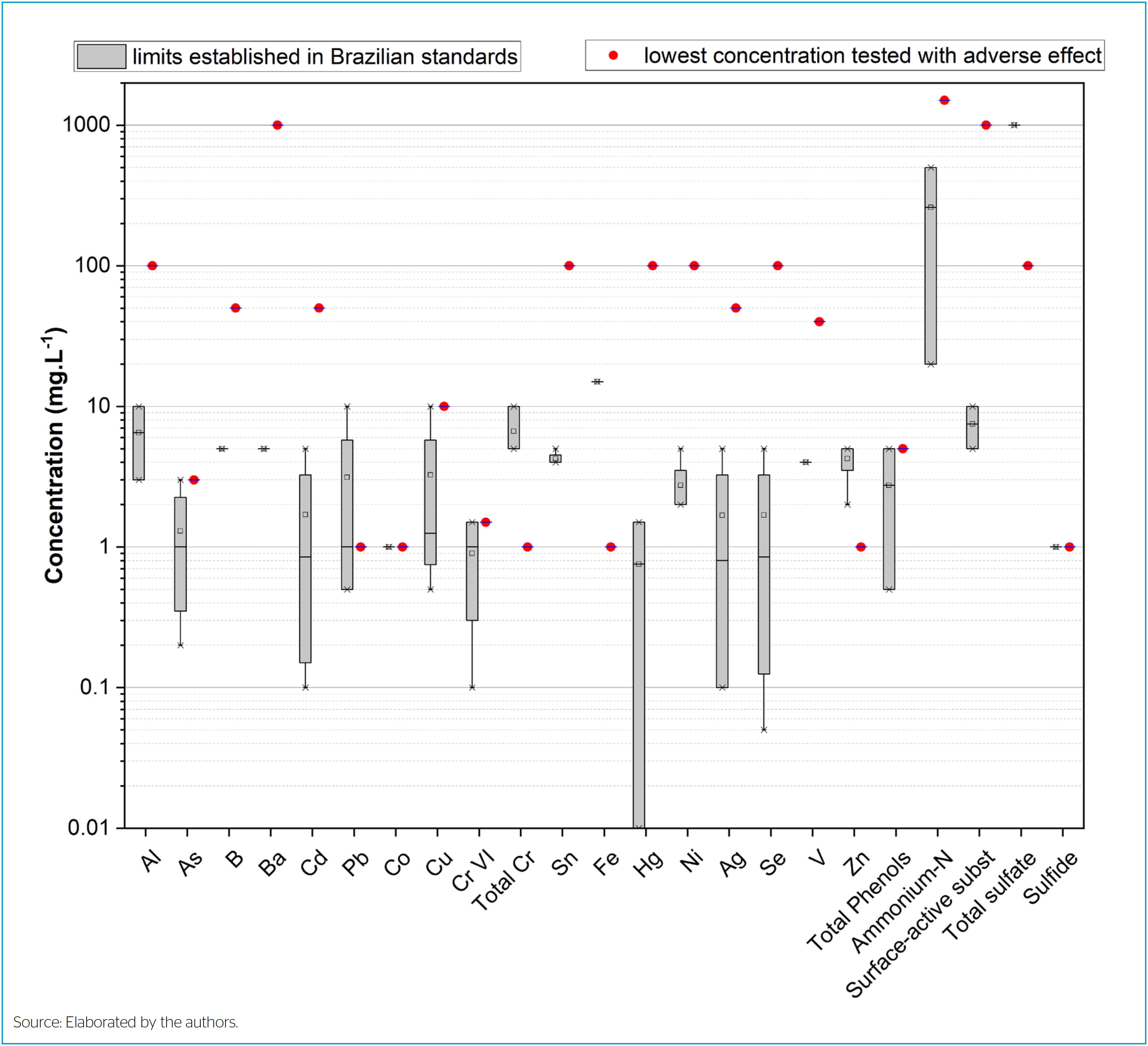
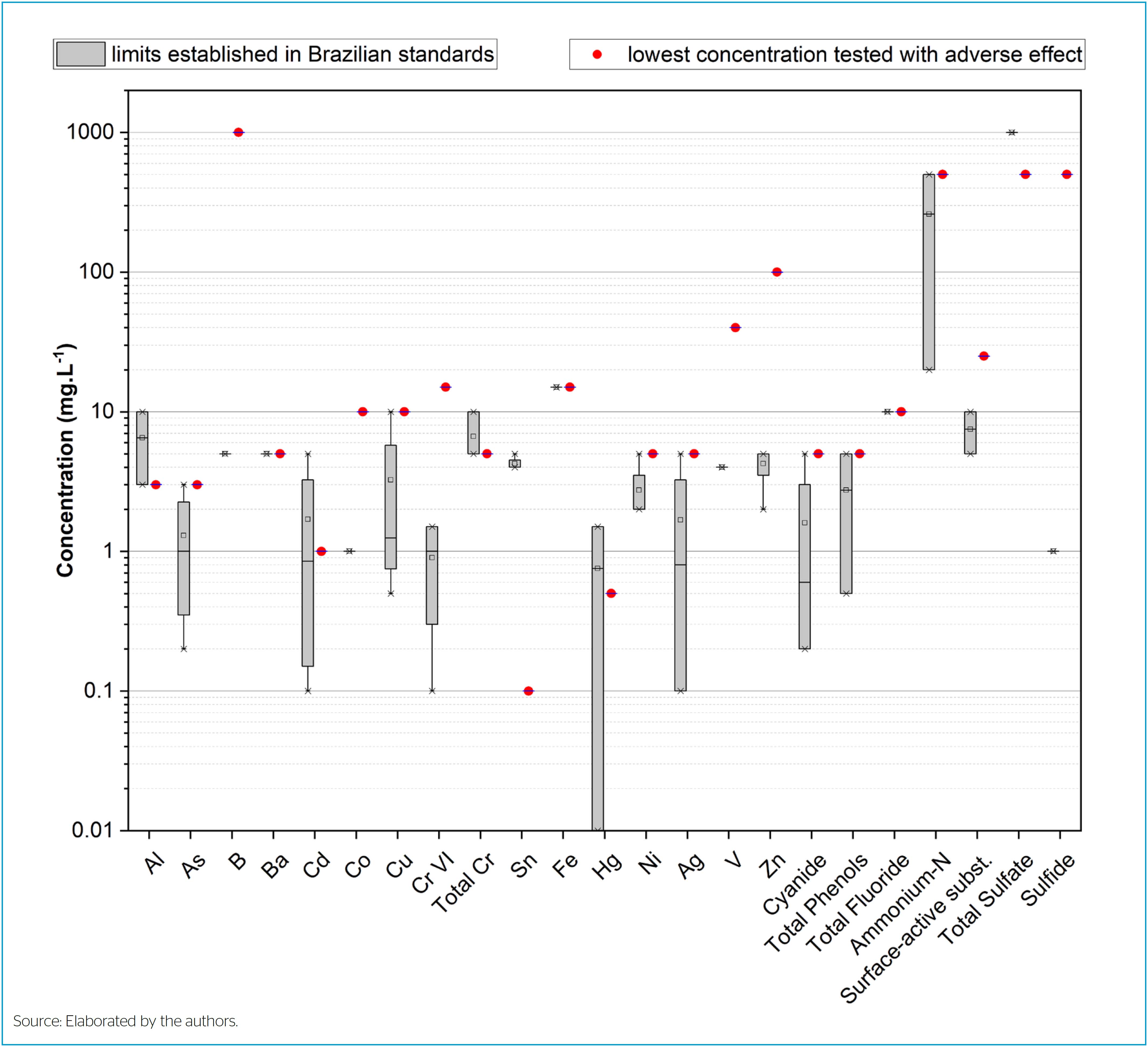
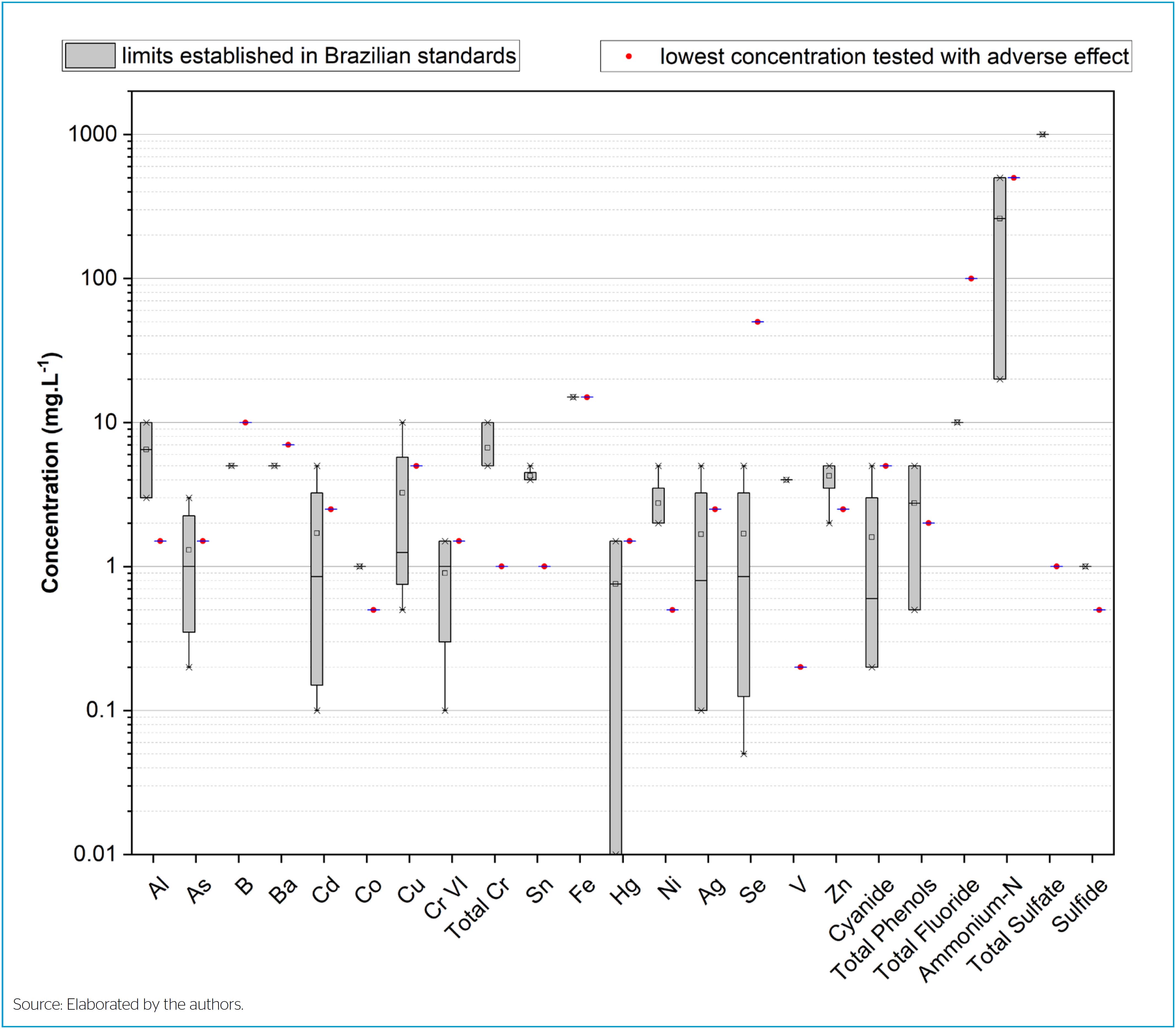
Table 3 summarizes the lowest concentrations of the various substances tested that harm aerobic, anaerobic, and algal biomass. Figures 1, 2, and 3 show the limit ranges established in the Brazilian legislation, as well as the lowest dose determined in this study for each type of biomass. It should be noted that data analysis was based on descriptive statistics and visual comparison of means between the experiments with the addition of the substances and their respective controls. Thus, although some substances appear to reduce biomass activity (aerobic, anaerobic, or algal), these results should be interpreted with caution, as formal statistical significance could not be determined. The observed differences suggest potential inhibitory effects, and this finding can help with decision-making regarding future studies and changes to current discharge standards.
Lowest concentration values of the substances tested that had an inhibitory effect on aerobic, anaerobic, and algal biomasses.
In general, the lowest inhibiting concentrations for each substance varied considerably between aerobic, anaerobic, and algal biomasses. Aerobic biomass seems to be more tolerant to most of the substances tested and was inhibited only at higher toxicant concentrations. In turn, algal biomass seems to be the most sensitive to 14 of the 25 substances tested, while anaerobic biomass was the most sensitive to seven substances. Aerobic biomass was particularly sensitive to metallic elements (e.g., lead (Pb), cobalt (Co), chromium (Cr), zinc (Zn)) and quite resilient to surfactants, Ba, and ammoniacal nitrogen. On the other hand, anaerobic biomass was more sensitive to tin (Sn) and mercury (Hg). Finally, algal biomass was quite sensitive to vanadium (V), sulfide, nickel (Ni), and Co. The following items will discuss in greater detail the effects of each substance on the biomasses tested. To compare the values reported as inhibitory (Figures 1, 2, and 3), the following legislation was used: Decree No. 15,425 of 07/23/1980 for the state of São Paulo, COEMA Resolution No. 02 of 02/02/2017 for the state of Ceará, Resolution No. 5,490 of 03/27/2013 for Espírito Santo, and Technical Standard T.187/6 of 04/30/2018 for Minas Gerais.
Comparison between the lowest concentration tested that presented an adverse effect on aerobic biomass and the range specified by some Brazilian water authorities for receiving non-domestic wastewater.
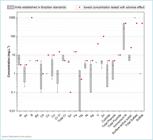
Comparison between the lowest concentration tested that presented an adverse effect on anaerobic biomass and the range of limits established by some Brazilian water authorities for receiving non-domestic wastewater.
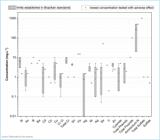
Comparison between the lowest concentration tested that presented an adverse effect on algal biomass and the range of limits established by some Brazilian water authorities for receiving non-domestic wastewater.
Effects on aerobic biomass
In comparison with the range of inhibitory values reported in the literature, eight out of the 25 substances tested were toxic at concentrations within the reported range (Table 2), while 12 seemed to be inhibitory at concentrations higher than the limits established by some Brazilian water authorities (Table 3). Furthermore, in general, the inhibitory doses for aerobic biomass were quite variable, with most of the tests showing an adverse effect-causing dose higher than 50 mg.L-1. On the other hand, doses between 1 and 10 mg.L-1 seemed to be subtly stimulating for several substances (e.g., Al, Ba, boron (B), N-ammoniacal, Hg, and silver (Ag)), indicating that the aerobic community appears to be more tolerant than the other biomasses. This is consistent with the higher growth rates observed for aerobic microorganisms. Al at low concentrations can reduce the repulsive force between particles and stimulate bioflocculation, in addition to improving the dehydrogenase activity of activated sludge, which increases the efficiency of organic matter handling and total toxicity (Zhang et al., 2019). As reported by Zhang et al. (2019), the presence of Al can stimulate the excretion of extracellular polymeric substances (EPS), one of the main components of activated sludge. This is considered an important mechanism of Al resistance. Microorganisms secrete them to protect their cells from the effect of cationic osmotic pressure (Zhang et al., 2019). Boron (B) stimulates quorum sensing between cells (Hu et al., 2022), while N is an essential element for microbial growth (Paśmionka et al., 2021). Regarding Hg, the survival of bacteria in environments containing this metal has been reported, due to their resistance capacity ("Operon mer"), through chemical transformation processes (Boyd; Barkay, 2012). Like Hg, Ag can also induce "hormesis", a biological response in which low doses of a toxic agent induce a beneficial or stimulatory effect, and high doses are inhibitory or lethal (Guo et al., 2016).
The substances with the lowest inhibitory dose (∼1 mg.L-1) to aerobic biomass were Co, Cr, Pb, Fe, Zn, and sulfide. These elements can trigger cellular inhibition mechanisms, such as oxidative stress, cell membrane disruption, enzyme inactivation, DNA damage, among others, reducing microbial activity (Nnaji et al., 2024). Similarly, Hernandez-Martinez et al. (2018) observed that a dose of 1 mg.L-1 of Co caused inhibition greater than 10% during a respirometric experiment. Çeçen et al. (2010) also indicated inhibition of aerobic activity by Cr from 2 mg.L-1 and that there was no adsorption of this metal to the biomass. These authors emphasize the importance of speciation studies, together with inhibition, since experimental conditions, such as pH and temperature, can influence the predominant form of the metal. In contrast, for Co and Cr, El Bestawy et al. (2013) reported inhibition of the aerobic activity of activated sludge only with concentrations above 20 mg Co.L-1 and 10 mg Cr.L-1, respectively, with IC50 (50% Inhibitory Concentration of the microbial community) values close to 180 mg Co.L-1 and 66 mg Cr.L-1. These authors emphasize the possibility of microbiota adaptation to Co due to adsorption to the sludge. For Cr, adsorption was negligible, which may justify its lower inhibitory concentration (El Bestawy et al., 2013). Therefore, adsorption onto solids mitigates toxicity by reducing metal concentrations in the liquid phase. This, on the other hand, increases its amount in the solid phase (sludge), which should be further treated and disposed of. Regarding Pb, Malamis et al. (2012) observed an inhibitory concentration of activated sludge biomass at 10 mg Pb.L-1, which is a higher dose than that observed in the present study. It should be noted that Pb has an inhibitory effect by interfering with the process of respiration and cell division (Nnaji et al., 2024). However, studies that tested lower doses were not found in the literature; moreover, there is a possibility of Pb adsorption after the addition of zeolite in the toxicity benchmark study (Malamis et al., 2012). Regarding iron, Hao et al. (2016) observed a decrease in the optical density of aerobic biomass with a dose of 32 mg Fe.L-1. These authors report that iron can bind to negatively charged cells and form microbial nuclei. This could favor microbial activity at lower concentrations (Hao et al., 2016). Yazdanbakhsh et al. (2019) also mention that the presence of iron nanoparticles at concentrations above 5 mg.L-1 affected the integrity of the cell membrane of aerobic sludge organisms. As for Zn, Esquivel-Rios et al. (2014) observed that at doses of 20 to 100 mg Zn.L-1, a reduction in the maximum oxygen consumption rate of the sludge was noted, while Alkan et al. (2008) reported an IC50 value of 45 mg Zn.L-1. Malamis et al. (2012) also observed some inhibition at a dose of 10 mg Zn.L-1 and highlighted the possibility of adsorption of this metal to mineral particles. However, it is noteworthy that these studies focused on higher doses, while the present study surveyed lower inhibitory concentrations and found that 1 mg Zn.L-1 was toxic for aerobic biomass. This effect could be associated with changes in membrane integrity, as reported by Nnaji et al. (2024). In the case of sulfide, Seuntjens et al. (2018) and Noriega-Hevia et al. (2020) reported inhibition of aerobic ammonium-oxidizing bacteria at concentrations ranging from 2.5 to 150 mg.L-1 which are higher than the value found in this study (1 mg S2-.L-1). Sulfide is very reactive, and, depending on the environmental conditions (e.g. pH and redox potential, pE), changes in speciation (e.g., HS-, hydrogen sulfide; S0, elemental sulfur) may change toxicity (Seuntjens et al., 2018). At the experimental pH (7.0–7.5), considering the sulfide speciation diagram, a large part of it may be found in the toxic form (hydrogen sulfide gas), which may justify the inhibitory effect observed in the present study. The mechanisms involved in the inhibition of aerobic bacteria due to sulfide in these experiments may be due to the inhibition of the respiratory chain, the generation of sulfur species, and intracellular acidification, among others (Xia et al., 2017).
In contrast, Ba, surfactants, and N-ammoniacal were the substances that had the highest inhibitory dose for aerobic biomass (1,000; 1,000, and 1,500 mg.L-1, respectively). Regarding Ba, no studies in the literature were found that reported inhibition of aerobic biomass. However, Baldi et al. (1996) indicated a tendency for this element to be adsorbed to the sludge of two STPs in Italy. In such study, tests were also carried out with the addition of barite, and it was reported that sulfate-reducing bacteria played a role in the solubilization of Ba and favored the formation of flocs of these organisms (Baldi et al., 1996). The presence of surfactants can cause numerous impacts. Among these, Yang et al. (2015) reported nitrification inhibition in aerobic cultures at a concentration of 5 mg.L-1 of benzalkonium chloride. In the present study, another representative of the surfactant class, sodium lauryl sulfate, was used, and the inhibitory dose was much higher (1,000 mg.L-1). Regarding N, depending on its form, it is an essential nutrient for microorganisms. Ammoniacal nitrogen in ionized form — which depends on the pH of the medium — is a source of N for protein synthesis and microbial growth, while the free form passes through the cell membrane, inhibiting respiratory enzymes (Li et al., 2025).
Paśmionka et al. (2021) reported that N-NH3 concentrations above 60 mg.L-1 caused inhibition of the nitrification process, although an increase in nitrifying biomass was reported. In contrast, for the DO decay tests in this study, there was an apparent reduction in the oxygen consumption rate only at a 1,500 mg.L-1 dose, indicating that lower doses may have stimulated aerobic activity. According to the ammonium-N speciation diagram (Aquino et al., 2019), at experimental pH of 7.0 to 7.5, about 5% of the ammonium-N concentration is in the free and toxic form, while 95% is in the ionized form. Therefore, adverse effects on the microbiota are only noted at high concentrations.
As shown in Figure 1, for the substances As, Co, copper (Cu), hexavalent chromium (Cr (VI)), total Cr, Pb, Fe, Zn, total phenols, sulfate, and sulfide, the lowest dose with an adverse effect (less pronounced DO decay over time, compared to the control experiment — example in Figure S1) was equal to or lower than the range of maximum limits established by some Brazilian water authorities. This indicates a possible need to evaluate the limits for these parameters, particularly for STPs receiving NDW with such substances and employing aerobic treatment. For Al, B, Ba, cadmium (Cd), Sn, Hg, Ni, Ag, selenium (Se), V, ammoniacal nitrogen, and surfactants, the lowest dose with an adverse effect on the microbial community was higher than the maximum concentration range allowed by some Brazilian water authorities, indicating that, for these parameters, the established limits consider safety. It was not possible to determine an inhibitory dose for cyanide and fluoride, since the concentrations tested slightly increased the oxygen consumption rate.
It is important to highlight that, for some substances (e.g., B, Ni, Se), the doses applied — which were within the range specified in the legislation — had a stimulating effect. This means an even greater decline in DO concentration was observed when compared to the control experiment. Ni and Se, for example, have been reported as stimulants of microbial enzyme activity at low concentrations (Chakrabarti; Jones, 1983; Barraquio; Knowles, 1989). For such substances, the specified limits are also well-established and consider safety.
Effects on anaerobic biomass
Compared to the range of inhibitory values reported in the literature (Table 2), only five out of the 25 substances tested were in accordance with the limit values reported in the literature, while 17 had inhibitory concentrations below the inhibition range (Table 3). In general, doses between 1 and 10 mg.L-1 of the substances tested, including several metals and semi-metals, had an inhibitory effect on anaerobic biomass. Sn and Hg were the substances with the lowest inhibitory dose (0.1 and 0.5 mg.L-1, respectively), while B had the highest inhibitory dose (1,000 mg.L-1). According to Oleszkiewicz and Sharma (1990), the main inhibition mechanisms associated with metals include combination with the sulfhydryl group, as in cysteine; replacement of metal cofactors of the enzyme; inactivation of the mercapto group; and binding with acidic groups in the polypeptide chain. Abdel-Shafy and Mansour (2014) indicated that Hg was, indeed, the most toxic metal for the anaerobic digestion of domestic sewage sludge, compared to Cd and Cr (III). Starting at the dose of 0.006 mg Hg.L-1, a decrease in biogas production and accumulation of volatile fatty acids (VFAs) (∼700 mg.L-1) was observed, due to the negative effect on methanogenic microorganisms (Abdel-Shafy; Mansour, 2014). Sharma and Melkania (2018) also observed hydrogen production inhibition at 1 mg Hg.L-1, indicating that this metal can also affect acidogenic bacteria. These results are consistent with the findings of the present research, although there was a subtle difference between the doses tested. It is important to highlight that the content of dissolved organic matter can influence Hg speciation, as reported by Zhang et al. (2024), who indicated the possibility of a strong bond between Hg and reduced sulfur functional groups. For Sn, no paper was found about its effects on anaerobic digestion, and this highlights the contribution of this study. However, for B, the literature reports that 1 mg.L-1 of boric acid activated and induced the excretion of the interspecies quorum-sensing molecules responsible for the communication between bacterial cells, allowing them to coordinate group activities. This stimulated the growth of acetate-consuming and hydrogenotrophic methanogenic archaea, leading to reduced VFA accumulation (Liu et al., 2024). This strengthens the hypothesis that B stimulates anaerobic digestion at low concentrations.
No adverse effects on anaerobic biomass were observed for Pb and Se in any of the samples tested. Regarding Pb, Sharma and Melkania (2018) observed inhibition of hydrogen production from a dose of 5 mg Pb.L-1; in contrast, for methane, the inhibitory dose reported by Li and Chen (1999) was 8,000 mg Pb.L-1, and from a dose of 1,300 mg Pb.L-1, 50% inhibition of VFA degradation was observed. This indicates that Pb tends to be more toxic to hydrogen-producing bacteria than to methanogenic archaea, thereby confirming the findings observed in the present study. Regarding Se, an inhibitory dose of 50% in biogas production was reported at 80 mg Se.L-1, and at a dose of 0.1 mg Se.L-1, a stimulus of approximately 47% of methane production was noted (Cai et al., 2018). Similar findings were reported by Logan et al. (2023), who observed an inhibitory concentration of 72 mg Se.L-1. Thus, for Se, the doses tested in this study were lower than the inhibitory concentration reported in the literature.
According to Figure 2, for Al, As, Ba, Cd, Cu, total Cr, Sn, Fe, Hg, Ni, Ag, ammoniacal nitrogen, total phenols, cyanide, sulfate, and fluoride, the lowest dose with an adverse effect was equal to or below the maximum limits established by some Brazilian water authorities, indicating the need for more detailed studies on these substances to support future revisions of the limits established for these parameters.
For B, Co, Cr (VI), V, Zn, surfactants, and sulfide, the lowest dose with an adverse effect on the microbial community was higher than the maximum permitted concentrations, indicating that for these parameters, the established limits are well-placed, in favor of safety. In this case, doses around the threshold values had a stimulating effect; that is, methane production was higher than that of the control experiment. In general, anaerobic biomass was more sensitive to the substances tested than aerobic biomass. This is consistent with the fact that anaerobic microorganisms have lower growth rates because fermentation results in less energy for cellular synthesis.
Effects on algal biomass
Regarding the effects on algal biomass, eight out of the 25 substances tested (Table 3) were within the range reported in the literature, while eight had inhibitory concentrations below the range considered toxic (Table 2). However, it is worth mentioning that some studies used a "model" organism other than the Chlorella vulgaris species. In general, it was observed that doses between 1 and 10 mg.L-1 of the substances tested, including several metals and semi-metals, had an inhibitory effect on Chlorella vulgaris. The mechanisms of metal toxicity to photosynthetic organisms include the blocking of functional groups of important molecules (e.g., enzymes, polynucleotides, essential nutrients and ion transport systems, enzyme inactivation, and disruption of cell membrane integrity); the formation of free radicals; and the oxidation of biological macromolecules (Bajguz et al., 2011). V, Co, Ni, and sulfide were the substances with the lowest inhibitory dose (0.2–0.5 mg.L-1). Stubblefield et al. (2020) reported an inhibitory concentration for the algal species Pseudokirchneriella subcapitata ranging from 0.014 to 0.038 mg Co.L-1, while in the present study, an inhibitory dose of 0.5 mg Co.L-1 was observed for Chlorella vulgaris. For Ni, Gong et al. (2019) observed that, after 48 hours, at an inhibitory concentration of 1 mg Ni.L-1, the nanoparticles of this metal inhibited the growth of Chlorella vulgaris. In the present study, the inhibitory concentration obtained for the same species was 0.5 mg Ni.L-1, using a chloride salt as the source of Ni. Regarding V, the species Pseudokirchneriella subcapitata and Scenedesmus quadricauda appear to be more resistant, since doses of around 3 and 4 mg.L-1 were inhibitory (Schiffer; Liber, 2017), while in the present study, an inhibitory dose of 0.2 mg V.L-1 was obtained for Chlorella vulgaris. For sulfide, an inhibitory concentration of 0.5 mg S2-.L-1 was observed in this study, whereas González-Sánchez and Posten (2017) found a minimum inhibitory concentration of 200 mg H2S.L-1 for Chlorella sp. Such differences may also be related to changes in sulfur speciation in aqueous medium, particularly at higher redox potentials, which can facilitate the conversion of sulfide in oxidized forms (e.g., thiosulfate and sulfate).
Ammoniacal nitrogen was the parameter that showed the highest inhibitory dose (500 mg.L-1), consistent with the fact that this substance stimulates algae growth. Lin et al. (2007) isolated two species of microalgae (Chlorella pyrenoidosa and Chlamydomonas snowiae) from leachate lagoons and observed that their growth was inhibited at concentrations above 670 mg.L-1 of ammonium-N. However, as previously mentioned, the toxicity of ammonium-N is mainly due to free ammonia, whose concentration depends on the pH and temperature of the medium. Free ammonia can cross the cell membranes of these organisms, causing physiological, metabolic, and cellular imbalances (Rossi et al., 2020). Pb and surfactants do not have any apparent adverse effect on algal biomass at the doses tested. Contrary to this trend, De Schamphelaere et al. (2014) reported inhibitory doses between 0.027 and 0.364 mg Pb.L-1 for Pseudokirchneriella subcapitata, Chlorella kesslerii, and Chlamydomonas reinhardtii. Pb can precipitate as carbonate (PbCO3) and sulfate (PbSO4), which drastically reduce its ionic activity and toxicity. It is possible that precipitation with carbonate occurred in the experiments, which would partly explain such discrepancies. As for surfactants, no reference values were found in the literature for comparison.
It is also important to highlight the ability of microalgae cell walls to adsorb inorganic pollutants, particularly heavy metals. For example, Wang et al. (2021) reported a tendency for Cd adsorption to Chlorella vulgaris, without causing oxidative stress or the inhibition of photosynthesis up to 5 mg.L-1. Alharbi et al. (2023) also reported the adsorption of As (III) (50 mg.L-1) to Chlorella vulgaris and attributed this process to the presence of carboxyl, hydroxyl, amine, and amide groups on the cell surface of the microalgae. However, in this case, the negative effects on the growth of algal biomass were not certain. This species has also been reported to efficiently remove up to 120 mg.L-1 of Cu and Co from water via bioabsorption (Sočo et al., 2024).
According to Figure 3, for the substances As, Cd, Co, Cu, Cr (VI), total Cr, Sn, Fe, Hg, Ni, Ag, V, Zn, cyanide, ammoniacal nitrogen, total phenols, cyanide, sulfide and sulfate, the lowest dose with an adverse effect (decay in the density of Chlorella vulgaris) was equal to or below the maximum limits established by some Brazilian sanitation authorities. For Ba, B, Se, and fluoride, the lowest dose with an adverse effect on the algal community was higher than the maximum concentration range allowed, thereby suggesting the proposed limits are well-placed, in favor of safety. In general, it was observed that Chlorella vulgaris was more sensitive to the substances tested than the anaerobic and aerobic biomasses.
CONCLUSIONS
In general, it was observed that algae (Chlorella vulgaris) were the most sensitive biomass to the 25 substances tested, followed by anaerobic and aerobic biomasses. The substances As, Cu, total Cr, Fe, total phenols, and sulfate caused toxicity to the three biomasses tested at concentrations lower than or equal to the standards established by some Brazilian water authorities. At concentrations equal to or lower than such standards, the parameters Al, Co, Cd, Cr (VI), Sn, Hg, Ni, Ag, Zn, ammoniacal nitrogen, cyanide, and sulfide caused toxicity in at least two of the biomasses tested; while the parameters Ba, Pb, and fluoride caused toxicity in only one of the biomasses tested. It should be noted that these experiments were carried out without prior adaptation of the biomass to the presence of these toxicants, as they were subject to similar shock loads in biological systems. This suggests the need for additional studies on acclimated biomass. The results obtained in this study, combined with information available in the literature, reinforce the need for further investigation into the concentrations and loads of contaminants from different industrial sectors that discharge wastewater into STPs. Considering the limited dilution capacity of the sewage system and the potential for microbiota to adapt to the substances present, it becomes clear that the limits currently established by the Brazilian legislation must be reviewed periodically. Additionally, considering the variability of results for each type of biomass used, the limits can be customized for each STP, depending on the type of biological treatment used (aerobic, anaerobic, and algal). This study represents a starting point for this reflection, based on bench experiments and supported by secondary data. Given the country's health and socioeconomic situation, proposing more restrictive limits can be considered a bold step forward. However, this discussion is necessary so that new studies can be conducted and, in the future, current legal standards can be revised, promoting greater safety regarding the quality of the wastewater treated.
DATA AVAILABILITY STATEMENT
The datasets generated and/or analyzed during the current study are available from the corresponding author upon reasonable request.
REFERENCES
-
ABDEL-SHAFY, Hussein I.; MANSOUR, Mona SM. Biogas production is affected by heavy metals in the anaerobic digestion of sludge. Egyptian Journal of Petroleum, v. 23, n. 4, p. 409-417, 2014. https://doi.org/10.1016/j.ejpe.2014.09.009
» https://doi.org/10.1016/j.ejpe.2014.09.009 -
ALHARBI, Reem Mohammed; SHOLKAMY, Essam M.; ALSAMHARY, Khawla Ibrahim; ABDEL-RAOUF, Neveen; IBRAHEEM, Ibraheem Borie M. Optimization study of the capacity of Chlorella vulgaris as a potential bio-remediator for the bio-adsorption of arsenic (III) from aquatic environments. Toxics, v. 11, n. 5, p. 439, 2023. https://doi.org/10.3390/toxics11050439
» https://doi.org/10.3390/toxics11050439 -
ALKAN, Ufuk; ELEREN, Sevil Caliskan; NALBUR, Berrak Erol; OBABAS, Elif. Influence of the activated sludge system configuration on heavy metal toxicity reduction. World Journal of Microbiology and Biotechnology, v. 24, p. 1435-1443, 2008. https://doi.org/10.1007/s11274-007-9629-7
» https://doi.org/10.1007/s11274-007-9629-7 -
ALTAS, Levent. Inhibitory effect of heavy metals on methane-producing anaerobic granular sludge. Journal of Hazardous Materials, v. 162, n. 2-3, p. 1551-1556, 2009. https://doi.org/10.1016/j.jhazmat.2008.06.048
» https://doi.org/10.1016/j.jhazmat.2008.06.048 -
AQUINO, Sérgio Francisco; CHERNICHARO, Carlos; FORESTI, Eugênio; SANTOS, Maria de Lourdes Florêncio dos; MONTEGGIA, Luiz O. Metodologias para determinação da atividade metanogênica específica (AME) em lodos anaeróbios. Engenharia Sanitária e Ambiental, v. 12, n. 2, p. 192-201, 2007. https://doi.org/10.1590/S1413-41522007000200010
» https://doi.org/10.1590/S1413-41522007000200010 - AQUINO, Sérgio Francisco; ARAÚJO, Juliana Calabria; PASSOS, Fernanda; CURTIS, Thomas; FORESTI, Eugênio. Fundamentals of anaerobic sewage treatment. In: CHERNICHARO, Carlos; BRESSANI-RIBEIRO, Thiago. Fundamentals of anaerobic sewage treatment. In: CHERNICHARO, Carlos; BRESSANI-RIBEIRO, Thiago. Anaerobic reactors for sewage treatment: design, construction and operation. London: IWA Publishing, 2019. p. 25-59.
-
ALRAWASHDEH, Khalideh Al Bkoor; GUL, Eid; YANG, Qing; YANG, Haiping; BARTOCCI, Pietro; FANTOZZI, Francesco. Effect of heavy metals in the performance of anaerobic digestion of olive mill waste. Processes, v. 8, n. 9, 1146, 2020. https://doi.org/10.3390/pr8091146
» https://doi.org/10.3390/pr8091146 -
BAJGUZ, Andrzej. Suppression of Chlorella vulgaris growth by cadmium, lead, and copper stress and its restoration by endogenous brassinolide. Archives of Environmental Contamination and Toxicology, v. 60, n. 3, p. 406-416, 2011. https://doi.org/10.1007/s00244-010-9551-0
» https://doi.org/10.1007/s00244-010-9551-0 -
BALDI, Franco; PEPI, Milva; BURRINI, Daniela; KNIEWALD, Goran; SCALI, Daniela; LANCIOTTI, Eudes. Dissolution of barium from barite in sewage sludges and cultures of Desulfovibrio desulfuricans. Applied and Environmental Microbiology, v. 62, n. 7, p. 2398-2404, 1996. https://doi.org/10.1128/aem.62.7.2398-2404.1996
» https://doi.org/10.1128/aem.62.7.2398-2404.1996 -
BARRAQUIO, Wilfredo L.; KNOWLES, Roger. Beneficial effects of nickel on Pseudomonas saccharophila under nitrogen-limited chemolithotrophic conditions. Applied and Environmental Microbiology, v. 55, n. 12, p. 3197-3201, 1989. https://doi.org/10.1128/aem.55.12.3197-3201.1989
» https://doi.org/10.1128/aem.55.12.3197-3201.1989 - BLUM, Diane; SPEECE, Richard E. A database of chemical toxicity to environmental bacteria and its use in interspecies comparisons and correlations. Research Journal of the Water Pollution Control Federation, v. 63, n. 3, p. 198-207, 1991.
-
BOYD, Eric S.; BARKAY, Tamar. The mercury resistance operon: from an origin in a geothermal environment to an efficient detoxification machine. Frontiers in Microbiology, v. 3, p. 349, 2012. https://doi.org/10.3389/fmicb.2012.00349
» https://doi.org/10.3389/fmicb.2012.00349 -
BRUNSKILL, Gregg J.; GRAHAM, Margaret B. W.; RUDD, John W. M. Experimental studies on the effect of arsenic on microbial degradation of organic matter and algal growth. Canadian Journal of Fisheries and Aquatic Sciences, v. 37, n. 3, p. 415-423, 1980. https://doi.org/10.1139/f80-055
» https://doi.org/10.1139/f80-055 -
BUAISHA, Magdi; BALKU, Saziye; ÖZALP-YAMAN, Şeniz. Heavy metal inhibition on an alternating activated sludge system and its comparison to conventional methods: case study of Cu2+. Water Science and Technology, v. 84, n. 4, p. 892-905, 2021. https://doi.org/10.2166/wst.2021.276
» https://doi.org/10.2166/wst.2021.276 -
CAI, Yafan; ZHENG, Zehui; ZHAO, Yubin; ZHANG, Yue; GUO, Shiyu; CUI, Zongjun; WANG, Xiaofen. Effects of molybdenum, selenium and manganese supplementation on the performance of anaerobic digestion and the characteristics of bacterial community in acidogenic stage. Bioresource Technology, v. 266, p. 166-175, 2018. https://doi.org/10.1016/j.biortech.2018.06.061
» https://doi.org/10.1016/j.biortech.2018.06.061 -
CALVERT, Jack G. Glossary of atmospheric chemistry terms (Recommendations 1990). Pure and Applied Chemistry, v. 62, n. 11, p. 2167-2219, 1990. https://doi.org/10.1351/pac199062112167
» https://doi.org/10.1351/pac199062112167 -
CANOVAS, S.; PICOT, Bernadette; CASELLAS, C.; ZULKIFI, H.; DUBOIS, A.; BONTOUX, Jean. Seasonal development of phytoplankton and zooplankton in a high-rate algal pond. Water Science and Technology, v. 33, n. 7, p. 199-206, 1996. https://doi.org/10.1016/0273-1223(96)00355-1
» https://doi.org/10.1016/0273-1223(96)00355-1 -
CAO, Jinman; DUAN, Guilan; LIN, Aijun; ZHOU, Yaoyu; YOU, Siming; WONG, Jonathan W. C.; YANG, Guang. Metagenomic insights into the inhibitory mechanisms of Cu on fermentative hydrogen production. Bioresource Technology, v. 380, 129080, 2023. https://doi.org/10.1016/j.biortech.2023.129080
» https://doi.org/10.1016/j.biortech.2023.129080 -
CARRERA, Julián; TORRIJOS, María; BAEZA, Juan A.; LAFUENTE, Javier; VICENT, Teresa. Inhibition of nitrification by fluoride in high-strength ammonium wastewater in activated sludge. Process Biochemistry, v. 39, n. 1, p. 73-79, 2003. https://doi.org/10.1016/S0032-9592(02)00313-8
» https://doi.org/10.1016/S0032-9592(02)00313-8 -
ÇEÇEN, Ferhan; SEMERCI, Neslihan; GEYIK, Ayse Gül. Inhibition of respiration and distribution of Cd, Pb, Hg, Ag and Cr species in a nitrifying sludge. Journal of Hazardous Materials, v. 178, n. 1-3, p. 619-627, 2010. https://doi.org/10.1016/j.jhazmat.2010.01.130
» https://doi.org/10.1016/j.jhazmat.2010.01.130 -
CHAKRABARTI, Tanwistha; JONES, Philip H. Effect of molybdenum and selenium addition on the denitrification of waste water. Water Research, v. 17, n. 8, p. 931-936, 1983. https://doi.org/10.1016/0043-1354(83)90168-9
» https://doi.org/10.1016/0043-1354(83)90168-9 -
CHEN, Jian Lin; ORTIZ, Raphael; STEELE, Terry; STUCKEY, David. Toxicants inhibiting anaerobic digestion: a review. Biotechnology Advances, v. 32, n. 8, p. 1523-1534, 2014. https://doi.org/10.1016/j.biotechadv.2014.10.005
» https://doi.org/10.1016/j.biotechadv.2014.10.005 -
CHEN, Xueqin; SU, Liya; YIN, Xinan; PEI, Yuansheng. Responses of Chlorella vulgaris exposed to boron: Mechanisms of toxicity assessed by multiple endpoints. Environmental Toxicology and Pharmacology, v. 70, 103208, 2019. https://doi.org/10.1016/j.etap.2019.103208
» https://doi.org/10.1016/j.etap.2019.103208 - CHERNICHARO, Carlos Augusto de Lemos. Reatores anaeróbios: princípios do tratamento biológico em águas residuárias. 3. ed. Belo Horizonte: UFMG, 2007. v. 5.
-
CHU, Shaojie P. Note on the technique of making bacteria free cultures of marine diatoms. Journal of the Marine Biological Association of the United Kingdom, v. 26, n. 3, p. 296-302, 1947. https://doi.org/10.1017/S0025315400012145
» https://doi.org/10.1017/S0025315400012145 - COMPANHIA DE SANEAMENTO DE MINAS GERAIS (COPASA). Norma Técnica T. 187/6 - Lançamento de efluentes não domésticos no sistema de esgotamento sanitário da COPASA, 2018. Minas Gerais: COPASA, 2018.
- COMPANHIA ESPÍRITO-SANTENSE DE SANEAMENTO (CESAN). Resolution n. 5,490, July 27, 2013 Aprova a Norma Técnica ENG.001.00.2013 – Recebimento de Dejetos Não-Domésticos. Espírito Santo: CESAN, 2013.
- CONSELHO ESTADUAL DE MEIO AMBIENTE (COEMA). Resolution n. 2, Feb. 2, 2017 Dispõe sobre padrões e condições para lançamento de efluentes líquidos gerados por fontes poluidoras, revoga as portarias SEMACE nº 154, de 22 de julho de 2002 e nº111, de 05 de abril de 2011, e altera a portaria semace nº 151, de 25 de novembro de 2002. COEMA, 2002.
-
CONTRERAS, Edgardo M.; ALBERTARIO, M. Elisa; BERTOLA, Nora C.; ZARITZKY, Noemí E. Modelling phenol biodegradation by activated sludges evaluated through respirometric techniques. Journal of Hazardous Materials, v. 158, n. 2-3, p. 366-374, 2008. https://doi.org/10.1016/j.jhazmat.2008.01.082
» https://doi.org/10.1016/j.jhazmat.2008.01.082 -
DA SILVA, Evandro B.; MUSSOLINE, Wendy A.; WILKIE, Ann C.; MA, Lena Q. Anaerobic digestion to reduce biomass and remove arsenic from As-hyperaccumulator Pteris vittata. Environmental Pollution, v. 250, p. 23-28, 2019. https://doi.org/10.1016/j.envpol.2019.03.117
» https://doi.org/10.1016/j.envpol.2019.03.117 -
DA SILVA, Juliana Alves; BRAGA, Adriana F. M.; FERMOSO, Fernando G.; ZAIAT, Marcelo; SILVA, Gustavo H. R. Evaluation of the influence of trace metals on methane production from domestic sewage, using the Plackett-Burman experimental design. Journal of Environmental Management, v. 294, 113002, 2021. https://doi.org/10.1016/j.jenvman.2021.113002
» https://doi.org/10.1016/j.jenvman.2021.113002 -
DELATORRE JUNIOR, Irineu, MORITA, Dione Mara. Avaliação da eficácia dos critérios de recebimento de efluentes não domésticos em sistemas de coleta e transporte de esgotos sanitários em São Paulo. Revista Brasileira de Engenharia Sanitária e Ambiental, v. 12, n. 1, p. 62-70, 2007. https://doi.org/10.1590/S1413-41522007000100008
» https://doi.org/10.1590/S1413-41522007000100008 -
DE SCHAMPHELAERE, Karel A. C.; NYS, Charlotte; JANSSEN, Colin Roger. Toxicity of lead (Pb) to freshwater green algae: development and validation of a bioavailability model and inter-species sensitivity comparison. Aquatic Toxicology, v. 155, p. 348-359, 2014. https://doi.org/10.1016/j.aquatox.2014.07.008
» https://doi.org/10.1016/j.aquatox.2014.07.008 - DE SOUZA, Marcos Eduardo. Fatores que influenciam a digestão anaeróbia. Revista DAE, v. 44, n. 137, p. 88-94, 1984.
-
DINÇER, Ali Riza. Use of activated sludge in biological treatment of boron containing wastewater by fed-batch operation. Process Biochemistry, v. 39, n. 6, p. 723-730, 2004. https://doi.org/10.1016/S0032-9592(03)00177-8
» https://doi.org/10.1016/S0032-9592(03)00177-8 -
EL BESTAWY, Ebtesam; HELMY, Shacker; HUSSEIN, Hany; FAHMY, Mohamed. Optimization and/or acclimatization of activated sludge process under heavy metals stress. World Journal of Microbiology and Biotechnology, v. 29, n. 4, p. 693-705, 2013. https://doi.org/10.1007/s11274-012-1225-9
» https://doi.org/10.1007/s11274-012-1225-9 -
ELEREN, Sevil Caliskan; ALKAN, Ufuk. Reducing effect of aerobic selector on the toxicity of synthetic organic compounds in activated sludge process. Bioresource Technology, v. 100, n. 23, p. 5714-5720, 2009. https://doi.org/10.1016/j.biortech.2009.06.054
» https://doi.org/10.1016/j.biortech.2009.06.054 -
ESQUIVEL-RIOS, Ivonne; GONZÁLEZ, Ignacio; THALASSO, Frederic. Microrespirometric characterization of activated sludge inhibition by copper and zinc. Biodegradation, v. 25, n. 6, p. 867-879, 2014. https://doi.org/10.1007/s10532-014-9706-1
» https://doi.org/10.1007/s10532-014-9706-1 -
FANG, Jing; SU, Bin; SUN, Peide; LOU, Juqing; HAN, Jingyi. Long-term effect of low concentration Cr (VI) on P removal in granule-based enhanced biological phosphorus removal (EBPR) system. Chemosphere, v. 121, p. 76-83, 2015. https://doi.org/10.1016/j.chemosphere.2014.11.024
» https://doi.org/10.1016/j.chemosphere.2014.11.024 -
GIKAS, Petros; ROMANOS, Pavlos. Effects of tri-valent (Cr (III)) and hexa-valent (Cr (VI)) chromium on the growth of activated sludge. Journal of Hazardous Materials, v. 133, n. 1-3, p. 212-217, 2006. https://doi.org/10.1016/j.jhazmat.2005.10.023
» https://doi.org/10.1016/j.jhazmat.2005.10.023 -
GONG, Ning; SHAO, Kuishuang; CHE, Cheng; SUN, Yeqing. Stability of nickel oxide nanoparticles and its influence on toxicity to marine algae Chlorella vulgaris. Marine Pollution Bulletin, v. 149, 110532, 2019. https://doi.org/10.1016/j.marpolbul.2019.110532
» https://doi.org/10.1016/j.marpolbul.2019.110532 -
GONZÁLEZ-SÁNCHEZ, Armando; POSTEN, Clemens. Fate of H2S during the cultivation of Chlorella sp. deployed for biogas upgrading. Journal of Environmental Management, v. 191, p. 252-257, 2017. https://doi.org/10.1016/j.jenvman.2017.01.023
» https://doi.org/10.1016/j.jenvman.2017.01.023 -
GÜNEŞ, Yalçin. Inhibition of boric acid and sodium borate on the biological activity of microorganisms in an aerobic biofilter. Environmental Technology, v. 34, n. 9-12, p. 1117-1121, 2013. https://doi.org/10.1080/09593330.2012.736540
» https://doi.org/10.1080/09593330.2012.736540 -
GUO, Zhi; CHEN, Guiqiu; ZENG, Guangming; HUANG, Zhenzhen; CHEN, Anwei; HU, Liang; WANG, Jiajia; JIANG, Longbo. Cysteine-induced hormesis effect of silver nanoparticles. Toxicology Research, v. 5, n. 5, p. 1268-1272, 2016. https://doi.org/10.1039/c6tx00222f
» https://doi.org/10.1039/c6tx00222f -
HAO, Wen; LI, Yaochen; LV, Junping; CHEN, Lisha; ZHU, Jianrong. The biological effect of metal ions on the granulation of aerobic granular activated sludge. Journal of Environmental Sciences, v. 44, p. 252-259, 2016. https://doi.org/10.1016/j.jes.2015.10.031
» https://doi.org/10.1016/j.jes.2015.10.031 -
HE, Ping; WU, Guangxue; TANG, Rui; JI, Peilun; YUAN, Shoujun; WANG, Wei; HU, Zhenhu. Influence of arsanilic acid, Cu 2+, PO 4 3–and their interaction on anaerobic digestion of pig manure. Frontiers of Environmental Science & Engineering, v. 12, p. 1-8, 2018. https://doi.org/10.1007/s11783-017-1004-9
» https://doi.org/10.1007/s11783-017-1004-9 -
HE, Qiulai; XIE, Zhiyi; FU, Zhidong; WANG, Hongyu; CHEN, Li; GAO, Shuxian; ZHANG, Wei; SONG, Jianyang; XU, Peng; YU, Jian; MA, Jingwei. Effects of phenol on extracellular polymeric substances and microbial communities from aerobic granular sludge treating low strength and salinity wastewater. Science of the Total Environment, v. 752, 141785, 2021. https://doi.org/10.1016/j.scitotenv.2020.141785
» https://doi.org/10.1016/j.scitotenv.2020.141785 -
HERNANDEZ-MARTINEZ, Gabriel R.; ORTIZ-ALVAREZ, Daniela; PEREZ-ROA, Michael; URBINA-SUAREZ, Nestor Andres; THALASSO, Frederic. Multiparameter analysis of activated sludge inhibition by nickel, cadmium, and cobalt. Journal of Hazardous Materials, v. 351, p. 63-70, 2018. https://doi.org/10.1016/j.jhazmat.2018.02.032
» https://doi.org/10.1016/j.jhazmat.2018.02.032 -
HOLLIGER, Christof; ALVES, Madalena; ANDRADE, Diana; ANGELIDAKI, Irini; ASTALS, Sergi; BAIER, Urs; BOUGRIER, Claire; BUFFIÈRE, Pierre; CARBALLA, Marta; DE WILDE, Vinnie; EBERTSEDER, Florian; FERNÁNDEZ, Belén; FICARA, Elena; FOTIDIS, Ioannis; FRIGON, Jean-Claude; FRUTEAU DE LACLOS, Hélène; GHASIMI, Dara S. M.; HACK, Gabrielle; HARTEL, Mathias; HEERENKLAGE, Joern; SARVARI HORVATH, Ilona; JENICEK, Pavel; KOCH, Konrad; KRAUTWALD, Judith; LIZASOAIN, Javier; LIU, Jing; MOSBERGER, Lona; NISTOR, Mihaela; OECHSNER, Hans; OLIVEIRA, João Vítor; PATERSON, Mark; PAUSS, André; POMMIER, Sébastien; PORQUEDDU, Isabella; RAPOSO, Francisco; RIBEIRO, Thierry; RÜSCH PFUND, Florian; STRÖMBERG, Sten; TORRIJOS, Michel; VAN EEKERT, Miriam; VAN LIER, Jules; WEDWITSCHKA, Harald; WIERINCK, Isabella. Towards a standardization of biomethane potential tests. Water Science and Technology, v. 74, n. 11, p. 2515-2522, 2016. https://doi.org/10.2166/wst.2016.336
» https://doi.org/10.2166/wst.2016.336 -
HU, Huizhi; LIU, Yirong; LUO, Feng; ZHANG, Xia; WANG, Yanshen; YE, Zhenmeng; CHEN, Jingyi; LI, Tinghao. Stable and rapid partial nitrification achieved by boron stimulating autoinducer-2 mediated quorum sensing at room & low temperature. Chemosphere, v. 304, 135327, 2022. https://doi.org/10.1016/j.chemosphere.2022.135327
» https://doi.org/10.1016/j.chemosphere.2022.135327 -
HUSSAIN, Fida; EOM, Heonseop; TOOR, Umair Ali; LEE, Chang Soo; OH, Sang-Eun. Rapid assessment of heavy metal-induced toxicity in water using micro-algal bioassay based on photosynthetic oxygen evolution. Environmental Engineering Research, v. 26, n. 6, 2021. https://doi.org/10.4491/eer.2020.391
» https://doi.org/10.4491/eer.2020.391 -
INGLEZAKIS, Vassilis J.; MALAMIS, Simos; OMIRKHAN, A.; NAURU ZBAYEVA, J.; MAKHTAYEVA, Z.; SEIDAKHMETOV, T.; KUDAROVA, A. Investigating the inhibitory effect of cyanide, phenol and 4-nitrophenol on the activated sludge process employed for the treatment of petroleum wastewater. Journal of Environmental Management, v. 203, part 2, p. 825-830, 2017. https://doi.org/10.1016/j.jenvman.2016.08.066
» https://doi.org/10.1016/j.jenvman.2016.08.066 -
JANKOWSKA, Ewelina; CHWIALKOWSKA, Joanna; STODOLNY, Mikolaj; OLESKOWICZ-POPIEL, Piotr. Volatile fatty acids production during mixed culture fermentation–The impact of substrate complexity and pH. Chemical Engineering Journal, v. 326, p. 901-910, 2017. https://doi.org/10.1016/j.cej.2017.06.021
» https://doi.org/10.1016/j.cej.2017.06.021 -
KAMIKA, Ilunga; MOMBA, Maggy N. B. Effect of vanadium toxicity at its different oxidation states on selected bacterial and protozoan isolates in wastewater systems. Environmental Technology, v. 35, n. 16, p. 2075-2085, 2014. https://doi.org/10.1080/09593330.2014.893023
» https://doi.org/10.1080/09593330.2014.893023 -
KELLY, David J. A.; BUDD, Kenneth; LEFEBVRE, Daniel D. Biotransformation of mercury in pH-stat cultures of eukaryotic freshwater algae. Archives of Microbiology, v. 187, n. 1, p. 45-53, 2007. https://doi.org/10.1007/s00203-006-0170-0
» https://doi.org/10.1007/s00203-006-0170-0 -
KIM, Young Mo; LEE, Dae Sung; PARK, Chul; PARK, Donghee; PARK, Jong Moon. Effects of free cyanide on microbial communities and biological carbon and nitrogen removal performance in the industrial activated sludge process. Water Research, v. 45, n. 3, p. 1267-1279, 2011. https://doi.org/10.1016/j.watres.2010.10.003
» https://doi.org/10.1016/j.watres.2010.10.003 -
KUMAR, Manoj; MATASSA, Silvio; BIANCO, Francesco; OLIVA, Armando; PAPIRIO, Stefano; PIROZZI, Francesco; DE PAOLA, Francesco; ESPOSITO, Giovanni. Effect of varying zinc concentrations on the biomethane potential of sewage sludge. Water, v. 15, n. 4, p. 729, 2023. https://doi.org/10.3390/w15040729
» https://doi.org/10.3390/w15040729 -
LEVY, Jacqueline L.; STAUBER, Jennifer L.; ADAMS, Merrin S.; MAHER, William A.; KIRBY, Jason K.; JOLLEY, Dianne F. Toxicity, biotransformation, and mode of action of arsenic in two freshwater microalgae (Chlorella sp. and Monoraphidium arcuatum). Environmental Toxicology and Chemistry, v. 24, n. 10, p. 2630-2639, 2005. https://doi.org/10.1897/04-580r.1
» https://doi.org/10.1897/04-580r.1 -
LI, Chengwei; LI, Meng; TAN, Bin; HE, Wenyin; GUO, Nuowei; ZHANG, Yunjie; ZHAO, Ziqi; LI, Jiayi. Effect of aluminum on full-scale biological treatment system: sludge performance and the microbial community structure. Environmental Engineering Science, v. 39, n. 5, p. 474-483, 2022. https://doi.org/10.1089/ees.2021.0224
» https://doi.org/10.1089/ees.2021.0224 -
LI, Chenlin; FANG, Hebert. Inhibition of heavy metals on fermentative hydrogen production by granular sludge. Chemosphere, v. 67, n. 4, p. 668-673, 2007. https://doi.org/10.1016/j.chemosphere.2006.11.005
» https://doi.org/10.1016/j.chemosphere.2006.11.005 -
LI, Jia; LIU, Yan; ZHANG, Tong; WANG, Ling; LIU, Xiang; DAI, Ruihua. The effect of Ni (II) on properties of bulking activated sludge and microbial analysis of sludge using 16S rDNA gene. Bioresource Technology, v. 102, n. 4, p. 3783-3789, 2011. https://doi.org/10.1016/j.biortech.2010.12.022
» https://doi.org/10.1016/j.biortech.2010.12.022 -
LI, Q.; WU, Yanyou Y.; WU, Y. D. Effects of fluoride and chloride on the growth of Chlorella pyrenoidosa. Water Science and Technology, v. 68, n. 3, p. 722-727, 2013. https://doi.org/10.2166/wst.2013.279
» https://doi.org/10.2166/wst.2013.279 -
LI, Siqi; KANG, Xiaofeng; MEN, Jiang; ISLAM, Md Sahidul; YANG, Shaolin; ZUO, Zhiqiang; LIANG, Peng; HUANG, Xia; LIU, Yanchen. Initial free ammonia is critical for robust acidic partial nitrification in sequencing batch reactor. Water Research, v. 278, 123385, 2025. https://doi.org/10.1016/j.watres.2025.123385
» https://doi.org/10.1016/j.watres.2025.123385 -
LIMA, Diego Roberto Sousa; HERRERA ADARME, Oscar Fernando; LOBO BAÊTA, Bruno Eduardo; GURGEL, Leandro Vinícius Alves; DE AQUINO, Sérgio Francisco. Influence of different thermal pretreatments and inoculum selection on the biomethanation of sugarcane bagasse by solid-state anaerobic digestion: a kinetic analysis. Industrial Crops and Products, v. 111, p. 684-693, 2018. https://doi.org/10.1016/j.indcrop.2017.11.048
» https://doi.org/10.1016/j.indcrop.2017.11.048 -
LIN, Chiu-Yue; CHEN, Chin-Chao. Effect of heavy metals on the methanogenic UASB granule. Water Research, v. 33, n. 2, p. 409-416, 1999. https://doi.org/10.1016/S0043-1354(98)00211-5
» https://doi.org/10.1016/S0043-1354(98)00211-5 -
LIN, Li; CHAN, Yuk Sing; JIANG, B. L.; LAN, Chongyu Y. Use of ammoniacal nitrogen tolerant microalgae in landfill leachate treatment. Waste Management, v. 27, n. 10, p. 1376-1382, 2007. https://doi.org/10.1016/j.wasman.2006.09.001
» https://doi.org/10.1016/j.wasman.2006.09.001 -
LIU, Fengqin; ZHANG, Yu; SHEN, Wenyan; WU, Zhenguo; YANG, Jiale; ZHANG, Yifan; LI, Jiuling; CHEN, Yun; ZHANG, Yupeng; YUAN, Zhiliang. Boron induced multiple quorum-sensing circuits in parallel to assist in anaerobic digestion recovery from volatile fatty acids accumulation. Chemosphere, v. 362, 142640, 2024. https://doi.org/10.1016/j.chemosphere.2024.142640
» https://doi.org/10.1016/j.chemosphere.2024.142640 -
LOGAN, Mohanakrishnan; TAN, Lea Chua; NZETEU, Corine Orline; LENS, Piet N. L. Effect of selenate on treatment of glycerol containing wastewater in UASB reactors. Renewable Energy, v. 206, p. 97-110, 2023. https://doi.org/10.1016/j.renene.2023.01.106
» https://doi.org/10.1016/j.renene.2023.01.106 -
MAGDALENO, Anahí; VÉLEZ, Carlos Guillermo; WENZEL, María Teresa; TELL, Guillermo. Effects of cadmium, copper and zinc on growth of four isolated algae from a highly polluted Argentina river. Bulletin of Environmental Contamination and Toxicology, v. 9, n. 2, p. 202-207, 2014. https://doi.org/10.1007/s00128-013-1171-8
» https://doi.org/10.1007/s00128-013-1171-8 -
MALAMIS, Simos; KATSOU, Evina; DASKALAKIS, Nikos; HARALAMBOUS, Katherine J. Investigation of the inhibitory effects of heavy metals on heterotrophic biomass activity and their mitigation through the use of natural minerals. Journal of Environmental Science and Health, Part A, v. 47, n. 13, p. 1992-1999, 2012. https://doi.org/10.1080/10934529.2012.695266
» https://doi.org/10.1080/10934529.2012.695266 -
MATAMOROS, Víctor; GUTIÉRREZ, Raquel; FERRER, Ivet; GARCÍA, Joan; BAYONA, Josep M. Capability of microalgae-based wastewater treatment systems to remove emerging organic contaminants: a pilot-scale study. Journal of Hazardous Materials, v. 288, p. 34-42, 2015. https://doi.org/10.1016/j.jhazmat.2015.02.002
» https://doi.org/10.1016/j.jhazmat.2015.02.002 -
MATOS, Rita Ventura; FERREIRA, Filipa; MATOS, José Saldanha. Influence of ventilation in H2S exposure and emissions from a gravity sewer. Water Science and Technology, v. 81, n. 10, p. 2043-2056, 2020. https://doi.org/10.2166/wst.2020.253
» https://doi.org/10.2166/wst.2020.253 -
MATSON, Robert S.; MUSTOE, George E.; CHANG, S. B. Mercury inhibition on lipid biosynthesis in freshwater algae. Environmental Science & Technology, v. 6, n. 2, p. 158-160, 1972. https://doi.org/10.1021/es60061a012
» https://doi.org/10.1021/es60061a012 -
MATYJA, Konrad; WASIELA, Aleksandra; DOBICKI, Wojciech; POKORNY, Przemysław; TRUSEK, Anna. Dynamic modeling of the activated sludge microbial growth and activity under exposure to heavy metals. Bioresource Technology, v. 339, 125623, 2021. https://doi.org/10.1016/j.biortech.2021.125623
» https://doi.org/10.1016/j.biortech.2021.125623 -
MERA, Roi; TORRES, Enrique; ABALDE, Julio. Effects of sodium sulfate on the freshwater microalga Chlamydomonas moewusii: implications for the optimization of algal culture media. Journal of Phycology, v. 52, n. 1, p. 75-88, 2016. https://doi.org/10.1111/jpy.12367
» https://doi.org/10.1111/jpy.12367 - MORITA, Dione M. Recebimento de efluentes não domésticos no sistema público de esgoto e seu impacto sobre o reúso. In: MANCUSO, Pedro Caetano Sanches; MIERZWA, José Carlos; HESPANHOL, Alexandra; HESPANHOL, Ivanildo (org.). Reúso de água potável como estratégia para a escassez Santana de Parnaíba: Manole, 2021. p. 151-173.
-
MOSET, Verónica; CAMBRA-LÓPEZ, María; MØLLER, Henrik Bjarne. The inhibiting effect of sulfate on thermophilic anaerobic digestion of cattle and pig waste slurry. Transactions of the ASABE, v. 55, n. 6, p. 2309-2317, 2012. https://doi.org/10.13031/2013.42499
» https://doi.org/10.13031/2013.42499 -
NNAJI, Nnabueze Darlington; ANYANWU, Chukwudi U.; MIRI, Taghi; ONYEAKA, Helen. Mechanisms of heavy metal tolerance in bacteria: A review. Sustainability, v. 16, n. 24, p. 11124, 2024. https://doi.org/10.3390/su162411124
» https://doi.org/10.3390/su162411124 -
NORIEGA-HEVIA, G.; MATEO, O.; MACIÁ, A.; LARDÍN, C.; PASTOR, L.; SERRALTA, J.; BOUZAS, A. Experimental sulphide inhibition calibration method in nitrification processes: A case-study. Journal of Environmental Management, v. 274, 111191, 2020. https://doi.org/10.1016/j.jenvman.2020.111191
» https://doi.org/10.1016/j.jenvman.2020.111191 -
NOVAK, Domen; FRANKE-WHITTLE, Ingrid H.; TRATAR PIRC, Elizabeta; JERMAN, Vesna; INSAM, Heribert; MARINŠEK LOGAR, Romana; STRES, Blaž. Biotic and abiotic processes contribute to successful anaerobic degradation of cyanide by UASB reactor biomass treating brewery waste water. Water Research, v. 47, n. 11, p. 3644-3653, 2013. https://doi.org/10.1016/j.watres.2013.04.027
» https://doi.org/10.1016/j.watres.2013.04.027 -
NOVAK, John T.; PARK, Chang Min. The effect of iron and aluminium for phosphorus removal on anaerobic digestion and organic sulfur generation. Water Science and Technology, v. 62, n. 2, p. 419-426, 2010. https://doi.org/10.2166/wst.2010.300
» https://doi.org/10.2166/wst.2010.300 -
OCHOA-HERRERA, Valeria; BANIHANI, Qais; LEÓN, Glendy; KHATRI, Chandra; FIELD, James A.; SIERRA-ALVAREZ, Reyes. Toxicity of fluoride to microorganisms in biological wastewater treatment systems. Water Research, v. 43, n. 13, p. 3177-3186, 2009. https://doi.org/10.1016/j.watres.2009.04.032
» https://doi.org/10.1016/j.watres.2009.04.032 -
OLESZKIEWICZ, Jan A.; SHARMA, Vinod Kumar. Stimulation and inhibition of anaerobic processes by heavy metals—a review. Biological Wastes, v. 31, n. 1, p. 45-67, 1990. https://doi.org/10.1016/0269-7483(90)90043-R
» https://doi.org/10.1016/0269-7483(90)90043-R - ORGANISATION FOR ECONOMIC CO-OPERATION AND DEVELOPMENT (OECD). Test No. 209: activated sludge, respiration inhibition test (carbon and ammonium oxidation). OECD Publishing, 2010.
-
OU, Yangjie; GU, Jinchuan; RAN, Mengjia; YANG, Hongmei; ZHANG, Dehang. Asynchronous cultivation and domestication of aerobic activated sludge to treat the pickle wastewater. IOP Conference Series: Earth and Environmental Science, v. 183, 012055, 2018. https://doi.org/10.1088/1755-1315/186/3/012055
» https://doi.org/10.1088/1755-1315/186/3/012055 -
PAKRASHI, Sunandan; DALAI, Swayamprava; T. C., Prathna; TRIVEDI, Shruti; MYNENI, Radhika; RAICHUR, Ashok M.; CHANDRASEKARAN, N.; MUKHERJEE, Amitava. Cytotoxicity of aluminium oxide nanoparticles towards fresh water algal isolate at low exposure concentrations. Aquatic Toxicology, v. 132-133, p. 34-45, 2013. https://doi.org/10.1016/j.aquatox.2013.01.018
» https://doi.org/10.1016/j.aquatox.2013.01.018 -
PARANHOS, Aline Gomes de Oliveira; PEREIRA, Andressa Rezende; GONÇALVES, Eliane Cristina Braga Martins; SILVA, Silvana de Queiroz; DE AQUINO, Sérgio Francisco. Effect of thermal hydrolysis of sewage sludge on the distribution and removal of antibiotics and antimicrobial resistance genes. Brazilian Journal of Chemical Engineering, p. 1-12, 2025. https://doi.org/10.1007/s43153-025-00538-3
» https://doi.org/10.1007/s43153-025-00538-3 -
PAŚMIONKA, Iwona Beata; BULSKI, Karol; HERBUT, Piotr; BOLIGŁOWA, Elżbieta; VIEIRA, Frederico Márcio C.; BONASSA, Gabriela; BORTOLI, Marcelo; CELANT DE PRÁ, Marina. Toxic effect of ammonium nitrogen on the nitrification process and acclimatisation of nitrifying bacteria to high concentrations of NH4-N in wastewater. Energies, v. 14, n. 17, p. 5329, 2021. https://doi.org/10.3390/en14175329
» https://doi.org/10.3390/en14175329 -
PAULO, Lara M.; RAMIRO-GARCIA, Javier; VAN MOURIK, Simon; STAMS, Alfons J. M.; SOUSA, Diana Z. Effect of nickel and cobalt on methanogenic enrichment cultures and role of biogenic sulfide in metal toxicity attenuation. Frontiers in Microbiology, v. 8, p. 1341, 2017. https://doi.org/10.3389/fmicb.2017.01341
» https://doi.org/10.3389/fmicb.2017.01341 -
PAWLIK-SKOWROŃSKA, Barbara; KACZOROWSKA, Renata; SKOWROŃSKI, Tadeusz. The impact of inorganic tin on the planktonic cyanobacterium Synechocystis aquatilis: the effect of pH and humic acid. Environmental Pollution, v. 97, n. 1-2, p. 65-69, 1997. https://doi.org/10.1016/S0269-7491(97)00074-2
» https://doi.org/10.1016/S0269-7491(97)00074-2 -
PIRC, E. Tratar; LEVSTEK, Meta; BUKOVEC, Peter. Influence of cyanide on the anaerobic degradation of glucose. Water Science and Technology, v. 62, n. 8, p. 1799-1806, 2010. https://doi.org/10.2166/wst.2010.467
» https://doi.org/10.2166/wst.2010.467 -
POIRIER, Simon; DÉJEAN, Sébastien; MIDOUX, Cédric; LÊ CAO, Kim-Anh; CHAPLEUR, Olivier. Integrating independent microbial studies to build predictive models of anaerobic digestion inhibition by ammonia and phenol. Bioresource Technology, v. 316, 123952, 2020. https://doi.org/10.1016/j.biortech.2020.123952
» https://doi.org/10.1016/j.biortech.2020.123952 -
POLONINI, Hudson C.; BRANDÃO, Humberto M.; RAPOSO, Nádia R. B.; BRANDÃO, Marcos Antônio F.; MOUTON, Ludovic; COUTÉ, Alain; YÉPRÉMIAN, Claude; SIVRY, Yann; BRAYNER, Roberta. Size-dependent ecotoxicity of barium titanate particles: the case of Chlorella vulgaris green algae. Ecotoxicology, v. 24, n. 4, p. 938-948, 2015. https://doi.org/10.1007/s10646-015-1436-6
» https://doi.org/10.1007/s10646-015-1436-6 -
ROSSI, Simone; DÍEZ-MONTERO, Rubén; RUEDA, Estel; CASTILLO CASCINO, Federico; PARATI, Katia; GARCÍA, Joan; FICARA, Elena. Free ammonia inhibition in microalgae and cyanobacteria grown in wastewaters: Photo-respirometric evaluation and modelling. Bioresource Technology, v. 305, 123046, 2020. https://doi.org/10.1016/j.biortech.2020.123046
» https://doi.org/10.1016/j.biortech.2020.123046 - SÃO PAULO. Decree n. 15,425, June 23, 1980 Acrescenta dispositivos e procede a alterações, que especifica, ao Regulamento da Lei n. 997, de 31 de maio de 1976, aprovado pelo Decreto n. 8.468, de 8 de setembro de 1976. São Paulo, 1980.
- SAPIA, Paula Marcia Augusti; MORITA, Dione Mara. Critérios de recebimento de efluentes não domésticos em sistemas públicos de esgotos: uma análise crítica. Revista Brasileira de Engenharia Sanitária e Ambiental, v. 8, n. 3, p. 145-156, 2003.
-
SAXENA, Pallavi; GUPTA, Amit Kumar; SAHARAN, Vinod; HARISH. Toxicity of boron nitride nanoparticles influencing bio-physicochemical responses in freshwater green algae. Environmental Science and Pollution Research, v. 30, n. 9, p. 23646-23654, 2023. https://doi.org/10.1007/s11356-022-23912-x
» https://doi.org/10.1007/s11356-022-23912-x -
SCHIFFER, Stephanie; LIBER, Karsten. Toxicity of aqueous vanadium to zooplankton and phytoplankton species of relevance to the athabasca oil sands region. Ecotoxicology and Environmental Safety, v. 137, p. 1-11, 2017. https://doi.org/10.1016/j.ecoenv.2016.10.040
» https://doi.org/10.1016/j.ecoenv.2016.10.040 -
SCRAGG, Allan H. The effect of phenol on the growth of Chlorella vulgaris and Chlorella VT-1. Enzyme and Microbial Technology, v. 39, n. 4, p. 796-799, 2006. https://doi.org/10.1016/j.enzmictec.2005.12.018
» https://doi.org/10.1016/j.enzmictec.2005.12.018 -
SEUNTJENS, Dries; VAN TENDELOO, Michiel; CHATZIGIANNIDOU, Ioanna; CARVAJAL-ARROYO, Jose Maria; VANDENDRIESSCHE, Sander; VLAEMINCK, Siegfried E.; BOON, Nico. Synergistic exposure of return-sludge to anaerobic starvation, sulfide, and free ammonia to suppress nitrite oxidizing bacteria. Environmental Science & Technology, v. 52, n. 15, p. 8725-8732, 2018. https://doi.org/10.1021/acs.est.7b06591
» https://doi.org/10.1021/acs.est.7b06591 -
SHARMA, Preeti; MELKANIA, Uma. Impact of heavy metals on hydrogen production from organic fraction of municipal solid waste using co-culture of Enterobacter aerogenes and E. coli. Waste Management, v. 75, p. 289-296, 2018. https://doi.org/10.1016/j.wasman.2018.02.005
» https://doi.org/10.1016/j.wasman.2018.02.005 -
SOČO, Eleonora; PAPCIAK, Dorota; DOMOŃ, Andżelika; PAJĄK, Dariusz. Modern treatment using powdered chlorella vulgaris for adsorption of heavy metals from freshwater. Water, v. 16, n. 17, p. 2388, 2024. https://doi.org/10.3390/w16172388
» https://doi.org/10.3390/w16172388 -
STASINAKIS, Athanasios S.; THOMAIDIS, Nikolaos S.; GIANNES, Apostolos S.; LEKKAS, Themistokles D. Effect of arsenic and mercury speciation on inhibition of respiration rate in activated sludge systems. Environmental Science and Pollution Research, v. 10, p. 177-182, 2003. https://doi.org/10.1065/espr2002.05.121
» https://doi.org/10.1065/espr2002.05.121 -
STUBBLEFIELD, William A.; VAN GENDEREN, Eric; CARDWELL, Allison S.; HEIJERICK, Dagobert G.; JANSSEN, Colin R.; DE SCHAMPHELAERE, Karel A. C. Acute and chronic toxicity of cobalt to freshwater organisms: using a species sensitivity distribution approach to establish international water quality standards. Environmental Toxicology and Chemistry, v. 39, n. 4, p. 799-811, 2020. https://doi.org/10.1002/etc.4662
» https://doi.org/10.1002/etc.4662 -
SUBRAMANIYAM, Vidhyasri; SUBASHCHANDRABOSE, Suresh Ramraj; PALANISAMI, Thavamani; CHEN, Zuliang; KRISHNAMURTI, G. S. R.; NAIDU, Ravi; MALLAVARAPU, Megharaj. Toxicity and bioaccumulation of iron in soil microalgae. Journal of Applied Phycology, v. 28, p. 2767-2776, 2016. https://doi.org/10.1007/s10811-016-0837-0
» https://doi.org/10.1007/s10811-016-0837-0 -
SUN, Jiachen; ZHANG, Le; LOH, Kai-Chee. Review and perspectives of enhanced volatile fatty acids production from acidogenic fermentation of lignocellulosic biomass wastes. Bioresources and Bioprocessing, v. 8, p. 68, 2021. https://doi.org/10.1186/s40643-021-00420-3
» https://doi.org/10.1186/s40643-021-00420-3 -
TANG, Rui; YUAN, Shoujun; CHEN, Fengqin; ZHAN, Xinmin; WANG, Wei; HU, Zhenhu. Effects of roxarsone and sulfadiazine on biogas production and their degradation during anaerobic digestion. International Biodeterioration & Biodegradation, v. 140, p. 113-118, 2019. https://doi.org/10.1016/j.ibiod.2019.04.001
» https://doi.org/10.1016/j.ibiod.2019.04.001 -
TEKERLEKOPOULOU, Athanasia G.; TSIAMIS, George; DERMOU, Eftychia; SIOZIOS, Stefanos; BOURTZIS, Kostas; VAYENAS, Dimitris V. The effect of carbon source on microbial community structure and Cr (VI) reduction rate. Biotechnology and Bioengineering, v. 107, n. 3, p. 478-487, 2010. https://doi.org/10.1002/bit.22837
» https://doi.org/10.1002/bit.22837 -
UNITED STATES ENVIRONMENTAL PROTECTION AGENCY (USEPA). Industrial wastewater United States of America: USEPA. Available at: https://www.epa.gov/npdes/industrial-wastewater Accessed on: Feb. 3, 2025.
» https://www.epa.gov/npdes/industrial-wastewater -
ÜNŞAR, E. Kökdemir; ÇIĞGIN, Asli S.; ERDEMA, Ayca; PERENDECI, Nuriye A. Long and short term impacts of CuO, Ag and CeO 2 nanoparticles on anaerobic digestion of municipal waste activated sludge. Environmental Science: Processes & Impacts, v. 18, n. 2, p. 277-288, 2016. https://doi.org/10.1039/C5EM00466G
» https://doi.org/10.1039/C5EM00466G -
VOCKE, Robert W.; SEARS, Kristen L.; O’TOOLE, James J.; WILDMAN, Ruth B. Growth responses of selected freshwater algae to trace elements and scrubber ash slurry generated by coal-fired power plants. Water Research, v. 14, n. 2, p. 141-150, 1980. https://doi.org/10.1016/0043-1354(80)90230-4
» https://doi.org/10.1016/0043-1354(80)90230-4 -
WANG, Hai-Long; HU, Zhen-Hu; TONG, Zi-Lin; XU, Qiao; WANG, Wei; YUAN, Shoujun. Effect of arsanilic acid on anaerobic methanogenic process: Kinetics, inhibition and biotransformation analysis. Biochemical Engineering Journal, v. 91, p. 179-185, 2014. https://doi.org/10.1016/j.bej.2014.08.011
» https://doi.org/10.1016/j.bej.2014.08.011 -
WANG, Li; LIU, Jing; FILIPIAK, Monika; MUNGUNKHUYAG, Khongorzul; JEDYNAK, Paweł; BURCZYK, Jan; FU, Pengcheng; MALEC, Przemysław. Fast and efficient cadmium biosorption by Chlorella vulgaris K-01 strain: The role of cell walls in metal sequestration. Algal Research, v. 60, 102497, 2021. https://doi.org/10.1016/j.algal.2021.102497
» https://doi.org/10.1016/j.algal.2021.102497 -
WANG, Xuepeng; GONG, Yijing; SUN, Cheng; WANG, Zhenxin; SUN, Ye; YU, Qilin; ZHANG, Yaobin. New insights into inhibition of high Fe (III) content on anaerobic digestion of waste-activated sludge. Science of the Total Environment, v. 916, 170147, 2024. https://doi.org/10.1016/j.scitotenv.2024.170147
» https://doi.org/10.1016/j.scitotenv.2024.170147 -
WYMAN, Valentina; SERRANO, Antonio; BORJA, Rafael; JIMÉNEZ, Antonia; CARVAJAL, Andrea; LENZ, Markus; BARTACEK, Jan; FERMOSO, Fernando G. Effects of barium on the pathways of anaerobic digestion. Journal of Environmental Management, v. 232, p. 397-403, 2019. https://doi.org/10.1016/j.jenvman.2018.11.065
» https://doi.org/10.1016/j.jenvman.2018.11.065 -
XIA, Yongzhen; LÜ, Chuanjuan; HOU, Ningke; XIN, Yufeng; LIU, Jihua; LIU, Honglei; XUN, Luying. Sulfide production and oxidation by heterotrophic bacteria under aerobic conditions. ISME Journal, v. 11, n. 12, p. 2754-2766, 2017. https://doi.org/10.1038/ismej.2017.125
» https://doi.org/10.1038/ismej.2017.125 -
XU, Qiuxiang; LI, Xiaoming; DING, Rongrong; WANG, Dongbo; LIU, Yiwen; WANG, Qilin; ZHAO, Jianwei; CHEN, Fei; ZENG, Guangming; YANG, Qi; LI, Hailong. Understanding and mitigating the toxicity of cadmium to the anaerobic fermentation of waste activated sludge. Water Research, v. 124, p. 269-279, 2017. https://doi.org/10.1016/j.watres.2017.07.067
» https://doi.org/10.1016/j.watres.2017.07.067 -
YAMAGUCHI, Takashi; HARADA, Hideki; HISANO, Tomoaki; YAMAZAKI, Shinichi; TSENG, I-Cheng. Process behavior of UASB reactor treating a wastewater containing high strength sulfate. Water Research, v. 33, n. 14, p. 3182-3190, 1999. https://doi.org/10.1016/S0043-1354(99)00029-9
» https://doi.org/10.1016/S0043-1354(99)00029-9 -
YANG, Jeongwoo; TEZEL, Ulas; LI, Kexun; PAVLOSTATHIS, Spyros G. Prolonged exposure of mixed aerobic cultures to low temperature and benzalkonium chloride affect the rate and extent of nitrification. Bioresource Technology, v. 179, p. 193-201, 2015. https://doi.org/10.1016/j.biortech.2014.12.030
» https://doi.org/10.1016/j.biortech.2014.12.030 -
YAZDANBAKHSH, Ahmad Reza; RAFIEE, Mohammad; DARAIEI, Hasti; AMOOZEGAR, Mohammad Ali. Responses of flocculated activated sludge to bimetallic Ag-Fe nanoparticles toxicity: Performance, activity enzymatic, and bacterial community shift. Journal of Hazardous Materials, v. 366, p. 114-123, 2019. https://doi.org/10.1016/j.jhazmat.2018.11.098
» https://doi.org/10.1016/j.jhazmat.2018.11.098 -
YU, H. Q.; FANG, Herbert H. Inhibition by chromium and cadmium of anaerobic acidogenesis. Water Science and Technology, v. 43, n. 11, p. 267-274, 2001. https://doi.org/10.2166/wst.2001.0691
» https://doi.org/10.2166/wst.2001.0691 -
ZHANG, Lanhe; ZHENG, Jing; GUO, Jingbo; GUAN, Xiaohui; ZHU, Suiyi; JIA, Yanping; ZHANG, Jian; ZHANG, Xiaoyu; ZHANG, Haifeng. Effects of Al 3+ on pollutant removal and extracellular polymeric substances (EPS) under anaerobic, anoxic and oxic conditions. Frontiers of Environmental Science & Engineering, v. 13, p. 85, 2019. https://doi.org/10.1007/s11783-019-1169-5
» https://doi.org/10.1007/s11783-019-1169-5 -
ZHANG, Liang; QIU, Yan-Ying; SHARMA, Keshab R.; SHI, Tao; SONG, Yarong; SUN, Jianliang; LIANG, Zhensheng; YUAN, Zhiguo; JIANG, Feng. Hydrogen sulfide control in sewer systems: A critical review of recent progress. Water Research, v. 240, 120046, 2023. https://doi.org/10.1016/j.watres.2023.120046
» https://doi.org/10.1016/j.watres.2023.120046 -
ZHANG, Lishan; KELLER, Jürg; YUAN, Zhiguo. Inhibition of sulfate-reducing and methanogenic activities of anaerobic sewer biofilms by ferric iron dosing. Water Research, v. 43, n. 17, p. 4123-4132, 2009. https://doi.org/10.1016/j.watres.2009.06.013
» https://doi.org/10.1016/j.watres.2009.06.013 -
ZHANG, Yixin; LIU, Jibao; GE, Zheng; OU, Changjin; WEI, Jinyi; LIU, Hongwei; WEI, Yuansong. The binding effects and mechanisms of dissolved organic matter (DOM) on the fate of mercury in sludge anaerobic digestion combined with thermal hydrolysis. Water Research, v. 259, 121845, 2024. https://doi.org/10.1016/j.watres.2024.121845
» https://doi.org/10.1016/j.watres.2024.121845
Edited by
-
Editor:
André Bezerra dos Santos, Universidade Federal do Ceará, Fortaleza (CE), Brazil. https://orcid.org/0000-0002-3395-8878