Redox mediators and microaeration: overcoming linear alkylbenzene sulfonate recalcitrance in anaerobic reactors
ABSTRACT
Contaminants of emerging concern, such as linear alkylbenzene sulfonate (LAS), pose persistent challenges to anaerobic wastewater treatment systems due to their recalcitrance and inhibitory effects on microbial consortia. Strategies based on redox mediators and controlled microaeration have been proposed to enhance anaerobic degradation pathways and mitigate surfactant toxicity. This study aimed to evaluate the combined effects of anthraquinone-2-sulfonate (AQS) and microaeration on LAS removal, biogas production, and metabolic responses in upflow anaerobic sludge blanket (UASB) reactors. Three operational conditions were assessed over 45 days each: a traditional UASB reactor, a UASB reactor supplemented with AQS, and a microaerated UASB reactor with AQS. Methane production remained similar between the conventional UASB (2.0 ± 0.2 L·day⁻¹) and UASB + AQS (1.9 ± 0.3 L·day⁻¹), with methane fractions of 67.2 ± 2.7% and 67.6 ± 2.7%, respectively. Microaeration markedly increased methane generation (5.6 ± 0.7 L·day⁻¹), though methane purity decreased to 33.5 ± 4.3% due to biogas dilution. LAS removal improved from 34.9 ± 14.4% in the traditional UASB to 65.6 ± 4.2% with AQS and to 76.5 ± 1.7% under microaeration combined with AQS. Overall, the integrated use of AQS and microaeration promoted a more favorable redox balance in the reactors, resulting in faster LAS degradation kinetics, improved system stability, and maintenance of methane production. These findings demonstrate the potential of combined microaeration and redox-mediator strategies to improve the treatment of surfactant-rich wastewaters while enabling energy recovery.
Keywords:
UASB reactor; redox mediator; syntrophic interactions; recalcitrant compounds; biotransformation
INTRODUCTION
The growing presence of contaminants of emerging concern in wastewater treatment plants and receiving water bodies has heightened environmental and public health concerns worldwide. Even at trace levels, many of these compounds exhibit environmental persistence, resistance to conventional treatment, and significant ecotoxicological potential. Within this broad group, surfactants stand out for their widespread use in household and industrial formulations. Linear alkylbenzene sulfonate (LAS), the most widely produced anionic surfactant, is extensively applied in detergents, cleaning agents, and personal care products (Terreros-Mecalco et al., 2024). Although LAS is generally regarded as biodegradable, the heterogeneity of its commercial formulations, which comprise mixtures of homologues and positional isomers, complicates its toxicity assessment and hampers predictions of its environmental behavior (Motteran, Varesche and Lara-Martin, 2022).
In tropical and subtropical regions, anaerobic technologies such as upflow anaerobic sludge blanket (UASB) reactors are preferred for domestic wastewater treatment due to their low energy requirements and biogas production capacity. However, LAS removal in anaerobic systems remains inconsistent. Reported efficiencies range from 30 to 91%, strongly influenced by operational conditions including electron acceptor availability, hydraulic retention time (HRT), and co-substrate addition (Costa et al., 2024).
Limited performance is typically attributed to two main mechanisms:
-
(i) the formation of insoluble complexes that reduce LAS bioavailability and
-
(ii) the inhibitory effect of LAS on anaerobic microbial communities (Terreros-Mecalco et al., 2024).
These limitations have been demonstrated in several studies. For instance, Granatto et al. (2019) observed average removals of 60 ± 30% in an expanded granular sludge bed reactor treating domestic sewage at influent LAS concentrations of 7.4 ± 3.8 mg.L⁻¹ and an HRT of 36 ± 3 hours. Similarly, Carosia et al. (2014) reported an average removal of 48 ± 10% in an anaerobic fluidized-bed reactor using sand as the support material and soap powder as the LAS source at an HRT of 15 hours. A recurrent finding in these studies is the initial high removal associated with biomass washout, which leads to instability and long-term efficiency losses. These observations reinforce the need for strategies that enhance biomass retention and mitigate LAS toxicity.
Aerobic processes are generally more efficient for LAS biodegradation. However, their application is often constrained by high energy requirements for oxygen transfer and by operational challenges such as excessive foaming (Liu et al., 2018; Zhang et al., 2023). In this context, microaeration has emerged as a promising alternative, offering a compromise between strictly anaerobic and fully aerobic conditions. By supplying limited oxygen, microaeration stimulates facultative and microaerophilic microorganisms, facilitates partial oxidation of recalcitrant compounds, and enhances subsequent anaerobic degradation steps without compromising methanogenesis (Li et al., 2024). Studies have demonstrated that microaeration can improve the treatment of various xenobiotics, including BTEX compounds (Siqueira et al., 2018), pharmaceuticals (Buakaew and Ratanatamskul, 2024), and steroid hormones (Nascimento et al., 2021), highlighting its versatility and potential in complex wastewater matrices.
In parallel, redox mediators have attracted attention as a means of accelerating anaerobic biotransformation pathways. Quinone-based compounds such as anthraquinone-2-sulfonate (AQS) and anthraquinone-2,6-disulfonate (AQDS), as well as naturally occurring substances like humic acids and vitamin-derived molecules (e.g., riboflavin), can act as electron shuttles that enhance reductive reactions (Nascimento et al., 2021). While effective, the continuous addition of soluble mediators increases operational costs, prompting research into their immobilization on solid supports, such as ferric oxides, activated carbon, or biochar, as a more sustainable strategy (Zhang et al., 2020). Evidence supporting their use includes findings by Lu et al. (2021), who reported a 15% increase in the removal of the azo dye RR X-3B in upflow anaerobic reactors supplemented with AQS immobilized in polyurethane foam, and He et al. (2017), who observed approximately 50% enhancement in sulfamethoxazole removal at only 10 µM AQDS in powder form in anaerobic batch systems.
Taken together, the literature suggests that integrating microaeration with redox mediator supplementation can overcome important limitations associated with LAS degradation in anaerobic systems. By improving pollutant bioavailability, mitigating toxicity, and promoting more efficient electron transfer, these strategies have the potential not only to enhance LAS removal but also to increase process stability and support sustained biogas generation. Given this, the present study investigates the combined effects of controlled microaeration and AQS supplementation on LAS removal in UASB reactors treating effluents enriched with surfactants, elucidating the underlying mechanisms and examining their implications for biogas production dynamics.
MATERIALS AND METHODS
Experimental set-up
The experiment was conducted evaluating three different conditions in laboratory-scale UASB reactors with a useful volume of 3.5 L. In both situations, the systems were inoculated with 1.6 L of anaerobic sludge from a wastewater treatment plant in the city of Fortaleza, Brazil, which presented 50 ± 3 g·L⁻¹ of total solids (TS), 28 ± 1 g·L⁻¹ of total volatile solids (TVS), and 23 ± 1 g·L⁻¹ of total fixed solids (TFS). The experiments were carried out with an HRT of 8 hours and an ambient temperature of approximately 28°C. A low HRT, typically 6 to 8 hours, is characteristic of UASB reactor design for domestic wastewater treatment under tropical conditions. The reactors differed only in the presence of microaeration and/or the addition of a redox mediator:
-
• Conventional UASB reactor without AQS;
-
• Conventional UASB reactor supplemented with AQS;
-
• Microaerated UASB reactor (referred to as UMSB - Upflow Microaerobic Sludge Blanket) supplemented with AQS.
Each condition was evaluated for 45 days. Microaeration was applied by injecting synthetic air (80% N2:20% O2, White Martins, Brazil) from the bottom of the reactor, using a mass flow controller (GFC17, Cole-Parmer, USA). The applied dose corresponded to 0.2 L O2 /L feed.d, equivalent to 1.5 mL air/min. For reactors with AQS, the influent synthetic wastewater was supplemented with anthraquinone-2-sulfonate (AQS, 98%, Sigma-Aldrich, USA) as redox mediator in powder form. Feeding was carried out using two peristaltic pumps (MasterFlex L/S 7522-30, Cole-Parmer, USA) at a flow rate of 6.8 mL/min.
The synthetic wastewater contained sodium dodecylbenzenesulfonate (LAS; technical-grade sodium dodecylbenzenesulfonate, Sigma-Aldrich, USA; Product No. 289957, CAS 25155-30-0) at 15 mg·L⁻¹. According to the manufacturer, this compound is supplied as a technical mixture that may contain positional isomers of the phenyl group along the alkyl chain, as well as homologues with different chain lengths and minor branched structures. The exact distribution of these isomers is not specified by the supplier. The medium also contained sucrose at 1 g COD·L⁻¹, a basal nutrient medium (macro- and micronutrients) prepared according to Firmino et al. (2010), and sodium bicarbonate at 1 g·L⁻¹ to maintain the pH around 7.0. All reagents were used without further purification.
Analytical Methods
Standard methods (APHA; AWWA and WEF, 2012) were used to determine chemical oxygen demand (COD), pH, acidity, total alkalinity, total suspended solids (TSS), and total solids (TS). The composition of the biogas (CH4, CO2, H2, and H2S) was analyzed by gas chromatography with barrier discharge ionization detection (GC-BID, 2010 Plus, Shimadzu, Japan), equipped with a GS-GASPRO column (60 m × 0.32 mm, Agilent, USA). Helium was used as carrier gas at 2 mL·min⁻¹. The operating conditions were: oven at 50°C, injector at 100°C, and detector at 250 °C, with a total run time of 9 min. O2 and N2 were quantified using a gas chromatograph with a thermal conductivity detector (GC-TCD, GC-17A, Shimadzu, Japan), fitted with a Mol Sieve 5A PLOT column (30 m × 0.32 mm ID, Restek, USA). Analyses were performed with helium as the carrier gas at 7 mL·min⁻¹ in splitless mode, with oven, injector, and detector temperatures of 35, 40, and 230°C, respectively, and a run time of 5 min.
LAS concentrations were quantified by high-performance liquid chromatography (HPLC, Shimadzu system: CBM-20A, SPD-20A, CTO-20A, SIL-20A, and LC-20AT) equipped with a reversed-phase C18 column (Shimadzu). The mobile phase consisted of water with 5 mmol·L⁻¹ ammonium acetate (solvent A) and acetonitrile (solvent B), at a flow rate of 1 mL·min⁻¹. The sample injection volume was 50 µL, the column was thermostated at 40°C, and detection was at 230 nm. A gradient elution was applied: initial 45% solvent B, increased to 60% after 5 min, maintained until 20 min, followed by a return to 45% after 1 min, which was sustained for 6 min.
Statistical Analysis
Data were analyzed using the Mann-Whitney and Kruskal-Wallis non-parametric tests, which do not assume specific data distributions. A 5% significance level was adopted to compare reactor performance across different experimental periods.
RESULTS AND DISCUSSION
Operational Parameters and Removal of Organic Matter
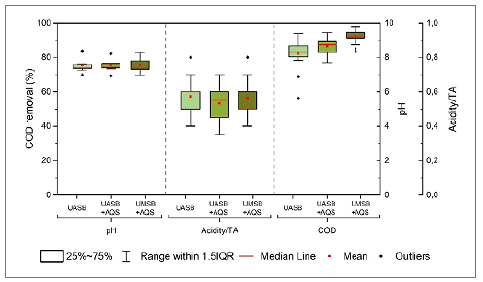
The operational stability observed across all reactors establishes a consistent baseline for interpreting performance differences among the evaluated conditions (Figure 1). The pH remained statistically similar across systems (7.5 ± 0.4; p = 0.14), indicating that neither the addition of AQS nor the introduction of microaeration caused shifts that could alter the anaerobic environment’s acid-base equilibrium.
Operational parameters and organic matter removal in traditional UASB, UASB with AQS, and microaerated UASB with AQS systems. Caption: TA - total alkalinity.
This stability is reinforced by the acidity/alkalinity ratios, which remained low and statistically indistinguishable, 0.6 ± 0.1 for both the traditional UASB and the microaerated UASB with AQS, and 0.5 ± 0.1 for the UASB containing only AQS (p > 0.1). Ratios in this range are characteristic of reactors with adequate alkalinity reserves and effective conversion of intermediates, particularly volatile fatty acids (VFAs). Since VFAs are central intermediates in the anaerobic degradation cascade, their accumulation is typically the earliest indicator of metabolic imbalance (Li et al., 2024). Therefore, the consistently low acidity/TA values across all systems indicate that VFA production and consumption remained well-coupled, with no signs of overloading or inhibition. This stable fermentative-methanogenic relationship ensures that any observed differences in COD removal arise not from operational disturbances but from the specific effects of AQS and microaeration.
Within this stable operational backdrop, the improvements in COD removal directly reflect the contribution of these two intensification strategies. The addition of AQS to the traditional UASB system increased COD removal to 86.5 ± 4.3% (p = 0.04), demonstrating that the mediator effectively facilitated the anaerobic conversion of organic matter. AQS accelerates the progression of substrates through the anaerobic metabolic stages by reducing kinetic limitations associated with electron transfer. This allows fermentative and methanogenic processes to operate more seamlessly, minimizing the buildup of intermediates and promoting a more complete transformation of influent organics into end products. In practical terms, the system becomes more reactive and efficient, reflected in the statistically significant increase in COD removal relative to the conventional UASB.
When microaeration is combined with AQS, COD removal increases further to 92.3 ± 3.8% (p < 0.001). The improvement is consistent with the known effects of low-level oxygen dosing in anaerobic systems, which can stimulate key steps in the degradation pathway without compromising methanogenesis. At controlled levels, microaeration tends to promote faster oxidation of readily biodegradable substrates by facultative microorganisms, reducing the pool of intermediate compounds and improving the overall metabolic flow toward methane formation (Nascimento et al., 2021; Siqueira et al., 2018). Furthermore, microaeration supports a more dynamic redox environment, which complements the action of AQS. The combined effect is a more efficient degradation process, reflected in the highest COD removal among the three conditions.
Methane and Biogas Production
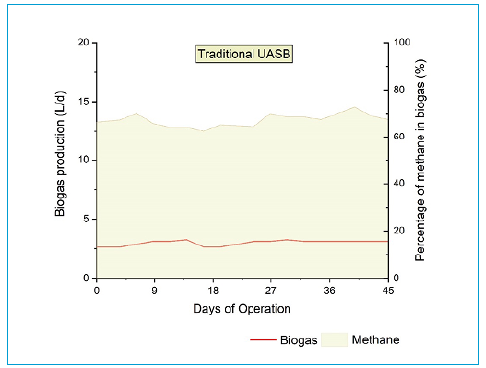
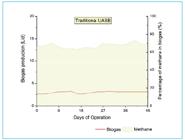
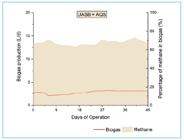
The volumetric production of biogas was monitored over 45 days of operation under the three configurations evaluated (Figures 2, 3 and 4). Biogas production remained similar between the traditional UASB and the UASB supplemented with AQS (Figures 2 and 3), indicating that the redox mediator did not affect overall gas production under strictly anaerobic conditions.
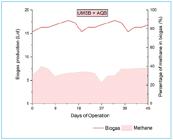
Biogas and methane production in the microaerated UASB (USMB) system with AQS over 45 days of operation.
The electron-shuttling behavior of AQS can explain this stability. Under anaerobic conditions, AQS is readily reduced by microbial metabolism; however, its function as a redox mediator depends on its ability to subsequently transfer these electrons to an appropriate electron acceptor. When such an acceptor is available, the reduced mediator donates its electrons, returns to the oxidized quinone form, and continues the catalytic cycle. When no suitable acceptor is present, the reduced AQS retains the electrons, temporarily competing with methanogenesis (Nascimento et al., 2021; Zhang et al., 2020). In principle, this competition can reduce the available electron flow to methanogens and thereby influence biogas formation. However, in the present work, the AQS concentration was intentionally kept very low. At such low levels, even when the mediator accumulates in its reduced form and retains electrons, the absolute amount involved is too small to produce a measurable shift in bulk electron partitioning or to generate detectable changes in biogas volume. If higher concentrations of AQS had been employed, this competition would be much more pronounced, and measurable impacts on methane yield and biogas formation would be expected.
In contrast, microaeration substantially increased total biogas production (Figure 4). This increase may be partly due to the introduction of oxygen, which can stimulate partial aerobic oxidation, enhance substrate turnover, and increase CO₂ production. Under microaerobic conditions, some metabolic activity may shift toward oxidative pathways and biomass synthesis, potentially leading to higher gas production, as reported by Buarque et al. (2019). It should also be noted that injecting air introduces nitrogen into the system, which may contribute to the measured increase in total biogas volume.
Focusing on methane, the traditional UASB and the UASB with AQS showed virtually identical behavior, with average productions of 2.0 ± 0.2 and 1.9 ± 0.3 L·day⁻¹ and stable methane concentrations of 67.2 ± 2.7% and 67.6 ± 2.7% (p = 0.026). This consistency reinforces that, under strictly anaerobic conditions, methanogenesis remains the dominant terminal pathway and governs electron flow. As reported by Nascimento et al. (2021) and Li et al. (2022), redox mediators exert limited influence when substrate biodegradability is high, and methanogenesis is not rate-limiting. However, under microaeration, methane dynamics changed substantially. The microaerated UASB with AQS produced 5.6 ± 0.7 L·day⁻¹ of methane, approximately three times the yield of the strictly anaerobic reactors, showing that methanogenesis remained active despite oxygen dosing. However, methane concentration dropped sharply to 33.5 ± 4.3%. This reduction in methane purity is primarily driven by gas dilution. Most of the oxygen that is not fully consumed is incorporated into the reactor’s biogas stream, along with atmospheric N2 and other gases introduced during aeration. As a result, there is substantial methane dilution. This mechanism is consistent with Oliveira et al. (2021), who observed strong methane dilution in microaerated UASB systems due to carryover of atmospheric gases to the biogas. Although partial oxidation of organic matter under microaerobic conditions does generate additional CO2, its contribution to dilution is comparatively minor given the low oxygen doses typically applied (Buarque et al., 2019).
Thus, the simultaneous increase in methane volume and decrease in methane fraction reflect a predictable dilution effect, not inhibition of methanogenesis. A portion of the substrate may have been diverted to microaerobic oxidation. At the same time, the remaining carbon remained available for methane formation, which explains higher volumetric production while simultaneously reducing methane purity, without indicating process instability. Overall, these results confirm that AQS does not influence methane generation under strictly anaerobic conditions. In contrast, microaeration boosts biogas and methane production but inevitably lowers methane purity by entraining unconsumed oxygen and atmospheric gases. Fine control of oxygen dosing may help optimize this trade-off in future applications.
LAS Removal
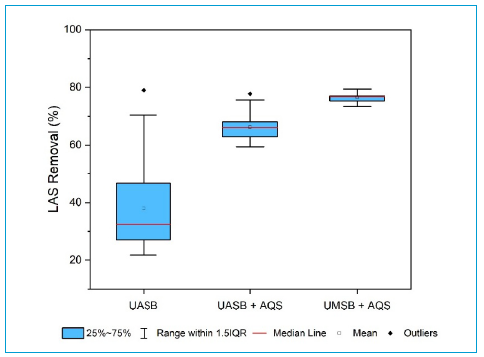
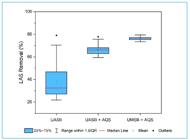
As shown in Figure 5, LAS removal was significantly improved by the addition of AQS and further enhanced under microaeration. The average removal efficiencies were 34.9 ± 14.4% (traditional UASB), 65.6 ± 4.2% (UASB + AQS), and 76.5 ± 1.7% (microaerated UASB). During the first few days of operation, all systems showed similar LAS removal rates, averaging approximately 79 ± 1%, with no statistically significant differences (p > 0.05). This initial performance can be attributed to the greater functional diversity of the newly established anaerobic microbiota, which had not yet been subjected to the selective pressure imposed by sulfonated compounds. At this stage, the results suggest a probable lower accumulation of toxic intermediates and the absence of prolonged stress conditions, which may have favored the activity of microbial consortia involved in the partial degradation of xenobiotic compounds, as previously reported (Oliveira et al., 2026).
The high initial LAS removals observed in all systems may be associated with the activity of secondary or non-specific metabolic pathways. Among these, the role of non-specific oxidoreductases is particularly relevant. As highlighted by Zhou et al. (2022) and Costa et al. (2024), these enzymes can contribute to the biodegradation of surfactants such as LAS, catalyzing broad-spectrum oxidation-reduction reactions. Although not highly selective, these reactions can effectively initiate the breakdown of both the aromatic ring and the aliphatic chain of LAS.
During continuous operation, the traditional UASB system exhibited greater instability in LAS removal, characterized by sharp fluctuations and a progressive decline in efficiency. This instability can be attributed to the metabolic limitations of a strictly anaerobic environment when challenged with recalcitrant sulfonated compounds.
Similarly, Li et al. (2021) reported that UASB reactors achieved high initial removal efficiencies of sodium dodecylbenzenesulfonate (a common LAS analog), with values close to 80% during the first days of operation, which progressively declined to less than 20% after 120 days, reflecting a loss of non-specific enzymatic activity and selective pressure over time.
In the absence of oxygen, LAS degradation relies exclusively on anaerobic pathways, which are generally less efficient and often unable to cleave the sulfonated aromatic ring, due to the lack of mono- and dioxygenases, aerobic enzymes involved in aromatic ring opening (Corada-Fernández, González-Mazo and Lara-Martín, 2018). As a result, toxic intermediates can accumulate, and metabolic pathways can be disrupted, further compromising degradation. Furthermore, the lack of oxygen prevents the establishment of ecological niches for facultative or microaerophilic microorganisms, whose partial oxidative activity could complement surfactant degradation and stabilize system performance (Castro, Azevedo and Souza, 2023; Nascimento et al., 2021).
Over time, however, a clear enhancement in LAS removal became evident with the addition of AQS. In the strictly anaerobic configuration, LAS removal nearly doubled compared to the control, reflecting the mediator’s specific chemical functionality rather than a generic improvement in reactor performance. AQS, an anthraquinone derivative, functions as an extracellular electron shuttle capable of cycling between oxidized and reduced forms. In its oxidized quinone state, it accepts electrons released by fermentative and syntrophic bacteria, thereby facilitating the thermodynamically demanding reductive steps required to initiate LAS degradation, particularly desulfonation and the partial reduction of the aromatic ring. Once reduced to its anthrahydroquinone form, AQS can subsequently transfer these electrons to available terminal electron acceptors (e.g., Fe(III), nitrate, or other oxidized redox-active species), indirectly supporting downstream anaerobic pathways, including methanogenesis, when suitable acceptors are present.
As mentioned earlier, because the AQS concentration used in this study was intentionally low, the reduced mediator did not accumulate to a level that would significantly divert electrons away from methanogenic routes. Instead, AQS operated primarily as a catalytic redox conduit, temporarily storing electrons and releasing them back into the system as soon as suitable electron acceptors - such as dissolved oxygen under microaerobic conditions, carbon dioxide in methanogenic pathways, or other oxidized intermediates present in the medium - became available. This cycling may have contributed to the early transformation of LAS and to the improved removal observed during the initial operational period. However, the underlying mechanisms could not be directly verified in this study.
In particular, the formation of more readily biodegradable intermediates was not assessed, and adsorption of LAS onto anaerobic biomass cannot be excluded as a contributing pathway. Therefore, the observed behavior may be associated with the redox-mediating properties of quinone derivatives reported in previous studies, which have been shown to enhance the degradation of structurally complex contaminants under anaerobic conditions, including LAS (Cui et al., 2022; Song et al., 2020). Future studies tracking degradation intermediates and quantifying sorption onto sludge would be necessary to clarify the relative contribution of these mechanisms.
For example, Li et al. (2021) achieved approximately 99% removal of antimony (Sb) from sulfurous industrial effluents using AQS as a redox mediator, while Nascimento et al. (2021) reported an increase in antibiotic removal from 6% to 75% with quinone-based mediators. Similarly, Tang et al. (2024) observed improved denitrification rates under comparable conditions. AQS is highly stable and can reversibly switch between its oxidized (quinone) and reduced (hydroquinone) states, enabling redox reactions in situations where microorganisms face limitations in direct electron transfer (Ren et al., 2022). During LAS degradation, this property facilitates both desulfonation and partial aromatic ring cleavage, generating metabolites more accessible to anaerobic and facultative aerobic pathways (Corada-Fernández, González-Mazo, and Lara-Martín, 2018; Cui et al., 2022).
However, even with AQS, LAS removal under strictly anaerobic conditions remained significantly lower than in microaerated systems (p = 0.017). This result highlights the fundamental limitation of anoxic environments: although redox mediators can accelerate electron transfer and facilitate partial LAS transformation, key reactions, such as desulfonation and aromatic ring cleavage, remain strongly dependent on molecular oxygen. Similar results were reported by Nascimento et al. (2021), who observed improved pollutant removal in UASB reactors combining AQS with microaeration. However, the authors emphasized that, from a technical standpoint, biogas dilution and potential cost implications should be considered when implementing such strategies on a large scale.
Therefore, it is worth highlighting the greater efficiency of LAS removal resulting from the combined effect of AQS and microaeration. It is noteworthy that the system subjected to microaeration, in addition to achieving significantly higher LAS removals (p < 0.001), was also more stable throughout the experimental period. These findings reinforce the role of redox mediators in accelerating LAS degradation and highlight microaeration as a promising complementary strategy to increase surfactant removal in UASB systems. Low oxygen concentrations likely promoted partial oxidation of LAS, reducing its recalcitrance and facilitating subsequent anaerobic degradation. Furthermore, the addition of the redox mediator AQS further increased LAS removal in both anaerobic and microaerated systems, highlighting its role in accelerating electron transfer and overcoming kinetic limitations in the biodegradation pathway. The combined strategy, however, proved more effective, with the microaerated reactor with AQS achieving an average LAS removal of 77 ± 1%, significantly higher than that observed in the anaerobic reactor with AQS supplementation alone (65 ± 4%) (p < 0.001). These results also indicate that the combined application of microaeration and AQS was associated with improved LAS degradation efficiency and greater process stability.
The AQS mechanism discussed herein becomes particularly relevant when considering the synergistic effect of microaeration and AQS supplementation. The simultaneous presence of low oxygen concentrations and an extracellular redox mediator created a more versatile redox environment. Under these conditions, oxygen-dependent enzymes (e.g., monooxygenases) and electron-transfer processes mediated by the redox mediator may have acted in parallel, thereby favoring complementary metabolic pathways. This synergy likely contributed to more efficient LAS degradation and prevented the accumulation of refractory or toxic intermediates. In summary, the absence of microaeration prevents the formation of intermediate redox zones that would otherwise facilitate partial oxidation and desulfonation of LAS. Even in the presence of AQS, electron transfer pathways alone are insufficient to achieve efficient mineralization of the compound.
Microaeration has consistently enhanced the removal of diverse recalcitrant pollutants. For benzene, toluene, ethylbenzene, and xylenes (BTEX) compounds, microaeration rates of 0.5-2.0 mL air·min⁻¹ increased overall removal to above 83%, with benzene elimination rising by approximately 30% relative to anaerobic conditions (Siqueira et al., 2018). In the case of pharmaceuticals, applying microaeration in an Anaerobic Biofilm Blanket - Membrane Bioreactor system increased antibiotic degradation to 78% for ciprofloxacin and 88-91% for sulfamethoxazole, clearly surpassing the non-aerated reactor (Buakaew and Ratanatamskul, 2024). For dyes, microaeration enabled the complete removal of aromatic amines from DB22 dye in a UASB reactor, resulting in an effluent that was 16 times less toxic than that from the anaerobic control (Carvalho et al., 2020). Similarly, for hormones and pharmaceuticals, an airflow of 4 mL·min⁻¹ increased removal to 90-94%, compared to less than 30% under strictly anaerobic operation (Nascimento et al., 2021). Microaeration is also widely applied for hydrogen sulfide oxidation in biogas treatment (Khadir et al., 2025).
Thus, while AQS is a valuable tool for enhancing anaerobic biodegradation, its effectiveness is limited without a more favorable redox environment. The persistence of LAS in strictly anaerobic systems underscores the need for integrated strategies, such as combining microaeration with redox mediator supplementation, to enhance the treatment of recalcitrant anionic surfactants in UASB reactors.
CONCLUSION
This study demonstrated that operating UASB reactors under controlled microaeration, combined with the addition of the redox mediator AQS, improved LAS removal at low HRTs while preserving the functional stability of the anaerobic process. Under these conditions, higher LAS elimination and COD removal were achieved, along with sustained methane generation, although methane purity decreased due to the expected dilution from air injection.
The improved performance may be related to complementary biochemical processes reported in the literature. Quinone-type compounds such as AQS can participate in reversible redox cycling, facilitating electron transfer processes that may support the transformation of recalcitrant compounds. At the same time, limited oxygen supply via microaeration may enable oxidative reactions to occur alongside anaerobic metabolism without suppressing methanogenic activity. Under such conditions, oxygen-dependent reactions and redox-mediated electron transfer may have contributed simultaneously to LAS transformation.
Although the specific transformation pathways were not directly assessed, the results indicate that the combined use of microaeration and redox mediator supplementation represents a promising operational strategy for improving the removal of surfactants such as LAS in anaerobic systems operating at reduced HRTs. Further studies integrating molecular and metabolite analyses may help clarify the microbial processes involved and support the optimization of this approach for the treatment of complex wastewater contaminants.
ACKNOWLEDGMENTS
This work was supported by the following Brazilian institutions: Higher Education Personnel Improvement Coordination (CAPES), National Council for Scientific and Technological Development (CNPq), National Institute of Science and Technology in Sustainable Sewage Treatment Stations (INCT Sustainable ETEs), and Ceará Foundation to Support Scientific and Technological Development (FUNCAP).
REFERENCES
- AMERICAN PUBLIC HEALTH ASSOCIATION - APHA; AMERICAN WATER WORKS ASSOCIATION - AWWA; WATER ENVIRONMENT FEDERATION - WEF. Standard Methods for the Examination of Water and Waste Water. 22. ed. Washington: APHA, AWWA, WEF, 2012.
-
BUAKAEW, Tanissorn; RATANATAMSKUL, Chavalit. Unveiling the influence of microaeration and sludge recirculation on the enhancement of pharmaceutical removal and microbial community change of the novel anaerobic baffled biofilm - membrane bioreactor in treating building wastewater. Science of the Total Environment, v. 927, 172420, 2024. https://doi.org/10.1016/J.SCITOTENV.2024.172420
» https://doi.org/https://doi.org/10.1016/J.SCITOTENV.2024.172420 -
BUARQUE, Patrícia Marques Carneiro; LIMA, Ricardo Bruno Pinheiro de; VIDAL, Carla Bastos; BUARQUE, Hugo Leonardo de Brito; FIRMINO, Paulo Igor Milen; SANTOS, André Bezerra dos. Enhanced removal of emerging micropollutants by applying microaeration to an anaerobic reactor. Engenharia Sanitaria e Ambiental, v. 24, p. 667-673, 2019. https://doi.org/10.1590/S1413-4152201920190030
» https://doi.org/https://doi.org/10.1590/S1413-4152201920190030 -
CAROSIA, Mariana Fronja; OKADA, Dagoberto Yukio; SAKAMOTO, Isabel Kimiko; SILVA, Edson Luiz; VARESCHE, Maria Bernadete Amâncio. Microbial characterization and degradation of linear alkylbenzene sulfonate in an anaerobic reactor treating wastewater containing soap powder. Bioresource Technology, v. 167, p. 316-323, 2014. https://doi.org/10.1016/J.BIORTECH.2014.06.002
» https://doi.org/https://doi.org/10.1016/J.BIORTECH.2014.06.002 -
CARVALHO, José Roberto Santo; AMARAL, Fernanda Magalhães; FLORÊNCIO, Lourdinha; KATO, Mario Takayuki; DELFORNO, Tiago Palladino; GAVAZZA, Sávia. Microaerated UASB reactor treating textile wastewater: The core microbiome and removal of azo dye Direct Black 22. Chemosphere, v. 242, 125157, 2020. https://doi.org/10.1016/J.CHEMOSPHERE.2019.125157
» https://doi.org/https://doi.org/10.1016/J.CHEMOSPHERE.2019.125157 -
CASTRO, Iacy Maria Pereira; AZEVEDO, Lariza dos Santos; SOUZA, C.L. Evaluation of microaeration strategies in the digestion zone of UASB reactors as an alternative for biogas desulfurization. Environmental Technology, v. 44, p. 431-445, 2023. https://doi.org/10.1080/09593330.2021.1974574
» https://doi.org/https://doi.org/10.1080/09593330.2021.1974574 -
CORADA-FERNÁNDEZ, Carmen; GONZÁLEZ-MAZO, Eduardo; LARA-MARTÍN, Pablo Antonio. Evaluation of the anaerobic biodegradation of linear alkylbenzene sulfonates (LAS) using OECD 308 water/sediment systems. Journal of Hazardous Materials, v. 360, p. 24-31, 2018. https://doi.org/10.1016/J.JHAZMAT.2018.07.087
» https://doi.org/https://doi.org/10.1016/J.JHAZMAT.2018.07.087 -
COSTA, Joelithon; SILVA, Luiz Galdino; VERAS, Shrylane; GAVAZZA, Savia; FLORÊNCIO, Lourdinha; MOTTERAN, Fabricio; KATO, Mario. Use of nitrate, sulphate, and iron (III) as electron acceptors to improve the anaerobic degradation of linear alkylbenzene sulfonate: effects on removal potential and microbiota diversification. Environmental Science and Pollution Research, v. 32, n. 28, p. 16640-16655, 2024. https://doi.org/10.1007/s11356-024-33158-4
» https://doi.org/https://doi.org/10.1007/s11356-024-33158-4 -
CUI, Xiaocai; REN, Qingqing; ZHANG, Jie; ZHOU, Yun. Removal kinetics of linear alkylbenzene sulfonate in a batch-operated oxygen-based membrane biofilm reactor treating greywater: Quantitative differentiation of adsorption and biodegradation. Science of the Total Environment, v. 806, 150523, 2022. https://doi.org/10.1016/J.SCITOTENV.2021.150523
» https://doi.org/https://doi.org/10.1016/J.SCITOTENV.2021.150523 -
FIRMINO, Paulo Igor Milen; SILVA, Marcos Erick Rodrigues da; CERVANTES, Francisco Javier; SANTOS, André Bezerra dos. Colour removal of dyes from synthetic and real textile wastewaters in one- and two-stage anaerobic systems. Bioresource Technology, v. 101, n. 20, p. 7773-7779, 2010. https://doi.org/10.1016/J.BIORTECH.2010.05.050
» https://doi.org/https://doi.org/10.1016/J.BIORTECH.2010.05.050 -
GRANATTO, Caroline Fabiane; MACEDO, Thaís Zaninetti; GEROSA, Leonardo Emerick; SAKAMOTO, Isabel Kimiko; SILVA, Edson Luiz; VARESCHE, Maria Bernadete Amâncio. Scale-up evaluation of anaerobic degradation of linear alkylbenzene sulfonate from sanitary sewage in expanded granular sludge bed reactor. International Biodeterioration & Biodegradation, v. 138, p. 23-32, 2019. https://doi.org/10.1016/J.IBIOD.2018.12.010
» https://doi.org/https://doi.org/10.1016/J.IBIOD.2018.12.010 -
HE, Kai; YIN, Qidong; LIU, Aike; ECHIGO, Shinya; ITOH, Sadahiko; WU, Guangxue. Enhanced anaerobic degradation of amide pharmaceuticals by dosing ferroferric oxide or anthraquinone-2, 6-disulfonate. Jounal of Water Process Engineering, v. 18, p. 192-197, 2017. https://doi.org/10.1016/J.JWPE.2017.06.018
» https://doi.org/https://doi.org/10.1016/J.JWPE.2017.06.018 -
KHADIR, Ali; NAKHLA, George; KARKI, Renisha; RASKIN, Lutgarde; MULLER, Christopher; GUEVARRA, Karla; SUMMERS, Amanda; PIERCE, Laurie; SHAHBAZ, Parisa; BELL, Kati; SKERLOS, Steven; BRONSTAD, Embrey. Micro-aeration for hydrogen sulfide reduction in full-scale anaerobic digesters with limited headspace: Performance and sulfide reduction kinetics. Process Safety and Environmental Protection, v. 196, 106911, 2025. https://doi.org/10.1016/J.PSEP.2025.106911
» https://doi.org/https://doi.org/10.1016/J.PSEP.2025.106911 -
LI, Qi; HUANG, Manhong; SHU, Shihu; CHEN, Xiaoguang; GAO, Naiyun; ZHU, Yanping. Quinone-mediated Sb removal from sulfate-rich wastewater by anaerobic granular sludge: Performance and mechanisms. Science of the Total Environment, v. 838, 156217, 2022. https://doi.org/10.1016/J.SCITOTENV.2022.156217
» https://doi.org/https://doi.org/10.1016/J.SCITOTENV.2022.156217 -
LI, Ruijie; ZHOU, Mengmeng; HE, Shilong; PAN, Tingting; LIU, Jing; ZHU, Jiabao. Deciphering the effect of sodium dodecylbenzene sulfonate on up-flow anaerobic sludge blanket treatment of synthetic sulfate-containing wastewater. Frontiers of Environmental Science & Engineering, v. 15, n. 91, p. 1-12, 2021. https://doi.org/10.1007/s11783-020-1385-z
» https://doi.org/https://doi.org/10.1007/s11783-020-1385-z -
LI, Xiaoyong; WANG, Zhi; HE, Yun; WANG, Yuzhong; WANG, Shilei; ZHENG, Zehui; WANG, Songtao; XU, Jingliang; CAI, Yafan; YING, Hanjie. A Comprehensive Review of the Strategies to Improve Anaerobic Digestion: Their Mechanism and Digestion Performance. Methane, v. 3, n. 2, p. 227-256, 2024. https://doi.org/10.3390/METHANE3020014
» https://doi.org/https://doi.org/10.3390/METHANE3020014 -
LIU, Zhuolin; ZHOU, Chen; ONTIVEROS-VALENCIA, Aura; LUO, Yi-Hao; LONG, Min; XU, Hua; RITTMANN, Bruce. Accurate O2 delivery enabled benzene biodegradation through aerobic activation followed by denitrification-coupled mineralization. Biotechnology and Bioengineering, v. 115, p. 1988-1999, 2018. https://doi.org/10.1002/BIT.26712
» https://doi.org/https://doi.org/10.1002/BIT.26712 -
LU, Hong; WANG, Jiaojiao; HUANG, Liping; WANG, Xiaolei; ZHOU, Jiti; WANG, Jing. Effect of immobilized anthraquinone-2-sulfonate on antibiotic resistance genes and microbial community in biofilms of anaerobic reactors. Journal of Environmental Management, v. 282, 111967, 2021. https://doi.org/10.1016/J.JENVMAN.2021.111967
» https://doi.org/https://doi.org/10.1016/J.JENVMAN.2021.111967 -
MOTTERAN, Fabricio; VARESCHE, Maria Bernadete Amâncio; LARA-MARTIN, Pablo. Assessment of the aerobic and anaerobic biodegradation of contaminants of emerging concern in sludge using batch reactors. Environmental Science and Pollution Research, v. 29, p. 84946-84961, 2022. https://doi.org/10.1007/S11356-022-21819-1
» https://doi.org/https://doi.org/10.1007/S11356-022-21819-1 -
NASCIMENTO, José Gilmar da Silva do; ARAÚJO, Maria Helena Peres de; SANTOS, André Bezerra dos; SILVA, Marcos Erick Rodrigues da; FIRMINO, Paulo Igor Milen. Redox mediator, microaeration, and nitrate addition as engineering approaches to enhance the biotransformation of antibiotics in anaerobic reactors. Journal of Hazardous Materials, v. 403, 123932, 2021. https://doi.org/10.1016/J.JHAZMAT.2020.123932
» https://doi.org/https://doi.org/10.1016/J.JHAZMAT.2020.123932 -
OLIVEIRA, Maurício Guimarães de; SILVA, Vicente Elício Porfiro Sales Gonçalves da; VASCONCELOS, Steven Renato Ferreira; SANTOS, André Bezerra dos. Redox mediators and microaeration boosting the linear alkylbenzene sulfonate removal. Chemosphere, v. 397, 144878, 2026. https://doi.org/10.1016/j.chemosphere.2026.144878
» https://doi.org/https://doi.org/10.1016/j.chemosphere.2026.144878 -
OLIVEIRA, Maurício Guimarães de; MOURÃO, José Macos Marques; SILVA, Francisco Schiavon Souza; SANTOS, André Bezerra dos; PEREIRA, Erlon Lopes. Effect of microaerophilic treatment on swine wastewater (SWW) treatment: Engineering and microbiological aspects. Journal of Environmental Management, v. 299, 113598, 2021. https://doi.org/10.1016/J.JENVMAN.2021.113598
» https://doi.org/https://doi.org/10.1016/J.JENVMAN.2021.113598 -
REN, Zhijun; MA, Peiyu; LV, Longyi; ZHANG, Guangming; LI, Weiguang; PENGFEI, Wang; LIU, Xiaoyang; GAO, Wenfang. Application of exogenous redox mediators in anaerobic biological wastewater treatment: A critical review. Journal of Cleaner Production, v. 372, 133527, 2022. https://doi.org/10.1016/J.JCLEPRO.2022.133527
» https://doi.org/https://doi.org/10.1016/J.JCLEPRO.2022.133527 -
SIQUEIRA, João Paulo Silva; PEREIRA, Andrey; DUTRA, Amanda Maria; FIRMINO, Paulo Igor Milen; SANTOS, André Bezerra dos. Process bioengineering applied to BTEX degradation in microaerobic treatment systems. Journal of Environmental Management, v. 223, p. 426-432, 2018. https://doi.org/10.1016/J.JENVMAN.2018.06.066
» https://doi.org/https://doi.org/10.1016/J.JENVMAN.2018.06.066 -
SONG, Yu-Hang; XU, Qing-Tao; HE, Tao; WANG, Zi-Yang; YU, Lei. Efficient Biodegradation of Azo Dyes Catalyzed by the Anthraquinone-2-sulfonate and Reduced Graphene Oxide Nanocomposite. ACS Omega, v. 5, n. 33, p. 21137-21144, 2020. https://doi.org/10.1021/acsomega.0C02837
» https://doi.org/https://doi.org/10.1021/acsomega.0C02837 -
TANG, Meizhen; MA, Shiqiang; YAO, Shumin; LU, Fei; YANG, Yuewei. Enhanced denitrification performance and extracellular electron transfer for eletrotrophic bio-cathode mediated by anthraquinone-2, 6-disulfonate (AQDS) at low temperature. International Journl of Hydrogen Energy, v. 84, p. 215-223, 2024. https://doi.org/10.1016/J.IJHYDENE.2024.08.213
» https://doi.org/https://doi.org/10.1016/J.IJHYDENE.2024.08.213 -
TERREROS-MECALCO, Jesús; VELAZQUEZ-GARDUÑO, Gisela; VELARDE, Enrique Daniel Archundia; RUIZ, Pedro Enrique Hernández. Effect of lactose as a co-substrate in the biodegradation of an anionic surfactant “LAS” by anaerobic digestion. Biocatalysis And Agricultural Biotechnology, v. 60, 103282, 2024. https://doi.org/10.1016/J.BCAB.2024.103282
» https://doi.org/https://doi.org/10.1016/J.BCAB.2024.103282 -
ZHANG, Lingyue; TANG, Chu; LI, Mingchun; WANG, Huijing; ZHANG, Sijia; WANG, Jianchao; DONG, Xinwei; FANG, Ding; BAI, Hao; SUN, Yue; YUE, Dongbei. Identification of key surfactant in municipal solid waste leachate foaming and its influence mechanism. Water Research, v. 231, n. 19, 119487, 2023. https://doi.org/10.1016/J.WATRES.2022.119487
» https://doi.org/https://doi.org/10.1016/J.WATRES.2022.119487 -
ZHANG, Yu; ZHANG, Zhengzhe; LIU, Weiguo; CHEN, Yinguang. New applications of quinone redox mediators: Modifying nature-derived materials for anaerobic biotransformation process. Science of the Total Environment, v. 744, 140652, 2020. https://doi.org/10.1016/J.SCITOTENV.2020.140652
» https://doi.org/https://doi.org/10.1016/J.SCITOTENV.2020.140652 -
ZHOU, Yun; LI, Ran; GUO, Bing; XIA, Siqing; LIU, Yang; RITTMANN, Bruce. The influent COD/N ratio controlled the linear alkylbenzene sulfonate biodegradation and extracellular polymeric substances accumulation in an oxygen-based membrane biofilm reactor. Journal of Hazardous Materials, v. 422, 126862, 2022. https://doi.org/10.1016/J.JHAZMAT.2021.126862
» https://doi.org/https://doi.org/10.1016/J.JHAZMAT.2021.126862
The datasets generated and/or analyzed during the current study are available from the corresponding author upon reasonable request.