
 The blank page in the children’s picturebook Eustáquio, o mágico magnífico (2022): a reading in light of the theory of Nonsense
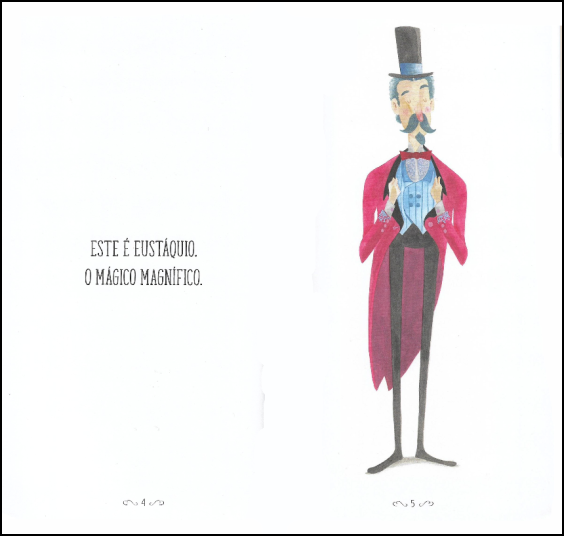
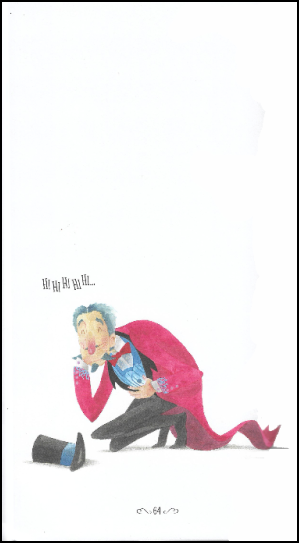
The children’s picturebook Eustáquio, o mágico magnífico [Eustáquio, the magnificent magician] (2022) by Alexandre Rampazo disorients given meanings regarding the blank page in western imaginary. The picturebook here analyzed plays a game of language that disrupts its own narrative structure through a visual partnership, which for this article will be read according to the theory of literary Nonsense. Although Wim Tigges’ foundational work attributes a verbal nature to Nonsense, many researchers devoted their studies to the interrelationship between word and illustration in the construction of a visual Nonsense. Drawing from studies that range from 1987 to 2019, the aesthetics of Nonsense privileges three combinations: mimetic, dialogical and contradictory, with special attention to the last one. In the case of the aforementioned picturebook, Nonsense is produced within a mimetic combination through the resource of literality, which in pictorial Nonsense tends to work within the metaphorical realm. Nevertheless, in Eustáquio, o mágico magnífico metaphors are not used. Therefore, in conclusion, the picturebook here analyzed decentralizes normative structures regarding children’s picturebooks, verbal as well as pictorial Nonsense and visual narratives.
Keywords:
children’s picturebook; literary nonsense; visual narrative; game of language
 Thumbnail
 Thumbnail
 Thumbnail
 Thumbnail
 Fonte:
  Fonte:
  Fonte:
  Fonte: