 Post-exercise effects of self-selected exercise intensity on cardiovascular parameters in peripheral artery disease: a randomized crossover study
Objective: To analyze the post-exercise effects of self-selected exercise intensity compared with the intensity recommended by guidelines on blood pressure and heart rate variability in participants with peripheral artery disease.
Methods: This was a randomized crossover trial. Twenty participants with peripheral artery disease (52.6% men; 69.1±7.9 years; ankle-brachial index 0.59±0.15) underwent three experimental sessions: self-selected exercise intensity, intensity recommended by guidelines, and a control session (no exercise). Blood pressure (auscultatory method), heart rate, and heart rate variability were measured before and after the intervention.
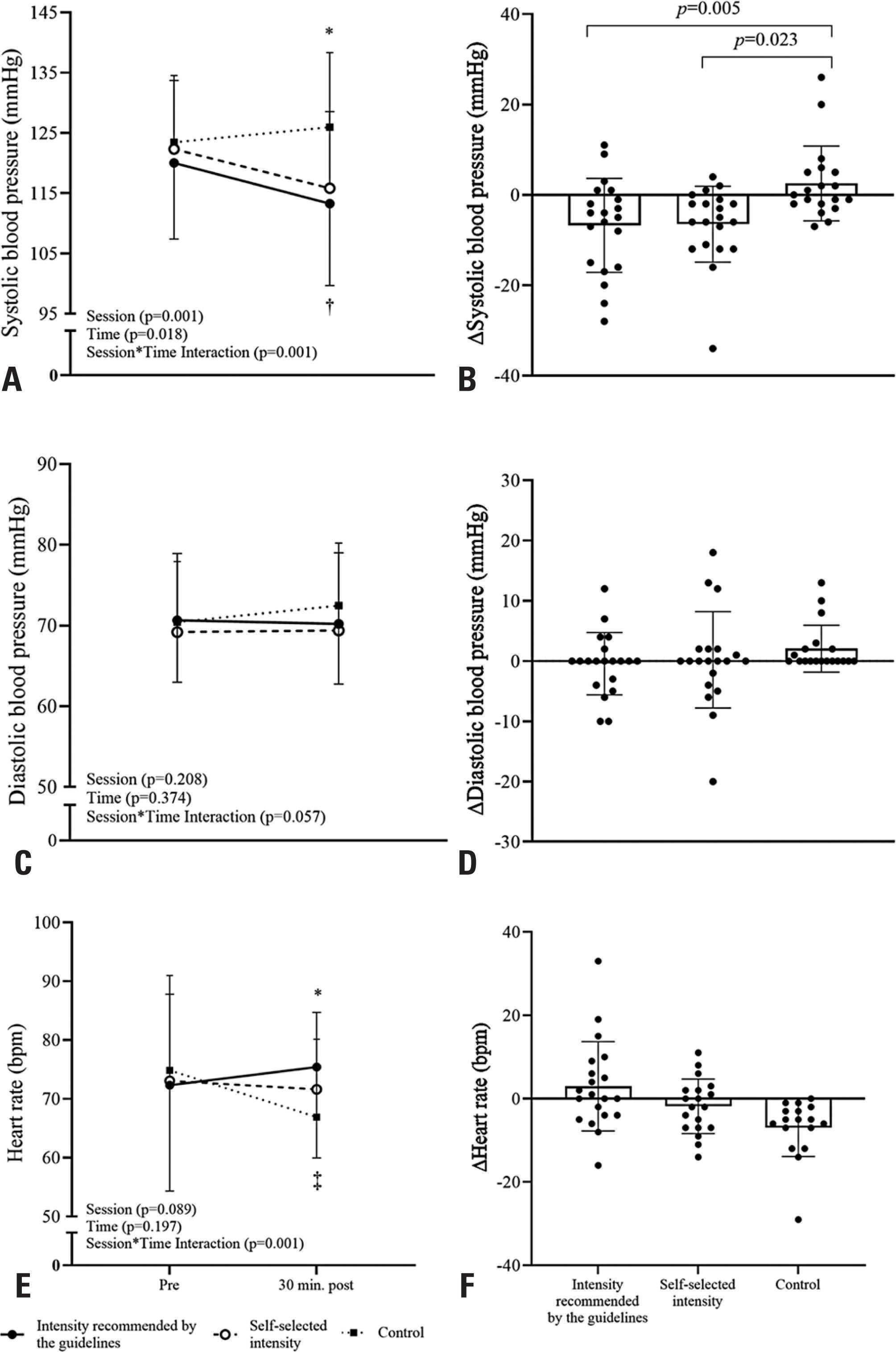
Results: Acute reductions in systolic blood pressure were observed in the exercise sessions compared to the control (p<0.005). The heart rate decreased after control and increased after exercise sessions (p<0.001). The absolute heart rate increase after exercise sessions were higher than that in the Control Group p<0.001. Heart rate recovery showed a progressive decrease post-session over 300 s (p<0.001), with the root mean square of successive differences significantly decreasing up to 60 seconds in both exercise sessions (p<0.05).
Conclusion: Acute walking exercise sessions prescribed at self-selected exercise intensity had similar effects on reducing systolic blood pressure and heart rate recovery compared with walking exercise session performed at the guideline-recommended intensity.
ClinicalTrials.gov Identifier: NCT04333615.
Keywords:
Intermittent claudication; Peripheral arterial disease; Vascular diseases; Blood pressure; Heart rate; Walking
-
■
A single session of self-selected intensity walking reduced systolic blood pressure in individuals with peripheral artery disease.
-
■
Heart rate recovery responses after self-selected-intensity walking were similar to those following the guideline-prescribed exercise.
-
■
Self-selected intensity exercise may offer a feasible strategy for patients with claudication, balancing comfort and cardiovascular benefits.
-
■
These findings support flexible exercise prescriptions tailored to individual comfort without compromising the cardiovascular benefits.

This randomized crossover trial evaluated the acute effects of a self-selected intensity walking session compared to the intensity recommended by guidelines on cardiovascular outcomes in patients with peripheral artery disease. These findings demonstrate that walking at a self-paced intensity provides comparable reductions in systolic blood pressure and similar patterns of heart rate recovery as the intensity recommended by the guidelines. These results highlight the potential of self-selected-intensity exercise as a feasible and effective strategy for clinical exercise prescription in patients with peripheral artery disease.
 Thumbnail
 Thumbnail
 Thumbnail