 Topical tranexamic acid powder for bleeding control in dentistry: a scoping review
ABSTRACT
Objective: This scoping review evaluated the efficacy of topical tranexamic acid powder, prepared from crushed tablets, for bleeding prevention during minor oral surgical procedures.
Methods: A comprehensive literature search was conducted in accordance with PRISMA-ScR guidelines across MEDLINE/PubMed, Elsevier, Embase, BVSalud, Web of Science, and Periódicos CAPES. Studies investigating topical tranexamic acid in powder form for minor dental procedures were included. Reviews, in vitro or animal studies, and investigations focusing on systemic, injectable, or mouthwash formulations of tranexamic acid were excluded. Methodological quality was assessed using the Newcastle-Ottawa Scale and Joanna Briggs Institute critical appraisal checklists.
Results: Ten studies met the inclusion criteria, including clinical trials, retrospective and prospective studies, case reports, and one letter to the editor. Tranexamic acid powder was applied directly to surgical sites or prepared as a paste or saline suspension, with doses ranging from 250 to 500mg. Most participants were receiving anticoagulant therapy or had underlying bleeding disorders, highlighting the need for effective local hemostatic approaches. All included studies reported successful bleeding control with topical tranexamic acid, frequently combined with additional local hemostatic measures such as sutures or gelatin sponges.
Conclusion: Topical tranexamic acid powder shows promise as an adjunctive measure for bleeding control in minor oral surgery, particularly in individuals at increased risk of hemorrhage. However, further studies are needed to clarify the isolated efficacy of tranexamic acid powder in dental bleeding management. Open Science Framework: https://osf.io/n5mbp
Keywords:
Tranexamic acid; Surgery, oral; Hemostasis
INTRODUCTION
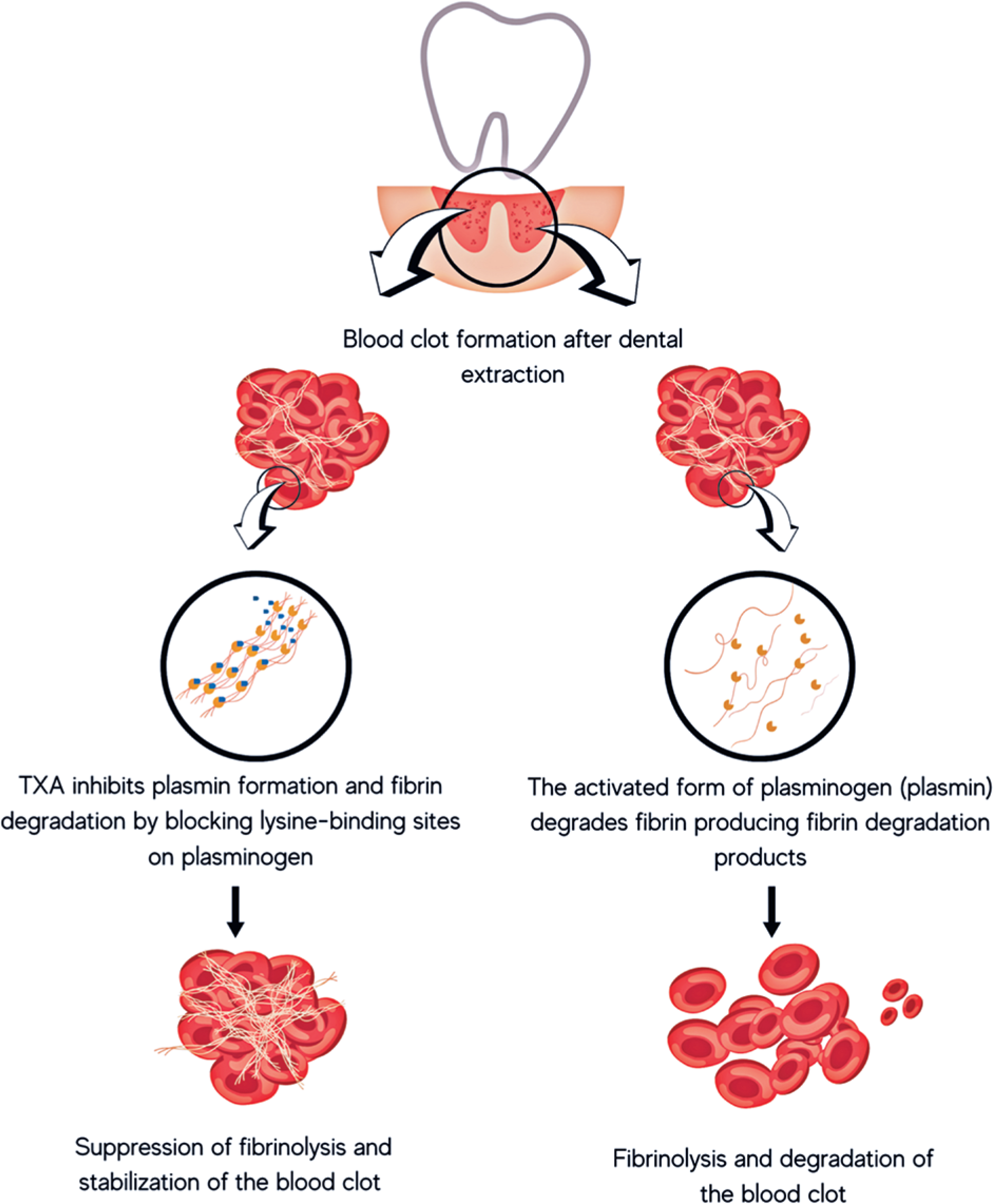
Tranexamic acid (TXA) is a synthetic lysine derivative and an antifibrinolytic agent widely used to reduce bleeding.(1,2) Pharmacokinetic and mechanistic studies show that TXA inhibits fibrin degradation by competitively blocking lysine-binding sites on plasminogen, thereby preventing plasmin formation.(2) This action stabilizes established clots and limits fibrinolysis, making TXA a valuable agent for bleeding control in clinical practice.(3) Tranexamic acid is available in multiple formulations for different routes of administration, including injectable solutions, pills, oral tablets, mouthwash preparations, and topical gels.(2–4)
The medical literature indicates that intravenous TXA effectively reduces bleeding during cardiovascular and orthopedic surgeries and is commonly used for hemostasis in hemorrhagic complications.(5) However, systemic administration of TXA, whether oral or intravenous, may cause adverse effects related to generalized inhibition of fibrin degradation.(2,6) Consequently, local application of TXA to the bleeding surface has emerged as a viable strategy to reduce bleeding while limiting systemic exposure.(7,8) In cardiovascular surgery, intrapericardial topical application of TXA in powder form has demonstrated efficacy in reducing postoperative bleeding and has been shown to be comparable to injectable formulations, without an associated increase in postoperative seizure risk.(9)
In dentistry, a ready-to-use 5% TXA mouthwash is commercially available in several countries.(2,4) This formulation effectively controls postoperative bleeding following oral surgery, particularly in patients receiving anticoagulant therapy.(2–4) In settings where a commercial TXA mouthwash is unavailable, a mouth rinse can be prepared by diluting the intravenous formulation with water or by creating a suspension from TXA tablets.(2) Alternatively, crushed TXA tablets mixed with saline can be applied directly to the surgical site to control intraoperative bleeding.(4,10)
Despite the well-established use of 5% TXA mouthwash, evidence on the local application of TXA tablets in dentistry remains limited. This review addresses this underexplored approach and contributes new insight, particularly given the increasing off-label use of TXA formulations. The aim of this study was to conduct a scoping review evaluating the efficacy of topical TXA powder in patients undergoing minor oral surgery for the prevention of bleeding and hemorrhagic complications (Figure 1).
Antifibrinolytic effect of tranexamic acid (TXA) versus no tranexamic acid following dental extraction
METHODS
Protocol
The search was conducted in October 2024 by four independent, calibrated reviewers. Rayyan software (Rayyan Systems, Toronto, Canada) was used to screen and filter records retrieved from electronic databases.(11)
Focused question
This study addressed the following focused question: What is the efficacy of topical TXA powder in controlling bleeding and preventing hemorrhagic complications following dental surgery?
Study design and eligibility criteria
Clinical studies, case reports, and letters to the editor involving patients undergoing oral surgery and reporting the topical use of crushed TXA tablets were included.
Exclusion criteria
Reviews, conference abstracts, editorials, in vitro studies, animal studies, and studies describing topical TXA use as ready-to-use mouthwash solutions, injectable formulations, or systemic administration rather than crushed tablets were excluded. Studies focusing on major surgical procedures, such as cardiovascular or orthopedic surgery, were also excluded.
Intervention
The intervention consisted of adjunctive hemostatic measures during or after dental surgical procedures, specifically the topical application of TXA prepared from tablets. The tablets were either crushed and applied directly to the surgical site or diluted in saline, with evaluation focused on bleeding control.
Outcome measures
The review assessed the effectiveness of powdered TXA in controlling intraoperative hemorrhage and managing postoperative bleeding, building on the established efficacy of other formulations. Application techniques were compared, including direct placement of crushed tablets, paste preparations, and aqueous dilutions. Dosage, frequency of application, and the type of oral procedure—such as biopsy, dental extraction, and periodontal surgery—were also examined to evaluate the efficacy of TXA across different clinical settings.
Information sources
The search was conducted across several major electronic databases with comprehensive coverage of medical and scientific literature, including the National Library of Medicine MEDLINE/PubMed, Scopus, Embase, BVSalud, Web of Science, and the Portal de Periódicos da Coordenação de Aperfeiçoamento de Pessoal de Nível Superior (CAPES). Reference lists of included studies were also screened. Duplicate records identified across databases were removed using EndNote software. No restrictions were applied regarding language, publication date, or geographic region.
Search strategy
A comprehensive search strategy was developed to identify studies evaluating the topical or local application of TXA at surgical sites. The strategy was adapted for each database to maximize retrieval of relevant articles. Searches were performed using title, abstract, and keyword fields in all databases (Table 1S, Supplementary Material).
Study selection and data extraction
Two independent, blinded reviewers conducted all stages of the literature search using Rayyan software. Studies with titles and abstracts meeting the eligibility criteria were included. When titles or abstracts were unavailable or provided insufficient information, full texts were retrieved and assessed. Articles fulfilling the inclusion criteria were selected accordingly. Disagreements between reviewers were resolved through discussion with a third reviewer until consensus was achieved.
The following data were extracted from each included study: first author's surname, year of publication, country of origin, study design, sample size and study groups, type of surgical procedure, references related to TXA, method of topical TXA application, and outcomes related to bleeding control.
Critical appraisal of studies
Quality assessment was performed independently by two reviewers, with disagreements resolved through discussion. The included studies were evaluated using validated tools to assess risk of bias. For cohort, case-control, prospective, and retrospective studies, the Newcastle-Ottawa Scale(12) was applied in accordance with Cochrane Collaboration guidance for non-randomized studies. This scale evaluates three domains: participant selection, group comparability, and outcome assessment. Studies received one star for each criterion met, with higher scores indicating lower risk of bias; 7-9 stars indicated low risk, 4-6 stars moderate risk, and fewer than 4 stars high risk.
The Joanna Briggs Institute (JBI) Critical Appraisal Checklists(13) were used for clinical trials and case reports. For clinical trials, the checklist assessed allocation concealment, blinding, similarity of treatment between groups, completeness of follow-up, appropriateness of statistical analysis, and clarity of outcome reporting. For case reports, the JBI checklist evaluated clarity of patient information, clinical history, diagnostic methods, treatment, outcomes, adverse events, relevance of discussion, and clinical implications. Studies meeting at least 70% of JBI criteria were classified as low risk of bias, those meeting 40%-69% as moderate risk, and those meeting less than 40% as high risk (Table 2S, Supplementary Material).
Protocol and registration
This review was conducted and reported in accordance with the Preferred Reporting Items for Systematic Reviews and Meta-Analyses Extension for Scoping Reviews (PRISMA-ScR) guidelines. The study protocol was registered in the Open Science Framework (https://osf.io/n5mbp).
RESULTS
Study selection
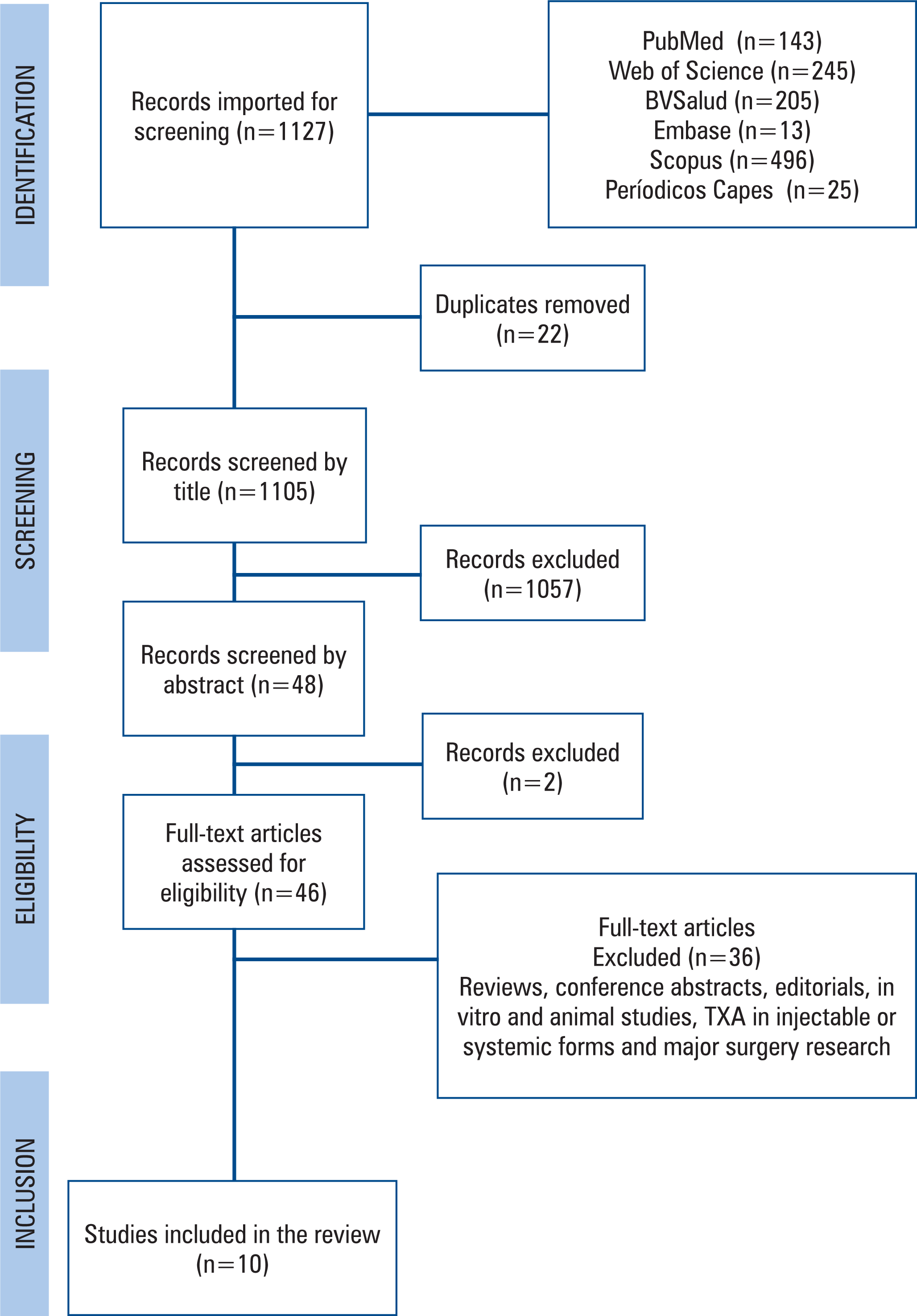
A total of 1,127 records were identified across electronic databases: 143 from PubMed, 245 from Web of Science, 205 from BVSalud, 496 from Scopus, 25 from Periódicos CAPES, and 13 from Embase. After removal of 22 duplicates, 1,105 titles and abstracts were screened. Of these, 1,057 records provided insufficient information for eligibility assessment and were therefore excluded. Forty-eight articles met the eligibility criteria based on title and abstract and were retrieved for full-text review. Two articles were excluded at this stage for not meeting the inclusion criteria. Full-text assessment was performed for 46 articles, of which 36 were excluded for predefined reasons. Ultimately, 10 studies were included in the review.(4,10,14–21) The study selection process is illustrated in figure 2.
Analysis of study types for selected articles
Of the 10 included studies, three were retrospective studies, two were clinical trials, and two were prospective cohort studies. The remaining three articles comprised one case-control study, one case report, and one letter to the editor (Table 1). All included articles underwent critical appraisal to assess risk of bias (Table 2S, Supplementary Material).
Tranexamic acid references
Six studies used 250-mg TXA tablets,(4,10,14–17) whereas three studies used 500-mg TXA tablets.(18–20) Only one study applied TXA powder without specifying the exact concentration.(21) These details are summarized in table 1.
Tranexamic acid administration methods
Most studies reported the use of TXA as crushed tablets mixed with saline and applied as a paste directly to the surgical site, often in combination with gelatin or collagen hemostatic sponges.(4,15-18,21) One study used TXA suspended in water and applied with wet cotton wool, a technique adapted for patients with hemophilia.(19) In several studies, TXA paste mixed with saline was applied directly into the dental alveolus without the use of hemostatic sponges.(10,14,20) These application methods are summarized in table 1.
For postoperative bleeding control, various TXA mouthwash formulations were described. Three studies recommended a TXA mouthwash prepared by dissolving one tablet in 100 mL of cold saline, used four times daily for seven postoperative days.(15–17) Another protocol involved a mouthwash containing 500 mg of TXA used for two minutes, four times daily for four days.(18) A different regimen recommended holding the mouthwash in the mouth for three minutes every six hours for seven days.(14)
Population characteristics
Across the included studies, all participants had an underlying coagulation disorder. These conditions were medication-related, resulting from the use of antithrombotic agents, hereditary in origin, or associated with systemic diseases such as liver disease. Most studies involved individuals receiving antithrombotic therapy,(15,21) including antiplatelet agents,(10) vitamin K antagonists,(4,14,18) or direct oral anticoagulants(16) (Table 1). Two of the remaining studies focused on patients with hereditary bleeding disorders, namely hemophilia(19) and Glanzmann thrombasthenia,(20) whereas one study evaluated bleeding risk in patients with liver disease(17) (Table 1).
Types of dental procedures and their outcomes
Among the included studies, eight focused exclusively on bleeding risk associated with dental extractions,(4,10,15,16,18-21) whereas one study also evaluated periodontal therapy(14) and another included oral biopsy.(17) These procedures are summarized in table 1.
All studies addressed bleeding management in individuals at high risk of hemorrhage undergoing dental surgical procedures. In every case, adjunctive local hemostatic measures, including topical application of TXA tablets, were effective in controlling bleeding (Table 1). Bernardoni-Socorro et al.(14) reported successful bleeding control in anticoagulated patients using local measures combined with TXA. Coetzee(19) identified crushed TXA tablets as a cost-effective option in resource-limited settings. Buhatem et al.,(10) Rocha et al.,(4,15,16) and Lu et al.(21) demonstrated that TXA, often combined with other hemostatic measures, enabled safe dental treatment without interruption of anticoagulant or antiplatelet therapy. Bhavyaa et al.(20) described the use of a TXA-soaked splint for bleeding control in a patient with Glanzmann thrombasthenia. Souza et al.(17) showed that TXA effectively reduced bleeding complications, hospitalizations, and transfusion requirements in patients with liver disease (Table 1).
DISCUSSION
In recent years, the effectiveness of hemostatic measures for controlling intraoperative and postoperative bleeding in anticoagulated patients has received increasing attention, with the aim of avoiding interruption of anticoagulant therapy during dental surgical procedures.(22–24) The literature indicates that application of TXA in the form of crushed tablets, combined with fibrin sponges and mechanical gauze compression, effectively controls postoperative bleeding.(25) Although evidence on this approach remains limited, this review represents the first synthesis focused specifically on the use of locally applied TXA powder, prepared from crushed tablets, for control of hemorrhagic events during dental surgery.
A systematic review of 129 randomized controlled trials demonstrated that TXA reduced the likelihood of blood transfusion by approximately one third(.26) However, concern persists regarding potential thromboembolic risk, which may discourage some clinicians from adopting systemic administration in routine practice.(26,27) In this context, topical application of TXA represents an effective alternative, with the advantage of inhibiting fibrin clot dissolution at the surgical site while limiting systemic exposure and interference with physiological coagulation processes.(26,27) Findings from another review evaluating topical TXA reported significant reductions in bleeding and transfusion requirements among surgical patients. That analysis included 28 trials across multiple surgical disciplines, including orthopedics, cardiology, otolaryngology, and dentistry.(26,27) Local application of TXA achieves hemostatic control while reducing risks associated with systemic administration, such as allergic reactions and renal overload, which occur more frequently with oral or intravenous routes.(2,20,27)
During the intraoperative period, TXA tablets have been explored as a hemostatic measure in minor oral surgical procedures. Tablets are crushed into powder and applied directly to the dental alveolus, increasing local drug concentration and enhancing bleeding control at the surgical site.(10,14-17,20,28)
Local administration of TXA in powder form may also represent a cost-effective alternative.(29) Tablet formulations are substantially less expensive than intravenous preparations and are widely available, supporting their use in minor dental surgery.(29) By reducing the need for blood transfusion and hospital-based interventions, TXA further contributes to lowering costs associated with hemorrhagic complications.(27–29)
Several pharmaceutical mouthwash formulations containing TXA have been proposed for control of postoperative bleeding following dental surgery. A systematic review including 430 anticoagulated individuals reported that local use of TXA significantly reduced postoperative bleeding risk, highlighting its role as an effective hemostatic measure in populations with coagulation disorders.(30) When a commercially available 4.8% TXA mouthwash is not accessible in dental practice, an alternative approach involves preparation of a mouthwash using 250-mg or 500-mg TXA tablets dispersed in water.(31–34) These formulations can be prepared by crushing tablets and dissolving them in purified water. To improve palatability, flavoring agents or aspartame may be added.(2,35) Laboratory studies have demonstrated that such solutions remain stable and effective for up to 31 days when stored in bottles at temperatures of 23°C or 5°C.(2)
The reviewed literature indicates that plasma concentrations of TXA following topical application are less than one tenth of those achieved after intravenous administration, a finding considered advantageous because of reduced systemic absorption.(26,27) In addition, comparison of a 5% TXA mouthwash with oral administration of a 1-g TXA tablet showed no detectable drug levels in saliva after oral dosing(2). In contrast, rinsing with 10 mL of a 5% aqueous solution resulted in salivary concentrations sufficient to inhibit fibrinolysis for several hours.(2,8)
Within the limitations of this scoping review, topical TXA powder prepared from crushed tablets was most frequently applied in combination with other local hemostatic methods, including resorbable sponges, Gelfoam, sutures, and mechanical compression. Such combined strategies limit the ability to isolate and evaluate the independent effect of TXA. Nevertheless, the available evidence supports the role of TXA as a valuable adjunct for dental bleeding management and as an important component of intraoperative hemostatic protocols.
CONCLUSION
The available literature indicates that topical application of tranexamic acid, as part of adjunctive local hemostatic measures, yields promising outcomes in controlling bleeding associated with minor oral surgery in individuals with coagulation disorders. However, further well-designed studies are required to evaluate the isolated efficacy of locally applied tranexamic acid powder in the management of bleeding complications following dental surgery.
ACKNOWLEDGMENTS
In memory of Professor Luiz César Fonseca Alves, whose simple question ignited a lifelong pursuit of knowledge. His curious spirit continues to guide us, and his absence echoes in our gratitude.
DATA AVAILABILITY
The underlying content is contained within the manuscript.
REFERENCES
- 1 Nishida T, Kinoshita T, Yamakawa K. Tranexamic acid and trauma-induced coagulopathy. J Intensive Care. 2017;5(1):5.
- 2 Donnelly RF. Stability of tranexamic acid mouth rinse. Int J Pharm Compd. 2018;22(5):412-6.
- 3 de Vasconcellos SJ, de Santana Santos T, Reinheimer DM, Faria-E-Silva AL, de Melo MF, Martins-Filho PR. Topical application of tranexamic acid in anticoagulated patients undergoing minor oral surgery: A systematic review and meta-analysis of randomized clinical trials. J Craniomaxillofac Surg. 2017;45(1):20-6.
- 4 Rocha AL, Oliveira SR, Souza AF, Travassos DV, Abreu LG, Ribeiro DD, et al. Bleeding assessment in oral surgery: A cohort study comparing individuals on anticoagulant therapy and a non-anticoagulated group. J Craniomaxillofac Surg. 2019;47(5):798-804.
- 5 Hong P, Liu R, Rai S, Liu J, Ding Y, Li J. Does tranexamic acid reduce the blood loss in various surgeries? An umbrella review of state-of-the-art meta-analysis. Front Pharmacol. 2022;13:887386.
- 6 Picetti R, Shakur-Still H, Medcalf RL, Standing JF, Roberts I. What concentration of tranexamic acid is needed to inhibit fibrinolysis? A systematic review of pharmacodynamics studies. Blood Coagul Fibrinolysis. 2019;30(1):1-10.
- 7 McCormack PL. Tranexamic acid: a review of its use in the treatment of hyperfibrinolysis. Drugs. 2012;72(5):585-617.
- 8 Sindet-Pedersen S, Stenbjerg S. Effect of local antifibrinolytic treatment with tranexamic acid in hemophiliacs undergoing oral surgery. J Oral Maxillofac Surg. 1986;44(9):703-7.
- 9 Habbab LM, Semelhago L, Lamy A. Topical use of tranexamic acid in cardiac surgery: a meta-analysis. Thorac Cardiovasc Surg. 2020;68(3):212-8.
- 10 Buhatem Medeiros F, Pepe Medeiros de Rezende N, Bertoldi Franco J, Porrio de Andrade AC, Timerman L, Gallottini M, et al. Quantification of bleeding during dental extraction in patients on dual antiplatelet therapy. Int J Oral Maxillofac Implants. 2017;46(9):1151-7.
- 11 Ouzzani M, Hammady H, Fedorowicz Z, Elmagarmid A. Rayyan-a web and mobile app for systematic reviews. Syst Rev. 2016;5(1):210. Review.
- 12 Wells GA, Shea B, O’Connell D, Peterson J, Welch V, Losos M, et al. The Newcastle-Ottawa Scale (NOS) for assessing the quality of nonrandomised studies in meta-analyses. Ottawa (ON): Ottawa Hospital Research Institute; 2009.
- 13 Aromataris E, Munn Z, editors. JBI Manual for Evidence Synthesis. Adelaide (AU): Joanna Briggs Institute; 2020.
- 14 Bernardoni-Socorro C, Arteaga-Vizcaino M, Villamizar Y, Diez-Ewald M, Vizcaíno-Salazar G, Torres-Guerra E, et al. [Mouth-washing with tranexamic acid in patients treated with oral anticoagulants subjected to oral surgery procedures]. Invest Clin. 1998;39(2):77-83. Spanish.
- 15 Rocha AL, Souza AF, Martins MA, Fraga MG, Travassos DV, Oliveira AC, et al. Oral surgery in patients under antithrombotic therapy: perioperative bleeding as a significant risk factor for postoperative hemorrhage. Blood Coagul Fibrinolysis. 2018;29(1):97-103.
- 16 Rocha AL, Oliveira SR, Souza AF, Travassos DV, Abreu LG, Ribeiro DD, et al. Direct oral anticoagulants in oral surgery: a prospective cohort. Minerva Stomatol. 2020;69(6):384-93.
- 17 Souza AF, Rocha AL, Silva RK, Bemquerer LM, Lanza CR, Castro WH, et al. Hemorrhagic complications in individuals with liver disease submitted to minor oral surgery. Blood Coagul Fibrinolysis. 2022;33(7):412-7.
- 18 Blinder D, Manor Y, Martinowitz U, Taicher S, Hashomer T. Dental extractions in patients maintained on continued oral anticoagulant: comparison of local hemostatic modalities. Oral Surg Oral Med Oral Pathol Oral Radiol Endod. 1999;88(2):137-40.
- 19 Coetzee MJ. The use of topical crushed tranexamic acid tablets to control bleeding after dental surgery and from skin ulcers in haemophilia. Haemophilia. 2007;13(4):443-4.
- 20 Bhavyaa R, Vignesh KC, Muthu MS, Haridoss S, Abirami S. Glanzmann Thrombasthenia: use of the soft splint with tranexamic acid paste to reduce spontaneous oral bleeding. Int J Clin Pediatr Dent. 2021;14(4):580-5.
- 21 Lu SY, Lin LH, Hsue SS. Management of dental extractions in patients on warfarin and antiplatelet therapy. J Formos Med Assoc. 2018;117(11):979-86.
- 22 Chinnaswami R, Bagadia RK, Mohan A, Kandaswamy E, Chandrasekaran D. Dentists’ knowledge, attitude and practice in treating patients taking oral antithrombotic medications: a survey. J Clin Diagn Res. 2017;11(1):ZC88-91.
- 23 Queiroz SI, Silvestre VD, Soares RM, Campos GB, Germano AR, da Silva JS. Tranexamic acid as a local hemostasis method after dental extraction in patients on warfarin: a randomized controlled clinical study. Clin Oral Investig. 2018;22(6):2281-9.
- 24 Wahl MJ, Pinto A, Kilham J, Lalla RV. Dental surgery in anticoagulated patients-stop the interruption. Oral Surg Oral Med Oral Pathol Oral Radiol. 2015;119(2):136-57.
- 25 Soares EC, Costa FW, Bezerra TP, Nogueira CB, de Barros Silva PG, Batista SH, et al. Postoperative hemostatic efficacy of gauze soaked in tranexamic acid, fibrin sponge, and dry gauze compression following dental extractions in anticoagulated patients with cardiovascular disease: a prospective, randomized study. Oral Maxillofac Surg. 2015;19(2):209-16.
- 26 Ker K, Beecher D, Roberts I. Topical application of tranexamic acid for the reduction of bleeding. Cochrane Database Syst Rev. 2013;2013(7):CD010562.
- 27 Ker K, Edwards P, Perel P, Shakur H, Roberts I. Effect of tranexamic acid on surgical bleeding: systematic review and cumulative meta-analysis. BMJ. BMJ. 2012;344:e3054.
- 28 Evaniew N, Bhandari M. Cochrane in CORR: topical application of tranexamic acid for the reduction of bleeding. Clin Orthop Relat Res. 2017;475(1):21-6. Review.
- 29 Luo ZY, Wang HY, Wang D, Zhou K, Pei FX, Zhou ZK. Oral versus intravenous versus topical tranexamic acid in primary hip arthroplasty: a prospective, randomized, double-blind, controlled study. J Arthroplasty. 2018;33(3):786-93.
- 30 Zaib A, Shaheryar M, Shakil M, Sarfraz A, Sarfraz Z, Cherrez-Ojeda I. Local tranexamic acid for preventing hemorrhage in anticoagulated patients undergoing dental and minor oral procedures: a systematic review and meta-analysis. Healthcare (Basel). 2022;10(12):2523.
- 31 Ambados F. Preparing tranexamic acid 4.8% mouthwash. Aust Prescr. 2003;26(4):75-7.
- 32 Lin ZX, Woolf SK. Safety, efficacy, and cost-effectiveness of tranexamic acid in orthopedic surgery. Orthopedics. 2016;39(2):119-30.
- 33 Peisker A, Raschke GF, Guentsch A, Roshanghias K, Schultze-Mosgau S. Management of dental extraction in a female patient with fanconi anemia. J Dent (Tehran). 2014;11(5):613-9.
- 34 Zirk M, Zinser M, Buller J, Bilinsky V, Dreiseidler T, Zöller JE, et al. Supportive topical tranexamic acid application for hemostasis in oral bleeding events - Retrospective cohort study of 542 patients. J Craniomaxillofac Surg. 2018;46(6):932-6.
- 35 McCluskey SV, Sztajnkrycer MD, Jenkins DA, Zietlow SP, Berns KS, Park MS. Stability of tranexamic acid in 0.9% sodium chloride, stored in type 1 glass vials and ethylene/propylene copolymer plastic containers. Int J Pharm Compd. 2014;18(5):432-7.
Edited by
-
Associate Editor:
Marcos de Lima The Ohio State University - Columbus, OH, USA ORCID: https://orcid.org/0000-0002-8568-4522