|
HRAS / KRAS
|
This gene family is involved in cellular proliferation, differentiation, and survival(57) and is among the most frequently mutated in cancer(9) |
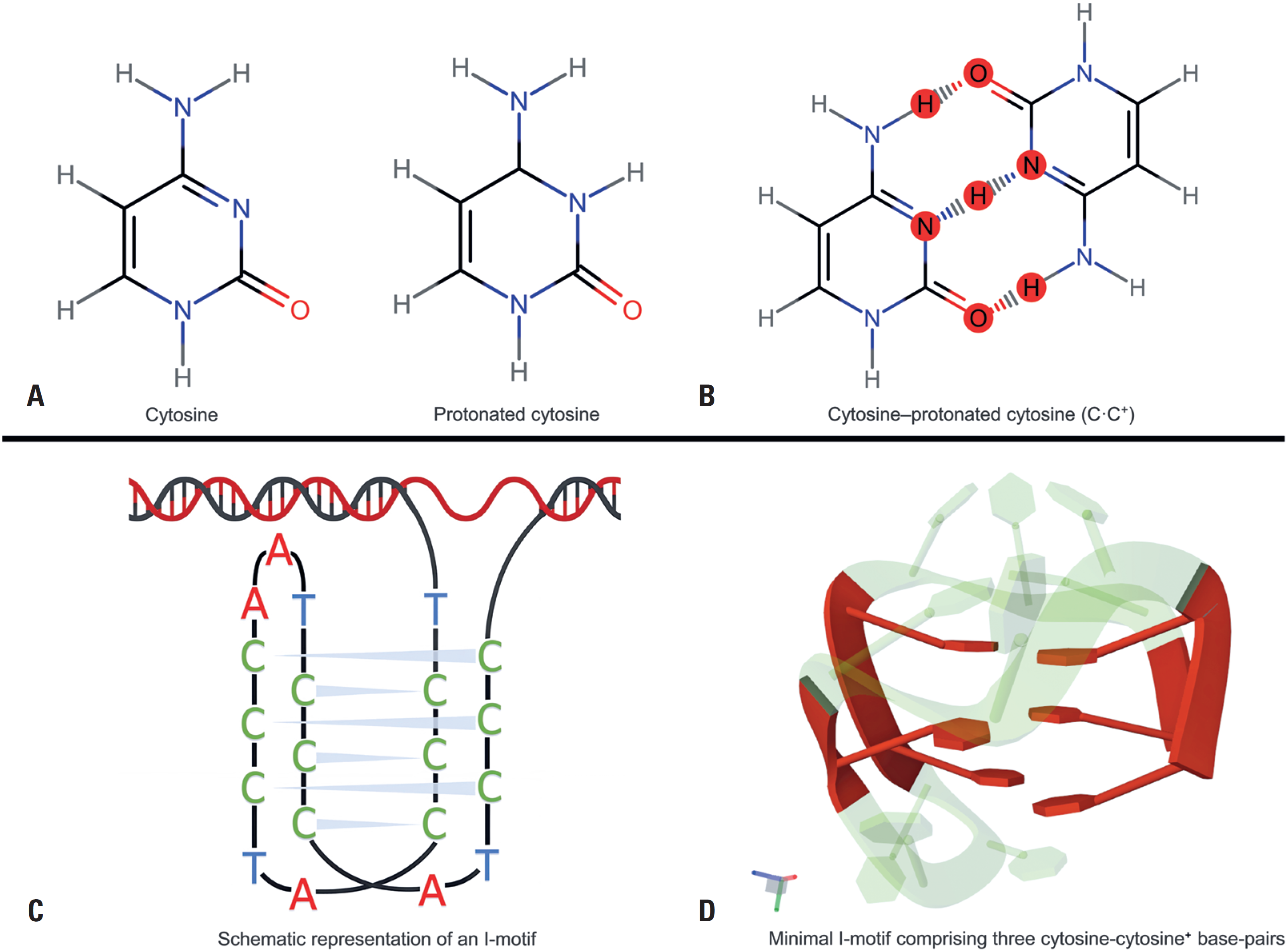
i-motif structures facilitate gene transcription through stable binding of the hnRNP A1 protein(32) and through positive regulation mediated by hnRNP K (45) |
|
VEGFA
|
A diffusible endothelial cell-specific mitogen involved in the regulation of physiological and pathological angiogenesis, cell survival, tumor growth, and metastasis(58) |
Transcriptional activation is mediated by binding of the hnRNP K protein to the partially unfolded i-motif structure(46) |
|
RET
|
Involved in tissue development, embryogenesis, immune surveillance, and metabolic regulation(59) |
To the best of our knowledge, no evidence has been reported in the literature |
|
BCL2
|
Regulator of the mitochondrial (intrinsic) apoptotic pathway, promoting cell survival by inhibiting cell death(60) |
Transcriptional activation is mediated by the hnRNP LL protein(48) |
|
RAD17
|
Responsible for DNA damage checkpoint control(61) |
To the best of our knowledge, no evidence has been reported in the literature |
|
MYC
|
Regulates cellular proliferation, differentiation, and apoptosis(62) |
The single-stranded CT-element – facilitated by dynamic structures such as the i-motif – enables hnRNP K binding, which acts as a transcriptional activator and leads to increased gene expression(50,63) |
|
MYB
|
Regulates cellular proliferation and differentiation in the hematopoietic and gastrointestinal systems; its overexpression induces cancerous lesions(64) |
To the best of our knowledge, no evidence has been reported in the literature. |
|
KIT
|
Regulates the proliferation and differentiation of hematopoietic stem cells and contributes to maintenance of the immune system(65,66) |
Repression of gene transcription and translation following i-motif stabilization by the bisacridine derivative B05(52) |
|
PDGFR-B
|
Promotes tumor growth through autocrine stimulation of malignant cells(67) |
Transcriptional activation is favored by the binding of activator proteins to the i-motif located in the gene promoter(53) |
|
HIF-1A
|
Related to metabolic adaptation, erythropoiesis, angiogenesis, cell growth and differentiation, survival, and apoptosis(68) |
To the best of our knowledge, no evidence has been reported in the literature |
|
RB1
|
Tumor suppressor that restricts the expression of genes required for cell proliferation(69) |
Destabilization of the i-motif allows RB1 transcription to increase(55) |
|
TERT
|
Responsible for replication of human telomere ends, thereby promoting cell survival(70) |
The presence of the i-motif does not favor the emergence of TERT activating mutations(56) |

 i-motifs: DNA structures with regulatory functions and therapeutic potential
 Thumbnail
 Thumbnail
 Thumbnail
 Thumbnail
 Thumbnail