
 Effects of Bolsa Família on the schooling gap of adolescent mothers: regional evidence from longitudinal data of the Cohort of 100 million brazilians
This study investigates the impact of the Bolsa Família Program (PBF) on school delay among adolescent mothers (up to 19 years old), using longitudinal data from the Cohort of 100 million Brazilians (C100) for the period from 2004 to 2015. The analysis focuses on the Semi-Arid Northeastern region of Brazil (SemiSet), with comparisons at the regional (Northeast) and national (Brazil) levels. A quasi-experimental approach is adopted through propensity score matching (PSM) using a Kernel algorithm to estimate the average treatment effect on the treated (ATT). The results indicate that adolescent mothers from PBF beneficiary families exhibit a lower incidence of school delay compared to those from non-beneficiary families with similar observable characteristics. This protective effect is more pronounced in the SemiSet region and increases with the duration of program exposure. The study also examines variations in the impact of the PBF based on eligibility for the Youth Variable Benefit (Benefício Variável Jovem - BVJ) and the quality of municipal management of program conditionalities, as measured by the Decentralized Management Index (IGD-M), showing that both factors contribute to strengthening the program’s positive effects on the educational trajectories of these young women.
Keywords:
School gap; Bolsa família; Cohort of 100 million brazilians
 Thumbnail
 Thumbnail
 Thumbnail
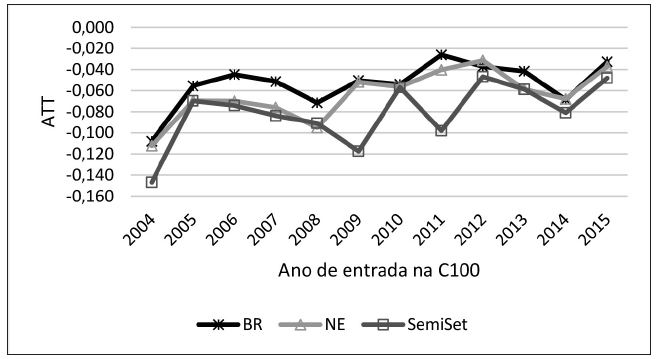 Fonte: Coorte de 100 milhões de Brasileiros, Cidacs/Fiocruz Bahia. Elaboração própria.
 Fonte: Coorte de 100 milhões de Brasileiros, Cidacs/Fiocruz Bahia. Elaboração própria.
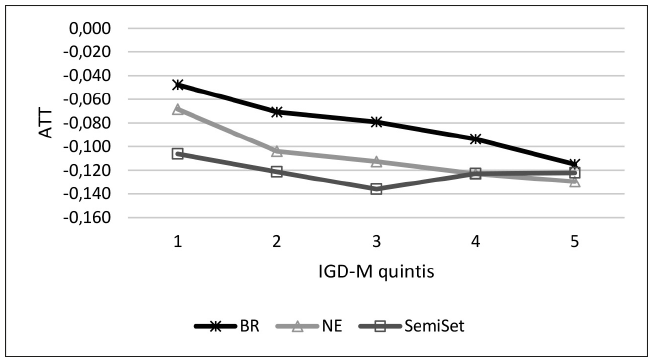 Fonte: Coorte de 100 milhões de Brasileiros, Cidacs/Fiocruz Bahia. Elaboração própria.