
 UNDERSTANDING SCHOOL VIOLENCE: REVIEW OF CHARACTERISTICS, ASSOCIATED FACTORS, AND INTERVENTIONS
ABSTRACT:
Educational institutions should be welcoming and safe environments for promoting student learning and development. However, safety in schools has been compromised by a variety of incidents of school violence, ranging from peer victimization and bullying to armed attacks. This study undertakes a rapid review of systematic reviews on school violence conducted in Brazil and abroad, aiming to understand the characteristics of school violence, its associated factors, armed attacks in schools, and possible prevention and intervention measures. A rapid review approach was adopted, following the PRISMA protocol (Page et al., 2020), with an emphasis on systematic reviews on school violence, which were screened by searching titles in eleven databases. A total of 1,738 publications were retrieved, and after excluding duplicates, screening references, and assessing the quality of the full texts, 127 studies were included in the analysis. The categories resulting from the analysis were: characteristics of school violence (15% of the studies), factors associated with school violence (45.7%), interventions in response to school violence (33.8%), and armed attacks on schools (5.5%). The results highlighted the complexity of school violence, the heterogeneity of school violence prevalence rates, and the need for more research into school violence in the Brazilian context to develop and evaluate inclusive and culturally appropriate interventions.
Keywords:
school violence; bullying; prevention; systematic review
RESUMO:
As instituições de ensino devem ser ambientes acolhedores e seguros para promover o aprendizado e o desenvolvimento dos estudantes. No entanto, a segurança nas escolas tem sido comprometida por uma série de incidentes de violência escolar, que abrange desde vitimização entre pares e bullying até ataques armados. Este estudo realiza uma revisão rápida de revisões sistemáticas sobre violência escolar conduzidas no Brasil e no exterior, com o objetivo de compreender as características da violência escolar, seus fatores associados, ataques armados em escolas e possíveis medidas de prevenção e intervenção diante da violência escolar. Foi adotada uma abordagem de revisão rápida, seguindo o protocolo PRISMA (Page et al., 2021), com ênfase em revisões sistemáticas sobre violência escolar, as quais foram rastreadas por meio da busca de títulos em onze bases de dados. Foram recuperadas 1738 publicações e, após a exclusão das duplicatas, triagem das referências e avaliação da qualidade dos textos completos localizados, 127 estudos foram mantidos na análise. As categorias resultantes da análise foram: características da violência escolar (15% dos estudos), fatores associados à violência escolar (45,7%), intervenções diante da violência escolar (33,8%) e ataques armados às escolas (5,5%). Os resultados destacaram a complexidade da violência escolar e a heterogeneidade das taxas de prevalência de violência escolar, além de destacar a necessidade de mais pesquisas sobre a violência escolar no contexto brasileiro para a o desenvolvimento e avaliação de intervenções inclusivas e culturalmente adequadas.
Palavras-chave:
violência escolar; bullying; prevenção; revisão sistemática
RESUMEN:
Los centros educativos deben ser entornos acogedores y seguros para promover el aprendizaje y el desarrollo de los alumnos. Sin embargo, la seguridad en las escuelas se ha visto comprometida por una serie de incidentes de violencia escolar, que van desde la victimización y el acoso entre compañeros hasta los ataques armados. Este estudio realiza una revisión rápida de las revisiones sistemáticas sobre violencia escolar realizadas en Brasil y en el extranjero, con el objetivo de comprender las características de la violencia escolar, sus factores asociados, los ataques armados en las escuelas y las posibles medidas de prevención e intervención ante la violencia escolar. Se adoptó un enfoque de revisión rápida, siguiendo el protocolo PRISMA (Page et al., 2020), con énfasis en las revisiones sistemáticas sobre violencia escolar, que se seleccionaron mediante la búsqueda de títulos en once bases de datos. Se recuperaron 1.738 publicaciones y, tras excluir duplicados, cribar referencias y evaluar la calidad de los textos completos localizados, se mantuvieron 127 estudios en el análisis. Las categorías resultantes del análisis fueron: características de la violencia escolar (15% de los estudios), factores asociados a la violencia escolar (45,7%), intervenciones ante la violencia escolar (33,8%) y ataques armados a escuelas (5,5%). Los resultados pusieron de manifiesto la complejidad de la violencia escolar y la heterogeneidad de las tasas de prevalencia de la violencia escolar, además de subrayar la necesidad de más investigación en el contexto brasileño para desarrollar y evaluar intervenciones inclusivas y culturalmente apropiadas.
Palabras clave:
violencia escolar; acoso escolar; prevención; revisión sistemática
INTRODUCTION
What occurs to teaching, learning, and social interaction when schools—ideally safe havens for education—transform into scenes of violence? Incidents of violence, including life-threatening events like mass shootings, have compromised safety in educational spaces (Prado, 2023). A notable example is the attack by a former student at a school in Cambé, Paraná, which resulted in two fatalities. This troubling trend encompasses acts of violence that take place within school environments or during school-related activities, adversely affecting not just students but also teachers, families, and entire communities (Polanin et al., 2020). Understanding this phenomenon necessitates a comprehensive approach to fully grasp the main factors associated with this complex and multifaceted issue (Nesello et al., 2014).
In 2021, at least 669 schools in Brazil suspended their activities due to episodes of violence, highlighting the prevalence and severity of this problem in Brazil (Fórum Brasileiro de Segurança Pública, 2023), while a high number of students stopped attending classes due to episodes of violence. For example, in 2021, a 14-year-old girl at a civic-military school in Curitiba, Paraná, was the victim of racism and other insults within the institution. She stopped attending school after receiving a death threat and finding threats in her notebook, such as “You damn black girl, I'm going to kill you” (sic) (Alcântara, 2021). This case, among others, illustrates the severity and multifaceted nature of school violence in Brazil. Furthermore, data from the National School Health Survey (PENSE) indicate that 23% of Brazilian students were victims of bullying in 2019, while 12% admitted to engaging in this behavior (Malta et al., 2022), revealing that school violence in Brazil is not limited to isolated incidents but rather is a persistent and multifaceted challenge. However, what are the limits of violence in school settings?
School violence encompasses a range of behaviors, from verbal and physical aggression among students to more severe incidents, such as life-threatening attacks and mass shootings, which seem to be on the rise in Brazilian schools (Prado, 2023). This worrying trend reflects not only physical and armed violence but also includes verbal, psychological, sexual, and various other forms of violence that occur within and around school environments (Nesello et al., 2014; Coelho, 2016). These violent acts stem from a complex interplay of influences, both internal and external to the school context, making it difficult to identify a single root cause for these incidents (Gázquez et al., 2015).
Schools should be considered safe and positive places, playing a fundamental role in student development (Polanin et al., 2020). They provide spaces where students not only learn content and cognitive skills but also develop social and emotional competencies, interact with their peers, and develop new ways to deal with individual and social problems. However, the reality expressed by school violence contradicts this ideal, negatively affecting everyone involved and reflecting the urgency of addressing this problem in the educational context (Gusfre et al., 2022; Turanovic & Siennick, 2022; Gizzarelli et al., 2023; Fórum Brasileiro de Segurança Pública, 2023).
The prevalence of school violence challenges the idea that schools are merely teaching and learning institutions. This expectation is challenged by a complex set of interactions that go beyond the dynamics of aggressor and victim. A static approach that classifies those involved solely as aggressors or victims may overlook the cycle through which students and the school community interact violently (Cunha et al., 2018). Thus, school violence emerges not only as a safety issue but also as a result of deeper social problems, such as inequality, social exclusion, and public policy failures (Ribeiro et al., 2013; Cookson & Darling-Hammond, 2022). This perspective shows the importance of broader approaches that consider the interconnection between individual, school, family, and community aspects to understand the dynamics of school violence.
The characteristics of school violence in Brazil and other countries are diverse, with bullying being one of the forms that has received the most attention in national (Nesello et al., 2014) and international studies (Lester et al., 2017). Defined as aggressive and repetitive behavior among students, in which there is an imbalance of power, bullying and its variants, such as cyberbullying, in which violent attacks are orchestrated through the use of information technology (Cunha et al., 2020), highlight the complexity of violent interactions in the school environment (Lester et al., 2017; Nesello et al., 2014). Furthermore, demographic factors such as gender, sexual orientation, and race/ethnicity influence the incidence and nature of peer violence in educational settings. LGBTI+ students and those from minority ethnic groups also face higher rates of victimization, highlighting the importance of inclusive and gender-sensitive approaches (Asinelli-Luz & Cunha, 2011; Alexander et al., 2011; Goodenow et al., 2016; Reis et al., 2016; Malta et al., 2019; Xu et al., 2020).
Education professionals, including teachers and staff, are also frequent targets of violence in schools. A meta-analysis indicated that more than half of basic education teachers reported experiencing some form of violence from students, ranging from verbal abuse to physical and sexual attacks (Longobardi et al., 2019). In Brazil, violence against teachers is a current issue, with data from the 2017 edition of the Basic Education Assessment System (SAEB-Sistema de Avaliação da Educação Básica) revealing attacks on personal property and even the lives of teachers in several schools in Brazil (Plassa et al., 2021). These data highlight the gravity of the situation and the urgency of addressing school violence prevention to create a safer and more welcoming environment for those dedicated to teaching (Fórum Brasileiro de Segurança Pública, 2023; Modzeleski & Randazzo, 2018).
The most severe incidents of violence in schools, including homicides and rapes, are occurring at alarming rates. Data from the Ministry of Health's Mortality Information System (SIM-MS) indicate that a significant proportion of homicides recorded between 2008 and 2018 took place within school environments (Cerqueira et al., 2021). There has been an upward trend in armed violence in schools, particularly concerning mass homicides, raising significant concerns about safety in Brazilian educational institutions (Prado, 2023). However, there remains a lack of empirical research within the national context that explores the characteristics of these serious forms of violence and their potential underlying factors. Additionally, it is crucial to investigate the possible cascading effects of everyday conflicts and their connections to neglect both inside and outside school boundaries.
The factors associated with school violence are numerous and complex, including both individual and social factors. Social factors such as poverty, social inequality, and exposure to community violence are important predictors of violence in schools (Cookson & Darling-Hammond, 2022; Ribeiro et al., 2013). The family environment, with the presence of domestic violence and negative parental behaviors, also influences the risk of youth involvement in school violence, while a positive family environment offers protection (Nesello et al., 2014; Oliveira et al., 2015). Individual factors such as aggression, impulsivity, and dysfunctional interpersonal skills increase the likelihood of engaging in violent behavior, and mental health disorders can be both a cause and a consequence of violence (Álvarez-García et al., 2015). However, it is important to recognize that no single factor explains all forms of school violence in different contexts and at different times. Approaches that articulate individual and contextual aspects and the relationship between different factors offer a more comprehensive and effective understanding of the phenomenon of school violence, recognizing its intrinsically multifaceted and dynamic nature.
The most severe incidents of violence in schools, including homicides and rapes, are occurring at alarming rates. Data from the Ministry of Health's Mortality Information System (SIM-MS) indicate that a significant proportion of homicides recorded between 2008 and 2018 took place within school environments (Cerqueira et al., 2021). There has been an upward trend in armed violence in schools, particularly concerning mass homicides, raising significant concerns about safety in Brazilian educational institutions (Prado, 2023). However, there remains a lack of empirical research within the national context that explores the characteristics of these serious forms of violence and their potential underlying factors. Additionally, it is crucial to investigate the possible cascading effects of everyday conflicts and their connections to neglect both inside and outside school boundaries.
Beyond the immediate consequences for the health and well-being of those involved, school violence harms the educational environment as a whole, interfering with teaching and learning processes and compromising the development of children and adolescents (Turanovic & Siennick, 2022; Polanin et al., 2020). In this context, student academic performance, as well as teacher and staff engagement, are impaired (Teixeira & Kassouf, 2015; Deole, 2017). A study based on the sociodemographic questionnaire of the National High School Exam (ENEM) revealed that incidents of violence and discrimination at school significantly harmed not only the academic performance of victimized students but also the entire school (Cunha & Santo, 2023). The fear and insecurity generated by school violence can lead to dropout, poor academic performance, and mental health problems, highlighting the need for preventive actions and effective intervention strategies to create a safe school environment conducive to the integral development of students.
In this context, it is crucial to evaluate effective programs and practices aimed at preventing school violence. Social-emotional programs that focus on peaceful conflict resolution skills, empathy, and assertive communication have demonstrated potential. Their effectiveness is heightened when embedded in universal, whole-school approaches, indicating the necessity for a holistic and inclusive strategy to address and mitigate school violence (Lester et al., 2017; Okonofua et al., 2016; Welsh & Little, 2018). The success of school violence prevention initiatives hinges not only on their content but also on the manner of their implementation, which requires sufficient support for school staff and adaptability to the local context (Ponsford et al., 2022). Therefore, a comprehensive approach to combating school violence must encompass changes in policies, practices, and the overall school climate.
In response to growing concern about school violence and its impacts, which range from harm to health and academic performance to broader social consequences (Polanin et al., 2020), research efforts have intensified in Brazil, and this work aims to develop a comprehensive literature review on school violence. However, recent systematic reviews conducted in the country, such as those by Silva et al. (2017 and 2020), point to a significant gap: the scarcity of studies with Brazilian samples that comprehensively address the multiple aspects of school violence. Given this limitation in the national literature, this work proposes a systematic review that adopts a survey approach of systematic studies, both national and international, in order to compile and analyze the available evidence on the topic more comprehensively. In this context, this rapid systematic review aims to examine in detail (1) the characteristics of school violence; (2) its associated factors; (3) armed attacks in schools; and (4) effective prevention and intervention strategies. The review offers a synthesis of evidence regarding the predictors, consequences, and possible actions in school violence, pointing out evidence-based support for educators, researchers, and policymakers interested in developing and evaluating prevention and intervention strategies in the face of school violence.
METHODS
This rapid systematic review was prepared according to the Core Reporting Items for Systematic Reviews and Meta-Analyses (PRISMA) protocol (Hamel et al., 2021; Page et al., 2021). The PRISMA protocol is an internationally recognized set of guidelines designed to improve transparency and reporting quality in systematic reviews and meta-analyses by ensuring that all critical aspects of the review are clearly documented and communicated in its updated version (Page et al., 2021). A rapid systematic review is a research approach that synthesizes the available evidence on a specific topic in a short timeframe while maintaining rigor and transparency, and is especially useful for informing decisions in time-limited situations (Hamel et al., 2021). This rapid review of systematic reviews was conducted between July and August 2023, from team formation to the writing of this report.
Search Strategy
Literature reviews on school violence were located through the following databases: Virtual Health Library (VHL), EBSCO, Education Resources Information Center (ERIC), Google Scholar, PsycInfo, PubMed, Sage, Scielo Brasil, Scopus, Taylor & Francis, and Wiley. The database searches were conducted independently by two authors. The search focused on the “title” field of the references, using the following terms and their combinations: (school OR student OR peers OR teachers) AND (violence OR victimization OR bullying OR aggression OR shooting) AND (review OR meta-analysis OR synthesis). The English version of the terms was used on all platforms, and terms in English and Portuguese (escola OU estudante OU pares OU professores) E (violência OU vitimização OU bullying OU agressão OU tiros) E (revisão OU metanálise OU síntese) were used on the VHL, Google Scholar, and Scielo Brasil platforms2. Furthermore, a filter was applied to select publications from 2010 to 2023. The search design, based solely on titles, allowed for a more agile analysis of the search results, although it limited the search's scope. For example, searching for terms from this review in the SCOPUS database, taking into account the title, abstract, or keywords, identified 6,295 references. A search targeting only the titles yielded 226 references. Given the time constraints for identifying references, a title-focused search strategy was adopted.
Inclusion and Exclusion Criteria
Given the broad scope of the research questions, this rapid review focused on systematic literature reviews. Four additional inclusion criteria were applied in the reference identification process: (a) articles, chapters, or technical reports published in English, Portuguese, or Spanish; (b) with a systematic review design; (c) evaluating one or more forms of violence in the school context (for example, bullying, armed attacks, etc.) involving students or education professionals; and (d) including data from the context of basic education. Research that did not limit the study of violence to the school context (generic studies on cyberbullying) was excluded. Furthermore, the full texts of the reviews were evaluated according to a procedure developed by Saleem et al. (2022) based on the Database of Abstracts of Reviews of Effects (DARE) criteria. Specifically, articles were scored on four aspects (Table 1), with the sum of the scores for the criteria ranging from 0 to 4. References with a total score below 2.0 were excluded.
Review Analysis
To synthesize the characteristics and factors associated with school violence, as well as examine evidence on interventions to address the problem, a narrative synthesis approach was adopted on the main results of the systematic reviews included in this research. The objectives and main results of the reviews were organized into tables distributed into the categories (1) characteristics of violence, addressing the prevalence of school violence; (2) risk and protective factors for school violence, considering studies on individual and contextual characteristics related to school violence; (3) armed attacks in the school environment; and (4) interventions to address school violence.
RESULTS
The initial search identified 1,738 articles, with duplicates removed using the DeDuplicator tool and the relaxed algorithm (Clark et al., 2020), resulting in 980 references available for the screening stage based on reading abstracts and titles. This identification stage was supported by the Abstrackr tool (Wallace et al., 2012), including double-blind review of article abstracts and titles, with disagreements resolved by consensus, resulting in 256 references for full-text evaluation. Among the references selected in the previous stage, 173 full-texts were retrieved. Subsequently, a quality assessment of the texts was performed3, excluding 46 references that did not meet the adopted quality criteria. Finally, 127 references included in the study were analyzed by recording on a form the number of studies selected in the review, the nature of school violence addressed, objectives, and main results. Figure 1 details the process of identifying, screening, and including references in the study.
The 127 review studies included in this systematic review were divided into five categories: characteristics of school violence, factors associated with school violence in general, factors associated with bullying and cyberbullying, armed attacks on schools, and interventions against school violence (Table 2). The first category included 19 studies (15.0%) that focused on descriptive and prevalence analyses of aspects of violence, such as violence perpetrated by teachers against students, school bullying and cyberbullying associated with school violence, and attitudes and behaviors toward school violence. In the two subsequent categories, 58 studies (45.6%) sought to identify correlates of school violence, such as risk and protective factors, as well as immediate and long-term consequences, most (45 articles) related to the phenomenon of bullying, peer victimization, or cyberbullying. Seven reviews (5.5%) were included in the armed attacks category, as they focused on systematizing studies related to incidents involving weapons in schools. Finally, 43 studies (33.9%) aimed to analyze interventions developed and/or implemented to prevent or combat school violence, whether in terms of methodological aspects, content, or the effectiveness of results4.
Characteristics of School Violence
Among the included studies, 19 focused on surveying works characterizing school violence5, mainly in bullying and peer victimization (84.2% of studies in this category). Although bullying has received considerable attention in the literature in recent years, the prevalence rates indicated that there is great variability in results depending on the assessment methodology (Bjereld et al., 2020) and the context (Costantino et al., 2022). None of the included reviews specifically addressed the Brazilian context, but studies were found for the context of Spain (García-García et al., 2017), Ireland (Foody et al., 2017), and Slovenia (Primc et al., 2021). A set of five studies (Çulhaoğlu & Akmanoğlu, 2022; Falla & Ortega-Ruiz, 2019; Maïano et al., 2016; Maïano et al., 2016; Martínez-Monteagudo et al., 2023) focused specifically on the aggression and victimization of students with special educational needs (SEN), indicating that these students may be at greater risk of being bullied than others. Two studies addressed teacher violence against students, indicating that the phenomenon occurs worldwide, negatively affecting students' mental health and academic performance (Gusfre et al., 2022; Scharpf et al., 2022). Finally, among the studies that focused on attitudes and behaviors towards bullying, the results showed that, although they are concerned about the situations, professionals have little information and knowledge about how to act in these situations (Byrne et al., 2018; Dawes et al., 2023).
Factors Associated with School Violence
During the review process, 12 articles were found that presented factors associated with school violence from a more general perspective, or involving multiple aspects of violence at school, in addition to 46 articles on factors specifically associated with peer victimization, bullying, and cyberbullying in the school context6.
Among studies on factors associated with school violence in general, four subcategories were identified: general demographic factors; antisocial behavior/delinquency; gender-based or sexual violence at school; and other factors. Regarding general demographic factors, a study stands out on ethnic-racial inequality as a motivator for students of some ethnic or racial groups to report perceiving school as an unsafe space (Basilici et al., 2022). A student's risk of becoming victimized at school is influenced by a combination of individual factors, such as gender, and contextual factors, such as the quality of family relationships, within an intricate web of interactions (Nesello et al., 2014). Regarding the subcategory "antisocial behavior/delinquency," three articles were evaluated. These reviews observed that being in a school where violence occurs can be detrimental to students' mental health and academic lives, regardless of their involvement in the situation (Silva et al., 2016; Polanin et al., 2020). Studies on "gender-based or sexual violence at school" represented the majority of research on factors associated with school violence from this perspective (n = 8), with emphasis on findings on the hostile school climate for lesbian, gay, bisexual, transgender, and intersex (LGBTI+) students (Collier et al., 2013; Toomey & Russel, 2016).
The 46 articles addressing the general factors associated with peer victimization, bullying, and cyberbullying were divided into six main subcategories. The first three emphasize relational aspects, considering teacher-student relationships, interactions between students, and family dynamics that influence bullying. Specific research highlights how a healthy relationship between teachers and students (e.g., Ten Bokkel et al., 2023), as well as between students themselves (Schacter et al., 2021), can act as a protective factor against bullying. When addressing family dynamics, the studies mention both protective factors, such as good communication between parents and children, and worrying associations, such as the connection between domestic and school violence (e.g., Oliveira et al., 2017; González-Moreno & Molero-Jurado, 2023).
In line with the theme of factors associated with bullying and victimization, 18 of these articles focus on the risk factors subcategory, covering topics such as emotional health (Christina et al., 2021) and exposure to violence outside of school (e.g., Gázquez et al., 2015). The next subcategory includes four studies that examine the association between student victimization and an increased risk of suicidal and self-harm behaviors. Finally, seven studies investigate other specific factors linked to bullying, such as the association with an increased risk of drug use among students involved in bullying situations (Valdebenito et al., 2015).
Armed Attacks on Schools
Among the analyzed articles, seven focus on armed attacks in schools7. The literature reveals a notable lack of studies on this topic. These studies emphasize the frequency of such attacks in educational settings and discuss the methodological challenges in characterizing the phenomenon (Stewart et al., 2022; Grøndahl & Bjørkly, 2016; Kim et al., 2021). Additionally, they explore the characteristics of the perpetrators of violent acts as well as the social contexts in which these incidents take place (Sommer et al., 2014; Valdebenito et al., 2017; Nowicki, 2020). It is also crucial to mention the study that examines the negative repercussions for those involved and suggests that expanding the support network can help mitigate the effects of these events on school communities (Travers et al., 2018).
Interventions in the Face of School Violence
Forty-three studies on interventions to prevent or address school violence were analyzed, divided into three subcategories: implementation processes, effects of interventions, and quality of research on interventions.
Almost half of the intervention-related studies focus on describing the implementation processes of actions against school violence. These studies evaluate aspects such as program guidelines, target audiences, methodologies employed, and factors that facilitate implementation. This subcategory was further subdivided based on the focus of the interventions, addressing (1) school community members (students, teachers, parents, other professionals); (2) the physical space; (3) multiple components; and (4) technological interventions. Ten of these studies explore the promotion of skills among students, teachers, and other professionals to act in violent situations (e.g., van Aalst et al., 2022; Yosep et al., 2023a). Many of these interventions are linked to promoting students' socio-emotional skills and establishing a positive school environment. Francis et al. (2022) focused on the reconfiguration of school physical spaces to enhance safety. Additionally, seven studies investigated strategies with multiple approaches, involving not only the school but also families and the community at large (e.g., Rawlings & Stoddard, 2019). Two studies focused on technological interventions, examining the use of social media, online games, and other media as tools for preventing school violence (Vandebosch et al., 2022; Yosep et al., 2023b).
The second subcategory, termed “intervention effects,” encompasses 21 studies that examine the efficacy and impact of various interventions. These interventions can be classified into four categories: (1) those that demonstrated no significant effects; (2) those that yielded positive effects; (3) those with mixed effects; and (4) studies evaluating the methodological quality of intervention effectiveness research. Among the studies revealing no significant effects, Silva et al. (2018) concluded that efforts aimed at enhancing social skills among students did not lead to a meaningful reduction in school violence. In contrast, several other studies have reported positive outcomes from similar initiatives, particularly those that engage multiple stakeholders within the school community, including students, teachers, and parents (Polanin et al., 2012; Valle et al., 2020). Most reviews in this subcategory highlighted promising results (n = 10), including strategies such as parental involvement in violence prevention (Huang et al., 2019), teacher-led violence interventions (Baumgarten et al., 2023), and targeted bullying prevention initiatives (Ttofi & Farrington, 2011; Gaffney et al., 2019). Some studies noted mixed findings, indicating that interventions produced effects only in specific areas (Torgal et al., 2023) or that results were not sustained over time (Cantone et al., 2015). For instance, the implementation of metal detectors in schools ultimately diminished students' sense of safety (Hankin et al., 2011). Lastly, two studies concentrated on the methodological assessment of intervention research, identifying opportunities for improvement in future studies (Houchins et al., 2016; Chalamandaris & Piette, 2015).
DISCUSSION
This review aimed to quickly analyze national and international systematic reviews on school violence, considering its characteristics, associated factors, and intervention strategies. Based on the PRISMA protocol for developing systematic reviews (Page et al., 2021), 127 systematic reviews and meta-analyses related to the topic were evaluated. The results were organized into four main categories: characteristics of school violence, associated factors, intervention strategies, and incidents of armed attacks in school settings.
The analysis of the characteristics of school violence highlights the complex and multifaceted nature of this phenomenon in schools, as well as the need for continued efforts to monitor and intervene in the problem. Among the studies analyzed, the large number of studies addressing violence among students, analyzing processes such as bullying and peer victimization, stands out, reflecting the concern regarding these phenomena in the global educational landscape and also in Brazil (Coelho et al., 2016). However, the heterogeneity among various studies regarding the prevalence rates of bullying (Bjereld et al., 2020) and other forms of school violence (Tokunaga, 2010; Gusfre et al., 2022) highlights the need to improve approaches to assessing manifestations of violence in schools. Furthermore, we highlighted the possible influence of cultural and social factors on school violence, which are still not well understood.
Additionally, specific groups, such as women (Nesello et al., 2014), people with special educational needs (Maïano et al., 2016; Falla & Ortega-Ruiz, 2019), and the LGBTI+ population (Martín-Castillo et al., 2020), have been identified as facing additional vulnerabilities when faced with violence at school. In addition to being more likely to be involved in episodes of violence at school, individuals from discriminated groups may have difficulty receiving support when they are targets of violence (Toomey & Russel, 2016). This scenario highlights the need for more inclusive and appropriate approaches to interventions against school violence.
But how can we effectively prevent school violence? The key may lie in evidence-based interventions. Studies show that holistic programs, which go beyond simply suppressing violent behavior and address underlying factors such as mental health and social and emotional skills, are crucial (Ttofi & Farrington, 2011). For example, programs that promote conflict resolution skills and empathy have shown a significant reduction in school violence (Gaffney, Ttofi, & Farrington, 2019). Implementing these programs requires an adaptive approach, considering cultural and socioeconomic differences across school contexts.
Effective interventions are those that consider the specificities of the context, are adaptable, and involve multiple actors, from educators and students to their families and communities (Rawlings & Stoddard, 2019; Hong et al., 2014). Advances in investment in program evaluation are needed not only to ensure the effectiveness of policies to combat school violence but also to avoid investments in ineffective approaches and their harmful effects (e.g., Hankin et al., 2011). In addition to efforts to evaluate program effectiveness, it is essential to monitor the conditions under which these interventions are implemented, ensuring adequate training opportunities for professionals involved and adapting programs to the specific reality of each school community. This approach not only reduces violence but also promotes a more positive and inclusive school environment (Okonofua et al., 2016).
The attention given to the factors associated with school violence highlights that this is not an isolated issue, but is connected to several individual and contextual elements (Azeredo et al., 2015; Mandira & Stoltz, 2021; Nesello et al., 2014). Thus, the need for multifaceted interventions is highlighted, which not only focus on students directly involved in incidents of violence, but which broaden the focus to the entire school (Silva et al., 2017; Valle et al., 2020) and even beyond the school walls (Rawlings & Stoddard, 2019).
Although violence prevention and socio-emotional education programs are still limited in scale in Brazil, two regulatory frameworks established in 2019 offer new possibilities for significant changes in basic education. The National Common Curricular Base (BNCC-Base Nacional Comum Curricular) defines ten general competencies, including socio-emotional aspects such as empathy, cooperation, respect for human rights, and conflict resolution skills, which are fundamental to promoting peaceful environments inside and outside of school. Although the BNCC requires adjustments to better integrate these competencies into the national curriculum, it opens the door for socio-emotional education and violence prevention to be proactively and continuously incorporated into daily school life. At the same time, Law 13.935 of 2019 promotes the inclusion of multidisciplinary teams, comprised of psychologists and social workers, in public schools. This legislation favors an interdisciplinary approach to preventing school violence and emphasizes the importance of continuing education for these professionals. Together, these regulatory frameworks create a favorable environment for the implementation of preventive programs integrated into the school curriculum, with the support of professionals specialized in school psychology and social services, added to the teams of educators already working in schools.
Beyond leveraging internal school resources, violence prevention efforts must also strengthen effective community participation in such processes. Research indicates that a collaborative approach to developing prevention programs, involving schools and communities, is essential to creating an environment of mutual respect and social support (Thapa, Cohen, Guffey, & Higgins-D’Alessandro, 2013). For example, initiatives that involve parents and community members in school life have shown a reduction in violence and an improvement in school climate (Gregory, Cornell, Fan, Sheras, Shih, & Huang, 2010). Thus, understanding and integrating the sociocultural context into the formulation of prevention strategies is an essential step in preventing and combating school violence.
In addition to ensuring improvements in the implementation of preventive programs, it is necessary to improve the critical evaluation of different intervention strategies. Studies such as those by Ttofi & Farrington (2011) and Gaffney, Ttofi, & Farrington (2019) highlight the long-term effectiveness of holistic programs focused on socio-emotional skills. However, contrasting these programs with traditional disciplinary approaches could provide a more comprehensive understanding of their effectiveness. Furthermore, a critique of the methodologies employed in studies on the topic, as discussed by Hankin et al. (2011), would help address potential biases or gaps in the research. Furthermore, given the demand for large-scale provision of such programs, it is necessary to assess their practical applicability, as well as their adaptability to diverse cultural and socioeconomic contexts, and not simply rely on studies developed from conveniently selected schools in large urban centers. Such an approach would not only elucidate the effectiveness of these strategies but also their feasibility and relevance in different educational settings.
This study certainly has limitations, particularly related to the research design adopted to conduct it in a relatively short timeframe. The systematic review synthesis approach excluded the analysis of a vast body of research, even though it could offer robust evidence on the characteristics, associated factors, and evaluations of interventions against school violence. In addition to concentrating the search for references on systematic reviews, the search process focused only on a specific period (2010-2023), which limits the scope of studies that could offer contributions. Furthermore, it was not possible to access some of the texts identified as potential inclusions, primarily due to financial unavailability. When considering the full-text references analyzed, the criteria for assessing the quality of the selected works may have resulted in the exclusion of pertinent research that was not adequately described from a methodological standpoint in the reviews analyzed.
Additionally, although paired review procedures were feasible in the abstract evaluation stage, the article quality assessment and results synthesis stages were conducted individually. Despite these limitations, given the limited timeframe for the review, the approach focused on systematic reviews offers a useful overview of studies on school violence and also allowed for the identification of potential gaps to be addressed in the planning of studies and policies on the topic at the national level. Furthermore, this type of rapid review can result in a synthesis of findings that is more descriptive than analytical, limiting the ability to draw robust and generalizable conclusions from the selected studies. Consequently, the evidence generated by this rapid review should be interpreted with caution, being more appropriate for decision-making contexts that require immediate responses but may require subsequent validation through more comprehensive studies.
The scarcity of studies on armed attacks in schools is alarming, considering the severity and devastating impact of these incidents (Travers et al., 2018; Kim et al., 2021), including in the Brazilian context (Prado, 2023). This may reflect methodological challenges. Furthermore, the relative scarcity of specific studies on school violence in the Brazilian educational setting, at least to the extent that localized reviews have been able to address (Nesello et al., 2014; Silva & Negreiros, 2020), suggests a significant gap in the literature, necessitating research that addresses the specific characteristics of school violence in Brazilian schools. Among the 127 studies included in this review, only five focused specifically on research conducted in Brazil. These studies investigated theoretical aspects, such as the diversity of definitions of school violence in national studies (Corona & Schwartz, 2021). There was also a survey of quantitative studies exploring the characteristics and factors linked to school violence in Brazil (Nesello et al., 2014). Furthermore, analyses of bullying prevention initiatives (Fernandes et al., 2022; Coelho, 2016) and gender-based violence (Prezenszky et al., 2018) were addressed. Future research on this topic should incorporate a more comprehensive database of aspects related to school violence in studies conducted in Brazil.
Considering the limitations of this study and the complexities inherent in school violence, the need for a broader and more diverse research agenda becomes evident. Longitudinal and multidimensional studies are crucial to understanding the evolution and patterns of violence in schools across different cultural and socioeconomic contexts. A particularly important area is evaluating the effectiveness of public policies and interventions in preventing and reducing school violence, requiring comparative analyses and long-term impact measurements. Furthermore, studies that delve deeper into contextual and cultural factors, exploring how family, community, and social norms influence school violence, can provide particularly relevant insights for developing and adapting more effective preventive strategies. Furthermore, research that focuses on the experiences of vulnerable groups, such as Indigenous, Black, LGBTI+, and students with special educational needs, is crucial to developing inclusive approaches.
Additionally, integrating quantitative and qualitative approaches in research can enable a better understanding of the nuances of school violence in Brazilian contexts, combining statistical analyses with studies that capture experiences in specific contexts. Investigating the effectiveness of preventive strategies versus reactive approaches to addressing school violence is also vital. This includes evaluating the effectiveness of preventive programs, as well as improving approaches to managing episodes of violence. Additionally, research on the growing impact of information and communication technologies, such as cyberbullying, is necessary to develop prevention strategies that leverage these same technologies to promote peaceful relationships. Finally, studies on training and support for education professionals can provide guidelines to better prepare educators and school staff to foster a safe and inclusive learning environment. In short, a multifaceted and collaborative research approach, ranging from program analysis to specific experiences, can offer a promising path to understanding and combating school violence more effectively.
Although there is growing concern about school violence in Brazil, including bullying, armed attacks, and other forms of aggression, there is a notable shortage of empirical studies, including systematic reviews, that address these phenomena in depth. This research gap hinders the understanding of the causes and consequences, and, most importantly, the identification of effective prevention and intervention strategies based on contextualized evidence. The lack of a robust body of empirical knowledge hinders the formulation of more assertive public policies and the implementation of programs that truly impact the reality of violence in the Brazilian educational environment.
Combating school violence is an ongoing effort that requires collaboration, innovation, and commitment from all involved. This review offers a comprehensive overview of the evidence on school violence and also highlights areas where further research and interventions are crucial. While the Brazilian education system has made significant progress in recent decades in access to basic education, this has been achieved through public policies guaranteeing the right to education and programs to ensure improved school processes, such as programs aimed at training literacy teachers. Similarly, educational programs can be developed to improve coexistence in schools by fostering social and emotional skills related to a peaceful approach to conflicts both inside and outside of educational settings. And if we have already achieved such progress with well-founded measures, we can develop strategies to universalize peaceful conflict resolution in schools.
References
-
Abramovay, M., & Rua, M. G. (2002). Violências nas escolas UNESCO. https://unesdoc.unesco.org/ark:/48223/pf0000125791
» https://unesdoc.unesco.org/ark:/48223/pf0000125791 -
Alcântara, C. (2021). Após ataques racistas, jovem de 14 anos é ameaçada em escola no PR: 'vou te matar, preta desgraçada'. O Globo https://oglobo.globo.com/brasil/apos-ataques-racistas-jovem-de-14-anosameacada-em-escola-no-pr-vou-te-matar-preta-desgracada-25281233
» https://oglobo.globo.com/brasil/apos-ataques-racistas-jovem-de-14-anosameacada-em-escola-no-pr-vou-te-matar-preta-desgracada-25281233 -
Alexander, M. M., Santo, J. B., da Cunha, J., Weber, L., & Russell, S. T. (2011). Effects of homophobic versus nonhomophobic victimization on school commitment and the moderating effect of teacher attitudes in Brazilian public schools. Journal of LGBT Youth, 8(4), 289-308. https://doi.org/10.1080/19361653.2011.607317
» https://doi.org/10.1080/19361653.2011.607317 - Alford, A. A., Derzon, J. (2012). Meta-analysis and systematic review of the effectiveness of schoolbased programs to reduce multiple violent and antisocial behavioral outcomes. In Handbook of school violence and school safety: International research and practice, 2nd ed. (pp. 593-606). Routledge/Taylor & Francis Group.
-
Álvarez-García, D., García, T., & Núñez, J. C. (2015). Predictors of school bullying perpetration in adolescence: A systematic review. Aggression and Violent Behavior, 23, 126-136. https://doi.org/10.1016/J.AVB.2015.05.007
» https://doi.org/10.1016/J.AVB.2015.05.007 - Asinelli-Luz, A., & Cunha, J. M. D. (2011). Percepções sobre a discriminação homofóbica entre concluintes do ensino médio no Brasil entre 2004 e 2008. Educar em Revista, (39), 87-102.
-
Azeredo, C. M., Rinaldi, A. E. M., de Moraes, C. L., Levy, R. B., & Menezes, P. R. (2015). School bullying: A systematic review of contextual-level risk factors in observational studies. Aggression and Violent Behavior, 22, 65-76. https://doi.org/10.1016/j.avb.2015.04.006
» https://doi.org/10.1016/j.avb.2015.04.006 -
Basilici, M. C., Palladino, B. E., & Menesini, E. (2022). Ethnic diversity and bullying in school: A systematic review. Aggression and Violent Behavior, 101762. https://doi.org/10.1016/j.avb.2022.101762
» https://doi.org/10.1016/j.avb.2022.101762 -
Baumgarten, E., Simmonds, M., & Mason‐Jones, A. J. (2023). School‐based interventions to reduce teacher violence against children: a systematic review. Child Abuse Review, 32(4). https://doi.org/10.1002/car.2803
» https://doi.org/10.1002/car.2803 -
Bjereld, Y., Augustine, L., & Thornberg, R. (2020). Measuring the prevalence of peer bullying victimization: Review of studies from Sweden during 1993-2017. Children and Youth Services Review, 119, 105528. https://doi.org/10.1016/j.childyouth.2020.105528
» https://doi.org/10.1016/j.childyouth.2020.105528 -
Bonell, C., Taylor, B., Berry, V., P Filho, S. R. P., Rizzo, A., Farmer, C., Hagell, A., Young, H., Orr, N., Shaw, N., Rigby, E., & Melendez-Torres, G. J. (2023). Re-orientating systematic reviews to rigorously examine what works, for whom and how: Example of a realist systematic review of school-based prevention of dating and gender violence. Research Synthesis Methods https://doi.org/10.1002/jrsm.1644
» https://doi.org/10.1002/jrsm.1644 -
Byrne, E., Vessey, J. A., & Pfeifer, L. (2018). Cyberbullying and social media: Information and interventions for school nurses working with victims, students, and families. The Journal of School Nursing, 34(1), 38-50. https://doi.org/10.1177/1059840517740191
» https://doi.org/10.1177/1059840517740191 -
Cantone, E., Piras, A. P., Vellante, M., Preti, A., Daníelsdóttir, S., D’Aloja, E., Lesinskiene, S., Angermeyer, M. C., Carta, M. G., & Bhugra, D. (2015). Interventions on bullying and cyberbullying in schools: A systematic review. Clinical Practice & Epidemiology in Mental Health, 11(1), 58-76. https://doi.org/10.2174/1745017901511010058
» https://doi.org/10.2174/1745017901511010058 -
Casper, D. M., Card, N. A., & Barlow, C. (2020). Relational aggression and victimization during adolescence: A meta-analytic review of unique associations with popularity, peer acceptance, rejection, and friendship characteristics. Journal of Adolescence, 80, 41-52. https://doi.org/10.1016/j.adolescence.2019.12.012
» https://doi.org/10.1016/j.adolescence.2019.12.012 - Cerqueira, D., Lima, R. S., Bueno, S., Valencia, L. I. O., Hanashiro, O., Machado, P. H. G., & Lima, A. L. (2021). Atlas da violência 2021. Instituto de Pesquisa Econômica Aplicada (IPEA) & Fórum Brasileiro de Segurança Pública (FBSP).
-
Chalamandaris, A.-G., & Piette, D. (2015). School-based anti-bullying interventions: Systematic review of the methodology to assess their effectiveness. Aggression and Violent Behavior, 24, 131-174, https://doi.org/10.1016/j.avb.2015.04.004
» https://doi.org/10.1016/j.avb.2015.04.004 -
Cheek, S. M., Reiter-Lavery, T., & Goldston, D. B. (2020). Social rejection, popularity, peer victimization, and self-injurious thoughts and behaviors among adolescents: A systematic review and meta-analysis. Clinical Psychology Review, 82 https://doi.org/10.1016/j.cpr.2020.101936
» https://doi.org/10.1016/j.cpr.2020.101936 -
Christina, S., Magson, N. R., Kakar, V., & Rapee, R. M. (2021). The bidirectional relationships between peer victimization and internalizing problems in school-aged children: An updated systematic review and meta-analysis. Clinical Psychology Review, 85, 101979. https://doi.org/10.1016/j.cpr.2021.101979
» https://doi.org/10.1016/j.cpr.2021.101979 -
Clark, J., Glasziou, P., Del Mar, C., Bannach-Brown, A., Stehlik, P., & Scott, A. M. (2020). A full systematic review was completed in 2 weeks using automation tools: A case study. Journal of Clinical Epidemiology, 121, 81-90. https://doi.org/10.1016/j.jclinepi.2020.01.008
» https://doi.org/10.1016/j.jclinepi.2020.01.008 -
Coelho, M. T. B. F. (2016). Bullying escolar: revisão sistemática da literatura do período de 2009 a 2014. Revista Psicopedagogia, 33(102), 319-330. http://pepsic.bvsalud.org/scielo.php?script=sci_arttext&pid=S0103-84862016000300010
» http://pepsic.bvsalud.org/scielo.php?script=sci_arttext&pid=S0103-84862016000300010 -
Collier, K. L., van Beusekom, G., Bos, H. M. W., Sandfort, T. G. M. (2013). Sexual Orientation and Gender Identity/Expression Related Peer Victimization in Adolescence: A Systematic Review of Associated Psychosocial and Health Outcomes. Journal of Sex Research, 50(3/4), 299-317. https://doi.org/10.1080/00224499.2012.750639
» https://doi.org/10.1080/00224499.2012.750639 -
Cookson Jr., P. W , Darling-Hammond, L. . (2022). Building school communities for students living in deep poverty. Learning Policy Institute https://doi.org/10.54300/121.698
» https://doi.org/10.54300/121.698 -
Cooper, G. D., Clements, P. T., & Holt, K. E. (2012). Examining Childhood Bullying and Adolescent Suicide: Implications for School Nurses. The Journal of School Nursing, 28(4), 275-283. https://doi.org/10.1177/1059840512438617
» https://doi.org/10.1177/1059840512438617 -
Corona, G. F., & Schwartz, M. C. (2021). Violência escolar e seus enunciados materializados em pesquisas nacionais: uma revisão de literatura | School violence and its statements materialized in national surveys: a literature review. Revista Cocar, 15(33). https://periodicos.uepa.br/index.php/cocar/article/view/4684
» https://periodicos.uepa.br/index.php/cocar/article/view/4684 -
Costa, B. L., Machado, M. S., Frizzo, G. B., & Bosa, C. A. (2023). A relação entre o contexto familiar e o envolvimento com bullying escolar. Psico, 54(1), e37630. https://doi.org/10.15448/19808623.2023.1.37630
» https://doi.org/10.15448/19808623.2023.1.37630 -
Costantino, C., Mazzucco, W., Scarpitta, F., Ventura, G., Marotta, C., Bono, S. E., Arcidiacono, E., Gentile, M., Sannasardo, P., Gambino, C. R., Sannasardo, C. E., Vella, C., Vitale, F., Casuccio, A., & Restivo, V. (2022). Prevalence and factors associated with bullying phenomenon among pre-adolescents attending first-grade secondary schools of Palermo, Italy, and a comparative systematic literature review. Italian Journal of Pediatrics, 48(1), 56. https://doi.org/10.1186/s13052-022-01245-2
» https://doi.org/10.1186/s13052-022-01245-2 -
Çulhaoğlu, Ö., & Akmanoğlu, N. (2022). Peer bullying experienced by children with autism spectrum disorder: A systematic review. Cukurova University Faculty of Education Journal, 51(2), 1315-1358. https://doi.org/10.14812/cuefd.1069494
» https://doi.org/10.14812/cuefd.1069494 - Cunha, J., Amaral, H. T., Yano, V. A., & Machado, N. S. (Eds.). (2018).Aprendendo a conviver: Bullying e discriminação de pessoas com deficiência e necessidades específicas(Vol. 3). NEAB-UFPR.
- Cunha, J.M., Mandira, M.R. & Santo, J.B. (2020). Experiências de bullying e cyberbullying entre crianças no Brasil. In TIC KIDS ONLINE BRASIL: Pesquisa sobre o Uso da Internet por Crianças e Adolescentes no Brasil Comitê Gestor da Internet no Brasil, São Paulo, Brasil: 131-138.
-
Cunha, J. M., & Santo, J. B. (2023). School (socie)ties: individual and school level differences in the association between ethnic/racial victimization and academic functioning. Frontiers in Education, 8, 1000328. https://doi.org/10.3389/feduc.2023.1000328
» https://doi.org/10.3389/feduc.2023.1000328 -
Cunningham, T., Hoy, K., & Shannon, C. (2016). Does childhood bullying lead to the development of psychotic symptoms? A meta-analysis and review of prospective studies. Psychosis, 8(1), 48-59. https://doi.org/10.1080/17522439.2015.1053969
» https://doi.org/10.1080/17522439.2015.1053969 -
Dawes, M., Gariton, C., Starrett, A., Irdam, G., & Irvin, M. J. (2023). Preservice teachers’ knowledge and attitudes toward bullying: A systematic review. Review of Educational Research, 93(2), 195-235. https://doi.org/10.3102/00346543221094081
» https://doi.org/10.3102/00346543221094081 -
Deole, S. S. (2018). Human capital consequences of violence in schools: Estimating the impact of violence in schools on education outcomes in Brazil. Review of Development Economics, 22(1), 287-310. https://doi.org/10.1111/rode.12342
» https://doi.org/10.1111/rode.12342 -
Eilts, J., & Koglin, U. (2022). Bullying and victimization in students with emotional and behavioural disabilities: a systematic review and meta-analysis of prevalence rates, risk and protective factors. Emotional and Behavioural Difficulties, 27(2), 133-151. https://doi.org/10.1080/13632752.2022.2092055
» https://doi.org/10.1080/13632752.2022.2092055 -
Estévez, E., Flores, E., Estévez, J. F. E., & Huéscar, E. (2019). Programas de intervención en acoso escolar y ciberacoso en educación secundaria con eficacia evaluada: una revisión sistemática. Revista Latinoamericana de Psicología, 51(3), 210-225. https://doi.org/10.14349/rlp.2019.v51.n3.8
» https://doi.org/10.14349/rlp.2019.v51.n3.8 -
Falla, D., & Ortega-Ruiz, R. (2019). Students diagnosed with autism spectrum disorder and victims of bullying: A systematic review | Los Escolares Diagnosticados con Trastorno del Espectro Autista y Víctimas de Acoso Escolar: Una Revisión Sistemática. Psicologia Educativa, 25(2), 77-90. https://doi.org/10.5093/psed2019a6
» https://doi.org/10.5093/psed2019a6 -
Fernandes, G., Yunes, M. A. M., & Dell’Aglio, D. D. (2022). Intervenções antibullying no contexto escolar: Revisão integrativa. Interação em Psicologia, 26(3), 299-311. https://doi.org/10.5380/riep.v26i3.78046
» https://doi.org/10.5380/riep.v26i3.78046 -
Fischer, S. M., John, N., & Bilz, L. (2021). Teachers’ self-efficacy in preventing and intervening in school bullying: a systematic review. International Journal of Bullying Prevention, 3(3), 196-212. https://doi.org/10.1007/s42380-020-00079-y
» https://doi.org/10.1007/s42380-020-00079-y -
Foody, M., Samara, M., & O’Higgins Norman, J. (2017). Bullying and cyberbullying studies in the schoolaged population on the island of Ireland: A meta-analysis. British Journal of Educational Psychology, 87(4), 535-557. https://doi.org/10.1111/bjep.12163
» https://doi.org/10.1111/bjep.12163 -
Foon, L. W., Hassan, S. A., & Nordin, M. H. M. (2020). Counselling intervention to address school bullying: A systematic review of literature. International Journal of Academic Research in Business and Social Sciences, 10(16), 175-192. https://doi.org/10.6007/IJARBSS/v10-i16/8301
» https://doi.org/10.6007/IJARBSS/v10-i16/8301 -
Fórum Brasileiro de Segurança Pública. (2023). 17o Anuário Brasileiro de Segurança Pública. Fórum Brasileiro de Segurança Pública. https://forumseguranca.org.br/anuario-brasileiro-seguranca-publica/
» https://forumseguranca.org.br/anuario-brasileiro-seguranca-publica/ -
Francis, J., Strobel, N., Trapp, G., Pearce, N., Vaz, S., Christian, H., Runions, K., Martin, K., & Cross, D. (2022). How does the school built environment impact students’ bullying behaviour? A scoping review. Social Science & Medicine, 314, 115451. https://doi.org/10.1016/j.socscimed.2022.115451
» https://doi.org/10.1016/j.socscimed.2022.115451 -
Fregoso-Borrego, D., Vera-Noriega, J. Á., Duarte-Tánori, K. G., Peña-Ramos, M. O. (2021). Familia, escuela y comunidad en relación a la violencia escolar en secundaria: Revisión sistemática. Entramado, 17(2), 42-58. https://doi.org/10.18041/1900-3803/ENTRAMADO.2.7574
» https://doi.org/10.18041/1900-3803/ENTRAMADO.2.7574 -
Gaffney, H., Ttofi, M. M., & Farrington, D. P. (2019). Evaluating the effectiveness of school-bullying prevention programs: An updated meta-analytical review. Aggression and Violent Behavior, 45, 111-133. https://doi.org/10.1016/j.avb.2018.07.001
» https://doi.org/10.1016/j.avb.2018.07.001 -
García-García, J., Ortega, E., de la Fuente, L., Zaldívar, F., & Gil-Fenoy, M. J. (2017). Systematic review of the prevalence of school violence in Spain. Procedia - Social and Behavioral Sciences, 237, 125-129. https://doi.org/10.1016/J.SBSPRO.2017.02.052
» https://doi.org/10.1016/J.SBSPRO.2017.02.052 -
Gázquez, J. J., Barragán, A. B., Pérez-Fuentes, M. C., Molero, M. del M., Garzón, A., & Martos, A. (2015). Factors associated with school violence: A systematic review. British Journal of Education, Society & Behavioural Science, 11(3), 1-12. https://doi.org/10.9734/BJESBS/2015/18084
» https://doi.org/10.9734/BJESBS/2015/18084 -
Gizzarelli, E., Burns, S., & Francis, J. (2023). School staff responses to student reports of bullying: A scoping review. Health Promotion Journal of Australia, 34(2), 508-517. https://doi.org/10.1002/HPJA.680
» https://doi.org/10.1002/HPJA.680 -
Gómez-Tabares, A. S., & Correa-Duque, M. C. (2022). El efecto de la desvinculación moral sobre el acoso escolar, el ciberacoso y otros comportamientos disruptivos en niños(As) y adolescentes. Una revisión de la literatura: Psicogente, 25(48). https://doi.org/10.17081/psico.25.48.5455
» https://doi.org/10.17081/psico.25.48.5455 -
Gonçalves, F. V., Cardoso, N. D. O., & Argimon, I. I. de L. (2019). Estratégias de intervenção para adolescentes em situações de bullying escolar: uma revisão sistemática. Contextos Clínicos, 12(2), 636-658. https://doi.org/10.4013/ctc.2019.122.12
» https://doi.org/10.4013/ctc.2019.122.12 -
González-Moreno, A., &Molero-Jurado, M. del M. (2023). Conductas prosociales y violencia escolar en la adolescencia: Una revisión sistemática con enfoque cualitativo. Teoría de La Educación. Revista Interuniversitaria, 35(1), 143-166. https://doi.org/10.14201/TERI.28629
» https://doi.org/10.14201/TERI.28629 -
Goodenow, C., Watson, R. J., Adjei, J., Homma, Y., & Saewyc, E. (2016). Sexual orientation trends and disparities in school bullying and violence-related experiences, 1999-2013. Psychology of Sexual Orientation and Gender Diversity, 3(4), 386-396. https://doi.org/10.1037/sgd0000188
» https://doi.org/10.1037/sgd0000188 -
Goodman, J., Medaris, J., Verity, K., & Hott, B. (2013). A synthesis of international school-based bullying interventions. The Journal of Special Education Apprenticeship, 2(2). https://scholarworks.lib.csusb.edu/josea/vol2/iss2/3
» https://scholarworks.lib.csusb.edu/josea/vol2/iss2/3 -
Gregory, A., Cornell, D., Fan, X., Sheras, P., Shih, T.-H., & Huang, F. (2010). Authoritative school discipline: High school practices associated with lower bullying and victimization. Journal of Educational Psychology, 102(2), 483-496. https://doi.org/10.1037/a0018562
» https://doi.org/10.1037/a0018562 -
Grøndahl, P., & Bjørkly, S. (2016). Research quality and psychological theory in publications on school shooters with multiple victims-A systematic review of the literature. Cogent Psychology, 3(1), 1152759. https://doi.org/10.1080/23311908.2016.1152759
» https://doi.org/10.1080/23311908.2016.1152759 -
Gusfre, K. S., Støen, J., & Fandrem, H. (2022). Bullying by teachers towards students-A scoping review. International Journal of Bullying Prevention, 1-17. https://doi.org/10.1007/S42380-022-00131-Z
» https://doi.org/10.1007/S42380-022-00131-Z -
Hall, W. (2017). The effectiveness of policy interventions for school bullying: A systematic review. Journal of the Society for Social Work and Research, 8(1), 45-69. https://doi.org/10.1086/690565
» https://doi.org/10.1086/690565 -
Hamel, C., Michaud, A., Thuku, M., Skidmore, B., Stevens, A., Nussbaumer-Streit, B., & Garritty, C. (2021). Defining rapid reviews: a systematic scoping review and thematic analysis of definitions and defining characteristics of rapid reviews. Journal of Clinical Epidemiology, 129, 74-85. https://doi.org/10.1016/j.jclinepi.2020.09.041
» https://doi.org/10.1016/j.jclinepi.2020.09.041 -
Hankin, A., Hertz, M., & Simon, T. (2011). Impacts of metal detector use in schools: Insights from 15 years of research. Journal of School Health, 81(2), 100-106. https://doi.org/10.1111/j.17461561.2010.00566.x
» https://doi.org/10.1111/j.17461561.2010.00566.x -
Healy, S. R., Valente, J. Y., Caetano, S. C., Martins, S. S., & Sanchez, Z. M. (2020). Worldwide schoolbased psychosocial interventions and their effect on aggression among elementary school children: A systematic review 2010-2019. Aggression and Violent Behavior, 55, 101486. https://doi.org/10.1016/j.avb.2020.101486
» https://doi.org/10.1016/j.avb.2020.101486 -
Hong, J. S., Lee, C.-H., Lee, J., Lee, N. Y., & Garbarino, J. (2014). A review of bullying prevention and intervention in South Korean schools: An Application of the social-ecological framework. Child Psychiatry & Human Development, 45(4), 433-442. https://doi.org/10.1007/s10578-013-0413-7
» https://doi.org/10.1007/s10578-013-0413-7 -
Houchins, D. E., Oakes, W. P., & Johnson, Z. G. (2016). Bullying and students with disabilities: A systematic literature review of intervention studies. Remedial and Special Education, 37(5), 259-273. https://doi.org/10.1177/0741932516648678
» https://doi.org/10.1177/0741932516648678 -
Huang, Y., Espelage, D. L., Polanin, J. R., & Hong, J. S. (2019). A meta-analytic review of school-based anti-bullying programs with a parent component. International Journal of Bullying Prevention, 1(1), 32-44. https://doi.org/10.1007/s42380-018-0002-1
» https://doi.org/10.1007/s42380-018-0002-1 -
Jack, A. H., & Egan, V. (2017). Trouble at school: A systematic review to explore the association between childhood bullying and paranoid thinking. Psychosis, 9(3), 260-270. https://doi.org/10.1080/17522439.2017.1340503
» https://doi.org/10.1080/17522439.2017.1340503 -
Jackson, V., Chou, S., & Browne, K. (2017). Protective factors against child victimization in the school and community: An exploratory systematic review of longitudinal predictors and interacting variables. Trauma, Violence, & Abuse, 18(3), 303-321. https://doi.org/10.1177/1524838015611675
» https://doi.org/10.1177/1524838015611675 -
Jiménez-Barbero, J. A., Jiménez-Loaisa, A., González-Cutre, D., Beltrán-Carrillo, V. J., Llor-Zaragoza, L., & Ruiz-Hernández, J. A. (2020). Physical education and school bullying: A systematic review. Physical Education and Sport Pedagogy, 25(1), 79-100. https://doi.org/10.1080/17408989.2019.1688775
» https://doi.org/10.1080/17408989.2019.1688775 -
Karanikola, M. N. K., Lyberg, A., Holm, A.-L., & Severinsson, E. (2018). The association between deliberate self-harm and school bullying victimization and the mediating effect of depressive symptoms and self-stigma: A systematic review. BioMed Research International, 2018, 1-36. https://doi.org/10.1155/2018/4745791
» https://doi.org/10.1155/2018/4745791 -
Kern, L., Simonsen, B., & Wilkinson, S. (2020). A review of behavior-based interventions that address bullying, aggressive, and inappropriate student behavior during recess. Education and Treatment of Children, 43(4), 377-391. https://doi.org/10.1007/s43494-020-00018-y
» https://doi.org/10.1007/s43494-020-00018-y -
Kim, C., Capellan, J. A., & Adler, A. (2021). Exploring the empirical literature on mass shooting: A mixedmethod systematic review of peer-reviewed journal articles. Aggression and Violent Behavior, 58, 101584. https://doi.org/10.1016/J.AVB.2021.101584
» https://doi.org/10.1016/J.AVB.2021.101584 -
Kliewer, W., Sosnowski, D. W., Noh, H., McGuire, K., & Wright, A. W. (2019). Peer victimization and cortisol production in children and adolescents: A systematic review. Journal of Applied Biobehavioral Research, 24(4), e12172. https://doi.org/10.1111/jabr.12172
» https://doi.org/10.1111/jabr.12172 -
Kretschmer, T. (2016). What explains correlates of peer victimization? A systematic review of mediating factors. Adolescent Research Review, 1(4), 341-356. https://doi.org/10.1007/s40894-016-0035-y
» https://doi.org/10.1007/s40894-016-0035-y -
Kumpulainen, K., Räsänen, E., & Puura, K. (2001). Psychiatric disorders and the use of mental health services among children involved in bullying. Aggressive Behavior, 27(2), 102-110. https://doi.org/10.1002/ab.3
» https://doi.org/10.1002/ab.3 -
Lambe, L. J., Della Cioppa, V., Hong, I. K., & Craig, W. M. (2019). Standing up to bullying: A social ecological review of peer defending in offline and online contexts. Aggression and violent behavior, 45, 51-74. https://doi.org/10.1016/j.avb.2018.05.007
» https://doi.org/10.1016/j.avb.2018.05.007 -
Lee, J. M., Hong, J. S., Yoon, J., Peguero, A. A., & Seok, H. J. (2018). Correlates of adolescent cyberbullying in South Korea in multiple contexts: A review of the literature and implications for research and school practice. Deviant Behavior, 39(3), 293-308. https://doi.org/10.1080/01639625.2016.1269568
» https://doi.org/10.1080/01639625.2016.1269568 -
Lester, S., Lawrence, C., & Ward, C. L. (2017). What do we know about preventing school violence? A systematic review of systematic reviews. Psychology, Health & Medicine, 22(sup1), 187-223. https://doi.org/10.1080/13548506.2017.1282616
» https://doi.org/10.1080/13548506.2017.1282616 -
Longobardi, C., Badenes-Ribera, L., Fabris, M. A., Martinez, A., & McMahon, S. D. (2019). Prevalence of student violence against teachers: A meta-analysis. Psychology of Violence, 9(6), 596-610. https://doi.org/10.1037/vio0000202
» https://doi.org/10.1037/vio0000202 -
Ma, T.-L., Meter, D. J., Chen, W.-T., & Lee, Y. (2019). Defending behavior of peer victimization in school and cyber context during childhood and adolescence: A meta-analytic review of individual and peerrelational characteristics. Psychological Bulletin, 145(9), 891-928. https://doi.org/10.1037/bul0000205
» https://doi.org/10.1037/bul0000205 -
Mackie, G., Lambert, K., & Patlamazoglou, L. (2021). The Mental Health of Transgender Young People in Secondary Schools: A Scoping Review. School Mental Health, 13(1), 13-27. https://doi.org/10.1007/s12310-020-09403-9
» https://doi.org/10.1007/s12310-020-09403-9 -
Maïano, C., Aimé, A., Salvas, M. C., Morin, A. J. S., & Normand, C. L. (2016). Prevalence and correlates of bullying perpetration and victimization among school-aged youth with intellectual disabilities: A systematic review. Research in Developmental Disabilities, 49-50, 181-195. https://doi.org/10.1016/J.RIDD.2015.11.015
» https://doi.org/10.1016/J.RIDD.2015.11.015 -
Maïano, C., Normand, C. L., Salvas, M. C., Moullec, G., & Aimé, A. (2016). Prevalence of school bullying among youth with autism spectrum disorders: A systematic review and meta-analysis. Autism Research, 9(6), 601-615. https://doi.org/10.1002/AUR.1568
» https://doi.org/10.1002/AUR.1568 -
Malta, D. C., Mello, F. C. M. D., Prado, R. R. D., Sá, A. C. M. G. N. D., Marinho, F., Pinto, I. V., ... & Silva, M. A. I. (2019). Prevalência de bullying e fatores associados em escolares brasileiros, 2015. Ciência & Saúde Coletiva, 24(4), 1359-1368. https://doi.org/10.1590/1413-81232018244.15492017
» https://doi.org/10.1590/1413-81232018244.15492017 -
Malta, D. C., Oliveira, W. A. D., Prates, E. J. S., Mello, F. C. M. D., Moutinho, C. D. S., & Silva, M. A. I. (2022). Bullying entre adolescentes brasileiros: Evidências das Pesquisas Nacionais de Saúde do Escolar, Brasil, 2015 e 2019. Revista Latino-Americana de Enfermagem, 30(spe), e3679. https://doi.org/10.1590/1518-8345.6278.3679
» https://doi.org/10.1590/1518-8345.6278.3679 -
Mandira, M. R., & Stoltz, T. (2021). Bullying risk and protective factors among elementary school students over time: A systematic review. International Journal of Educational Research, 109, 101838. https://doi.org/10.1016/j.ijer.2021.101838
» https://doi.org/10.1016/j.ijer.2021.101838 -
Martín-Castillo, D., Jiménez-Barbero, J. A., del Mar Pastor-Bravo, M., Sánchez-Muñoz, M., FernándezEspín, M. E., & García-Arenas, J. J. (2020). School victimization in transgender people: A systematic review. Children and Youth Services Review, 119, 105480. https://doi.org/10.1016/j.childyouth.2020.105480
» https://doi.org/10.1016/j.childyouth.2020.105480 -
Martínez-Monteagudo, Á., Martínez-Monteagudo, M. C., & Delgado, B. (2023). School bullying and cyberbullying in academically gifted students: A systematic review. Aggression and Violent Behavior, 71, 101842. https://doi.org/10.1016/j.avb.2023.101842
» https://doi.org/10.1016/j.avb.2023.101842 -
Marx, R., & Kettrey, H. (2016). Gay-Straight Alliances are Associated with Lower Levels of School-Based Victimization of LGBTQ+ Youth: A Systematic Review and Meta-analysis. Journal of Youth & Adolescence, 45(7), 1269-1282. https://doi.org/10.1007/s10964-016-0501-7
» https://doi.org/10.1007/s10964-016-0501-7 -
Modzeleski, W., & Randazzo, M. R. (2018). School threat assessment in the USA: Lessons learned from 15 years of teaching and using the federal model to prevent school shootings. Contemporary School Psychology, 22(2), 109-115. https://doi.org/10.1007/s40688-018-0188-8
» https://doi.org/10.1007/s40688-018-0188-8 -
Moyano, N., & Sánchez-Fuentes, M. D. M. (2020). Homophobic bullying at schools: A systematic review of research, prevalence, school-related predictors and consequences. Aggression and Violent Behavior, 53 https://doi.org/10.1016/j.avb.2020.101441
» https://doi.org/10.1016/j.avb.2020.101441 -
Mullan, V. M., Golm, D., Juhl, J., Sajid, S., & Brandt, V. (2023). The relationship between peer victimisation, self-esteem, and internalizing symptoms in adolescents: A systematic review and metaanalysis. PLoS one, 18(3), e0282224. https://doi.org/10.1371/journal.pone.0282224
» https://doi.org/10.1371/journal.pone.0282224 -
Nesello, F., Sant'Anna, F. L., Santos, H. G. D., Andrade, S. M. D., Mesas, A. E., & González, A. D. (2014). Characteristics of school violence in Brazil: a systematic review of quantitative studies. Revista Brasileira de Saúde Materno Infantil, 14, 119-136. https://doi.org/10.1590/S1519-38292014000200002
» https://doi.org/10.1590/S1519-38292014000200002 -
Noret, N., Hunter, S. C., & Rasmussen, S. (2018). The relationship between peer victimization, cognitive appraisals, and adjustment: A systematic review. Journal of School Violence, 17(4), 451-471. https://doi.org/10.1080/15388220.2017.1423492
» https://doi.org/10.1080/15388220.2017.1423492 -
Nowicki, J. M. (2020). K-12 Education: Characteristics of School Shootings (GAO-20-455). US Government Accountability Office. https://www.gao.gov/products/gao-20-455
» https://www.gao.gov/products/gao-20-455 -
Okonofua, J. A., Walton, G. M., & Eberhardt, J. L. (2016). A vicious cycle: A social-psychological account of extreme racial disparities in school discipline. Perspectives on Psychological Science, 11(3), 381-398. https://doi.org/10.1177/1745691616635592
» https://doi.org/10.1177/1745691616635592 -
Oliveira, W. A. D., Silva, J. L. D., Sampaio, J. M. C., & Silva, M. A. I. (2017). Students’ health: an integrative review on family and bullying. Ciência & Saúde Coletiva, 22, 1553-1564. https://doi.org/10.1590/1413-81232017225.09802015
» https://doi.org/10.1590/1413-81232017225.09802015 -
Oliveira, W. A. D., Silva, J. L. D., Yoshinaga, A. C. M., & Silva, M. A. I. (2015). Interfaces entre família e bullying escolar: uma revisão sistemática. Psico-USF, 20, 121-132. https://doi.org/10.1590/141382712015200111
» https://doi.org/10.1590/141382712015200111 -
Oliveira, W. A. de, Silva, J. L. da, Querino, R. A., Santos, C. B. dos, Ferriani, M. D. G. B. de C., Santos, M. A. dos, & Silva, M. A. I. (2018). Revisão sistemática sobre bullying e família: uma análise a partir dos sistemas bioecológicos. Revista de Salud Pública, 20(3), 396-403. https://doi.org/10.15446/rsap.v20n3.47748
» https://doi.org/10.15446/rsap.v20n3.47748 -
Orr, N., Chollet, A., Rizzo, A. J., Shaw, N., Farmer, C., Young, H., Rigby, E., Berry, V., Bonell, C., & Melendez-Torres, G. J. (2022). School-based interventions for preventing dating and relationship violence and gender-based violence: A systematic review and synthesis of theories of change. Review of Education, 10(3), e3382. https://doi.org/10.1002/REV3.3382
» https://doi.org/10.1002/REV3.3382 -
Page, M. J., McKenzie, J. E., Bossuyt, P. M., Boutron, I., Hoffmann, T. C., Mulrow, C. D., Shamseer, L., Tetzlaff, J. M., Akl, E. A., Brennan, S. E., Chou, R., Glanville, J., Grimshaw, J. M., Hróbjartsson, A., Lalu, M. M., Li, T., Loder, E. W., Mayo-Wilson, E., McDonald, S., … Moher, D. (2021). The PRISMA 2020 statement: An updated guideline for reporting systematic reviews. BMJ, n71. https://doi.org/10.1136/bmj.n71
» https://doi.org/10.1136/bmj.n71 -
Parkes, J., Heslop, J., Ross, J., Westerveld, R., & Unterhalter, E. (2016). A rigorous review of global research evidence on policy and practice on school-related gender-based violence https://www.unicef.org/documents/rigorous-review-global-research-evidence-policy-and-practiceschool-related-gender-based
» https://www.unicef.org/documents/rigorous-review-global-research-evidence-policy-and-practiceschool-related-gender-based -
Patton, D. U., Hong, J. S., Patel, S., & Kral, M. J. (2017). A systematic review of research strategies used in qualitative studies on school bullying and victimization. Trauma, Violence, & Abuse, 18(1), 3-16. https://doi.org/10.1177/1524838015588502
» https://doi.org/10.1177/1524838015588502 -
Plassa, W., Paschoalino, P. A. T., & Bernardelli, L. V. (2021). Violência contra professores nas escolas brasileiras: determinantes e consequências. Nova Economia, 31(01), 247-271. https://doi.org/10.1590/0103-6351/5798
» https://doi.org/10.1590/0103-6351/5798 -
Polanin, J. R., Espelage, D., & Grotpeter, J. K. (2020). The consequences of school violence: A systematic review and meta-analysis (NCJ 254672). U.S. Department of Justice. https://ojp.gov/library/publications/consequences-school-violence-systematic-review-and-metaanalysis
» https://ojp.gov/library/publications/consequences-school-violence-systematic-review-and-metaanalysis -
Ponsford, R., Falconer, J., Melendez-Torres, G. J., & Bonell, C. (2022). What factors influence implementation of whole-school interventions aiming to promote student commitment to school to prevent substance use and violence? Systematic review and synthesis of process evaluations. BMC Public Health, 22, 2148. https://doi.org/10.1186/s12889-022-14544-4
» https://doi.org/10.1186/s12889-022-14544-4 -
Prado, M. (2023). Extremismo violento em ambiente escolar (Nota Técnica #15). Monitor do Debate Político no Meio Digital. https://www.monitordigital.org/2023/03/29/nota-tecnica-15-extremismo-violentoem-ambiente-escolar/
» https://www.monitordigital.org/2023/03/29/nota-tecnica-15-extremismo-violentoem-ambiente-escolar/ -
Prezenszky, B. C., Galli, E. F., Bachega, D., & Mello, R. R. (2018). School actions to prevent genderbased violence: A (quasi-)systematic review of the Brazilian and the international scientific literature. Frontiers in Education, 3, 402598. https://doi.org/10.3389/FEDUC.2018.00089
» https://doi.org/10.3389/FEDUC.2018.00089 -
Primc, T., Lobnikar, T., Tratnik, B., & Dvojmoč, M. (2021). Study of different forms of peer violence in primary and secondary schools-A systematic literature review. Journal of Criminal Justice and Security, 23(3), 264-302. https://www.fvv.um.si/rV/arhiv/2021-3/03_Primc_et_al_2021_3-E.html
» https://www.fvv.um.si/rV/arhiv/2021-3/03_Primc_et_al_2021_3-E.html -
Rawlings, J. R., & Stoddard, S. A. (2019). A critical review of anti-bullying programs in North American elementary schools. The Journal of School Health, 89(9), 759-780. https://doi.org/10.1111/JOSH.12814
» https://doi.org/10.1111/JOSH.12814 -
Reijntjes, A., Kamphuis, J. H., Prinzie, P., & Telch, M. J. (2010). Peer victimization and internalizing problems in children: A meta-analysis of longitudinal studies. Child Abuse & Neglect, 34(4), 244-252. https://doi.org/10.1016/j.chiabu.2009.07.009
» https://doi.org/10.1016/j.chiabu.2009.07.009 - Reis, T., Harrad, D., Cunha, J., & Kosciw, J. (2018). Pesquisa Nacional sobre o Ambiente Educacional no Brasil 2015: As experiências de adolescentes e jovens lésbicas, gays, bissexuais, travestis e transexuais em nossos ambientes educacionais NEAB-UFPR.
-
Ribeiro, W. S., Mari, J. J., Quintana, M. I., Dewey, M. E., Evans-Lacko, S., Vilete, L. M. P., Figueira, I., Bressan, R. A., de Mello, M. F., Prince, M., Ferri, C. P., Coutinho, E. S. F., & Andreoli, S. B. (2013). The impact of epidemic violence on the prevalence of psychiatric disorders in Sao Paulo and Rio de Janeiro, Brazil. PLoS ONE, 8(5), e63545. https://doi.org/10.1371/journal.pone.0063545
» https://doi.org/10.1371/journal.pone.0063545 -
Rizzo, A. J., Orr, N., Shaw, N., Farmer, C., Chollet, A., Young, H., Berry, V., Rigby, E., Hagell, A., Bonell, C., & Melendez-Torres, G. J. (2022). Exploring the activities and target audiences of school-based violence prevention programs: Systematic review and intervention component analysis. Trauma, Violence, & Abuse, 152483802211342. https://doi.org/10.1177/15248380221134294
» https://doi.org/10.1177/15248380221134294 -
Roza, T. H., Yano, V. A. N., Roza, S. A., Santo, J. B., & Cunha, J. M. da. (2021). Bullying victimization and friendship as influences on sleep difficulty among Brazilian adolescents. The Journal of Genetic Psychology, 182(6), 348-360. https://doi.org/10.1080/00221325.2021.1905597
» https://doi.org/10.1080/00221325.2021.1905597 -
Sadjadi, M., Blanchard, L., Brülle, R., & Bonell, C. (2022). Barriers and facilitators to the implementation of health-promoting school programmes targeting bullying and violence: A systematic review. Health Education Research, 36(5), 581-599. https://doi.org/10.1093/her/cyab029
» https://doi.org/10.1093/her/cyab029 -
Saleem, S., Khan, N. F., Zafar, S., & Raza, N. (2022). Systematic literature reviews in cyberbullying/cyber harassment: A tertiary study. Technology in Society, 70, 102055. https://doi.org/10.1016/j.techsoc.2022.102055
» https://doi.org/10.1016/j.techsoc.2022.102055 -
Sanguineti, M. C., Yepes Fiallo, V., Valencia Garzón, M. J., Noy Robayo, A., Pugh, J. D., & Vecino Ortiz, A. I. (2023). Social Norms and Interventions on Peer Violence: A Systematic Review of the Empirical Literature. Adolescent Research Review, 8(1), 63-73. https://doi.org/10.1007/s40894-022-00191-8
» https://doi.org/10.1007/s40894-022-00191-8 -
Schacter, H. L., Lessard, L. M., Kiperman, S., Bakth, F., Ehrhardt, A., & Uganski, J. (2021). Can friendships protect against the health consequences of peer victimization in adolescence? A systematic review. School mental health, 1-24. https://doi.org/10.1007/s12310-021-09417-x
» https://doi.org/10.1007/s12310-021-09417-x -
Scharpf, F., Kızıltepe, R., Kirika, A., & Hecker, T. (2022). A systematic review of the prevalence and correlates of emotional violence by teachers. Trauma, Violence, & Abuse, 152483802211025. https://doi.org/10.1177/15248380221102559
» https://doi.org/10.1177/15248380221102559 -
Scherman, V. (2020). The role of social network composition in the phenomenon of bullying: Insights into how cohesive school communities can be fostered. Child Care in Practice, 26(4), 373-389. https://doi.org/10.1080/13575279.2020.1792837
» https://doi.org/10.1080/13575279.2020.1792837 -
Silva, E., & Negreiros, F. (2020). Violência nas escolas públicas brasileiras: Uma revisão sistemática da literatura. Revista Psicopedagogia, 37(114), 327-340. https://doi.org/10.51207/2179-4057.20200027
» https://doi.org/10.51207/2179-4057.20200027 -
Silva, F. R., & Assis, S. G. (2017). Prevenção da violência escolar: Uma revisão da literatura. Educação e Pesquisa, 44, e157305. https://doi.org/10.1590/s1517-9702201703157305
» https://doi.org/10.1590/s1517-9702201703157305 -
Silva, J. L. da, Oliveira, W. A. de, Bono, E. L., Dib, M. A., Bazon, M. R., & Silva, M. A. I. (2016). Associações entre bullying escolar e conduta infracional: Revisão sistemática de estudos longitudinais. Psicologia: Teoria e Pesquisa, 32(1), 81-90. https://doi.org/10.1590/0102-37722016012241081090
» https://doi.org/10.1590/0102-37722016012241081090 -
Silva, J. L., Oliveira, W. A. de, Mello, F. C. M. de, Andrade, L. S. de, Bazon, M. R., & Silva, M. A. I. (2017). Revisão sistemática da literatura sobre intervenções antibullying em escolas. Ciência & Saúde Coletiva, 22(7), 2329-2340. https://doi.org/10.1590/1413-81232017227.16242015
» https://doi.org/10.1590/1413-81232017227.16242015 -
Silva, J. L., Oliveira, W. A., Zequinão, M. A., Lizzi, E. A. S., Pereira, B. O., & Silva, M. A. I. . (2018). Resultados de intervenções em habilidades sociais na redução de bullying escolar: revisão sistemática com metanálise. Temas em Psicologia, 26(1), 509-522. https://doi.org/10.9788/TP2018.1-20Pt
» https://doi.org/10.9788/TP2018.1-20Pt -
Sivaraman, B., Nye, E., & Bowes, L. (2019). School-based anti-bullying interventions for adolescents in low- and middle-income countries: A systematic review. Aggression and Violent Behavior, 45, 154-162. https://doi.org/10.1016/J.AVB.2018.07.007
» https://doi.org/10.1016/J.AVB.2018.07.007 -
Sommer, F., Leuschner, V., & Scheithauer, H. (2014). Bullying, romantic rejection, and conflicts with teachers: The crucial role of social dynamics in the development of school shootings - a systematic review. International Journal of Developmental Sciences, 8(1-2), 3-24. https://doi.org/10.3233/DEV-140129 Steffgen, G., Recchia, S., & Viechtbauer, W. (2013). The link between school climate and violence in school: A meta-analytic review. Aggression and violent behavior, 18(2), 300-309. https://doi.org/10.1016/j.avb.2012.12.001
» https://doi.org/10.3233/DEV-140129 -
Stewart, I., Wertz, J., & Jen, H. (2022). School-Associated Violent Deaths in the United States: A Comprehensive Review of the Literature. Journal of School Violence, 21(4), 355-380. https://doi.org/10.1080/15388220.2022.2105855
» https://doi.org/10.1080/15388220.2022.2105855 -
Stroppa, T. V. da S., & Lourenço, L. M. (2018). Propostas atuais de intervenção em violência escolar: Uma revisão da produção científica. Perspectivas En Psicología: Revista de Psicología y Ciencias Afines, 15(1), 34-45. http://perspectivas.mdp.edu.ar/revista/index.php/pep/article/view/346
» http://perspectivas.mdp.edu.ar/revista/index.php/pep/article/view/346 -
Suzuki, D. C., & Vitalle, M. S. D. S. (2020). Musicoterapia na escola - estratégia de enfrentamento do bullying: Uma revisão integrativa. Revista Educação - UNG-Ser, 15(1), 88. https://doi.org/10.33947/19806469-v15n1-4010
» https://doi.org/10.33947/19806469-v15n1-4010 -
Tabares, A. S. G., & Duque, M. C. C. (2022). La asociación entre acoso y ciberacoso escolar y el efecto predictor de la desconexión moral: una revisión bibliométrica basada en la teoría de grafos. Educación XX1, 25(1), 273-308. https://doi.org/10.5944/educXX1.29995
» https://doi.org/10.5944/educXX1.29995 -
Tatiani, G. (2021). The influence of parental style and socioeconomic circumstances on school bullying: A systematic review. Journal of Educational Research and Reviews, 9(1), 1-5. https://doi.org/10.33495/jerr_v9i1.20.163
» https://doi.org/10.33495/jerr_v9i1.20.163 -
Teixeira, E. C., & Kassouf, A. L. (2015). Impacto da violência nas escolas paulistas sobre o desempenho acadêmico dos alunos. Economia Aplicada, 19, 221-240. https://doi.org/10.1590/1413-8050/ea124436
» https://doi.org/10.1590/1413-8050/ea124436 -
Ten Bokkel, I. M., Roorda, D. L., Maes, M., Verschueren, K., & Colpin, H. (2023). The role of affective teacher-student relationships in bullying and peer victimization: A multilevel meta-analysis. School psychology review, 52(2), 110-129. https://doi.org/10.1080/2372966X.2022.2029218
» https://doi.org/10.1080/2372966X.2022.2029218 -
Thapa, A., Cohen, J., Guffey, S., & Higgins-D’Alessandro, A. (2013). A review of school climate research. Review of Educational Research, 83(3), 357-385. https://doi.org/10.3102/0034654313483907
» https://doi.org/10.3102/0034654313483907 -
Thompson, I., Hong, J. S., Lee, J. M., Prys, N. A., Morgan, J. T., & Udo-Inyang, I. (2020). A review of the empirical research on weight-based bullying and peer victimisation published between 2006 and 2016. Educational Review, 72(1), 88-110. https://doi.org/10.1080/00131911.2018.1483894
» https://doi.org/10.1080/00131911.2018.1483894 -
Tokunaga, R. S. (2010). Following you home from school: A critical review and synthesis of research on cyberbullying victimization. Computers in Human Behavior, 26(3), 277-287. https://doi.org/10.1016/j.chb.2009.11.014
» https://doi.org/10.1016/j.chb.2009.11.014 -
Toomey, R. B., & Russell, S. T. (2016). The role of sexual orientation in school-based victimization. Youth & Society, 48(2), 176-201. https://doi.org/10.1177/0044118X13483778
» https://doi.org/10.1177/0044118X13483778 -
Torgal, C., Espelage, D. L., Polanin, J. R., Ingram, K. M., Robinson, L. E., el Sheikh, A. J., & Valido, A. (2023). A meta-analysis of school-based cyberbullying prevention programs’ impact on cyber-bystander behavior. School Psychology Review, 52(2), 95-109. https://doi.org/10.1080/2372966X.2021.1913037
» https://doi.org/10.1080/2372966X.2021.1913037 -
Travers, Á., McDonagh, T., & Elklit, A. (2018). Youth Responses to School Shootings: A Review. Current Psychiatry Reports, 20(6). https://doi.org/10.1007/s11920-018-0903-1
» https://doi.org/10.1007/s11920-018-0903-1 -
Tsaousis, I. (2016). The relationship of self-esteem to bullying perpetration and peer victimization among schoolchildren and adolescents: A meta-analytic review. Aggression and Violent Behavior, 31, 186-199. https://doi.org/10.1016/j.avb.2016.09.005
» https://doi.org/10.1016/j.avb.2016.09.005 -
Ttofi, M. M., & Farrington, D. P. (2011). Effectiveness of school-based programs to reduce bullying: A systematic and meta-analytic review. Journal of Experimental Criminology, 7(1), 27-56. https://doi.org/10.1007/s11292-010-9109-1
» https://doi.org/10.1007/s11292-010-9109-1 -
Ttofi, M. M., Farrington, D. P., Lösel, F., & Loeber, R. (2011). The predictive efficiency of school bullying versus later offending: A systematic/meta-analytic review of longitudinal studies. Criminal Behaviour and Mental Health, 21(2), 80-89. https://doi.org/10.1002/cbm.808
» https://doi.org/10.1002/cbm.808 -
Ttofi, M. M., Bowes, L., Farrington, D. P., & Lösel, F. (2014). Protective factors interrupting the continuity from school bullying to later internalizing and externalizing problems: A systematic review of prospective longitudinal studies. Journal of School Violence, 13(1), 5-38. https://doi.org/10.1080/15388220.2013.857345
» https://doi.org/10.1080/15388220.2013.857345 -
Ttofi, M. M., Farrington, D. P., & Lösel, F. (2012). School bullying as a predictor of violence later in life: A systematic review and meta-analysis of prospective longitudinal studies. Aggression and Violent Behavior, 17(5), 405-418. https://doi.org/10.1016/j.avb.2012.05.002
» https://doi.org/10.1016/j.avb.2012.05.002 -
Turanovic, J. J., & Siennick, S. E. (2022). The causes and consequences of school violence: A Review (NIJ 302346). U.S. Department of Justice. https://ojp.gov/library/publications/causes-and-consequences-schoolviolence-review
» https://ojp.gov/library/publications/causes-and-consequences-schoolviolence-review -
Valdebenito, S., Ttofi, M., & Eisner, M. (2015). Prevalence rates of drug use among school bullies and victims: A systematic review and meta-analysis of cross-sectional studies. Aggression and Violent Behavior, 23, 137-146. https://doi.org/10.1016/j.avb.2015.05.004
» https://doi.org/10.1016/j.avb.2015.05.004 -
Valdebenito, S., Ttofi, M. M., Eisner, M., & Gaffney, H. (2017). Weapon carrying in and out of school among pure bullies, pure victims and bully-victims: A systematic review and meta-analysis of crosssectional and longitudinal studies. Aggression and Violent Behavior, 33, 62-77. https://doi.org/10.1016/j.avb.2017.01.004
» https://doi.org/10.1016/j.avb.2017.01.004 -
Valle, J. E., & Williams, L. C. de A. (2021). Engajamento escolar: Revisão de literatura abrangendo relação professor-aluno e bullying. Psicologia: Teoria e Pesquisa, 37 https://doi.org/10.1590/0102.3772e37310
» https://doi.org/10.1590/0102.3772e37310 -
Valle, J. E., Williams, L. C. A., & Stelko‐Pereira, A. C. (2020). Whole‐school antibullying interventions: A systematic review of 20 years of publications. Psychology in the Schools, 57(6), 868-883. https://doi.org/10.1002/pits.22377
» https://doi.org/10.1002/pits.22377 -
van Aalst, D. A. E., Huitsing, G., & Veenstra, R. (2022). A systematic review on primary school teachers’ characteristics and behaviors in identifying, preventing, and reducing bullying. International Journal of Bullying Prevention, 1-14. https://doi.org/10.1007/s42380-022-00145-7
» https://doi.org/10.1007/s42380-022-00145-7 -
Vandebosch, H., Botezat, A., Amodeo, A. L., Pabian, S., Plichta, P., Puharić, Z., & Pyżalski, J. (2022). A scoping review of technological interventions to address ethnicity-related peer aggression. Aggression and Violent Behavior, 67, 101794. https://doi.org/10.1016/j.avb.2022.101794
» https://doi.org/10.1016/j.avb.2022.101794 -
Wallace, B. C., Small, K., Brodley, C. E., Lau, J., & Trikalinos, T. A. (2012). Deploying an interactive machine learning system in an evidence-based practice center: Abstrackr. Proceedings of the 2nd ACM SIGHIT International Health Informatics Symposium, 819-824. https://doi.org/10.1145/2110363.2110464
» https://doi.org/10.1145/2110363.2110464 -
Welsh, R. O., & Little, S. (2018). The school discipline dilemma: A comprehensive review of disparities and alternative approaches. Review of Educational Research, 88(5), 752-794. https://doi.org/10.3102/0034654318791582
» https://doi.org/10.3102/0034654318791582 -
Wu, L., Zhang, D., Su, Z., & Hu, T. (2015). Peer Victimization Among Children and Adolescents: A Meta-Analytic Review of Links to Emotional Maladjustment. Clinical Pediatrics, 54(10), 941-955. https://doi.org/10.1177/0009922814567873
» https://doi.org/10.1177/0009922814567873 -
Xing, J., Peng, M., Deng, Z., Chan, K. L., Chang, Q., & Ho, R. T. H. (2022). The prevalence of bullying victimization and perpetration among the school-aged population in Chinese communities: A systematic review and meta-analysis. Trauma, Violence, & Abuse, 152483802211295. https://doi.org/10.1177/15248380221129595
» https://doi.org/10.1177/15248380221129595 -
Xu, M., Macrynikola, N., Waseem, M., & Miranda, R. (2020). Racial and ethnic differences in bullying: Review and implications for intervention. Aggression and Violent Behavior, 50, 101340. https://doi.org/10.1016/j.avb.2019.101340
» https://doi.org/10.1016/j.avb.2019.101340 -
Yosep, I., Hikmat, R., & Mardhiyah, A. (2023a). School-based nursing interventions for preventing bullying and reducing its incidence on students: A scoping review. International Journal of Environmental Research and Public Health, 20(2), 1577. https://doi.org/10.3390/ijerph20021577
» https://doi.org/10.3390/ijerph20021577 -
Yosep, I., Hikmat, R., Mardhiyah, A., Kurniawan, K., & Amira, I. (2023b). A scoping review of the online interventions by nurses for reducing negative impact of bullying on students. Journal of Multidisciplinary Healthcare, Volume 16, 773-783. https://doi.org/10.2147/JMDH.S406050
» https://doi.org/10.2147/JMDH.S406050 -
Zakszeski, B., & Rutherford, L. (2021). Mind the gap: A systematic review of research on restorative practices in schools. School Psychology Review, 50(2-3), 371-387. https://doi.org/10.1080/2372966X.2020.1852056
» https://doi.org/10.1080/2372966X.2020.1852056 -
Zych, I., Viejo, C., Vila, E., & Farrington, D. P. (2021). School bullying and dating violence in adolescents: A systematic review and meta-analysis. Trauma, Violence, & Abuse, 22(2), 397-412. https://doi.org/10.1177/1524838019854460
» https://doi.org/10.1177/1524838019854460
-
1
Article published with funding from theConselho Nacional de Desenvolvimento Científico e Tecnológico- CNPq/Brazil for editing, layout and XML conversion services.
-
2
The basic search strategy is detailed in Supplementary Table 1 (available at https://osf.io/wk82f/)
-
3
For more information, access Supplemental Table 2, available at https://osf.io/wk82f/
-
4
Detailed results of the analysis of each reference are presented in Supplementary Table 3. Access available at https://osf.io/zg3rj
-
5
Detailed results of the analysis of each reference are presented in Appendix Table 3. Access available at https://osf.io/zg3rj
-
6
For more information on the categorization of studies, see Tables 4 and 5 in the Appendix. Access available at https://osf.io/zg3rj
-
7
For more information on study categorization, see Tables 6 and 7 in the Appendix. Access available at https://osf.io/zg3rj
-
FUNDING
Article funded through a project carried out in partnership with the Political Behavior Laboratory of the University of Brasília (UnB), the Fundação de Apoio à Pesquisa , and the Fundação Escola Nacional de Administração Pública (ENAP)
-
DECLARATION OF DATA AVAILABILITY
The content is now available. The following is the title and respective URL, accession number, or DOI of the files: Characteristics, Associated Factors, and Prevention of School Violence: A Rapid Review of Systematic Reviews - https://osf.io/wk82f/
The content is now available. The following is the title and respective URL, accession number, or DOI of the files: Characteristics, Associated Factors, and Prevention of School Violence: A Rapid Review of Systematic Reviews - https://osf.io/wk82f/
History
-
Received
17 May 2024 -
Preprint posted on
17 May 2024
10.1590/SciELOPreprints.7095 -
Accepted
23 June 2025

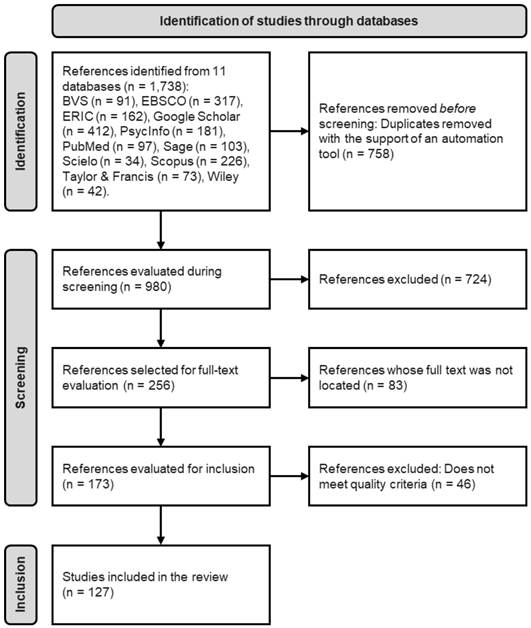 Note. Based on