
 Industrial policy for prematurely deindustrialized economies in the twenty-first century: integrating economic, social and environmental goals for Brazil *
Deindustrialization has not equally affected countries, either in terms of the share of manufacturing value added in GDP or in terms of industrial employment in total employment. Recent studies also show that, at a sub-sectoral level, the most innovative manufacturing groups are not deindustrializing in both value-added and employment shares. Though manufacturing still matters for sustaining economic growth, its subsectors have different capacities to generate and diffuse technical progress throughout the economy. Based on theoretical and empirical analyses, we suggest a mission-oriented and integrated industrial policy for Brazil by identifying the following priorities: reindustrialization; promoting innovation; generating formal jobs; reducing social inequality; engaging in the digital economy; and gradually replacing high carbon dioxide (CO2) emissions technologies with lower ones. We hope that the policy suggestions are helpful for other developing countries that have faced premature deindustrialization and stagnation in the last decades.
Keywords:
Premature deindustrialization; Economic development; Industrial policy; Developing countries; Brazil.
 Thumbnail
 Thumbnail
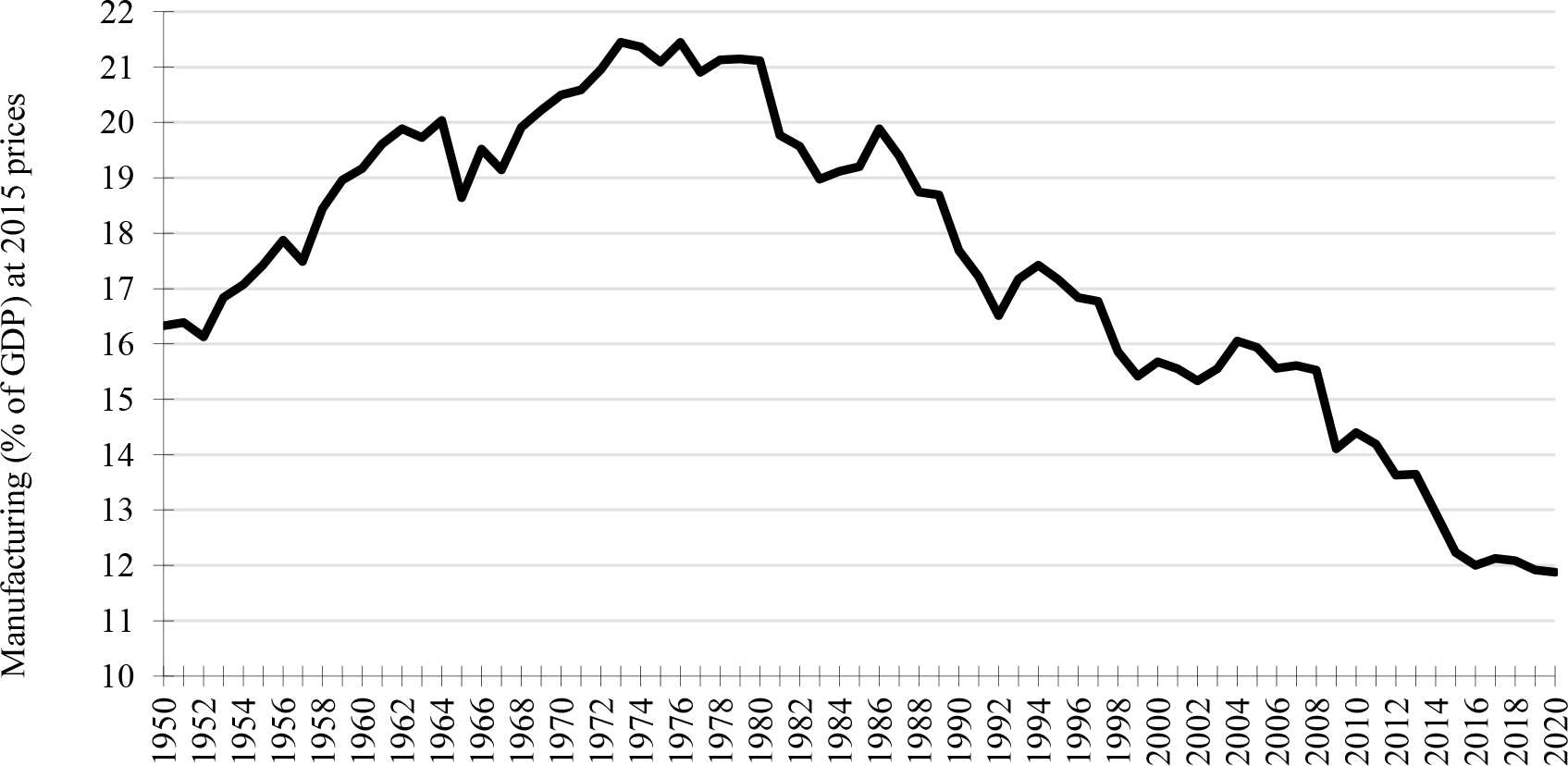 Source: Brazilian National Accounts System, Brazilian Institute of Geography and Statistics (IBGE). Authors’ calculation and elaboration.
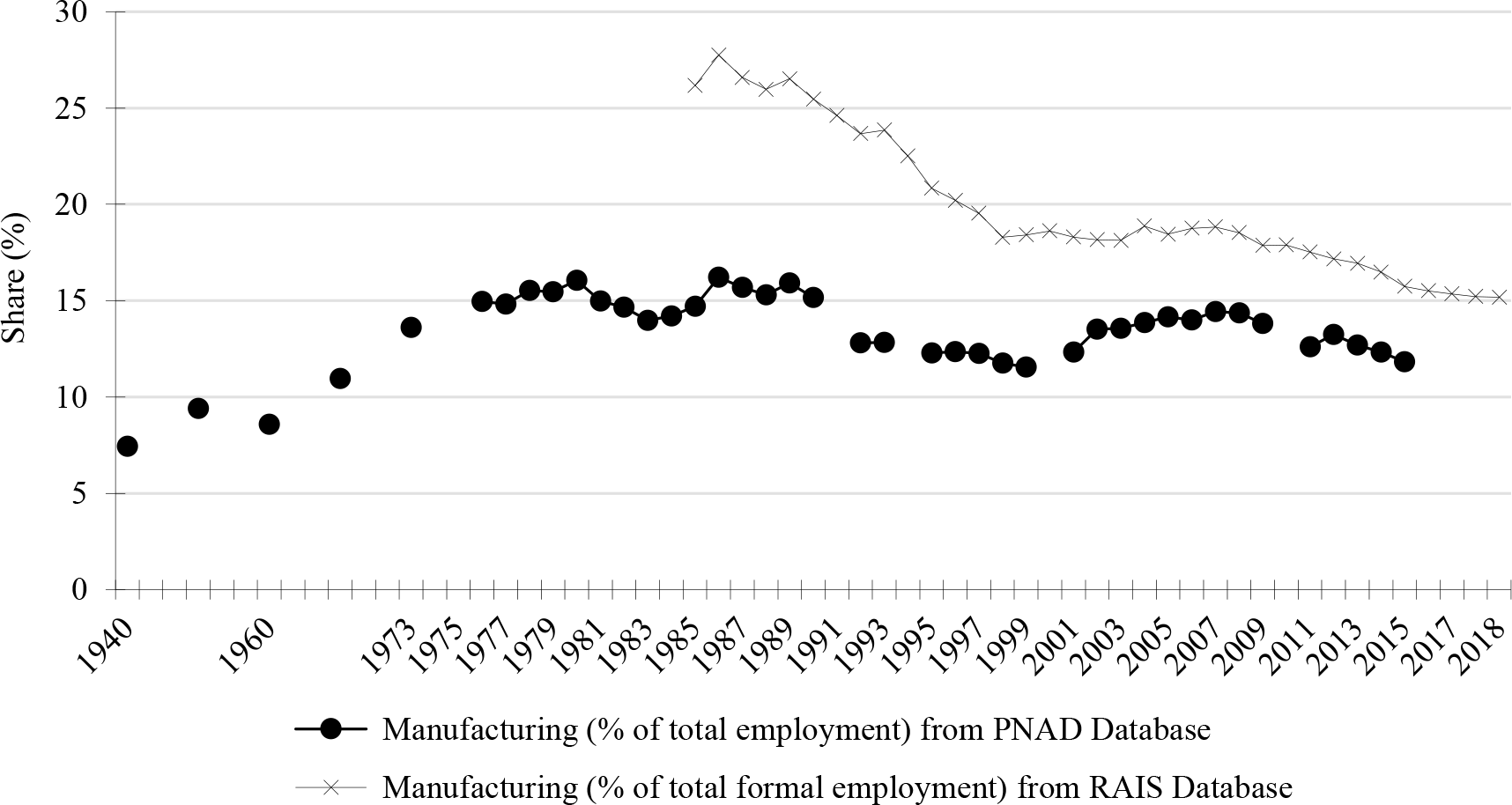 Source: National Household Sample Survey (PNAD)/IBGE; Annual Social Security Information Report (RAIS) from Ministry of Labour and Social Security of Brazil. Authors’ elaboration.