
 Industrial policy for prematurely deindustrialized economies in the twenty-first century: integrating economic, social and environmental goals for Brazil *
Abstract
Deindustrialization has not equally affected countries, either in terms of the share of manufacturing value added in GDP or in terms of industrial employment in total employment. Recent studies also show that, at a sub-sectoral level, the most innovative manufacturing groups are not deindustrializing in both value-added and employment shares. Though manufacturing still matters for sustaining economic growth, its subsectors have different capacities to generate and diffuse technical progress throughout the economy. Based on theoretical and empirical analyses, we suggest a mission-oriented and integrated industrial policy for Brazil by identifying the following priorities: reindustrialization; promoting innovation; generating formal jobs; reducing social inequality; engaging in the digital economy; and gradually replacing high carbon dioxide (CO2) emissions technologies with lower ones. We hope that the policy suggestions are helpful for other developing countries that have faced premature deindustrialization and stagnation in the last decades.
Keywords:
Premature deindustrialization; Economic development; Industrial policy; Developing countries; Brazil.
Resumo
Nem todos os países têm sido igualmente afetados pela desindustrialização, seja medida pela participação do valor agregado industrial no PIB, seja pela participação do emprego industrial no emprego total. Estudos recentes mostram que, em nível subsetorial, os segmentos industriais mais inovadores não enfrentam desindustrialização. Embora o setor manufatureiro seja o motor do crescimento econômico e do avanço da produtividade, os subsetores industriais detêm diferentes potenciais para gerar e difundir progresso técnico no sistema econômico. Com base na literatura teórica e em evidências empíricas, sugerimos, para o Brasil, uma política industrial integrada e orientada pelas seguintes “missões” prioritárias: reindustrialização; promoção da inovação; geração de empregos formais; redução da desigualdade social; engajamento na economia digital; e substituição de tecnologias com elevada emissão de dióxido de carbono (CO2) por outras com baixo CO2. A proposta pode ser adaptada por outros países em desenvolvimento que vêm enfrentando desindustrialização prematura e estagnação nas últimas décadas.
Palavras-chave:
Desindustrialização prematura; Desenvolvimento econômico; Política industrial; Países em desenvolvimento; Brasil.
1 Introduction
Since the 1970s, the global economy has changed, being driven by radical technological revolutions, like the information and communication industries revolution and, more recently, the so-called Industry 4.0 (or digital) revolution. Even though these new technologies have increased the role of tradable services in both the productive structure and global trade, it is misleading to expect the world will be transformed into a service economy. As Bianchi and Laboury (2018, p. 51, boldface ours) point out, this fourth industrial revolution (that is, the digital revolution), driven by robotics, artificial intelligence, big data, the internet of things, biotechnologies, genomics, new materials, and renewable energy, is characterized by the “real integration [not the separation] of science and production, and not just interaction as in the previous industrial revolutions.” This means that the role of manufacturing as an engine of growth, traditionally stressed by several authors (Young, 1928; Lewis, 1954; Kaldor, 1966; 1967; Cornwall, 1977), could be reduced but not eliminated since manufacturing will continue acting as the primary source of generation and diffusion of technical progress (Aiginger; Rodrik, 2020). Moreover, although new technologies are labour-saving, the actual impact of the digital revolution on employment is not so evident in the long run.
What is evident, however, is that deindustrialization has not equally affected countries worldwide. In developed countries, deindustrialization is driven by technological progress and has manifested in the drop of the share of manufacturing employment in total employment. Yet, in most developing countries, deindustrialization has prematurely accelerated and has resulted more in the decreasing share of manufacturing value added in total GDP than in the relative manufacturing employment share. Its explanatory factors vary from the high global competition (especially from China) to an industrial policy that is either inappropriately coordinated or lacking coordination with other policy spheres (Rodrik, 2016). But not all developing countries have suffered from premature deindustrialization. Asian countries provide a good example of the contrary, where the share of manufacturing value added increased from 13.5% to 19.1% on average between 1970 and 2017. In Latin American countries, this same share decreased considerably in the time period, from 18.6% to 13.9%. Premature deindustrialization measured as the share of manufacturing employment in total employment has also shown a similar behaviour: while this share rose from 11.9% to 14.5% on average in Asian countries in the period 1970-2017, it significantly dropped from 15.5% to 11.9% in Latin America in the same period (Araújo et al., 2021, p. 2).
Although many developing countries in Latin America and elsewhere suffer from deep premature deindustrialization, this phenomenon has not been observed at the manufacturing sub-sectoral level in developed or many Asian countries. Tregenna and Andreoni (2020) argue that most empirical studies calculate the degree of premature deindustrialization based on aggregate calculations of the share of manufacturing value added to total GDP or manufacturing employment in overall employment. Since the pace of labour productivity growth and employment creation varies within the manufacturing sector, the authors compare the manufacturing pattern by technology level in 1993 and 2010. They show empirical evidence that high-tech manufacturing sub-sectors are “monotonically increasing their shares of both employment and GDP.” They also conclude that medium-tech manufacturing sub-sectors show a small but not a dramatic drop in their value-added share; in contrast, their employment share indicates some tendency of stabilization. Dosi, Riccio, and Virgilitto (2021) reach similar results using different methodologies and regressions. They conclude that the most innovative manufacturing groups (basically machine and equipment and science-based manufacturing sub-sectors) are those exhibiting increases in both value-added and employment shares. However, paradoxically, their contribution to employment generation is relatively minor compared to the labour-intensive and scale-intensive manufacturing sub-sectors.
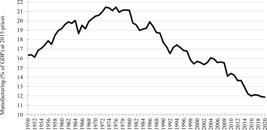
Brazil is one of the developing countries most severely affected by premature deindustrialization in the last decades. The share of manufacturing value added in total GDP (at 2015 constant price) decreased from 21.1% to 11.9% between 1980 and 2020 (Morceiro, 2021).1 As to the share of the manufacturing employment in total employment in Brazil, the result has traditionally been disappointing.2 According to the National Household Sample Survey (PNAD-IBGE/Annual Series), the highest labour share absorbed by the Brazilian manufacturing industry, corresponding to 16.2%, was reached in 1986. In 2018, this share had reduced to only 10.8%.3
Since manufacturing still matters, one of the primary roles of industrial policy is to combine instruments to reverse the premature deindustrialization observed in many developing countries, including Brazil. This strategy must focus on manufacturing subsectors that, by having a higher potential to innovate as well as spread technical progress and dynamic economies of scale, can contribute to accelerating economic growth and both overall employment and high skilled jobs. However, it is worth stressing that choosing the most innovative subsectors is dependent on which are compatible with each country’s potential to develop capabilities.
But in line with the Neoschumpeterian national innovation system approach, industrial policy is viewed systemically and conceived as long-term mission-oriented national plans (Mazzucato, 2021). Therefore, it must be connected and harmonized with the other economic and social spheres, such as science & technology, education & training, physical & human infrastructure, demand-side policies that enlarge the market (such as selective import tariffs, local content, government purchases, etc.), and, last but not least, macroeconomic policies. As stated, the most innovative subsectors are reflected in their compatibility with each’s country potential to develop capabilities.
In light of the above, this paper has two goals: (i) analyze reindustrialization as an opportunity to integrate economic, social, and environmental goals in developing countries, with particular reference to Brazil; and (iii) based on the theoretical analysis and some empirical data, suggest industrial policy for Brazil as a mission-oriented national plan by identifying the main missions and addressing the main sub-sectoral priorities. We hope that the policy suggestions are helpful and can be adapted for similar developing countries that have faced premature deindustrialization and stagnation in the last decades.
The remainder of this paper is organized as follows. Section 2 briefly discusses why the recovery and diversification of the manufacturing sector still matter for accelerating technical progress and the catching-up trajectory in prematurely deindustrialized economies. Section 3 presents the case of Brazil by discussing reindustrialization as an opportunity to integrate the economic, social, and environmental agenda for the twenty-first century. In this section, we identify the set of economic, social, and environmental problems through a brief history and descriptive statistics data, with emphasis at the sub-sectoral level. Section 4 uses these results to suggest a set of proposals for mission-oriented industrial policy and choose the priorities at the disaggregated sub-sectoral level. Finally, Section 5 draws the main conclusions.
2 What do we know about industrialization, premature deindustrialization, and stagnant economies?
The literature on economic development discusses the role of the manufacturing sector as an engine of growth. However, this particular role is not present in the neoclassical framework, for which all sectors work with technologies subject to constant returns to scale. Moreover, the neoclassical approach implicitly incorporates the hypothesis that all sectors produce goods with the same income elasticity of demand. From the structuralist view, in contrast, at least two empirical observations make the manufacturing industry, differently from the traditional primary and tertiary sectors, act as an engine of growth: (i) it is the primary source of creation and diffusion of technical progress in the economy as a whole; and (ii) as a result of the cumulative effects of technical progress, it is subject to static and dynamic returns to scale (Marx, 1867; Young, 1928; Kaldor, 1966, 1967; Dosi; Pavitt; Soete, 1990).
Based on the historical evolution of capitalism since the Industrial Revolution, in the eighteenth century, the structuralist tradition argues that economic development is marked by the following stylized facts or empirical regularities: (i) The transition of an underdeveloped to a developed economy involves a process of structural change through which labour surpluses are shifted from the sector of lower labour productivity (mainly traditional agriculture) to the higher one (manufacturing) [Lewis, 1954]; (ii) As this latter sector has a high potential to create and spread technical progress throughout the economy, it commands the average growth rates of aggregate labour productivity and long-term economic growth (Kaldor, 1967; Prebisch, 1949; 1951); (iii) As this process is accompanied by an intense urbanization and a growing demand for services (transportation, retail, personal and governmental services, etc.), part of the labour shifting is absorbed by the service sector; (iv) Even when the economy reaches a per capita income level close to the average of the world economy, it continues showing significant labour productivity gaps across sectors, notwithstanding that such gaps tend to decrease over time (Kaldor, 1967); and (v) As the labour surplus is eliminated, the overall labour productivity growth, rather than the structural change mechanism, depends on the capacity of each sector to generate or incorporate technical progress from both manufacturing and high-tech services, such as machines & equipment, robotics, artificial intelligence and so on (McMillan; Rodrik, 2011).
The debate on deindustrialization revolves around whether or not the manufacturing sector loses its capacity to act as an engine of growth when a continuing drop of its value-added share in total GDP or its labour share in overall employment is observed. Indeed, deindustrialization goes back to Kaldor’s (1966) investigation on the causes of sluggish economic growth in the United Kingdom through the 1960s.
The debate gained momentum when Rowthorn (1994), based on a sample of 70 countries, interpreted deindustrialization (measured as the share of manufacturing employment in total employment) as a natural phenomenon that followed an inverted U-shaped curve: it initially rises as per capita income increases, then reaches a maximum, and finally drops after per capita income hits a turning point. Later, Rowthorn and Ramaswamy (1999), based on a sample of 18 industrialized countries for the period 1963-1994, showed that deindustrialization in these countries manifested from a drop in the manufacturing employment share rather than in the value-added share. By accepting that the manufacturing sector still works as an engine of growth, they point out that its higher labour productivity growth provokes a decrease in relative prices of manufacturing goods, sustaining, therefore, the demand stimulus for them. In other words, at least in advanced countries, natural deindustrialization is predominantly understood as a result of technological progress.
In addressing the issue of premature deindustrialization, Palma (2005) and Dasgupta and Singh (2006) showed that deindustrialization does not appear naturally in developing countries. In his seminal paper, Palma (2005),4 based on a sample of 105 countries in the period 1970-1998, shows empirical evidence that the average per capita income turning point from which countries entered into deindustrialization drastically reduced from US$20,645 to US$8,691 between 1980 and 1998 (at PPP 1985 US dollars). Thus, Palma argues that since the early 1990s many developing countries (especially in Latin America) have prematurely deindustrialized (that is, before reaching a higher per capita income turning point) not because of the impact of technological progress or globalization. Instead, this phenomenon has prematurely occurred because of the rapid liberalizing economic reforms (trade liberalization, financial and credit markets, external capital openness, etc.) that were adopted as “shock therapy” (Lin; Chang, 2014). Moreover, as Palma (2005) points out, most Latin American governments, differently from Asia’s, have replaced an agenda prioritizing a development strategy towards the catching up for one concentrated in price stabilization.5
A new strand of research that has emerged in the past few years has explored sub-sectoral heterogeneity and different kinds of deindustrialization. Morceiro (2018) is the first author to show empirical evidence on Brazilian premature deindustrialization at sub-sectoral level. Tregenna and Andreoni (2020) are the first to present empirical evidence on worldwide deindustrialization using a manufacturing sub-sectoral analysis from a sample of 67 countries. They show that while the inverted U-shaped curve is evident for low and some medium-tech sub-sectors, high-tech manufacturing is the group that does not follow this behaviour. Instead, this latter group shows a rise in both manufacturing value added and employment shares, suggesting that “the more specialized, sophisticated and high-tech a manufacturing activity, the less concave is its pattern of development, becoming a monotonically increasing line and even a convex curve for very high-tech sub-sectors” (op. cit., p. 27). The authors (op. cit., p. 28) also observe that “this relationship stands even in the case of capitaland robot-intensive sectors such as automotive production, suggesting that premature deindustrialization does not necessarily have to lead to a reduction in employment.”
Dosi, Riccio, and Virgilitto (2021) reach similar results using different methodologies and regressions. They show that globalization has accelerated deindustrialization since the early 1990s, while denying that it can be treated as a natural phenomenon driven by income growth and technical progress. Their paper shows sound evidence that there are several varieties of deindustrialization, both on aggregate and sub-sectoral terms. The main contribution of their study is to explore the empirical evidence of deindustrialization at the sub-sectoral level within the Neoschumpeterian and the evolutionary dynamics of innovation and technical progress. As the authors point out, “potato chips” do not have the same dynamic impact of “microchips” on labour productivity and growth dynamics. Therefore, they break down the manufacturing sector into four groups according to Pavitt’s (1984) classic taxonomy, which is based on factor and technological content, economies of scale intensity, competitive position on the supply chain, and science and knowledge. These groups are “supplier dominated” (basically natural-resource based and labour-intensive sub-sectors), “scale intensive” (capital intensive industries such as paper, plastics, refined petroleum products, basic metals, and motor vehicles), “specialized suppliers” (machinery and equipment, electrical machinery and other transport equipment), and “science-based” (chemicals, office, and computing machinery, communication equipment, and medical, precision and optical instruments).
By using a broad database for 23 manufacturing industries of 173 countries from 1963 to 2013, Dosi, Riccio and Virgilitto’s main findings are as follows:6 (i) Not all groups show the typical U-shape curve: the tests corroborate canonical U-shape only for supplier dominated and scale intensive groups, while science-based manufacturing figures out as an exception since it shows a rising trend in both value-added and employment shares; (ii) By comparing the tendencies in developed and developing countries, we see that supplier dominated follows a solid trend of deindustrialization, with science-based and specialized suppliers growing both in terms of value-added and employment shares; in the case of scale intensive manufacturing, the results suggest a reallocation of production from developed to developing countries in the last decades as both value-added and employment shares experience a sharp decline in the former, while the value added shows a vigorous increasing trend in the developing world (the employment share does not vary); and (iii) In conclusion, the most innovative manufacturing groups are those revealing increases in both value-added and employment shares, although, paradoxically, their contribution to employment generation is relatively minor in comparison to the supplier dominated and scale intensive ones.
These empirical results have a clear policy implication: the new segments of the service sector associated with the digital economy (robotics, artificial intelligence, big data, the internet of things, etc.) may change but do not rule out the role of the manufacturing sector for sustaining growth. This implication means that manufacturing continues to act as fuel for low and middle per capita income economies to catch up. Several reasons make us support such a perspective. First, manufacturing is responsible for around two-thirds of total private research and development (R&D) in the world and between 53% and 73% of all patents issued in the most innovative countries, such as the United States, Japan, and Germany (Manyika et al., 2012).7
Second, as Galindo-Rueda and Verger (2016) documented, manufacturing sub-sectors possess most of the technological efforts (measured by the ratio of R&D to value added) among OECD countries.
Third, as Bianchi and Labory (2018) argue, the so-called Industry 4.0 tends to actually integrate with manufacturing throughout the twenty-first century rather than merely interact. Therefore, it is more appropriate to understand the manufacturing sector and the medium and high-tech services as an ecosystem of complex technologies that generate dynamic feedback than isolated activities.
And fourth, both poor and developing countries cannot directly jump to medium and high-tech services without establishing a relatively diversified and competitive manufacturing sector. As Amsden (2001) documented, there is no historical experience in which a country achieved high per capita income without industrialization. The challenge for prematurely deindustrialized developing countries is not to directly jump to the new high-tech services. Rather, it is to recover their old manufacturing industry and gradually upgrade to more sophisticated technologies in manufacturing, while, simultaneously, incorporating the new services. This reindustrialization must also gradually replace technologies with high carbon dioxide (CO2) emissions for lower ones. This necessity is justified not only for ethical but also for economic reasons since the international community will rightly press for a greener global economy, which will have implications for countries that want to play and position themselves in the international competitive game.
In the late 1960s, Kaldor (1967, p. 54) stressed that “there can be little doubt that the kind of economic growth, which involves the use of modern technology and eventuates in high real income per capita, is inconceivable without industrialization.” Empirical evidence on premature deindustrialization based on sectoral heterogeneity shows that Kaldor’s statement continues to be valid even today. We share Aiginger and Rodrik’s (2020, p. 15) theoretical and normative views according to which manufacturing will continue to play its central role in the game of technological change and that “industrial policy is a systemic approach that coordinates innovation, regional policy, and trade policy, with manufacturing at its core while affecting upstream and downstream industries, sectoral change, clusters, and networks.”
3 The case of Brazil: identifying the main problems
Brazil is a clear case of a country that, after following an initial trajectory of catching up between 1950 and 1980, has entered into premature deindustrialization and has fallen behind since then (Nassif, 2008; Nassif; Feijó; Araújo, 2015). Brazil’s growth (1950-1980) and stagnation trajectories (1981-2020) involve particularities that can be summarized as follows. First, during the import-substitution strategy (1950-1980), governments designed and implemented ambitious industrial policies (National Plans of Development) by conceding domestic protection against imports and increasing and diversifying exports, especially manufactured goods. This left plenty of problems on both the micro and macroeconomic sides: lack of selectivity, high import tariffs, low government compliance, extreme foreign technological dependence, an increase in social inequality on the microeconomic side, and complacency with high inflation rates and external indebtedness on the macroeconomic side. Despite all these problems, the Brazilian economy experienced high dynamic efficiency, expressed by a significant growth of real annual GDP (7.5%) and labor productivity (4.5% p.y.), which largely offset the static inefficiency of resource allocation (Nassif, 2003; 2005).
In contrast, chronic inflation and external debt crises (1981-1994) and the liberalizing economic reforms from the 1990s onwards marked the period 1981-2020. After the 1990s, particularly, the Brazilian government embarked on a set of radical reforms suggested by the Washington Consensus, such as rapid trade liberalization, privatization, financial deregulation, and external capital openness, etc., most of which were adopted as “shock therapy.” As a result, between 1981 and 2020, the improvement in static efficiency of the Brazilian economy, expressed by the consumers’ access to cheaper imported goods, did not translate into higher dynamic efficiency. Consequently, Brazil experienced sluggish economic growth (GDP growth at 2.0% p.y., lower than the world’s at 2.7% p.y.), stagnant labor productivity growth (only 0.3% p.y.), and premature deindustrialization.
The Covid-19 pandemic crisis evidenced several economic, social, and environmental problems that have afflicted Brazil for a long time. Identifying these central problems helps map out a guide for designing a mission-oriented industrial policy to renew the Brazilian trajectory towards catching up and improving the population’s well-being. The remainder of this subsection will be used to proceed with this task, which will help us to indicate such primary missions.
Figure 1 gives a long-term overview of the rise and fall of industrialization in Brazil in the last century. Figure 1 shows a continuing rise in the share of the manufacturing GDP in the Brazilian economy between 1950 and 1980, followed by a monotonical decline since then. Between 1980 and 2020, the share of manufacturing decreased from 21.1% to 11.9%. This indicates a severe case of premature deindustrialization, where the process initiates at a relatively low per capita income level. In 1980, Brazil’s per capita income stood at US$11,000 in PPP 2016 terms, representing only 60% of the per capita GDP associated with the peak of the inverted U curve that characterizes normal deindustrialization (Morceiro; Guilhoto, 2023).
Since 1980, there has been widespread premature deindustrialization observed at the sub-sectoral level, both in lower tech sub-sectors and higher tech sub-sectors, as indicated by Morceiro and Guilhoto (2023) and summarized in Table 1. The pharmaceutical industry stands as an exception, showing no deindustrialization trend (Table 1). Lower tech sub-sectors began their deindustrialization trajectory as early as the 1970s, a period when Brazilian per capita GDP was significantly low at US$6,800 in 2016 PPP terms. Among the lower tech industries experiencing deindustrialization, various categories stand out, including labor-intensive sub-sectors such as textiles, wearing apparel, leather, and footwear, resource-based sub-sectors like food, beverages, and tobacco, and scale-intensive sub-sectors encompassing paper, basic metals, non-metallic minerals, and rubber and plastics.
However, the most concerning cases of premature deindustrialization emerge from the highly technologically intensive sub-sectors, particularly science-based industries like chemicals and pharmaceuticals, and specialized suppliers like machinery and equipment and electrical equipment. This observation aligns with the studies conducted by Dosi, Riccio, and Virgilitto (2021) and Tregenna and Andreoni (2020), which propose that such advanced technological industries should not demonstrate a deindustrialization trend or, if present, should occur only in specific sub-sectors when per capita GDP exceeds US$30,000 at 2020 prices. Consequently, the premature deindustrialization in Brazil carries negative implications for the country’s future scientific and technological development (Morceiro and Guilhoto, 2023).
The remarkably low real growth rate observed across all sub-sectors between 1980 and 2020 is noteworthy (see the last column of Table 2). According to Morceiro and Guilhoto (2023), all sub-sectors experienced real growth below the growth rate of the working-age population, which averaged 2.28% annually during this period. Particularly striking is the fact that the real growth of higher-tech sub-sectors was four times slower than the growth of the working-age population. In advanced countries, deindustrialization started at a late stage of demographic transition (Morceiro; Guilhoto, 2023) and yet real growth of the most technological industries far outpaces population growth. Such empirical evidence adds even more intensity to Brazil’s severe premature deindustrialization process.
There are several causes to explain the low performance at the sub-sectoral level in Brazil. Studies often point to an appreciated real exchange rate and high real interest rates as the main factors explaining premature deindustrialization (Nassif; Bresser-Pereira; Feijo, 2018; Morceiro; Guilhoto, 2023). But there are certainly other factors such as competition with Asian countries (especially China) and fiscal rules introduced to restrict governmental spending, especially public investments (Iasco-Pereira; Morceiro, 2024).
Given the discontinuity of the employee database, we present two different data in Figure 2: one for the manufacturing employment share in overall employment (formal and informal) from 1940 to 2015; and one exclusively for the manufacturing employment share in the total formalized work. As expected, there was an increase in manufacturing employment share in overall jobs until the early 1980s, reflecting the absorption of traditional agricultural labour surplus during the initial industrialization trajectory. Yet, the Brazilian employment share in the manufacturing sector never surpassed the peak of 16.2% in 1986, contrary to several development experiences (Felipe et al., 2020). The manufacturing employment share has fluctuated between 10.5% and 15% throughout 1990 and 2018, confirming that Brazilian deindustrialization is prematurely manifested much more by the fall in the value-added share than in the employment share. The top line in Figure 2 reveals that, despite the employment in the manufacturing sector representing a large share of total formalized jobs in Brazil, that share falls to 15.2%, against the peak of 27.7% registered in 1986.
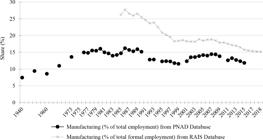
Manufacturing employment share in total employment in Brazil by two different databases (1940-2018; in %)
Regarding the employment structure in Brazil, the workforce employed in the formal market represented almost half of the overall employment in the Brazilian economy in 2018.8 Data also contrast the very low formality of the labor force in agriculture, forestry, and fishing (which represented 12.7% of formal employment in 2018) compared with the other sectors. This result is not surprising since Brazilian agriculture still maintains its dual characteristics of precarious conditions for workers in the Northeast region and better well-being in the modern Southeast, South, and Midwest. Based on the 2017 Brazil Agriculture Census, Souza, Gomes, and Alves (2020, p. 39) estimate that the income inequality in Brazilian agriculture is one of the highest in the world. The Gini index (closer to 1 means higher income concentration) at the firm level jumped from 0.85 to 0.90 between 2006 and 2017. The workforce’s higher formalization occurs in the medium and higher-skilled labor services, especially in the public sector and financial activities. Except for construction, the other segments of the Brazilian industry (including manufacturing) also have a high degree of labor formalization.
The agricultural income concentration impacts both high overall social inequality and regional imbalance in Brazil, whose roots have historical, economic, and political causes that are out of the scope of our study.9 Even so, it is still worth registering some inequality indicators in Brazil. First, the Gini index related to aggregate income reveals that accelerated economic growth between 1950 and 1980 is not safe against income concentration. The Gini index was still extremely high in 1981 (0.579), peaked in 1989 (0.633), and due to government social transfers and real increases in the minimum wage in the second half of the 2000s, fell to 0.519 in 2015. Then, with the 2015-2016 recession and low growth afterward, it rose again to 0.534 in 2019.10
Second, despite still being high, both the poverty and the extreme poverty ratios considerably decreased in Brazil, especially after the 2000s, due to several governmental social programs of income transfers to poor people. The share of the population living with less than 5.50 US dollars a day dropped from 41.1% to 19.6% between 2001 and 2019 (the world, from 65.2% to 43.5%), and those living with less than 1.90 US dollars a day reduced from 11.5% to 4.6% in the same period (from 26.9% to 9.3% in the world).11, 12
Third, income disparity also appears between Brazil’s geographic regions. Despite concentrating 35.9% of Brazil’s population in 2018, the North and Northeast regions had an average per capita income of around 9,174 PPP US dollars, much lower than the country’s per capita income of 15,513 PPP US dollars. In particular, the Northeast, considered the poorest region in the country and responsible for 27.2% of the total population, had a per capita income corresponding to 53.2% of the country’s per capita income and only 40.8% of the Midwest’s per capita income, Brazil’s wealthiest region.
The stagnant labor productivity growth and the sluggish economic growth in Brazil in the last decades are explained, at least partially by premature deindustrialization and a macroeconomic regime relatively unfriendly to capital accumulation and technical progress. Nassif, Feijo, and Araújo (2020) stress that the Brazilian macroeconomic regime is more biased towards price stabilization than other long-term goals, especially stimulus ones to boost potential output through capital accumulation and innovation. The authors (op. cit., p. 749) show empirical evidence that, in the face of significant capital movements, an orthodox inflation targeting regime and a procyclical fiscal policy have been “perpetuating trends of high real interest rates, domestic currency overvaluation and low economic growth in Brazil in the last two decades.” Additionally, by regressing Brazil’s labor productivity on several explanatory microeconomic and macroeconomic variables, Nassif et al. (2020) show that the stagnation of the Brazilian economy between 1995 and 2011 is explained by the overvaluation trend of its currency, the reprimarization of the export basket (“a regressive specialization”) and the high real interest rate prevailing in the period.
Nassif, Bresser-Pereira, and Feijo (2018) also point out that, in the absence of harmonization between the industrial policy and the macroeconomic regime, the former cannot boost productivity and structural change. In the authors’ (op. cit., p. 14) words:
The main role of a consistent macroeconomic regime is, thus, to widen the policy space for seeding good results from the industrial policy. [Moreover], consistent macroeconomic policies create an environment favorable to capital accumulation, innovation, and structural change oriented to economic development and catching up.
In Brazil, for instance, the inability of the three industrial policy programs adopted between 2004 and 2014 to boost investment, innovation, and reverse premature deindustrialization is explained, in part, by the high real interest rates and overvaluation of the Brazilian currency prevailing in most of the period.13 The reason is apparent: as the former raises capital costs and the latter reduces the expected profit rate, they negatively affect investment and innovation. Nassif, Feijo, and Araújo (2020, p. 760-761) calculate that, between 2006 and 2011, not only was the Brazilian real overvalued (except during transitory short periods) but also the real interest rate was around 6.5% p.y, on average (against 10.5% between 1999 and 2005). It is not surprising that such an economic environment reflects in regressive trade specialization, that is, an export basket with a high share of commodities and imports concentrated in goods of high income-elasticity of demand, as evidenced in empirical studies (Nassif; Feijo; Araújo, 2015, Nassif; Castilho, 2020).14Tables 3 and 4, which use a taxonomy adapted from Pavitt’s (1984) classification to decompose the groups in the manufacturing sector, confirm such a trend.
Table 3 shows the changes in the Brazilian export composition. It registers the rapid augmentation of the primary product share and the significant drop in manufactured goods in total exports between 1990 and 2020. In this period, Brazil developed its extreme dependency on commodity exports (represented by the sum of primary goods and resource-based manufactured goods), which reached 65.8% of total exports in 2020 (against 38.8% in 1990). In addition, there was a fall in the shares of all manufacturing groups, particularly in labor-intensive and scale-intensive goods.
Table 4 presents the changes in the Brazilian import composition. It confirms Brazil’s extreme dependency as a manufactured goods importer and the country’s almost self-sufficiency as a producer of primary goods. Between 1990 and 2020, the share of manufactured goods in total imports increased from 69.1% to 91.8%. Except for the resource-based group, the import shares of all the other groups have grown, especially the more technologically sophisticated ones (scale-intensive, specialized suppliers, and science-based).
Despite Brazil’s significant total trade surpluses in the last decade, the high volatility of international commodity prices does not save the country from the long-term balance of payments constraints. Moreover, Brazil’s high dependency on commodities is not safe, for the eventual transitory gains obtained by commodity-price booms - the “commodity lottery,” using Diaz-Alejandro’s (1984) term - do not translate into permanent gains.15
The theoretical discussion of Section 2 and the empirical evidence of this subsection draw four primary missions for an industrial policy that could potentially put the Brazilian economy towards a trajectory of catching up: first, reindustrialization and industrial revitalization; second, innovation promotion, technical progress, and creation of dynamic comparative advantages; third, fostering employment, job formalization, and the reduction of social and regional inequalities; and fourth, boosting investment in infrastructure. In addition, given the current digital revolution and the world’s transition to a greener economy, it is necessary to add two other missions to these primary missions: integrating Brazilian activities into digital technologies and gradually replacing technologies with high carbon dioxide (CO2) emissions for lower ones.
Section 4 will analyze the motivations and priorities related to these mission-oriented industrial policies. It is worth anticipating that gradually transforming the Brazilian economy into a green economy is both an ethical issue and an economic one. As to this latter issue, there is a definite global trend to make the economy green and sustainable, with important implications for international manufacturing competitiveness through trade agreements and pressure from societies for carbon-neutral production processes and more efficient green products. Moreover, as we shall argue in Section 4, adopting green technologies can open enormous windows of potential opportunities for Brazil when most countries in the world economy will (or will have to) do the same. Whatever these opportunities are, one of Brazil’s priority challenges is to improve land use and fight against and reduce deforestation, which was responsible for 44% of the carbon dioxide emissions in 2018 (SEEG, 2019, p. 4).16
4 A mission-oriented industrial policy proposal for Brazil
This section aims to identify the general guidelines of an industrial policy to tackle structural bottlenecks and significant obstacles to socioeconomic development in Brazil. Despite being advanced compared to most developing countries, it is still incomplete when compared to developed countries. In other words, the objective is not to design policies with associated instruments but to draw a generic roadmap with priorities to build consensus - note that the missions use existing industrial policy instruments, but in a combined way with the specific purpose of increasing the success rate of the policy. To fulfill our objective, we base our mission-oriented innovation policies framework on Mazzucato’s (2018; 2021) and Kattel and Mazzucato’s (2018). However, the mission-oriented industrial policies we propose are broader and do not focus only on innovation.
For Brazil to achieve successful results with the missions, the business environment needs to improve significantly to enable innovation and international competitiveness. A tax reform that eliminates regressive tax and reduces the complexity of indirect taxes is vital - a topic that forms a consensus in the country. Establishing a trade policy more consistent with import tariffs at a moderate level so that firms can learn and develop imitative and innovative capabilities also forms a consensus (Viotti, 2002). Thus, any trade liberalization, if adopted, should not be introduced using linear import tariff cuts (across-the-board), but, rather, as a case-by-case policy instrument (“concertina”) for accelerating innovators’ learning curve and avoiding excessive imports of close substitute goods. In addition, it is essential to adjust the macroeconomic regime (monetary, fiscal, and exchange rate policies) to stimulate domestic production, in line with Nassif, Bresser-Pereira, and Feijo’s (2018) proposals.
Subsection 4.1, which follows, presents the priority missions to be pursued in the coming decades, and Subsection 4.2 connects industrial policy to these missions.
4.1 Wide-ranging priority missions
The theoretical discussion in Section 2 and the historical and empirical diagnoses of the Brazilian economy presented in Section 3 are the basis on which we justify and indicate six priority missions to be pursued in the long term, summarized in Table 5.
The main challenges and obstacles to Brazil’s development are included in many of the 17 goals of the United Nations Sustainable Development Goals (SDGs)17, as described in the second column of Table 5. For Brazil to restore and sustain its development trajectory as well as surpass its middle-income level, it is necessary to boost reindustrialization (Mission 1). This means not only increasing the value-added share of the manufacturing sector but also taking advantage of opportunities to update its technological structure, including the gradual substitution of low-carbon dioxide technologies for high ones (Mission 6). Reindustrialization means to restore Brazil’s industrialization process that had been interrupted at the end of the 1970s. It is important to stress that Mission 1 can also be addressed to other developing countries suffering from premature deindustrialization.
At the same time, it is necessary to innovate more (Mission 2), create formal and good jobs, as well as reducing social and regional inequalities (Mission 3), advance in the digital economy (Mission 5) and take action to have a more carbon neutral and sustainable production activity (Mission 6). Additionally, a significant expansion and revitalization of infrastructure (Mission 4) is also required. The motivation for choosing infrastructure as a mission is because Brazil has severe deficiencies in areas such as sanitation, access to treated water, mass transportation in populous cities, and information and communication networks - vital for advancing digitalization (Mission 5) -, not to mention deep spatial inequality in the coverage of physical (roads, railways, electricity), social (sanitation, water, urban mobility) and technological (internet and telecommunication) infrastructure. It is challenging to start an industry in regions with inadequate infrastructure such as roads and the internet. Industrializing backward regions (Missions 1 and 3) thus depends on local capabilities and industrial policies. In addition, significant infrastructure works are an umbrella for industrial policies, as they demand industrial goods (e.g., chemical inputs, construction materials, and custom machinery and equipment) and engineering and R&D services.
The synergies among the six missions should be explored to maximize gains, as proposed by Sachs et al. (2019), of actions seeking to optimize the results of the SDGs based on their synergies - for example, investing in innovation (Mission 2) to produce wind turbines (Missions 1 and 6) and their electronic components (Missions 1 and 5) and installing them in the Northeast of the country (Missions 3 and 4). Note that infrastructure can also contribute directly and indirectly to all six missions and generate many jobs and high social return externalities.18
It is worth mentioning that Brazil has already had successful examples of combining these missions. First, it turned the Midwest region (Brazilian savannah) into a large modern agricultural producer based on technologies19 developed by Embrapa in partnership with public universities (Andreoni; Tregenna, 2020; Mazzucato; Penna, 2016). Second, it developed and used sugarcane ethanol as an alternative to gasoline in the 1970s, 1980s, and 1990s and developed flex-fuel engines (ethanol and petrol) for cars in the 2000s (Mazzucato; Penna, 2016). Third, Petrobras’s technology programs have extracted offshore oil in increasingly deeper waters with several world records since 1979 (Mazzucato; Penna, 2016). These three examples and the State’s action via public research institutes and sub-sectoral regulation mentioned in Subsection 3.2 show that Brazil can coordinate, define, and obtain good results with the missions. But for this to continue, it is necessary to establish priorities since a large share of public R&D resources are not yet results-oriented (De Negri, 2021).
In January 2024, the federal government launched a new industrial policy called Nova Indústria Brasil (Brazil, 2024) with a focus on six priority missions very similar to the ones we propose in this article, except for missions 1 and 6, which cover the agro-industrial chains and the national defense sector, respectively. Therefore, there is a lot of overlap between the missions we propose, and the new industrial policy recently released.20 It is not objective here to evaluate the NIB, as it is a plan still in the process of improvement - and execution - in terms of target segments, instruments used, synergies between missions and required goals.21
4.2 Target sub-sectors linked to priority missions
We selected sub-sectors targeted by industrial policy considering the priority missions. Furthermore, our focus lies on sub-sectors wherein Brazil holds potential and where government interventions, such as public procurement, investments, development banks, and sectoral regulations, can be employed to stimulate growth. Below is the list of sub-sectors:
-
Health and pharmaceutical complex (Missions 1 and 2). Brazil has many key players in the health innovation system, such as public research institutes (Fiocruz and Butantan), big pharma companies, and one of the largest public health systems in the world. In this complex are science-based industries (pharmaceutical and chemical), specialized suppliers (medical-hospital equipment), and scale-intensive manufacturing (plastics linked to hospital supplies). The pandemic has underscored the crucial need of a more robust public health system, and it is the government that holds the capacity to strengthen the entire industrial chain of this complex by making substantial public procurements for the public health system (named SUS in Brazil) and by harnessing the capabilities of public research institutes for technological requisitions, such as the development of vaccines.
-
Reindustrialization of niches with more significant potential to generate tech jobs and dynamic comparative advantages (Missions 1 and 2). Policymakers can select a few niches from science-based, specialized suppliers and scale-intensive manufacturing. For example:
-
Chemical inputs such as fertilizers and pesticides, since the country has a high trade deficit and substantial agricultural demand.
-
Aerospace industry niches, as there are already productive and technological capacities from Embraer - a leading company in the value chain that produces regional jets and is entering the flying car segment - and ITA. Public procurements directed to the defense and security area can guarantee a minimum demand to make projects viable, as the government did in the recent past to develop the KC-390 military freighter.
-
Develop the entire electric motors and batteries chain for electric vehicles, including the charging infrastructure (Missions 1, 2, and 4). Note that all the world’s largest automakers have factories in Brazil.
-
-
Industrialization of backward regions, especially in more populated areas in the North and Northeast (Missions 1 and 3). The government through national (The Brazilian Development Bank - BNDES) and regional (Banco do Nordeste) development banks and regional and sectoral regulations can encourage industrialization from peripheral areas where labor is still cheap through labour-intensive and resource-based manufacturing. In the more peripheral regions, they will need a mix of policies, such as expanding infrastructure (Mission 4) through public investments, income transfers to create markets (Mission 3), and professional training and innovation policies (Mission 2). It is noteworthy that income transfers via successful programs such as Bolsa Familia or Emergency Aid used during the pandemic have a high marginal propensity for mass consumption linked to the sub-sectors of food, clothing, footwear, construction, and retail trade, which are all labour-intensive ones (Mission 3).
-
Information services, mainly software (Missions 2 and 5). Currently, information services invest in R&D as much as in more technologically sophisticated manufacturing (Galindo-Rueda; Verger, 2016) and play a vital role in the leading technologies of the digital economy - such as artificial intelligence, machine learning, cloud computing, advanced robotics, virtual reality, etc. These technologies can revitalize manufacturing (Mission 1) due to the growing symbiosis between industry and services. By utilizing the resources of BNDES and the innovation agency FINEP, the government has the potential to nurture this sector by promoting digitalization and industrial modernization.
-
Sub-sectors linked to infrastructure expansion and green economy (Missions 1, 2, 4 and 6). For example:
-
Capital goods on demand are linked to social infrastructure (human transportation such as subways and commuter rail) and physical infrastructure (freight trains and port equipment).
-
Telecommunications equipment is linked to the expansion of technological infrastructures, such as the 5G network. Expanding the coverage and speed of the broadband network can reduce spatial inequalities (Mission 3), allow society to adapt more quickly to digital technologies (Mission 5), and enable new business models in peripheral regions.
-
Chemical inputs and plastic products are linked to the expansion of basic sanitation.
-
Energy generation, transmission, and distribution equipment, including clean energy such as photovoltaic panels and wind turbines (Mission 4).
-
The government possesses the capacity to take direct action in the early stages by increasing public investments, which currently remain at a suboptimal level, and enhancing regulations to boost public-private partnerships in infrastructure. By doing so, the broader industrial chain interconnected with physical, social and technological infrastructure projects would benefit.
Frequently, Brazil is at risk of an energy crisis due to the low levels of the water reservoirs that maintain the hydroelectric plants. Therefore, the country needs to expand and diversify its energy matrix. Solar and wind energy are great alternatives because the country has the highest rate of solar irradiation in the world.
All the above policies generate jobs, especially those linked to infrastructure expansion, income transfers, and the industrialization of light industries in backward regions. In addition to these, two other policies are capable of increasing employment. The first is linked to incentives to the construction sector that could be adopted in the immediate post-pandemic period, which indirectly impacts many sub-sectors - such as non-metallic minerals, wood products, metallurgy, plastics, and engineering services. Through sectoral regulation, the government can also demand greener buildings, for example, with incentives for solar panels and more sustainable materials. The second, which is more structural in the medium to long term, will depend on advances in innovation, trade policy, and improvement in the business environment to increase the manufacturing exports’ global market share, which is currently below 1%. Brazil should have goals to increase the market share of exports globally, including in the less high-tech sub-sectors where the country has comparative advantages, but the international presence is still low.
The State can also act via sub-sector regulation to accelerate the necessary changes toward environmentally sustainable investments with regulatory frameworks for residential construction and infrastructure. In addition, the State can further raise technological and environmental efficiency requirements in sub-sectors dominated by multinational companies, such as the automobile industry.
In summary, the State can act proactively on four fronts to pave the way for industrial policy: first, through the sectoral interventions mentioned above; second, through enormous public procurements in vital areas such as health, education, defense and public administration upkeep; third, by increasing public investment, particularly in infrastructure; and fourth, through development banks and innovation agencies to improve business capabilities in digitalization and innovation, and most of all to increase exports of more technologically sophisticated products that demonstrate a robust growth trajectory in international trade.
5 Conclusions
Deindustrialization is one of the most researched topics in economics in the last decades, but it has not equally affected countries worldwide. In developed countries, deindustrialization is driven by technological progress and manifested in the drop of the share of manufacturing employment in total employment. Yet, in most developing countries, deindustrialization has prematurely accelerated, except for a few where this phenomenon has not occurred. For example, in Asian countries, both the value-added manufacturing share in total GDP and the employment share in overall employment increased between 1970 and 2017; in Latin American countries, these results were in opposition.
Since the information and communication revolution circa the 1970s, there have been growing medium and high-tech activities in tradable services. In addition, the current digital economy revolution (Industry 4.0) brings several creative but job-destructive technologies such as robotics, artificial intelligence, the internet of things, big data, 3D printing, and nanotechnology, among others. As a result, many analysts anticipate that there will be radical job destruction and the transformation of the global world into a service economy. However, Industry 4.0 tends to integrate with manufacturing throughout the twenty-first century rather than merely interact. Therefore, it is more appropriate to understand this latter sector and the medium and high-tech services as an ecosystem of complex technologies that generate dynamic feedback rather than isolated activities. This means that the role of manufacturing as an engine of growth could be reduced but not eliminated since it will continue to act as the primary source of generation and diffusion of technical progress (Aiginger and Rodrik, 2020). Moreover, although new technologies are labor-saving, the actual impact of the digital revolution on employment is not so evident in the long run.
In Brazil, particularly, premature deindustrialization began in the mid-1980s, accelerated in the following decades, and manifested much more as a fall in the manufacturing value added to total GDP than as a significant drop in its employment share. Since the early 2000s, macroeconomic policies extremely unbiased toward price stabilization vis-à-vis sustaining economic growth-oriented to catching up have been responsible for stagnant labor productivity and sluggish growth.
Most empirical studies calculate the degree of premature deindustrialization based on aggregate calculations of the share of manufacturing value added to total GDP or manufacturing employment in overall employment. However, recent empirical estimates at a sub-sectoral level conclude that the most innovative manufacturing groups like machine and equipment and science-based manufacturing segments are not deindustrializing in value-added and employment shares (Tregenna; Andreoni, 2021; Dosi; Riccio; Virgilitto, 2021). Therefore, industrial policy for the most innovative sub-sectors may be able to reindustrialize middle-income countries like Brazil.
Based on the theoretical discussion on industrialization and premature deindustrialization as well as several empirical pieces of evidence on Brazil’s economic stagnation over the last decades, we proposed a mission-oriented industrial policy to boost labor productivity growth and restore Brazil’s catching-up trajectory. We suggested the following six missions: (i) Reindustrialization and industrial revitalization; (ii) Innovation promotion, technical progress, and creation of dynamic comparative advantages; (iii) Employment, job formalization, and reduction of social and regional inequalities; (iv) Boosting investment in infrastructure; (v) Integrating Brazilian activities into digital technologies; and (vi) Gradually replacing technologies with high carbon dioxide (CO2) emissions for lower ones.
The Brazilian State can accelerate the necessary changes towards an environmentally sustainable economy and a less socially and regionally unequal one with regulatory frameworks for infrastructure and the automobile industry. It can also become more entrepreneurial. After four decades of economic stagnation and regression, Brazil cannot lose any more time.
We hope that the missions and policy suggestions are helpful for similar developing countries that have faced premature deindustrialization and stagnation in the last decades, including many countries in the Global South.
-
JEL: O14, O25, O29, O38.
-
1
These series were carefully calculated at basic prices, by adjusting to the 2010 System of National Accounts methodology by the Brazilian Institute of Geography and Statistics (IBGE in Portuguese), correcting for methodological changes and the financial dummy.
-
2
See Nassif et al. (2020), especially Figure 2 on page 7.
-
3
This data is provided by the 2020 System of National Accounts (SNA-IBGE), whose methodology is close to the PNAD’s.
-
4
The seminal credit must be awarded to J. G. Palma, who published the quoted reference as a working paper in 2004.
-
5
See also Palma (2019).
-
6
Due to the lack of data for all countries, some results refer to the period 1971-2011.
-
7
See also OECD’s Analytical Business Enterprise Research and Development database.
-
8
Data calculated by the authors based on Brazilian National Accounts System from IBGE.
- 9
-
10
Data calculated by the authors, based on the World Bank estimate.
-
11
The last indicators for the World are related to the 2017 data.
-
12
Data calculated at 2011 PPP US dollar by the authors, based on the World Bank estimate.
-
13
These industrial policies, whose details can be found on the website of Brazil’s Ministry of Development, Industry and Commerce (https://www.gov.br/mdic/pt-br), were entitled Foreign Trade, Technological and Industrial Policy (Política Industrial, Tecnológica e de Comércio Exterior, 2004-2008), Policy for Productive Development (Política de Desenvolvimento Produtivo, 2008-2010) and Major Brazil Plan (Plano Brasil Maior, 2011-2014).
-
14
Coutinho (1997) first coined the term regressive specialization when analysing the Brazilian economy throughout the 1990s. Nassif and Castilho (2020, p. 672) define regressive specialization as a process “in which both production and export structures are strongly oriented to activities or segments of low technological sophistication and, therefore, to low-income elasticity of demand.”
-
15
Several empirical studies confirm the “secular” deterioration of the long-term terms of trade for periphery countries that were exporters of primary goods, such as Coatsworth and Williamson (2002) for the period 1870-1940, the IMF (1994) for the period 1945-1970, and Silva, Prado and Torracca (2016) for the period 1977-2011.
-
16
According to this Report (op. cit., p. 4), the other shares related to direct emissions are as follows: agriculture and meat industry (25%); energy (23%); and other industries (8%).
- 17
-
18
As to the public investment in infrastructure, the case for boosting such public investment goes beyond the short-term effect of Keynesian fiscal multipliers. As Furman and Summers (2020, p. 34) argue, in virtue of its high externalities, “from a supply-side perspective, public investment can also offset some, all or even more than all of its cost if it has a sufficiently high rate of return in expanding the economy’s potential itself. More important for a broader set of policies, public investments that have a rate of return in excess of the interest rate can repay themselves in present value terms.”
-
19
For example, correcting soil acidity and genetic improvement of seeds, adopting new fertilization practices, soil management, and pest and disease control.
-
20
A first version of this article was written and made public in October 2021, long before the NIB was released. It was circulated among several members of the current team at the Ministry of Finance, MDIC (Ministry of Development, Industry and Commerce) and BNDES (The Brazilian Development Bank), and was a likely source of inspiration for the NIB given the lack of mission-focused studies for Brazil until then. For details on the first version of this paper, see authors (2021).
-
21
A first critical appreciation of NIB can be seen in Nassif (2024).
Disponibilidade de Dados de Pesquisa
Não se aplica
References
- AIGINGER, K.; RODRIK, D. Rebirth of industrial policy and an agenda for the twenty-first century. Journal of Industry, Competition and Trade, v. 20, p. 189-207, 2020.
- AMSDEN, A. H. The rise of the rest: challenges to the West from late-industrializing economies. Oxford: Oxford University Press, 2001.
- ANDREONI, A. The architecture and dynamics of industrial ecosystems: diversification and innovative industrial renewal in Emilia Romagna. Cambridge Journal of Economics, v. 42, n. 6, p. 1613-1642, 2018.
- ANDREONI, A.; TREGENNA, F. Escaping the middle-income technology trap: a comparative analysis of industrial policies in China, Brazil and South Africa. Structural Change and Economic Dynamics, v. 54, p. 324-340, 2020.
- ARAÚJO, B. C.; CAVALCANTE, L. R.; ALVEZ, P. Variáveis proxy para os gastos empresariais em inovação com base no pessoal ocupado técnico-científico disponível na Relação Anual de Informações Sociais (Rais). Radar: Tecnologia, Produção e Comércio Exterior, n. 5, p. 16-21, 2009.
- ARAÚJO, E.; PERES, S. C.; PUNZO, L. An investigation into shapes and determinants of deindustrialization processes: theory and evidence for developed and developing countries (1970-2017). Economia, 2021.
- BAILY, M. N.; BOSWORTH, B. P. US manufacturing: understanding its past and its potential future. Journal of Economic Perspectives, v. 28, n. 1, p. 3-26, 2014.
- BIANCHI, P.; LABOURY, S. Industrial policy for the manufacturing revolution: perspectives on digital globalisation. Cheltenham: Edward Elgar, 2018.
- BRASIL. Nova indústria Brasil: plano de ação para a neoindustrialização 2024-2026. Brasília: MDIC; CNDI, 2024.
- BRESCHI, S.; MALERBA, F. Sectoral innovation systems: technological regimes, Schumpeterian dynamics, and spatial boundaries. In: EDQUIST, C. (Ed.). Systems of innovation: technologies, institutions and organizations. Abingdon: Routledge, 1997. p. 130-156.
- COATSWORTH, J. H.; WILLIAMSON, J. G. The roots of Latin American protectionism: looking before the Great Depression. Cambridge: National Bureau of Economic Research, 2002. (Working Paper, n. 8999).
- CORNWALL, J. Modern capitalist: its growth and transformation. New York: St. Martin’s Press, 1977.
- COUTINHO, L. A especialização regressiva: um balanço do desempenho industrial pós-estabilização. In: VELLOSO, J. P. R. (Coord.). Brasil: desafios de um país em transformação. Rio de Janeiro: José Olympio, 1997. p. 81-106.
- DASGUPTA, S.; SINGH, A. Manufacturing, services, and premature deindustrialization Helsinki: UNU-WIDER, 2006. (Research Paper, n. 2006/49).
- DE NEGRI, F. New pathways for innovation in Brazil Rio de Janeiro: Ipea; Washington, DC: Wilson Center, 2021.
- DE VRIES, G. et al. The economic transformation database (ETD): content, sources, and methods. Helsinki: UNU-WIDER, 2021. (Technical Note, n. 2/2021).
- DIAZ-ALEJANDRO, C. Latin America in the 1930s. In: THORPE, R. (Ed.). Latin America in the 1930s London: Macmillan, 1984.
- DIERDORFF, E. C. et al. Greening of the world of work: implications for ONET-SOC and new and emerging occupations Washington, DC: U.S. Department of Labor, 2009.
- DIERDORFF, E. C. et al. Greening of the world of work: revisiting occupational consequences. Washington, DC: U.S. Department of Labor, 2011.
- DOSI, G.; PAVITT, K.; SOETE, L. The economics of technical change and international trade London: Harvester Wheatsheaf, 1990.
- DOSI, G.; RICCIO, F.; VIRGILITTO, M. E. Varieties of deindustrialization and patterns of diversification: why microchips are not potato chips. Structural Change and Economic Dynamics, v. 57, p. 182-202, 2021.
- FELIPE, J.; MEHTA, A.; RHEE, C. Manufacturing matters… but it’s the jobs that count. Cambridge Journal of Economics, v. 43, p. 139-168, 2019.
- FURMAN, J.; SUMMERS, L. H. A reconsideration of fiscal policy in the era of low interest rates 2020.
- FURTADO, C. The economic growth of Brazil: a survey from colonial to modern times. Berkeley: University of California Press, 1959.
- FURTADO, C. Development and underdevelopment Berkeley: University of California Press, 1961.
- FURTADO, C. Os ares do mundo São Paulo: Paz e Terra, 1992.
- GALINDO-RUEDA, F.; VERGER, F. OECD taxonomy of economic activities based on R&D intensity Paris: OECD Publishing, 2016.
- GUILHOTO, J. J. M. Input-output models applied to environmental analysis. In: OXFORD Research Encyclopedia of Environmental Science. Oxford: Oxford University Press, 2021.
- GUILHOTO, J. J. M.; SESSO FILHO, U. A. Estimação da matriz insumo-produto a partir de dados preliminares das contas nacionais. Economia Aplicada, v. 9, n. 2, p. 277-299, 2005.
- GUILHOTO, J. J. M.; SESSO FILHO, U. A. Estimação da matriz insumo-produto utilizando dados preliminares das contas nacionais. Economia & Tecnologia, n. 23, p. 53-62, 2010.
- IASCO-PEREIRA, H. C.; MORCEIRO, P. C. Industrialization and deindustrialization. Brazilian Journal of Political Economy, v. 44, n. 3, p. 442-466, 2024.
- IMF. World economic outlook Washington, DC, 1994.
- KALDOR, N. Causes of the slow rate of economic growth of the United Kingdom. In: KALDOR, N. Further essays on economic theory London: Duckworth, 1966.
- KALDOR, N. Strategic factors in economic development Ithaca: Cornell University, 1967.
- KATTEL, R.; MAZZUCATO, M. Mission-oriented innovation policy and dynamic capabilities in the public sector. Industrial and Corporate Change, v. 27, n. 5, p. 787-801, 2018.
- LEWIS, W. A. Economic development with unlimited supplies of labour. Manchester School of Economic and Social Studies, v. 22, n. 2, p. 139-191, 1954.
- LIN, J.; CHANG, H. J. Should industrial policy in developing countries conform to comparative advantage or defy it? Development Policy Review, v. 27, n. 5, p. 1-20, 2009.
- MANYKA, J. et al. Manufacturing the future: the next era of global growth and innovation. McKinsey Global Institute, 2012.
- MCMILLAN, M. S.; RODRIK, D. Globalization, structural change, and productivity growth. Cambridge: NBER, 2011.
- MARX, K. O capital: crítica da economia política. São Paulo: Boitempo, 2013.
- MAZZUCATO, M. Mission-oriented innovation policies: challenges and opportunities. Industrial and Corporate Change, v. 27, n. 5, p. 803-815, 2018.
- MAZZUCATO, M. Mission economy: a moonshot guide to changing capitalism. New York: HarperCollins, 2021.
- MAZZUCATO, M.; PENNA, C. The Brazilian innovation system: a mission-oriented policy proposal. Brasília: CGEE, 2016.
- MORCEIRO, P. C. A indústria brasileira no limiar do século XXI: uma análise da sua evolução estrutural, comercial e tecnológica. Tese (Doutorado em Economia)-Faculdade de Economia, Administração e Contabilidade, Universidade de São Paulo, São Paulo, 2018.
- MORCEIRO, P. C. Influência metodológica na desindustrialização brasileira. Revista de Economia Política, v. 41, n. 4, p. 700-722, 2021.
- MORCEIRO, P. C.; GUILHOTO, J. J. M. Sectoral deindustrialization and long-run stagnation of Brazilian manufacturing. Brazilian Journal of Political Economy, v. 43, n. 2, p. 418-441, 2023.
- NASSIF, A. Liberalização comercial e eficiência econômica: a experiência brasileira. Tese (Doutorado)-Universidade Federal do Rio de Janeiro, Rio de Janeiro, 2003.
- NASSIF, A. As fontes de mudança da eficiência técnica da indústria brasileira após a liberalização comercial. Revista de Economia Aplicada, v. 9, n. 1, p. 1-24, 2005.
- NASSIF, A. Há evidências de desindustrialização no Brasil? Brazilian Journal of Political Economy, v. 28, n. 1, p. 72-96, 2008.
- NASSIF, A.; FEIJÓ, C.; ARAÚJO, E. Structural change and economic development: is Brazil catching up or falling behind? Cambridge Journal of Economics, v. 39, p. 1307-1332, 2015.
- NASSIF, A.; BRESSER-PEREIRA, L. C.; FEIJÓ, C. The case for reindustrialisation in developing countries: towards the connection between the macroeconomic regime and the industrial policy in Brazil. Cambridge Journal of Economics, v. 42, p. 355-381, 2018.
- NASSIF, A.; CASTILHO, M. Trade patterns in a globalised world: Brazil as a case of regressive specialization. Cambridge Journal of Economics, v. 44, p. 671-701, 2020.
- NASSIF, A.; FEIJÓ, C.; ARAÚJO, E. Macroeconomic policies in Brazil before and after the 2008 global financial crisis: Brazilian policy-makers still trapped in the New Macroeconomic Consensus guidelines. Cambridge Journal of Economics, v. 44, p. 749-779, 2020.
- NASSIF, A.; MORANDI, L.; FEIJÓ, C.; ARAÚJO, E. Economic development and stagnation in Brazil (1950-2011). Structural Change and Economic Dynamics, v. 53, p. 1-15, 2020.
- NASSIF, A. Nova indústria Brasil: uma avaliação crítica da nova política industrial brasileira. Revista Brasileira de Comércio Exterior, n. 158, 2024.
- PALMA, J. G. Four sources of de-industrialization and a new concept of the Dutch disease. In: OCAMPO, J. A. (Ed.). Beyond reforms: structural dynamics and macroeconomic vulnerability. Washington, DC: Stanford University Press; World Bank, 2005. p. 71-116.
- PALMA, J. G. Desindustrialización, desindustrialización “prematura” y “síndrome holandés”. El Trimestre Económico, v. 86, n. 344, p. 901-966, 2019.
- PAVITT, K. Sectoral patterns of technical change: towards a taxonomy and a theory. Research Policy, n. 13, p. 343-373.
- PREBISCH, R. El desarrollo económico de la América Latina y algunos de sus principales problemas Santiago de Chile: Naciones Unidas/Cepal, 1949.
- PREBISCH, R. Problemas teóricos y prácticos del crecimiento económico Santiago de Chile: Naciones Unidas/Cepal, 1951.
- RODRIK, D. Premature deindustrialization. Journal of Economic Growth, v. 21, n. 1, p. 1-33, 2016.
- ROWTHORN, R. Korea at the cross-roads. Cambridge: University of Cambridge, 1994. (Working Paper, n. 11).
- ROWTHORN, R.; RAMASWAMY, R. Growth, trade and deindustrialization. IMF Staff Papers, v. 46, n. 1, p. 18-41, 1999.
- SACHS, J. D. et al. Six transformations to achieve the sustainable development goals. Nature Sustainability, v. 2, n. 9, p. 805-814, 2019.
- SEEG. Análise das emissões brasileiras de gases de efeito estufa e suas implicações para as metas do Brasil (1970-2018) Observatório do Clima, 2019.
- SILVA, J. C. A. L.; PRADO, L. C.; TORRACCA, J. Um novo olhar sobre um antigo debate: a tese de Prebisch-Singer é, ainda, válida? Economia Aplicada, v. 20, n. 2, p. 203-226, 2016.
- SOUZA, G. S.; GOMES, E. G.; ALVES, E. R. A. Uma visão da agricultura brasileira com base em dados recentes do censo agropecuário. In: VIEIRA FILHO, J. E. R.; GASQUES, J. C. (Org.). Uma jornada pelos contrastes do Brasil: cem anos do censo agropecuário. Brasília: IPEA, 2020. p. 39-50.
- TREGENNA, F.; ANDREONI, A. Deindustrialisation reconsidered: structural shifts and sectoral heterogeneity. London: University College London, 2020. (Working Paper, n. 2020-06).
- VIOTTI, E. B. National learning systems: a new approach on technological change in late industrializing economies. Technological Forecasting & Social Change, v. 69, p. 653-680, 2002.
- YOUNG, A. A. Increasing returns and economic progress. The Economic Journal, v. 38, n. 152, p. 527-542, 1928.
-
EDITOR RESPONSÁVEL PELA AVALIAÇÃO
Carolina Troncoso Baltar

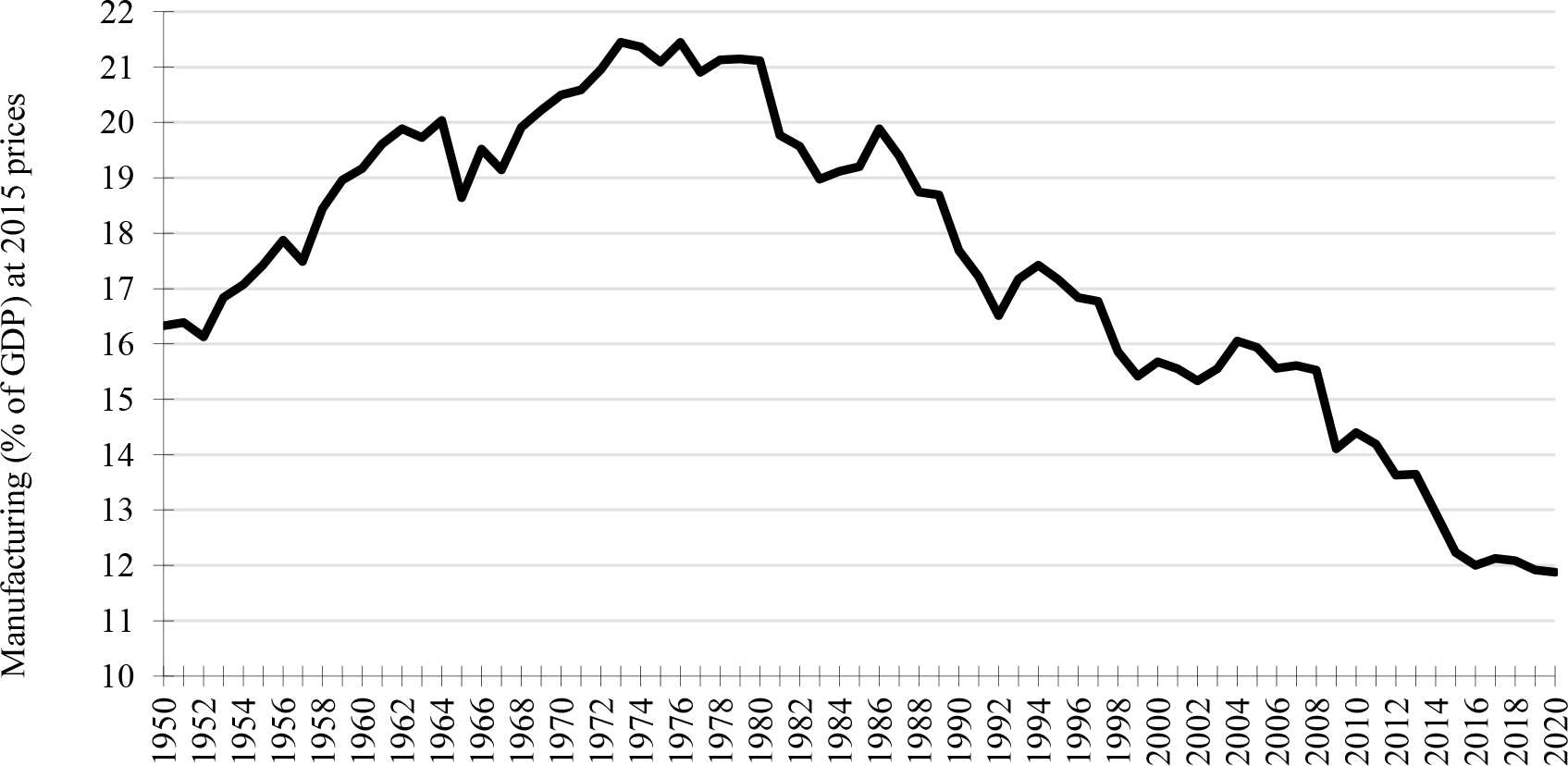 Source: Brazilian National Accounts System, Brazilian Institute of Geography and Statistics (IBGE). Authors’ calculation and elaboration.
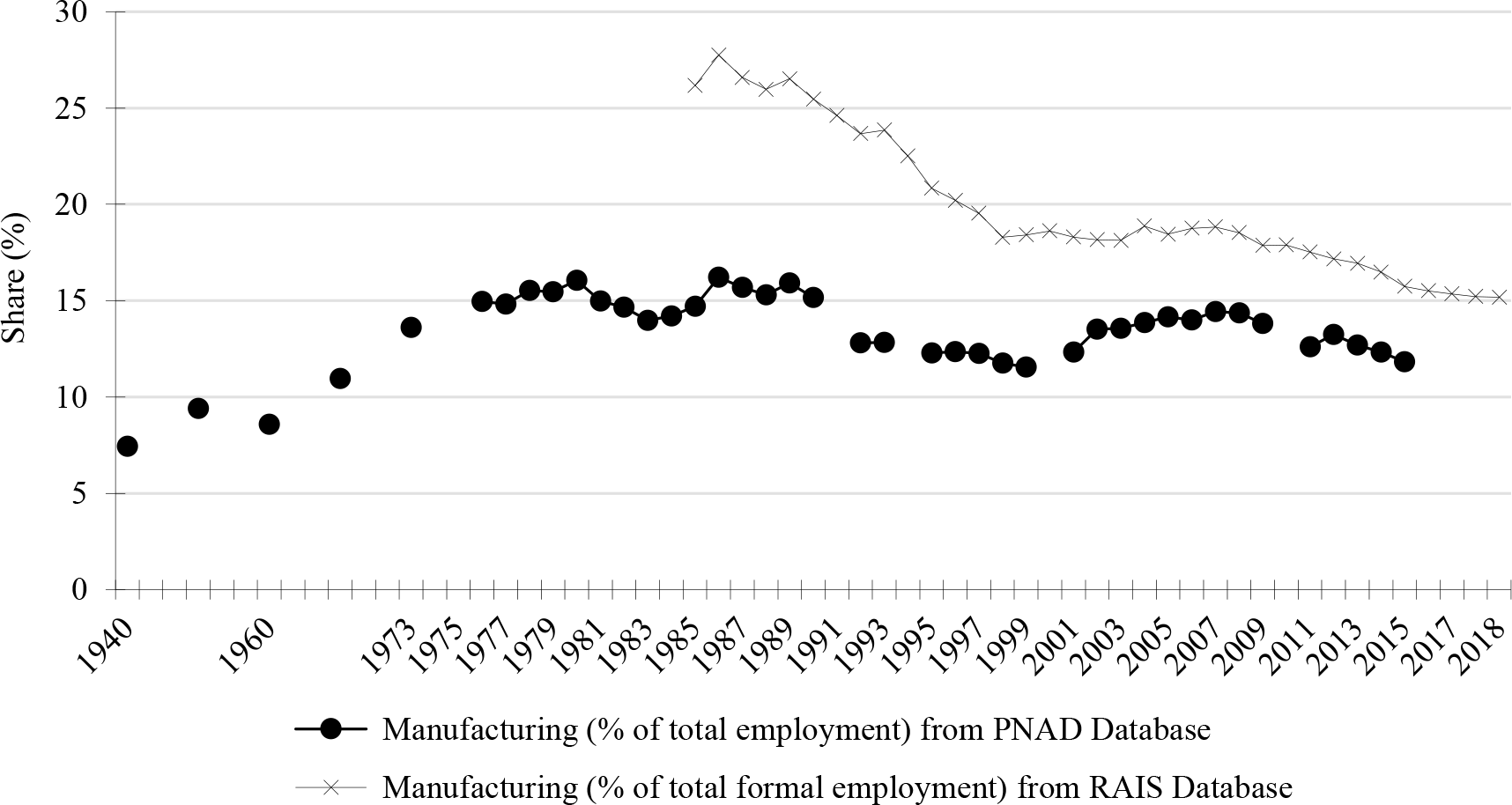 Source: National Household Sample Survey (PNAD)/IBGE; Annual Social Security Information Report (RAIS) from Ministry of Labour and Social Security of Brazil. Authors’ elaboration.