
 Optimizing Information Flow through an Information Architecture Model in SUS Digital and RNDS Support Services
Objective: This study proposes an Information Architecture (IA) model aligned with organizational information, business process management, and information systems to optimize the information flow in user support for the SUS Digital Platforms and the National Health Data Network (RNDS). The model aims to guide the support team in creating organizational informational spaces, considering standards, methods, and appropriate tools for efficient information management.
Methods: This is an exploratory, applied research with a quantitative-qualitative approach. Bibliographic and field research methods were employed, with primary data collection through direct observation of user support workflows, along with the structuring of a model based on the Dublin Core metadata standard. Additionally, Artificial Intelligence (AI) tools were employed to structure and translate the abstract, as well as to reorganize protocol data collected, ensuring the confidentiality of personal information.
Results: The study presents a conceptual Information Architecture model to structure and retrieve information in system user support, enabling the standardization of the information flow and the dissemination of data through Business Intelligence (BI) dashboards.
Conclusions: The implementation of the proposed model can optimize the organization and retrieval of information generated in support services, increasing data efficiency and accessibility. Furthermore, the solution can be applied in various organizational contexts requiring a structured information flow for support and decision-making.
KEYWORDS:
Information Architecture; Metadata; Information Systems; Information Management; Records Management.
 Thumbnail
 Thumbnail
 Thumbnail
 Thumbnail
 Thumbnail
 Thumbnail
 Thumbnail
 Thumbnail
 Thumbnail
 Thumbnail
 Fonte:
  Fonte:
  Fonte:
  Fonte:
  Fonte:
  Fonte:
  Fonte:
 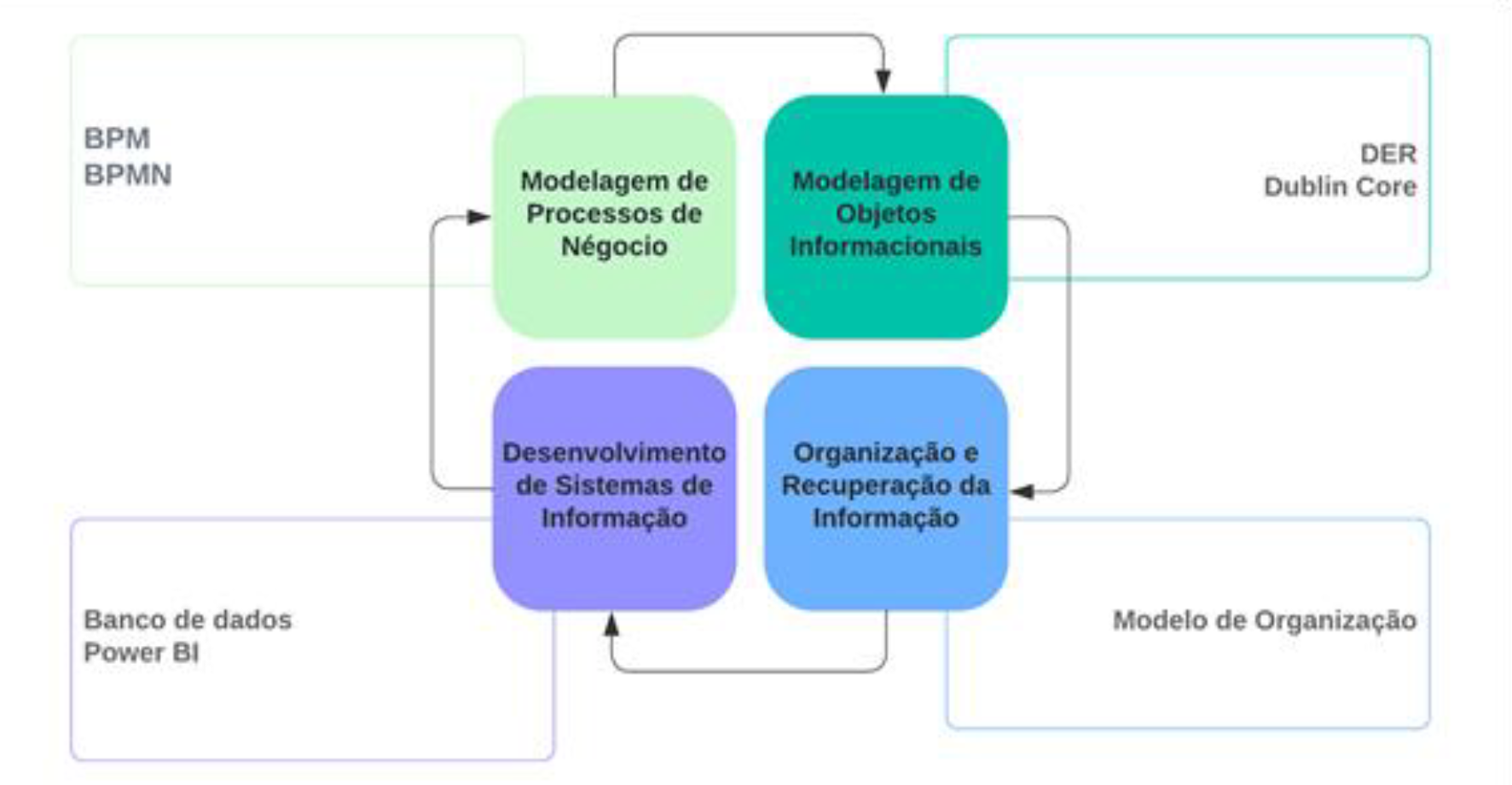 Fonte: elaborado pelos autores (2024).
 Fonte: elaborado pelos autores (2024).
 Fonte: elaborado pelos autores (2024).