
 Impact of thermal processing on bioactive compound composition and antioxidant activity in bell pepper varieties
Abstract
Bell pepper (Capsicum annuum L.) is a widely cultivated vegetable with substantial economic and nutritional relevance worldwide. This crop comprises several cultivars, primarily distinguished by green, yellow, and red coloration, which correspond to different maturity stages and phytochemical profiles. Dehydration represents an effective preservation strategy for bell peppers, as it promotes concentration of bioactive compounds such as carotenoids, flavonoids, and capsaicinoids. Moreover, dehydration constitutes a key processing step in paprika production, a condiment with high added value. This article addresses major bell pepper varieties, examines effects of dehydration on fruit bioactive composition, and explores relationships between processing and production of derived products such as paprika. A comparative analysis of physicochemical characteristics of green, yellow, and red bell pepper varieties was conducted in fresh form and after dehydration. Physical, biochemical, and sensory parameters were assessed, along with effects of thermal processing on concentrations of bioactive compounds, pigments, sugars, and antioxidant activity. Results indicate that thermal processing, particularly dehydration, increases concentration of several beneficial compounds, thereby enhancing nutritional value and potential health benefits of final products.
Keywords:
bell pepper; physicochemical characterization; thermal processing; dehydration; bioactives; antioxidants
Introduction
Brazil ranks among major global producers of bell pepper (Capsicum annuum L.), with an estimated production of 224 thousand tons and a market value of approximately 319.3 thousand reais, concentrated mainly in the Southeast region (IBGE, 2017). Despite its origin in Central America, bell pepper has adapted well to Brazilian tropical conditions and has become a vital component of the national diet due to its nutritional and functional benefits (Goto et al., 2011).
During fruit maturation, marked changes in coloration occur, reflecting chlorophyll degradation and accumulation of pigments such as lycopene and β-carotene, which confer characteristic red and yellow hues. These biochemical changes are strongly associated with antioxidant capacity. Several studies indicate that pigment accumulation results from regulation of enzymes in the isoprenoid pathway and chlorophyll degradation, processes influenced by genetic and environmental factors (Howard et al., 2000; Wahyuni et al., 2013; Deepa et al., 2007).
Bell pepper fruits are rich sources of nutrients and phytochemicals, including vitamins, phenolic compounds, flavonoids, and carotenoids, which exhibit anti-inflammatory, antioxidant, anti-aging, and immunomodulatory activities (Song et al., 2021). In addition, these compounds may inhibit lipid oxidation, suppress microbial growth, and enhance postprandial satiety, contributing to health promotion (Machado et al., 2017). According to Simonne et al. (1997) and Márkus et al. (1999), concentrations of these compounds vary widely among cultivars and are directly associated with maturity stage and cultivation conditions, reinforcing relevance of comparative varietal studies.
Several studies report that bell pepper dehydration may intensify carotenoid content, particularly β-carotene and lycopene, as well as flavonoids such as quercetin. However, preservation efficiency depends on drying temperature and duration, as antioxidant compounds are sensitive to excessive heat. Dehydration involves partial or total removal of water from fruits through methods such as sun drying, oven drying, or freeze-drying. Studies by Vega-Gálvez et al. (2009), Arslan & Özcan (2011), and Sharifian et al. (2022) demonstrate that adequate temperature control is critical to minimize thermal degradation of bioactive compounds and preserve sensory and functional attributes of dried products.
Beyond extending shelf life, dehydration reduces volume and weight, facilitating transport and storage. More importantly, water removal concentrates bioactive compounds on a dry-matter basis, resulting in products with enhanced nutritional and functional value. Dehydration is among oldest thermal processing techniques used to prolong food shelf life and add value to horticultural products such as paprika, derived from dehydrated bell peppers. Evidence indicates that oven drying under controlled temperatures better preserves quality attributes, including color, pungency, ascorbic acid content, and oleoresin, compared with sun drying (Sharangi et al., 2022). Water loss during processing influences concentration of bioactive compounds such as organic acids, sugars, pigments, and phenolics. In addition, varietal characteristics and pulp thickness affect drying kinetics and retention of heat-sensitive compounds, as reported by Nema et al. (2015) and Doymaz (2017).
Paprika is produced by grinding dehydrated bell pepper fruits and represents an important condiment widely consumed worldwide. Its commercial value is associated with intense color and characteristic flavor, attributes linked to pigment composition and volatile compounds present in fruits.
Selection of bell pepper variety and dehydration conditions directly influences paprika quality. Fruits with high carotenoid content and low residual moisture provide more intense color and greater stability in final products. Consequently, fully mature red bell peppers are preferred for production of high-quality paprika. Nevertheless, literature remains limited regarding comparative evaluation of different bell pepper varieties subjected to distinct dehydration conditions, particularly concerning preservation of bioactive compounds and physicochemical attributes.
Varietal diversification and adoption of dehydration technologies enable valorization of bell pepper from both nutritional and economic perspectives. In addition to preserving bioactive compounds, dehydration supports paprika production, adds value, and promotes full utilization of yield. Therefore, understanding how thermal processing affects different cultivars is essential for development of products with higher added value and industrial potential (Kaur et al., 2020; Chidley et al., 2021). Accordingly, this study aimed to conduct a comparative evaluation of physicochemical characteristics of different bell pepper varieties, in fresh form and after dehydration, to identify most suitable options for processing and consumption.
Material and Methods
Bell pepper samples
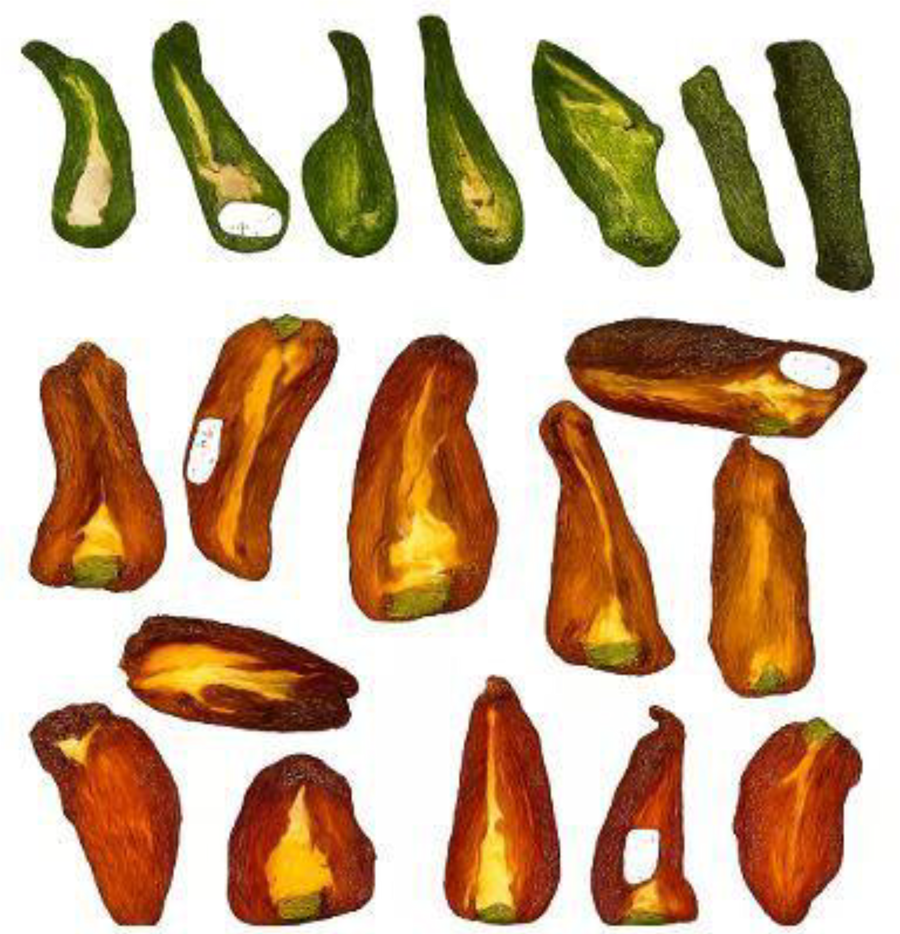
Bell peppers were purchased from a commercial retailer located in Tupã, São Paulo, Brazil. After acquisition, fruits were transported to the Biology and Chemistry Laboratories of the School of Science and Engineering, São Paulo State University (UNESP), Tupã campus. For sample preparation, vegetables were washed under running potable water and divided into two batches: T0, fresh vegetables (in natura), and T1, processed vegetables. Figure 1 illustrates bell peppers used in the experimental procedure.

Processing: obtaining dried bell peppers by dehydration
For bell pepper dehydration, three fruits of each color (green, yellow, and red) were selected. Fruits were individually weighed and then cut longitudinally to increase surface area during drying. After preparation, samples were arranged on trays and subjected to drying in a forced-air circulation oven (Tecnal, model TE-394/3 MP) at a constant temperature of 60 °C for 24 h, according to a previously established methodology.
Drying was terminated when samples reached constant weight. Subsequently, samples were removed from the oven and ground using a conventional mixer to obtain powder, thereby facilitating subsequent analytical procedures.

Laboratory analyses were conducted on different bell pepper varieties subjected to two processing conditions: fresh (in natura) and dehydrated (paprika). These analyses were classified into two methodological categories: non-destructive characterization and destructive characterization. Non-destructive analyses comprised procedures that preserved physical integrity of samples, allowing measurements without significant alteration of structure. In contrast, destructive analyses required manipulation and fragmentation of samples, resulting in irreversible changes to physical and structural properties.
Non-destructive analyses performed on fresh fruits
Weight: Determined by individual weighing using an analytical balance, with final values expressed in grams (g) to ensure accuracy and data representativeness.
Texture: Evaluated using a digital texture analyzer/penetrometer (VICTOR GY-4 model) equipped with a straight circular probe (3.50 mm diameter) and a penetration depth of 10 mm. Results were expressed in Newtons (N), reflecting fruit resistance to puncture. Measurements were performed on fruit peel at the equatorial region.
Length and diameter: Morphometric dimensions were measured using a digital caliper, considering total length (maximum longitudinal dimension) and mean diameter measured at the middle portion of fruits. Results were expressed in centimeters (cm).
Instrumental color: Assessed using a Nix™ Pro sensor, with measurements taken at apical, medial, and basal points of each sample (Borges et al., 2022). The device, equipped with an internal LED light source, provided consistent readings in RGB, XYZ, CMYK, HEX, and CIELAB formats through the Nix Toolkit application on a Bluetooth-connected mobile device (Scalisi et al., 2020). Measurements were performed on fruit peel at the equatorial region.
Moisture content: Determined exclusively in dehydrated samples by calculating mass difference before and after thermal processing. Samples were weighed on an analytical balance, and moisture content (%) was calculated according to the following equation:
pH (hydrogen potential): Measured using an electrometric method with a digital pH meter. The electrode was immersed in juice extracted by pressing fresh fruits and previously filtered to ensure homogeneity.
Soluble solids (SS): Total soluble solids were quantified by direct refractometry using a digital refractometer, with results expressed in °Brix. Samples were prepared from juice obtained by pressing.
Titratable acidity (TA): Determined by titration with 0.1 N NaOH solution, using phenolphthalein as an indicator. The sample consisted of 1 mL of extract diluted in 100 mL of distilled water. Results were expressed as grams of citric acid per 100 g of pulp, according to the equation based on the methodology of Instituto Adolfo Lutz (2008):
Where:
-
V is the titrant volume (mL);
-
f is the correction factor;
-
M is the molarity;
-
MW is the molecular weight of citric acid;
-
W is the sample weight, and
-
n is the number of equivalents.
SS/TA ratio: Obtained by dividing soluble solids (°Brix) by titratable acidity (g citric acid 100 g⁻1), expressed as a dimensionless ratio:
Destructive analyses performed on fresh and dehydrated fruits
Pigment quantification: Conducted according to the protocol described by Sims and Gamon (2002), using spectrophotometry with readings at wavelengths of 663 nm (chlorophyll a), 647 nm (chlorophyll b), 537 nm (anthocyanins), and 470 nm (carotenoids). Results allowed individual estimation of each pigment class based on characteristic spectral signatures.
Total sugar quantification: Performed using the phenol–sulfuric acid colorimetric method described by Dubois et al. (1956). The procedure involves dehydration of monosaccharides under concentrated sulfuric acid, followed by reaction with phenol, forming a colored complex whose intensity is proportional to sugar concentration.
Lycopene quantification: Conducted using an acetone: hexane mixture (4:6). Spectrophotometric readings of the supernatant were obtained at wavelengths of 663 nm, 645 nm, 505 nm, and 453 nm. Lycopene concentration was calculated using the equation developed by Nagata & Yamashita (1992), which enables differentiation of pigments with overlapping spectra.
Flavonoid quantification: Flavonoids were extracted using acidified methanol containing 5% aluminum chloride, followed by spectrophotometric determination at 425 nm. The methodology was based on Popova et al. (2004) and relies on formation of flavonoid–aluminum complexes as an indicator of concentration.
Antioxidant activity (FRAP): Determined using the FRAP (Ferric Reducing Antioxidant Power) assay, as described by Benzie & Strain (1996). This method evaluates the ability of antioxidant compounds in extracts to reduce ferric ions (Fe3⁺) to ferrous ions (Fe2⁺). Results were expressed as mmol Fe kg⁻1, with color intensity directly proportional to reducing power.
Statistical analysis
Fruit samples and processed products were subjected to statistical analysis using Tukey’s multiple comparison test at a 5% significance level. Five samples per treatment and cultivar were analyzed, with three independent biological replicates for each group, ensuring data representativeness and statistical robustness. Data tabulation and analysis were performed using Minitab® software.
RESULTS AND DISCUSSION
Analysis of mean fruit weight revealed significant variation among the three varieties evaluated. Recorded values were 158.33 ± 0.0001 g for green bell peppers, 233.33 ± 0.0001 g for yellow, and 206.67 ± 0.0001 g for red fruits. These results indicate morphological differences among cultivars, suggesting a genetic influence on fresh biomass accumulation.
Penetration resistance was assessed at basal, medial, and apical regions of fresh fruits. A consistent pattern was observed across varieties, with the apical region exhibiting greater mechanical resistance, reflected by higher mean force values (N), whereas the medial region showed the lowest resistance. These findings indicate structural heterogeneity along the fruit, likely associated with distribution of parenchymatic tissues and variation in cell wall thickness.
Morphometric measurements showed variation among varieties with respect to length and major and minor diameters (Table 1). However, no consistent correlations were established between fruit dimensions and color. Overall, data highlights intrinsic variability among cultivars evaluated, indicating that larger sample sizes may be required for more conclusive inferences.
Colorimetric parameters L*, a*, and b* revealed marked differences among varieties (Table 2). Yellow bell pepper exhibited the highest L* value (41.77), indicating greater lightness, whereas red bell pepper showed the lowest value (13.12), characteristic of darker tones. The a* value was negative in green bell pepper (−13.6), confirming chlorophyll predominance, while red bell pepper presented high positive values (33.81), consistent with elevated lycopene concentration. Parameter b* was highest in yellow bell pepper (45.65), associated with presence of carotenoids such as lutein and β-carotene.
According to Guo et al. (2018) and Liu et al. (2024), application of thermal treatments such as dehydration tends to reduce L* values and modify a* and b* parameters due to degradation of heat-sensitive pigments, including carotenoids and chlorophylls, as well as formation of nonenzymatic browning compounds, such as Maillard reaction products. Consequently, processed fruits are expected to exhibit darker and less vivid color tones, directly affecting sensory acceptance.
Getahun & Ebissa (2024) evaluated effects of different blanching times and drying temperatures on bell pepper color and concluded that blanching for 3 min followed by drying at 60 °C better preserves red color intensity and reduces visual quality losses. The authors emphasize that L*, a*, and b* parameters are extremely sensitive to pretreatment conditions and temperature, making them useful indicators for establishing optimized protocols that balance sensory quality and drying efficiency.
Dehydration promoted a substantial reduction in fruit moisture content. Mean moisture values were 93.63% for green bell pepper, 90.39% for yellow, and 90.69% for red. The green variety exhibited the highest initial water content, possibly associated with its maturity stage and lower solids density. Differences in drying time and structural characteristics may also explain variation in water removal efficiency among varieties.
Analysis of sensory-related parameters showed that red bell pepper presented higher titratable acidity (0.482 g citric acid per 100 g), and consequently the lowest SS/TA ratio (13.897), indicating a more acidic flavor profile. In contrast, green bell pepper showed lower acidity (0.192 g per 100 g) and a higher SS/TA ratio (25), suggesting a sweeter taste. These findings support influence of phytochemical composition on sensory profile of different varieties (Table 3).
Fruit color and hue are directly associated with presence of natural pigments such as carotenoids, anthocyanins, betalains, and chlorophyll-related compounds (Méndez-Lagunas et al., 2017; Muliterno et al., 2017). Visual appearance, particularly color, plays a vital role in shaping initial consumer perception and is intrinsically linked to sensory acceptability of foods. In this context, color is recognized as one of most relevant quality attributes and serves as an indirect indicator of nutritional composition (Wang et al., 2018).
Quantification of chlorophyll a revealed that green bell peppers exhibited highest concentrations in both fresh state and after processing. In contrast, lowest values varied according to treatment: among fresh fruits, lowest chlorophyll a content was observed in red bell peppers, whereas in dehydrated samples, lowest values occurred in yellow bell peppers. Regarding chlorophyll b, applied methodology did not detect measurable concentrations, indicating absence or levels below detection limit of technique employed (Table 4).
With respect to carotenoids, dehydrated yellow and red bell peppers showed significantly higher β-carotene concentrations. Red variety also exhibited greater lycopene accumulation after thermal processing. These results indicate that dehydration may favor concentration of these lipophilic pigments, depending on variety and processing conditions. Studies by Mohamed Ahmed et al. (2024) on jalapeño peppers reported increased total carotenoid content after dehydration, suggesting that partial chlorophyll degradation and heat-induced acceleration of maturation may contribute to this increase. However, Pinar et al. (2021) observed that β-carotene and lycopene levels may decrease depending on drying method employed. Freeze-drying provided best carotenoid preservation, whereas sun and shade drying resulted in substantial losses. Those authors also reported that microwave drying promoted greater retention of total phenolic compounds, highlighting impact of processing method on bioactive stability.
Complementarily, Krzykowski et al. (2024) reported that drying under low-oxygen atmospheres, such as freeze-drying and vacuum drying, enhanced carotenoid preservation due to reduced oxidative degradation. Villa-Rivera & Ochoa-Alejo (2020) also reported protective effects of capsaicin, particularly at lower temperatures, through inhibition of lipid oxidation. Chaudhary et al. (2022) further support this mechanism by associating capsaicin antioxidant activity with reduced formation of reactive oxygen species during thermal processing.
Collectively, these findings emphasize importance of selecting appropriate drying methods to preserve nutritional and functional attributes of bell peppers, particularly bioactive compounds of interest in food biochemistry.
Analysis of lycopene data revealed distinct trends among evaluated varieties. In green and yellow bell peppers, lycopene concentrations increased after dehydration, likely due to moisture reduction and consequent concentration on a dry-matter basis. Mean concentrations increased from 57.903 ± 0.001 µg g⁻1 to 111.263 ± 0.001 µg g⁻1 in green bell pepper and from 35.276 ± 0.001 µg g⁻1 to 78.164 ± 0.001 µg g⁻1 in yellow bell pepper. In contrast, red bell pepper, which initially exhibited the highest lycopene concentration (322.524 ± 0.001 µg g⁻1), showed a pronounced reduction after thermal processing, reaching 84.552 µg g⁻1. This decrease may be attributed to thermal sensitivity of lycopene, whose molecular structure is highly susceptible to degradation upon exposure to elevated temperatures.
These findings are consistent with results reported by Pinar et al. (2021), who demonstrated that drying method significantly influences preservation of bioactive compounds. Microwave drying was more effective in retaining total phenolics, whereas freeze-drying showed superior performance in preserving protein, carotenoid, and lycopene contents.
Quantitative analysis of flavonoids included all three bell pepper varieties subjected to both processing conditions (Table 5). Considering that quercetin is among predominant flavonoids in these fruits, results showed a marked increase in flavonoid concentration following dehydration. This response can be attributed to water removal, which concentrates bioactive compounds per unit of dry mass.
Liu et al. (2024) reported that moderate drying temperatures, between 50 and 60 °C, promote greater retention of carotenoids and flavonoids during drying of red bell peppers. Processing methods involving lower thermal intensity and longer exposure times contribute to reduced degradation of thermolabile compounds, thereby preserving nutritional quality. Therefore, controlled drying strategies are recommended to maximize functional value of bell peppers, particularly with respect to antioxidant flavonoid content.
Analysis of flavonoids included all three bell pepper varieties subjected to both thermal treatments. Considering that quercetin is among predominant flavonoids in these fruits, results showed a marked increase in flavonoid concentration after dehydration. This behavior can be explained by water removal, which concentrates bioactive compounds on a dry-matter basis.
Mean flavonoid concentrations increased significantly in all varieties, rising from 4.23 ± 0.01 mg 100 g⁻1 to 194.30 ± 0.01 mg 100 g⁻1 in green bell peppers, from 5.39 ± 0.01 mg 100 g⁻1 to 197.43 ± 0.01 mg 100 g⁻1 in yellow, and from 5.44 ± 0.01 mg 100 g⁻1 to 182.91 ± 0.01 mg 100 g⁻1 in red. Highest concentration was observed in dehydrated yellow bell peppers, which may be associated with presence of yellow-colored flavonoids consistent with predominant pigmentation of this variety.
Genzel et al. (2021) reported that moderate cold stress may also induce increased flavonoid biosynthesis, including cynaroside and graveobioside A, in bell pepper tissues, highlighting potential of postharvest treatments to modulate bioactive composition. Complementarily, Truong et al. (2025) characterized 20 green bell pepper cultivars and reported high flavonoid and total phenolic contents, along with elevated antioxidant capacity, indicating functional potential of these fruits for food applications and breeding programs.
Evaluation of antioxidant activity using the FRAP (Ferric Reducing Antioxidant Power) assay provided relevant information on reducing capacity of compounds present in samples. Results indicated that dehydrated fruits exhibited higher antioxidant activity than fresh fruits, consistent with increased concentration of phenolic compounds and flavonoids following water removal.
Dehydrated red bell pepper stood out, reaching a value of 144.70 µmol g⁻1, the highest among all samples. This increase is directly related to concentration of antioxidant compounds such as quercetin, catechin, and phenolic acids. Glória et al. (2017), when investigating bioactive composition of Schinus terebinthifolius, reported similar results, with high antioxidant activity detected by FRAP, DPPH, and ABTS assays, emphasizing role of these compounds in neutralizing reactive oxygen species and protecting against cellular oxidative stress.
Quantitative analysis of total sugars revealed differences between fresh and dehydrated states across all bell pepper varieties. Mean values for fresh fruits were 303.23 ± 0.01 mg g⁻1 (green), 151.37 ± 0.01 mg g⁻1 (yellow), and 64.84 ± 0.01 mg g⁻1 (red). After dehydration, mean concentrations increased to 491.96 ± 0.01 mg g⁻1 (green), 548.69 ± 0.01 mg g⁻1 (yellow), and 621.95 ± 0.01 mg g⁻1 (red).
This increase is associated with water removal, which concentrates soluble solids in fruit matrix. Notably, an inversion in accumulation pattern was observed between treatments: green bell peppers exhibited highest sugar content in fresh state, whereas red bell peppers surpassed other varieties after dehydration. This behavior may be related to sugar solubilization dynamics and thermal stability during processing, as well as intrinsic varietal differences.
Elmatsani et al. (2024) provided a comprehensive overview of evolution of drying technologies applied to red bell pepper (Capsicum annuum) over the past two decades, identifying trends that shape future directions of the sector. Their bibliometric analysis, conducted using VOSviewer and Bibliometrix, revealed steady growth in scientific output on this topic, with an average annual increase of 6.65%, reflecting rising global interest, particularly in countries such as Turkey, India, and China.
A marked transition from conventional drying methods, such as sun drying, toward more advanced technologies—including microwave, infrared, ultrasound, cold plasma, and hybrid systems—was observed. This evolution suggests a future in which vegetable drying will increasingly prioritize energy efficiency, reduction of losses, and preservation of bioactive compounds and sensory quality. The cited study also emphasizes importance of expanding comparative research among drying methods, considering economic feasibility, environmental impact, and technological scalability.
Conclusions
Among evaluated varieties, red bell pepper showed best performance for dehydration processing, standing out due to higher contents of lycopene, β-carotene, and flavonoids, as well as elevated antioxidant activity after thermal treatment. Yellow and green varieties also demonstrated functional potential, although with lower concentrations of pigments and total phenolic compounds.
Dehydration at 60 °C proved effective in concentrating bioactive compounds, promoting significant increases in carotenoids, sugars, and flavonoids compared with fresh samples. These findings reinforce potential of this technique for development of products with higher added value, particularly for production of paprika with intense coloration and improved stability, as well as for nutraceutical applications in functional food formulations and antioxidant supplements.
From a practical perspective, use of fully mature red bell peppers is recommended for industrial production of paprika and dehydrated ingredients rich in bioactive compounds. In addition to adding value to production chain, this technology contributes to utilization of surplus yield and reduction of postharvest losses.
As a limitation of this study, use of a single dehydration temperature (60 °C) restricts comparison among different processing conditions. Furthermore, sensory analyses were not included and could complement assessment of final product quality. Future studies should explore variations in temperature, drying time, and pretreatments, as well as integrate evaluations of color, texture, and consumer acceptability, thereby expanding industrial applicability of obtained results.
References
-
Arslan, D., & Özcan, M. M. (2011). Dehydration of red bell pepper (Capsicum annuum L.): Change in drying behavior, color, and antioxidant content. Food and Bioproducts Processing, 89 (4), 504-513. https://doi.org/10.1016/j.fbp.2010.09.009
» https://doi.org/10.1016/j.fbp.2010.09.009 - Benzie, I. F. F., & Strain, J. J. (1996). The ferric reducing ability of plasma (FRAP) as a measure of antioxidant power: The FRAP assay. Analytical Biochemistry, 239 (1), 70-76.
-
Borges, C. S., Silva, R. D., Souza, L. H. S., Santos, F. P., & Oliveira, M. R. de. (2022). Pocket-sized sensor for controlled, quantitative and instantaneous color acquisition of plant leaves. Journal of Plant Physiology, 272, 153686. https://doi.org/10.1016/j.jplph.2022.153686
» https://doi.org/10.1016/j.jplph.2022.153686 -
Chaudhary, A., Gour, J. K., & Rizvi, S. I. (2022). Capsaicin has potent in vivo antioxidant effects through a receptor-independent mechanism. Archives of Physiology and Biochemistry, 128 (2), 141-147. https://doi.org/10.1080/13813455.2019.1669056
» https://doi.org/10.1080/13813455.2019.1669056 -
Chidley, H. G., Singh, B., Gupta, R., Kumar, A., Sharma, S., Patel, A., & Rao, L. (2021). Genetic and biochemical diversity in Capsicum annuum: Relationship between bioactive compounds and fruit coloration. Food Chemistry, 339, 128110. https://doi.org/10.1016/j.foodchem.2020.128110
» https://doi.org/10.1016/j.foodchem.2020.128110 -
Deepa, N., Kaur, C., George, B., Singh, B., & Kapoor, H. C. (2007). Antioxidant constituents in some sweet pepper (Capsicum annuum L.) varieties grown in India. LWT - Food Science and Technology, 40 (1), 121-129. https://doi.org/10.1016/j.lwt.2005.09.016
» https://doi.org/10.1016/j.lwt.2005.09.016 -
Doymaz, I. (2017). Drying kinetics, rehydration and colour characteristics of convective hot-air drying of carrot slices. LWT - Food Science and Technology, 77, 868-873. https://doi.org/10.1007/s00231-016-1791-8
» https://doi.org/10.1007/s00231-016-1791-8 -
Dubois, M., Gilles, K. A., Hamilton, J. K., Rebers, P. A., & Smith, F. (1956). Colorimetric method for determination of sugars and related substances. Analytical Chemistry, 28 (3), 350-356. https://doi.org/10.1021/ac60111a017
» https://doi.org/10.1021/ac60111a017 -
Elmatsani, H. M., Abudulai, M., Boateng, E., Ofori, J., & Teye, E. (2024). A global perspective on red chili drying: Insights from two decades of research (2004-2023). Frontiers in Sustainable Food Systems, 8, 1456938. https://doi.org/10.3389/fsufs.2024.1456938
» https://doi.org/10.3389/fsufs.2024.1456938 -
Getahun, M. A., & Ebissa, D. (2024). Effect of blanching times and drying temperatures on color parameters and drying kinetics of red bell pepper (Capsicum annuum L.). Food Chemistry, 433, 144690. https://doi.org/10.1016/j.foodchem.2025.144690
» https://doi.org/10.1016/j.foodchem.2025.144690 -
Genzel, F., Dicke, M. D., Junker-Frohn, L. V., Neuwohner, A., Thiele, B., Putz, A., Usadel, B., Wormit, A. & Wiese-Klinkenberg, A. (2021). Impact of moderate cold and salt stress on the accumulation of antioxidant flavonoids in the leaves of two capsicum cultivars. Journal of Agricultural and Food Chemistry, 69 (23), 6431-6443. https://doi.org/10.1021/acs.jafc.1c00908
» https://doi.org/10.1021/acs.jafc.1c00908 -
Glória, L. L., Arantes, M. B. S., Pereira, S. M. F., Vieira, G. S., Martins, C. X., Carvalho Junior, A. R., Antunes, F., Braz-Filho, R., Vieira, I. J. C., Cruz, L. L., Chaves, D. S. A., Freitas, S. P. & Barros de Oliveira, D. (2017). Phenolic compounds present schinus terebinthifolius raddi influence the lowering of blood pressure in rats. Molecules, 22 (10), 1792. https://doi.org/10.3390/molecules22101792
» https://doi.org/10.3390/molecules22101792 - Goto, R., Rossi, F., & Souza, L. S. (2011). Cultivo de pimentão em estufa CPT.
-
Guo, Y., Chen, D., Dong, Y., Ju, H., Wu, C., & Lin, S. (2018). Characteristic volatile fingerprints and changes in volatile compounds in fresh and dried Tricholoma matsutake. Journal of Chromatography B, 1099, 46-55. https://doi.org/ 10.1016/j.jchromb.2018.09.011
» https://doi.org/ -
Howard, L. R., Talcott, S. T., Brenes, C. H., & Villalon, B. (2000). Changes in phytochemical and antioxidant activity of selected pepper cultivars as influenced by maturity. Journal of Agricultural and Food Chemistry, 48 (5), 1713-1720. https://doi.org/10.1021/jf990916t
» https://doi.org/10.1021/jf990916t - Instituto Adolfo Lutz. (2008). Normas analíticas do Instituto Adolfo Lutz: Métodos químicos e físicos para análise de alimentos. IMESP.
-
Instituto Brasileiro de Geografia e Estatística. (2017). Produção agrícola municipal 2017: Culturas temporárias e permanentes. IBGE. https://sidra.ibge.gov.br/pesquisa/pam/tabelas
» https://sidra.ibge.gov.br/pesquisa/pam/tabelas -
Kaur, R., Kaur, K. & Ahluwalia, P. (2020). Effect of drying temperatures and storage on chemical and bioactive attributes of dried tomato and sweet pepper. LWT, 1171 108604. https://doi.org/10.1016/j.lwt.2019.108604
» https://doi.org/10.1016/j.lwt.2019.108604 -
Krzykowski, A., Nowak, D., Kujawski, W., & Stasiak, M. (2024). Drying of red chili pepper (Capsicum annuum L.): Process kinetics, color changes, carotenoid content, and phenolic profile. Molecules, 29 (21), 5164. https://doi.org/10.3390/molecules29215164
» https://doi.org/10.3390/molecules29215164 -
Liu, M., Zhang, Y., Wang, H., Chen, L., & Li, X. (2024). Effects of different hot-air drying methods on dynamic changes in color, nutrient, and aroma quality of chili pepper varieties. Food Chemistry: X, 22, 101262. https://doi.org/10.1016/j.fochx.2024.101262
» https://doi.org/10.1016/j.fochx.2024.101262 - Machado, A., Oliveira, F., Silva, J., R. & Gomes, F. (2017). Caracterização físico-química e antioxidante de diferentes variedades de pimentão. Agrarian Academy, 4 (8).
-
Márkus, F., Daood, H. G., Kapitány, J. & Biacs, P. A. (1999) Change in the Carotenoid and Antioxidant Content of Spice Red Pepper (Paprika) as a Function of Ripening and Some Technological Factors. Journal of Agricultural and Food Chemistry, 47 (1), 100-107. https://doi.org/10.1021/jf980485z
» https://doi.org/10.1021/jf980485z -
Méndez-Lagunas, L., Rodríguez-Ramírez, J., Cruz-Gracida, M., & Sandoval-Torres, S. (2017). Convective drying kinetics of strawberry (Fragaria × ananassa): Effects on antioxidant activity, anthocyanins and total phenolic content. Food Chemistry, 230, 174-181. https://doi.org/10.1016/j.foodchem.2017.03.010
» https://doi.org/10.1016/j.foodchem.2017.03.010 -
Mohamed Ahmed, I. A., AlJuhaimi, F., Uslu, N., Özcan, M. M., & Karrar, E. (2024). The role of environmental air and microwave drying on colour values, bioactive properties and phenolic compounds of jalapeno pepper. International Journal of Food Science & Technology, 59(6), 3613 - 3623. https://doi.org/10.1111/ijfs.17095
» https://doi.org/10.1111/ijfs.17095 -
Muliterno, M. M., Rodrigues, D., De Lima, F. S., Ida, E. I., & Kurozawa, L. E. (2017). Conversion/degradation of isoflavones and color alterations during the drying of okara. LWT - Food Science and Technology, 75, 512-519. https://doi.org/10.1016/j.lwt.2016.09.031
» https://doi.org/10.1016/j.lwt.2016.09.031 - Nagata, M., & Yamashita, I. (1992). Simple method for simultaneous determination of chlorophyll and carotenoids in tomato fruit. Nippon Shokuhin Kogyo Gakkaishi, 39 (10), 925-928.
-
Nema, P., Kaur, B. & Mujumdar, A. (2015). Drying technologies for foods: Fundamentals and applications https://doi.org/10.13140/RG.2.1.1839.5687
» https://doi.org/10.13140/RG.2.1.1839.5687 -
Pinar, H., Kibar, H., Usanmaz, S., & Yilmaz, M. (2021). Biochemical composition, drying kinetics, and chromatic parameters of red pepper as affected by cultivars and drying methods. Journal of Food Composition and Analysis, 102, 103976. https://doi.org/10.1016/j.jfca.2021.103976
» https://doi.org/10.1016/j.jfca.2021.103976 -
Scalisi, A., Pelliccia, D., & O'Connell, M. G. (2020). Maturity prediction in yellow peach (Prunus persica L.) cultivars using a fluorescence spectrometer. Sensors, 20 (22), 6555. https://doi.org/10.3390/s20226555
» https://doi.org/10.3390/s20226555 -
Sharangi, A. B., Datta, S., Saha, S., & Roy, A. (2022). Physicochemical properties of red pepper as influenced by drying methods and temperatures. Processes, 10 (3), 484. https://doi.org/10.3390/pr10030484
» https://doi.org/10.3390/pr10030484 -
Sharifian, F., Ahmadi, E., Kashaninejad, M., & Jafari, S. M. (2022). Effect of drying conditions on carotenoid retention and antioxidant activity of red bell pepper powder. Journal of Food Measurement and Characterization,16, 1295 - 1307. https://doi.org/10.1016/j.lwt.2009.05.014
» https://doi.org/10.1016/j.lwt.2009.05.014 -
Song, Y., Zhang, L., Li, Y., Wang, J., & Chen, Q. (2021). Baked red pepper (Capsicum annuum L.) powder flavor analysis under different exogenous Maillard reaction treatments. LWT - Food Science and Technology, 139, 110525. https://doi.org/10.1016/j.lwt.2020.110525
» https://doi.org/10.1016/j.lwt.2020.110525 -
Truong, V. L., Rarison, R. H. G., Bae, Y. J., Bang, J. H., & Jeong, W. S. (2025). Quality evaluation of fresh sweet pepper ( Capsicum annuum L.) juices prepared using a household high-speed blender and a low-speed masticating juicer: A Comparative Study. Beverages, 11 (1), 2. https://doi.org/10.3390/beverages11010002
» https://doi.org/10.3390/beverages11010002 -
Vega-Gálvez, A., Miranda, M., Díaz, L. P., López, L., Rodriguez, K., & Di Scala, K. (2009). Effect of air-drying temperature on physicochemical properties and antioxidant capacity of red pepper. Food Chemistry, 117, 647 - 653. https://doi.org/10.1016/j.foodchem.2009.04.066
» https://doi.org/10.1016/j.foodchem.2009.04.066 -
Villa-Rivera, M. G., & Ochoa-Alejo, N. (2020). Chili pepper carotenoids: Nutraceutical properties and mechanisms of action. Molecules, 25(23), 5573. https://doi.org/10.3390/molecules25235573
» https://doi.org/10.3390/molecules25235573 -
Wang, J., Xiao, H., Li, Y., & Chen, F. (2018). Pulsed vacuum drying enhances drying kinetics and quality of lemon slices. Journal of Food Engineering, 224, 129-138. https://doi.org/10.1016/j.jfoodeng.2018.01.002
» https://doi.org/10.1016/j.jfoodeng.2018.01.002 -
Wahyuni, Y., Ballester, A. R., Sudarmonowati, E., Bino, R. J., & Bovy, A. G. (2013). Metabolite biodiversity in pepper (Capsicum) fruits of thirty-two diverse accessions: Variation in health-related compounds and implications for breeding. Phytochemistry, 72, 1358-1370. https://doi.org/10.1016/j.phytochem.2011.03.016
» https://doi.org/10.1016/j.phytochem.2011.03.016

 Source: The authors, 2023.
 Source: The authors, 2023.