 The impact of physical activity on cognitive, behavioral, and academic performance in children with ADHD: a systematic review
ABSTRACT.
Attention Deficit/Hyperactivity Disorder (ADHD) is a neurodevelopmental disorder affecting many children worldwide. They face challenges in multiple cognitive, behavioral, and emotional functions. It is well established that engaging in physical exercise enhances physical capacities and is associated with improved cognitive performance in children.
Objective: This systematic review aimed to examine the role of physical activity as a non-pharmacological approach for enhancing the cognitive, and consequently, academic and behavioral, performance in children with ADHD.
Methods: Clinical trials from the last 10 years were searched in the PubMed, LILACS, and Cochrane databases, with 11 studies included in this review.
Results: All studies demonstrated improvements in cognitive domains, including memory, attention, and inhibition, as well as behavioral benefits.
Conclusion: Published data indicate that physical activity positively impacts the cognitive, academic, and behavioral performance of children with ADHD.
Keywords
Neurodevelopmental Disorders; Exercise; Behavior; Cognition; Child
RESUMO
O Transtorno de Déficit de Atenção/Hiperatividade (TDAH) é um distúrbio do neurodesenvolvimento que acomete muitas crianças ao redor do mundo, gerando desafios em múltiplas funções cognitivas, comportamentais e emocionais. Sabe-se que a prática de exercício físico melhora as capacidades físicas e está associada ao aumento do desempenho cognitivo em crianças.
Objetivo: Examinar o papel da atividade física como abordagem não farmacológica para a melhoria do desempenho cognitivo e, consequentemente, acadêmico e comportamental em crianças com TDAH.
Métodos: Ensaios clínicos dos últimos 10 anos foram pesquisados nas bases de dados PubMed, LILACS e Cochrane, sendo incluídos 11 estudos nesta revisão.
Resultados: Todos os estudos demonstraram melhorias em domínios cognitivos, incluindo memória, atenção e inibição, além de benefícios comportamentais.
Conclusão: Os dados publicados indicam que a atividade física impacta positivamente o desempenho cognitivo, acadêmico e comportamental de crianças com TDAH.
Palavras-chave:
Transtornos do Neurodesenvolvimento; Exercício Físico; Comportamento; Cognição; Criança
INTRODUCTION
Cognition includes memory, attention, perception, language, decision-making, and visuospatial and executive functions1. Executive functions are a set of cognitive processes that direct actions and behaviors essential for learning and daily performance. These functions contribute to task monitoring and regulation, extending beyond the cognitive domain to encompass socioemotional and behavioral aspects of human functioning2.
There is a consensus that three fundamental executive functions exist: inhibition, working memory, and cognitive flexibility3. Inhibition allows children to control behavior, attention, thoughts, and emotions to take the most appropriate actions, suppressing strong internal predisposition or blocking habitual or inappropriate responses. Working memory refers to the short-term storage and manipulation of information needed for practical taks. Cognitive flexibility enables children to shift attention between task demands and modify approaches to problem-solving, adapting to new requirements, rules, or priorities3.
Worldwide, attention deficit hyperactivity disorder (ADHD) affects 3 to 8% of children and adolescents. Prevalence rates are higher in children under 12 than in adolescents, and the disorder is more common in boys than in girls4. In Brazil, ADHD prevalence aligns with global estimates, affecting approximately 7.6% of children and adolescents aged 6 to 17 years5.
According to the Diagnostic and Statistical Manual of Mental Disorders6, ADHD is a neurodevelopmental disorder characterized by deficits in inattention, disorganization, and/or hyperactivity-impulsivity, resulting in impairments in social, cognitive/academic, and occupational functioning. Inattention is characterized by difficulty maintaining focus, lack of persistence, a tendency to stay away from tasks, and disorganization6. Hyperactivity is defined as excessive or inappropriate motor activity, fidgeting, tapping, or excessive talking6. Impulsivity reflects a desire for immediate rewards or an inability to delay gratification6.
Children with ADHD often struggle to perform adequately in various cognitive domains, including problem-solving, planning, orientation, cognitive flexibility, sustained attention, response inhibition, and working memory5. Between half and two-thirds of school-age children with ADHD also present co-occurring psychiatric and developmental disorders4. In the long term, these difficulties can affect academic performance, interpersonal relationships, and self-esteem4,5.
The signs of ADHD usually become more evident when children’s responsibilities and independence increase, for example, at the beginning of individual activities in a school setting or when organizing tasks without parental supervision5. Consequently, the disorder is often identified and treated in the early elementary school years, before age 124,6.
Risk factors commonly associated with ADHD include certain temperamental aspects, such as lower levels of behavioral inhibition and negative affectivity; environmental elements, including very low birth weight (less than 1.5 kg, associated with a 2- to 3-fold higher risk), maternal exposure to toxins from smoking, alcoholism, lead-contaminated water, etc.; and genetic and physiological factors, with heritability being more likely when first-degree biological relatives have the disorder6. Although early childhood family interactions do not cause ADHD, they can influence the development of secondary conduct problems, acting as modifiers of the disorder’s course6.
These classification systems are similar, although the American Psychiatric Association (APA) criteria are more up-to-date.
Regarding treatment, medications such as methylphenidate, whose mechanism of action involves stimulating alpha- and beta-adrenergic receptors and releasing dopamine and norepinephrine from synaptic terminals8, as well as lisdexamfetamine, which acts by blocking dopamine reuptake and stimulating its production and that of norepinephrine9, can be used. Non-pharmacological treatment may include multidisciplinary approaches aimed at improving symptoms, executive control, and social and occupational functioning associated with this complex condition5. Cognitive-behavioral therapy employs techniques that enable the patient (child or adult) to restructure beliefs based on more adaptive perspectives, suppress or mitigate conditioned and maladaptive behaviors, and modify thoughts, emotions, and sensations. Cognitive techniques include cognitive restructuring, problem-solving, and inner dialogue, while behavioral techniques include self-monitoring and self-assessment, a reward system, and response cost5,10.
Another approach that may be included in the therapeutic strategy is physical activity and exercise, including sports and exergames, which have been considered fundamentally important for the effective treatment of children with ADHD. These activities provide numerous cognitive benefits11, as well as behavioral benefits, including reductions in symptoms of depression and anxiety12,13.
This systematic review aimed to assess the impact of physical activity and exercise as non-pharmacological interventions to improve cognitive, academic, and behavioral performance in children with ADHD.
METHODS
The methodology was developed in accordance with the PRISMA guidelines14, and the PICO acronym, a strategic research tool15, guided the study search.
Database search strategy
The PubMed, LILACS, and Cochrane databases were used. For PubMed, the search terms and Boolean operators were: ("child" OR "preschool" OR "children" OR "elementary schoolchildren" OR "ADHD" OR "children with ADHD") AND ("exercise" OR "games" OR "exergaming" OR "recreational" OR "play") AND ("cognition" OR "executive function" OR "academic success" OR "academic achievement"). For LILACS and Cochrane, the terms were: ("children with ADHD") AND ("exercise") AND ("cognition").
Selection criteria
The selection criteria included randomized controlled trials published in the last 10 years (2014–2024), with samples composed of children or preschoolers with ADHD, interventions involving physical activity/exercise (including sports, play, games, or exergames), a control/comparison group maintaining sedentary behavior, and outcomes aimed at improving cognitive, academic, and behavioral domains, using any type of validated test to measure cognitive domains. Studies were excluded if there was a lack of supervision during training, insufficient description of the physical activity/exercise protocol, a control group that received training, populations with conditions other than ADHD, or interventions that included complementary factors in addition to physical exercise.
Data collection
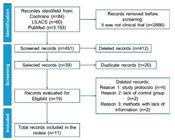
The extracted data on the sample included sample size, gender, age, and mean age. For the intervention group, information was collected on the duration of the supervised intervention (in weeks), the weekly frequency of activities/exercises, the types of activities practiced, and the cognitive tests applied. The outcomes collected for both groups included descriptive result in the cognitive, academic, and behavioral domains (the latter two when reported). Following the search and study selection process, 11 clinical trials were included, featuring multiple types of activities and physical exercises as interventions, along with cognitive assessments. Details of the study selection are presented in Figure 1.
RESULTS
Literature findings suggest that physical exercise can positively impact various domains of cognitive function in children. Ziereis and Jansen16 reported improved memory performance in children following interventions involving multiple exercises and sports. Other studies corroborated these improvements through recreational swimming13, aerobic and neurocognitive exercises17, and judo18.
Inhibition reaction time was also positively affected. According to Pan et al.12, improvements in inhibition reaction time were observed after table tennis intervention, similar to results reported by Chang et al.19 using the same sport. Significant improvements in these domains were also demonstrated with other strategies, including different modalities of aerobic exercise17,20, exergames21,22 and recreational swimming13,23. The domain of attention improved after playing table tennis in both real and simulated environments12,19, as well as following swimming practice11,23. Finally, task switching21,22 and cognitive flexibility11,17 were also enhanced.
Only one study assessing academic outcomes identified improvements in reading comprehension and mathematical reasoning among children who participated in recreational swimming13. In terms of behavioral outcomes, decreases were observed in somatic complaints13, symptoms of anxiety/depression11-13, and withdrawn or aggressive behavior11,12,20,23. Table 1 provides a detailed description of the studies that evaluated the influence of physical activity on different cognitive domains.
DISCUSSION
This systematic review aimed to investigate the impact of physical activity and exercise on cognitive performance in children with ADHD. Eleven clinical trials were reviewed, involving multiple modalities of physical activity and exercise as interventions, alongside cognitive assessments. The results indicated cognitive benefits in the following domains, as evaluated using standard tests: memory, attention, inhibition, task switching, and cognitive flexibility. Improvements were also observed in academic outcomes, as assessed by reading comprehension and mathematics tests, as well as behavioral modifications, including reductions in anxiety and depressive symptoms. For a detailed description, see Table 1.
The interventions were predominantly aerobic and delivered in a fun and dynamic manner. Although they varied in both practice and resources used, the interventions were generally replicable and accessible. Notably, exergames were highlighted as particularly interesting, as they allow the practice of cognitively challenging activities, including non-automated movements that demand considerable coordination and speed of action21.
Regarding interventions in general, two critical aspects were identified: the diversity of physical activities and their implementation with children. Physical activity sessions ranged from 15 to 90 minutes, with two interventions lasting 15 and 30 minutes21,22 using exergames. These shorter sessions demonstrated significant acute effects on response inhibition, reaction time, and task switching in children with ADHD, suggesting that even brief, 15-minute sessions at moderate to vigorous intensity can enhance certain cognitive functions21,24. These findings expand the understanding of the role of volume and intensity in selecting suitable physical activities and exercises. Previous reviews demonstrated a positive link between physical activity and both cognitive performance and academic achievement in childhood populations25,26. However, similar to our review, there is no consensus regarding the necessary duration of intervention. The studies included in the present review featured protocols lasting 8 to 12 weeks, with a weekly frequency of 2 to 3 sessions, and variations in the duration of training sessions, as mentioned above.
The second aspect underscores the importance of considering the professional’s conduct and interaction with the children to ensure the successful implementation of the interventions. For instance, in the study by Benzing et al.22, the absence of incentives, weekly communication, and feedback on training frequency resulted in a relatively high dropout rate, with seven children withdrawing before the post-test. In contrast, the study by Pan et al.12 provided individualized instruction, immediate positive reinforcement, and feedback on the accuracy of each child’s movements after each training session, resulting in zero dropouts and demonstrating adequate program adherence.
Cognitive assessment varies across domains, with multiple tests available for each domain, and results can be reported as absolute scores or percentiles. Consequently, cognitive outcomes are presented descriptively in Table 1. For example, working memory (including verbal, visual, and visuospatial components) was assessed using the digit span task, letter-number sequencing task, Corsi block-tapping test, modified change detection task, Tower of London task, backward color-figure extension task, and Rey-Osterrieth complex figure. Inhibition was assessed using the Simon task, Stroop test, Junior Hayling test, Wisconsin Card Sorting Test, and go/no-go test. Task switching was assessed with the Flanker task, cognitive flexibility with the Trail Making Test, and selective attention with a cancellation attention test.
Most of these tests were repeatedly used across studies, with modifications to the Simon task, Flanker task, and change detection task reported in only three studies18,21,22. Regarding behavioral assessment, the Child Behavior Checklist (CBCL), academic performance tests (including reading comprehension, mathematics, and overall average), the Child Depression Inventory (CDI), and the Perceived Stress Scale (PSS-14) were used. In addition, handwriting ability was improved in the study by Chang et al.19. This heterogeneity of assessments is essential, as it enables evaluation through various methods and approaches, considering accessibility and replicability.
All studies demonstrated cognitive improvements in children with ADHD, reinforcing the importance of physical activity and exercise in this context. Notably, the benefits extended beyond the immediate post-program period, influencing children’s daily lives, particularly in the academic domain, with improved performance in reading comprehension and mathematical ability13. This aspect has considerable potential for further exploration, as demonstrated by Pagani et al.27, which showed that sports participation in childhood is associated with higher indicators of academic success at the end of adolescence, potentially enhancing opportunities in adult life, as well as promoting behavioral changes12,13,20. Physical activity and exercise, when appropriately developed by a professional, can become an effective strategy and should be part of the therapy for children with ADHD. Interventions in the form of games, for example, can effectively maximize performance in children with ADHD28. Working in small or large groups, ensuring adequate professional supervision, and implementing an effective behavior management system can help reduce social problems and foster friendships among participants12. In the study by Pan et al.12, some parents wrote thank-you notes, indicating that their children enjoyed the sessions and looked forward to meeting the coaches and other participants each week. Parents also reported that the program provided opportunities to develop social networks with other family members. When activities are engaging, playful, responsible, and challenging, with consistent interactions and feedback, the resulting improvements in cognitive function, academic performance, and behavior are more pronounced and enduring.
Physical activity and exercise have a significantly positive impact on the cognitive, behavioral, and academic performance of children with ADHD. The diversity of intervention protocols, including aerobic activities and exergames, demonstrates that different approaches are effective if conducted in a structured manner and tailored to the needs of the children. Physical activity may affect cognition through multiple mechanisms. Brain-derived neurotrophic factor (BDNF) appears particularly important, as it promotes synaptogenesis — a process directly related to cognitive functions29,30. Reycraft et al.31 showed that BDNF levels increase following aerobic exercise at different intensities. Physical exercise can also induce cerebral angiogenesis, thereby improving blood flow and facilitating the delivery of oxygen and essential nutrients, which contribute to enhanced cognitive function32.
The mechanisms underlying physical exercise-induced cerebral and cognitive adaptations have been studied in animal models. Marlatt et al.33 demonstrated that in female rats, regular aerobic exercise at the onset and during middle age could maintain brain function. Physical exercise increased both BDNF levels and neurogenesis and improved spatial memory retention. Van Praag et al.34 demonstrated that aged rats with free access to physical activity exhibited increased neurogenesis and improved memory compared to sedentary aged rats. Mirochnic et al.35 showed that transgenic mice with features of Alzheimer disease (APP23 mice) exhibited increased hippocampal neurogenic activity after engaging in physical activity at an advanced age. Horowitz et al.36 investigated the effects of exercise-induced blood-borne factors on neurogenesis and cognitive function in aged mice, showing that the infusion of plasma from aged exercising mice into sedentary aged mice resulted in significant improvements in neural regeneration and cognition. The enzyme Gpld1, produced in the liver and elevated after physical activity, was identified as a key mediator of these effects. One limitation of the current study is the challenge of applying findings from animal models to human beings. While animal research provides valuable insights into the neurobiological mechanisms linking physical activity and cognition, species differences restrict the direct application of these results to humans. Therefore, the findings should be interpreted cautiously when considering their relevance to human contexts.
The variation in intervention methods and the way professionals interact with children significantly influences success and adherence. Aspects such as session duration and exercise intensity can be adjusted, with evidence that even short, intense sessions produce significant results. However, a lack of incentives or inadequate follow-up can lead to dropout, as observed in some studies. In addition to immediate benefits, the positive effects of physical activity extend to daily life, including improvements in school performance and social behavior, reinforcing the importance of incorporating physical activity into the treatment of children with ADHD. Playful and interactive interventions, conducted with appropriate professional support, optimize cognitive and behavioral development and provide a positive social environment with lasting impacts on children and their families.
The results indicate that participation in physical activity and exercise enhances cognitive function. However, a limitation of the research is the inability to identify the optimal type of exercise due to the wide variation in the intervention protocols. Furthermore, despite the cognitive improvements observed, it is difficult to determine which specific cognitive domains are most positively affected by physical activity, given the considerable diversity of measurement instruments employed. In this context, the unique physiological and cognitive demands of different types of physical activity could lead to various adaptations in brain structure and function.
It is important to note that this research was limited to specific databases and publications in English, which may have excluded relevant evidence available in other languages. Another significant limitation is that the methodological quality of the included studies was not assessed, which diminishes the strength of the conclusions drawn. Additionally, variability in methods, samples, and outcomes among the analyzed studies hinders a more comprehensive synthesis of the findings. A further limitation lies in the extrapolation of findings from animal models to human contexts. While animal studies provide valuable insights into the neurobiological mechanisms linking physical activity and cognition, species differences restrict the direct application of these results to humans. Therefore, the findings should be interpreted with caution when applied to human situations.
The selected studies varied in intervention duration, ranging from 8 to 12 weeks. For future research, it is recommended to follow national or international guidelines regarding the frequency and intensity of physical activity and exercise. It is also essential to consider children’s preferences when designing training sessions. Additionally, we suggest implementing a comprehensive cognitive test battery that assesses multiple cognitive domains. Evaluating physical capabilities and, when possible, collecting biological samples, such as blood, to analyze BDNF levels and other potential biomarkers, would also be valuable. This approach may help determine whether these variables are related to cognition in children with ADHD.
DATA AVAILABILITY STATEMENT
No new data were generated or analyzed in this study.
REFERENCES
- 1 Kandel ER, Schwartz JH, Jessell TM, Siegelbaum SA, Hudspeth AJ. Principles of neural science (5th ed.). New York: McGraw-Hill; 2013.
-
2 2. Baggetta P, Alexander PA. Conceptualization and operationalization of executive function. Mind Brain Educ. 2016;10(1):10-33. https://doi.org/10.1111/mbe.12100
» https://doi.org/10.1111/mbe.12100 -
3 Diamond A. Executive functions. Annu Rev Psychol. 2013;64:135-68. https://doi.org/10.1146/annurev-psych-113011-143750
» https://doi.org/10.1146/annurev-psych-113011-143750 -
4 Charach, A. Crianças com transtorno de déficit de atenção e hiperatividade: epidemiologia, comorbidade e avaliação. In: Enciclopédia sobre o desenvolvimento na primeira infância [Internet]. 2010 [acessado em 26 maio 2024]. Disponível em: https://www.enciclopedia-crianca.com/pdf/expert/hiperatividade-e-deficit-de-atencao-tdah/segundo-especialistas/criancas-com-transtorno-de-deficit-de
» https://www.enciclopedia-crianca.com/pdf/expert/hiperatividade-e-deficit-de-atencao-tdah/segundo-especialistas/criancas-com-transtorno-de-deficit-de -
5 Brasil. Ministério da Saúde. Comissão Nacional de Incorporação de Tecnologias no SUS (CONITEC). Protocolo Clínico e Diretrizes Terapêuticas - TDAH [Internet]. Brasília: CONITEC, 2022 [acessado em 26 maio 2024]. Disponível em : https://www.gov.br/conitec/pt-br/midias/consultas/relatorios/2022/20220311_relatorio_cp_03_pcdt_tdah.pdf
» https://www.gov.br/conitec/pt-br/midias/consultas/relatorios/2022/20220311_relatorio_cp_03_pcdt_tdah.pdf - 6 American Psychiatric Association. Diagnostic and Statistical Manual of Mental Disorders (5th ed.). In: American Psychiatric Association, editor. Schizophrenia Spectrum and Other Psychotic Disorders. Porto Alegre: Artmed; 2014. p. 31-86.
- 7 World Health Organization. Classification of mental and behavioral Disorders of ICD-10: clinical descriptions and diagnostic guidelines. Porto Alegre: Artmed; 1993.
-
8 Pastura G, Mattos P. Efeitos colaterais do metilfenidato. Arch Clin Psychiatry. 2004;31(2):100-4. https://doi.org/10.1590/S0101-60832004000200006
» https://doi.org/10.1590/S0101-60832004000200006 -
9 Maciel FD, Fonseca ME, Franco JVV, Azeredo JPS, Lima AMD, Almeida FVD, et al. Segurança e eficácia do dimesilato de lisdexanfetamina em transtorno de déficit de atenção e hiperatividade: uma revisão literária. Res Soc Dev. 2023;12(2):e28412240259. https://doi.org/10.33448/rsd-v12i2.40259
» https://doi.org/10.33448/rsd-v12i2.40259 -
10 Bortoli PF. Terapia cognitivo comportamental: o que é e como funciona? Psicólogo [Internet]. 2017 [acessado em 28 out. 2024]. Disponível em: https://www.psicologo.com.br/blog/terapia-cognitivo-comportamental-tcc/
» https://www.psicologo.com.br/blog/terapia-cognitivo-comportamental-tcc/ -
11 Silva LAD, Doyenart R, Salvan PH, Rodrigues W, Lopes JF, Gomes K, et al. Swimming training improves mental health parameters, cognition and motor coordination in children with Attention Deficit Hyperactivity Disorder. Int J Environ Health Res. 2020;30(5):584-92. https://doi.org/10.1080/09603123.2019.1612041
» https://doi.org/10.1080/09603123.2019.1612041 -
12 Pan CY, Chu CH, Tsai CL, Lo SY, Cheng YW, Liu YJ. A racket-sport intervention improves behavioral and cognitive performance in children with attention-deficit/hyperactivity disorder. Res Dev Disabil. 2016;57:1-10. https://doi.org/10.1016/j.ridd.2016.06.009
» https://doi.org/10.1016/j.ridd.2016.06.009 -
13 Hattabi S, Forte P, Kukic F, Bouden A, Have M, Chtourou H, et al. A randomized trial of a swimming-based alternative treatment for children with attention deficit hyperactivity disorder. Int J Environ Res Public Health. 2022;19(23):16238. https://doi.org/10.3390/ijerph192316238
» https://doi.org/10.3390/ijerph192316238 -
14 Page MJ, Moher D, Bossuyt PM, Boutron I, Hoffmann TC, Mulrow CD, et al. PRISMA 2020 explanation and elaboration: updated guidance and exemplars for reporting systematic reviews. BMJ. 2021;372:n160. https://doi.org/10.1136/bmj.n160
» https://doi.org/10.1136/bmj.n160 -
15 Eriksen MB, Frandsen TF. The impact of patient, intervention, comparison, outcome (PICO) as a search strategy tool on literature search quality: a systematic review. J Med Libr Assoc JMLA. 2018;106(4):420-31. https://doi.org/10.5195/jmla.2018.345
» https://doi.org/10.5195/jmla.2018.345 -
16 Ziereis S, Jansen P. Effects of physical activity on executive function and motor performance in children with ADHD. Res Dev Disabil. 2015;38:181-91. https://doi.org/10.1016/j.ridd.2014.12.005
» https://doi.org/10.1016/j.ridd.2014.12.005 -
17 Liang X, Qiu H, Wang P, Sit CHP. The impacts of a combined exercise on executive function in children with ADHD: A randomized controlled trial. Scand J Med Sci Sports. 2022;32(8):1297-312. https://doi.org/10.1111/sms.14192
» https://doi.org/10.1111/sms.14192 -
18 Ludyga S, Mücke M, Leuenberger R, Bruggisser F, Pühse U, Gerber M, et al. Behavioral and neurocognitive effects of judo training on working memory capacity in children with ADHD: A randomized controlled trial. NeuroImage Clin. 2022;36:103156. https://doi.org/10.1016/j.nicl.2022.103156
» https://doi.org/10.1016/j.nicl.2022.103156 -
19 Chang SH, Shie JJ, Yu NY. Enhancing executive functions and handwriting with a concentrative coordination exercise in children with ADHD: a randomized clinical trial. Percept Mot Skills. 2022;129(4):1014-35. https://doi.org/10.1177/00315125221098324
» https://doi.org/10.1177/00315125221098324 - 20 Memarmoghaddam M, Torbati HT, Sohrabi M, Mashhadi A, Kashi A. Effects of a selected exercise program on executive function of children with attention deficit hyperactivity disorder. J Med Life. 2016;9(4):373-9.
-
21 Benzing V, Chang YK, Schmidt M. Acute physical activity enhances executive functions in children with ADHD. Sci Rep. 2018;8(1):12382. https://doi.org/10.1038/s41598-018-30067-8
» https://doi.org/10.1038/s41598-018-30067-8 -
22 Benzing V, Schmidt M. The effect of exergaming on executive functions in children with ADHD: A randomized clinical trial. Scand J Med Sci Sports. 2019;29(8):1243-53. https://doi.org/10.1111/sms.13446
» https://doi.org/10.1111/sms.13446 - 23 Hattabi S, Bouallegue M, Ben Yahya H, Bouden A. Rehabilitation of ADHD children by sport intervention: a Tunisian experience. Tunis Med. 2019;97(7):874-81.
-
24 Vazou S, Smiley-Oyen A. Moving and academic learning are not antagonists: acute effects on executive function and enjoyment. J Sport Exerc Psychol. 2014;36(5):474-85. https://doi.org/10.1123/jsep.2014-0035
» https://doi.org/10.1123/jsep.2014-0035 -
25 Donnelly JE, Hillman CH, Castelli D, Etnier JL, Lee S, Tomporowski P, et al. Physical activity, fitness, cognitive function, and academic achievement in children: a systematic review. Med Sci Sports Exerc. 2016;48(6):1197-222. https://doi.org/10.1249/mss.0000000000000901
» https://doi.org/10.1249/mss.0000000000000901 -
26 Bidzan-Bluma I, Lipowska M. Physical activity and cognitive functioning of children: a systematic review. Int J Environ Res Public Health. 2018;15(4):800. https://doi.org/10.3390/ijerph15040800
» https://doi.org/10.3390/ijerph15040800 -
27 Pagani LS, Harandian K, Gauthier B, Kosak LA, Necsa B, Tremblay MS. Middle childhood sport participation predicts timely long-term chances of academic success in boys and girls by late adolescence. Med Sci Sports Exerc. 2024;56(11):2184-94. https://doi.org/10.1249/mss.0000000000003511
» https://doi.org/10.1249/mss.0000000000003511 -
28 Vlad AR, Lungu AI. Can a person with attention deficit hyperactivity disorder be an athlete? Acta Medica Marisiensis. 2017;63(3):110-4. https://doi.org/10.1515/amma-2017-0030
» https://doi.org/10.1515/amma-2017-0030 -
29 Vaynman S, Ying Z, Gomez-Pinilla F. Hippocampal BDNF mediates the efficacy of exercise on synaptic plasticity and cognition. Eur J Neurosci. 2004;20(10):2580-90. https://doi.org/10.1111/j.1460-9568.2004.03720.x
» https://doi.org/10.1111/j.1460-9568.2004.03720.x -
30 Sasi M, Vignoli B, Canossa M, Blum R. Neurobiology of local and intercellular BDNF signaling. Pflugers Arch. 2017;469(5-6):593-610. https://doi.org/10.1007/s00424-017-1964-4
» https://doi.org/10.1007/s00424-017-1964-4 -
31 Reycraft JT, Islam H, Townsend LK, Hayward GC, Hazell TJ, Macpherson REK. Exercise intensity and recovery on circulating brain-derived neurotrophic factor. Med Sci Sports Exerc. 2020;52(5):1210-7. https://doi.org/10.1249/mss.0000000000002242
» https://doi.org/10.1249/mss.0000000000002242 -
32 Hötting K, Röder B. Beneficial effects of physical exercise on neuroplasticity and cognition. Neurosci Biobehav Rev. 2013;37(9 Pt B):2243-57. https://doi.org/10.1016/j.neubiorev.2013.04.005
» https://doi.org/10.1016/j.neubiorev.2013.04.005 -
33 Marlatt MW, Potter MC, Lucassen PJ, Van Praag H. Running throughout middle-age improves memory function, hippocampal neurogenesis, and BDNF levels in female C57BL/6J mice. Dev Neurobiol. 2012;72(6):943-52. https://doi.org/10.1002/dneu.22009
» https://doi.org/10.1002/dneu.22009 -
34 Van Praag H, Shubert T, Zhao C, Gage FH. Exercise enhances learning and hippocampal neurogenesis in aged mice. J Neurosci. 2005;25(38):8680-5. https://doi.org/10.1523/jneurosci.1731-05.2005
» https://doi.org/10.1523/jneurosci.1731-05.2005 -
35 Mirochnic S, Wolf S, Staufenbiel M, Kempermann G. Age effects on the regulation of adult hippocampal neurogenesis by physical activity and environmental enrichment in the APP23 mouse model of Alzheimer disease. Hippocampus. 2009;19(10):1008-18. https://doi.org/10.1002/hipo.20560
» https://doi.org/10.1002/hipo.20560 - 36 Horowitz AM, Fan X, Bieri G, Smith LK, Sanchez-Diaz CI, Schroer AB, et al. Blood factors transfer beneficial effects of exercise on neurogenesis and cognition to the aged brain. Science. 2020;369(6500):167-73.