
 4AT screening for delirium in dementia: meta-analysis of diagnostic performance
ABSTRACT.
Delirium is frequently underdiagnosed in older adults, especially those with dementia, due to overlapping clinical features. In this meta-analysis, we evaluate the diagnostic performance of the 4 ‘A’s Test (4AT) in detecting delirium specifically among dementia patients. Five eligible diagnostic accuracy studies were identified in a systematic search in six databases, comprising 1,304 older adults, including 482 with dementia. Pooled sensitivity and specificity were 88 and 79%, respectively, with a diagnostic odds ratio of 32.0, indicating strong discriminatory power. The 4AT high sensitivity supports its use as an initial screening tool to rule out delirium in dementia patients, especially in acute or resource-limited settings. However, moderate specificity highlights the need for confirmatory assessments in positive cases. In this review, we underscore the clinical utility of the 4AT for rapid delirium detection in complex geriatric populations and recommend further research on its performance across dementia subtypes and healthcare environments.
Keywords
Delirium; Dementia; Aged; Neuropsychological Tests
RESUMO.
Delirium é com frequência subdiagnosticado em idosos, especialmente naqueles com demência, por causa de caraterísticas clínicas sobrepostas. Nesta metanálise, avaliamos o desempenho diagnóstico do teste 4AT na detecção do delirium, especificamente entre pacientes com demência. Cinco estudos de precisão diagnóstica elegíveis foram identificados em uma busca sistemática em seis bases de dados, totalizando 1.304 idosos, 482 com demência. As sensibilidade e especificidade agrupadas foram de 88 e 79%, respectivamente, com um odds ratio diagnóstico de 32, demonstrando alto poder discriminatório. O uso do teste 4AT como uma ferramenta inicial de rastreio para descartar o delirium em pacientes com demência se apoia em sua alta sensibilidade, particularmente em situações de cuidado intensivo ou com limitações de recursos, no entanto destaca-se a necessidade de avaliações confirmatórias em casos positivos em razão da sua especificidade moderada. Nesta revisão, ressaltamos a utilidade clínica do teste 4AT para a detecção rápida de delirium em populações idosas complexas e recomendamos que pesquisas sejam feitas sobre o seu desempenho em subtipos de demência e serviços de saúde.
Palavras-chave:
Delirium; Demência; Idoso; Testes Neuropsicológicos
INTRODUCTION
Delirium is an acute neuropsychiatric disorder involving disturbances of consciousness, attention, and cognition, with a typical rapid onset and fluctuating course1,2. Delirium is moderately prevalent in the general population (1–2%), but significantly rises in hospitalized older persons, particularly on geriatric wards and in long-stay care institutions, where it occurs up to 40%3. Delirium is independently associated with increased morbidity, hospital stay, institutionalization, and mortality4. Despite its clinical significance, delirium is frequently underdiagnosed, with rates estimated up to 75% in routine practice5. Therefore, early and accurate detection is crucial to improve outcome.
The Diagnostic and Statistical Manual of Mental Disorders, Fifth Edition (DSM-V) remains the gold standard for the diagnosis of delirium. However, DSM-based diagnosis requires clinical experience, time, and formal training, therefore being less feasible in settings lacking resources or acute — such as the emergency department6,7. The 4 ‘A’s Test (4AT) was developed to address these challenges. As a brief, bedside screening tool, the 4AT screens for alertness assessment at the bedside, orientation using the Abbreviated Mental Test 4 (AMT4), attention task through months of the year backwards, and acute change/fluctuation in mental status. Its brevity (under two minutes) and ease have made it increasingly popular8-10. Rapid assessment by trained personnel is also helpful, especially for instruments that can be used by nurses and health professionals other than the physician on duty in the room11.
The diagnosis of delirium in a patient with preexisting dementia also poses diagnostic challenges, as the clinical presentation may overlap (e.g., shared cognitive symptoms, preexisting cognitive impairment masking acute changes)8,12. The presence of overlapping symptoms may weaken the sensitivity and specificity of standard screening tools such as the 4AT.
While some researchers have investigated the utility of the 4AT in more general populations of hospitalized patients, a few have focused on its diagnostic accuracy in older people with dementia12,13. Authors of some previous meta-analyses also combine data from heterogeneous populations, not presenting findings for dementia subgroups individually, thereby limiting their relevance to clinical practice10. In light of the increasing prevalence of dementia-associated comorbidities amidst a global aging population, there is a need to identify screening instruments that can consistently detect superimposed delirium in this vulnerable population2,4. Therefore, in this systematic review and meta-analysis, we will establish the diagnostic accuracy of 4AT for detecting delirium in older patients with clinically-established dementia. By synthesizing evidence from diagnostic accuracy studies, we seek to elucidate the strengths and weaknesses of 4AT in this vulnerable population.
METHODS
Study identification
This systematic review and meta-analysis was conducted in accordance to the Preferred Reporting Items for Systematic Reviews and Meta-Analyses of Diagnostic Test Accuracy (PRISMA-DTA) guidelines and was duly registered in PROSPERO (CRD42025636378)13. The literature search was performed on six electronic databases, including PubMed, Cochrane Library, ProQuest, Scopus, Taylor & Francis, and Sage. The search strategy combined terms related to delirium, the 4AT, and diagnostic accuracy, including MeSH terms and Boolean operators as provided in Table 1. Studies published up to October 16, 2024, were considered.
Study eligibility criteria
comparison of the diagnostic accuracy of the 4AT in older adults (≥65 years) with clinically-diagnosed dementia;
availability of sensitivity and specificity data;
cross-sectional or prospective study design; and
reference standard of DSM-IV, DSM-V, or validated structured clinical examination.
The exclusion criteria were studies that did not report on dementia populations, incomplete data, and non-English and non-Indonesian language publications.
Study selection
Five reviewers (AJA, AK, DI, PRKY, and KEU) independently performed study selection and data extraction in Rayyan.ai — without using artificial intelligence (AI) tools to all articles meeting the keywords and the Patient, Intervention, Comparison and Outcome (PICO) criteria across the databases. Disagreements were resolved through consensus. The extracted data were study design, setting, sample size, delirium and dementia prevalence, index test procedures, and diagnostic outcomes (sensitivity, specificity, and likelihood ratios). Values not included in the study were manually estimated in a cautious manner based on the provided information to acquire its derivation. All information was extracted with predefined characteristics.
Risk of bias assessment
Independently, two reviewers (KEU and AJA) evaluated the methodological quality of the included studies using the Quality Assessment of Diagnostic Accuracy Studies (QUADAS-2) tool. Risk of bias was categorized as high, low, or unclear, alongside assessments of applicability concerns, which were narratively summarized. In order to modify the QUADAS-2 tool for the purposes of this review, the threshold item was omitted due to the presence of a predetermined cutoff score (≥4) for delirium identification, as established by the 4AT tool. Furthermore, the time frame between the execution of the index test and the reference standard was standardized to not exceed three hours10.
Extracted data and synthesis
In this study, the Cochrane Collaboration’s guidelines for conducting a systematic review were followed, specifically focusing on the evaluation of diagnostic test accuracy (DTA)14. To analyze and summarize the diagnostic performance, two hierarchical statistical models were employed: the Hierarchical Summary Receiver Operating Characteristic (HSROC) model and the Bivariate model. Pooled sensitivity and specificity were derived from a bivariate random-effects model. These models allowed for a robust synthesis of data from multiple studies, enhancing the reliability of the findings and facilitating more comprehensive estimations. To further interpret the data, positive and negative likelihood ratios and diagnostic odds ratios were calculated based on the combined sensitivity and specificity values15. The analysis included plotting an HSROC curve with 95% confidence and prediction intervals for comprehensive visualization. All statistical analysis was conducted in the R software version 3.2.2 with the "mada" package.
RESULTS
Study identification
Of the 190 initial search results, 147 studies remained following deduplication. Following title, abstract, and full-text screening, five studies were eligible. The eligible studies enrolled 1,304 older adults, 482 of whom had a confirmed dementia diagnosis. In Figure 1, we provide a PRISMA flowchart illustrating the study selection process9,16-19.

Study characteristics
In Table 2, we describe the characteristics of the five studies included. The proportion of dementia patients varied between 14.3 and 80%, while the study participants ranged from 71 to 392. Moreover, the eligible studies were conducted in five countries in various clinical settings, i.e., emergency departments and geriatric wards. The intervention using 4AT for diagnosing delirium varies between three and 24 hours of admission9,16-19.
Quality assessment
All included studies were considered as low or moderate risk of bias according to the QUADAS-2 evaluation (Figure 2). The most common limitation was non-consecutive patient sampling in two studies16,19 although consistent inclusion criteria were used and sensitivity analyses were performed. There were no significant concerns regarding applicability. In short, the results confirm that the 4AT is an effective tool for screening for delirium in older adult patients with dementia across different healthcare settings.

Summary of QUADAS-2 risk of bias and applicability concerns.
Abbreviations: QUADAS-2, Quality Assessment of Diagnostic Accuracy Studies.
Diagnostic test accuracy
We verified a pooled sensitivity of 88% (95%CI 81–93) and specificity of 79% (95%CI 65–88) in the 4AT for the diagnosis of delirium in patients with dementia, reflecting good performance of the diagnostic accuracy of the 4AT as a tool to detect delirium in dementia patients (Table 3 and Table 4). In Figure 3, we demonstrate the pooled diagnostic odds ratio, which was 32.0 (95%CI 19.6–52.4), indicating a high level of overall test accuracy. The HSROC curve demonstrated a summary point close to the upper left corner of the graph, thereby indicating its excellent discriminatory power with no significant heterogeneity (I²=0%).
Summary of pooled diagnostic accuracy estimates from the bivariate random-effects meta-analysis.
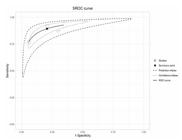
HSROC curve for 4AT for detecting delirium in dementia patients.
Abbreviations: HSROC, Hierarchical Summary Receiver Operating Characteristic.
DISCUSSION
Main findings
In this meta-analysis, we synthesized data from five diagnostic accuracy studies encompassing 1,304 geriatric patients, 482 of whom had dementia. According to the results, 4AT is an effective tool to screen for delirium in individuals with preexisting dementia, with pooled sensitivity and specificity rates of 88 and 79%, respectively. The high sensitivity supports the usefulness of 4AT as a useful initial screening tool to rule out delirium in negative cases. Moderate specificity indicates that confirmatory testing — especially when the 4AT is positive — is required to eliminate underlying symptoms of dementia from delirium.
Contextualization with current literature
Our findings are in line with and advance the existing meta-analyses evaluating 4AT in older adults more broadly. Tieges et al.10 presented pooled sensitivity and specificity estimates of 88%, demonstrating the diagnostic strength of the test. Calf et al.20 showed, in another study, that 4AT was very accurate when compared with other assessment tools such as the Confusion Assessment Method (CAM) and the Modified Richmond Agitation-Sedation Scale (mRASS). In contrast, a reduction in sensitivity when applying the 4AT to more heterogeneous clinical groups was verified by Jeong et al.21 and Hendry et al.22, indicating that routine, less-controlled clinical environments — such as hospital settings — may lower specificity; therefore, the need for subgroup analysis, a section this review particularly explores, was emphasized. We contribute to the literature with our research for specifically targeting the dementia subgroup, a distinction not consistently made by previous meta-analyses. Such specificity increases the clinical applicability of our results to geriatricians and emergency physicians, who are commonly faced with the diagnostic challenge of delirium that occurs in the context of dementia6,10,23.
The Diagnostic Odds Ratio (DOR) of 32.0 indicates a very good overall discriminatory ability. A positive 4AT test result strongly raises the post-test probability of delirium, and a negative result systematically lowers this probability. Clinicians should, however, be cautious in the interpretation of 4AT results in dementia patients, notably because of the risk of false positives from chronic cognitive impairment23-25. In such instances, follow-up evaluation with structured clinical interviews or instruments, such as the CAM, is recommended19,23.
Strengths and limitations
This is the first meta-analysis to specifically address the use of 4AT in dementia populations, addressing an important knowledge gap. In this study, we employed rigorous methodology in line with PRISMA-DTA and Cochrane DTA guidelines and novel statistical models (bivariate and HSROC) for data synthesis14. However, limitations must be acknowledged. The small number of combined studies (n=5), differences between studies in the prevalence of dementia (14–80%), and application of variable reference standards may restrict generalizability. Publication bias and small-study effects were not formally assessed due to the limited number of included studies, which reduces the power and interpretability of conventional bias diagnostics. This limitation is consistent with recommendations from the Cochrane DTA Handbook14.
Implications for practice and research
4AT is an effective delirium screening instrument in individuals with dementia, especially where time, training, and personnel constraints exist. Its high sensitivity renders it a useful tool for ruling out delirium and promoting early treatment8,24. A positive 4AT, however, should be considered in the context of clinical assessment and, if possible, complemented by targeted testing. Authors of future studies should investigate the performance of the 4AT between dementia subtypes (e.g., Alzheimer’s disease versus vascular dementia) and across different clinical settings as well as its integration within standard delirium care pathways.
All in all, in this meta-analysis we evaluated five studies investigating 4AT as a tool for delirium screening in patients with dementia. According to the findings, 4AT is a highly-sensitive test with an acceptable level of specificity for delirium detection in older adult patients with dementia. Ease of application and lack of extensive training needs make it an appropriate option for screening in acute and resource-limited settings alike. In this review, we validate 4AT use in ongoing delirium screening initiatives and highlight the importance of further validation in other dementia populations and healthcare settings.
DATA AVAILABILITY STATEMENT
No new data were generated or analyzed in this study.
REFERENCES
- 1 American Psychiatric Association. Diagnostic and statistical manual of mental disorders. 5th ed. American Psychiatric Association; 2022.
-
2 2. Echeverría M de LR, Schoo C, Paul M. Delirium. 2022 [cited on Nov. 6, 2024]. Available from: https://www.ncbi.nlm.nih.gov/books/NBK470399/
» https://www.ncbi.nlm.nih.gov/books/NBK470399/ -
3 Hshieh TT, Inouye SK, Oh ES. Delirium in the elderly. Psychiatr Clin North Am. 2018;41(1):1-17. https://doi.org/10.1016/j.psc.2017.10.001
» https://doi.org/10.1016/j.psc.2017.10.001 -
4 Chen F, Liu L, Wang Y, Liu Y, Fan L, Chi J. Delirium prevalence in geriatric emergency department patients: A systematic review and meta-analysis. Am J Emerg Med. 2022;59:121-8. https://doi.org/10.1016/j.ajem.2022.05.058
» https://doi.org/10.1016/j.ajem.2022.05.058 -
5 Lee S, Gottlieb M, Mulhausen P, Wilbur J, Reisinger HS, Han JH, et al. Recognition, prevention, and treatment of delirium in emergency department: An evidence-based narrative review. Am J Emerg Med. 2019;38(2):349-57. https://doi.org/10.1016/j.ajem.2019.158454
» https://doi.org/10.1016/j.ajem.2019.158454 -
6 Oh ES, Fong TG, Hshieh TT, Inouye SK. Delirium in older persons. JAMA. 2017;318(12):1161-74. https://doi.org/10.1001/jama.2017.12067
» https://doi.org/10.1001/jama.2017.12067 -
7 Chmielewski M, Clark LA, Bagby RM, Watson D. Method matters: Understanding diagnostic reliability in DSM-IV and DSM-5. J Abnorm Psychol. 2015;124(3):764-9. https://doi.org/10.1037/abn0000069
» https://doi.org/10.1037/abn0000069 -
8 MacLullich AMJ, Shenkin SD, Goodacre S, Godfrey M, Hanley J, Stíobhairt A, et al. The 4 ’A’s test for detecting delirium in acute medical patients: a diagnostic accuracy study. Health Technol Assess (Rockv). 2019;23(40):1194. https://doi.org/10.3310/hta23400
» https://doi.org/10.3310/hta23400 -
9 Bellelli G, Morandi A, Davis DHJ, Mazzola P, Turco R, Gentile S, et al. Validation of the 4AT, a new instrument for rapid delirium screening: a study in 234 hospitalised older people. Age Ageing. 2014;43(4):496-502. https://doi.org/10.1093/ageing/afu021
» https://doi.org/10.1093/ageing/afu021 -
10 Tieges Z, MacLullich AMJ, Anand A, Brookes C, Cassarino M, O’Connor M, et al. Diagnostic accuracy of the 4AT for delirium detection in older adults: systematic review and meta-analysis. Age Ageing. 2020;50(3):73343. https://doi.org/10.1093/ageing/afaa224
» https://doi.org/10.1093/ageing/afaa224 -
11 Håkon Ihle‐Hansen, Johnsen NT, Jankowiak T, Hagberg G, Marte Meyer Walle-Hansen, Ida Wilson Landgraff, et al. Delirium screening in a stroke unit by nurses using 4AT: Results from a quality improvement project. Nursing Open. 2023;10(11):7431-6. https://doi.org/10.1002/nop2.1856
» https://doi.org/10.1002/nop2.1856 -
12 Fong TG, Hshieh TT, Tabloski PA, Metzger ED, Arias F, Heintz HL, et al. Identifying delirium in persons with moderate or severe dementia: review of challenges and an illustrative approach. Am J Geriatr Psychiatry. 2022;30(10):1067–78. https://doi.org/10.1016/j.jagp.2022.04.003
» https://doi.org/10.1016/j.jagp.2022.04.003 -
13 McInnes MDF, Moher D, Thombs BD, McGrath TA, Bossuyt PM, the PRISMA-DTA Group, et al. Preferred Reporting Items for a Systematic Review and Meta-analysis of Diagnostic Test Accuracy Studies: The PRISMA-DTA Statement. JAMA. 2018;319(4):388-396. https://doi.org/10.1001/jama.2017.19163
» https://doi.org/10.1001/jama.2017.19163 -
14 Deeks JJ, Bossuyt PM, Leeflang MM, Takwoingi Y, editors. Cochrane handbook for systematic reviews of diagnostic test accuracy. Version 2.0 [Internet]. Cochrane; 2023 [cited on June 30, 2025]. Available from: https://training.cochrane.org/handbook-diagnostic-test-accuracy/current
» https://training.cochrane.org/handbook-diagnostic-test-accuracy/current -
15 Kim KW, Lee J, Choi SH, Huh J, Park SH. Systematic review and meta-analysis of studies evaluating diagnostic test accuracy: a practical review for clinical researchers-part I. General guidance and tips. Korean J Radiol. 2015;16(6):1175-87. https://doi.org/10.3348/kjr.2015.16.6.1175
» https://doi.org/10.3348/kjr.2015.16.6.1175 -
16 O’Sullivan D, Brady N, Manning E, O’Shea E, O’Grady S, O ’Regan N, et al. Validation of the 6-Item cognitive impairment test and the 4AT test for combined delirium and dementia screening in older emergency department attendees. Age Ageing. 2017;47(1):61-8. https://doi.org/10.1093/ageing/afx149
» https://doi.org/10.1093/ageing/afx149 -
17 De J, Wand APF, Smerdely PI, Hunt GE. Validating the 4A’s test in screening for delirium in a culturally diverse geriatric inpatient population. Int J Geriatr Psychiatry. 2016;32(12):1322-9. https://doi.org/10.1002/gps.4615
» https://doi.org/10.1002/gps.4615 -
18 Pouw MA, Calf AH, Georg RR, Ter JC. Diagnostic accuracy of the Dutch version of the 4AT for delirium detection in a mixed patient population and setting. Aging Clin Exp Res. 2023;35(8):1705-10. https://doi.org/10.1007/s40520-023-02447-2
» https://doi.org/10.1007/s40520-023-02447-2 -
19 Shenkin SD, Fox C, Godfrey M, Siddiqi N, Goodacre S, Young J, et al. Delirium detection in older acute medical inpatients: a multicentre prospective comparative diagnostic test accuracy study of the 4AT and the confusion assessment method. BMC Med. 2019;17(1):138. https://doi.org/10.1186/s12916-019-1367-9
» https://doi.org/10.1186/s12916-019-1367-9 -
20 Calf AH, Pouw MA, van Munster BC, Burgerhof JGM, de Rooij SE, Smidt N. Screening instruments for cognitive impairment in older patients in the Emergency Department: a systematic review and meta-analysis. Age Ageing. 2021;50(1):105-12. https://doi.org/10.1093/ageing/afaa183
» https://doi.org/10.1093/ageing/afaa183 -
21 Jeong E, Park J, Chang SO. Development and evaluation of clinical practice guideline for delirium in long-term care. Int J Environ Res Public Health. 2020;17(21):8255. https://doi.org/10.3390/ijerph17218255
» https://doi.org/10.3390/ijerph17218255 -
22 Hendry K, Quinn TJ, Evans J, Scortichini V, Miller H, Burns J, et al. Evaluation of delirium screening tools in geriatric medical inpatients: a diagnostic test accuracy study. Age Ageing. 2016;45(6):832-7. https://doi.org/10.1093/ageing/afw130
» https://doi.org/10.1093/ageing/afw130 -
23 Evensen S, Hylen Ranhoff A, Lydersen S, Saltvedt I. The delirium screening tool 4AT in routine clinical practice: prediction of mortality, sensitivity and specificity. Eur Geriatr Med. 2021;12(4):793-800. https://doi.org/10.1007/s41999-021-00489-1
» https://doi.org/10.1007/s41999-021-00489-1 -
24 Han JH, Wilson A, Graves AJ, Shintani A, Schnelle JF, Ely EW. A quick and easy delirium assessment for nonphysician research personnel. Am J Emerg Med. 2016;34(6):1031-6. https://doi.org/10.1016/j.ajem.2016.02.069
» https://doi.org/10.1016/j.ajem.2016.02.069 -
25 Lees R, Corbet S, Johnston C, Moffitt E, Shaw G, Quinn TJ. Test accuracy of short screening tests for diagnosis of delirium or cognitive impairment in an acute stroke unit setting. Stroke. 2013;44(11):3078-83. https://doi.org/10.1161/strokeaha.113.001724
» https://doi.org/10.1161/strokeaha.113.001724


