 Teleneuropsychology in Latin America: Experiences and challenges during the COVID-19 pandemic
ABSTRACT.
The COVID-19 pandemic accelerated the use of teleneuropsychology (TeleNP) to deliver remote neuropsychological services in settings with limited clinic access.
Objective: To examine TeleNP practices in Latin America (LA), focusing on clinicians’ perceptions of utility, validity, and barriers.
Methods: A descriptive, exploratory cross-sectional survey was conducted between November 2020 and January 2021 among health professionals practicing neuropsychology in LA. The instrument, validated through a Delphi process, assessed professional background, TeleNP use, patient profiles, applied tests, and perceived advantages and challenges.
Results: A total of 212 clinicians from 10 countries participated (mean age and clinical experience=42.7 years and 12.3 years, respectively). Participants were primarily psychologists (75.9%), but also neurologists, geriatricians, psychiatrists and speech-language pathologists. TeleNP adoption rose from 4.2% regular and 13.7% occasional pre-pandemic use to 58% at the time of the survey, with significant cross-country variation (χ2=79.0, df=30, p<0.001). TeleNP was used mainly for patient (90%) and informant (89.5%) interviews, screening (71.8%), and, in half of the cases, more extensive assessments. The advantages reported were improved access (81.5%), reduced transportation costs (79.8%), patient comfort (66.1%), and easier scheduling (66.1%). The main barrier identified was limited patient connectivity (84.7%). Regulatory knowledge was heterogeneous: 36.7% reported TeleNP authorization in their country, 23.5% reported no authorization, and 39.8% were unsure.
Conclusion: TeleNP adoption in LA increased during the pandemic and is perceived as a valid, accessible modality to address geographic disparities in neuropsychological care. However, heterogeneous implementation, regulatory uncertainty, and technological limitations remain major challenges, underscoring the need for standardized guidelines.
Keywords:
Neuropsychology; COVID-19; Neuropsychological Tests; Latin America; Health Services Accessibility; Dementia
RESUMEN.
La pandemia de COVID-19 aceleró el uso de la teleneuropsicología (TeleNP) para ofrecer servicios neuropsicológicos remotos en entornos con acceso limitado a clínicas.
Objetivo: Examinar las prácticas de TeleNP en América Latina (AL), centrándose en las percepciones de los clínicos sobre su utilidad, validez y barreras.
Métodos: Se realizó una encuesta descriptiva, exploratoria y de corte transversal entre noviembre de 2020 y enero de2021 entre profesionales de la salud que ejercen la neuropsicología en AL. El instrumento, validado mediante un proceso Delphi, evaluó los antecedentesprofesionales, el uso de TeleNP, los perfiles de los pacientes, las pruebas aplicadas y las ventajas y desafíos percibidos.
Resultados: Participaron un totalde 212 clínicos de 10 países (edad media=42,7 años; experiencia=12,3 años). Los participantes fueron principalmente psicólogos (75,9%), aunquetambién se incluyeron neurólogos, geriatras, psiquiatras y terapeutas del lenguaje. La adopción de TeleNP aumentó de un uso regular de 4,2% y un usoocasional de 13,7% antes de la pandemia a un 58% en el momento de la encuesta, con una variación significativa entre países (χ2=79,0; gl=30; p<0.001).La TeleNP se utilizó principalmente para entrevistas con pacientes (90%) e informantes (89,5%), cribado (screening) (71,8%) y, en la mitad de los casos,evaluaciones más exhaustivas. Las ventajas reportadas fueron la mejora de acceso (81,5%), la reducción de los costos de transporte (79,8%), la comodidaddel paciente (66,1%) y la facilidad de programación de citas (66,1%). La principal barrera identificada fue la limitada conectividad de los pacientes (84,7%).El conocimiento normativo fue heterogéneo: el 36,7% informó tener autorización para la TeleNP en su país, el 23,5% informó no tener autorización y el39,8% no estaba seguro.
Conclusión: La adopción de TeleNP en AL aumentó durante la pandemia y se percibe como una modalidad válida y accesiblepara abordar las disparidades geográficas en la atención neuropsicológica. Sin embargo, la implementación heterogénea, la incertidumbre regulatoria y laslimitaciones tecnológicas siguen siendo desafíos importantes, lo que subraya la necesidad de directrices estandarizadas.
Palabras clave:
Neuropsicología; COVID-19; Pruebas Neuropsicológicas; América Latina; Accesibilidad a los Servicios de Salud; Demencia
INTRODUCTION
Neuropsychological assessment is essential for diagnosing and managing brain disorders1. Traditionally conducted in person using paper-and-pencil tasks, these evaluations were transformed by the COVID-19 pandemic, which accelerated the adoption of online methods collectively referred to as teleneuropsychology (TeleNP). Practiced for over two decades2, TeleNP expanded markedly during the pandemic3 and improved access to services, particularly for historically underserved populations4,5 .
TeleNP — defined as the use of audiovisual tools for remote neuropsychological evaluation6 — offers advantages such as reduced travel time and lower costs7, although it poses methodological challenges8. Many clinicians still prefer in-person assessments, as traditional paper-and-pencil tests may not be fully transferable to remote formats9,10.
clinician-patient interactions;
the presentation of stimuli;
the level of control clinicians maintains during assessments; and
the ability to capture qualitative information from patient performance11
Another key factor is the technical infrastructure required, including stable internet and adequate electronic devices6 ,12. Access to these resources remains limited in Latin America due to disparities in connectivity and digital literacy, especially among older adults13-15.
A recent French pilot study examined the feasibility of TeleNP in older adults presenting with cognitive complaints5. The study compared a basic neuropsychological assessment — including a clinical interview — administered via telemedicine with the same evaluation conducted face-to-face in a mobile clinic. Findings indicated no significant differences in acceptability or user experience between the two approaches, with participants reporting high levels of acceptance and user-friendliness for both the telemedicine format and the mobile clinic setting4,5.
In recent years, consensus-based guidelines have been published to establish standardized methodologies for TeleNP assessment 1,2,6 ,12,16. However, information on TeleNP implementation in Latin America (LA) remains limited, particularly considering regional disparities in human and technological resources.17,18
Considering these gaps and the growing reliance on TeleNP to reach underserved populations, this study sought to describe the use of TeleNP in LA during the COVID-19 pandemic and to examine clinicians’ perceptions of its utility, validity, and associated barriers. To address these objectives, a survey was conducted among neuropsychologists in the region.
METHODS
Study design and subjects
This study employed a descriptive, exploratory quantitative design. A cross-sectional online survey was conducted between November 2020 and January 2021 to collect data on the use of TeleNP across LA countries.
The survey targeted health professionals practicing neuropsychology with adult populations in LA. The sample was defined based on self-reported professional practice in neuropsychology, which was used as a proxy criterion given the heterogeneity of training pathways across the region and the lack of standardized certification in most countries19. To maximize reach, the survey was distributed via email (Google Forms) through colleagues affiliated with the Latin America and the Caribbean Consortium on Dementia (LAC-CD) network17, yielding a non-probability sample.
This study was approved by the Ethics Committee of the School of Medicine of Universidad de Chile (Approval Protocol No. 252-2020; Record No. 180).
Procedure
The survey instrument was developed in Spanish, drawing on previously validated questionnaires to ensure content validity and methodological consistency with prior research11,20,21. To refine the instrument, a Delphi method was employed, involving iterative rounds of expert review to achieve consensus on item clarity, relevance, and comprehensiveness. The final survey was organized into five sections, each designed to capture distinct dimensions of TeleNP practice (Table 1).
The survey was translated into Portuguese by a Brazilian neuropsychologist (MO) and a neurologist (SB). Concordance between the Spanish and Portuguese versions was verified by a Chilean psychologist fluent in Portuguese.
Statistical analysis
Survey data were analyzed using the Statistical Package for the Social Sciences (SPSS, version 27; SPSS Inc., Chicago, IL, USA). Descriptive statistics (frequencies, percentages, means, and standard deviations) were computed for each item to characterize the sample and overall patterns of TeleNP use. To examine associations between categorical variables, chi-square tests of independence were conducted, including analyses of cross-country differences in TeleNP practices and reported regulations, as well as the relationship between training background and TeleNP use. Statistical significance was set at p<0.05.
RESULTS
Sociodemographic profile and professional background of study participants
A total of 212 neuropsychologists from 10 LA countries responded to the survey. The mean age of participants was 42.72 (standard deviation – SD=10.6), with an average of 12.28 years of professional experience (SD=8.7). Most participants were psychologists (75.9%), although there were also neurologists (9%), geriatricians (5.2%), speech therapists (4.7%), and psychiatrists (1.4%). Table 2 for country-level details.
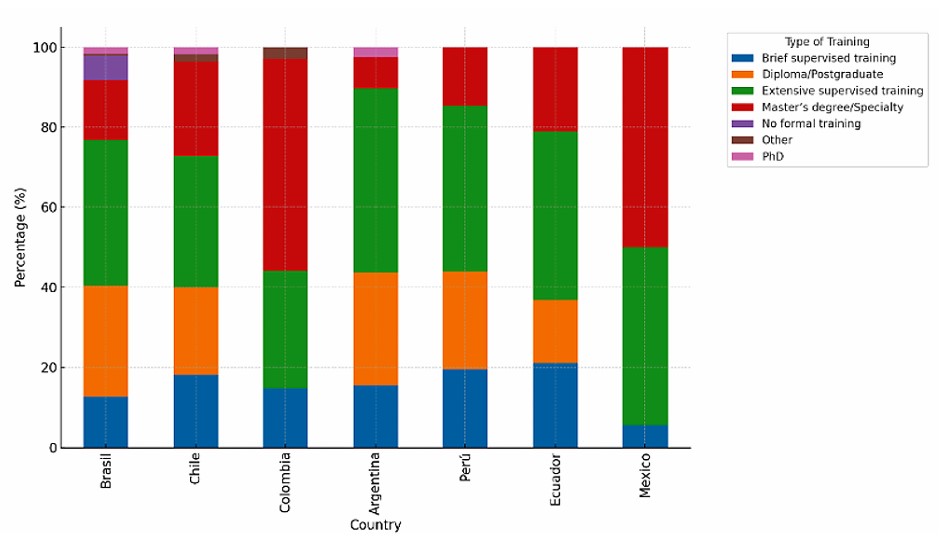
The educational background and type of training in neuropsychology varied among respondents: 22.2% reported holding a diploma or postgraduate certificate, 20.7% a master’s degree or specialty in the field, and 1.3% a PhD. In terms of practical training, 37.5% had received extensive supervised training, whereas 14.7% reported only brief supervised experience in neuropsychology (Figure 1 for country-level details).
Regarding time allocation for neuropsychological evaluations within the working day, 40.1% reported it as their primary work activity; 39.6% dedicated only part of their working day, and 20.3% considered it a minor activity. Most respondents reported the private sector as their primary workplace (61.5%), followed by the public sector (32.0%) and academia (4–5%).
General antecedents of the use of teleneuropsychology
Overall, 125 participants (58%) reported currently practicing TeleNP, representing an increase compared with the period before the COVID-19 pandemic. Prior to the pandemic, its use was infrequent: 4.2% reported using it regularly and 13.7% occasionally.
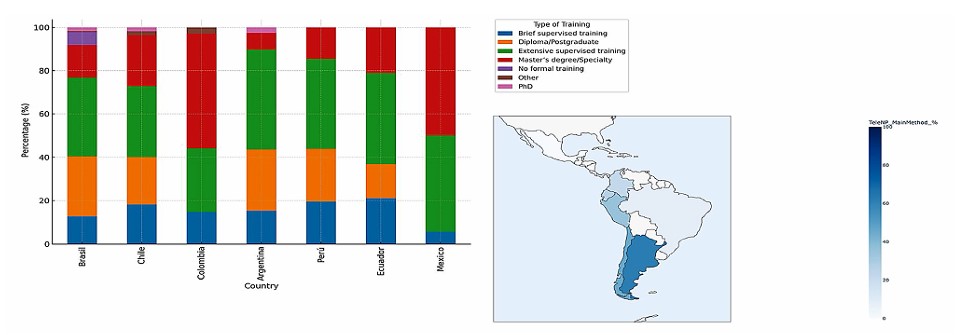
At the time of the survey, 22.6% of respondents reported using TeleNP as their primary evaluation method. A mixed approach — combining remote and in-person assessments — was employed by 36.8%. Meanwhile, 33.5% relied exclusively on in-person evaluations, and 7.1% had suspended their clinical practice altogether. The analysis revealed statistically significant cross-country differences in the current practice of TeleNP (χ2=79.0, df=30, p<0.001). In Argentina and Chile, a large proportion of professionals reported using TeleNP as their primary evaluation method, whereas in Brazil fully in-person assessments predominated. In contrast, Colombia and Peru showed greater reliance on mixed approaches, with Peru also presenting the highest proportion of professionals who reported suspending their clinical practice. Figure 2 shows the practice of TeleNP by country.
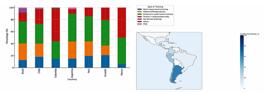
Use of teleneuropsychology in Latin America and the Caribbean per country and Geographical Distribution of Teleneuropsychology as Main Evaluation Method in Latin America.
When exploring the association between training background and the use of TeleNP, the analysis did not reveal significant differences across groups. Professionals with postgraduate diplomas, master’s or specialty training, doctoral degrees, or varying levels of supervised practice were similarly distributed among those who reported using TeleNP as their main method, those combining it with in-person practice, and those maintaining fully in-person evaluations. The chi-square test confirmed the absence of a statistically significant relationship (χ2=19.23, df=18, p=0.378), suggesting that the type of academic or supervised training does not appear to be a decisive factor in shaping current patterns of TeleNP use across the region.
Regarding technology use in TeleNP, most participants preferred the Zoom platform (52.8%) and the use of a computer or laptop (80.2%). The latter was particularly prevalent in Chile and Argentina, where participants from Peru, Brazil, Colombia, and Mexico preferred cell phone for TeleNP. The predominant type of internet connection was Wi-Fi (90.6%).
The analysis of national regulations on TeleNP revealed substantial cross-country variation. Overall, 36.7% (n=76) of respondents reported that TeleNP is authorized in their country, 23.5% (n=49) indicated it is not, and 39.8% (n=82) were unsure (χ2=87.90, df=12, p<0.001). In Argentina, nearly all affirmed authorization (95%, n=20), while uncertainty predominated in Chile (≈60%, n=15) and Brazil (44%, n=45). Most respondents in Colombia reported authorization (74%, n=17), whereas in Peru the majority reported no authorization (68%, n=13). In Ecuador and Mexico, "don’t know" was the most frequent response. These findings highlight both regulatory diversity and limited awareness of the legal status of TeleNP in the region.
TeleNP was mainly used with patients showing mild cognitive impairment or subjective complaints (42.9%) (Table 3 for country-level details).
Characterization of clinical practice using Teleneuropsychology
Regarding the purpose of TeleNP, most respondents reported using it to interview both patients (n=112, 90%) and family members or informants (n=111, 89.5%). TeleNP was also frequently applied for screening evaluations (n=89, 71.8%), whereas only half of the respondents (n=62, 50%) reported using it to conduct extensive assessments.
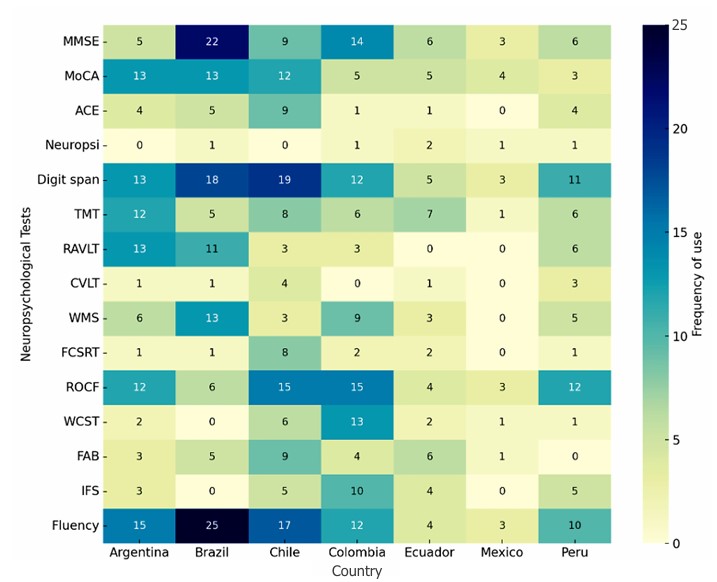
The most frequently used test in TeleNP was Verbal Fluency (70.2%), followed by the Digits Span task (66.1%), the Rey-Osterrieth Complex Figure Test (54.8%), and the Mini-Mental State Examination (53,2%). Figure 3 displays the distribution of neuropsychological tests administered through TeleNP across LA countries.
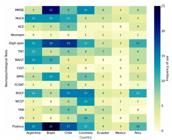
Neuropsychological Test used in teleneuropsychology by Country.
Abbreviations: MMSE, Mini-Mental State Examination; MoCA, Montreal Cognitive Assessment; ACE, Addenbrooke’s Cognitive Examination; TMT, Trail Making Test; RAVLT, Rey Auditory Verbal Learning Test; CVLT, California Verbal Learning Test; WMS, Wechsler Memory Scale; FCSRT, Free and Cued Selective Reminding Test; ROCF, Rey-Osterrieth Complex Figure; WCST, Wisconsin Card Sorting Test; FAB, Frontal Assessment Battery; IFS, INECO Frontal Screening.
A total of 60.5% of respondents reported adapting test administration protocols compared with traditional in-person assessments. Most of these adaptations were self-devised (42.7%), while others followed modifications proposed by test authors (22.6%) or expert consensus (18.5%). Reported strategies included incorporating an informant to assist with the presentation of test stimuli, sending stimuli in advance by email, or displaying them through screen-sharing slides.
Perception of teleneuropsychology
Overall, 80.6% (n=100) of the participants considered that TeleNP was sufficient to fulfill the goal of a neuropsychological evaluation. Reported advantages of TeleNP included improved access regardless of location (81.5%); reduced transportation costs (79.8%); greater patient comfort from being assessed in a familiar environment (66.1%); and easier scheduling (66.1%). Additional benefits mentioned by participants included lower exposure to COVID-19 infection in an at-risk population and savings in travel time. Detailed country-level results are presented in Table 4.
Patient satisfaction was reported by 27.4% (n=34) of participants in the total sample, with important variation across countries. Rates ranged from 100% (n=6) in Mexico to 22% (n=9) in Brazil. In Chile, the proportion was 23.8% (n=5), in Argentina 31.3% (n=5), in Peru 28.6% (n=4), in Colombia 50% (n=8), and in Ecuador 22.2% (n=2).
The main barrier reported by participants to TeleNP across most countries was the limited connectivity of the evaluated individuals, which was poorer than that of the evaluator (additional details in Table 5). Indeed, restricted access to technology and inadequate connectivity in LA were identified as the principal barriers to the widespread implementation of TeleNP in the region.
DISCUSSION
This study provides one of the first region-wide overviews of TeleNP practices in LA during the COVID-19 pandemic. Findings indicate that although TeleNP was rarely used before the pandemic, its adoption increased substantially, with more than half of professionals reporting its use. The application of TeleNP varied significantly across countries: in Argentina and Chile, many clinicians reported using it as their primary evaluation method; in Brazil, fully in-person assessments predominated; and in Colombia and Peru, mixed approaches were more common. Clinically, TeleNP was most frequently applied to patients with mild cognitive impairment and subjective cognitive complaints and was primarily used for interviews and screening evaluations rather than full assessments. Despite notable barriers — particularly technological limitations — most clinicians perceived TeleNP as useful and advantageous, emphasizing accessibility, reduced costs, and greater patient comfort as its main benefits.
Consistent with these results, a recent national survey in Mexico22 similarly showed a significant rise in TeleNP implementation after the onset of the pandemic, with more than 80% of neuropsychologists reporting current use. Their data also revealed that training in TeleNP was predominantly acquired through self-directed learning and bibliographic review rather than formal supervised instruction, and that technological barriers — such as poor internet connectivity and limited access to adequate devices — were among the most frequently reported obstacles. Serrano-Juárez et al.23 emphasized that this rapid and largely unstructured expansion of TeleNP in the region should be systematically organized through models tailored to Latin American contexts, including standardized procedures, technological requirements, and culturally sensitive guidelines to ensure validity, reliability, and ethical soundness in clinical practice.
TeleNP is an emerging field that has expanded in recent years, particularly accelerated by the COVID-19 pandemic, and its use continues to be reported in current practice24. Although general practice recommendations have been recently developed to support TeleNP implementation6,12, no studies had previously examined its application in the context of the pandemic across LA, a region characterized by significant cultural diversity and marked heterogeneity in technological infrastructure. Importantly, while participants recognized multiple advantages of TeleNP, they also highlighted persistent challenges in LA, particularly limited access to adequate technology and internet connectivity, as well as the need to adapt traditional in-person assessment procedures to remote modalities.
The findings highlight patterns that mirror, but also diverge from, those reported in other regions. Similar to surveys conducted in North America and Europe, the use of TeleNP in LA was rare before COVID-19 but increased substantially during the pandemic, particularly for patient and informant interviews and brief cognitive screening25,26. However, in contrast to high-income countries where access to adequate devices and stable internet is more widely available, clinicians in LA consistently identified patient-side connectivity as the main barrier, echoing concerns raised by previous studies in underserved contexts5,27. The heterogeneity across countries in legal frameworks and clinicians’ awareness of them also appears more pronounced than in settings with centralized telehealth regulations28. Taken together, these results suggest that while the advantages of TeleNP — such as accessibility and reduced costs — are broadly recognized worldwide, the LA experience underscores how structural inequalities in infrastructure and digital literacy critically shape the feasibility and equity of remote neuropsychological assessment.
Regarding technological resources, most participants reported conducting assessments using a computer or laptop, while only a small group relied on cell phones.
This finding is consistent with reports from other regions25, where TeleNP has also been primarily implemented via computers. Such preference is likely shaped by international recommendations on screen size for stimulus presentation6 and by the fact that most psychometric validation studies of TeleNP have been carried out on laptops or computers8. Nevertheless, this poses a significant challenge in LA, where large segments of the population — particularly underserved groups — have more reliable access to cell phones than to computers. Ensuring equitable implementation of TeleNP will therefore require strategies to improve access to adequate devices5. Additional barriers included unstable internet connections, often aggravated during the pandemic by increased network demand due to teleworking and online education29. This limitation is particularly concerning in rural areas, where connectivity is typically poorer than in urban centers, even though TeleNP could be especially beneficial for these populations30-32.
In terms of regulation, only one third of participants indicated that TeleNP was legally authorized in their country, while nearly 40% were uncertain. This suggests that, beyond the heterogeneity in local regulatory frameworks, there is limited awareness among professionals about the legal status of TeleNP in their own contexts. This gap highlights the need for clearer guidance and dissemination of information for clinicians, similar to the standards provided by the American Psychological Association28. Notably, since December 2022, Brazil has implemented a telehealth law establishing regulatory provisions for both patients and health professionals, illustrating how country-level developments may not always be fully known or understood by practitioners.
Despite its limitations, clinicians in LA viewed TeleNP as valid, accessible, and patient-centered. These included reduced transportation costs and the comfort of being assessed at home, given that traveling to a medical facility can be stressful in itself4, particularly for the populations most frequently attended by the professionals surveyed. TeleNP was also recognized as a valuable option for individuals with physical disabilities, enabling them to receive quality care without leaving their homes25. Similarly, for patients living in remote rural areas, TeleNP offers the possibility of avoiding long and costly trips to access specialized healthcare33. From an economic standpoint, telemedicine has further been shown to reduce healthcare costs and require less time compared with traditional in-person approaches34.
Challenges encountered by professionals
Adapting neuropsychological assessments to TeleNP in LA proved challenging, as clinicians were required to introduce multiple modifications to ensure effective evaluations. Among the most common adjustments were changes to test instructions, alternative modes of stimulus presentation, and, in some cases, the involvement of a family member to assist the patient — an approach rarely used in traditional face-to-face settings. These modifications also generated additional difficulties, particularly the limited control over the evaluation environment, which demanded greater vigilance from examiners to monitor patient behavior and manage potential distractions. Clinicians often faced the delicate task of balancing the supportive role of an informant with the risk of excessive interference in the assessment process, an issue identified as a specific challenge for TeleNP practice.
A key limitation of this study concerns the potential selection bias associated with the recruitment strategy. The survey was primarily disseminated through the LACCD network, which may have favored the participation of professionals from countries with stronger digital connectivity and international academic ties. Consequently, contexts with more consolidated infrastructure and professional networks may be overrepresented, whereas those with fewer technological resources or reduced integration into regional collaborations may be underrepresented. This limitation restricts the generalizability of the findings and underscores the need for future studies to adopt more inclusive sampling strategies to better represent the diversity of regional realities.
In conclusion, this study provides essential insights into the implementation of TeleNP across Latin America, highlighting both its rapid expansion during the COVID-19 pandemic and the persistent challenges that remain. While TeleNP has demonstrated its potential to improve access to neuropsychological services, particularly for underserved populations, its equitable use is still constrained by technological barriers and disparities in digital literacy. Moreover, psychometric validation of remote assessments in diverse populations remains an urgent priority to ensure methodological rigor. Moving forward, the systematic development of regional guidelines — including standardized procedures, platform and device requirements, and context-sensitive recommendations — will be critical to consolidate TeleNP as a reliable, valid, and sustainable practice beyond the pandemic.
DATA AVAILABILITY STATEMENT
The datasets generated and/or analyzed during the current study are available from the corresponding author upon reasonable request.
REFERENCES
-
1 Bloch A, Maril S, Kavé G. How, when, and for whom: Decisions regarding remote neuropsychological assessment during the 2020 COVID-19 pandemic. Isr J Health Policy Res. 2021;10(1):31. https://doi.org/10.1186/s13584-021-00465-x
» https://doi.org/10.1186/s13584-021-00465-x -
2 Grosch MC, Gottlieb MC, Cullum CM. Initial practice recommendations for teleneuropsychology. Clin Neuropsychol. 2011;25(7):1119-33. https://doi.org/10.1080/13854046.2011.609840
» https://doi.org/10.1080/13854046.2011.609840 -
3 Hammers DB, Stolwyk R, Harder L, Cullum CM. A survey of international clinical teleneuropsychology service provision prior to and in the context of COVID-19. Clin Neuropsychol. 2020;34(7-8):1267-83. https://doi.org/10.1080/13854046.2020.1810323
» https://doi.org/10.1080/13854046.2020.1810323 -
4 Zeghari R, Guerchouche R, Duc MT, Bremond F, Lemoine MP, Bultingaire V, et al. Pilot study to assess the feasibility of a mobile unit for remote cognitive screening of isolated elderly in rural areas. Int J Environ Res Public Health. 2021;18(11):6108. https://doi.org/10.3390/ijerph18116108
» https://doi.org/10.3390/ijerph18116108 -
5 Zeghari R, Guerchouche R, Tran-Duc M, Bremond F, Langel K, Ramakers I, et al. Feasibility study of an internet-based platform for tele-neuropsychological assessment of elderly in remote areas. Diagnostics (Basel). 2022;12(4):925. https://doi.org/10.3390/diagnostics12040925
» https://doi.org/10.3390/diagnostics12040925 -
6 Bilder RM, Postal KS, Barisa M, Aase DM, Cullum CM, Gillaspy SR, et al. InterOrganizational practice committee recommendations/guidance for teleneuropsychology (TeleNP) in response to the COVID-19 pandemic. Clin Neuropsychol. 2020;34(7-8)1314-34. https://doi.org/10.1080/13854046.2020.1767214
» https://doi.org/10.1080/13854046.2020.1767214 -
7 Kitaigorodsky M, Loewenstein D, Cid RC, Crocco E, Gorman K, González-Jiménez C. A teleneuropsychology protocol for the cognitive assessment of older adults during COVID-19. Front Psychol. 2021;12:651136. https://doi.org/10.3389/fpsyg.2021.651136
» https://doi.org/10.3389/fpsyg.2021.651136 -
8 Marra DE, Hamlet KM, Bauer RM, Bowers D. Validity of teleneuropsychology for older adults in response to COVID-19: a systematic and critical review. Clin Neuropsychol. 2020;34(7-8):1411-52. https://doi.org/10.1080/13854046.2020.1769192
» https://doi.org/10.1080/13854046.2020.1769192 -
9 Gnassounou R, Defontaines B, Denolle S, Brun S, Germain R, Schwartz D, et al. Comparison of neuropsychological assessment by videoconference and face to face. J Int Neuropsychol Soc. 2022;28(5):483-93. https://doi.org/10.1017/S1355617721000679
» https://doi.org/10.1017/S1355617721000679 -
10 Schmand B. Why are neuropsychologists so reluctant to embrace modern assessment techniques? Clin Neuropsychol. 2019;33(2):209-19. https://doi.org/10.1080/13854046.2018.1523468
» https://doi.org/10.1080/13854046.2018.1523468 -
11 Parsons MW, Gardner MM, Sherman JC, Pasquariello K, Grieco JA, Kay CD, et al. Feasibility and acceptance of direct-to-home tele-neuropsychology services during the COVID-19 pandemic. J Int Neuropsychol Soc. 2022;28(2):210-5. https://doi.org/10.1017/S1355617721000436
» https://doi.org/10.1017/S1355617721000436 -
12 Crivelli L, Quiroz YT, Calandri IL, Martin ME, Velilla LM, Cusicanqui MI, et al. Working group recommendations for the practice of teleneuropsychology in Latin America. Arch Clin Neuropsychol. 2022;37(3):553-67. https://doi.org/10.1093/arclin/acab080
» https://doi.org/10.1093/arclin/acab080 -
13 Malaquias RF, Albertin AL. Challenges for development and technological advancement: An analysis of Latin America. Information Development. 2019;35(3):413-20. https://doi.org/10.1177/0266666918756170
» https://doi.org/10.1177/0266666918756170 -
14 Datta A, Bhatia V, Noll J, Dixit S. Bridging the digital divide: Challenges in opening the digital world to the elderly, poor, and digitally illiterate. IEEE Consumer Electronics Magazine. 2019;8(1):78-81. https://doi.org/10.1109/MCE.2018.2867985
» https://doi.org/10.1109/MCE.2018.2867985 -
15 Smirnykh L. Digital literacy of the elderly population and digitalization of enterprises: experience of European countries. Voprosy Ekonomiki. 2020;12:104-24. https://doi.org/10.32609/0042-8736-2020-12-104-124
» https://doi.org/10.32609/0042-8736-2020-12-104-124 -
16 Hewitt KC, Block C, Bellone JA, Dawson EL, Garcia P, Gerstenecker A, et al. Diverse experiences and approaches to tele neuropsychology: Commentary and reflections over the past year of COVID-19. Clin Neuropsychol. 2022;36(4):790-805. https://doi.org/10.1080/13854046.2022.2027022
» https://doi.org/10.1080/13854046.2022.2027022 -
17 Ibanez A, Parra MA, Butler C, Latin America and the Caribbean Consortium on Dementia. The Latin America and the Caribbean Consortium on Dementia (LAC-CD): from networking to research to implementation science. J Alzheimers Dis. 2021;82(s1):S379-S394. https://doi.org/10.3233/JAD-201384
» https://doi.org/10.3233/JAD-201384 -
18 Parra MA, Butler S, McGeown WJ, Nicholls LAB, Robertson DJ. Globalising strategies to meet global challenges: the case of ageing and dementia. J Glob Health. 2019;9(2):020310. https://doi.org/10.7189/jogh.09.020310
» https://doi.org/10.7189/jogh.09.020310 -
19 Arango-Lasprilla JC, Stevens L, Morlett Paredes A, Ardila A, Rivera D. Profession of neuropsychology in Latin America. Appl Neuropsychol Adult. 2017;24(4):318-30. https://doi.org/10.1080/23279095.2016.1185423
» https://doi.org/10.1080/23279095.2016.1185423 -
20 Arruabarrena MM, Martin ME, Calandri IL, Corvalán N, Helou MB, Martínez C, et al. Teleneuropsychological assessment in South America: a perspective from patients and neuropsychologists. J Appl Cogn Neurosci. 2022;3(2):00324683. https://doi.org/10.17981/JACN.3.2.2022.05
» https://doi.org/10.17981/JACN.3.2.2022.05 -
21 Gardner MM, Aslanzadeh FJ, Zarrella GV, Braun SE, Loughan AR, Parsons MW. Cancer, cognition, and COVID: delivering direct-to-home teleneuropsychology services to neuro-oncology patients. Neurooncol Pract. 2021;8(4):485-96. https://doi.org/10.1093/nop/npab021
» https://doi.org/10.1093/nop/npab021 -
22 Seubert-Ravelo AN, Serrano-Juárez CA, Cabañas-Tinajero JA, González-Gutiérrez FA, Moreno-Villagómez J, Prieto-Corona B, et al. Teleneuropsychology during the COVID-19 pandemic in Mexico: the perspective from a middle-income country. J Clin Exp Neuropsychol. 2023;45(1):12-30. https://doi.org/10.1080/13803395.2023.2189229
» https://doi.org/10.1080/13803395.2023.2189229 -
23 Serrano-Juárez CA, Reyes-Mendez C, Prieto-Corona B, Seubert-Ravelo AN, Moreno-Villagomez J, Cabañas-Tinajero JA, et al. A systematic review and a Latin American clinical model for teleneuropsychological assessment. Arch Clin Neuropsychol. 2023;38(2):283-300. https://doi.org/10.1093/arclin/acac077
» https://doi.org/10.1093/arclin/acac077 -
24 Messler AC, Hargrave DD, Trittschuh EH, Sordahl J. National survey of telehealth neuropsychology practices: Current attitudes, practices, and relevance of tele-neuropsychology three years after the onset of Covid-19. Clin Neuropsychol. 2025;39(5):1017-36. https://doi.org/10.1080/13854046.2023.219242
» https://doi.org/10.1080/13854046.2023.219242 -
25 Fox-Fuller JT, Rizer S, Andersen SL, Sunderaraman P. Survey findings about the experiences, challenges, and practical advice/solutions regarding teleneuropsychological assessment in adults. Arch Clin Neuropsychol. 2022;37(2):274-91. https://doi.org/10.1093/arclin/acab076
» https://doi.org/10.1093/arclin/acab076 -
26 Rochette AD, Rahman-Filipiak A, Spencer RJ, Marshall D, Stelmokas JE. Teleneuropsychology practice survey during COVID-19 within the United States. Appl Neuropsychol Adult. 2022;29(6):1312-22. https://doi.org/10.1080/23279095.2021.1872576
» https://doi.org/10.1080/23279095.2021.1872576 -
27 Caze T, Dorsman KA, Carlew AR, Diaz A, Bailey KC. Can you hear me now? Telephone-based teleneuropsychology improves utilization rates in underserved populations. Arch Clin Neuropsychol. 2020;35(8):1234-9. https://doi.org/10.1093/arclin/acaa098
» https://doi.org/10.1093/arclin/acaa098 -
28 Joint Task Force for the Development of Telepsychology Guidelines for Psychologists. Guidelines for the practice of telepsychology. Am Psychol. 2013;68(9):791-800. https://doi.org/10.1037/a0035001
» https://doi.org/10.1037/a0035001 -
29 Ortego J, Andara R, Navas LM, Vásquez CL, Ramírez-Pisco R. Impact of the Covid-19 pandemic on traffic congestion in Latin American cities: Aan updated five-month study. Ibero-American Congress of Smart Cities. 2021;216-29. https://doi.org/10.1007/978-3-030-69136-3_15
» https://doi.org/10.1007/978-3-030-69136-3_15 -
30 Ramirez-Asis E, Guerra-Muñoz M, Asís-López M, Saenz-Rodriguez R, Castillo-Picon J. Evolution of the Latin American Digital Ecosystem in COVID-19. Webology. 2022;19(1):2621-41. https://doi.org/10.14704/WEB/V19I1/WEB19174
» https://doi.org/10.14704/WEB/V19I1/WEB19174 -
31 Hewitt KC, Rodgin S, Loring DW, Pritchard AE, Jacobson LA. Transitioning to telehealth neuropsychology service: Considerations across adult and pediatric care settings. Clin Neuropsychol. 2020;34(7-8):1335-51. https://doi.org/10.1080/13854046.2020.1811891
» https://doi.org/10.1080/13854046.2020.1811891 -
32 Montaña Luque S, Lopera Vásquez J, Martínez Morales D, Carvajal Castrillón J, Galeano Toro LM. G, Rueda Nobmann MT, et al Teleneuropsicología: experiencia del Instituto Neurológico de Colombia duranteconfinamiento obligatorio por covid-19, año 2020. Ciencia e Innovaciónen Salud. 2021;e131:242-57. https://doi.org/10.17081/innosa.131
» https://doi.org/10.17081/innosa.131 -
33 Morgan DG, Crossley M, Kirk A, McBain L, Stewart NJ, D’Arcy C, et al. Evaluation of telehealth for preclinic assessment and follow-up in an interprofessional rural and remote memory clinic. J Appl Gerontol. 2011;30(3):304-31. https://doi.org/10.1177/0733464810366564
» https://doi.org/10.1177/0733464810366564 -
34 Castanho TC, Amorim L, Moreira PS, Mariz J, Palha JA, Sousa N, et al. Assessing cognitive function in older adults using a videoconference approach. EbioMedicine. 2016;11:278-84. https://doi.org/10.1016/j.ebiom.2016.08.001
» https://doi.org/10.1016/j.ebiom.2016.08.001
-
Funding:
AS is supported by ANID/FONDEF/ ID18I10113, ANID/Fondecyt 1231839, ANID/ IDeA I+D 2022 #ID22I10251 and the MULTI-PARTNER CONSORTIUM TO EXPAND DEMENTIA RESEARCH IN LATIN AMERICA (ReDLat), supported by NIH research grant R01 AG057234 funded by the// National Institute on Aging (NIA) and the Fogarty International Center (FIC), an Alzheimer’s Association grant (SG-20-725707), the Rainwater Charitable Foundation, and the Global Brain Health Institute with additional support from the Bluefield Project to Cure Frontotemporal Dementia, an NIH Contract (75N95022C00031), and NIA under award numbers R01 AG075775, R01 AG082056, and R01 AG083799. The content is solely the responsibility of the authors and does not represent the official views of the National Institutes of Health, Alzheimer’s Association, Rainwater Charitable Foundation, Bluefield Project to Cure Frontotemporal Dementia or Global Brain Health Institut. CDA is supported by ANID/FONDECYT Regular (1210622 & 1250091), ANID/NAM22I0007, ANID/PIA/ANILLOS ACT210096, Alzheimer’s Association (AARGD-24- 1310017), ANID/FOVI240065, ANID/Proyecto Exploracion 13240170
Edited by
-
Editor-in-Chief:
Ricardo Nitrini https://orcid.org/0000-0002-5721-1525