
 Association of gait, balance, and fall risk with dementia in Down syndrome: a systematic review of the literature
Advances in healthcare have led to increased life expectancy among individuals with Down syndrome, resulting in a growing population of older adults within this group. As a result, the prevalence of cognitive decline and dementia has increased, largely due to the genetic predisposition of Down syndrome to early and significant accumulation of brain amyloid and intensified formation of neurofibrillary tangles. Early detection of functional alterations, particularly those related to gait and balance, may serve as a valuable clinical marker of emerging neurocognitive impairment.
Objective: To synthesize the current evidence on the relationship between gait, cognitive decline, and dementia in adults and older adults with Down syndrome.
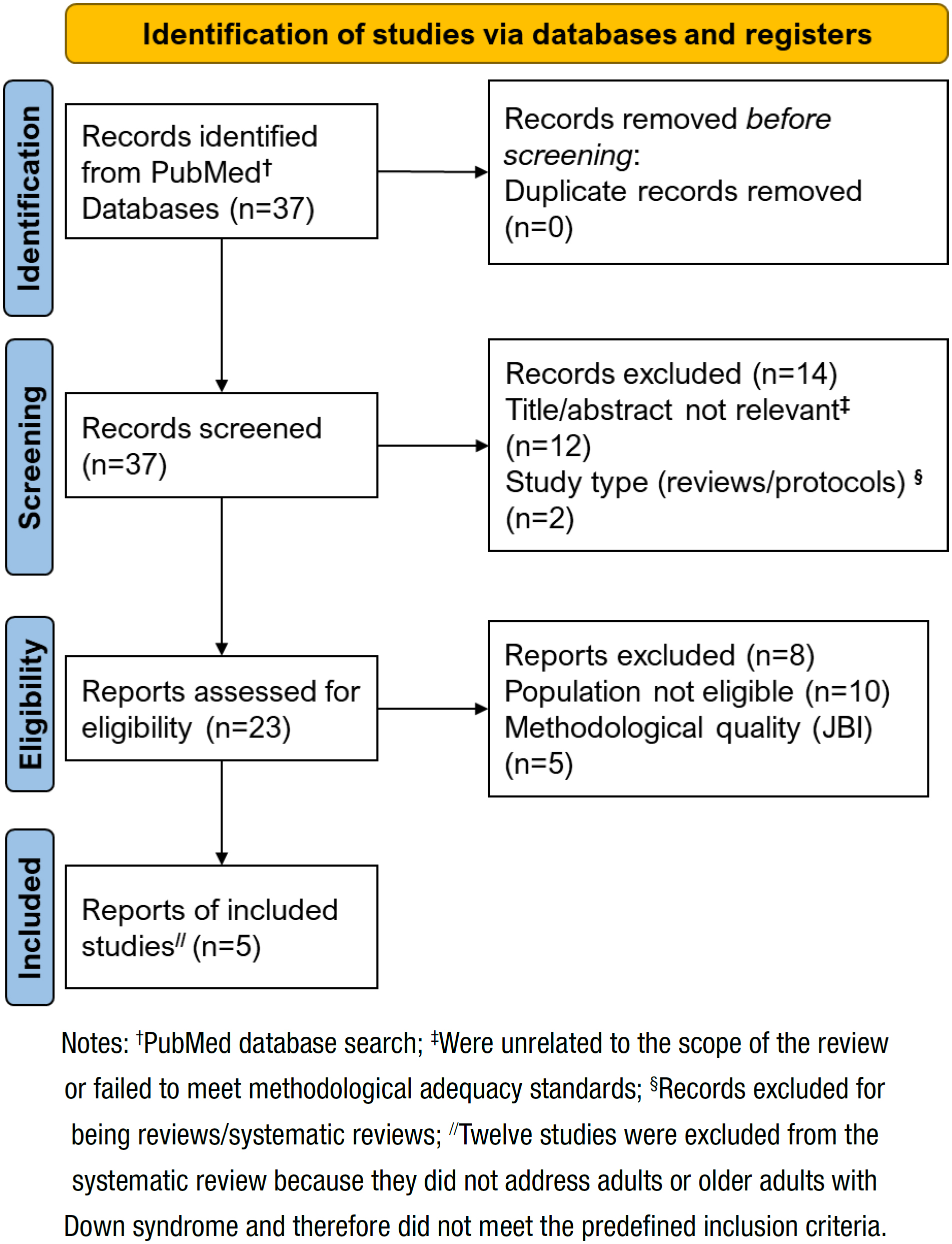
Methods: A systematic search was conducted in the PubMed database in accordance with the Preferred Reporting Items for Systematic Reviews and Meta-Analyses (PRISMA) 2020 guidelines. Original observational studies evaluating gait, balance, or fall risk in relation to cognitive decline or dementia in adults with Down syndrome were included. Methodological quality was assessed using the Joanna Briggs Institute critical appraisal tools.
Results: Thirty-seven records were identified, of which five original studies met the inclusion criteria. Overall, the findings suggest an association between gait alterations, balance, and cognitive decline in individuals with Down syndrome. Commonly reported abnormalities included reduced gait speed, increased gait variability, inconsistency in gait parameters, and impaired balance. However, heterogeneity in study design, different measurement protocols, and small sample sizes limited the comparability and generalizability of the results.
Conclusion: Gait assessment holds promise as a non-invasive, accessible approach for early identification of cognitive decline in individuals with Down syndrome. Future research should prioritize longitudinal designs, standardized assessment protocols, and larger representative samples to inform targeted and evidence-based clinical interventions.
Keywords:
Trisomy 21; Intellectual Disability; Dementia; Gait; Postural Balance
 Thumbnail
 Source: Page et al.