
 Independent and grouped associations of physical activity and sedentary behavior with urinary incontinence: data from adult and older women from ELSI-Brasil
Abstract
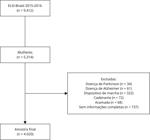
Urinary incontinence is a prevalent condition in older women, negatively impacting their quality of life and generating high costs for health systems. Physical activity and sedentary behavior may be associated with urinary incontinence but this relationship remains scarcely explored. This study aimed to assess the association between physical activity intensity and sedentary behavior and urinary incontinence in Brazilian adult and older women. The sample consisted of 4,020 women aged 50 years or older who participated in the first wave (2015-2016) of the Brazilian Longitudinal Study of Aging (ELSI-Brazil). Moderate physical activity was associated with a lower prevalence of urinary incontinence, with a prevalence ratio (PR) from 0.66 to 0.73, whereas vigorous physical activity was associated with a higher prevalence of urinary incontinence (PR from 1.69 to 1.92). Sedentary behavior equal to or exceeding six hours per day was also associated with a higher prevalence of urinary incontinence (PR from 1.54 to 1.66). Women with sufficient levels of physical activity and low sedentary behavior showed a reduction of about 33-35% in their prevalence of urinary incontinence (PR from 0.65 to 0.67), regardless of sociodemographic and physical factors. Maintaining sufficient levels of physical activity and reducing sedentary behaviors are associated with a lower prevalence of urinary incontinence in adult and older women.
Keywords:
Physical Inactivity; Life Style; Aging; Women’s Health; Risk Factors
 Thumbnail
