 Adverse childhood experiences and adulthood physical performance: the Brazilian Longitudinal Study of Adult Health (ELSA-Brasil)
Abstract
This study aimed to investigate associations between adverse childhood experiences (ACEs) and adulthood physical performance within a Brazilian population using a cross-sectional analysis. A total of 10,896 civil servants, aged 41 to 84 years, from the third wave of the Brazilian Longitudinal Study of Adult Health, were included in this research. ACEs were identified retrospectively using child labor and five household dysfunction indicators related to the first 14 years of life, analyzed individually and as a cumulative score. Physical performance was assessed using Short Physical Performance Battery, whose score was categorized as poor (≤ 7) or good (≥ 8) physical performance. Binary logistic regression models were employed. Participants had a mean age of 59 years (SD = 8.71), with 42% reporting exposure to at least 1 ACE and 28% having poor physical performance. After adjustments, exposure to one (OR = 1.18; 95%CI: 1.07; 1.32), two (OR = 1.19; 95%CI: 1.02; 1.39), and three or more ACEs types (OR = 1.36; 95%CI: 1.05; 1.75) increased poor physical performance chances in adulthood. Those who experienced household members conviction/incarceration (OR = 1.43; 95%CI: 1.02; 1.99), parental death (OR = 1.22; 95%CI: 1.05; 1.41) or separation/divorce (OR = 1.17; 95%CI: 1.01; 1.36) during childhood also had higher poor physical performance chances in adulthood. ACEs are associated with increased poor physical performance chances in adulthood. These findings underscore the importance of public policies aimed at reducing ACEs to alleviate the burden of diminished physical performance in adulthood.
Keywords:
Adverse Childhood Experiences; Child Labor; Physical Performance
Resumo
O objetivo foi investigar associações entre experiências adversas na infância (EAIs) e o desempenho físico na vida adulta em uma população brasileira. Uma análise transversal foi realizada com 10.896 servidores públicos, com idades entre 41 e 84 anos, da terceira onda do Estudo Longitudinal de Saúde do Adulto. As EAIs foram identificadas retrospectivamente utilizando trabalho infantil e cinco indicadores de disfunção domiciliar antes dos 14 anos de idade, analisados individualmente e por meio do escore cumulativo. O desempenho físico foi avaliado usando a Short Physical Performance Battery [Bateria Curta de Desempenho Físico], cujo escore foi categorizado como desempenho físico baixo (≤ 7) ou alto (≥ 8). Modelos de regressão logística binária foram empregados. Os participantes tinham uma idade média de 59 anos (DP = 8,71). Um total de 42% relatou exposição a pelo menos uma EAI e 28% tiveram baixo desempenho físico. Após os ajustes, a exposição a um (OR = 1,18; IC95%: 1,07; 1,32), dois (OR = 1,19; IC95%: 1,02; 1,39) e três ou mais tipos de EAI (OR = 1,36; IC95%: 1,05; 1,75) aumentou as chances de baixo desempenho físico na vida adulta. Aqueles que vivenciaram a condenação/encarceramento de membros da família (OR = 1,43; IC95%: 1,02; 1,99), a morte de mãe e/ou pai (OR = 1,22; IC95%: 1,05; 1,41) e a separação/divórcio dos pais (OR = 1,17; IC95%: 1,01; 1,36) durante a infância também apresentaram chances maiores de baixo desempenho físico na vida adulta. EAIs associam-se ao aumento das chances de baixo desempenho físico na vida adulta. Essas descobertas ressaltam a importância de políticas públicas voltadas à redução das EAIs para minimizar a ocorrência do baixo desempenho físico na vida adulta.
Palavras-chave:
Experiências Adversas da Infância; Trabalho Infantil; Desempenho Físico
Resumen
El objetivo era investigar las asociaciones entre las experiencias adversas en la infancia (EAIs) y el desempeño físico en la edad adulta en una población brasileña. Se realizó un análisis transversal con 10.896 funcionarios públicos, de entre 41 y 84 años, de la tercera fase del Estudio Longitudinal de Salud del Adulto, que fueron incluidos en esta investigación. Las EAIs se identificaron retrospectivamente utilizando indicadores de trabajo infantil y cinco indicadores de disfunción familiar antes de los 14 años, analizados individualmente y como puntuación acumulativa. El desempeño físico se evaluó utilizando la Short Physical Performance Battery [Batería de Desempeño Físico Corto], cuya puntuación se clasificó como desempeño físico deficiente (≤ 7) o bueno (≥ 8). Se emplearon modelos de regresión logística binaria. Los participantes tenían una edad media de 59 años (DE = 8,71), el 42% declaró haber estado expuesto al menos a una EAI y el 28% presentaba un desempeño físico deficiente. Tras los ajustes, la exposición a un (OR = 1,18; IC95%: 1,07; 1,32), dos (OR = 1,19; IC95%: 1,02; 1,39) y tres o más tipos de EAIs (OR = 1,36; IC95%: 1,05; 1,75) aumentaba las posibilidades de un desempeño físico deficiente en la edad adulta. Quienes vivieron la condena/encarcelamiento de miembros de la familia (OR = 1,43; IC95%: 1,02; 1,99), sufrir la muerte de los padres (OR = 1,22; IC95%: 1,05; 1,41) o la separación/divorcio (OR = 1,17; IC95%: 1,01; 1,36) durante la infancia también aumentaba las posibilidades de un desempeño físico deficiente en la edad adulta. Las EAIs se asocian con un mayor riesgo de bajo desempeño físico en la edad adulta. Estos hallazgos subrayan la importancia de las políticas públicas destinadas a reducir las EAIs para aliviar la carga que supone el bajo desempeño físico en la edad adulta.
Palabras-clave:
Experiencias Adversas de la Infancia; Trabajo Infantil; Desempeño Físico
Introduction
Physical performance encompasses a range of bodily skills that are crucial for daily activities, including locomotor functions, muscular strength, balance, dexterity, and resistance 1,2,3. In epidemiological studies, it is typically assessed via standardized tests measuring gait speed, balance, chair stand, and handgrip strength 1,2,3,4. Poor physical performance in adulthood correlates with adverse outcomes such as falls, hospitalizations, increased healthcare costs, diminished quality of life, and higher mortality 1,3,4,5,6,7,8,9,10,11,12.
The aging process naturally diminishes physical performance, which can be exacerbated by unfavorable socioenvironmental factors experienced early in life, including adverse childhood experiences (ACEs) 5,7,13,14. ACEs encompass traumatic events occurred within the household environment, such as exposure to parental substance abuse or incarceration 15. Similar to poor physical performance, ACEs show a remarkable impact on health outcomes in adulthood 15,16,17,18,19, mediated via mechanisms such as stress-induced neurobiological changes and adverse social and behavioral trajectories 20.
However, there are few studies linking ACEs to physical performance in adulthood and they often overlook potential confounding variables, such as race/skin color, or are constrained with small sample sizes, hindering the identification of precise associations 5,7,14. Moreover, most studies are limited to assessing exposure to ACEs via cumulative scores, without accounting for the potential specific effects of each experience on adulthood physical performance 5,7,14.
ACEs are particularly relevant in low- and middle-income countries such as Brazil, where a sizable portion of the population lives in poverty and may be highly exposed to ACEs 21. Additionally, identifying modifiable factors that influence healthy aging is imperative in Brazil, given its growing aging population 22,23. The diverse population of Brazil also contends with structural racism 24, which may influence ACEs exposure and physical performance in adulthood via several mechanisms, such as poverty, unemployment, and violence in communities.
This study aims to investigate associations between ACEs indicators - both individually and cumulatively - with physical performance in Brazilian adults. The hypothesis posits that higher ACEs exposure is associated with poorer physical performance in adulthood.
Material and methods
Study design and population
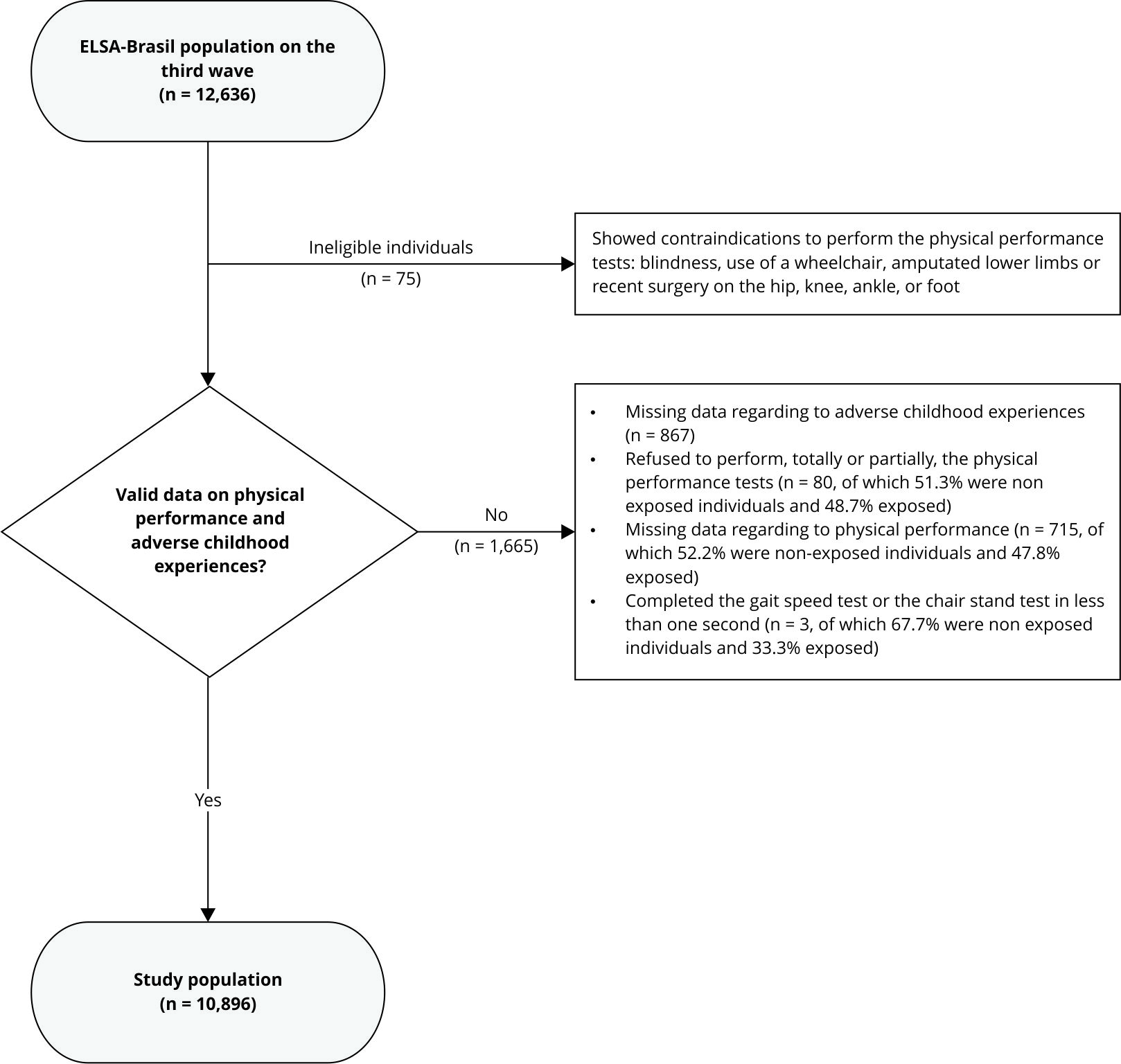
This study adopts a cross-sectional design with a longitudinal perspective, retrospectively assessing exposure to ACEs. Data were sourced from the third wave (2017-2019) of the Brazilian Longitudinal Study of Adult Health (ELSA-Brasil, acronym in Portuguese), for which additional information is available elsewhere 25,26. Of the 12,636 participants in the ELSA-Brasil third wave, we included 10,896 individuals with valid data on adulthood physical performance and ACEs (Figure 1). All tests and questionnaires were administered by trained and certified research assistants to minimize systematic errors and ensure data quality.

Study participation flowchart. Brazilian Longitudinal Study of Adult Health (ELSA-Brasil), 2017-2019.
Response variable
Physical performance was evaluated using the Short Physical Performance Battery (SPPB) 4,27, encompassing gait speed, balance, and chair stand tests, measured in seconds.
(i) Gait speed test. Participants walked for four meters at their usual speed; each participant performed the test twice. The test performed in the shortest time was used for analysis.
(ii) Balance test. Conducted in three positions with progressive difficulty levels: feet side-by-side, semi-tandem, and tandem. The test ended when the participant became unbalanced or after remaining in each position for the maximum time (10 seconds). Participants were only allowed to move to the next position if they remained in the previous position for the maximum time.
(iii) Chair stand test. Participants were asked to stand up from a chair as quickly as possible five times in a row. Each participant completed the test twice. The test performed in the shortest time was used for analysis.
All the tests were scored according to the method proposed by Guralnik et al. 4, in 1994. Specifically, scores for each test ranged from 0 to 4 - the higher the score, the better the physical performance. To categorize individuals into these scores, we utilized the distribution of the times taken to complete gait speed and chair stand tests, separately, dividing them into quartiles. The first quartile (representing the fastest participants) scored 4, the second 3, the third 2, and the fourth (the slowest) scored 1. Those unable to complete each test received a score of 0. Scoring was not specific to sex or age, as performances overlapped in the levels of these characteristics (Supplementary Material - Figures S1 and S2; https://cadernos.ensp.fiocruz.br/static//arquivo/suppl-e00039125_8214.pdf). In the balance test, participants received a score of 0 if they were unable to maintain the feet side-by-side position for 10 seconds; 1 if they could hold the side-by-side position for 10 seconds but not the semi-tandem position for 10 seconds; 2 if they could hold the semi-tandem position for 10 seconds but not the tandem position for more than 2 seconds; 3 if they could hold the tandem position for between 3 and 9 seconds; and finally, they received a score of 4 if they could hold the tandem position for 10 seconds.
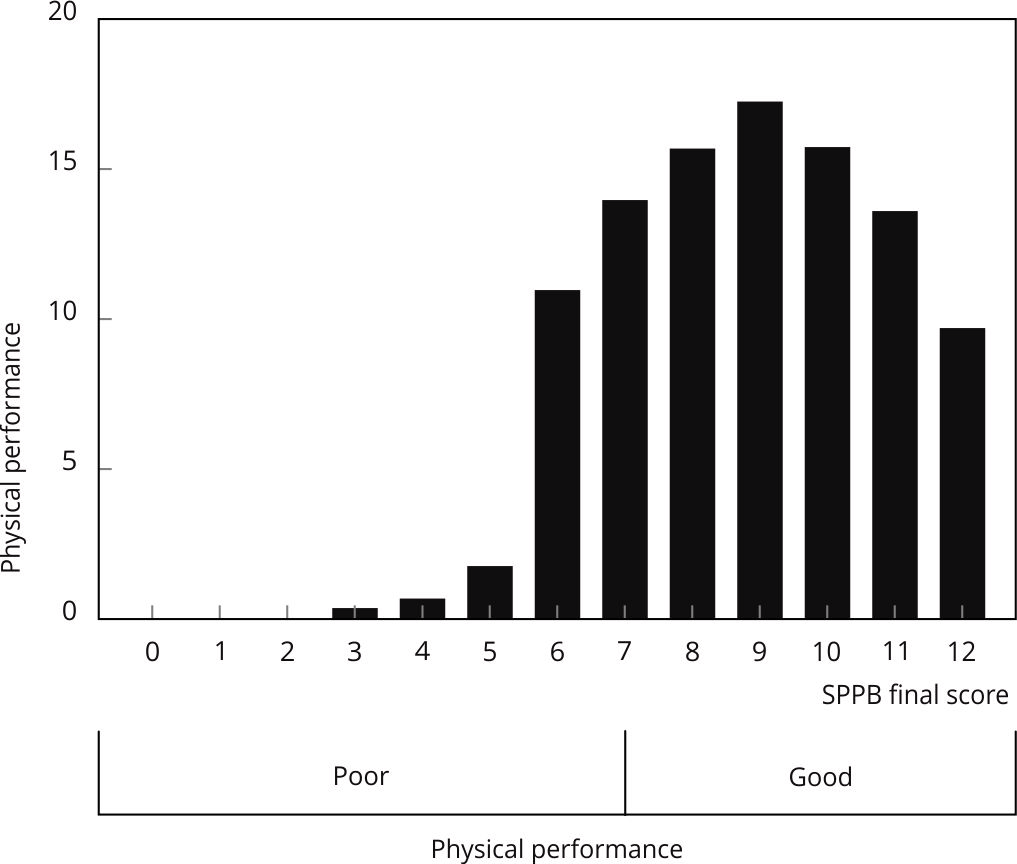
The final SPPB score consisted of the simple sum of the scores for each test, ranging from 0 to 12. Subsequently, this score was dichotomized, according to recommendation from other studies 14,28,29, into poor (7 points or fewer) or good (8 points or more) physical performance.
Explanatory variable of interest
ACEs assessment comprised five household dysfunction indicators and one related to child labor before 14 years. Household dysfunction indicators were derived from the Adverse Childhood Experiences International Questionnaire30, encompassing parental/guardian death or separation/divorce, in addition to substance abuse, mental illness, and incarceration of household members. Individuals were classified as exposed to child labor if they engaged in work activities before 14 years old, but only when these activities interfered with schooling or led to school dropout. We defined child labor in these terms to improve specificity, once an elevated proportion of our population (24.3%) reported having worked during their first 14 years of life. Highly sensitive experiences, such as physical, sexual, and emotional abuse, were not assessed in ELSA-Brasil. This decision was to prevent participants’ discomfort, non-responses, and withdrawals. Responses were dichotomized (yes = 1, no = 0) and summed for a cumulative score ranging from 0 to 6. Categorical classification of this score included no exposure, exposure to one, exposure to two and exposure to three or more types of ACEs.
Other covariates
Potential confounders, according to the theoretical model shown in Supplementary Material (Figure S3; https://cadernos.ensp.fiocruz.br/static//arquivo/suppl-e00039125_8214.pdf), encompassed age (continuous), sex (male/female), race/skin color (white; mixed-race; black), maternal education and paternal education (high school or higher; elementary education; primary education; had not attended school). In this study, maternal and paternal education were used as indicators of childhood socioeconomic position. White individuals (n = 6,000) were analyzed together with individuals with Asian origins (n = 296) due to the limited number of the latter, and because they had similar prevalence of ACEs and physical performance characteristics in this study. Similarly, due to limited number (n = 101) and the historical social vulnerability and exclusion of Brazilian Indigenous people, this group was analyzed together with black individuals (n = 1,534), which also have a history of social disadvantages and marginalization, resulting from structural racism and historical disrespect produced by slavery.
Statistical analysis
Distributions of all variables were described using proportions. Tetrachoric correlation coefficients were calculated to explore the relationships among the ACEs indicators. Using complete-case analysis, logistic regression models estimated the magnitude of associations between the cumulative score and each ACEs indicator with physical performance in adulthood, via odds ratio (OR) and 95% confidence intervals (95%CI). Sequential model adjustments incorporated age and sex (model 1), race/skin color (model 2), and maternal and paternal education (model 3). Multiplicative interaction terms between sex and ACE indicators were included in the final models. No statistically significant interactions were found; therefore, models were not stratified by sex. Statistical significance was set at 5%. Analysis employed Stata 14.00 software (https://www.stata.com).
Declaration of generative artifical intelligence (AI) and AI-assisted technologies in the writing process
During the preparation of this work, the authors used ChatGPT (OpenAI; https://chatgpt.com/) to improve readability and language. After using this tool/service, the authors reviewed and edited the content as needed and take full responsibility for the content of the publication.
Statements of ethical approval
The study procedures were performed in compliance with relevant laws and institutional guidelines and have been approved by the ethics committees of all the involved institutions (Federal University of Bahia - approval n. 027/06; Federal University of Espírito Santo - approval n. 041/06; Federal University of Minas Gerais - approval n. 186/06; Oswaldo Cruz Foundation - approval n. 343/06; Federal University of Rio Grande do Sul - approval n. 194/06; University of São Paulo - approval n. 669/06). Informed consent was obtained from all the participants, and the privacy rights of human subjects were respected.
Results
Of the 12,636 participants on the third wave of ELSA-Brasil, 12,561 were eligible for this investigation (Figure 1). After excluding individuals who declined to participate in the SPPB assessment, as well as those with missing data regarding ACEs questionnaire and physical performance tests, our investigation analyzed 10,896 individuals (Figure 1). The mean (standard deviation - SD) age of this analytical population was 59.2 (SD = 8.7) years, ranging from 41 to 84 years, with 55.1% being female. Table 1 shows additional sociodemographic descriptions. About 70% of the participants were aged within the range of 51 to 70 years old, and most of them identified themselves as white (Table 1). Notably, a significant proportion of individuals had mothers with low levels of education: 43% of these mothers had completed only primary education (up to four years of study), while 12.8% had never attended school (Table 1).
Overall, 42.2% of the population reported exposure to at least one type of ACE, with 28.1% reporting exposure to one type, 10.5% to two types, and 3.6% to three or more types. Exposure to ACEs was more prevalent among females, younger groups, black and brown individuals, and those from poorer socioeconomic position during childhood (Table 2). Tetrachoric correlation coefficients indicated significant weak relationships among ACEs indicators, ranging from 0.070 to 0.370 (Table 3).
Figure 2 illustrates the distribution of the SPPB final score. When scoring the gait speed test, the quartiles cutoff points were 3.31 seconds, 3.69 seconds, and 4.29 seconds; for the chair stand test, they were 7.47 seconds, 8.83 seconds, and 10.50 seconds. A total of 28% of the population showed poor physical performance in adulthood (Figure 2), which was higher among females, older groups, black individuals, participants with parents who had never attended school, and among those exposed to the ACEs indicators (Table 1).

Short Physical Performance Battery (SPPB) scores distribution. Brazilian Longitudinal Study of Adult Health (ELSA-Brasil), 2017-2019.
Figure 3 demonstrates an inverse relationship between ACEs cumulative score and physical performance in adulthood: good physical performance was more prevalent among non-exposed individuals, while poor physical performance was more common among those exposed to one, two, and three or more ACEs indicators. This finding suggests a significant trend in the relationship between ACEs cumulative score and physical performance in adulthood (p-value for trend < 0.001).
Final logistic regression models revealed that the chances of poor physical performance in adulthood increased by 18% for those exposed to one type (OR = 1.18; 95%CI: 1.07; 1.32), 19% for those exposed to two types (OR = 1.19; 95%CI: 1.02; 1.39), and 36% for those exposed to three or more types of ACEs (OR = 1.36; 95%CI: 1.05; 1.75) compared to non-exposed individuals (Table 4). These associations hold a significant upward trend (Wald test for trends p-value < 0.01).
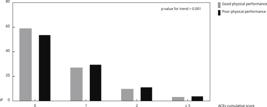
Levels of physical performance according to the adverse childhood experiences (ACEs) cumulative score. Brazilian Longitudinal Study of Adult Health (ELSA-Brasil), 2017-2019.
Varied ORs were observed when each ACE indicator was analyzed separately in logistic regression models. While the crude model indicated a 47% higher chance of poor physical performance in adulthood for those exposed to child labor compared to non-exposed individuals (OR = 1.47; 95%CI: 1.26; 1.73), this association lost statistical significance in the final model (Table 4). Nevertheless, even after adjusting for all confounders, those who experienced conviction/incarceration of household members, parental separation/divorce and parental/guardian death during childhood had their chances of poor physical performance in adulthood increased by 43% (OR = 1.43; 95%CI: 1.02; 1.99), 17% (OR = 1.17; 95%CI: 1.01; 1.36), and 22% (OR = 1.22; 95%CI: 1.05; 1.41), respectively (Table 4).
Discussion
This study, situated in a Brazilian context, explored the associations between six different indicators of ACEs, related to the first 14 years of life, with physical performance in adulthood. Our findings revealed that, cumulatively, ACEs were associated with poor physical performance in adulthood, with the strongest association observed in individuals exposed to three or more types of ACEs. These associations held a significant upward trend. Our findings build upon previous studies by showing that, independently of confounders, individuals who had a household member arrested, or experienced parental separation or death during childhood, had poorer physical performance in adulthood.
The observed associations between cumulative exposure to ACEs and poor physical performance in adulthood align with previous research findings. A multinational study among older adults in Brazil, Colombia, Albania, and Canada demonstrated that those most exposed to ACEs had a 236% higher chance of poor physical performance in adulthood 14. However, this result was not adjusted for race/skin color, a significant confounding factor in our analysis. Additionally, it includes physical and emotional abuse as ACEs indicators, which were not investigated in our study. Another research, situated in United Kingdom, showed that the greater the exposure to ACEs, the poorer the mean physical performance score in adulthood 7. Nonetheless, unlike the results of this study, the association between ACEs and physical performance in adulthood was not independent of childhood socioeconomic position, measured by paternal occupation, in a cohort of English women 5. Note that, although most of these findings are consistent with ours, they come from studies that were conducted in older populations than the ELSA-Brasil cohort. In any case, our results were adjusted for age and showed that, even in a younger population, ACEs could compromise physical performance.
We found no statistically significant interactions between sex and ACEs in our study, and physical performance outcomes were overlapped by sex (Supplementary Material - Figures S1 and S2; https://cadernos.ensp.fiocruz.br/static//arquivo/suppl-e00039125_8214.pdf). Therefore, our results were not stratified by sex and reflect mean associations applicable to both men and women. Similar findings have been reported in other studies 7,14.
Using a cumulative ACEs exposure score is advantageous because it increases the statistical power of the analysis 5. It also accounts for the co-occurrence of different forms of adversity, which may jointly lead to poorer physical performance in adulthood 5. However, the use of such scores assumes that all types of ACEs have a similar contribution to diminish physical performance in adulthood, which may not be true. Thus, it is crucial to examine the associations between each ACE indicator and adulthood physical performance individually.
Our findings suggest that individuals who had a household member that was arrested had the highest chances for poor physical performance in adulthood. This could be attributed to the significant stigma and disruptions in social identity and household arrangement caused by such experience 31. Moreover, parental/guardian death and separation were associated with poor physical performance in adulthood. Similarly, a study from ELSA-Brasil found that different ACEs had specific patterns of association with depression in adulthood 32. Parental separation, for instance, was associated with a 55% increase in the chances of adulthood depression 32. Although parental separation is now common, note that the participants of this study were children between the 1950s and 1970s, when parental separation was a great social stigma in Brazil 33. This prevailing view regarding divorce/separation then is likely to have influenced the long-term impacts of this experience in our cohort’s adulthood physical performance.
We chose not to mutually adjust the ACEs indicators in multivariate models due to their interrelated nature and other methodological considerations. A fundamental assumption in causal inference is temporal sequencing: when adjusting the association between two variables (X and Y) for a third variable (Z), Z must precede both X and Y. If this assumption is violated, adjustment for Z may introduce spurious associations or obscure true ones. In our study, establishing a consistent temporal order among certain ACEs is particularly challenging. As such, attempting to isolate independent effects of each ACE via mutual adjustment may lead to imprecise interpretations. Nevertheless, note that tetrachoric correlation showed weak relationships among the indicators of ACEs in the context of our research (Table 3). Then, it is possible that mutually adjusting them would not substantially change our results.
Different mechanisms may explain the relationships between ACEs and physical performance in adulthood 20. ACEs can indirectly affect physical performance in adulthood by triggering social disadvantages throughout life, such as poor education, poor jobs, and a higher likelihood of engaging in unhealthy behaviors 20. Additionally, exposures to ACEs and social disadvantages are important sources of suffering and can directly trigger short- and long-term biological stress responses, such as changes in the functioning of the hypothalamic-pituitary-adrenal axis, deregulated secretion of hormones and neurotransmitters (e.g. cortisol and catecholamines), and amplification of the inflammatory activity 20. Chronic inflammation, in its turn, has a catabolic effect and is central to numerous pathophysiological mechanisms, such as bone loss and sarcopenia 20,34, which play an important role in physical performance.
Despite robustness, our study has limitations. There is a possibility of residual confounding for the variables indicating childhood socioeconomic position. In addition to mother and father’s education, other variables have been used, such as parents’ income and property ownership. The potential for survival bias must be acknowledged, as participants with poorer physical performance and a higher prevalence of ACEs may have passed away before data collection for this study. Additionally, the healthy worker effect should be considered, once our cohort consists of employed personnel from Brazilian research and high education institutes. Retrospective measurement of socially sensitive household-related issues, such as ACEs, is susceptible to desirability bias, memory limitations, and underreporting 35, even when questionaries are administered by trained research assistants. However, this does not imply that such retrospective assessments are invalid. A study has shown that measures of ACEs collected in childhood and in adulthood demonstrated reasonable concordance, supporting the validity of retrospective reports 35. The combined effect of these limitations may have resulted in an underestimation of the associations found in our study compared to those expected in the general population. Nonetheless, upon recognizing these limitations, the associations between ACEs and adulthood physical performance observed in our study are evidence applicable to the whole population. Analytical studies focusing on specific subgroups of the general population, such as ELSA-Brasil, can enhance scientific inference by prioritizing internal validity over representativeness, enabling an improved assessment of causal relationship 36,37,38.
Regardless of these limitations, our study provides significant insights. We have strengthened the validity of our findings by using the SPPB, a well-established tool for assessing physical performance 39, and adjusting associations for race/skin color, an important confounding factor. Additionally, our analysis included consideration of specific ACEs indicators, rather than solely a cumulative score of exposure, thereby advancing our understanding of the nuanced effects of individual ACEs on physical performance in adulthood.
If the associations found in this study are causal, preventing ACEs or giving adequate psychosocial support to those exposed to them may help reduce the burden of poor physical performance later in life and its associated repercussions, such as diminished ability to perform daily activities, increased risk of falls, hospitalizations, and reduced quality of life. Evidence from the literature indicates that multisectoral and multidisciplinary interventions, some of which are feasible within the Brazilian Unified National Health System (SUS, acronym in Portuguese), can contribute to addressing ACEs 40,41. For instance, screening for domestic violence during prenatal care appointments or home visits by healthcare professionals has been associated with the prevention of ACEs in countries such as England 40,41. The English experience has also led to the development of screening tools, games, and therapeutic strategies specifically designed for the primary, secondary, or tertiary prevention of ACEs 40,41. These resources may be adapted for use within healthcare services, social assistance programs, and schools in Brazil. Although this study did not aim to evaluate the effectiveness of such interventions, the authors believe they may be promising in preventing ACEs and/or mitigating their short and long-term health consequences. Moreover, the creation of dedicated commissions within public administration to coordinate ACE-related strategies, an approach adopted in England, has been identified as a promising governance mechanism 40,41. In the Brazilian context, incorporating such coordination into existing intersectoral structures may help to align and strengthen efforts across health, education, and social protection systems. Nonetheless, the impact of these actions is constrained without broader improvements in living and working conditions. Given that ACEs are partly shaped by structural determinants such as poverty, unemployment, and community violence, effective prevention also requires tackling these root causes via policies aimed at reducing socioeconomic and racial inequalities and expanding social protection. Strengthening the role of SUS in promoting early-life well-being, by actions like early screening, family-centered care, and intersectoral collaboration, is essential for advancing a more comprehensive approach to the prevention of ACEs in Brazil.
Acknowledgments
We thank all ELSA-Brasil participants for their invaluable contribution to this study. This study was funded by the Brazilian Ministry of Health (Department of Science and Technology) and the Brazilian Ministry of Science, Technology and Innovation (Funding Authority for Studies and Projects - FINEP, and Brazilian National Research Council - CNPq; grants n. 01 06 0010.00, 01 06 0212.00, 01 06 0300.00,01 06 0278.00, 01 06 0115.00, and 01 06 0071.00). The ELSA-Brasil MSK has been supported by the Minas Gerais State Research Foundation (FAPEMIG, grants APQ-00921-16 and APQ-00549-22), and CNPq (grants 423585/2016-9 and 404728/2021-9). This study was partially financed by the Brazilian Coordination for the Improvement of Higher Education Personnel (CAPES; Financing Code 001). The funders were not involved in study design; in the collection, analysis and interpretation of data; in the writing of the report; and in the decision to submit the article for publication.
References
- 1 Cooper R, Kuh D, Hardy R. Objectively measured physical capability levels and mortality: systematic review and meta-analysis. BMJ 2010; 341:c4467.
- 2 Cooper R, Kuh D, Cooper C, Gale CR, Lawlor DA, Matthews F, et al. Objective measures of physical capability and subsequent health: a systematic review. Age Ageing 2011; 40:14-23.
- 3 Kuh D, Cooper R, Hardy R, Richards M, Ben-Shlomo Y. A life-course approach to healthy ageing: maintaining physical capability. Proc Nutr Soc 2014; 73:237-48.
- 4 Guralnik JM, Simonsick EM, Ferrucci L, Glynn RJ, Berkman LF, Blazer DG, et al. A short physical performance battery assessing lower extremity function: association with self-reported disability and prediction of mortality and nursing home admission. J Gerontol 1994; 49:M85-94.
- 5 Anderson EL, Fraser A, Caleyachetty R, Hardy R, Lawlor DA, Howe LD. Adversity in childhood and measures of aging in midlife: findings from a cohort of British women. Psychol Aging 2017; 32:521-30.
- 6 Birnie K, Cooper R, Martin RM, Kuh D, Sayer AA, Alun Hughes R, et al. Socio-economic disadvantage from childhood to adulthood and locomotor function in old age: a lifecourse analysis of the Boyd Orr and Caerphilly prospective studies. J Epidemiol Community Health 2011; 65:1014-23.
- 7 Caleyachetty R, Hardy R, Cooper R, Richards M, Kuh D. Modeling exposure to multiple childhood social risk factors and physical capability and common affective symptoms in later life. J Aging Health 2018; 30:386-407.
- 8 Cheval B, Sieber S, Guessous I, Orsholits D, Courvoisier DS, Kliegel M, et al. Association between adverse childhood experiences and muscle strength in older age. Gerontology 2019; 65:474-84.
- 9 Kuh D, Bassey EJ, Butterworth S, Hardy R, Wadsworth ME. Grip strength, postural control, and functional leg power in a representative cohort of British men and women: associations with physical activity, health status, and socioeconomic conditions. J Gerontol A Biol Sci Med Sci 2005; 60:224-31.
- 10 McCrory C, Dooley C, Layte R, Kenny RA. Intergenerational occupational mobility and objective physical functioning in midlife and older ages. J Gerontol B Psychol Sci Soc Sci 2018; 73:279-91.
- 11 Oliveira-Figueiredo DST, Silva AO, Feliciano GD, Costa ML, Costa FM, Mendonça ET. Prevalence of functional disability in the elderly: analysis of the National Health Survey. Rev Rene 2017; 18:468.
- 12 Petersen GL, Pedersen JLM, Rod NH, Mortensen EL, Kawachi I, Osler M, et al. Childhood socioeconomic position and physical capability in late-middle age in two birth cohorts from the Copenhagen aging and midlife biobank. PLOS One 2018; 13:e0205019.
- 13 Cohen RA, Marsiske MM, Smith GE. Neuropsychology of aging. In: Dekosky ST, Asthana S, editors. Handbook of Clinical Neurology. v. 167. Amsterdam: Elsevier; 2019. p. 149-80.
- 14 Sousa PA, Lima MG, Cesar CLG, Barros MBA. Lifecourse adversity and physical performance across countries among men and women aged 65-74. PLOS One 2014; 9:e102299.
- 15 Felitti VJ, Anda RF, Nordenberg D, Williamson DF, Spitz AM, Edwards V, et al. Relationship of childhood abuse and household dysfunction to many of the leading causes of death in adults. Am J Prev Med 1998; 14:245-58.
- 16 Petruccelli K, Davis J, Berman T. Adverse childhood experiences and associated health outcomes: a systematic review and meta-analysis. Child Abuse Negl 2019; 97:104127.
- 17 Rich-Edwards JW, Spiegelman D, Lividoti Hibert EN, Jun HJ, Todd TJ, Kawachi I, et al. Abuse in childhood and adolescence as a predictor of type 2 diabetes in adult women. Am J Prev Med 2010; 39:529-36.
- 18 Riley EH, Wright RJ, Jun HJ, Hibert EN, Rich-Edwards JW. Hypertension in adult survivors of child abuse: observations from the Nurses' Health Study II. J Epidemiol Community Health 2010; 64:413-8.
- 19 Schmahl OC, Wittchen HU, Bloechl-Daum B, Baumeister H, Harter M, Gensichen J. Impact of childhood trauma on multidimensional frailty in older patients with a unipolar depressive-, anxiety- or somatic symptom disorder. Arch Gerontol Geriatr 2021; 96:104452.
- 20 Miller GE, Chen E, Parker KJ. Psychological stress in childhood and susceptibility to the chronic diseases of aging: moving toward a model of behavioral and biological mechanisms. Psychol Bull 2011; 137:959-97.
- 21 Walsh D, McCartney G, Smith M, Armour G. Relationship between childhood socioeconomic position and adverse childhood experiences (ACEs): a systematic review. J Epidemiol Community Health 2019; 73:1087-93.
-
22 Paradella R. Número de idosos cresce 18% em 5 anos e ultrapassa 30 milhões em 2017. Agência IBGE Notícias 2018; 26 apr. https://agenciadenoticias.ibge.gov.br/agencia-noticias/2012-agencia-de-noticias/noticias/20980-numero-de-idosos-cresce-18-em-5-anos-e-ultrapassa-30-milhoes-em-2017
» https://agenciadenoticias.ibge.gov.br/agencia-noticias/2012-agencia-de-noticias/noticias/20980-numero-de-idosos-cresce-18-em-5-anos-e-ultrapassa-30-milhoes-em-2017 -
23 Instituto Brasileiro de Geografia e Estatística. Síntese de indicadores sociais. https://www.ibge.gov.br/estatisticas/multidominio/condicoes-de-vida-desigualdade-e-pobreza/9221-sintese-de-indicadores-sociais.html?=&t=resultados (accessed on 17/Jan/2025).
» https://www.ibge.gov.br/estatisticas/multidominio/condicoes-de-vida-desigualdade-e-pobreza/9221-sintese-de-indicadores-sociais.html?=&t=resultados - 24 Almeida S, Ribeiro D. Racismo estrutural. São Paulo: Pólen; 2019.
- 25 Aquino EM, Barreto SM, Bensenor IM, Carvalho MS, Chor D, Duncan BB, et al. Brazilian Longitudinal Study of Adult Health (ELSA-Brasil): objectives and design. Am J Epidemiol 2012; 175:315-24.
- 26 Schmidt MI, Duncan BB, Mill JG, Lotufo PA, Chor D, Barreto SM. Cohort profile: Longitudinal Study of Adult Health (ELSA-Brasil). Int J Epidemiol 2015; 44:68-75.
- 27 Guralnik JM, Ferrucci L, Pieper CF, Leveille SG, Markides KS, Ostir GV, et al. Lower extremity function and subsequent disability: consistency across studies, predictive models, and value of gait speed alone compared with the short physical performance battery. J Gerontol A Biol Sci Med Sci 2000; 55:M221-31.
- 28 Freire AN, Guerra RO, Alvarado B, Guralnik JM, Zunzunegui MV. Validity and reliability of the short physical performance battery in two diverse older adult populations in Quebec and Brazil. J Aging Health 2012; 24:863-78.
- 29 Vasunilashorn S, Coppin AK, Patel KV, Lauretani F, Ferrucci L, Bandinelli S, et al. Use of the Short Physical Performance Battery Score to predict loss of ability to walk 400 meters: analysis from the InCHIANTI study. J Gerontol A Biol Sci Med Sci 2009; 64:223-9.
- 30 Pereira FG, Viana MC. Adaptação transcultural do Adverse Childhood Experiences International Questionnaire. Rev Saúde Pública 2021; 55:79.
- 31 Sequeira VC. Uma vida que não vale nada: prisão e abandono político-social. Psicol Ciênc Prof 2006; 26:660-71.
- 32 Léo MB, Barreto SM, Griep RH, Patrão AL, Camelo LV, Viana MC, et al. Childhood family adversities and recurrence of depression in adulthood: findings from three ELSA-Brasil visits. Braz J Psychiatry 2024; 46:e20243914.
- 33 Pereira RDC. Direito das famílias. 5th Ed. Rio de Janeiro: Editora Forense; 2024.
- 34 Meng SJ, Yu LJ. Oxidative stress, molecular inflammation and sarcopenia. Int J Mol Sci 2010; 11:1509-26.
- 35 Reuben A, Moffitt TE, Caspi A, Belsky DW, Harrington H, Schroeder F, et al. Lest we forget: comparing retrospective and prospective assessments of adverse childhood experiences in the prediction of adult health. J Child Psychol Psychiatry 2016; 57:1103-12.
- 36 Elwood JM. Commentary: on representativeness. Int J Epidemiol 2013; 42:1014-5.
- 37 Richiardi L, Pizzi C, Pearce N. Commentary: representativeness is usually not necessary and often should be avoided. Int J Epidemiol 2013; 42:1018-22.
- 38 Rothman KJ, Gallacher JE, Hatch EE. Why representativeness should be avoided. Int J Epidemiol 2013; 42:1012-4.
- 39 World Health Organization. Decade of healthy ageing: baseline report. Geneva: World Health Organization; 2021.
-
40 Asmussen K, Fischer F, Drayton E, McBride T. Adverse childhood experiences: what we know, what we don't know, and what should happen next. https://www.eif.org.uk/report/adverse-childhood-experiences-what-we-know-what-we-dont-know-and-what-should-happen-next (accessed on 17/Jan/2025).
» https://www.eif.org.uk/report/adverse-childhood-experiences-what-we-know-what-we-dont-know-and-what-should-happen-next -
41 Bullock M. Adverse childhood experiences in London. Investigating ways that adverse childhood experiences and related concepts of vulnerability can help us to understand and improve Londoners' health. https://www.london.gov.uk/sites/default/files/adverse_childhood_experiences_in_london._final_report_october_2019_with_author._mb.pdf (accessed on 17/Jan/2025).
» https://www.london.gov.uk/sites/default/files/adverse_childhood_experiences_in_london._final_report_october_2019_with_author._mb.pdf
Edited by
The research data are available upon request to the corresponding author.