
 Scientific production on health inequalities using the Brazilian Information System on Live Births: a scoping review
Abstract
The Brazilian Information System on Live Births (SINASC) is widely used by health managers to plan and monitor maternal and child health programs. Scientific research using SINASC data is also essential to identify underexplored topics that warrant further investigation. This study aims to describe the profile of scientific output based on SINASC data and to determine gaps in the literature, with particular attention to studies addressing health inequalities. A scoping review was conducted, including original articles reporting primary outcomes derived from SINASC data. Five databases were searched up to August 2025: PubMed, Embase, Scopus, Web of Science, and LILACS. Brazilian official websites were also manually consulted. A total of 7,363 records were identified, and 85 studies were included in the final analysis. The most frequently analyzed variables were congenital anomalies, birth weight, pregnancy duration, type of delivery, and maternal age. The most commonly reported outcomes were cleft lip/palate, prematurity, low birth weight, Cesarean section, and maternal age distribution. Almost all studies (95.3%) addressed at least one inequality dimension, most frequently geographic and maternal sociodemographic factors. The Human Development Index was the main external socioeconomic indicator. This review underscores the relevance of SINASC for advancing research on health equity in Brazil. Nonetheless, gaps remain in analyses of antenatal care and race/skin color.
Keywords:
Health Information Systems; Live Births; Health Status Disparities; Scoping Review
Resumo
O Sistema de Informações sobre Nascidos Vivos (SINASC) é amplamente utilizado para apoiar gestores de saúde no planejamento e monitoramento de programas de saúde materna e infantil. Pesquisas científicas usando dados do SINASC também são essenciais para identificar temas ainda não explorados que merecem investigação adicional. Este estudo tem como objetivo descrever o perfil da produção científica com base nos dados do SINASC, identificando lacunas na literatura existente, com atenção especial aos estudos que abordam desigualdades em saúde. Foi realizada uma revisão de escopo, incluindo artigos originais que relatavam os resultados primários do SINASC. Cinco base de dados foram pesquisadas até agosto de 2025: PubMed, Embase, Scopus, Web of Science e LILACS. Os sites oficiais brasileiros também foram consultados manualmente. Um total de 7.363 registros foi identificado, e 85 foram incluídos na análise final. As variáveis mais frequentemente analisadas foram anomalias congênitas, peso ao nascer, duração da gestação, tipo de parto e idade materna, com desfechos mais frequentemente relacionados à fenda labial/palatina, prematuridade, baixo peso ao nascer, cesariana e distribuição etária materna. Quase todos os estudos (95,3%) abordaram pelo menos uma dimensão da desigualdade, sendo mais frequentemente fatores geográficos e sociodemográficos maternos, com o Índice de Desenvolvimento Humano como principal variável socioeconômica externa. Esta revisão ressalta a relevância do SINASC para o avanço da pesquisa sobre equidade em saúde no Brasil. No entanto, persistem lacunas nas análises do cuidado pré-natal e da raça/cor da pele.
Palavras-chave:
Sistemas de Informação em Saúde; Nascidos Vivos; Desigualdades em Saúde; Revisão de Escopo
Resumen
El Sistema de Informaciones sobre Nacidos Vivos (SINASC) de Brasil se utiliza ampliamente para ayudar a los gestores sanitarios en la planificación y el seguimiento de los programas de salud materno-infantil. La investigación científica que utiliza datos de SINASC también es esencial para identificar temas aún no explorados que merecen una investigación más profunda. Este estudio tiene como objetivo describir el perfil de la producción científica con base en los datos del SINASC, identificando las lagunas en la literatura existente, con especial atención a los estudios que abordan las desigualdades en salud. Se realizó una revisión de alcance, que incluyó artículos originales que informaron sobre los resultados principales del SINASC. Se realizaron búsquedas en cinco bases de datos hasta agosto del 2025: PubMed, Embase, Scopus, Web of Science y LILACS. También se consultaron manualmente los sitios web oficiales brasileños. Se identificó un total de 7.363 registros, de los cuales 85 se incluyeron en el análisis final. Las variables analizadas con mayor frecuencia fueron las anomalías congénitas, el peso al nacer, la edad gestacional, el tipo de parto y la edad materna, mientras que los resultados más frecuentemente relacionados fueron el labio hendido/paladar hendido, la prematuridad, el bajo peso al nacer, la cesárea y la distribución de la edad materna. Casi todos los estudios (95,3%) abordaron al menos una dimensión de la desigualdad, centrándose con mayor frecuencia en factores geográficos y sociodemográficos maternos, y el Índice de Desarrollo Humano fue la principal variable socioeconómica externa. Esta revisión destaca la relevancia del SINASC para el avance de la investigación sobre equidad en salud en Brasil. Sin embargo, persisten lagunas en los análisis sobre la atención prenatal y la raza/color de piel.
Palabras-clave:
Sistemas de Información en Salud; Nacidos Vivos; Desigualdades en la Salud; Revisión de Alcance
Introduction
Health information systems (HIS) are fundamental tools for public health decision-making, supporting the surveillance of health conditions and the evaluation of healthcare system performance 1. In this context, it is essential to distinguish between their primary use - focused on administrative management, financial allocation, and routine surveillance - and their secondary use, which involves analyzing existing databases to address research questions and generate scientific knowledge. HIS can provide essential data for monitoring health disparities, facilitating the identification of vulnerable areas and populations and informing public policies and interventions over time 2.
The Brazilian Information System on Live Births (SINASC, acronym in Portuguese) is one of the most important and widely used HIS in Brazil. Established in 1990 by the Brazilian Ministry of Health, its primary objective is to collect data on live births nationwide 3. It is extensively used by researchers for epidemiological studies and by health managers to plan, monitor, and evaluate maternal and child health programs. The system is based on the Live Birth Certificate (in Portuguese: Declaração de Nascido Vivo - DNV), which serves as its main data source 4.
SINASC is crucial for assessing epidemiological profiles and monitoring antenatal care, pregnancy, and childbirth 5. By providing a comprehensive overview of live births, the system is central to evaluating maternal and child health, access to and quality of care, and disparities in key outcomes. Although coverage increased from 92.9% in 2000 to 98.2% in 2020 5, the system still faces significant challenges. These include variability in data completeness across municipalities and concerns about the quality of specific variables, such as congenital anomalies and race/skin color, which may be underreported or misclassified. Furthermore, changes to the DNV over time require methodological caution when analyzing temporal trends 5.
Despite these limitations, SINASC remains an essential tool for research. Its high national coverage and population-based framework provide unique large-scale insights into birth outcomes. Given its significance, understanding the scope of scientific research using SINASC data is imperative not only for identifying underexplored topics but also for examining how researchers have addressed data quality issues. While the body of evidence has expanded, the most recent study analyzing the types of research conducted and the knowledge gaps based on SINASC data was published in 2011 6. Therefore, this study aims to describe the profile of scientific output based on SINASC data and to identify gaps in the literature, with particular attention to studies addressing health inequalities.
Methods
A scoping review of the literature was conducted and reported in accordance with the Preferred Reporting Items for Systematic Reviews and Meta-Analyses for Scoping Reviews (PRISMA-ScR) 7.
Eligibility criteria
Original articles published in peer-reviewed journals that included primary outcomes derived from the SINASC database were eligible. The scope was restricted to studies with a primary analytical focus on Brazil as a whole or on one or more of its five macroregions. Studies limited to a single Federative Unit, municipality, or geographic area smaller than a macroregion (e.g., mesoregion or health microregion) were excluded. However, national or regional studies that included sub-analyses at the state or municipal level were maintained. Studies were excluded if SINASC data were used solely as a denominator to calculate outcomes based on other data sources (e.g., neonatal mortality rates, for which the number of live births from SINASC is typically used as the denominator) or if they focused exclusively on assessing SINASC data coverage, completeness, validity, reliability, or quality. Multicountry studies without a specific focus on Brazil, as well as preprints and gray literature (such as theses and dissertations) were also excluded. No restrictions were applied regarding year of publication or language.
Information sources and search strategy
Searches were conducted in PubMed (MEDLINE), Embase (Elsevier), Scopus (Elsevier), Web of Science (Clarivate), and the Virtual Health Library (LILACS) up to August 2025. The search strategy was developed in collaboration with a research librarian. Search terms were organized into two blocks. The first included the keywords “Health Information Systems”, “Live Birth Information System”, “Live Births Information System”, “Live Birth System”, “Certificate of Live Birth”, SINASC, DATASUS, and TABNET, combined using the Boolean operator OR. The second block included terms to restrict the search to the Brazilian context and specifically to SINASC. The two blocks were then combined using the AND operator. Portuguese equivalents of the key terms were included in the LILACS search. All articles were managed using Rayyan (https://www.rayyan.ai/) 8. Additionally, a manual search was conducted on official websites of Brazilian data observatories, such as the Center for Data and Knowledge Integration for Health (CIDACS; https://cidacs.bahia.fiocruz.br/). The full search strategy is presented in Supplementary Material (https://cadernos.ensp.fiocruz.br/static//arquivo/suppl-e00197425_1782.pdf).
Selection process
Two reviewers (N.L. and F.S.C.) independently screened the articles according to the predefined eligibility criteria. Titles and abstracts were assessed first, followed by full-text review. Disagreements were resolved by consensus; when necessary, a third reviewer (L.E.S.S.) was consulted.
Data charting process and items
Following study selection, information from each selected study was independently extracted by two reviewers (N.L. and F.S.C.) and recorded in a Microsoft Excel spreadsheet (https://products.office.com/). Any discrepancies were discussed and resolved by consensus, with consultation with a third reviewer (L.E.S.S.) when needed. The extracted data are available in Supplementary Material (https://cadernos.ensp.fiocruz.br/static//arquivo/suppl-e00197425_1782.pdf).
Given that all included studies used data from SINASC, it is important to briefly describe this information system and its structure. SINASC uses the DNV as a standardized data collection instrument, as established by the Brazilian Ministry of Health. The DNV collects sociodemographic information on the mother and the newborn, including maternal age, education, race/skin color, place of residence, and newborn sex. It also records clinical information related to pregnancy and childbirth, such as gestational age, type of pregnancy, mode of delivery, number of antenatal care visits, birth weight, and presence of congenital anomalies, as well as data on childbirth care, including place of occurrence and type of health professional attending the delivery. These data are essential for maternal and child health surveillance, enabling the characterization of epidemiological profiles, monitoring antenatal and childbirth care, and identifying health inequalities. Operational definitions, response categories, and guidance for proper completion of the DNV are provided in official manuals and technical documents issued by the Brazilian Ministry of Health 4,5.
Based on this structure, the following information was extracted from each article: study identification (author, year of publication, and title), objective, setting (Brazil or its regions), study period, SINASC variables used to calculate the outcomes, outcomes assessed, primary exposures or stratification variables, assessment of interaction or double stratification, primary analyses conducted (trend analysis, geospatial analysis, descriptive analysis, or multivariable analysis), unity of analysis (ecological and/or individual), level of geographical aggregation, and main results. Geographic region, maternal age, race/skin color, marital status, and education were among the exposure or stratification variables collected from the original studies. In addition to the variables available in the SINASC dataset, we also extracted information on external socioeconomic indicators used in the studies included in this scoping review.
The classification of the unit of analysis as individual (i.e., each live birth in SINASC) or ecological (e.g., municipalities) was based on the level of data aggregation. Ecological analyses involve aggregating data at the group or population level, such as municipalities, states, or meso- and macroregions. Descriptive analyses were classified as individual because, although they present aggregated results, they are conducted at the individual level.
Additionally, to assess the impact of the publications, we collected data in September 2025 on the journal in which each article was published, its journal impact factor (JIF), and its JIF category ranking, as reported in the 2024 Journal Citation Reports9. Category rankings are based on the journal’s position within its subject area according to JIF, from which percentile and quartile classifications are derived. We also obtained the number of documents citing each publication from Scopus. Given the Brazilian context of this study, the included articles were evaluated according to the current Qualis-CAPES ranking (2021-2024 quadrennium). The Qualis system assesses the quality of scientific production by classifying the journals in which articles are published, a metric used to evaluate Brazilian graduate programs. Journals are categorized as A1 to A4 (highest), B1 to B4, and C (lowest). The classification for each journal was retrieved from the Qualis Periódicos portal, available at: https://sucupira-legado.capes.gov.br/sucupira/public/consultas/coleta/veiculoPublicacaoQualis/listaConsultaGeralPeriodicos.jsf.
Synthesis of results
Data were analyzed quantitatively, with absolute and relative frequencies reported for the overall sample and stratified by period: before 2021 and from 2021 onward. The year 2021 was considered a milestone for evaluating contemporary literature, as it captures scientific production during the COVID-19 pandemic. Additionally, this timeframe corresponds to the most recent updates to the DNV terminology, including the replacement of the fields “mother’s name” and “father’s name” with “parturient” and “legal guardian” 4,5, reflecting the current standardization of the system’s data collection procedures.
Results
A total of 7,363 publications were initially identified, including three additional articles retrieved from observatory websites. After removing duplicates, 4,124 studies remained. Following title and abstract screening, 137 publications were selected for full-text review. After a detailed assessment, 85 studies were included in the final analysis (Figure 1). Most studies were published in the last five years (n = 49, 57.6%) and had a national scope (n = 81, 95.3%). The remaining studies focused on a single region: the South (n = 3, 3.5%) and the Northeast (n = 1, 1.2%).
Table 1 summarizes the main findings. The most frequently used SINASC variables were congenital anomaly (n = 34; 40%) 10,11,12,13,14,15,16,17,18,19,20,21,22,23,24,25,26,27,28,29,30,31,32,33,34,35,36,37,38,39,40,41,42,43, birth weight (n = 19; 19.5%) 17,28,36,44,45,46,47,48,49,50,51,52,53,54,55,56,57,58,59, pregnancy duration (n = 18; 21.2%) 17,28,36,44,46,49,51,52,55,56,59,60,61,62,63,64,65,66, type of delivery (n = 15; 17.6%) 36,56,67,68,69,70,71,72,73,74,75,76,77,78,79, and maternal age (n = 12; 14.1%) 51,56,69,78,80,81,82,83,84,85,86,87. Antenatal care visits were investigated in eight publications 17,56,69,78,88,89,90,91, Apgar scores in six 17,36,55,92,93,94, and type of pregnancy in only two studies 36,95. Although the ranking of these variables varied slightly across time periods, they consistently remained among the most frequently examined, both before and after 2021. The most commonly investigated outcomes associated with these variables were cleft lip and/or palate, prematurity, low birth weight, Cesarean section, and distribution of live births by maternal age.
The exposure or stratification variables included socioeconomic and demographic factors from SINASC and socioeconomic data from external sources. A total of 81 studies (95.3%) evaluated at least one dimension of inequality, and 22 (25.9%) examined interactions or performed double stratification. Geographic area was the most frequently assessed dimension (n = 65, 76.5%), with regions being the most commonly analyzed units. Other frequent factors included maternal sociodemographic characteristics, particularly education (n = 42, 49.4%), age (n = 29, 34.1%), marital status (n = 24, 28.2%), and race/skin color (n = 22, 25.9%). A smaller number of studies used external data from SINASC. The Human Development Index (HDI) was the most frequently used variable obtained from external sources, appearing in ten studies (11.8%), followed by household income per capita (n = 4, 4.7%), gross domestic product (GDP) per capita at the municipal level (n = 2, 2.4%), and illiteracy (n = 2, 2.4%), among others. From 2021 onwards, HDI, GDP per capita, and illiteracy were used. Overall, external socioeconomic factors were more frequently assessed in studies published before 2021 (Table 1).
Trend or change analysis was the most common analytical approach (n = 56, 65.9%), followed by descriptive analysis (n = 52, 61.2%). Multivariable analysis was conducted in 23 studies (27.1%), and geospatial analysis in six (7.1%). Although the ranking of these approaches remained unchanged over time, the use of multivariable analysis increased from 16.7% before 2021 to 34.7% thereafter (Table 1).
Regarding the unit of analysis, when combining studies using exclusively ecological approaches (n = 26, 30.6%) with those using both ecological and individual levels (n = 31, 36.5%), ecological-level analyses were conducted in 57 studies (67.1%). Similarly, individual-level analyses, whether used alone (n = 28, 32.9%) or in combination, were performed in 59 studies (69.4%). From 2021 onwards, a shift was observed: individual-level analyses (alone or combined) were present in 38 studies (77.6%), compared to 21 studies (58.3%) published before 2021. Among ecological studies, the national level was the most frequent unit of geographic analysis (n = 49, 86%), followed by regional (n = 41, 71.9%) and state-level (n = 15, 26.3%) analyses. Percentages exceeded 100% because several studies examined multiple geographical levels. Municipal-level analyses were less common (n = 5, 8.8%), and microregional and health district-level analyses were the least frequent, appearing in only one study. The distribution of geographic disaggregation levels was similar across periods, with national and regional levels remaining the primary focus (Table 1).
There was a predominance of articles published in Brazilian journals, accounting for 58.8% (n = 50) of the total, while international journals represented 41.2% (n = 35). Among studies published from 2021 onwards, 49% appeared in international journals, compared to 30.6% before 2021. Regarding impact factors, 68 articles were published in journals with an available JIF classification, most of which were in the third and fourth quartiles (n = 40, 58.8%). Among studies with information available in the most recent JIF classification, 22.8% of those published in the last five years appeared in top-quartile journals (Q1), compared to 15.2% before 2021 (Table 1). At the time of data extraction, citation counts ranged from 0 to 67. Nine studies lacked citation information. The three most cited articles addressed microcephaly in Brazil, the Zika virus epidemic, and Cesarean section rates, respectively. Overall, 35.3% of the studies were published in journals ranked in the highest category (A1) of the Qualis-CAPES system.
Discussion
This scoping review provides a comprehensive overview of the scientific literature using SINASC data for analyses at the national or regional level, focusing on how health inequalities have been addressed. The findings reveal a growing body of research that increasingly relies on SINASC to explore diverse maternal and neonatal health outcomes.
Our analysis indicates that most studies included in this review were published in the last five years and had national coverage. This trend likely reflects the increasing accessibility and use of SINASC data, which now covers nearly 90% of Brazilian municipalities 96,97 and shows high completeness of variables 98. These advances have established the system as the main official source of information on live births in Brazil, with strong potential to support large-scale epidemiological investigations.
The most frequently analyzed outcomes included congenital anomalies, prematurity, low birth weight, Cesarean section, and distribution of live births by maternal age. Antenatal care, particularly the number of visits and timely initiation, was notably underexplored. Given its importance in preventing adverse outcomes 99,100, further investigation into antenatal care practices is warranted, especially regarding disparities in access. Future studies should leverage SINASC data to address these gaps in maternal healthcare.
Regarding the analysis of inequalities, our findings emphasize a strong focus on geographic disparities, followed by maternal education, age, marital status, and race/skin color. Notably, maternal race/skin color remains underexplored, despite being a key social determinant associated with substantial inequalities in maternal and child health outcomes in Brazil 101,102,103,104,105, where structural racial disparities persist. Although over 90% of the studies assessed at least one dimension of inequality, only about one third explored intersections between different dimensions, suggesting an opportunity for more nuanced analytical approaches. Greater integration of an intersectional perspective is warranted to better understand how interacting social factors compound their effects on health outcomes.
External socioeconomic variables, such as HDI and GDP per capita, were more prevalent in studies published before 2021, suggesting a decline in the incorporation of broader contextual data in recent years. This shift aligns with the observed increase in studies employing individual-level analyses. Nevertheless, the inclusion of contextual socioeconomic factors remains essential to understand the structural determinants of health disparities. In Brazil, several contextual indicators can support future research on the broader social determinants of health. For example, the Brazilian Deprivation Index (IBP, acronym in Portuguese) 18 and the Social Vulnerability Index (IVS, acronym in Portuguese) 19 capture territorial inequalities by providing standardized measures of deprivation and vulnerability at the municipal level. These indices enable more detailed analyses and can inform the development of geographically targeted and socially responsive public health policies.
Most of the identified studies focused on national or regional results. However, within these scopes, stratification was predominantly limited to macroregions. While such analyses help identify large-scale patterns, they often overlook essential variations at finer levels of granularity. Analyses at the state, municipal, and microregional levels remain underutilized as sub-analyses within broader investigations, despite the availability of disaggregated SINASC data. This gap represents a missed opportunity to uncover localized health inequities and to inform more context-sensitive public health interventions. Future studies should prioritize deeper geographic disaggregation to better support targeted policy responses. It is important to note that this review focused exclusively on national and regional research; consequently, studies conducted at the state or municipal level were not included. Although expanding the search to encompass strictly local studies could generate valuable evidence for health management, our findings highlight that even large-scale research often fails to explore the geographic disaggregation potential offered by the system.
Regarding scientific impact, the increasing number of articles published in international and higher-impact journals since 2021 suggests growing global recognition of Brazil’s live birth data and the expanding relevance of SINASC-based research. A key strength of this scoping review is its systematic and comprehensive approach, including a broad search strategy across five major databases and adherence to the PRISMA-ScR guidelines. The inclusion of studies regardless of language or year of publication further enhances the completeness of our synthesis. However, some limitations should be acknowledged. Despite efforts to ensure comprehensive coverage, relevant publications may have been missed, particularly those not indexed in the selected databases or published in non-traditional formats. Moreover, some studies may have been overlooked because they did not explicitly mention SINASC in indexed fields, potentially limiting the scope of inclusion. Finally, our focus on national and regional studies may have excluded valuable local-level research that could offer context-specific insights into health disparities.
Overall, this review demonstrates the extensive use of SINASC data in the scientific literature and its growing potential to advance research on health equity in Brazil. However, important gaps remain. The limited focus on antenatal care, the relatively infrequent use of race/skin color as a primary exposure or stratification variable, and the underutilization of local-level analyses reveal critical areas for future investigation. Incorporating indicators from complementary data sources may enhance analyses of the structural and social determinants underlying health inequalities. Addressing these gaps is essential to improve understanding of health disparities and to inform more equitable, evidence-based maternal and neonatal health policies in Brazil.
Acknowledgments
The authors acknowledge the Department of Science and Technology (DECIT) of the Brazilian Ministry of Health, the Women’s, Children’s and Adolescents’ Health Program of the Umane Association, and Dr. Natália Lima for their support and collaboration in the conduct of this research.
References
-
1 World Health Organization. Strengthening health information systems. https://www.who.int/europe/teams/data-and-digital-health/strengthening-health-information-systems (accessed on 16/Sep/2025).
» https://www.who.int/europe/teams/data-and-digital-health/strengthening-health-information-systems - 2 World Health Organization. National health inequality monitoring: a step-by-step manual. Geneva: World Health Organization; 2017.
- 3 Jorge MHPM, Laurenti R, Gotlieb SLD. Análise da qualidade das estatísticas vitais brasileiras: a experiência de implantação do SIM e do SINASC. Ciênc Saúde Colet 2007; 12:643-54.
- 4 Departamento de Análise Epidemiológica e Vigilância de Doenças Não Transmissíveis, Secretaria de Vigilância em Saúde, Ministério da Saúde. Declaração de Nascido Vivo: manual de instruções para preenchimento. 4th Ed. Brasília: Ministério da Saúde; 2022.
- 5 Departamento de Análise Epidemiológica e Vigilância de Doenças Não Transmissíveis, Secretaria de Vigilância em Saúde, Ministério da Saúde. Dados para vigilância: perfis das bases de dados produzidas pela vigilância em saúde no Brasil. Brasília: Ministério da Saúde; 2023.
- 6 Paiva NS, Coeli CM, Moreno AB, Guimarães RM, Camargo Jr. KR. Sistema de Informações sobre Nascidos Vivos: um estudo de revisão. Ciênc Saúde Colet 2011; 16 Suppl 1:1211-20.
- 7 Tricco AC, Lillie E, Zarin W, O'Brien KK, Colquhoun H, Levac D, et al. PRISMA extension for Scoping Reviews (PRISMA-ScR): checklist and explanation. Ann Intern Med 2018; 169:467-73.
- 8 Ouzzani M, Hammady H, Fedorowicz Z, Elmagarmid A. Rayyan: a web and mobile app for systematic reviews. Syst Rev 2016; 5:210.
-
9 Clarivate. Journal Citation Reports. https://clarivate.com/academia-government/scientific-and-academic-research/research-funding-analytics/journal-citation-reports/ (accessed on 16/Sep/2025).
» https://clarivate.com/academia-government/scientific-and-academic-research/research-funding-analytics/journal-citation-reports/ - 10 Souza S, Carvalho CG, Schuler-Faccini L. Spatial analysis of risk areas of congenital anomalies in Brazil, 2012-2021. Epidemiol Serv Saúde 2025; 34:e20250240.
- 11 Cruz MRB, Rodrigues DC, Amorim AP. Aspectos epidemiológicos das malformações congênitas oftalmológicas em nascidos vivos no Brasil nos anos de 2013 a 2021. Rev Bras Oftalmol 2025; 84:e0005.
- 12 Fernandes QHRF, Paixão ES, Costa MCN, Teixeira MG, Barreto ML, Acosta AX. Maternal and gestational factors associated with congenital anomalies among live births: a nationwide population-based study in Brazil from 2012 to 2020. BMC Pregnancy Childbirth 2025; 25:678.
- 13 Santos LGS, Rodrigues V, Rocha JR, de Assunção MRL, Borges MVC, Fontoura Nogueira da Cruz MC. Nationwide spatial patterns and maternal and birth-related factors associated with orofacial clefts in Brazil. Int J Environ Res Public Health 2025; 22:995.
- 14 Silvestri Melkan MPI, Ferreira OS, Bassan LCL, Brizot ML, Francisco RPV, Rodrigues AS, et al. Prevalence and trends of major congenital anomalies in Brazil: a study from 2011 to 2020. PLOS One 2025; 20:e0323654.
- 15 Gomes JA, Cardoso-Dos-Santos AC, Bremm JM, Alves RSM, Bezerra AB, Araújo VEM, et al. Congenital anomalies in Brazil, 2010 to 2022. Rev Panam Salud Pública 2025; 49:e9.
- 16 Vieira KM, Menezes VC, Cardoso-Dos-Santos AC, Franco ALMM, Carvalho FM, Faccini LS, et al. Orofacial clefts in newborns in Brazil: a time series study, 2010-2021. Epidemiol Serv Saúde 2025; 34:e20240027.
- 17 Cerqueira-Silva T, Paixao ES, Falcao IR, Guimarães JMN, Rodrigues LC, Baribieri A, et al. Perinatal health outcomes of offspring of internal migrant women according to human development index: a registry-based cohort study of over 10 million live births from Brazil. Lancet Reg Health Am 2025; 43:101020.
- 18 de Macêdo Filho LJM, Mansouri A, Otamendi-Lopez A, Sarigul B, Diógenes AVG, Carate CK, et al. Congenital pediatric hydrocephalus in the Brazilian public health system: the reality of a middle-income country in the past 13 years. World Neurosurg 2024; 181:e801-8.
- 19 Moura SRB, Nakachima LR, Santos JBGD, Belloti JC, Fernandes CH, Faloppa F, et al. Prevalence of congenital anomalies of the upper limbs in Brazil: a descriptive cross-sectional study. Sao Paulo Med J 2024; 142:e2023349.
- 20 Polay JPG, Barth FV, Bayer RN, Ost C. Epidemiological analysis of congenital glaucoma: a national scenario. Rev Assoc Méd Bras (1992) 2024; 70:e20231203.
- 21 Silva AM, Calumby RT, Freitas VS. Epidemiologic profile and prevalence of live births with orofacial cleft in Brazil: a descriptive study. Rev Paul Pediatr 2024; 42:e2022234.
- 22 da Silva AM, de Lavôr JR, Freitas VS, Vieira AR. Coast-or inland residence and differences in the occurrence of cleft lip and cleft palate. Cleft Palate Craniofac J 2023; 62:380-4.
- 23 Fernandes QHRF, Paixão ES, Costa MCN, Teixeira MG, Rios JDC, Di Santo KSG, et al. Temporal trends in prevalence and infant mortality of birth defects in Brazil, from 2001 to 2018. Ciênc Saúde Colet 2023; 28:969-79.
- 24 Oliveira RTC, Dantas DB, de Andrade EM, de Gouveia Affonso MV, de Marin ABR, de Campos Gomes F, et al. Influence of social, demographic, and clinical factors in live births with spinal dysraphism in Brazil: an ecological study of 21 years. Childs Nerv Syst 2023; 39:1773-82.
- 25 Oliveira JB, Russi K, Kosinski S, Shiguihara GF, Poliseli L, Seba G, et al. Epidemiology of congenital diaphragmatic hernia, esophageal atresia, and gastroschisis in South Brazil. J Neonat Surg 2023; 12:13.
- 26 Zanon N, Dos Santos Silva RP, Varjão Vieira E, Niquen-Jimenez M, Estevão I, da Costa Benalia VH, et al. Spina bifida folate fortification in Brazil, update 2022: a cross-sectional study. Childs Nerv Syst 2023; 39:1765-71.
- 27 Dallegrave CD, Alves GA, Rodrigues JO, Dahmer VG, Cunha CRH. Análise descritiva da ocorrência de fenda orofacial - série histórica de 2007 a 2016 no Sul do Brasil. Rev AMRIGS 2022; 66:01022105.
- 28 Lucas ADP, de Oliveira Ferreira M, Lucas TDP, Salari P. The intergenerational relationship between conditional cash transfers and newborn health. BMC Public Health 2022; 22:201.
- 29 Bessa Dantas D, da Costa D, Andrade E, Bastos MDS, Gomes F, de Melo-Neto JS. Sociodemographic and clinical factors associated with cryptorchidism in live births in Brazil: a 20-year analysis. J Public Health Res 2021;10:1850.
- 30 Laignier MR, Lopes-Júnior LC, Santana RE, Leite FMC, Brancato CL. Down syndrome in Brazil: occurrence and associated factors. Int J Environ Res Public Health 2021; 18:11954.
- 31 Reis LC, Kaizer WL, Boquett JA. Geographic distribution of live births and infant mortality from congenital anomalies in Brazil, 2012-2017. J Community Genet 2021; 12:377-86.
- 32 Salim TR, Andrade TM, Klein CH, Oliveira GMM. IDH, recursos tecnológicos e humanos para diagnóstico e tratamento das malformações do aparelho circulatório no Brasil. Arq Bras Cardiol 2021; 117:63-71.
- 33 Paixão ES, Rodrigues MS, Cardim LL, Oliveira JF, Catharina LC, Costa MCN, et al. Impact evaluation of Zika epidemic on congenital anomalies registration in Brazil: an interrupted time series analysis. PLOS Negl Trop Dis 2019; 13:e0007721.
- 34 Shibukawa BMC, Rissi GP, Higarashi IH, Oliveira RR. Factors associated with the presence of cleft lip and/or cleft palate in Brazilian newborns. Rev Bras Saúde Mater Infant 2019; 19:947-56.
- 35 Pereira ALA, Souza MAB, Santos JC. Tendência temporal das malformações congênitas do sistema nervoso nos últimos quatro anos no Brasil. Rev Pesqui Fisioter 2018; 8:16-23.
- 36 Santana DS, Souza RT, Surita FG, Argenton JL, Silva CM, Cecatti JG. Twin pregnancy in Brazil: a profile analysis exploring population information from the national birth e-registry on live births. Biomed Res Int 2018; 2018:9189648.
- 37 Sousa GFT, Roncalli AG. Orofacial clefts in Brazil and surgical rehabilitation under the Brazilian National Health System. Braz Oral Res 2017; 31:e23.
- 38 Abreu MHNG, Lee KH, Luquetti DV, Starr JR. Temporal trend in the reported birth prevalence of cleft lip and/or cleft palate in Brazil, 2000 to 2013. Birth Defects Res A Clin Mol Teratol 2016; 106:789-92.
- 39 Marinho F, Araújo VE, Porto DL, Ferreira HL, Coelho MR, Lecca RC, et al. Microcefalia no Brasil: prevalência e caracterização dos casos a partir do Sistema de Informações sobre Nascidos Vivos (Sinasc), 2000-2015. Epidemiol Serv Saúde 2016; 25:701-12.
- 40 Guimarães RM, Bueno PC, Moreira EM, Luvizotto MJ, Apgáua G, Lima G. The impact of agricultural pesticide use on the prevalence of perinatal outcomes in Brazil. Environ Health Perspect 2015; 2015:2920.
- 41 Schuler-Faccini L, Sanseverino MT, de Rocha Azevedo LM, Moorthie S, Alberg C, Chowdhury S, et al. Health needs assessment for congenital anomalies in middle-income countries: examining the case for neural tube defects in Brazil. J Community Genet 2014; 5:147-55.
- 42 Orioli IM, Lima do Nascimento R, López-Camelo JS, Castilla EE. Effects of folic acid fortification on spina bifida prevalence in Brazil. Birth Defects Res A Clin Mol Teratol 2011; 91:831-5.
- 43 Rodrigues K, Sena MF, Roncalli AG, Ferreira MAF. Prevalence of orofacial clefts and social factors in Brazil. Braz Oral Res 2009; 23:38-42.
- 44 Rocha AS, Rangel Bousquet Carrilho T, Costa PRF, Paixao ES, Silva NJ, da Silva HBM, et al. Interpregnancy weight change and adverse birth outcomes: cohort study using Brazil's routine register-based linked data. Matern Child Nutr 2025; 21:e70052.
- 45 Rebouças P, Paixão ES, Ramos D, Pescarini J, Pinto-Junior EP, Falcão IR, et al. Ethno-racial inequalities on adverse birth and neonatal outcomes: a nationwide, retrospective cohort study of 21 million Brazilian newborns. Lancet Reg Health Am 2024; 37:100833.
- 46 da Silva HBM, Ribeiro-Silva RD, Pinto Jr. EP, Barreto ML, Paixao ES, Ichihara MY. Syphilis in pregnancy and adverse birth outcomes: a nationwide longitudinal study in Brazil. Int J Gynaecol Obstet 2024; 166:80-9.
- 47 Victor A, Aguiar IWO, Flores-Ortiz R, Mahoche M, Gotine ARM, Falcão I, et al. Social inequalities in child development: analysis of low-birth-weight trends in Brazil, 2010-2020. J Prev (2022) 2024; 45:545-55.
- 48 Rocha AS, Ribeiro-Silva RC, Silva JFM, Pinto EJ, Silva NJ, Paixao ES, et al. Postnatal growth in small vulnerable newborns: a longitudinal study of 2 million Brazilians using routine register-based linked data. Am J Clin Nutr 2024; 119:444-55.
- 49 Victor A, Gotine ARM, Falcão IR, Ferreira AJF, Flores-Ortiz R, Xavier SP, et al. Association between food environments and fetal growth in pregnant Brazilian women. BMC Pregnancy Childbirth 2023; 23:661.
- 50 Moura SMA, Ferreira MO, Lucas ADP. Vulnerabilidade ao nascer e condicionalidades: estimação com efeitos fixos entre 2012 e 2016. Rev Bras Estud Popul 2022; 39:1-18.
- 51 Shimamura LKS, Monteiro DLM, Silva CR, Morgado FEF, Souza FM, Rodrigues NCP. Late pregnancy: impact on prematurity and newborn's weight. Rev Assoc Méd Bras (1992) 2021; 67:1550-7.
- 52 Falcão IR, Ribeiro-Silva RC, de Almeida MF, Fiaccone RL, Dos S Rocha A, Ortelan N, et al. Factors associated with low birth weight at term: a population-based linkage study of the 100 million Brazilian cohort. BMC Pregnancy Childbirth 2020; 20:536.
- 53 Nascimento MI, Pereira DF, Lopata C, Oliveira CLF, Moura AA, Mattos MJS, et al. Trends in the prevalence of live macrosomic newborns according to gestational age strata, in Brazil, 2001-2010, and 2012-2014. Rev Bras Ginecol Obstet 2017; 39:376-83.
- 54 Lima MCBM, Oliveira GS, Lyra CO, Roncalli AG, Ferreira MAF. The spatial inequality of low birth weight in Brazil. Ciênc Saúde Colet 2013; 18:2443-52.
- 55 Cremonese C, Freire C, Meyer A, Koifman S. Exposição a agrotóxicos e eventos adversos na gravidez no Sul do Brasil, 1996-2000. Cad Saúde Pública 2012; 28:1263-72.
- 56 Paes NA, Santos CSA. As estatísticas de nascimento e os fatores maternos e da criança nas microrregiões do Nordeste brasileiro: uma investigação usando análise fatorial. Cad Saúde Pública 2010; 26:311-22.
- 57 Silva AA, Silva LM, Barbieri MA, Bettiol H, Carvalho LM, Ribeiro VS, et al. The epidemiologic paradox of low birth weight in Brazil. Rev Saúde Pública 2010; 44:767-75.
- 58 Andrade CLT, Szwarcwald CL, Castilho EA. Baixo peso ao nascer no Brasil de acordo com as informações sobre nascidos vivos do Ministério da Saúde, 2005. Cad Saúde Pública 2008; 24:2564-72.
- 59 Guimaraes RM, Bueno PC, Apgáua G, Lima G, Moreira EM, Luvizotto MJ. The impact of agricultural pesticide use on the prevalence of perinatal outcomes in Brazil. Bol Malariol Salud Ambient 2014; 54:88-94.
- 60 Ortelan N, de Almeida MF, Pinto Júnior EP, Bispo N, Fiaccone RL, Falcão IR, et al. Evaluating the relationship between conditional cash transfer programme on preterm births: a retrospective longitudinal study using the 100 million Brazilian cohort. BMC Public Health 2024; 24:713.
- 61 Zhang Y, Huang W, Xu R, Ye T, Chen G, Yue X, et al. Wildfire-sourced fine particulate matter and preterm birth risks in Brazil: a nationwide population-based cohort study. J Hazard Mater 2024; 480:136920.
- 62 Alberton M, Rosa VM, Iser BPM. Prevalence and temporal trend of prematurity in Brazil before and during the COVID-19 pandemic: a historical time series analysis, 2011-2021. Epidemiol Serv Saúde 2023; 32:e2022603.
- 63 Charles CM, Souza Neto LA, Soares CF, Souza Araújo T, Torezzan C, Lima EEC, et al. Preterm births prevalence during the COVID-19 pandemic in Brazil: results from the national database. Sci Rep 2023; 13:14580.
- 64 Martinelli KG, Dias BAS, Leal ML, Belotti L, Garcia EM, Santos Neto ET. Prematuridade no Brasil entre 2012 e 2019: dados do Sistema de Informações sobre Nascidos Vivos. Rev Bras Estud Popul 2021; 38:e0173.
- 65 Matijasevich A, Silveira MF, Matos ACG, Rabello Neto D, Fernandes RM, Maranhão AG, et al. Estimativas corrigidas da prevalência de nascimentos pré-termo no Brasil, 2000 a 2011. Epidemiol Serv Saúde 2013; 22:557-64.
- 66 Silveira MF, Santos IS, Matijasevich A, Malta DC, Duarte EC. Nascimentos pré-termo no Brasil entre 1994 e 2005 conforme o Sistema de Informações sobre Nascidos Vivos (SINASC). Cad Saúde Pública 2009; 25:1267-75.
- 67 Ferreira CVL, Pereira IA, Assoni MAS, Jesus VS, Conceição MSS, Camacho BA, et al. Evolução temporal da via de parto e os fatores maternos associados no Brasil (2011-2021). Arq Ciências Saúde UNIPAR 2023; 27:5124-41.
- 68 Dias BAS, Leal MC, Esteves-Pereira AP, Nakamura-Pereira M. Variations in cesarean and repeated cesarean section rates in Brazil according to gestational age at birth and type of hospital. Cad Saúde Pública 2022; 38:e00073621.
- 69 Bicalho MLC, Araújo FG, Andrade GN, Martins EF, Felisbino-Mendes MS. Trends in fertility rates, proportion of antenatal consultations and caesarean sections among Brazilian adolescents. Rev Bras Enferm 2021; 74:e20200884.
- 70 Melo L. Restricting the timing of elective CS: evidence from Brazil. Estudos Econômicos 2021; 51:245-83.
- 71 Paixao ES, Bottomley C, Smeeth L, da Costa MCN, Teixeira MG, Ichihara MY, et al. Using the Robson classification to assess caesarean section rates in Brazil: an observational study of more than 24 million births from 2011 to 2017. BMC Pregnancy Childbirth 2021; 21:589.
- 72 Knobel R, Lopes TJP, Menezes MO, Andreucci CB, Gieburowski JT, Takemoto MLS. Cesarean-section rates in Brazil from 2014 to 2016: cross-sectional analysis using the Robson classification. Rev Bras Ginecol Obstet 2020; 42:522-8.
- 73 Rudey EL, Leal MC, Rego G. Cesarean section rates in Brazil: trend analysis using the Robson classification system. Medicine (Baltimore) 2020; 99:e19880.
- 74 Kluthcovsky A, Amari VCD, Esperidiao CR, Ciriaco EM, Freitas NB, Vernizi BT. Trends and factors associated with cesarean sections in Brazil and its states between 2001 and 2015. Mundo Saúde 2019; 43:1044-53.
- 75 Rothstein JR, Secco AC, Souza R, Weber L, d'Orsi E, Hallal ALC, et al. Cesarean sections' proportion according to skin color and maternal schooling in the different regions of Brazil: temporal trend from 2007 to 2016. Revista UNIVAP 2019; 25:116-29.
- 76 Rattner D, Moura EC. Nascimentos no Brasil: associação do tipo de parto com variáveis temporais e sociodemográficas. Rev Bras Saúde Mater Infant 2016;16:39-47.
- 77 Barros FC, Matijasevich A, Maranhão AGK, Escalante JJ, Rabello Neto DL, Fernandes RM, et al. Cesarean sections in Brazil: will they ever stop increasing? Rev Panam Salud Pública 2015; 38:217-25.
- 78 Freitas M, Mattos Segre CA, Siqueira AAF. Obstetric care in Brazil: an analysis of the situation. Einstein (Sao Paulo) 2006; 4:8-15.
- 79 Höfelmann DA. Tendência temporal de partos cesáreos no Brasil e suas regiões: 1994 a 2009. Epidemiol Serv Saúde 2012; 21:561-8.
- 80 Cargnin AVE, Piran CMG, Oliveira NN, Oliveira RR, Araújo CRS, Merino MFGL, et al. Análise da tendência temporal de nascidos vivos considerando a idade reprodutiva durante a gestação. Rev Rene 2024; 25:e93011.
- 81 Pinto IV, Bernal RTI, Souza JB, Andrade GN, Araújo LF, Felisbino-Mendes MS, et al. Pregnancy in girls under 14 years old: spatial analysis in Brazil, 2011-2021. Ciênc Saúde Colet 2024; 29:e10582024.
- 82 Coutinho RZ, Souza IVM. Fertility transition in Brazil: investigation of the effects of exogenous crises on the recent trends of decline in live births. Rev Bras Estud Popul 2024; 41:e0283.
- 83 Monteiro DLM, Miranda FRD, Lacerda IMS, Taquette SR, Ramos JAS, Souza FM, et al. Increase in fertility rate before the age of 14 in Brazil from 1996 to 2018. Rev Assoc Méd Bras (1992) 2021; 67:1712-8.
- 84 Marteleto LJ, Guedes G, Coutinho RZ, Weitzman A. Live births and fertility amid the Zika epidemic in Brazil. Demography 2020; 57:843-72.
- 85 Buratto J, Kretzer MR, Freias PF, Traebert J, Nunes RD. Temporal trend of adolescent pregnancy in Brasil. Rev Assoc Méd Bras (1992) 2019; 65:880-5.
- 86 Monteiro DLM, Martins JAFS, Rodrigues NCP, Miranda FRD, Lacerda IMS, Souza FM, et al. Adolescent pregnancy trends in the last decade. Rev Assoc Méd Bras (1992) 2019; 65:1209-15.
- 87 Vaz RF, Monteiro DL, Rodrigues NC. Trends of teenage pregnancy in Brazil, 2000-2011. Rev Assoc Méd Bras (1992) 2016; 62:330-5.
- 88 Wehrmeister FC, Costa JC, da Silva LES, Lima NP, Costa FS, Barros AJD. Assessment of inequalities in women's and children's health: why, how, and for whom? Analyses of the Brazilian Live Birth Information System. Rev Bras Epidemiol 2025; 28:e250029.
- 89 Silva LES, Costa JC, Blumenberg C, Lima NP, Ruas LPV, Costa FS, et al. Timely initiation of antenatal care in adolescent victims of sexual violence: implications for legal abortion in Brazil. Ciênc Saúde Colet 2025; 30:e18682024.
- 90 Mallmann MB, Boing AF, Tomasi YT, Anjos JC, Boing AC. Evolution of socioeconomic inequalities in conducting prenatal consultations among Brazilian parturient women: analysis of the period 2000-2015. Epidemiol Serv Saúde 2018; 27:e2018022.
- 91 Anjos JC, Boing AF. Diferenças regionais e fatores associados ao número de consultas de pré-natal no Brasil: análise do Sistema de Informações sobre Nascidos Vivos em 2013. Rev Bras Epidemiol 2016; 19:835-50.
- 92 Brasil JF, Sacramento IO, Costa JLFR, Brasil LFF, Carletto MP, Lopes FFL, et al. The impact of the place of delivery, type of birth and number of antenatal visits on the Apgar score. J Health Sci (Londrina) 2023; 25:83-8.
- 93 Magalhães ALC, Monteiro DLM, Trajano AJB, Souza FM. Proporção e fatores associados a Apgar menor que 7 no 5º minuto de vida: de 1999 a 2019, o que mudou? Ciênc Saúde Colet 2023; 28:385-96.
- 94 Bessa JF, Bonatto N. Apgar scoring system in Brazil's live births records: differences between home and hospital births. Rev Bras Ginecol Obstet 2019; 41:76-83.
- 95 Cardoso-Dos-Santos AC, Boquett J, Oliveira MZ, Callegari-Jacques SM, Barbian MH, Sanseverino MTV, et al. Twin Peaks: a spatial and temporal study of twinning rates in Brazil. PLOS One 2018; 13:e0200885.
- 96 Pedraza DF. Sistema de informações sobre nascidos vivos: uma análise da qualidade com base na literatura. Cad Saúde Colet (Rio J.) 2021; 29:143-52.
- 97 Szwarcwald CL, Leal MC, Esteves-Pereira AP, Almeida WS, Frias PG, Damacena GN, et al. Avaliação das informações do Sistema de Informações sobre Nascidos Vivos (SINASC), Brasil. Cad Saúde Pública 2019; 35:e00214918.
- 98 Romaguera AA, Guimarães ALS, Oliveira CM, Cardoso MD, Bonfim CV. Concordância e completude dos dados sobre nascidos vivos e óbitos infantis. Acta Paul Enferm 2020; 33:e-APE20180309.
- 99 EBCOG Scientific Committee. The public health importance of antenatal care. Facts Views Vis Obgyn 2015; 7:5-6.
- 100 Tunçalp Ӧ, Pena-Rosas JP, Lawrie T, Bucagu M, Oladapo OT, Portela A, et al. WHO recommendations on antenatal care for a positive pregnancy experience-going beyond survival. BJOG 2017; 124:860-2.
- 101 Coimbra Jr. CEA, Santos RV, Welch JR, Cardoso AM, Souza MC, Garnelo L, et al. The First National Survey of Indigenous People's Health and Nutrition in Brazil: rationale, methodology, and overview of results. BMC Public Health 2013; 13:52.
- 102 Horta BL, Santos RV, Welch JR, Cardoso AM, Santos JV, Assis AMO, et al. Nutritional status of indigenous children: findings from the First National Survey of Indigenous People's Health and Nutrition in Brazil. Int J Equity Health 2013; 12:23.
- 103 Leal MC, Gama SGN, Pereira APE, Pacheco VE, Carmo CN, Santos RV. A cor da dor: iniquidades raciais na atenção pré-natal e ao parto no Brasil. Cad Saúde Pública 2017; 33 Suppl 1:e00078816.
- 104 Silva AD, Guida JPS, Santos DS, Santiago SM, Surita FG. Racial disparities and maternal mortality in Brazil: findings from a national database. Rev Saúde Pública 2024; 58:25.
- 105 Rebouças P, Goes E, Pescarini J, Ramos D, Ichihara MY, Sena S, et al. Ethnoracial inequalities and child mortality in Brazil: a nationwide longitudinal study of 19 million newborn babies. Lancet Glob Health 2022; 10:e1453-62.
Edited by
The sources of information used in the study are indicated in the body of the article.

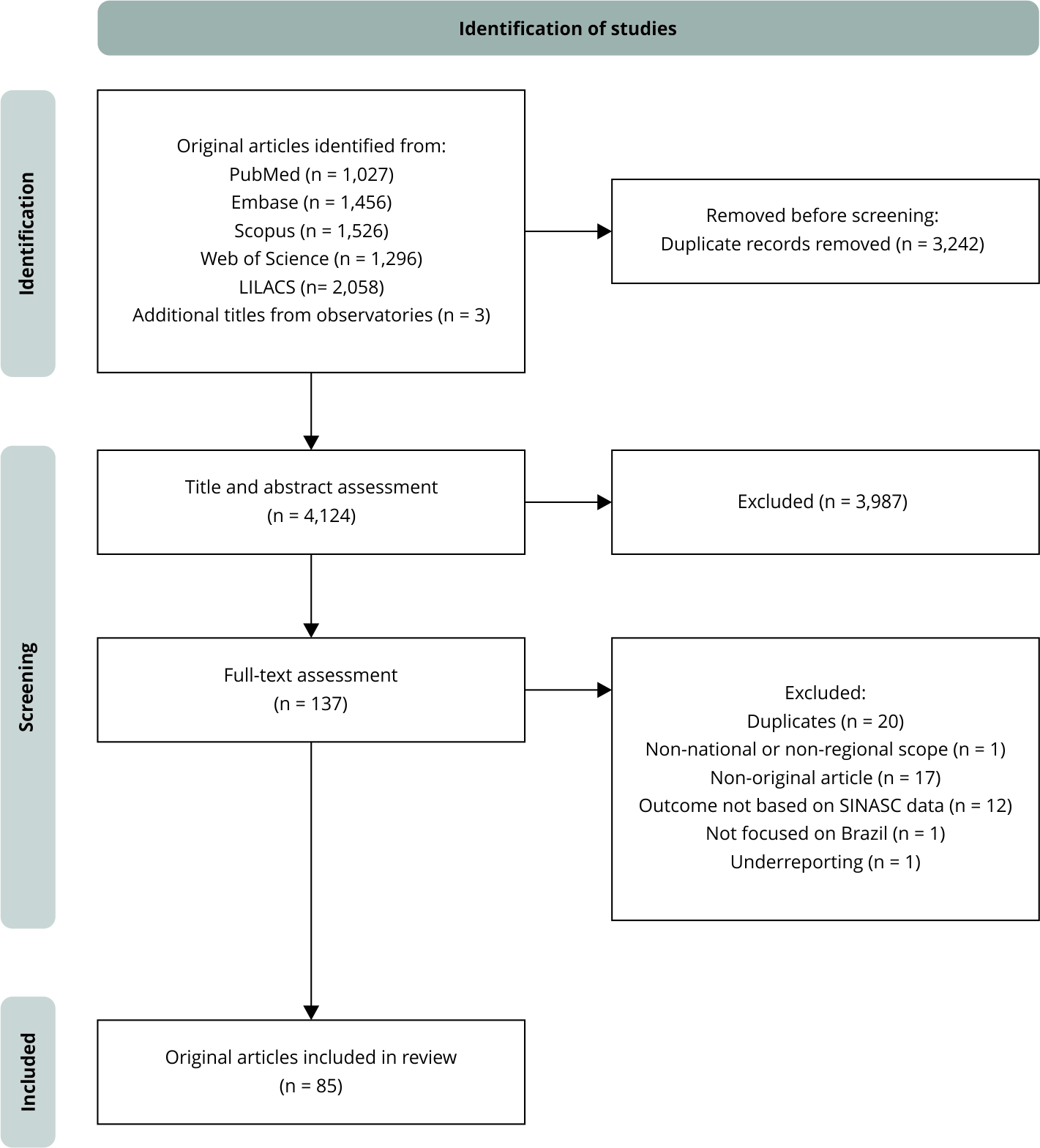 SINASC: Brazilian Information System on Live Births.