| Indicador comportamental |
| Proporção de mulheres sedentárias (%) |
Proporção de mulheres maiores de 18 anos que relataram serem sedentárias (não realizar atividade física semanal moderada fora do âmbito da escola ou trabalho, por pelo menos 150 minutos ou não realizaram atividade física semanal vigorosa fora do âmbito da escola ou trabalho por pelo menos 75 minutos. |
PNSa
|
=(∑ mulheres com 18 anos ou mais que eram sedentárias em 2019 e participaram da PNS) ∕ (∑mulheres com 18 anos ou mais que participaram da PNS em 2019) |
| Indicadores sociodemográficos e de cobertura |
| Índice de envelhecimento (%) |
Refere-se ao processo de envelhecimento da população, sendo que maiores valores refletem um estágio mais avançado da transição demográfica |
IBGEb (acesso em maio 2021) |
= (∑ mulheres com 60 anos ou mais para os anos de 2018 e 2019) ∕ (∑ mulheres com menos de 15 anos na mesma para os anos de 2018 e 2019) * 100 |
| IDHc
|
Medida de desenvolvimento de uma localidade, composto de indicadores de três dimensões do desenvolvimento humano, incluindo a expectativa de vida ao nascer, a educação e a renda. |
IPEAd (acesso em maio 2021) |
Indicador direto para o ano de 2017 (o mais recente disponível) |
| Cobertura por plano de saúde (%) |
Refere-se à proporção de beneficiários que aderiram a saúde suplementar |
ANSe (acesso em maio 2021) |
= (proporção de beneficiárias mulheres com plano de saúde ativo em 2018 + proporção de beneficiárias mulheres com plano de saúde ativo em 2019) ∕ 2 |
| Indicadores relativos ao controle do câncer de mama |
| Cobertura de rastreamento na população alvo (mulheres de 50 a 69 anos) (%) |
Proporção anual de mulheres rastreadas para câncer de mama na população alvo preconizada pelo SUSg, considerando-se a periodicidade recomendada bianual e excluindo-se as mulheres cobertas pela saúde suplementar. |
SIA/SUSf, IBGEb (acessados em maio 2021) e ANSe (acesso em janeiro 2024) |
= [(∑ mamografias de rastreamento autorizadas em mulheres de 50 a 69 nos anos de 2018 e 2019) ∕ (∑ população alvo total estimada pelo IBGE para os anos de 2018 e 2019, excluindo-se o percentual de mulheres nesta faixa etária cobertura pela saúde suplementar) *0,5] * 100. |
| Déficit de mamografias necessárias ao ano (%) |
Reflete o déficit relativo ao parâmentro de necessidade de mamografias/ano, conforme indicações de realização de mamografia dignóstica (10%, D1) ou outras indicações (10%, Ou) em mulheres de 40-49 anos e mamografia dignóstica (8,9%, D2) ou outras rastreamento (50%, R1) em mulheres de 50-59. |
SIA/SUSf, IBGEb (acessados em maio 2021) e ANSe (acesso em janeiro 2024) |
= [100 - (∑ mamografias autorizadas em mulheres com idade de 40-59 anos, nos anos de 2018 e 2019) ∕ (∑ D1, Ou, D2, R1, excluindo-se da população total o percentual de mulheres nesta faixa etária coberta pela saúde suplementar) *100] |

 Spatial analysis of the incidence of breast cancer in women in Brazil in the 2018-2019 biennium and related indicators
 Thumbnail
 Thumbnail
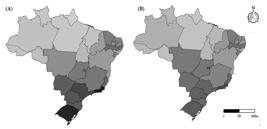
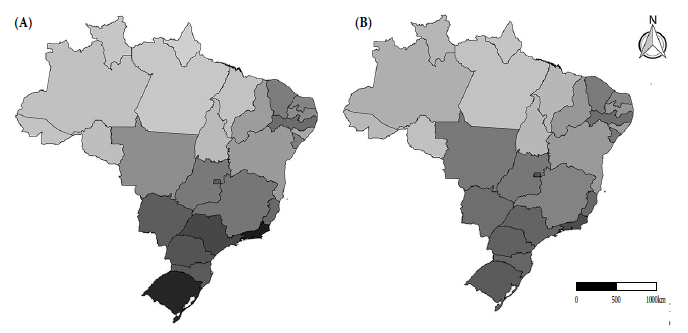 Fonte: Autores.
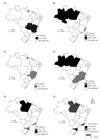
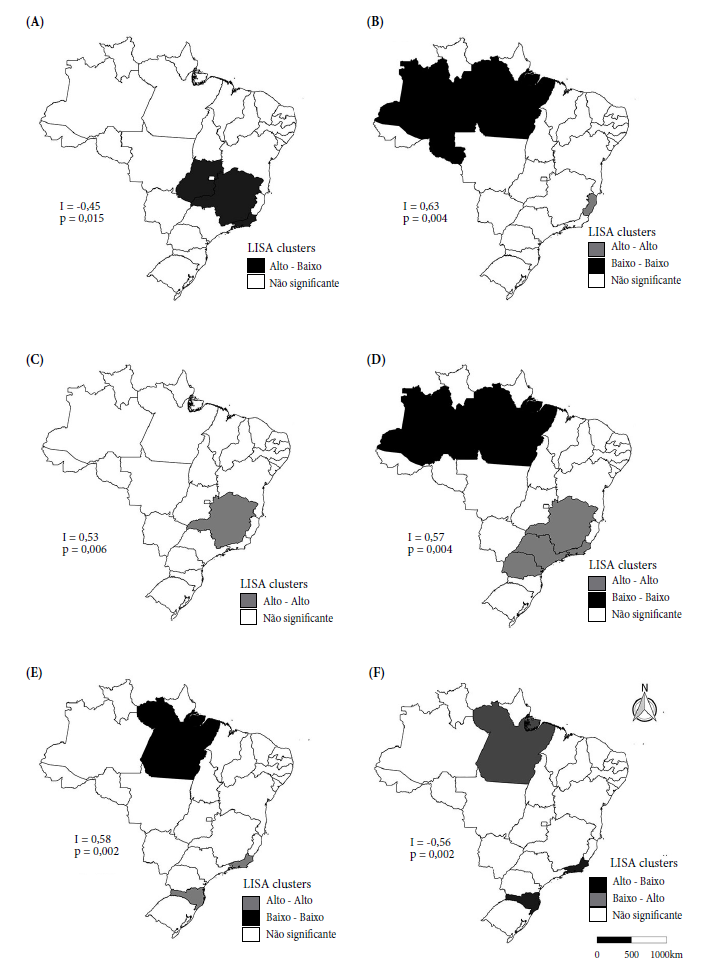 P-valores baseados no método de simulação de Monte Carlo. Fonte: Autores.