 Economic nationalism and the dilemma of the health economic-industrial complex agenda
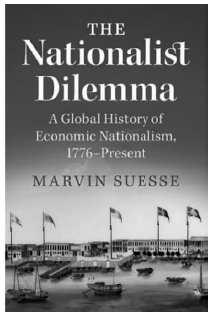
The resumption of national development is on the agenda in Brazil through the project of the Health Economic and Industrial Complex (CEIS) and the defense of a comprehensive industrialist policy in the third Lula government1. It is common for Brazilian liberals in academia, social media, and the mainstream press to attribute the contemporary revival of the national developmental agenda exclusively to Latin American thinkers as a way of disproving and vetoing it. The book The Nationalist Dilemma: A Global History of Economic Nationalism, 1776 - Present2 helps to undermine the liberal argument by showing that the idea of broad political intervention in the macroeconomy is the intellectual heritage of nations that are overcoming ongoing globalization or seeking to curb it.
The author’s ideas effectively help to argue in favor of developing autonomous national technological capacity in health by presenting the surprising trajectory of nationalist-oriented economic thought in a wide range of political regimes and countries, from the founders of the United States’ federative pact to the American First reactionary agenda or the current drive for technological hegemony in China. The historical experiences of economic nationalism in France, England, Italy, Germany, Japan, Argentina, Bolivia, and Brazil are not left out.
The case of East Asia is revisited in detail, as is the economic thinking that emerged in the African anticolonial struggle, focusing on the ideas of Kwame Nkrumah in Ghana and Julius Nyerere in Tanzania. The contextualized emergence of Friedrich List’s ideas and the shocking demonstration of Max Weber’s links to the social-Darwinist discourse and the German racist chauvinism of the late 19th and early 20th centuries are also interesting. Finally, the pages on the national issue in the late Soviet Union are incredibly enlightening and help the reader understand, for example, the current conflict between Russia and Ukraine.
Suesse argues in the book that there are common points in how nationalists view the economy. In the most radical version, economic nationalism is the political expression of the idea that economy and nation must absolutely converge. In this sense, this nationalism advocates the development of the domestic economy independent of the global sphere, with trade and investment controlled by compatriots, restricted contact with foreigners, privilege of ownership of property and employment by fellow citizens, and deliberate exclusion of non-nationals from public functions. In other words, according to Suesse, the privilege of exchange within the nation rather than outside it is the objective of economic nationalism’s isolationist agenda (p.2).
Thus, nationalist intellectuals attack classical liberal economic theory, which advocates the globalization of domestic economies by privatizing state-owned enterprises, unilaterally opening the domestic market, allowing capital free flow, and destroying labor rights. Furthermore, economic nationalist thinkers are commonly seen by liberals as antagonists of globalization.
Suesse shows that ideas about national development effectively consolidated coalitions of interest, successfully articulating domestic demands in globalization. He states that the dilemma accompanying the isolationist agenda stems from its formulators additionally adopting the agenda of “modernizing” the nation.
In some cases, the success of the modernization project allowed many nations to achieve technological and commercial standards identical to those of the Western countries that pioneered the Industrial Revolution. This catch-up success was possible due to alliances with the hegemonic countries in the globalization outlook and aggressive policies of import replacement, technological innovation, and export.
In this context, Suesse calls the attempt by domestic elites to reconcile isolationism with the expansionist objectives of commercial, political, and military power, a “nationalist dilemma”.
Drawing on evidence from The Nationalist Dilemma, Rodrik argues that no one can deny the success of East Asian developmental states: Japan, South Korea, Taiwan, and China, which encouraged global economic integration and selectively protected primary sectors, even though they failed to build the welfare state. He says, “East Asian economic nationalism was a boon to the rest of the world. Even with trade barriers here and there, the buoyant markets it created for trading partners were far greater than any alternative economic strategy would have produced”3.
Suesse frequently refers to the spread of national-developmentalist ideas in Brazil, especially emphasizing the revival of the decisive influence of the formulator of the authoritarian State model, Mihail Manoilescu, in the 1920s and 1930s. However, the author highlights that, after 1945, Brazilian national developmentalism distanced itself from the authoritarian legacy inspired by Manoilescu and sought support for its agenda by mobilizing workers and the industrialist bourgeoisie.
Suesse also attributes the resilience of national-developmentalism ideas in Latin America after World War II to the continued developmentalist agenda of the second Vargas government on a larger scale. This point was also addressed in an extraordinary 2015 article by Wilson Cano4.
Even so, readers who are informed about the intellectual production of economic thought in Brazil will be surprised by the paucity of references to the important national literature on developmentalism, which currently exerts a notable influence on the CEIS sectoral agenda. Celso Furtado’s monumental work receives only a passing mention in the book. The release in 2023 of the collection A History of Brazilian Economic Thought, organized by Bielschowsky, Boianovsky, and Coutinho5, will certainly help to recognize domestic intellectual production in a future reissue of Suesse’s book.
In any case, The Nationalist Dilemma is a highly recommended work for those in the field of collective health. It is a must-read for understanding the intellectual and political complexity of building a development project for a nation. By reading Suesse’s work, we can conclude that the national development agenda, especially in the knowledge economy and innovation sphere, is a determining variable for any possibility of resilience of the health system based on an active industrial policy, as advocated by the CEIS strategic agenda.
References
- 1 Costa NR, Gon RK. Saúde é desenvolvimento: o Complexo Econômico-Industrial da Saúde como opção estratégica nacional. Saude Debate 2024; 48(140):e9027.
- 2 Suesse M. The Nationalist Dilemma: A Global History of Economic Nationalism, 1776-Present. London: Cambridge University Press; 2023.
-
3 Rodrik D. Nacionalismo de maneira certa [Internet]. 2023 [acessado 2024 abr 9]. Disponível em: https://valor.globo.com/opiniao/coluna/nacionalismo-da-maneira-certa.ghtml
» https://valor.globo.com/opiniao/coluna/nacionalismo-da-maneira-certa.ghtml - 4 Cano W. Crise e industrialização no Brasil entre 1929 e 1954: a reconstrução do Estado Nacional e a política nacional de desenvolvimento. Rev Econ Polit 2015; 35(2):444-460
- 5 Bielschowsky R, Boianovsky M, Coutinho MC. A History of Brazilian Economic Thought. London: Routledge; 2023.