
 Gender-race-class intersectionality in the training of health professionals at UFBA, Brazil
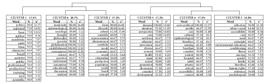
The aim of this article was to identify and analyze the presence/absence of social markers of gender, race and class in the syllabuses of health courses offered at two campuses of Universidade Federal da Bahia, in force in 2024. In the 22 courses analyzed, we identified 1,090 compulsory, open-access subjects. However, only 3.4% of the syllabuses mentioned the terms and content surrounding these markers and made up the analyzed sample. We used document analysis and submitted the syllabuses to the descending hierarchical classification analysis of the Iramuteq software. We adopted the notion of gender-race-class intersectionality as a theoretical framework. We identified six different classes, presented in a dendrogram. The majority of health courses at UFBA have not yet included the discussion of the main social markers in their curricula in a direct or even indirect way. Only a few have already faced differential discussions that problematize them as constituents for understanding health and which are reflected in professional training. This suggests a careful and urgent review of the curricula.
Key words:
Curriculum; Intersectionality; Health Education; University
 Thumbnail
 Source: Authors, with support from Iramuteq software.