| Psychosocial factors |
| A. Self-efficacy (sense of competence to seek, obtain and use health information) |
| A1. Competence perceived by the receiver |
“I was able to find what I needed, I always manage to find what I want, I said I would find a solution to the issue, it was easy to find this, it seems easy to use this...” |
| A2. Incompetence perceived by the receiver |
“I don’t understand any of this, I need help to understand this, I never find what I need, it’s so difficult to find a solution to my problem, I don’t know how to resolve this anymore...” |
| A3. Additional receiver’s asks related to the amber necklace |
"Where can I find more information about this? What is this used for? How do you use this? They say this is good, is it true?” |
| B. Risk perception of teething (perceived susceptibility and severity of teething, prompting the need for intervention in its management, such as the acquisition or intention to acquire amber teething necklaces) |
| B1. Perceived severity by the receiver |
“This is more serious than I thought, it’s very severe, my child seems like he’s going to die...” |
| B2. Severity not perceived by the receiver |
“This isn’t a serious issue, it’s not severe, my child doesn’t feel any of it...” |
| B3. Receiver’s need to take action |
“I have to do something about this, I can’t stand this situation anymore.” |
| B4. Lack of receiver’s need to take action |
“There’s no need to do anything, just wait.” |
| B5. Acquisition or intention to acquire the necklace |
“I just bought one for my daughter, where can I buy one? How much does it cost? It’s beautiful, I want one...” |
| B6. Lack of intention to acquire the necklace |
“I will never buy this, I won’t waste money on it, anyone who buys this is throwing money away.” |
| C. Concern/anxiety about teething symptoms (expresses concern/anxiety about teething symptoms) |
| C1. Physical discomfort |
“I’m worried/anxious about my child’s discomfort (pain), I fear that he’s suffering a lot...” |
| C2. Crying |
“My daughter is screaming so much, I’ve never seen so much crying, is it normal to cry this much?” |
| C3. Fever |
“I’m worried/anxious because my daughter has a fever, is it normal to have a fever with the teething...?” |
| C4. Diarrhea |
“My daughter has diarrhea every day because of her teeth. I’m very afraid of a more significant problem...” |
| C5. Drooling |
“My son doesn’t stop drooling for a second, he drools a lot!” |
| C6. Putting hands or objects in the mouth |
“Is it normal for a child to have their hand in their mouth all the time while teething? My son puts everything in his mouth, thanks to those teeth!” |
| C7. Other perceived conditions |
“My son has lots of white spots on the roof of his mouth, what could that be?” |
| D. Concern/anxiety about the use of amber necklace (expresses concern/anxiety about the use of amber teething necklaces) |
| D1. Danger alert |
“I’m afraid this necklace might cause an accident, what if my child gets strangled by it...?” |
| D2. Fear of accidents |
“Warning! Don’t buy or use this necklace! It can be very dangerous...” |
| D3. Dentist contraindication |
“Dentists don’t recommend using this necklace. I talked to my daughter’s dentist, and she told me not to buy or use it.” |
| Instrumental Factors |
| E. Quality of information (classification of post quality by the receiver) |
| E1. The information is of high quality |
“Excellent post! Congratulations on the content! Very informative!” |
| E2. The information is of low quality |
“Bad post! Not great, huh? Terrible!” |
| E3. The information is of questionable quality |
“I’m somewhat skeptical about this, I’ll believe it when I see it...” |
| F. Social media reliability (classification of the reliability of Facebook in providing health information by the receiver) |
| F1. Facebook is reliable for information about amber necklace |
“Everything I find on Facebook is great, Facebook is fantastic!” |
| F2. Facebook is not reliable for information about amber necklace |
“Nothing on Facebook is worth it! What a shame, Facebook!” |
| G. Information utility (evaluation of content usefulness by the receiver) |
| G1. The information is useful or potentially useful |
“This information was very helpful, look how great it is, @maria!” |
| G2. The information is useless |
“Useless post! Why is this, my God! Is there nothing better to do than write nonsense?” |
| H. Teething experience (classification of the receiver’s level of experience regarding teething) |
| H1. Current experience with the condition |
“I’m going through this right now, only God! Only God can help me; it’s tough!” |
| H2. Past experience with the condition |
“Thank goodness I’ve been through this already! Thank God it’s over!” |
| H3. No experience with the condition |
“I’ve never been through this, but it must be tough. I can empathize even without knowing what it’s like...” |
| I. Amber necklace experience (classification of the type of real or expected experience with the amber teething necklace) |
| I1. Neutral experience/knowledge about the amber necklace |
“It is very common in Europe, amber is a natural resin from the Baltic Sea, succinic acid is released upon contact with the skin…” |
| I2. Positive experience from using the amber necklace |
“I used it on my daughter, and it was wonderful! I recommend it! Besides being beautiful, it works...” |
| I3. Negative experience from using the amber necklace |
“I used it, and it didn’t do anything, it was the same as water...” |
| I4. Positive expectation about using the amber necklace |
“I received one of these from my mom, and I think it’ll be great for relieving my child’s pain...” |
| I5. Negative expectation about using the amber necklace |
“I got a necklace like this at the baby shower, but I don’t really believe it will work. I’ll believe it when I see it...” |

 Creencias sobre la odontiasis y los collares de ámbar: un análisis de contenido de las perspectivas de los usuarios en comentarios de Facebook
 Thumbnail
 Thumbnail
 Thumbnail
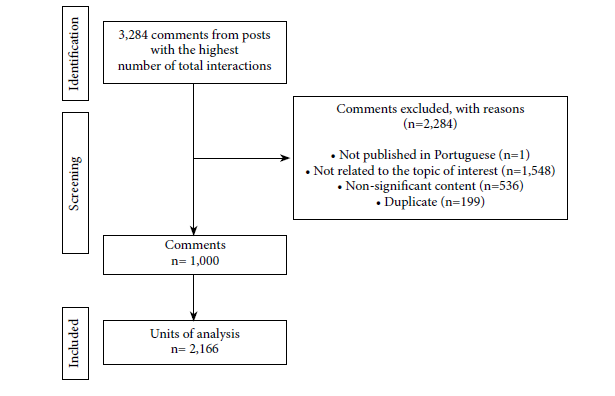 Source: Authors.
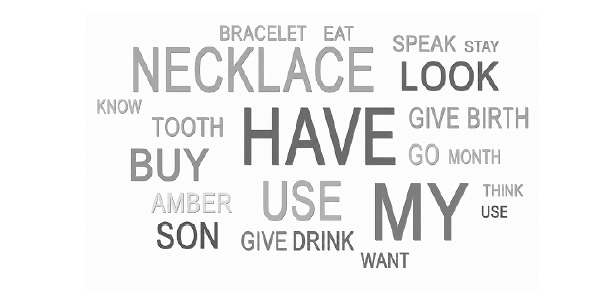 Source: Authors.
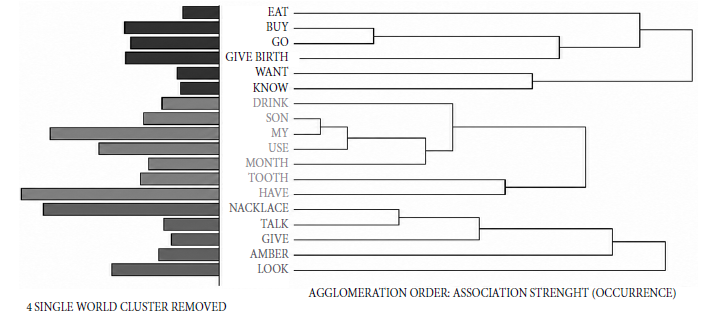 Source: Authors.