 Random forest and infrared spectroscopy to detect contamination of freeze-dried milk by ivermectin residues
ABSTRACT:
Veterinary drugs in milk poses a risk to consumers’ health. Little attention is paid to investigating residues of veterinary medicines in powdered milk, then there is a need to develop new methods for monitoring these residues. We proposed the use of random forest (RF) for the prediction of the concentration of ivermectin residues in freeze-dried milk, using FTIR spectroscopy. Eight hundred models were tested and after fine tuning the best RF model was obtained with 800 trees, 5 variables for each tree, node size 1, and 75% of the data for training. The RF regression model demonstrated good ability to predict the concentration of ivermectin residues in freeze-dried milk, with correlation and determination coefficients greater than 0.96 and low error and residual values (approximately 1.0). The proposed method is fast, simple, sensitive, low cost, non-destructive and environmentally friendly, being an alternative to make the control of ivermectin residues in milk.
Key words:
chemometrics; ATR FTIR; non-destructive method; one health.
RESUMO:
Medicamentos veterinários no leite representam riscos à saúde dos consumidores. Pouca atenção é dada à investigação de resíduos de medicamentos veterinários em leite em pó, havendo, portanto, a necessidade do desenvolvimento de novos métodos para monitorar esses resíduos. Propomos o uso de Randon Forest (RF) para a predição da concentração de resíduos de ivermectina em leite em liofilizado, utilizando a espectroscopia FTIR. Foram testados 800 modelos e, após ajustes finos, o melhor modelo RF foi obtido com 800 árvores, cinco variáveis para cada árvore, tamanho de nó 1 e 75% dos dados para treinamento. O modelo de regressão RF demonstrou boa capacidade de prever a concentração de resíduos de ivermectina em leite liofilizado, com coeficientes de correlação e determinação superiores a 0,96 e baixos valores de erro e resíduos (aproximadamente 1,0). O método proposto é rápido, simples, sensível, de baixo custo, não destrutivo e ambientalmente amigável, sendo uma alternativa para o controle de resíduos de ivermectina no leite.
Palavras-chave:
ATR FTIR; método não destrutivo; quimiometria; saúde única
INTRODUCTION
Ivermectin (IVM) is a broad spectrum antiparasitic from the family of avermectins (macrocyclic lactones), produced by the actinomycete Streptomyces avermitilis, used in the treatment and control of parasites in livestock (RÚBIES et al., 2015). Due to the low water solubility and high lipophilicity, IVM accumulates in muscles and adipose tissues of the treated animal and persists for long periods in plasma and milk (ANASTASIO et al., 2002; HOYOS et al., 2017). Therefore, the use of IVM is not recommended in food-producing animals due to potential health risks to consumers (IMPERIALE & LANUSSE, 2021).
Residues from veterinary drugs represent chemical hazards in milk. Poor milk safety (milk contamination and adulteration) is a public health risk, in addition to compromising the development of the dairy sector (NYOKABI et al., 2021), as observed in scientific reports (BRITO et al., 2024; PAUCAR-QUISHPE et al., 2024). To protect consumers, regulators set Maximum Residue Limits (MRLs) for ivermectin in milk, as well as for other veterinary drugs in foods of animal origin. In Brazil, the Brazilian Health Regulatory Agency (ANVISA) establishes the MRL of 10 µg L-1 for IVM in fluid cow’s milk, and it is the responsibility of the Ministry of Agriculture, Livestock and Food Supply to verify the attendance of MRL through the National Plan for the Control of Residues and Contaminants (PNCRC) (BRASIL, 1999; 2022). The FAO, and Brazil has established for ivermectin an acceptable daily intake (ADI) for consumers of 0-10 µg/kg of their body weight, to avoid risk to Consumer Health For human health (FAO, 2024; BRASIL, 2022).
The presence of avermectins (abamectin, doramectin, eprinomectin, ivermectin, and moxidectin) has been reported in commercial milk (MULLER et al., 2020; PAUCAR-QUISHPE et al., 2024). This is a health problem that must be addressed, as well as the antibiotic residues in milk. Both drugs can lead to drug-resistance, a public health (SCHLEMPER & SACHET, 2017; BRITO et al., 2024; MALIK et al., 2023).
The determination of IVM residues in milk and dairy products has been widely performed using different systems of liquid chromatography with fluorescence detector (MACEDO et al., 2015; SUVARNA, 2023) and coupled to a mass spectrometer (ROMERO-GONZÁLEZ et al., 2011; SUVARNA, 2023). However, chromatographic methods are expensive, demand qualified personnel, require sample pre-treatment (FERNÁNDEZ et al., 2011), and use toxic solvents in the mobile phase (YOO et al., 2021). The extraction of IVM in milk is usually performed using toxic solvents, such as acetonitrile and hexane (DANAHER et al., 2006; SUVARNA, 2013), and involves complex and laborious processes of sample treatment, which increases the time and cost of each analysis (ROMERO-GONZÁLEZ et al., 2011; BRITO et al., 2024). Therefore, there is a need to develop new methods, faster, cheaper, and environmentally friendly, for the determination of IVM residues in milk.
According to GONG et al. (2024), many papers have been published using FTIR spectroscopy in recent years. These authors note that while the use of FTIR spectroscopy is extensive in food analysis, it is also widely applied in various other fields such as pharmaceuticals, environmental sciences, materials, forensic analysis, among others. They emphasize that numerous articles have been published using FTIR spectroscopy in recent times (SAJI et al., 2024).
Fourier Transformed Infrared spectroscopy (FTIR) has excelled in milk quality control due to its high analytical capacity, shorter analysis time and requires little or no sample preparation and use of reagents, resulting in lower analysis costs and a larger number of samples analyzed (COITINHO et al., 2017). The association of FTIR and chemometric tools has been efficient in several research areas, making it possible to extract and analyze information accurately and quickly (LUIZ et al., 2021; BABUSHKIN et al., 2016; AHMAD & AYUD, 2022), as for investigating adulteration of raw milk (COITINHO et al., 2017), and powdered milk (FENG et al., 2019), and for the detection of veterinary drug residues in raw milk (SILVA et al. 2009; LUIZ et al., 2018; TEIXEIRA et al., 2020; FREITAS et al., 2020), and powdered (lyophilized) milk (FREITAS et al., 2021).
The United Nations Food and Agriculture Organization estimates that over 80% of the world’s population (about 6 billion people) regularly consumes dairy products (FAO, 2025). These consumers guarantee a projected improvement in the international commercial trade of milk powder (OECD-FAO, 2020). Global powdered milk production grew by 26.86%, from 324.6 billion tons in 2010 to 411.8 billion tons in 2022 (FAO, 2024). According to Renub Research projections, the market growth rate will improve by 4.93% from 2025 to 2030 (RENUB RESEARCH, 2024).
Machine learning (ML) is a powerful tool that uses algorithms to find patterns and make decisions from data (PATIÑO et al., 2024). When applied to the analysis of antibiotic residues, especially by means of Fourier transform infrared spectroscopy (FTIR), ML offers an efficient and accurate approach to identifying and quantifying these substances in complex matrices such as milk (FREITAS et al., 2020). Among the ML algorithms, Random Forest stands out as a robust and effective approach, where it works by creating multiple decision trees that together form a set capable of classifying or predicting the presence of antibiotic residues from the spectral patterns generated by FTIR (SHARAHA et al., 2022). This technique is particularly useful for dealing with large volumes of data and correlated variables, guaranteeing reliable results even in samples with interferences (CUNHA et al., 2020).
The RF basic concept is to plant many unpruned decision trees based on the bootstrap sampling method (LI et al., 2020), and their results are combined using un-weighted majority vote (ROKACH, 2016). This machine learning method has become popular for its flexibility to perform different types of analysis, including regression, classification, unsupervised learning, and survival analysis (NIU et al., 2022). RF has stood out in prediction for the ease of tuning (a few tuning parameters) and modeling with multi-dimensional complex data (AHMAD et al., 2017).
It is noteworthy that little attention is paid to investigating veterinary drug residues in powdered milk (KNEEBONE et al., 2010). In view of the need to develop new methods for monitoring residues of veterinary drugs in powdered milk, this research developed a fast, sensitive, low cost and environmentally friendly method for the determination of ivermectin residues in powdered milk, using ATR FTIR for direct sample analysis and random forest (RF), to establish a prediction model, and based on decision trees proposed by BREIMAN (2001).
MATERIALS AND METHODS
Samples
Samples of raw milk, from commercial farms (500 mL/cow) were obtained from 10 healthy cows (Holstein/Zebu) that were not treated with IVM. The samples were collected, from the 10 same cows, in the region of Itapetinga - Bahia - Brazil (15º 15’ 23” South, 40º 15’ 27” West), in three different days during the month of July (winter season in Brazil), separated by 1 week, at the same time in the morning (n=30). The samples were collected with adequate sanitary control, stored under refrigeration, and immediately conducted to the laboratory after collection (Figure 1).

Experimental design
After homogenization, each raw milk sample, from each cow, was subdivided into 11 aliquots (n=330), one without adding an IVM standard (pure milk) and, to simulate the contamination of the milk, the others were impregnated with standard IVM (Sigma-Aldrich, Saint Louis, USA) solution to obtain concentrations (Figure 1). The IVM solution (10.0 mg L-1) was prepared by solubilizing the standard IVM in milk. In volumetric flasks (10 mL) different volumes of IVM solution were added and bulked with the raw milk samples, to obtain IVM concentrations of: zero, 2, 4, 6, 8, 10, 12, 14, 16, 18 and 20 µg L-1, predefined according to the MRL for IVM in cow’s milk (10 µg L-1).
Samples preparation (lyophilization)
After dividing the aliquots and adding IVM standard, the milk samples were frozen at -20 ºC ± 2 ºC for 24 h and lyophilized (freeze-dried) at -48 ºC ± 2 ºC and 0.100 mBar for 24 h in a FreeZone lyophilizer (Labconco, Kansas, USA). Lyophilization was used to ensure the integrity of the samples for the FTIR analyses, since it was necessary to use raw milk to simulate the contamination of powdered milk by IVM residues and liquid milk has a shelf life shorter than powdered milk. As IVM is non-volatile and the total volume of each contaminated milk sample was lyophilized for FTIR analysis, the amount of IVM tested has the same amount introduced into the raw milk samples.
Spectroscopic analysis
The samples of pure milk and milk contaminated (freeze-dried) with IVM and the IVM standard were analyzed by Attenuated Total Reflectance Fourier Transform Infrared spectroscopy (ATR FTIR) in the mid-infrared region (650-4000 cm-1) in an equipment model Cary 630 (Agilent, Santa Clara, USA). Data were processed using MicroLab and Resolution Pro software (Agilent, Santa Clara, USA).
Random forest model development and assessment
Initially, the data from the spectroscopic analysis of pure milk and milk contaminated with ivermectin were standardized centered on the mean. The random forest model was performed with the R software version 3.4.4 (The R Foundation, Austria) along with the random Forest package version 4.6-14 and its dependencies. The fine tuning of the model was performed with the ranger package version 0.12.1 and caret package version 6.0-84.
The parameters evaluated in fine tuning were number of trees (ntree), number of variables randomly chosen for each tree (mtry), minimum number of samples within the terminal nodes (node size) and training set (sample size). 800 models were tested, varying the ntree from 20 to 2000 (ranging by 10), the mtry from 1 to 16 (ranging by 1), the node size from 1 to 10 (ranging by 1), and the sample size of 55%, 66%, 70%, 75% and 80%.
RESULTS AND DISCUSSION
FTIR spectra
The IVM spectrum (Figure 2A) showed well-defined and characteristic absorption bands: at 815-980 cm-1 due to stretching vibration of C-O related to cyclic ethers, around: 1180-1030 cm-1 characteristic of aliphatic ethers due to asymmetric and symmetric stretching of C-O-C; 1300-1380 cm-1 showing moderate ketone absorption; in 1380-1480 cm-1 related to asymmetric and symmetric deformation vibration of aliphatic C-H groups; 1680 cm-1 due to the C=C group adjacent to the -O group in unsaturated lactones; 1735 cm-1 characteristic of the elongation of the C=O group of saturated aliphatic ketone; in 2930-2970 cm-1 due to the asymmetric and symmetric stretching of C-H groups; and around 3400-3500 cm-1 due to axial deformation of O-H (LU et al., 2017; LI et al., 2016).

ATR FTIR Ivermectin samples spectra (A), and spectra of pure milk (freeze-dried) and milk contaminated with ivermectin (2-20 µg L-1) overlapping in the infrared region of 650-4000 cm-1 (B).
In the spectra of the mid-infrared region, the compounds responsible for each absorption may be identified. The freeze-dried milk spectra (Figure 2B) showed well-defined absorption bands characteristic of functional groups within milk components (lactose, proteins and lipids).
Protein-related absorption bands are due to peptide bonds between amino acids; lipid-related absorption bands are characteristic of CH groups of fatty acid chains and carbonyl groups in ester linkages of fats; and lactose-related absorption bands are mainly associated with hydroxyl groups (MOHAMED et al., 2021). Absorption bands associated to lactose: at 892 cm-1 due to C-H stretching vibration; at 1023 cm-1 related to C-OH stretching of alcohol function; and at 1148 cm-1 characteristic of C-O-C ether stretching (AERNOUTS et al., 2011). Absorption bands related to proteins: in 700 cm-1 associated with amides (N-H bending); in 768 cm-1 related to amide III (O=C=N bending); in 1241 cm-1 characteristic of amide III (C-N stretching, N-H bending, C=O stretching and O=C=N bending); 1300 cm-1 related to amide III (N-H bending and C-N stretching); 1541 cm-1 characteristic of amide II (C-N stretching and N-H bending); 1647 cm-1 relative to amide I (C=O stretching, C-N stretching and N-H bending); and 3278 cm-1 associated with amides (N-H stretching) (AERNOUTS et al., 2011; KONG & YU, 2007).
Absorption bands referring to fats: at 1376 cm-1 due to C=O stretching; in 1458 cm-1 related to bending vibration of saturated C-H, CH3 and CH2 bonds of fatty acids; in 1742 cm-1 relative C=O ester stretching; in 2851 cm-1 associated with stretching vibration of saturated C-H, CH3 and CH2 bonds of fatty acid; and at 2919 cm-1 due to C-H stretching (AERNOUTS et al., 2011).
The presence of IVM in freeze-dried milk in the studied concentration range (2-20 µg L-1) did not produce significant differences between the spectra of pure powdered milk and milk contaminated with IVM (Figure 2). Another study reporting the analysis of IVM residues in milk by FTIR indicates that, for 10-100 ppb concentration range, it was only possible to distinguish pure milk from the milk samples impregnated with ivermectin at 100 µg L-1 expanding a certain range of interest in the spectrum in the near infrared region (LUIZ et al., 2020; KOLBERG et al., 2009).
Therefore, the visual inspection of the milk spectrum alone is not enough to indicate milk contamination by veterinary drug residues, evidencing the importance of the association of infrared spectroscopy with chemometrics for the investigation of milk contamination (FREITAS et al., 2021). Several chemometric methods have been applied to obtain IR spectra with high quality and more accurate models (QI et al., 2022).
Random forest model
Random forests have two important parameters: the number of trees (ntree) and the number of variables randomly chosen for each tree (mtry), and their predictive capacity depends strongly on these two parameters. The optimal values for the ntree and mtry parameters are determined based on the least out-of-bag (OOB) error (LI et al., 2020) and should be enough to stabilize the OOB error (SANTANA et al., 2019). After fine tuning varying ntree, mtry, node size and sample size, the best RF model among the 800 models tested was obtained with 800 trees (Figure 3), 5 variables for each tree, node size equal to 1, and the training set with 75% of the data, so that of the total data set (330 observations): 248 observations constituted the training set and 82 observations were part of the test set.

The accuracy and the reliability of the prediction model is evaluated based on statistical parameters, such as correlation coefficient (CHEN et al., 2015; DRAČKOVÁ et al., 2009), determination coefficient and root mean standard error (JHA et al., 2021; WANG et al., 2018). The accuracy of the RF model can be evaluated by calculating the mean square residual value of the OOB, which indicated the variable importance measure when evaluating the degree of influence of the independent variable on the dependent variable (LIU et al., 2020a).
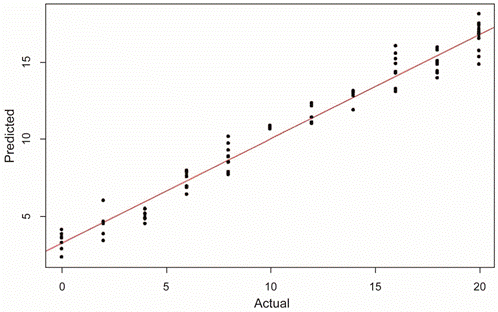
After the refinement of the model, the best RF model presented R2 = 0.9699, R = 0.9848, mean of squared residuals (MSR) = 1.040, and out-of-bag mean squared error (OOBMSE) = 1.015. The high R and R2 coefficients (near to 1) and the low MSR and OOBMSE (approximately 1.0) ensure the accuracy of the RF model and these quality parameters indicate that the model presents good ability to predict the concentration of ivermectin (0-20 µg L-1) in milk (Figure 4).

Regression graph of the predicted versus actual ivermectin concentration (020 µg L-1) in freeze-dried milk.
Considering the linear regression model, obtained from the correlation between the actual and predicted values, for the adulteration level 0 ug/L (unadulterated samples), the value predicted by the Random Forest model is 3.37±1.18 ug/L. Therefore, we considered from this inference that the minimum detection limit of the ATR FTIR(RF) method is 3.37±1.18 ug/L, where the uncertainty value is expressed by the confidence interval.
The Bland-Altman analysis (Figure 5) revealed an average bias of 0.1988, indicating that, on average, the predictions of the Random Forest regression model exhibit slight positive deviations from the true values. However, the magnitude of this bias is minimal and not statistically significant. The calculated limits of agreement, ranging from -4.2192 (lower) to 4.6169 (upper), that encompasses 95% of the observed differences, indicated a strong concordance between the model’s predictions and the actual values within the dataset. Notably, only a single difference fell outside the established limits of agreement (Real = 20.00 ug/L; predicted = 14.89 ug/L). This discrepancy may be attributed to the model’s limited ability to capture specific features of that observation or, more likely, the presence of an outlier in the data. Overall, the Bland-Altman analysis underscores the consistent and robust performance of the Random Forest model, as assessed through linear regression (predicted vs real model). These findings validate the machine learning model’s predictive capabilities and highlighted its reliability for the prediction of Ivermectin in milk at trace level.

Milk composition may be influenced by many factors, such as geographic location, season of the year, feeding system, animal’s physiological state, genetic factors, lactation stage, milking interval, among others (COITINHO et al., 2017). Milk variability may affect calibration results, as the inclusion of samples with very discrepant compositions in the model leads to great spectral variability and a decrease in calibration sensitivity (CASSOLI et al., 2011). In another study that used FTIR spectroscopy combined with machine learning (multilayer perceptron network) to determine veterinary drug residues (tylosin) in milk, it was necessary to add a multiclass classification variable as a correction factor for the matrix effect related to the great variability in the composition of the analyzed milk samples (FREITAS et al., 2021). It was not necessary to add correction factor or remove outliers to generate the calibration model, which indicates that there was no significant variation in the composition of the analyzed powdered milk samples and there was no matrix effect.
To date, no other studies have been found reporting the analysis of ivermectin residues in powdered milk by FTIR spectroscopy. The lowest IVM concentration (2 ppb) in powdered milk analyzed by FT-MIR combined with RF in this study is lower than that reported in another study in which IVM residues, in fluid milk, were analyzed at concentrations 10-100 ppb using FT-NIR combined with PCA (LUIZ et al., 2020). Noteworthy is that the lyophilization of milk samples may help detect lower concentrations of ivermectin residues, as well as other contaminant residues. Lyophilization removes water that may interfere with the milk FTIR spectrum, as water absorbs in the analyzed region, absorbing at 1200-1800 cm-1 and 2800-3700 cm-1 for example (SHI et al., 2020). Thus, lyophilization is also a strategy to help with the milk infrared attenuated reflectance measurement.
The use of mid and near infrared spectroscopy associated with nonlinear regression analysis has been shown to be more effective in detecting small concentrations of various substances. Nonlinear regression analyzes stand out as a key factor in studies with spectroscopic analyzes of milk antibiotic residues due to low concentrations in milk (LANDGREBE et al., 2010; QU et al., 2015), and may become usual tools in the evaluation of milk contamination, necessary for the control of antimicrobial residues in milk.
Several studies, as CASARRUBIAS-TORRES et al. (2018) tetracycline residues in milk (10 ppb), LUIZ et al. (2018) (4 ppb), enrofloxacin (100 ppb) and terramycin (100 ppb) in milk; LUIZ et al. (2020) ivermectin (lowest concentration 10 ppb), penicillin, oxytetracycline and enrofloxacin (from 4 ppb) in milk; TEIXEIRA et al. (2020) ampicillin and benzylpenicillin residues (4 ppb); FREITAS et al. (2021) tylosin (10-100 ppb) in milk; and FREITAS et al. (2021) tylosin residues in powdered milk (10-100 ppb) have demonstrated the effectiveness of FTIR-MIR, or NIR spectroscopy combined with chemometrics for the analysis of contaminant residues at ppb levels in fluid, or powdered milk, especially residues of veterinary medicines. Compared to other machine learning methods, RF regression model has excellent tolerance to noise and outliers in the data, has high stability and is not prone to overfitting, has few adjustment parameters, is easy to operate and low computational cost (NIU et al., 2022; ROKACH, 2016). FERNÁNDEZ-DELGADO et al. (2014) reported that the random forest versions were better classifiers, surpassing the other machine learning methods, and the best RF version is the one implemented in the R software and accessed via caret. This better RF version was used in this study and presented as advantages the application speed and assured generalization capacity, in addition to the advantages already mentioned.
This study showed that the combination of FTIR spectroscopy with random forest is efficient for the analysis of ivermectin residues in powdered milk, being a sensitive, low cost and environmentally friendly method, with advantages mainly in terms of fast, simple, and non-destructive analysis. The developed method is proposed to improve the control of residues of veterinary medicines in powdered milk, since it can be incorporated into the routine analysis of milk quality. The proposed method also to make the control of ivermectin residues in milk more efficient by allowing to increase the number of milk samples analyzed in official laboratories.
The number of milk samples officially analyzed for avermectin residues is still small in Brazil, despite having increased from 71 to 299 from 2010 to 2019, with a reduction to 81 and 221 samples analyzed in 2020 and 2021, respectively (BRASIL, 2021). According to the results of the PNCRC in the 2023, the percentage of analyzed milk samples contaminated with ivermectin residues above the MRL (10 µg L-1) was 0,98%, or 3 samples (BRASIL, 2023). Despite the low percentage of violated samples, it is noteworthy the fact that, among veterinary drug residues, IVM was the only one that was found to contaminate milk samples every year from 2015 to 2019 and in 2021, highlighting the need to develop new methods to improve the control of IVM residues in milk, mainly because it is a frequent and current problem and represents a health risk to consumers.
The determination of ivermectin residues in milk has been carried out mainly by liquid chromatography coupled mass spectrometry or with a fluorescence detector. Using these techniques, low limits of detection (LOD) of ivermectin in fluid milk were reported: 0.14 ppb (KOLBERG et al., 2009); 0.5 ppb by UPLC-MS/MS (WANG et al., 2020). Despite the low LODs, these studies have as main disadvantages the use of toxic solvents in the composition of the mobile phase and in the extraction stage, which usually involves complex, time-consuming, and laborious processes, in addition to the high cost related to the equipment.
It is noteworthy that in the present study the lowest concentration of ivermectin in powdered milk (2 ppb), analyzed by FT-MIR combined with RF, is lower than the LOD established in other studies employing different LC systems for the IVM analysis in fluid milk. The importance of this study is also highlighted since little attention is given to the contamination of powdered milk by residues of veterinary drugs (KNEEBONE et al., 2010), and because it presents advantages as an alternative rapid, of lower cost, non-destructive and without the use of toxic solvents for the control of veterinary drug residues in powdered milk.
CONCLUSION
To improve the control of IVM residues in freeze-dried milk, a new method is proposed, using FTIR spectroscopy for direct analysis of powdered milk and random forest to predict the concentration of IVM residues. The proposed method proved to be efficient, fast, simple, sensitive, low cost, non-destructive and environmentally friendly.
ACKNOWLEDGMENTS
This paper was supported by Coordenação de Aperfeiçoamento de Pessoal de Nível Superior (CAPES), Brazil - Finance Code 001, Fundação de Amparo à Pesquisa do Estado da Bahia (FAPESB) and Fundo de Desenvolvimento Econômico, Científico, Tecnológico e de Inovação (FUNDECI) (2010.0051) . The resource for the acquisition of equipment was destined by the Ministério do Desenvolvimento Agrário (775463/2012), by Deputy Waldener Pereira.
REFERENCES
-
AERNOUTS, B. et al. Mid-infrared spectrometry of milk for dairy metabolomics: A comparison of two sampling techniques and effect of homogenization. Analytica Chimica Acta, v.705, n.1-2, p.88-97, 2011. Available from: <Available from: https://doi.org/10.1016/j.aca.2011.04.018 >. Accessed: Aug. 05, 2024. doi: 10.1016/j.aca.2011.04.018.
» https://doi.org/10.1016/j.aca.2011.04.018.» https://doi.org/10.1016/j.aca.2011.04.018 -
AHMAD, A.; AYUB, H. Fourier transform infrared Spectroscopy (FTIR) Technique for Food Analysis and Authentication. In: PATHARE, P.B., RAHMAN, M.S. (eds) Nondestructive Quality Assessment Techniques for Fresh Fruits and Vegetables. Springer, Singapore, 2022. Available from: <Available from: https://link.springer.com/chapter/10.1007/978-981-19-5422-1_6 >. Accessed: Jan. 23, 2025. doi: 10.1007/978-981-19-5422-1_6.
» https://doi.org/10.1007/978-981-19-5422-1_6.» https://link.springer.com/chapter/10.1007/978-981-19-5422-1_6 -
AHMAD, M. W. et al. Trees vs neurons: comparison between random forest and ANN for high-resolution prediction of building energy consumption. Energy and Buildings, v.147, p.77-89, 2017. Available from: <Available from: https://doi.org/10.1016/j.enbuild.2017.04.038 >. Accessed: Jul. 22, 2024. doi: 10.1016/j.enbuild.2017.04.038.
» https://doi.org/10.1016/j.enbuild.2017.04.038.» https://doi.org/10.1016/j.enbuild.2017.04.038 -
ANASTASIO, A. et al. Residue study of ivermectin in plasma, milk, and mozzarella cheese following subcutaneous administration to buffalo (Bubalus bubalis). Journal of Agricultural and Food Chemistry, v.50, n.18, p.5241-5245, 2002. Available from: <Available from: https://doi.org/10.1021/jf0201752 >. Accessed: Sept. 15, 2024. doi: 10.1021/jf0201752.
» https://doi.org/10.1021/jf0201752.» https://doi.org/10.1021/jf0201752 -
BABUSHKIN, V. et al. Application of NIR and FTIR in Food Analysis. Journal of Physical Science and Application, v.6, n.2, p.47-50, 2016. Available from: <Available from: https://pdfs.semanticscholar.org/0ae8/735420246b1bda6c0678ed5cfa35af6b4a66.pdf >. Accessed: Jul. 14, 2024. doi: 10.17265/2159-5348/2016.02.007.
» https://doi.org/10.17265/2159-5348/2016.02.007.» https://pdfs.semanticscholar.org/0ae8/735420246b1bda6c0678ed5cfa35af6b4a66.pdf -
BRASIL. Instrução Normativa SDA/MAA 42/1999. Ministério da Agricultura, Pecuária e Abastecimento. Brasília, 1999. Available from: <Available from: https://www.gov.br/agricultura/pt-br/assuntos/inspecao/produtos-animal/plano-de-nacional-de-controle-de-residuos-e-contaminantes/documentos-da-pncrc/instrucao-normativa-sda-n-o-42-de-20-de-dezembro-de-1999.pdf >. Accessed: Jul. 18, 2024.
» https://www.gov.br/agricultura/pt-br/assuntos/inspecao/produtos-animal/plano-de-nacional-de-controle-de-residuos-e-contaminantes/documentos-da-pncrc/instrucao-normativa-sda-n-o-42-de-20-de-dezembro-de-1999.pdf -
BRASIL. Ministério da Saúde - MS. Agência Nacional de Vigilância Sanitária - ANVISA. INSTRUÇÃO NORMATIVA - IN N° 162, de 1° de julho de 2022 (Publicada no DOU nº 126, de 6 de julho de 2022). 2022. Available from: <Available from: https://www.gov.br/agricultura/pt-br/assuntos/inspecao/produtos-animal/plano-de-nacional-de-controle-de-residuos-e-contaminantes/instrucao-normativa-anvisa-2022_162.pdf >. Accessed: Jul. 14, 2024.
» https://www.gov.br/agricultura/pt-br/assuntos/inspecao/produtos-animal/plano-de-nacional-de-controle-de-residuos-e-contaminantes/instrucao-normativa-anvisa-2022_162.pdf -
BRASIL. Plano de Nacional de Controle de Resíduos e Contaminantes PNCRC / Animal. Resultados do plano nacional de controle de resíduos e contaminantes-PNCRC 2021 espécie / categoria animal compostos monitorados matriz. Ministério da Agricultura, Pecuária e Abastecimento, p.1-12, 2021. Available from: <Available from: https://www.gov.br/agricultura/pt-br/assuntos/inspecao/produtos-animal/plano-de-nacional-de-controle-de-residuos-e-contaminantes/consolidado-resultados-pncrc-2021.pdf >. Accessed: Jul. 14, 2024.
» https://www.gov.br/agricultura/pt-br/assuntos/inspecao/produtos-animal/plano-de-nacional-de-controle-de-residuos-e-contaminantes/consolidado-resultados-pncrc-2021.pdf -
BREIMAN, L. Random Forests. Machine Learning, v.45, n.1, p.5-32, 2001. Available from: <Available from: https://doi.org/10.1023/A:1010933404324 >. Accessed: Aug. 17, 2024. doi: 10.1023/A:1010933404324.
» https://doi.org/10.1023/A:1010933404324.» https://doi.org/10.1023/A:1010933404324 -
BRITO, I. C. P. et al. Modification and validation of miniaturized QuEChERS method for multi-residual determination of antibiotics in milk from a tropical region. Microchemical Journal, v. 207, 2024. Available from: <Available from: https://www.sciencedirect.com/science/article/pii/S0026265X24021374 >. Accessed: Jan. 23, 2025. doi: 10.1016/j.microc.2024.112025.
» https://doi.org/10.1016/j.microc.2024.112025.» https://www.sciencedirect.com/science/article/pii/S0026265X24021374 -
CASARRUBIAS-TORRES, L. M. et al. Mid-infrared spectroscopy and multivariate analysis for determination of tetracycline residues in cow’s milk. Acta Veterinaria Brno, v.87, n.2, p.181-188, 2018. Available from: <Available from: https://doi.org/10.2754/avb201887020181 >. Accessed: Sept. 15, 2024. doi: 10.2754/avb201887020181.
» https://doi.org/10.2754/avb201887020181.» https://doi.org/10.2754/avb201887020181 -
CASSOLI, L. D. et al. An assessment of Fourier Transform Infrared spectroscopy to identify adulterated raw milk in Brazil. International Journal of Dairy Technology, v.64, n.4, p.480-485, 2011. Available from: <Available from: https://doi.org/10.1111/j.1471-0307.2011.00711.x >. Accessed: Jul. 26, 2024. doi: 10.1111/j.1471-0307.2011.00711.x.
» https://doi.org/10.1111/j.1471-0307.2011.00711.x.» https://doi.org/10.1111/j.1471-0307.2011.00711.x -
CHEN, H. Z. et al. Use of random forest in FTIR analysis of LDL cholesterol and tri-glycerides for hyperlipidemia. Biotechnology Progress, v.31, n.6, p.1693-1702, 2015. Available from: <Available from: https://doi.org/10.1002/btpr.2161 >. Accessed: Aug. 09, 2024. doi: 10.1002/btpr.2161.
» https://doi.org/10.1002/btpr.2161.» https://doi.org/10.1002/btpr.2161 -
COITINHO, T. B. et al. Adulteration identification in raw milk using Fourier transform infrared spectroscopy. Journal of Food Science and Technology, v.54, n.8, p.2394-2402, 2017. Available from: <Available from: https://doi.org/10.1007/s13197-017-2680-y >. Accessed: Jul. 25, 2024. doi: 10.1007/s13197-017-2680-y.
» https://doi.org/10.1007/s13197-017-2680-y.» https://doi.org/10.1007/s13197-017-2680-y -
CUNHA, B. R. et al. Metabolic Fingerprinting with Fourier-Transform Infrared (FTIR) Spectroscopy: Towards a High-Throughput Screening Assay for Antibiotic Discovery and Mechanism-of-Action Elucidation. Metabolites, v.10, n.145, 2020. Available from: <Available from: https://www.mdpi.com/2218-1989/10/4/145 >. Accessed: Jul. 25, 2024. doi: 10.3390/metabo10040145.
» https://doi.org/10.3390/metabo10040145.» https://www.mdpi.com/2218-1989/10/4/145 -
DANAHER, M. et al. Review of methodology for the determination of macrocyclic lactone residues in biological matrices. Journal of Chromatography B: Analytical Technologies in the Biomedical and Life Sciences, v.844, n.2, p.175-203, 2006. Available from: <Available from: https://doi.org/10.1016/j.jchromb.2006.07.035 >. Accessed: Sept. 07, 2024. doi: 10.1016/j.jchromb.2006.07.035.
» https://doi.org/10.1016/j.jchromb.2006.07.035.» https://doi.org/10.1016/j.jchromb.2006.07.035 -
DRAČKOVÁ, M. et al. Determination residues of penicillin G and cloxacillin in raw cow milk using fourier transform near infrared spectroscopy. Acta Veterinaria Brno, v.78, n.4, p.685-690, 2009. Available from: <Available from: https://doi.org/10.2754/avb200978040685 >. Accessed: Sept. 20, 2024. doi: 10.2754/avb200978040685.
» https://doi.org/10.2754/avb200978040685.» https://doi.org/10.2754/avb200978040685 -
FAO, Food and Agriculture Organization of the United Nations (FAO). Climate change and the global dairy cattle sector. 2019. United Nations Food and Agriculture Organisation. Available from: <Available from: https://openknowledge.fao.org/items/d5966b72-ca71-4466-a2e2-575d129eb2bf >. Accessed: Jan. 23, 2025.
» https://openknowledge.fao.org/items/d5966b72-ca71-4466-a2e2-575d129eb2bf -
FAO, Food and Agriculture Organization of the United Nations, FAO Stat. Crops and livestock products. 2024. Available from:<Available from:https://www.fao.org/faostat/en/#data/QCL/visualize >. Accessed: Nov. 12, 2024.
» https://www.fao.org/faostat/en/#data/QCL/visualize - FAO/WHO. Maximum Residue Limits (MRLs) and Risk Management Recommendations (RMRs) for Residues of Veterinary Drugs in Foods; World Health Organization-Technical Report Series; WHO: Geneva, Switzerland, 2023.
-
FENG, L. et al. Combining fourier transform mid-infrared spectroscopy with chemometric methods to detect adulterations in milk powder. Sensors, v.19, n.13, p.2934, 2019. Available from: <Available from: https://doi.org/10.3390/s19132934 >. Accessed: Sept. 22, 2024. doi: 10.3390/s19132934.
» https://doi.org/10.3390/s19132934.» https://doi.org/10.3390/s19132934 -
FERNÁNDEZ, F. et al. Portable surface plasmon resonance immunosensor for the detection of fluoroquinolone antibiotic residues in milk. Journal of Agricultural and Food Chemistry, v.59, n.9, p.5036-5043, 2011. Available from: <Available from: https://doi.org/10.1021/jf1048035 >. Accessed: Jul. 05, 2024. doi: 10.1021/jf1048035.
» https://doi.org/10.1021/jf1048035.» https://doi.org/10.1021/jf1048035 -
FERNÁNDEZ-DELGADO, M. et al. Do we need hundreds of classifiers to solve real world classification problems? Journal of Machine Learning Research, v.15, p.3133-3181, 2014. Available from: <Available from: http://www.mathworks.es/products/neural-network >. Accessed: Sept. 28, 2024.
» http://www.mathworks.es/products/neural-network -
FREITAS, A. G. M. et al. FTIR spectroscopy with chemometrics for determination of Tylosin residues in milk. Journal of the Science of Food and Agriculture, v.101, n.5, p.1854-1860, 2020. Available from: <Available from: https://doi.org/10.1002/jsfa.10799 >. Accessed: Jul. 19, 2024. doi: 10.1002/jsfa.10799.
» https://doi.org/10.1002/jsfa.10799.» https://doi.org/10.1002/jsfa.10799 -
FREITAS, A. G. M. et al. Infrared spectroscopy combined with random forest to determine tylosin residues in powdered milk. Food Chemistry, v.365, p.130477, 2021. Available from: <Available from: https://doi.org/10.1016/j.foodchem.2021.130477 >. Accessed: Aug. 11, 2024. doi: 10.1016/j.foodchem.2021.130477.
» https://doi.org/10.1016/j.foodchem.2021.130477.» https://doi.org/10.1016/j.foodchem.2021.130477 -
HOYOS, D. E. O. et al. Development and validation of a highly sensitive quantitative/confirmatory method for the determination of ivermectin residues in bovine tissues by UHPLC-MS/MS. Food Chemistry, v.221, p.891-897, 2017. Available from: <Available from: https://doi.org/10.1016/j.foodchem.2016.11.077 >. Accessed: Jul. 30, 2024. doi: 10.1016/j.foodchem.2016.11.077.
» https://doi.org/10.1016/j.foodchem.2016.11.077.» https://doi.org/10.1016/j.foodchem.2016.11.077 -
IMPERIALE, F.; LANUSSE, C. The pattern of blood-milk exchange for antiparasitic drugs in dairy ruminants. Animals, v.11, n.2, p.371, 2021. Available from: <Available from: https://doi.org/10.3390/ani11020371 >. Accessed: Aug. 07, 2024. doi: 10.3390/ani11020371.
» https://doi.org/10.3390/ani11020371.» https://doi.org/10.3390/ani11020371 -
JHA, S. N. et al. Rapid Detection and quantification of aflatoxin B1 in milk using fourier transform infrared spectroscopy. Journal of The Institution of Engineers (India): Series A, v.102, n.1, p.259-265, 2021. Available from: <Available from: https://doi.org/10.1007/s40030-020-00507-8 >. Accessed: Jul. 03, 2024. doi: 10.1007/s40030-020-00507-8.
» https://doi.org/10.1007/s40030-020-00507-8.» https://doi.org/10.1007/s40030-020-00507-8 -
KNEEBONE, J. et al. Short communication: Rapid antibiotic screening tests detect antibiotic residues in powdered milk products. Journal of Dairy Science, v.93, n.9, p.3961-3964, 2010. Available from: <Available from: https://doi.org/10.3168/jds.2010-3057 >. Accessed: Jul. 08, 2024. doi: 10.3168/jds.2010-3057.
» https://doi.org/10.3168/jds.2010-3057.» https://doi.org/10.3168/jds.2010-3057 -
KOLBERG, D. I. S. et al. Rapid and accurate simultaneous determination of abamectin and ivermectin in bovine milk by high performance liquid chromatography with fluorescence detection. Journal of the Brazilian Chemical Society, v.20, n.7, p.1220-1226, 2009. Available from: <Available from: https://doi.org/10.1590/S0103-50532009000700005 >. Accessed: Aug. 25, 2024. doi: 10.1590/S0103-50532009000700005.
» https://doi.org/10.1590/S0103-50532009000700005.» https://doi.org/10.1590/S0103-50532009000700005 -
KONG, J.; YU, S. Fourier transform infrared spectroscopic analysis of protein secondary structures. Acta Biochimica et Biophysica Sinica, v.39, n.8, p.549-559, 2007. Available from: <Available from: https://doi.org/10.1111/j.1745-7270.2007.00320.x >. Accessed: Sept. 25, 2024. doi: 10.1111/j.1745-7270.2007.00320.x.
» https://doi.org/10.1111/j.1745-7270.2007.00320.x.» https://doi.org/10.1111/j.1745-7270.2007.00320.x -
LANDGREBE, D. et al. On-line infrared spectroscopy for bioprocess monitoring. Applied Microbiology and Biotechnology, v.88, n.1, p.11-22, 2010. Available from: <Available from: https://doi.org/10.1007/s00253-010-2743-8 >. Accessed: Aug. 30, 2024. doi: 10.1007/s00253-010-2743-8.
» https://doi.org/10.1007/s00253-010-2743-8.» https://doi.org/10.1007/s00253-010-2743-8 -
LI, R. et al. Estimating historical SO2 level across the whole China during 1973-2014 using random forest model. Chemosphere, v.247, p.125839, 2020. Available from: <Available from: https://doi.org/10.1016/j.chemosphere.2020.125839 >. Accessed: Sept. 05, 2024. doi: 10.1016/j.chemosphere.2020.125839.
» https://doi.org/10.1016/j.chemosphere.2020.125839.» https://doi.org/10.1016/j.chemosphere.2020.125839 -
LI, W. L. et al. Investigation on specific heat capacity and combustion enthalpy of ivermectin. Journal of Thermal Analysis and Calorimetry, v.124, n.1, p.447-453, 2016. Available from: <Available from: https://doi.org/10.1007/s10973-015-5111-1 >. Accessed: Sept. 09, 2024. doi: 10.1007/s10973-015-5111-1.
» https://doi.org/10.1007/s10973-015-5111-1.» https://doi.org/10.1007/s10973-015-5111-1 -
LIU, D. et al. Random forest regression evaluation model of regional flood disaster resilience based on the whale optimization algorithm. Journal of Cleaner Production, v.250, p.119468, 2020. Available from: <Available from: https://doi.org/10.1016/j.jclepro.2019.119468 >. Accessed: Sept. 02, 2024. doi: 10.1016/j.jclepro.2019.119468.
» https://doi.org/10.1016/j.jclepro.2019.119468.» https://doi.org/10.1016/j.jclepro.2019.119468 -
LU, M. et al. Sustained release ivermectin-loaded solid lipid dispersion for subcutaneous delivery: In vitro and in vivo evaluation. Drug Delivery, v.24, n.1, p.622-631, 2017. Available from: <Available from: https://doi.org/10.1080/10717544.2017.1284945 >. Accessed: Aug. 28, 2024. doi: 10.1080/10717544.2017.1284945.
» https://doi.org/10.1080/10717544.2017.1284945.» https://doi.org/10.1080/10717544.2017.1284945 -
LUIZ, L. C. et al. Use of near-infrared spectroscopy with Fourier Transform (FT-NIR) to accompany the Bovine Parasitic Sadness process. Brazilian Journal of Animal and Environmental Research, v.4, n.2, p.1594-1605, 2021. Available from: <Available from: https://doi.org/10.34188/bjaerv4n2-003 >. Accessed: Aug. 03, 2024. doi: 10.34188/bjaerv4n2-003.
» https://doi.org/10.34188/bjaerv4n2-003.» https://doi.org/10.34188/bjaerv4n2-003 -
LUIZ, L. D. C. et al. Detection of veterinary antimicrobial residues in milk through near-infrared absorption spectroscopy. Journal of Spectroscopy, v.2018, p.5152832, 2018. Available from: <Available from: https://doi.org/10.1155/2018/5152832 >. Accessed: Aug. 30, 2024. doi: 10.1155/2018/5152832.
» https://doi.org/10.1155/2018/5152832.» https://doi.org/10.1155/2018/5152832 -
LUIZ, L. D. C. et al. FT-NIR associado a método quimiométrico para discriminar resíduos de antimicrobianos e antiparasitário no leite. DEMETRA: Alimentação, Nutrição & Saúde, v.15, p.e47945, 2020. Available from: <Available from: https://doi.org/10.12957/demetra.2020.47945 >. Accessed: Jul. 11, 2024. doi: 10.12957/demetra.2020.47945.
» https://doi.org/10.12957/demetra.2020.47945.» https://doi.org/10.12957/demetra.2020.47945 -
MACEDO, F. et al. Development and validation of a method for the determination of low-ppb levels of macrocyclic lactones in butter, using HPLC-fluorescence. Food Chemistry, v.179, p.239-245, 2015. Available from: <Available from: https://doi.org/10.1016/j.foodchem.2015.01.046 >. Accessed: Aug. 11, 2024. doi: 10.1016/j.foodchem.2015.01.046.
» https://doi.org/10.1016/j.foodchem.2015.01.046.» https://doi.org/10.1016/j.foodchem.2015.01.046 -
MALIK, H. et al. Review of antibiotic use and resistance in food animal production in WHO South-East Asia Region. Journal of Infection and Public Health, v.16, p.172-182, 2023. doi: 10.1016/j.jiph.2023.11.002.
» https://doi.org/10.1016/j.jiph.2023.11.002 -
MOHAMED, H. et al. Use of near and mid infra-red spectroscopy for analysis of protein, fat, lactose and total solids in raw cow and camel milk. Food Chemistry, v.334, p.127436, 2021. Available from: <Available from: https://doi.org/10.1016/j.foodchem.2020.127436 >. Accessed: Jul. 17, 2024. doi: 10.1016/j.foodchem.2020.127436.
» https://doi.org/10.1016/j.foodchem.2020.127436.» https://doi.org/10.1016/j.foodchem.2020.127436 -
MULLER, P. M. et al. Avermectins residues in milk produced in the state of Pernambuco. Food Science and Technology, Campinas, v.40, n.4, p.979-984, Oct.-Dec. 2020. Available from: <Available from: https://www.scielo.br/j/cta/a/zgysmVCTnYPbQ3N7tP4YjCM/?lang=en >. Accessed: Jan. 23, 2025. doi: 10.1590/fst.21919.
» https://doi.org/10.1590/fst.21919» https://www.scielo.br/j/cta/a/zgysmVCTnYPbQ3N7tP4YjCM/?lang=en -
NIU, B. et al. Investigation of occupant window opening behaviour during the summer period in a Beijing maternity hospital. Journal of Building Engineering, v.45, p.103441, 2022. Available from: <Available from: https://doi.org/10.1016/j.jobe.2021.103441 >. Accessed: Sept. 18, 2024. doi: 10.1016/j.jobe.2021.103441.
» https://doi.org/10.1016/j.jobe.2021.103441.» https://doi.org/10.1016/j.jobe.2021.103441 -
NYOKABI, S. N. et al. Milk quality along dairy farming systems and associated value chains in Kenya: An analysis of composition, contamination and adulteration. Food Control, v.119, p.107482, 2021. Available from: <Available from: https://doi.org/10.1016/j.foodcont.2020.107482 >. Accessed: Sept. 02, 2024. doi: 10.1016/j.foodcont.2020.107482.
» https://doi.org/10.1016/j.foodcont.2020.107482.» https://doi.org/10.1016/j.foodcont.2020.107482 -
OECD-FAO. Agricultural Outlook 2020-2029, OECD Publishing, Paris/FAO, Rome, 2020. Available from: <Available from: https://doi.org/10.1787/1112c23b-en >. Accessed: Jan. 23, 2025. doi: 10.1787/1112c23b-en.
» https://doi.org/10.1787/1112c23b-en. » https://doi.org/10.1787/1112c23b-en -
PATIÑO, C. P. B. et al. Machine Learning in FTIR spectrum for the sdentification of antibiotic resistance: a demonstration with different species of microorganisms. Antibiotics, 2024, v.13, n.821. Available from: <Available from: https://www.mdpi.com/2079-6382/13/9/821 >. Accessed: Jan. 23, 2025. doi: 10.3390/antibiotics13090821.
» https://doi.org/10.3390/antibiotics13090821.» https://www.mdpi.com/2079-6382/13/9/821 -
PAUCAR-QUISHPE, V. et al. Evaluating the human risks of consumption of foods of bovine origin with ivermectin residues in Ecuador. Foods, v.13, n.21, p.3470, 2024. Available from: <Available from: https://www.mdpi.com/2304-8158/13/21/3470 >. Accessed: Jan. 23, 2025. doi: 10.3390/foods13213470.
» https://doi.org/10.3390/foods13213470.» https://www.mdpi.com/2304-8158/13/21/3470 -
QI, W. et al. Research progress of applying infrared spectroscopy technology for detection of toxic and harmful substances in food. Foods, v.11, n.3, p.383, 2022. Available from: <Available from: https://doi.org/10.3390/foods11030383 >. Accessed: Sept. 13, 2024. doi: 10.3390/foods11030383.
» https://doi.org/10.3390/foods11030383.» https://doi.org/10.3390/foods11030383 -
QU, J. H. et al. Applications of near-infrared spectroscopy in food safety evaluation and control: A review of recent research advances. Critical Reviews in Food Science and Nutrition, v.55, n.13, p.1939-1954, 2015. Available from: <Available from: https://doi.org/10.1080/10408398.2013.871693 >. Accessed: Jul. 08, 2024. doi: 10.1080/10408398.2013.871693.
» https://doi.org/10.1080/10408398.2013.871693.» https://doi.org/10.1080/10408398.2013.871693 -
RENUB RESEARCH. Milk Powder Market Size. Available from: <Available from: https://www.renub.com/milk-powder-market-p.php >. Accessed: Nov. 12, 2024.
» https://www.renub.com/milk-powder-market-p.php -
ROKACH, L. Decision forest: Twenty years of research. Information Fusion, v.27, p.111-125, 2016. Available from: <Available from: https://doi.org/10.1016/j.inffus.2015.06.005 >. Accessed: Aug. 14, 2024. doi: 10.1016/j.inffus.2015.06.005.
» https://doi.org/10.1016/j.inffus.2015.06.005.» https://doi.org/10.1016/j.inffus.2015.06.005 -
ROMERO-GONZÁLEZ, R. et al. Food contaminant analysis at high resolution mass spectrometry: Application for the determination of veterinary drugs in milk. Journal of Chromatography A, v.1218, n.52, p.9353-9365, 2011. Available from: <Available from: https://doi.org/10.1016/j.chroma.2011.10.074 >. Accessed: Sept. 28, 2024. doi: 10.1016/j.chroma.2011.10.074.
» https://doi.org/10.1016/j.chroma.2011.10.074.» https://doi.org/10.1016/j.chroma.2011.10.074 -
RÚBIES, A. et al. Determination of avermectins: A QuEChERS approach to the analysis of food samples. Food Chemistry, v.181, p.57-63, 2015. Available from: <Available from: https://doi.org/10.1016/j.foodchem.2015.02.067 >. Accessed: Aug. 23, 2024. doi: 10.1016/j.foodchem.2015.02.067.
» https://doi.org/10.1016/j.foodchem.2015.02.067.» https://doi.org/10.1016/j.foodchem.2015.02.067 -
SANTANA, F. B. et al. Random forest as one-class classifier and infrared spectroscopy for food adulteration detection. Food Chemistry, v.293, p.323-332, 2019. Available from: <Available from: https://doi.org/10.1016/j.foodchem.2019.04.073 >. Accessed: Jul. 28, 2024. doi: 10.1016/j.foodchem.2019.04.073.
» https://doi.org/10.1016/j.foodchem.2019.04.073.» https://doi.org/10.1016/j.foodchem.2019.04.073 -
SCHLEMPER, V.; SACHET, A. P. Antibiotic residues in pasteurized and unpasteurized milk marketed in southwest of Paraná, Brazil. Ciência Rural, v.47, n.12, e20170307, 2017. Available from: <Available from: https://www.scielo.br/j/cr/a/frRxQbxFmzcKQcCPYmPqKTF/?lang=en >. Accessed: Jul. 28, 2024. doi: 10.1590/0103-8478cr20170307.
» https://doi.org/10.1590/0103-8478cr20170307.» https://www.scielo.br/j/cr/a/frRxQbxFmzcKQcCPYmPqKTF/?lang=en -
SHARAHA, U. et al. Rapid determination of Proteus mirabilis susceptibility to antibiotics using infrared spectroscopy in tandem with random forest. Rapid determination of Proteus mirabilis susceptibilityto antibiotics using infrared spectroscopy in tandemwith random forest. Journal of Biophotonics, v.16, e202200198, 2022. Available from: <Available from: https://onlinelibrary.wiley.com/doi/10.1002/jbio.202200198 >. Accessed: Jul. 28, 2024. doi: 10.1002/jbio.202200198.
» https://doi.org/10.1002/jbio.202200198.» https://onlinelibrary.wiley.com/doi/10.1002/jbio.202200198 -
SHI, H. et al. The strategy for correcting interference from water in Fourier transform infrared spectrum based bacterial typing. Talanta, v.208, p.120347, 2020. Available from: <Available from: https://doi.org/10.1016/j.talanta.2019.120347 >. Accessed: Sept. 23, 2024. doi: 10.1016/j.talanta.2019.120347.
» https://doi.org/10.1016/j.talanta.2019.120347.» https://doi.org/10.1016/j.talanta.2019.120347 -
SUVARNA, V. Ivermectin: a critical Review on Characteristics, Properties, and Analytical Methods. Journal of AOAC INTERNATIONAL, v.106, n.3, p.534-557, 2023. Available from: <Available from: https://academic.oup.com/jaoac/article/106/3/534/7067735?login=true >. Accessed: Sept. 23, 2024. doi: 10.1093/jaoacint/qsad031.
» https://doi.org/10.1093/jaoacint/qsad031.» https://academic.oup.com/jaoac/article/106/3/534/7067735?login=true -
TEIXEIRA, R. C. et al. Detection of antibiotic residues in Cow’s milk: A theoretical and experimental vibrational study. Journal of Molecular Structure, v.1215, p.128221, 2020. Available from: <Available from: https://doi.org/10.1016/j.molstruc.2020.128221 >. Accessed: Jul. 14, 2024. doi: 10.1016/j.molstruc.2020.128221.
» https://doi.org/10.1016/j.molstruc.2020.128221.» https://doi.org/10.1016/j.molstruc.2020.128221 -
WANG, J. et al. Targeted analysis of six emerging derivatives or metabolites together with 25 common macrolides in milk using Quick, Easy, Cheap, Effective, Rugged and Safe extraction and ultra-performance liquid chromatography quadrupole/electrostaticfield orbitrap mass spectrometry. Journal of Separation Science, v.43, n.19, p.3719-3734, 2020. Available from: <Available from: https://doi.org/10.1002/jssc.202000408 >. Accessed: Sept. 10, 2024. doi: 10.1002/jssc.202000408.
» https://doi.org/10.1002/jssc.202000408.» https://doi.org/10.1002/jssc.202000408 -
WANG, Y. et al. Comprehensive quality assessment of Dendrubium officinale using ATR-FTIRATR FTIRATR FTIR spectroscopy combined with random forest and support vector machine regression. Spectrochimica Acta Part A: Molecular and Biomolecular Spectroscopy, v.205, p.637-648, 2018. Available from: <Available from: https://doi.org/10.1016/j.saa.2018.07.086 >. Accessed: Aug. 17, 2024. doi: 10.1016/j.saa.2018.07.086.
» https://doi.org/10.1016/j.saa.2018.07.086.» https://doi.org/10.1016/j.saa.2018.07.086 -
YOO, K. H. et al. Development of an analytical method for multi-residue quantification of 18 anthelmintics in various animal-based food products using liquid chromatography-tandem mass spectrometry. Journal of Pharmaceutical Analysis, v.11, n.1, p.68-76, 2021. Available from: <Available from: https://doi.org/10.1016/j.jpha.2020.03.008 >. Accessed: Aug. 19, 2024. doi: 10.1016/j.jpha.2020.03.008.
» https://doi.org/10.1016/j.jpha.2020.03.008.» https://doi.org/10.1016/j.jpha.2020.03.008
Edited by
-
ASSOCIATE EDITOR:
Rudi Weiblen (0000-0002-1737-9817)
-
SCIENTIFIC EDITOR:
Gabriel Augusto Marques Rossi (0000-0001-7967-7628)
Not applicable.