
 Differential tolerance of bean genotypes to the herbicides fomesafen, imazamox and S-metolachlor
ABSTRACT:
Beans are one of the most important legumes for humans, requiring the adoption of strategies that can improve their productivity, such as the use of herbicides. The study identified bean genotypes tolerant to fomesafen, imazamox and S-metolachlor belonging to different herbicides mechanisms of action, for use in the improvement of new tolerant cultivars and to verify the influence of their morphogenetic aspects on the response to herbicides. The trial was carried out in randomized blocks, in a 4x15 factorial design, with four replications. The first factor consisted of the herbicides fomesafen, imazamox, S-metolachlor and control (without herbicide). The second factor was composed of the genotypes Caviano, IPR Uirapurú, IPR Tuiuiú, IPR Campos Gerais, BRS Pérola, BRS Campeiro, BRS Estilo, BAF03, BAF07, BAF36, BAF51, BAF235, BAF238, BAF239 and BAF240. Phytotoxicity, chlorophyll, number of leaves, stem diameter, plant height, dry mass of the aerial part, number of pods per plant, number of grains per pod and grain production per plant were evaluated. Data were subjected to backward elimination analysis, MANOVA and multivariate contrasts. It was observed that the accessions (BAFs) were less tolerant than cultivars. Cultivars such as BAF238, BAF239, BAF51, BAF36 and BAF03 were identified as the most sensitive to herbicides, while the cultivars BRS Pérola, IPR Campos Gerais, Caviano and BAF07 were the most tolerant, taking into account the different modes of action of herbicides.
Key words:
chemical control; phytointoxication; selection; Phaseolus vulgaris; MANOVA
RESUMO:
O feijão é uma das leguminosas mais importantes para o homem, sendo necessário adoção de estratégias que possam melhorar sua produtividade, como o uso de herbicidas. O estudo objetivou-se em identificar genótipos de feijão tolerantes a fomesafen, imazamox e S-metolachlor pertencentes a diferentes mecanismos de ação de herbicidas, para uso no melhoramento de novas cultivares tolerantes e verificar a influência dos aspectos morfogenéticos destes na resposta aos herbicidas. O ensaio foi realizado em blocos casualizados, em esquema fatorial 4x15, com quatro repetições. O primeiro fator constituiu-se em herbicidas fomesafen, imazamox, S-metolachlor e testemunha (sem herbicida). O segundo fator foi composto pelos genótipos Caviano, IPR Uirapurú, IPR Tuiuiú, IPR Campos Gerais, BRS Pérola, BRS Campeiro, BRS Estilo, BAF03, BAF07, BAF36, BAF51, BAF235, BAF238, BAF239 e BAF240. Avaliou-se a fitointoxicação, clorofila, número de folhas, diâmetro do caule, estatura da planta, massa seca da parte aérea, número de vagens por planta, número de grãos por vagem e produção de grãos por planta. Os dados foram submetidos à análise de eliminação regressiva, MANOVA e contrastes multivariados. Observou-se que os acessos (BAFs) foram menos tolerantes que cultivares. Os acesos como BAF238, BAF239, BAF51, BAF36 e BAF03 foram identificados como os mais sensíveis aos herbicidas, enquanto as cultivares BRS Pérola, IPR Campos Gerais, Caviano e BAF07 foram as mais tolerantes, tendo em conta a diferentes modos de atuação dos herbicidas.
Palavras-chave:
controle químico; fitointoxicação; seleção; Phaseolus vulgaris; MANOVA
INTRODUCTION
Phaseolus vulgaris is an important grain legume for human consumption and a staple food for millions of people around the world, mainly in tropical Latin America, South, and East Africa (SMITH et al., 2022; GONÇALVES et al., 2016). The importance of this crop is due to its high nutritional value, due to the content of protein, minerals, antioxidants, and bioactive compounds (KARAVIDAS et al., 2022).
World bean production in 2020 was approximately 28 million tons, harvested on an area of 34 million hectares (FAOSTAT, 2020). Brazil is among the main producers and consumers of this grain, but average national grain production in the 2023/2024 harvest was around 3.11 million tons and productivity was 1,091 kg ha-1, in an area of 2.7 million hectares (CONAB, 2024). However, despite the genetic progress made in improving this species, grain yields are still below the crop productive potential (SOUZA et al., 2018).
One of the limiting factors in bean crop productivity is the interference caused by weeds, representing one of the biggest challenges for sustainable agricultural production. The application of herbicides is an important method and an alternative for reducing weed interference, improving productivity, and increasing the security of global agricultural production (DAI et al., 2022). Although, the use of this method of weed control requires the crop to be tolerant to the recommended herbicides, this is sometimes not verified, as there can be variation in the response of genotypes to herbicides.
The variation found in the response to the effect of herbicides between bean genotypes is recurrent and is an unfavorable phenomenon from a production point of view. It is therefore believed that this phenomenon is due to the genetic variability that occurs between genotypes. Therefore, knowledge of the tolerance of cultivars of a species is important for the choice of herbicides (PAGNONCELLI JR. et al., 2018; VIECELLI et al., 2021).
Although there have some reports demonstrating the variation between bean genotypes in relation to herbicides (PAGNONCELLI JR. et al., 2018), other studies have shown this fact in Glycine max (LEITE et al., 2000; BRIHENTI et al., 2002) and in other plants of the legume family: Pueraria phaseoloides, Desmodium ovalifolium, Mucuna aterrima, Mucuna cochinchinensis (SILVA & BUENO, 2002). Therefore, this information is extremely important for breeding programs aimed at obtaining cultivars with higher yields, grain quality, and tolerance to herbicides.
This study was therefore to: i) to identify bean genotypes tolerant to fomesafen, imazamox and S-metolachlor belonging to different herbicides mechanisms of action, for use in the improvement of new tolerant cultivars; ii) to verify the influence of the morphological and genetic aspects of these genotypes on the response to herbicides.
MATERIALS AND METHODS
The trial was carried out between August and November 2022, in a greenhouse at the Instituto de Melhoramento e Genética Molecular (IMEGEM) at the Centro de Ciências Agroveterinárias of the Universidade do Estado de Santa Catarina (CAV/UDESC), in the municipality of Lages, Santa Catarina state, Brazil.
Before setting up the experiment, soil samples were collected and subjected to chemical analysis by the laboratory of the Empresa de Pesquisa Agropecuária e Extensão Rural de Santa Catarina (EPAGRI). The soil used in the experiment is classified as Cambissolo Úmico Alumínio léptico, composed of 47% clay. The chemical analysis revealed the following composition: 5.9 pH; 3.2 and 3.1 mg dm-3 of organic matter and phosphorus, respectively; 124 mmol dm-3 of potassium; 3.7 and 16.2 cmol dm-3 of H + Al and sum of bases, respectively; and 81% base saturation.
Sowing and top dressing were based on the interpretation of the soil analysis, following the provisions of the Comissão de Química e Fertilidade do Solo, aiming for a grain yield of 4,000 kg ha-1 (CQFS-RS/SC, 2016). The nitrogen fertilizer was applied in two installments at the first (V3) and third (V4) open trifoliate leaf stages.
The study was conducted in a randomized complete block design, in a 4 × 15 factorial scheme (herbicide vs. genotype), with four replicates. The herbicide factor consisted of four levels corresponding to fomesafen (250 g i. a. ha-1), imazamox (42 g i. a. ha-1), S-metolachlor (1,200 g i. a. ha-1), and the control (no application), applied as described in table 1.
The genotype factor consisted of 15 levels, including seven commercial cultivars and eight bean accessions (Table 2). The accessions with the initial letters are called BAF (Active Bean Germplasm Bank, UDESC), followed by the sequence numerals used to enter the seed bank, described with the characteristics (Table 2).
The bean genotypes were sown by hand in 5 dm3 pots, with four seeds per pot, sown at a depth of 3 cm. Eight days after seedling emergence, two plants per pot were thinned out until 28 days after application (pre-emergence) or after emergence (post-emergence), at which point one plant was removed at random from each pot to determine the shoot dry mass. This procedure was performed for both pre-emergence and post-emergence treatments.
The herbicide S-metolachlor was applied in the pre-emergence of the crop (soil) one day after sowing. The herbicides fomesafen and imazamox were applied post-emergence, at the stage of 2 to 4 fully expanded compound leaves (trifoliolate). The herbicides were applied at the doses recommended for the crop according to the manufacturer (Table 1), using a CO2-pressurized knapsack sprayer, maintained at a constant pressure of 210 kPa, fitted with a boom with four AIXR 110 015 spray tips, spaced 50 cm apart, calibrated to apply a spray volume of 150 L ha-1. When the products were applied pre- or post-emergence, temperatures of 16 and 22 ºC, relative air humidity of 70 and 63%, and wind speeds of 2.8 and 4.1 km h-1 were recorded, respectively.
To ensure that the products applied post-emergence adhered to the leaves of the plants, fomesafen was applied in a mixture with the non-ionic adhesive spreader “Mees” at 0.2% of the volume of the mixture (200 mL for every 100 L of mixture) and imazamox in a mixture with the non-ionic surfactant “Aterbane” at a rate of 0.5% of the volume of the mixture (500 mL for every 100 L of mixture) in accordance with the manufacturers recommendations.
During the course of the experiment, some cultivation work, such as removing weeds from the pots, was carried out manually. Irrigation was carried out according to the crop’s needs. In the event of attacks by diseases and pests, they were controlled with the products indicated for the crop, with the systemic insecticide and acaricide Cefanol (150 g i. a. ha-1) being applied for the control of whitefly (Bemisia tabaci) and the systemic fungicide Methylthiophan (70 g i. a. ha-1) for the control of powdery mildew (Erysiphe polygoni).
Phytointoxication (PI) assessments were carried out at 7, 14, 21, and 28 days after application (DAA), using a percentage scale (0 to 100%), where zero represented the absence of symptoms and 100% represented total plant death. The chlorophyll content (CT) was determined on the three leaflets of the third leaf of the plant counting from the top with a “SPAD-502 Plus” meter, at 21 DAA. The number of leaves (NL), by counting all the completely open compound leaves; plant height (PH), by measuring close to the ground up to the insertion of the apical bud and stem diameter (SD), at 5 cm from the base, were determined at 21 and 28 DAA, using the tape measure and “INSIZE” digital caliper, respectively.
The shoot dry mass (SDM) was determined at 28 DAA. In the post-harvest period, the number of pods per plant (NP) was determined by counting all the pods on each plant, the number of grains per pod (NGP), by the total number of grains in all the pods on the plant, and the grain yield per plant (GY), by the total number of grains produced on each plant.
Initially, the variables were selected using the backward elimination method, in order to eliminate the variables that contributed little to the study, using the model [(Y = X1-X2-X3-...-n) / selection = backward slstay = 0.01], taking the variable “grain yield per plant” as the main variable. Where “y” is an independent variable and “x” represents the dependent variables.
Variable selection using the backward elimination method was used to select a reduced number of representative variables and thus eliminate those whose contribution is insignificant to reducing the sum of the squares of the predictive errors (PRESS), which facilitates the interpretation of the results achieved.
Finally, the selected variables were subjected to multivariate analysis of variance (MANOVA) according to the model Y = XB + E, where Y is the matrix of the set of response variables, X is the design matrix, B is the parameter estimation matrix, and E is the residual variance and covariance matrix.
The main advantage of MANOVA is that it takes into account the covariance between the response variables, which makes it possible to select genotypes that have several characteristics of interest (COIMBRA et al., 2007; SCHMIT et al., 2018). This makes it possible to characterize this technique as of great importance for deriving inferences regarding the variation of a set of response variables between two or more treatments (COIMBRA et al., 2007), which can aid in identifying the variability that exists between bean genotypes in terms of the effect caused by herbicides.
Canonical discriminant analysis was then carried out to assess the dispersion of the genotypes. The experiments were also subjected to multivariate contrast analysis to compare the morphological and genetic structure of the bean genotypes. The analyses were carried out using the “Statistical Analysis System - SAS” software in the academic version (SAS University Edition).
RESULTS AND DISCUSSION
The backward elimination analysis made it possible to select the following variables: plant height (PH); stem diameter (SD: 21 and 28 DAA); shoot dry mass (SDM); number of pods per plant (NP); number of grains per pod (NGP), and grain yield per plant (GY), as those that best meet the needs of the study (Table 3). These variables were used for multivariate analysis of variance, canonical score plotting and multivariate contrasts.
The backward elimination method made a significant contribution to the selection of variables such as: SD (21 and 28 DAA), PH (21 DAA), SDM, GY, NGP, and NP, as these had significant F statistics, contributing to the selection of a reduced number of representative variables. However, this procedure is carried out by calculating statistics for a specified model, including all the independent variables. The variables are then excluded from the model one by one until all the remaining variables in the model produce significant F-statistics at the SLSTAY = level specified in the MODEL statement. At each step, the variable with the lowest contribution to the model is excluded (MAYA & BHARGAVI, 2019).
Therefore, the basic principle of variable selection methods is to select a reduced number of representative variables and then identify more concise and effective spectral data, with a view to facilitating multivariate analysis, since the removal of irrelevant variables by the backward elimination method is effective in producing better results, making interpretation easier (SABONI et al., 2021).
The multivariate analysis of variance resulted in significant variation (P > 0.05) for the effects of block, Genotype, Herbicide, and the Genotype × Herbicide interaction, considering different tests (Wilk’s Lambda, Pillai’s Trace, Hotelling-Lawley Trace, and Roy’s Greatest Root) (Table 4). Thus, considering the causes of variation of interest in the study, differences were observed between at least two bean genotypes and also between herbicides. The rejection of the null hypothesis considering the Genotype × Herbicide interaction reveals the existence of variation between the levels of the factors studied, indicating differential behavior between the genotypes in relation to the different herbicides applied (Table 4).
Multivariate analysis of variance (MANOVA) considering the variables grain yield per plant (GY), plant height (PH 21 DAA), stem diameter (SD 21 and 28 DAA), shoot dry mass (SDM), total number of pods per plant (NP), and average number of grains per pod (NGP) of bean genotypes. CAV/UDESC. Lages, SC. Brazil, 2022.
The significance of the interaction observed by the multivariate analysis of variance (MANOVA) allows us to infer that there was a dependent relationship between the factors studied (herbicide × genotype), i.e. with variation in the levels of the herbicide factor there was variation in the levels of the genotype factor. However, this technique was chosen because it can enrich the discussion of the results obtained in agricultural experiments and clarify the hypotheses raised about the effect and relationship of response variables.
Considering the first canonical discriminant function, the characters stem diameter (SD: 21 and 28 DAA) and shoot dry mass (SDM) were the ones that showed the greatest contribution to discriminating the Genotype × Herbicide interaction. In the second canonical discriminant function, the characters with the greatest contribution were grain yield per plant (GY), number of grains per pod (NGP), number of pods per plant (NP), and plant height (PH) (Table 5).
Standardized canonical coefficients inherent in the different canonical discriminant functions (CDF), considering the variables grain yield per plant (GY), plant height (PH), stem diameter (SD), shoot dry mass (SDM), number of pods per plant (NP), and number of grains per pod (NGP), referring to the interaction between bean genotypes and herbicides. CAV/UDESC. Lages, SC. Brazil, 2022.
Looking at the standardized canonical coefficients inherent in the different canonical discriminant functions, the first canonical discriminant function captured 41.46% of the accumulated variance in the eigenvalues and was significant at a 5% probability of error in the test. While the second function captured 17.23% of the variance in the eigenvalues, also with significance by the F test (P ˂ 0.05). These eigenvectors were plotted graphically, representing the variables with the greatest contribution to separating the genotypes, as shown in figure 1.

Biplot graph showing the dispersion of the eigenvectors corresponding to the contribution of the variables used in the canonical discriminant analysis. CAV/UDESC. Lages, SC. Brazil, 2022.
Identifying the variables with the greatest contribution to separating the genotypes made it possible to see how much the genotypes were affected by the action of the herbicides (Figure 1), as this provides an advantage from the point of view of selecting the desired characteristics, since it is not in the interest of breeders to look for genitors with single characteristics, but rather multiple characteristics. In this case, it is convenient to characterize the genotypes based on a set of traits that aim to identify them in terms of the effect of the herbicides
Based on these two canonical discriminant functions, which together account for 58.7% of the total variation, the dispersion of the canonical scores of the interaction between genotypes and the different herbicides can be seen (Figure 2). The best and worst scores can be seen graphically by looking at the first discriminant function, which showed the greatest cumulative variation (CDF 1). For the herbicide fomesafen, the tolerant genotypes were G1, G8 and G4, G14, G6, while the susceptible genotypes for this herbicide were G11, G12, G10 and G7. For the herbicide imazamox, the tolerant genotypes were G1, G8, G2, G4, G3, G6 and G7. The susceptible genotypes to imazamox were G12, G11, G15, G9, G10 and G13. While for the herbicide S-metolachlor, the tolerant genotypes were G4, G1, G5 and G7, and the susceptible genotypes were G12, G11, G6, G9, G13 and G14 (Figure 2).
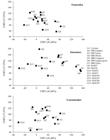
Dispersion of the standardized canonical scores for the first two canonical discriminant functions (CDF) estimated for the interaction of genotypes with the different herbicides. CAV/UDESC. Lages, SC. Brazil, 2022.
The dispersion of the genotypes seen in figure 2 shows their performance in terms of the variables seen in figure 1, thus confirming that cultivars are more tolerant to herbicides than accessions (BAFs), as they have a higher performance in terms of variables such as GY, NGP, NP, SDM, and SD (Figure 2), unlike the accessions which have a higher performance in terms of PH. On the other hand, BAF07 was shown to be tolerant to all herbicides used in the present study. Therefore, the discrimination of genotypes using the multivariate method was efficient in separating them, since the technique allows genotypes to be separated in terms of the performance of the characters evaluated. This is because this method provides results for the joint analysis of all variables used and aims to test the equality of the multivariate vector of means between treatment levels (SAS, 2006).
Multivariate contrasts were carried out considering the differences between the bean genotypes with the application of the herbicides, where it was observed that the contrasts indicated significant differences between the cultivars and accessions, with greater tolerance for cultivars in relation to accessions (Table 6). However, within the cultivars there was a significant difference in type II vs. III growth habit, due to the greater accumulation of SDM, which was the variable that contributed most to separating the genotypes and the herbicide imazamox was the one that contributed to separating this trait, followed by fomesafen and S-metolachlor. However, cultivars with type III growth habit were more tolerant to the herbicides applied (fomesafen, imazamox, and S-metolachlor) than cultivars with type II growth habit.
Multivariate contrasts considering the differences between the genotypes for the different herbicides present in the experimental structure, evaluated by the Wilk’s Lambda test (λ) for the response variables plant height (PH), stem diameter (SD: 21 and 28 DAA), shoot dry mass (SDM), number of pods per plant (NP), number of grains per pod (NGP), and grain yield per plant (GY). CAV/UDESC. Lages, SC. Brazil, 2022.
The contrasts between the genotypes with the application of the herbicide fomesafen show differences in the comparison between Cultivars vs. Accessions (C1) and the cultivars differ in terms of growth habit II and III (C2). Considering the group of genotypes formed by the accessions from the active bean bank, the genotypes with the morphological characteristic of type I growth habit do not differ from those with type II growth habit (C3), performing similarly. Also in the comparisons made between the accessions, the contrast between type I vs. III (C4) and type II vs. III (C5) growth habit was significant (P > 0.05). The gene pool of these genotypes was also different, between genotypes from the Andean and Mesoamerican gene pools, inferring adaptive differences between these genotypes in terms of tolerance to the herbicide fomesafen. This highly relevant comparison showed that the main characters visualized by the standardized canonical scores were stem diameter (SD 28 DAA), shoot dry mass (SDM), and grain yield (GY).
It is important to note that within the accessions, those with type I growth habit were the most tolerant to the herbicides applied compared to type II, and type III was the most tolerant when compared to types I vs. II. The genotypes of Mesoamerican origin were more tolerant to the herbicides imazamox and S-metolachlor and more sensitive to the herbicide fomesafen than those of Andean origin.
Comparisons between the genotypes that were treated with the herbicide imazamox (Table 6) showed differences between the cultivars and the accessions (C7) using the Wilk’s Lambda test (P ˂ 0.05). In the group of cultivars, there was significance for type II vs. III growth habit (C8). In the group of accessions, there was significance in the contrast between type I vs. II growth habits (C9), and between types II vs. III (C10). In addition, differential behavior was observed within the genotypes inherent to the Andean and Mesoamerican gene pools, which could provide important guidance regarding the choice of crosses aimed to increase the tolerance of bean genotypes to the herbicide imazamox, via classical breeding.
Considering these comparisons for the genotypes with the application of S-metolachlor (Table 6), it was found that all the comparisons made with the orthogonal contrasts (C13, C14, C15, C16, C17, and C18) were significant using the Wilk’s Lambda test (P ˂ 0.05). However, contrary to what was observed in the standardized canonical scores for applications of the other two herbicides (fomesafen and imazamox), the values with a positive contribution were for the variables stem diameter (28 DAA), shoot dry mass (SDM), number of pods per plant (NP), and number of grains per pod (NGP). In addition, these scores were generally negative for the grain yield variable, reflecting a negative effect of this herbicide on the genotypes used in this study.
As for growth type I vs. II between accessions, there was no significant difference when fomesafen was applied, only when the other herbicides were applied. The SD variable (21 DAA) made the greatest contribution to separating type I vs. II growth between the accessions.
When comparing growth type I vs. III between accessions, it was observed that the herbicide imazamox did not differentiate the genotypes, while the other herbicides showed significant differences between the genotypes, with GY contributing most to fomesafen and SD (28 DAA) to S-metolachlor. There was a significant difference between type II vs. III growth in all the herbicides evaluated, but the variable that contributed most to separating the genotypes when fomesafen was applied was GY, while for the other herbicides it was SDM.
The difference between accessions in terms of the gene group was seen with the application of all the herbicides, with the SDM variable making the greatest contribution to separating the genotypes for fomesafen and imazamox, while SD (28 DAA) made the greatest contribution to separating the genotypes. This difference can be explained by various characteristics, starting with the size of the seeds, the seed coat and so on. However, depending on the geographical location of the centers of primary origin and domestication, beans can show significant differences in terms of plant characteristics, adaptability and tolerance to stress (SCHMUTZ et al., 2014), which may explain the difference in the tolerance of the genotypes found in this study.
Seed size is strongly related to the bean center of origin, since genotypes of Andean origin have predominantly large seeds, while those of Mesoamerican origin range from medium to small. Another important difference between the Andean and Mesoamerican bean genetic groups is the tegument characteristic. It is; therefore, important to note that accessions G11 and G13 are of Andean origin, but were sensitive to the herbicides applied, as can be seen in figure 2. This could be due to these accessions are creole and still in the breeding phase, which may not give them some advanced characteristics compared to cultivars already on the market.
The difference found in tolerance between bean cultivars and accessions evaluated in this study may be related to the capacity for detoxification, rapid metabolization, reduced absorption and translocation, sequestration, increased activity of antioxidant enzymes, gene variation and mutation, which are important mechanisms of plant tolerance to herbicides (POWLES & YU, 2010; BUSI et al., 2018; ADHIKARI et al., 2020; MOORE et al., 2022). This phenomenon is probably due to that these cultivars have been improved, which allows them to obtain more advanced genetic characteristics compared to the accessions.
On the other hand, the difference in the behavior of the herbicides on bean genotypes is due to characteristics that are specific to each of the herbicides. S-metolachlor caused delayed plant growth in bean genotypes, darkening of leaves (characteristic green), yellowing and burning of leaf edges, stiffening and rounding of leaves, but tolerant genotypes recovered from the action of this herbicide and there was no marked damage.
Results found in the present study partially corroborated those found in a study carried out to evaluate the tolerance of bean cultivars to herbicides applied pre-planting, where it was found that S-metolachlor (doses 1,600 and 3,200 g a.i. ha-1) is tolerated by the red and white bean group, causing mild injuries and without yield reduction and when applied to adzuki beans at a dose of 3,200 g a.i. ha-1, it caused marked visual lesions in bean plants, leaf deformation, growth reduction, chlorosis and necrosis (SOLTANI et al., 2018; SYMINGTON et al., 2022).
In the present study, it was found that fomesafen caused the presence of purple coloration in the central and lateral veins of the leaves and on the petiole, necrosis on the leaves, wilting of new leaves and burning on the edges of the leaves in cultivars, but without considerable damage in tolerant genotypes. The same symptoms were found when evaluating the tolerance of bean cultivars to protoporphyrinogen oxidase (PROTOX) inhibitors. It was found that fomesafen (840 g i.a. h-1) had the highest selectivity among all the herbicides, with tolerance levels above 68% for all the cultivars (BRUSAMARELLO et al., 2021).
The fact that fomesafen is tolerated by the genotypes is due to that it is a contact herbicide, which when deposited on the leaf has little selectivity and many crops are able to quickly recover the affected leaf area. As a result, the herbicide may have no effect on new leaves, thus facilitating total plant regeneration and normal development (OLIVEIRA JÚNIOR., 2011).
In sensitive bean genotypes, imazamox caused yellowing of leaves (limbus), more pronounced in new leaves; stunting initially of new leaves and later generalized to all leaves, an increase in shoots and quantity of leaves, mainly a decrease in leaf size and a delay in flowering and consequently production. The symptoms of imazamox did not appear quickly, as this herbicide works relatively slowly compared to other active ingredients. The first symptoms can appear 2 days after application, but plant death can take 2 to 3 weeks (GURBUZ & YENTURK, 2022).
Imazamox is a herbicide suitable for beans, but its effect on bean genotypes is justified by the activity of the enzyme acetolactate synthase (ALS) in some sensitive genotypes. This results in blocking the production of branched-chain amino acids (valine, leucine and isoleucine) and reducing protein synthesis and cell division, causing plant death (GURBUZ & YENTURK, 2022). Inhibition of this enzyme leads to accumulation of ketobutyrate (toxic in high quantities) and a reduction in the translocation of photoassimilates; consequently, paralyzing the plant metabolic activities.
CONCLUSION
It can be concluded that there is genetic variability among bean genotypes, with accessions being less tolerant than the cultivars, where BAF238, BAF239, BAF51, BAF36, and BAF03 were identified as the most sensitive to the herbicides, while the cultivars Caviano, BRS Pérola, IPR Campos gerais, and BAF07 were the most tolerant, respectively.
Morphological and genetic characteristics such as plant height and gene pool were strongly related to the tolerance of genotypes to herbicides. Between cultivars, there was a variability between genotypes with type II vs. III growth habit (plant height). Also between accessions, there was a variability between type I vs. II growth habit; type I vs. III; and type II vs. III (plant height), respectively. As well as in the accessions between Andean and Mesoamerican origin (gene pool).
ACKNOWLEDGEMENTS
This research was carried out with support from the Fundação Coordenação de Aperfeiçoamento de Pessoal de Nível Superior (CAPES) - Brazil (PROAP/AUXPE), Financing Code 001. Also with support from the Fundação de Amparo à Pesquisa e Inovação do Estado de Santa Catarina (FAPESC) and the Centro de Ciências Agrículas at the Universidade do Estado de Santa Catarina (CAV/UDESC).
REFERENCES
-
ADHIKARI, P. et al. Genetic variation associated with PPO-inhibiting herbicide tolerance in sorghum. PLoS ONE, v.15, n.e0233254, p.1-15, 2020. Available from: <Available from: https://doi.org/10.1371/journal.pone.0233254 >. Accessed: Sept. 22, 2022. doi: 10.1371/journal.pone.0233254.
» https://doi.org/10.1371/journal.pone.0233254.» https://doi.org/10.1371/journal.pone.0233254 -
BRIHENTI, A. M. et al. Tolerance of soybean genotypes to the herbicides trifluralin and imazaquin. Planta Daninha, v.20, n.1, p.63-69, 2002. Available from: <Available from: https://doi.org/10.1590/S0100-83582002000100009 >. Accessed: Nov. 11, 2024. doi: 10.1590/S0100-83582002000100009.
» https://doi.org/10.1590/S0100-83582002000100009.» https://doi.org/10.1590/S0100-83582002000100009 -
BRUSAMARELLO, P. A. et al. Tolerance of Brazilian bean cultivars to protoporphyrinogen oxidase inhibiting-herbicides. Journal of Plant Protection Research, v.61, n.2, p.117-126, 2021. Available from: <Available from: https://doi.org/10.24425/jppr.2021.137018 >. Accessed: Oct. 24, 2022. doi: 10.24425/jppr.2021.137018.
» https://doi.org/10.24425/jppr.2021.137018.» https://doi.org/10.24425/jppr.2021.137018 -
BUSI, R. et al. Pyroxasulfone resistance in Lolium rigidum is metabolism-based. Pest Biochemistry and Physiology, v.148, p.74-80, 2018. Available from: <Available from: https://doi.org/10.1016/j.pestbp.2018.03.017 >. Accessed: Nov. 20, 2022. doi: 10.1016/j.pestbp.2018.03.017.
» https://doi.org/10.1016/j.pestbp.2018.03.017.» https://doi.org/10.1016/j.pestbp.2018.03.017 -
COIMBRA, J. L. M. et al. Multivariate techniques applied to the study of soil fauna: multivariate contrasts and canonical discriminant analysis. Ceres, v.54, n.313, p.270-276, 2007. Available from: <Available from: http://redalyc.org/articulo.oa?id=305226813006 >. Accessed: Sept. 10, 2023.
» http://redalyc.org/articulo.oa?id=305226813006 -
CONAB - National Supply Company. Monitoring of the Brazilian harvest: 2023/2024 Harvest. 4th Survey. 2024. Available from: <Available from: https://www.conab.gov.br/info-agro/safras/graos >. Accessed: Feb. 19, 2024.
» https://www.conab.gov.br/info-agro/safras/graos -
CQFS - Commission on Soil Chemistry and Fertility. Fertilization and liming manual for the states of Rio Grande do Sul and Santa Catarina. 10. ed. Porto Alegre: SBCS, South Regional Center/UFRGS, 400p. 2016. Available from: <Available from: http://www.sbcs-nrs.org.br/docs/Manual_de_Calagem_e_Adubacao_para_os_Estados_do_RS_e_de_SC-2016.pdf >. Accessed: Jul. 17, 2022.
» http://www.sbcs-nrs.org.br/docs/Manual_de_Calagem_e_Adubacao_para_os_Estados_do_RS_e_de_SC-2016.pdf -
DAI, S. et al. Ectopic expression of a rice triketone dioxygenase gene confers mesotrione tolerance in soybean. Pest Management Science, v.78, p.2816-2827, 2022. Available from: <Available from: https://doi-org.ez74.periodicos.capes.gov.br/10.1002/ps.6904 >. Accessed: Jul. 24, 2022.
» https://doi-org.ez74.periodicos.capes.gov.br/10.1002/ps.6904 -
FAOSTAT - Food and Agriculture Organization of the United Nations. Food and agriculture data. 2020. Available from: <Available from: https://www.fao.org/faostat/en/#data >. Accessed: Apr. 20, 2022.
» https://www.fao.org/faostat/en/#data -
GONÇALVES, D. L. et al. Genetic variability of traditional germplasm of common bean in Cáceres region, Brazil. Ciência Rural, v.46, n.1, p.100-107, 2016. Available from: <Available from: https://doi.org/10.1590/0103-8478cr20140812 >. Accessed: Aug. 08, 2023. doi: 10.1590/0103-8478cr20140812.
» https://doi.org/10.1590/0103-8478cr20140812.» https://doi.org/10.1590/0103-8478cr20140812 -
GURBUZ, R.; YENTURK, O. Determination of minimum doses of imazamox for controlling Xanthium strumarium L. and Chenopodium album L. in bean (Phaseolus vulgaris L.). Agronomy, v.12, n.1557, p.1-16, 2022. Available from: <Available from: https://doi.org/10.3390/agronomy12071557 >. Accessed: Oct. 10, 2023. doi: 10.3390/agronomy12071557.
» https://doi.org/10.3390/agronomy12071557.» https://doi.org/10.3390/agronomy12071557 -
HRAC-WSSA Herbicide Resistance Action Committee. Mechanisms of action of herbicides. 2023. Available from: <Available from: https://www.hrac-br.org/ >. Accessed: Oct. 31, 2023.
» https://www.hrac-br.org/ -
KARAVIDAS, I. et al. Agronomic practices to increase the yield and quality of common bean (Phaseolus vulgaris L.): A systematic review. Agronomy, v.12, n271, p.1-39, 2022. Available from: <Available from: https://doi.org/10.3390/agronomia12020271 >. Accessed: Oct. 23, 2022. doi: 10.3390/agronomia12020271.
» https://doi.org/10.3390/agronomia12020271.» https://doi.org/10.3390/agronomia12020271 -
LEITE, C. R. F. et al. Sensitivity of soybean cultivars (Glycine max) to the herbicides diclosulam and flumetsulam. Planta Daninha, v.18, n.1, p.103-122, 2000. Available from: <Available from: https://doi.org/10.1590/S0100-83582000000100011 >. Accessed: Nov. 11, 2024. doi: 10.1590/S0100-83582000000100011.
» https://doi.org/10.1590/S0100-83582000000100011.» https://doi.org/10.1590/S0100-83582000000100011 -
MAYA, G. P. S.; BHARGAVI, R. Selection of important features for optimizing crop yield prediction. International Journal of Agricultural and Environmental Information, v.10, n.3, p.1-18, 2019. Available from: <Available from: https://doi.org/10.4018/IJAEIS.2019070104 >. Accessed: Oct. 20, 2022. doi: 10.4018/IJAEIS.2019070104.
» https://doi.org/10.4018/IJAEIS.2019070104.» https://doi.org/10.4018/IJAEIS.2019070104 -
MOORE, P. C. et al. Field-evolved ΔG210-ppo2 from palmer amaranth confers pre-emergence tolerance to PPO-inhibitors in rice and Arabidopsis. Genes, v.13, n.1044, p.1-14, 2021. Available from: <Available from: https://doi.org/10.3390/genes13061044 >. Accessed: Oct. 20, 2022. doi: 10.3390/genes13061044.
» https://doi.org/10.3390/genes13061044.» https://doi.org/10.3390/genes13061044 - OLIVEIRA JÚNIOR. R. S. Mechanism of action of herbicides. In: OLIVEIRA JR, R.S; CONSTANTIN, J; INOUE, M.H. Weed biology and management. 1st ed. Curitiba-PR. Editora Omnipax. 348 p. 2011. Accessed: Sept. 20, 2023.
-
PAGNONCELLI J. R. et al. Characterization of ethoxysulfuron herbicide selectivity in common bean cultivars. Planta Daninha, v.36, n.e018176694, p.1-7, 2021. Available from: <Available from: https://doi.org/10.1590/S0100-83582018360100113 >. Accessed: Sept. 18, 2022. doi: 10.1590/S0100-83582018360100113.
» https://doi.org/10.1590/S0100-83582018360100113.» https://doi.org/10.1590/S0100-83582018360100113 -
POWLES, S. B.; YU, Q. Evolution in action: plants resistant to herbicides. Annual Review of Plant Biology, v.61, p.317-347, 2010. Available from: <Available from: https://www.uv.mx/personal/tcarmona/files/2010/08/Powes-y-Yu-2010.pdf >. Accessed: Oct. 03, 2022.
» https://www.uv.mx/personal/tcarmona/files/2010/08/Powes-y-Yu-2010.pdf -
SABONI, R. et al. Hyperspectral wavelength selection for estimating chlorophyll content of muskmelon leaves. European Journal of Remote Sensing, v.54, n.1, p.513-524, 2021. Available from: <Available from: https://doi-org.ez74.periodicos.capes.gov.br/10.1080/22797254.2021.1964383 >. Accessed: Sept. 08, 2023. doi: 10.1080/22797254.2021.1964383.
» https://doi.org/10.1080/22797254.2021.1964383.» https://doi-org.ez74.periodicos.capes.gov.br/10.1080/22797254.2021.1964383 -
SAS Institute of Statistical Analysis Systems. Institute INC., Cary, NC, EUA. 2006. Available from: <Available from: http://www.id.unizh.ch/software/unix/statmath/sas/sasdoc/stat/index.htm >. Accessed: Sept. 20, 2023.
» http://www.id.unizh.ch/software/unix/statmath/sas/sasdoc/stat/index.htm -
SCHMIT, R. et al. Multivariate selection between and within bean mutant populations. Revista de Ciências Agroveterinárias, v.17, n.4, p.472-480, 2021. Available from: <Available from: https://doi.org/10.5965/223811711732018472 >. Accessed: Aug. 20, 2022. doi: 10.5965/223811711732018472.
» https://doi.org/10.5965/223811711732018472.» https://doi.org/10.5965/223811711732018472 -
SCHMUTZ, J. et al. A reference genome for common bean and genome-wide analysis of dual domestications. Nature Genetics, v.46, p.707-713, 2014. Available from: <Available from: https://doi.org/10.1038/ng.3008 >. Accessed: Aug. 18, 2022. doi: 10.1038/ng.3008.
» https://doi.org/10.1038/ng.3008.» https://doi.org/10.1038/ng.3008 -
SILVA, J. F.; BUENO, C. R. Tolerance of ground cover legumes to herbicides. Acta Amazonica, v.32, n.2, p.193-204, 2002. Available from: <Available from: https://doi.org/10.1590/1809-43922002322204 >. Accessed: Nov. 11, 2024. doi: 10.1590/1809-43922002322204.
» https://doi.org/10.1590/1809-43922002322204» https://doi.org/10.1590/1809-43922002322204 -
SMITH, M. R. et al. Investigating nutrient supply effects on plant growth and seed nutrient content in common bean. Plants, v.11, n.737, p.1-12, 2022. Available from: <Available from: https://doi.org/10.3390/plants11060737 >. Accessed: Jul. 14, 2022. doi: 10.3390/plants11060737.
» https://doi.org/10.3390/plants11060737.» https://doi.org/10.3390/plants11060737 -
SOLTANI, N. et al. Response of dry bean to Group 15 herbicides applied preplant incorporated. Canadian Journal of Plant Science, v.98, n.5, p.1168-1175, 2018. Available from: <Available from: https://doi-org.ez74.periodicos.capes.gov.br/10.1139/cjps-2018-0020 >. Accessed: Jul. 10, 2022. doi: 10.1139/cjps-2018-0020.
» https://doi.org/10.1139/cjps-2018-0020.» https://doi-org.ez74.periodicos.capes.gov.br/10.1139/cjps-2018-0020 -
SOUZA, T. L. P. O. et al. Agronomic performance and yield stability of the RNA interference-based bean golden mosaic virus-resistant common bean. Crop Science, v.57, p.579-591, 2018. Available from: <Available from: https://doi.org/10.2135/cropsci2017.06.0355 >. Accessed: Aug. 19, 2022. doi: 10.2135/cropsci2017.06.0355.
» https://doi.org/10.2135/cropsci2017.06.0355.» https://doi.org/10.2135/cropsci2017.06.0355 -
VIECELLI, M. et al. Morphophysiological characteristics of Brazilian bean genotypes related with sulfentrazone tolerance. Journal of Environmental Science and Health, Part B, v.56, n.8, p.706-721, 2021. Available from: <Available from: https://doi.org/10.1080/03601234.2021.194065 >. Accessed: Aug. 20, 2023. doi: 10.1080/03601234.2021.194065.
» https://doi.org/10.1080/03601234.2021.194065.» https://doi.org/10.1080/03601234.2021.194065
Edited by
-
Editors
Alessandro Dal’Col Lúcio (0000-0003-0761-4200) André da Rosa Ulguim (0000-0002-8850-4670)


