 Gram-negative β-lactamase-producing bacteria in food systems in Brazil
ABSTRACT:
β-lactams play a fundamental role in the antibiotic arsenal for treating Gram-negative bacteria (GNB), which are important causative agents of infection. β-Lactamase producing Gram-negative bacteria (BL-GNB) are a public health problem because they limit infection treatment options. Several types of food can be reservoirs of BL-GNB, contributing to the dissemination of different types of genes encoding resistance to β-lactams. This research conducted a literature review that addresses the characteristics and dynamics of BL-GNBs in foods produced in Brazil and possible control actions implemented to combat antimicrobial resistance (AR) in the country. The presence of BL-GNBs in food sources highlighted the implications of the One-Health approach in Brazil, a global concept that consolidates and unifies human, animal, and environmental health. AR has not yet been a political priority in the country. In this sense, the application of measures to reduce and control AR is essential, especially in Brazil, which has an economic base in agribusiness.
Key words:
Gram-negative bacteria; β-lactamases; antibiotic resistance; food production; One Health approach; control actions
RESUMO:
Os β-lactâmicos detêm um papel fundamental no arsenal de antibióticos para tratamento de bactérias Gram-negativas (BGN) que são importantes agentes causadores de infecção. As BGNs produtoras de β-lactamases (BGN-BLs) são um problema de saúde pública, pois limitam as opções de tratamento para infecções. Diversos tipos de alimentos podem ser reservatórios de BGNs produtoras de β-lactamases (BGN-BLs), contribuindo para a disseminação de diferentes tipos de genes codificadores de resistência a β-lactâmicos. Este trabalho tem como objetivo realizar uma revisão bibliográfica que aborde as características e a dinâmica das BGN-BLs em alimentos produzidos no Brasil e possíveis ações de controle implementadas para combate à resistência aos antibióticos (RA) no país. A presença de BGN-BLs em fontes alimentares destaca as implicações da abordagem “One-Health” no Brasil, um conceito global que consolida e unifica a saúde humana, animal e ambiental. A RA ainda não é considerada uma prioridade política no país. Nesse sentido, a aplicação de medidas de redução e controle da RA é essencial, principalmente no Brasil, que tem sua base econômica no agronegócio.
Palavras-chave:
bactérias Gram-negativas; β-lactamases; resistência aos antibióticos; produção de alimentos; conceito Saúde Única; ações de controle
INTRODUCTION
GNBs have great notoriety among the causes and studies of AR, have overcome hospital barriers, and are widely disseminated and adapted to different niches, such as the environment, animals, food, and even healthy people (AHMAD et al., 2023).
Food has been particularly overlooked as a potential reservoir and vector of antibiotic resistance genes (ARGs) in humans. Residues from indiscriminate antimicrobial use in livestock and agriculture contribute to the selection of BL-GNBs. Because of their mobility and adaptation to different niches, these bacteria are widely spread, playing a crucial role in the distribution of ARGs in the food chain. This is an essential component of the One Health concept, which requires intensive attention and increases health risks for animals and humans (NODARI et al., 2023; TIEDJE et al., 2023).
β -lactams are antibiotic compounds often selected as the first option in the treatment of a wide variety of infections because of their low toxicity, high efficacy, and broad spectrum of action, making them a very relevant class of antibiotics for human health (KARAISKOS et al., 2019). The production of β-lactamases, enzymes that inactivate β-lactam antibiotics, is the main mechanism of resistance to this class of antibiotics. Due to the combination of high AR, dissemination capacity, and pathogenicity, BL-GNBs are considered a critical public health problem (MANCUSO et al., 2023).
In recent decades, global food production systems have expanded significantly because of global population growth, that has been accompanied by the massive use of antibiotics, which are used to promote yield and productivity (DE SOUZA et al., 2023). Despite restrictions imposed by some governments worldwide, global consumption of antibiotics increased significantly between 2000 and 2015 and is expected to double by 2030 (KLEIN et al., 2018). This review highlighted the characteristics and dynamics of BL-GNBs in food production systems in Brazil and discusses possible control actions implemented to combat AR in the country.
GNBs, β-lactam and β-lactamases
Penicillin, an antibiotic effective in treating several infectious diseases, was discovered in 1928, but it was only made clinically available in 1945. However, even before this milestone in antibiotic therapy, a resistant strain of Escherichia coli had already been documented (BUSH, 2023).
Antibiotic derivatives with an amplified spectrum of activity formed the β-lactam class composed of penicillin, monobactams, cephalosporins, and carbapenems. β-lactams have in their structural core the β-lactam ring, which prevents the formation of cross-links between peptide chains to form peptidoglycan. With the disruption of the cell wall, bacteria lose their resistance to osmotic pressure, leading to cell death (BUSH, 2023). Because they are among the most effective drugs available, resistance to carbapenems is especially worrying, and if associated with resistance to other β-lactams, it can result in the uselessness of an entire class of drugs (DARBY et al., 2023).
With the success of clinical efficacy, the extensive use of β-lactams was maintained, and AR was advanced in ways that could not be predicted. From the mastery of the basic structure of penicillin, the fight against AR began, with new derivatives that circumvented the action of β-lactamases. To circumvent the action of β-lactamases, combinations of susceptible β-lactams with enzyme inhibitors were developed (such as clavulanic acid) (PAYNE et al., 2000). Over time, resistance mechanisms have become more effective and sophisticated. Thus, bacterial strains have acquired resistance to almost all available β-lactams (WHO, 2023). However, the β-lactam class, even today, has the greatest empirical coverage prescribed worldwide because of its high tissue perfusion, low cost, and safety profile (KARAISKOS et al., 2019; MANCUSO et al., 2023).
GNBs are a priority target in the fight against AR because of their distinct outer membrane, which enables them to survive and adapt to the selective pressures on ARGs imposed by exposure to β-lactams. β-lactamases are distributed in diversity and abundance in their cellular matrix, which may explain why the expression of inactivating enzymes is the most significant AR mechanism in more adapted GNBs (NORDMANN & POIREL, 2019).
β-lactamases can be categorized into 3 main groups: extended-spectrum β-lactamases (ESBLs), cephalosporinases, and carbapenemases (CP). ESBL-producing GNBs and CP-producing GNBs are the most concerning in clinical aspects, as they have limited or intractable therapeutic options, in addition to commonly presenting multiclass resistance. ESBLs are enzymes capable of inactivating penicillin, third-generation cephalosporins, and monobactam (aztreonam); cephalosporinases hydrolyze all generations of cephalosporins, while CP-producing GNBs hydrolyzes carbapenems, antibiotics used in severe infections (BUSH, 2023).
Although, therapeutic drugs are available to treat these infections, ESBLs variants are widespread globally and are increasingly adapting in response to the overuse and misuse of β-lactams (MANDUJANO et al., 2023; SADEK et al., 2021). This scenario is a growing challenge for global health managers, as the evolution of ESBL may reduce treatment options and force health services to no longer restrict the use of carbapenems, which are currently prescribed in hospital settings for potentially fatal infections. The increased demand for these antibiotics may lead to the rapid evolution of carbapenemases and render more severe infections untreatable (MANCUSO et al., 2023).
The concept of “difficult-to-treat resistance” was designed to identify GNBs that are resistant to all fluoroquinolones and all categories of β-lactams, including carbapenems. Failure to follow appropriate therapy is associated with worse outcomes, such as an approximately 20% increase in the risk of in-hospital mortality (BASSETTI et al., 2022). As bacteria become more resistant to various antibiotics, therapeutic alternatives become increasingly limited. Multi-resistant bacteria have been identified in any antibiotic available for treatment, rapidly leading to death in hospitalized patients (CASPAR et al., 2017).
Complex pathway of β-lactam resistance determinants in the food chain
Humans are the largest contributors to the accumulation and dissemination of ARGs, with approximately 85% of ARGs shared between external habitats and human feces (TIEDJE et al., 2023). In addition, anthropogenic actions in agriculture can have a significant impact on the transmission of AR. Intensive food production systems are driven by an exponential increase in the demand for food resulting from the massive growth of the global population. However, with the increase in food supply, the excessive use of antibiotics has become an essential factor for yield and productivity (DE SOUZA et al., 2023).
The residues and metabolites of active antibiotics generated in sub-inhibitory quantities by agriculture potentially contribute to worsening AR. In turn, the waste originating from this production, combined with BNG and AGR, can be deposited in the soil, directly or as organic fertilizer, or even spread into aquatic environments (MANCUSO et al., 2023).
Livestock farming is a promising area to develop ARGs. In animal production, antibiotics are added at low doses to animal feed or water, mainly as growth promoters (TIEDJE et al., 2023). The transmission of AR in animal production usually occurs through the consumption of meat, milk, and dairy products. However, the residues generated of antibiotics and biologicals can follow intricate pathways, allowing AR-associated genes to enter the food chain from soil (biofertilizer), air (bioaerosols), water (irrigation, effluents, sewage, and natural resources), and/or direct fecal contamination (WU et al., 2023; BENLABIDI et al., 2023).
In agriculture, pesticides are widely used to minimize crop losses caused by harmful pests. However, in addition to the significant human and environmental risks of these chemicals being reasonably known, the use of pesticides may significantly increase the diversity and abundance of ARGs, suggesting that pesticides may act as selective agents for antibiotic resistance (ZHOU et al., 2025).
A wide diversity of β-lactamases is identified in plant tissues and surfaces; although, β-lactams are not among the vital biocides in agriculture. The natural microbiota of plant products, in addition to being hosts, produce their own antibiotics (e.g. penicillin by fungi), which exert selective pressure on endogenous ARGs together with natural intrinsic genes (RAMAKRISHNAN et al., 2019).
ARBs can live in symbiosis with plants, fixing nitrogen available for plant growth in exchange for habitats and nutrients. These ARBs are closely linked to water, soil, and air and inhabit different habitats in plants: colonized on the surface of leaves (phyllosphere) and around the roots (rhizosphere). Once colonized in these habitats, ARGs can be absorbed into the internal part of the plant (endosphere), promoting the abundance and diversity of ARGs in edible portions of plants (LOPES et al., 2021a).
β-lactamases from food and/or environmental sources can resist the digestive process and colonize and disseminate among commensals of the intestinal microbiota, even in the absence of human antibiotic selection (GRUDLEWSKA-BUDA et al., 2023). In this context, food, humans, animals, and environments may have large interconnected and shared reservoirs, potentially accelerating the occurrence and dissemination of ARGs among different hosts (FUGA et al., 2022; TIEDJE et al., 2023). CTX-M β-lactamases are ubiquitous in sources throughout the food production chain and are commonly associated with mobile genetic elements (MGEs) (GRUDLEWSKA-BUDA et al., 2023). The main types of BL-GNB genes according to each critical pathogen in the food chain are presented in table 1.
Mechanisms of ESBLs transfer and adaptation between food chain niches
BL-GNBs carrying immobile β-lactamases in chromosomes can disseminate β-lactamases as they replicate. However, the evolution of AR was achieved by the exchange of genetic material between different bacteria and habitats through a mechanism called horizontal gene transfer (HGT) (BENLABIDI et al., 2023). Other genes and elements with important harmful properties, such as virulence and biofilm genes, benefit from HGT and influence pathogenicity (PARUSSOLO et al., 2019; WU et al., 2023).
Mobilization of β-lactamase genes typically occurs in MGEs containing plasmids, transposons, and integrons. Among the MGEs, the integron draws attention for conferring diversity and genomic expression, predominantly of AGRs, which are mainly spread in the chromosomes of environmental bacteria (SADEK et al., 2021).
Impact of AR on food security
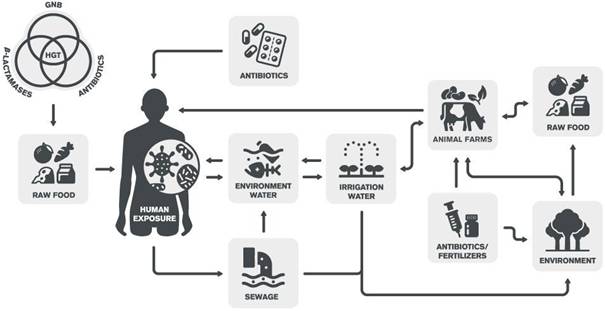
Food consumption can directly influence the modulation of the human or animal intestinal microbiota from a diverse and competitive ecosystem of commensal bacteria and opportunistic foodborne pathogens (Figure 1). This dynamic system is influenced by a myriad of factors that correlate and make the individual more vulnerable, from the level of pollution in agroecosystems to the inherent characteristics of the host, such as sociodemographic patterns, misuse of antibiotics, and immune function (GRUDLEWSKA-BUDA et al., 2023).
Along the farm-to-table pathway, resistance determinants and MGEs from multiple sources can be preserved in large reservoirs colonized in food (RICHTER et al., 2023). Contamination of humans with foodborne pathogens can also occur directly through contact with infected animals or humans (BENLABIDI et al., 2023).
Regardless of the food source, the increase in cases of foodborne contamination can be associated with the growing consumer demand for a wide variety of “in natura” foods or minimally processed products (CDC, 2023). The threat to human health attributed to the consumption of these foods can be explained by the greater exposure to AGRs and substances with different degrees of virulence and toxicity, since most harmful agents do not survive applied heat treatments (LOPES et al., 2021b).
Contamination of plant-based foods is more related to the planting method, especially due to the use of wastewater and biofertilizers, originating mainly in circumstances where antibiotics were applied inappropriately (TIEDJE et al., 2023).
Because of their ability to move and harbor a wide variety of genetic information in a single strain, most Enterobacteriaceae have become resistant to the β-lactam class (FUGA et al., 2022). In recent years, Extended-spectrum β-lactamase-producing Enterobacteriaceae (ESBL-E) have been dispersed in different environments, and they are easily disseminated into food systems. They are frequently associated with several foodborne illnesses, particularly severe ones. The most recent outbreaks of pathogenic E. coli infections involved cases of food consumption (GRUDLEWSKA-BUDA et al., 2023).
Adapted E. coli strains can acquire and grouping virulence properties and are categorized into pathotypes according to the degree of pathogenicity. These pathotypes invade the host and can cause diseases of different natures, such as intestinal (e.g. enteropathogenic E. coli) and extraintestinal (e.g. uropathogenic E. coli). In extreme cases, it can cause septicemia and even death. E. coli can acquire resistance and/or virulence genes from other commensal species, including harmless species (RIBEIRO et al., 2016). Another threat to the host’s food safety is related to the fact that some pathotypes have low infectious doses and can cause disease even in small numbers (GRUDLEWSKA-BUDA et al., 2023).
AR and agribusiness in Brazil
South American countries are particularly notable for the increase in the incidence of RA-associated deaths. Observational studies in this subcontinent, which mainly include data from Brazil, indicate that the most critical β-lactamases, which make the therapeutic use of third-generation cephalosporins and carbapenems unfeasible, are more challenging in South America than in more developed regions (DE SOUZA et al., 2023; DA SILVA et al., 2023).
Brazil is a country of interest to AR researchers because of its large arable land area and population. In the country, the reporting of ESBL-producing critical priority group pathogens is a concern in the hospital setting, but the growing number of pathogens in integrated reservoirs in the environment and food chain is also a threat (DE SOUZA et al., 2023; FUGA et al., 2022).
In the 1990s, with the opening-up of the Brazilian economy and greater financial support for technological innovations, agriculture became a fundamental sector of Brazil’s economic growth. In 2018, 29% of the territory was agribusiness. From 2000 to 2020, the country was responsible for 22.2% of world exports in the sector (CONTINI et al., 2022).
This leadership position in agribusiness can lead to harmful, extensive production practices that directly impact the environment and human and animal health. The evolution of AR dynamics between natural and opportunistic microbiota is enhanced by pollutants generated by agriculture, such as antibiotic residues and molecular determinants of resistance. In addition to agricultural farms, inadequate pollutant disposal in homes, pharmaceutical companies, and hospitals are important factors causing pollution in the Brazilian territory (DE SOUZA et al., 2023).
According to the national dietary guidelines for the Brazilian population, dietary transitions toward healthy and sustainable diets have been increasing based on a variety of natural or minimally processed foods (ANDRETTA et al., 2022). However, these foods can increase exposure to pathogens that carry AR-encoding agents, putting consumers health at risk (TEODORO et al., 2022; MELO et al., 2022; LOPES et al., 2021b). In food, these bacteria are capable of horizontally disseminating genetic content through integrons and plasmids (IncFIB), with the cooperation of genes that confer resistance to biocides, heavy metals, disinfectants, and antiseptics (FUGA et al., 2022; MENEZES et al., 2023).
Successful adaptations of E. coli clones underscore the implications of One-Health in Brazil, a global concept that consolidates and unifies human, animal, and environmental health, and that actions that affect one sector can have an impact on others (TIEDJE et al., 2023). Fresh vegetables grown in Brazilian soil may carry endophytic bacteria identified as critical priority clones previously identified in human infections (FUGA et al., 2022).
A multicenter study conducted in 28 European countries revealed an association between increased antibiotic resistance and the quality of government management. The results suggested that countries with low-quality control of antibiotic use in humans and animals have higher rates of microbial resistance and its spread (COLLIGNON et al., 2018).
Although, current World Health Organization (WHO) assumptions of food chain interconnections encourage monitoring of risks in various food categories at the national level, in Brazil, efforts are focused on monitoring beef cattle, with increasing trends in poultry and pig farming (ANDRETTA et al., 2022). In contrast, monitoring the production chain of food produced by land cultivation is still scarce in the country (FUGA et al., 2022).
AR’s political agenda in Brazil with a focus on food security
Between 2000 and 2010, emerging countries, including Brazil, were responsible for 76% of the global increase in antibiotic use. Factors such as restrictions on access to health and basic sanitation and limited economic resources, which are common in Brazil and emerging countries, increase the chance of populations in these countries contracting infections and transmitting resistant bacteria (ANDRETTA et al., 2022). In recent years, the challenges in controlling and preventing RA have worsened due to the increase in the prescription of antibiotics and inadequate and incomplete therapies, resulting from the effects of the SARS-CoV-2 pandemic in the country (FUGA et al., 2022; WHO, 2023).
Brazil stands out in Latin America in terms of the development of academic research on reducing antibiotic abuse in animals, which addresses a wide variety of resistome and viruses. Conversely, there is still a scarcity of scientific production that relates AR and β-lactamase genes to food samples that do not require thermal processing, especially milk, artisanal cheeses, and even less plant products (ANDRETTA et al., 2022).
Antibiotic residues and bacterial resistance elements in products of animal origin, in addition to hurting food and environmental safety, can pose a threat to the country’s coffers due to the stricter requirements of the main meat-importing countries, regarding the maximum residue limit for antibiotics and the presence of emerging contaminants specific to each country (DA SILVA et al., 2023).
Brazil has adopted measures to promote responsible use of antibiotics in animal production. Since 1998, antibiotics from several classes have been gradually banned as growth promoters based on the WHO critical antibiotics list (AGUIAR et al., 2023). However, the country still allows the use of antibiotics as animal growth promoters, a practice that has been banned in the European Union since 2006. While the use of β-lactams in animal production has been completely banned in the European Union, Brazil has only banned their use as growth promoters, allowing their application as a veterinary therapeutic option (DA SILVA et al., 2023).
Although, other specific actions were developed between 1990 and 2000, the main milestone for Brazilian public policies related to the prevention and control of RA, from the perspective of human health, was the publication, in 2018, of the National Action Plan for the Prevention and Control of RA within the Scope of One Health (PAN-BR). Coordinated by the Ministry of Health and with several collaborating agencies, PAN-BR was the first initiative to consolidate a national agenda to combat RA based on integrative management, from the One Health perspective, proposed by the WHO (AGUIAR et al., 2023).
Although, it was developed from the perspective of the One Health concept, one of the most forceful criticisms of PAN-BR is that it has a limited approach to tackling AR, directing its actions primarily to health services and only mentioning aspects of animal and environmental health. As a result of PAN-BR guidelines, the National Action Plan for the Prevention and Control of Antimicrobial Resistance in Agriculture (PAN-BR AGRO) was launched, with the objective of “analyzing risks, trends and patterns related to AR via foods of animal origin produced in Brazil, generating collaborative data for decision-making and establishing public policies for the prevention and control of resistance” (AGUIAR et al., 2023; CORRÊA et al., 2022).
According to the Ministry of Agriculture, Livestock and Food Supply (MAPA), the initial stage of the plan, planned for the five years 2018-2022, was conceived as a structuring phase to align national guidelines with international recommendations and requirements related to the topic. In the next stage, Brazil will maintain its compliance with international initiatives on the topic by incorporating lessons learned in the first stage. The implementation of “Agromonitora”, a service designed to report sales data for monitoring antibiotics for veterinary use; and the development of international cooperation partnerships in the sector were the greatest advances achieved by PAN-BR AGRO so far (BRASIL, 2023).
Although, the publication of PAN-BR and PAN-BR AGRO are considered important milestones, there is still no research confirming their effectiveness as instruments to control the spread of AR in the country (DE OLIVEIRA et al., 2021; BRASIL, 2023). Aiming to partially fill this gap, a study conducted in 2021 through interviews sought to identify the perceptions of academics, managers and policymakers involved in the development of PAN-BR on the implementation of the plan and the challenges in tackling AR. The researchers concluded, among other points, that AR is not yet considered a political priority in Brazil; and that the publication of PAN-BR was predominantly due to the need to demonstrate, externally, an alignment with global efforts to tackle AR, seeking not to harm Brazilian agribusiness. Furthermore, failures in coordination between the bodies involved and the lack of definition of clear goals and indicators for monitoring were identified as factors that, in the researchers’ view, hindered the effective implementation of PAN-BR (CORRÊA et al., 2022).
AR is a growing problem threatening public health worldwide, including in Brazil. Foods of animal and plant origins are potential reservoirs and carriers of BL-GNBs. Because Brazil is a major exporter of food products, this threat can cross national borders, posing a risk to global health. Studies that performed genetic analysis of foods produced in the country identified clones of critical international BL-GNBs. The implementation of measures to reduce the risk of contamination in agricultural production is still quite limited. It is crucial to consider the interaction between the environment, humans, and animals, recognizing food as one of the main disseminators of AR in the food chain.
Future perspectives
AR is a growing global problem threatening humans, animals, and environmental health. The evolution of food production is a complex and challenging issue to monitor and control, and there is a significant gap in understanding its true extent and impact on the health of ecosystems. Actions to combat AR in the agricultural sector are non-existent or extremely limited in many countries, especially those with fewer resources, including Brazil. The reduction and gradual elimination of the use of antibiotics as growth promoters in the agricultural sector are essential to control the selection of resistant bacterial strains and the transfer of their resistance genes through the food chain. This requires an integrated and unified approach from the One Health perspective.
In this context, to achieve results on a global scale, it is crucial to accelerate the improvement or even the implementation of national surveillance systems, which are strengthened by international collaborations and capacities. Restricting the sale of antibiotics in the agricultural market, especially clandestine sales, raising awareness of their prudent use, providing guidance and training to workers, establishing integrated food production surveillance systems, and conducting effective, accurate, and readily available international monitoring and detection surveys of ARGs in a field setting.
ACKNOWLEDGMENTS
This study was financed in part by the Coordenação de Aperfeiçoamento de Pessoal de Nível Superior (CAPES), Brazil (Finance Code 001).
REFERENCES
-
AGUIAR, J. N. et al. The evolution of Brazilian human health policies for the prevention and control of antimicrobial resistance: a scoping review. Rev Panam Salud Publica, v.47, p.1, 2023. Available from: <Available from: https://www.scielosp.org/pdf/rpsp/2023.v47/e77/pt >. Accessed: Mar. 18, 2024. doi: 10.26633/RPSP.2023.77.
» https://doi.org/10.26633/RPSP.2023.77.» https://www.scielosp.org/pdf/rpsp/2023.v47/e77/pt -
AHMAD, N. et al. Evolution and implementation of One Health to control the dissemination of antibiotic-resistant bacteria and resistance genes: A review. Frontiers in Cellular and Infection Microbiology, v.12, p.1065796, 2023. Available from: <Available from: https://pmc.ncbi.nlm.nih.gov/articles/PMC9884834/ >. Accessed: Mar. 25, 2024. doi: 10.3389/fcimb.2022.1065796.
» https://doi.org/10.3389/fcimb.2022.1065796.» https://pmc.ncbi.nlm.nih.gov/articles/PMC9884834/ -
ALGAMMAL, A. M. et al. Emerging MDR-Pseudomonas aeruginosa in fish commonly harbor oprL and toxA virulence genes and blaTEM, blaCTX-M, and tetA antibiotic-resistance genes. Scientific Reports, v.10, n.1, p.15961, 2020. Available from: <Available from: https://www.nature.com/articles/s41598-020-72264-4 >. Accessed: Mar. 25, 2024. doi: 10.1038/s41598-020-72264-4.
» https://doi.org/10.1038/s41598-020-72264-4.» https://www.nature.com/articles/s41598-020-72264-4 -
ANDRETTA, M. et al. Insights into antibiotic use in Brazilian dairy production. International Journal of Dairy Technology, v.76, n.1, 2022. Available from: <Available from: https://www.researchgate.net/publication/364431408_Insights_into_antibiotic_use_in_Brazilian_dairy_production >. Accessed: Apr. 24, 2024. doi: 10.1111/1471-0307.12914.
» https://doi.org/10.1111/1471-0307.12914.» https://www.researchgate.net/publication/364431408_Insights_into_antibiotic_use_in_Brazilian_dairy_production -
BASSETTI, M. et al. Early appropriate diagnostics and treatment of MDR Gram-negative infections. JAC-Antimicrobial Resistance, v.4, n.5, p.dlac089, 2022. Available from: <Available from: https://academic.oup.com/jacamr/article/4/5/dlac089/6696666 >. Accessed: Mar. 18, 2024. doi: 10.1093/jacamr/dlac089.
» https://doi.org/10.1093/jacamr/dlac089.» https://academic.oup.com/jacamr/article/4/5/dlac089/6696666 -
BENLABIDI, S. et al. Occurrence of high-risk clonal lineages ST58, ST69, ST224, and ST410 among Extended-Spectrum β-Lactamase-Producing Escherichia coli Isolated from Healthy Free-Range Chickens (Gallus gallus domesticus) in a Rural Region in Tunisia. Genes, v.14, n.4, p.875, 2023. Available from: <Available from: https://academic.oup.com/jacamr/article/4/5/dlac089/6696666 >. Accessed: Mar. 25, 2024. doi: 10.3390/genes14040875.
» https://doi.org/10.3390/genes14040875.» https://academic.oup.com/jacamr/article/4/5/dlac089/6696666 -
BRASIL. Balanço de atividades - 1a etapa (2018-2022). Ministério da Agricultura, Pecuária E Abastecimento, 2023. Available from: <Available from: https://www.gov.br/agricultura/pt-br/assuntos/insumos-agropecuarios/insumos-pecuarios/resistencia-aos-antimicrobianos/pan-br-agro/BalanodeAtividadesPANBRAGRO_final.pdf >. Accessed: Oct. 25, 2023.
» https://www.gov.br/agricultura/pt-br/assuntos/insumos-agropecuarios/insumos-pecuarios/resistencia-aos-antimicrobianos/pan-br-agro/BalanodeAtividadesPANBRAGRO_final.pdf -
BUSH, K. Classification for β-lactamases: historical perspectives. Expert Review of Anti-infective Therapy, v.21, n.5, p.513-522, 2023. Available from: <Available from: https://pubmed.ncbi.nlm.nih.gov/36951174/ >. Accessed: Jan. 12, 2024. doi: 10.1080/14787210.2023.2194633.
» https://doi.org/10.1080/14787210.2023.2194633.» https://pubmed.ncbi.nlm.nih.gov/36951174/ -
CASPAR, Y. et al. mcr-1 Colistin Resistance in ESBL-Producing Klebsiella pneumoniae, France. Emerging Infectious Diseases, v.23, n.5, p.874-876, 2017. Available from: <Available from: https://pubmed.ncbi.nlm.nih.gov/28418313/ >. Accessed: Mar. 25, 2024. doi: 10.3201/eid2305.161942.
» https://doi.org/10.3201/eid2305.161942.» https://pubmed.ncbi.nlm.nih.gov/28418313/ -
CENTERS FOR DISEASE CONTROL AND PREVENTION. CDC: Salmonella outbreak linked to fresh diced onions. December 13, 2023. Available from: <Available from: https://www.cdc.gov/salmonella/outbreaks/onions-10-23/investigation.html >. Accessed: Mar. 25, 2024.
» https://www.cdc.gov/salmonella/outbreaks/onions-10-23/investigation.html -
COLLIGNON, P. et al. Anthropological and socioeconomic factors contributing to global antimicrobial resistance: a univariate and multivariable analysis. The Lancet Planetary Health, v.2, n.9, p.e398-e405, 2018. Available from: <Available from: https://www.thelancet.com/journals/lanplh/article/PIIS2542-5196(18)30186-4/fulltext >. Accessed: Mar. 23, 2024. doi: 10.1016/S2542-5196(18)30186-4.
» https://doi.org/10.1016/S2542-5196(18)30186-4.» https://www.thelancet.com/journals/lanplh/article/PIIS2542-5196(18)30186-4/fulltext -
CONTINI, E. et al. Trajetória do Agro, 2022. Available from: <Available from: https://www.embrapa.br/visao-de-futuro/trajetoria-do-agro >. Accessed: Dec. 07, 2023.
» https://www.embrapa.br/visao-de-futuro/trajetoria-do-agro -
CORRÊA, J. S. et al. Antimicrobial resistance in Brazil: an integrated research agenda. Journal of the School of Nursing-University São Paulo, v.56, p.e20210589, 2022. Available from: <Available from: https://www.scielo.br/j/reeusp/a/sxzWXMSsRf3WxVpfnLqSTpM/?format=pdf⟨=enAccessed >. Accessed: Apr. 23, 2024. doi: 10.1590/1980-220X-REEUSP-2021-0589.
» https://doi.org/10.1590/1980-220X-REEUSP-2021-0589.» https://www.scielo.br/j/reeusp/a/sxzWXMSsRf3WxVpfnLqSTpM/?format=pdf⟨=enAccessed -
COSTA-JÚNIOR, S. D. et al. Gram-negative bacilli carrying mcr gene in Brazil: a pathogen on the rise. Brazilian Journal of Microbiology, v.54, n.2, p.1009-1020, 2023. Available from: <Available from: https://pmc.ncbi.nlm.nih.gov/articles/PMC10028778/ >. Accessed: Mar. 30, 2024. doi: 10.1007/s42770-023-00948-w.
» https://doi.org/10.1007/s42770-023-00948-w.» https://pmc.ncbi.nlm.nih.gov/articles/PMC10028778/ -
DA SILVA, R. A. et al. Regulations on the use of antibiotics in livestock production in South America: A Comparative Literature Analysis. Antibiotics, v.12, n.8, p.1303, 2023. Available from: <Available from: https://www.mdpi.com/2079-6382/12/8/1303 >. Accessed: Dec. 08, 2024. doi: 10.3390/antibiotics12081303.
» https://doi.org/10.3390/antibiotics12081303.» https://www.mdpi.com/2079-6382/12/8/1303 -
DARBY, E. M. et al. Molecular mechanisms of antibiotic resistance revisited. Nature Reviews Microbiology, v.21, n.5, p.280-295, 2023. Available from: <Available from: https://www.nature.com/articles/s41579-022-00820-y >. Accessed: Nov. 25, 2023. doi: 10.3390/antibiotics12081303.
» https://doi.org/10.3390/antibiotics12081303.» https://www.nature.com/articles/s41579-022-00820-y -
DE OLIVEIRA, L. R. C. et al. Surveillance and monitoring of antimicrobial resistance in production animals in Brazil: a review. Journal Archives of Health, v.2, n.4, p.1246-1249, 2021. Available from: <Available from: https://ojs.latinamericanpublicacoes.com.br/ojs/index.php/ah/article/view/613 >. Accessed: Dec. 19, 2023. doi: 10.46919.
» https://doi.org/10.46919.» https://ojs.latinamericanpublicacoes.com.br/ojs/index.php/ah/article/view/613 -
DE SOUZA, Z. N. et al. Antibiotic resistance profiles on pathogenic bacteria in the Brazilian environments. Archives of Microbiology, v.205, n.5, p.185, 2023. Available from: <Available from: https://doi.org/10.1007/s00203-023-03524-w >. Accessed: Nov. 18, 2023. doi: 10.1007/s00203-023-03524-w.
» https://doi.org/10.1007/s00203-023-03524-w.» https://doi.org/10.1007/s00203-023-03524-w -
FUGA, B. et al. WHO critical priority escherichia coli as one health challenge for a post-pandemic scenario: genomic surveillance and analysis of current trends in Brazil. Microbiology Spectrum, v.10, n.2, p.e01256-21, 2022. Available from: <Available from: https://journals.asm.org/doi/10.1128/spectrum.01256-21 >. Accessed: Oct. 20, 2023. doi: 10.1128/spectrum.01256-21.
» https://doi.org/10.1128/spectrum.01256-21.» https://journals.asm.org/doi/10.1128/spectrum.01256-21 -
GRUDLEWSKA-BUDA, K. et al. Antibiotic resistance in selected emerging bacterial foodborne pathogens-an issue of concern? Antibiotics, v.12, n.5, p.880, 2023. Available from: <Available from: https://www.mdpi.com/2079-6382/12/5/880 >. Accessed: Nov. 24, 2023. doi: 10.3390/antibiotics12050880.
» https://doi.org/10.3390/antibiotics12050880.» https://www.mdpi.com/2079-6382/12/5/880 -
KARAISKOS, I. et al. The “old” and the “new” antibiotics for mdr gram-negative pathogens: for whom, when, and how. Frontiers in Public Health, v.7, 2019. Available from: <Available from: https://www.frontiersin.org/articles/10.3389/fpubh.2019.00151 >. Accessed: Jan. 16, 2024. doi: 10.3389/fpubh.2019.00151.
» https://doi.org/10.3389/fpubh.2019.00151.» https://www.frontiersin.org/articles/10.3389/fpubh.2019.00151 -
KLEIN, E. Y. et al. Global increase and geographic convergence in antibiotic consumption between 2000 and 2015. Proceedings of the National Academy of Sciences of the United States of America, v.115, n.15, p.E3463-E3470, 2018. Available from: <Available from: https://www.pnas.org/doi/10.1073/pnas.1717295115 >. Accessed: Mar. 12, 2024. doi: 10.1073/pnas.1717295115.
» https://doi.org/10.1073/pnas.1717295115.» https://www.pnas.org/doi/10.1073/pnas.1717295115 -
LOPES, R. et al. Endophytic lifestyle of global clones of extended-spectrum β-lactamase-producing priority pathogens in fresh vegetables: a trojan horse strategy favoring human colonization? mSystems, v.6, n.1, 2021. Available from: <Available from: https://journals.asm.org/doi/10.1128/msystems.01125-20 >. Accessed: Dec. 14, 2023. doi: 10.1128/msystems.01125-20.
» https://doi.org/10.1128/msystems.01125-20.» https://journals.asm.org/doi/10.1128/msystems.01125-20 -
LOPES, R. et al. Colistin-resistant mcr-1-positive escherichia coli st131-h22 carrying blactx-m-15 and qnrb19 in agricultural soil. Frontiers in Microbiology, v.12, 2021b. Available from: <Available from: https://www.frontiersin.org/articles/10.3389/fmicb.2021.659900 >. Accessed: Oct. 22, 2023. doi: 10.3389/fmicb.2021.659900.
» https://doi.org/10.3389/fmicb.2021.659900.» https://www.frontiersin.org/articles/10.3389/fmicb.2021.659900 -
MANCUSO, G. et al. The challenge of overcoming antibiotic resistance in carbapenem-resistant gram-negative bacteria: “attack on titan”. Microorganisms, v.11, n.8, p.1912, 2023. Available from: <Available from: https://www.mdpi.com/2076-2607/11/8/1912 >. Accessed: Nov. 25, 2023. doi: 10.3390/microorganisms11081912.
» https://doi.org/10.3390/microorganisms11081912.» https://www.mdpi.com/2076-2607/11/8/1912 -
MANDUJANO, A. et al. Extended-spectrum β-lactamase-producing escherichia coli isolated from food-producing animals in tamaulipas, Mexico. Antibiotics, v.12, n.6, p.1010, 2023. Available from: <Available from: https://www.mdpi.com/2079-6382/12/6/1010 >. Accessed: Mar. 12, 2024. doi: 10.3390/antibiotics12061010.
» https://doi.org/10.3390/antibiotics12061010.» https://www.mdpi.com/2079-6382/12/6/1010 -
MARTAK, D. et al. Populations of extended-spectrum β-lactamase-producing Escherichia coli and Klebsiella pneumoniae are different in human-polluted environment and food items: a multicentre European study. Clinical Microbiology and Infection, v.28, n.3, p.447.e7-447.e14, 2022. Available from: <Available from: https://www.clinicalmicrobiologyandinfection.com/article/S1198-743X(21)00414-6/fulltext >. Accessed: Nov. 23, 2023. doi: 10.1016/j.cmi.2021.07.022.
» https://doi.org/10.1016/j.cmi.2021.07.022.» https://www.clinicalmicrobiologyandinfection.com/article/S1198-743X(21)00414-6/fulltext -
MELO, F. M. de et al. Resistência antimicrobiana da microbiota de queijos servidos em hospital oncológico do Rio de Janeiro-Brasil. Research, Society and Development, v.11, n.12, p.e505111234837-e505111234837, 2022. Available from: <Available from: https://rsdjournal.org/index.php/rsd/article/view/34837 >. Accessed: Oct. 23, 2023. doi: 10.33448/rsd-v11i12.34837.
» https://doi.org/10.33448/rsd-v11i12.34837.» https://rsdjournal.org/index.php/rsd/article/view/34837 -
MENEZES, K. V. et al. Virulence factors and antimicrobial resistance of Escherichia coli isolated from commercialized fresh cheese in the south of Espírito Santo. Brazilian Journal of Microbiology, v.54, n.3, p.2063-2071, 2023. Available from: <Available from: https://doi.org/10.1007/s42770-023-01013-2 >. Accessed: Feb. 01, 2024. doi: 10.3390/antibiotics12081303.
» https://doi.org/10.3390/antibiotics12081303.» https://doi.org/10.1007/s42770-023-01013-2 -
MINERDI, D. et al. Monooxygenases and antibiotic resistance: a focus on carbapenems. Biology, v.12, n.10, p.1316, 2023. Available from: <Available from: https://pmc.ncbi.nlm.nih.gov/articles/PMC10604202/#:~:text=Flavin%20monooxygenases%20are%20enzymes%20involved,caused%20by%20multidrug%2Dresistant%20bacteria >. Accessed: Dec. 08, 2024. doi: 10.3390/biology12101316.
» https://doi.org/10.3390/biology12101316.» https://pmc.ncbi.nlm.nih.gov/articles/PMC10604202/#:~:text=Flavin%20monooxygenases%20are%20enzymes%20involved,caused%20by%20multidrug%2Dresistant%20bacteria -
NODARI, C. S. et al. Editorial: Mobile genetic elements as dissemination drivers of multidrug-resistant Gram-negative bacteria. Frontiers in Cellular and Infection Microbiology, v.13, 2023. Available from: <Available from: https://www.frontiersin.org/articles/10.3389/fcimb.2023.1180510 >. Accessed: Jan. 23, 2024. doi: 10.3389/fcimb.2023.1180510.
» https://doi.org/10.3389/fcimb.2023.1180510.» https://www.frontiersin.org/articles/10.3389/fcimb.2023.1180510 -
NORDMANN, P. et al. Epidemiology and diagnostics of carbapenem resistance in gram-negative bacteria. Clinical Infectious Diseases, v.69, n.Supplement_7, p.S521-S528, 2019. Available from: <Available from: https://doi.org/10.1093/cid/ciz824 >. Accessed: Jan. 23, 2024. doi: 10.1093/cid/ciz824.
» https://doi.org/10.1093/cid/ciz824.» https://doi.org/10.1093/cid/ciz824 -
PARUSSOLO, L. et al. Detection of virulence genes and antimicrobial resistance profiles of Escherichia coli isolates from raw milk and artisanal cheese in Southern Brazil. Semina: Ciências Agrárias, v. 40, n. 1, p. 163-178, 2019. Available from: <Available from: https://www.redalyc.org/journal/4457/445758367012/html/#redalyc_445758367012_ref39 >. Accessed: Oct. 13, 2023. doi: 10.5433/1679-0359.2019v40n1p163.
» https://doi.org/10.5433/1679-0359.2019v40n1p163.» https://www.redalyc.org/journal/4457/445758367012/html/#redalyc_445758367012_ref39 -
PAYNE, D. J. et al. beta-lactamase epidemiology and the utility of established and novel beta-lactamase inhibitors. Expert Opinion on Investigational Drugs, v.9, n.2, p.247-261, 2000. Available from: <Available from: https://doi.org/10.1517/13543784.9.2.247 >. Accessed: Oct. 31, 2023. doi: 10.1517/13543784.9.2.247.
» https://doi.org/10.1517/13543784.9.2.247.» https://doi.org/10.1517/13543784.9.2.247 -
RAMAKRISHNAN, B. et al. Local applications but global implications: Can pesticides drive microorganisms to develop antimicrobial resistance? Science of The Total Environment, v.654, p.177-189, 2019. Available from: <Available from: https://doi.org/10.1080/14787210.2023.2194633 >. Accessed: Dec. 18, 2023. doi: 10.1016/j.scitotenv.2018.11.041.
» https://doi.org/10.1016/j.scitotenv.2018.11.041.» https://doi.org/10.1080/14787210.2023.2194633 -
RIBEIRO, L. F. et al. Antimicrobial resistance and virulence factors of Escherichia coli in cheese made from unpasteurized milk in three cities in Brazil. Foodborne Pathogens and Disease, v.13, n.9, p.469-476, 2016. Available from: <Available from: https://www.liebertpub.com/doi/10.1089/fpd.2015.2106 >. Accessed: Oct. 20, 2023. doi: 10.1089/fpd.2015.2106.
» https://doi.org/10.1089/fpd.2015.2106.» https://www.liebertpub.com/doi/10.1089/fpd.2015.2106 -
RICHTER, L. et al. Prevalence of extended-spectrum β-lactamase producing Enterobacterales in Africa’s water-plant-food interface: A meta-analysis (2010-2022). Frontiers in Sustainable Food Systems, v.7, 2023. Available from: <Available from: https://www.frontiersin.org/articles/10.3389/fsufs.2023.1106082 >. Accessed: Dec. 20, 2023. doi: 10.3389/fsufs.2023.1106082.
» https://doi.org/10.3389/fsufs.2023.1106082.» https://www.frontiersin.org/articles/10.3389/fsufs.2023.1106082 -
SADEK, M. et al. Genetic characterization of carbapenemase-producing enterobacter cloacae complex and pseudomonas aeruginosa of food of animal origin from Egypt. Microbial Drug Resistance, v.27, n.2, p.196-203, 2021. Available from: <Available from: https://www.liebertpub.com/doi/abs/10.1089/mdr.2019.0405 >. Accessed: Dec. 20, 2023. doi: 10.1089/mdr.2019.0405.
» https://doi.org/10.1089/mdr.2019.0405.» https://www.liebertpub.com/doi/abs/10.1089/mdr.2019.0405 -
SALAZAR, J. A. G. et al. Who is winning the war: science or the adaptive molecular mechanisms of bacteria, evolving to survive antibiotic therapy? Gene Reports, v.34, p.101882, 2024. Available from: <Available from: https://www.sciencedirect.com/science/article/pii/S2452014424000050 >. Accessed: Jan. 23, 2024. doi: 10.1016/j.genrep.2024.101882.
» https://doi.org/10.1016/j.genrep.2024.101882.» https://www.sciencedirect.com/science/article/pii/S2452014424000050 -
TEODORO, J. R. et al. Incidence, evaluation of detection and identification methods, and antimicrobial resistance of Aeromonas spp. in ready-to-eat foods. International Journal of Food Microbiology, v.379, p.109862, 2022. Available from: <Available from: https://www.sciencedirect.com/science/article/pii/S0168160522003348 >. Accessed: Oct. 16, 2023. doi: 10.1016/j.ijfoodmicro.2022.109862.
» https://doi.org/10.1016/j.ijfoodmicro.2022.109862.» https://www.sciencedirect.com/science/article/pii/S0168160522003348 -
TIEDJE, J. M. et al. Antibiotic resistance genes in food production systems support One Health opinions. Current Opinion in Environmental Science & Health, v.34, p.100492, 2023. Available from: <Available from: https://www.sciencedirect.com/science/article/pii/S2468584423000521 >. Accessed: Oct. 23, 2023. doi: 10.1016/j.coesh.2023.100492.
» https://doi.org/10.1016/j.coesh.2023.100492.» https://www.sciencedirect.com/science/article/pii/S2468584423000521 -
WALSH, A. M. et al. Meta-analysis of cheese microbiomes highlights contributions to multiple aspects of quality. Nature Food, v.1, n.8, p.500-510, 2020. Available from: <Available from: https://www.nature.com/articles/s43016-020-0129-3 >. Accessed: Feb. 01, 2024. doi: 10.1038/s43016-020-0129-3.
» https://doi.org/10.1038/s43016-020-0129-3.» https://www.nature.com/articles/s43016-020-0129-3 -
WHO. Global consultation: WHO strategic and operational priorities to address drug-resistant bacterial infections, 2025-2035. 2023. Available from: <Available from: https://www.who.int/news-room/articles-detail/global-consultation--who-strategic-and-operational-priorities-to-address-drug-resistant-bacterial-infections--2025-2035 >. Accessed: Jan. 08, 2024. doi: 10.3390/antibiotics12081303.
» https://doi.org/10.3390/antibiotics12081303.» https://www.who.int/news-room/articles-detail/global-consultation--who-strategic-and-operational-priorities-to-address-drug-resistant-bacterial-infections--2025-2035 -
WU, X. et al. Spread of multidrug-resistant Pseudomonas aeruginosa in animal-derived foods in Beijing, China. International Journal of Food Microbiology, v.403, p.110296, 2023. Available from: <Available from: https://www.sciencedirect.com/science/article/pii/S016816052300212X >. Accessed: Dec. 20, 2023. doi: 10.1016/j.ijfoodmicro.2023.110296.
» https://doi.org/10.1016/j.ijfoodmicro.2023.110296.» https://www.sciencedirect.com/science/article/pii/S016816052300212X -
ZHOU, W. et al. A comprehensive review on environmental and human health impacts of chemical pesticide usage. Emerging Contaminants, v.11, n.1, p.100410, 2025. Available from: <Available from: https://linkinghub.elsevier.com/retrieve/pii/S0147651322010879 >. Accessed: Feb. 04, 2024. doi: 10.1016/j.ecoenv.2022.114247.b
» https://doi.org/10.1016/j.ecoenv.2022.114247.b» https://linkinghub.elsevier.com/retrieve/pii/S0147651322010879
Edited by
-
Editors
Rudi Weiblen (0000-0002-1737-9817)Cristiano Ragagnin de Menezes (0000-0003-4523-8875)